
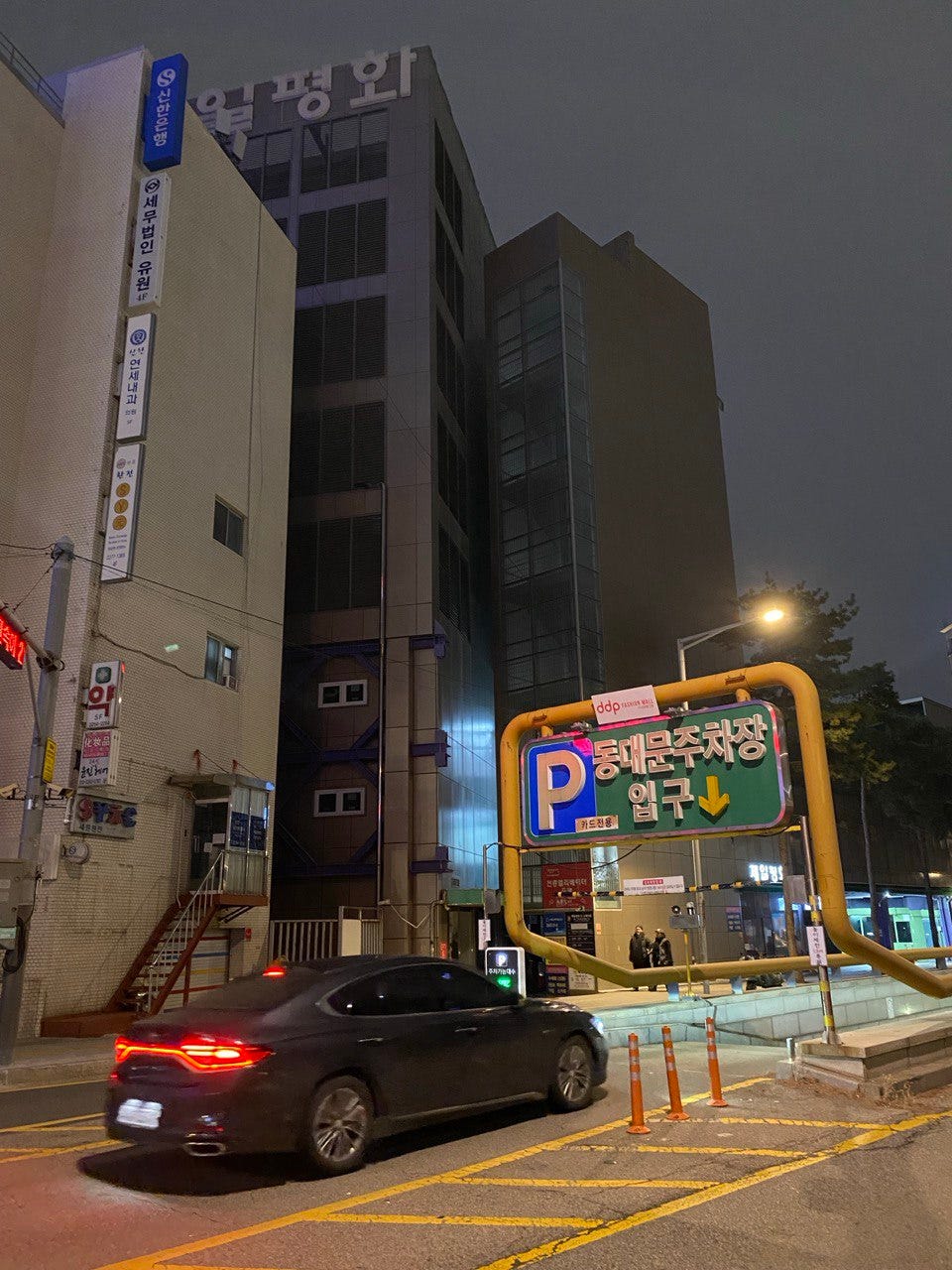
December 27th, Saturday
Seoul
At first, N— did not get it when I said Korea does not feel like home to me. Tomorrow, I am going to Manchuria. The contemporary Chinese simply call it the Dongbei now, the Northeast, but the two names do not carry the same nuances. Koreans, Chinese, Japanese, and sometimes even Russians—only those who no longer had homes left for Manchuria since the nineteenth century until 1945. Then, Manchuria was gone.
Technically, I am going there only for thirteen days, to take a look around for my new novel set in 1920s Manchuria. It is not to aimlessly wander, or to settle in a strange land like the people of the past century did. There is something mythic about the land when it is called by the name Manchuria, though. My grandfather, an ethnic Korean born in Manchuria, recounted that he had not realized the Tumen River was a border when he had been on a school trip to Seoul, then called Keijo. Keijo is a Japanese name, and the Tumen River was supposed to be the border between Korea/Chosen, then a part of the Empire of Japan, and Manchukuo, a Japanese puppet state established in Manchuria. To the eyes of the Korean/Chosen-jin teenager, nevertheless, both Manchuria and Korea were just continuous lands of the Japanese Lebensraum, or the Dai Toa Kyoeiken.
I have wanted to visit Tumen, my grandfather’s hometown that bears the same name as the river. X—, a Chinese, asked if I was a Chaoxianzu after hearing that my grandfather was from Tumen. Chaoxianzu is a Chinese term often used to refer to ethnic Koreans in China, one of the 55 ethnic minorities officially recognized by the Chinese government. I said no. It was hard to find an adequate explanation. How can one be a Chaoxianzu when descended from a Korean born in Manchuria, not the Dongbei, a person who belonged to the age when there was no People’s Republic of China or Republic of Korea? The category ceases to work in Dai Toa, or the Greater East Asia, as the Japanese called its world.
The working title of my novel is The Peony River. The Chinese characters that constitute the name of the Mudan River, a tributary of the Sunggari, can be translated into “the Peony River”, even though they are in fact a phonetic transcription of a Manchurian name. There is also a city named after it, Mudanjiang. I will have to head south from Mudanjiang to reach Tumen.
I am not sure if I will visit Tumen this time. I might head north and go to Jiamusi instead. Obviously, Tumen cannot be my home, like China is not either. To claim so would be beyond absurd. Nevertheless, there is a peculiar psychological effect at work here. Everyone needs a sense of origin, or a myth of origin.
I have a strange feeling that whether I visit Jiamusi, Tumen, or somewhere else is going to affect the direction my life will take. As of now, I am not sure where it’s going, or if it’s going anywhere at all. I have three book-length manuscripts to sell, without any guarantee that they will be sold. I just want to pack up and leave for Manchuria—but that Manchuria is gone now, and only the Dongbei remains.
I do not long for the Empire of Japan. The empire was stupid enough to start a two-front war against China and America. It deserved to be nuked, more so because of its imbecility than its war crimes or colonial policies, and also because of giving up its own aesthetics of gyokusai—to die honorably like jade getting shattered. What kind of emperor, who is supposedly descended from a goddess, poses next to MacArthur like a well-tamed Yorkshire Terrier to be photographed anyway? What I long for is a world where the mythic is still alive, where a certain East Asian cosmopolitanism is still achievable, where we still have the Wild East: Manchuria. The Empire of Japan was a contingent factor of such a world, just like Stefan Zweig’s world of yesterday did not necessarily have to end with the Anschluss.
I am perhaps being naïve. Can there be a belle époque without Leopold II and the Congo Free State? However, it is a writer’s privilege to stay naïve. Stefan Zweig did not see what prestige he had, sadly. Hopefully, I will be permitted to stay naïve. I paid the price by suffering from the claustrophobia caused by contemporary East Asia, a suffocating place where all nation-states are islands. We no longer have a continent. Even China feels like an island now, no less closed than Taiwan.
Grandpa, I envy you for staying a naïve boy in the colonized Manchuria, not grasping what a border is. You had a roomy home that I have never had, at least once in your life. It’s too small and stuffy here.
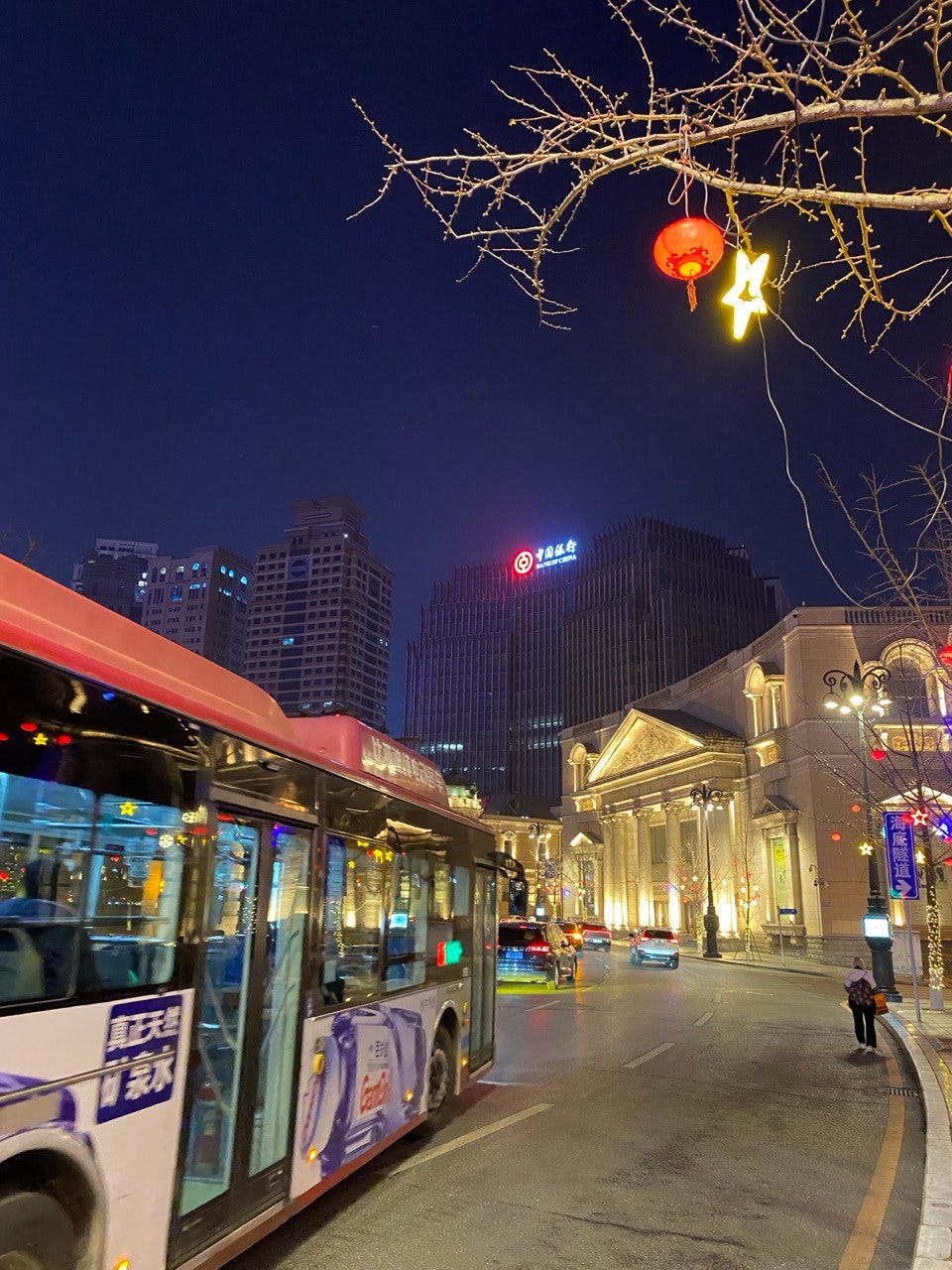
December 28th, Sunday
Seoul-Dalian
An inexplicable and unquenchable thirst is in the air at Incheon International Airport. Every time I am here, I always feel the urge to buy and drink the overpriced airport beer. I resisted for half an hour and gave in, like always. Perhaps people are not supposed to travel by airplane. We are supposed to travel by car, train, and ship, instead of a crowded metal can that deprives us of the sense of moving. Maybe I need that beer to relax my nerves before being simply dropped into a strange place.
Nonetheless, it seems Natsume Soseki still felt uneasy despite traveling by ship and plane. It is well known that he travelled to London in 1900 to study English, funded by the Japanese Ministry of Letters. It did not take long for him to have a mental breakdown. His friends would find him crying alone in a dark room, and the Ministry had to order Natsume to come back home. This incident is often understood as the Meiji writer’s reaction to the Modernity/West.
Isn’t that too convenient an interpretation, though? Compared to his stay in England, Natsume’s travel to Manchuria and Korea in 1909 is relatively unknown. It was just before An Jung-geun, a Korean activist, assassinated Ito Hirobumi in Harbin for his role in the Japanese colonization of Korea.
I hereby make it clear that I absolutely love Natsume and consider him to be the greatest East Asian writer of his age. Even Lu Xun read and absorbed his works, but from the way I see it, he never got as good as Natsume in writing fiction. The reason I wrote the last two sentences is to say: Natsume’s record of his travels to Manchuria and Korea, which he serialized in The Asahi Shimbun, is absolutely laughable. It sucks. Again, I say this as someone who considers Natsume to be one of the greatest novelists of the last century. His Travels in Manchuria and Korea is so bad that it is plain bad writing, not just bad for something Natsume wrote. Quite likely, it is because he did not want to write it and did not want to travel in the first place. Reading each episode, you can feel that he hates writing it and just wants to meet the word count. In the end, he quit working on it in the middle, even before reaching Korea in his writing.
The great author of Kokoro and Sanshiro, I believe, needed to stay in Japan to stay great. He was a man fit neither for England nor for Manchuria. What he writes in the unfinished Travels in Manchuria and Korea, when he is not constantly complaining about his indigestion, is mostly about the Japanese he met in Manchuria being Japanese and doing Japanese things. Surprisingly, he seems quite uninterested in the exotic details that he could have found in the land where the Empire of Japan was newly exerting its influence after winning the Russo-Japanese War. He says a few mean words to a Chinese rickshaw man, which some Korean critics interpret as evidence of his imperialist view, but hold on—getting on a taxi in a foreign country often makes people a bit racist or xenophobic, right?
Soseki was too Japanese to be an imperialist. An imperialist has to acknowledge the existence of the colonized people in the empire, at least. (Come to think of it, I am also writing about a Japanese guy, even though I am now in a Chinese port city.) This might explain his nervous breakdown in London as well.
I walked around Zhongshan Square, observing and taking photos of the buildings the Japanese built in Dalian during their occupation for my novel. Natsume was in Dalian, too. I wondered if seeing those buildings could have worsened Natsume’s digestion: they were the result of the Japanese attempts to imitate Europe, in terms of their style. Then, I walked to Qiqi Street and took a bus to Xinghai Square by the sea. A small amusement park looking out to the dark sea of the night made me a bit sentimental, which made me buy beer again, which made me learn that the Chinese subway does not allow its passengers to carry beer, which made me grab a taxi to return to my hotel. The taxi driver, a nice man and a smooth driver, did not change my opinion on the Chinese at all.
Natsume-sensei, I think you should have just frequented pubs in London, or in Dalian.
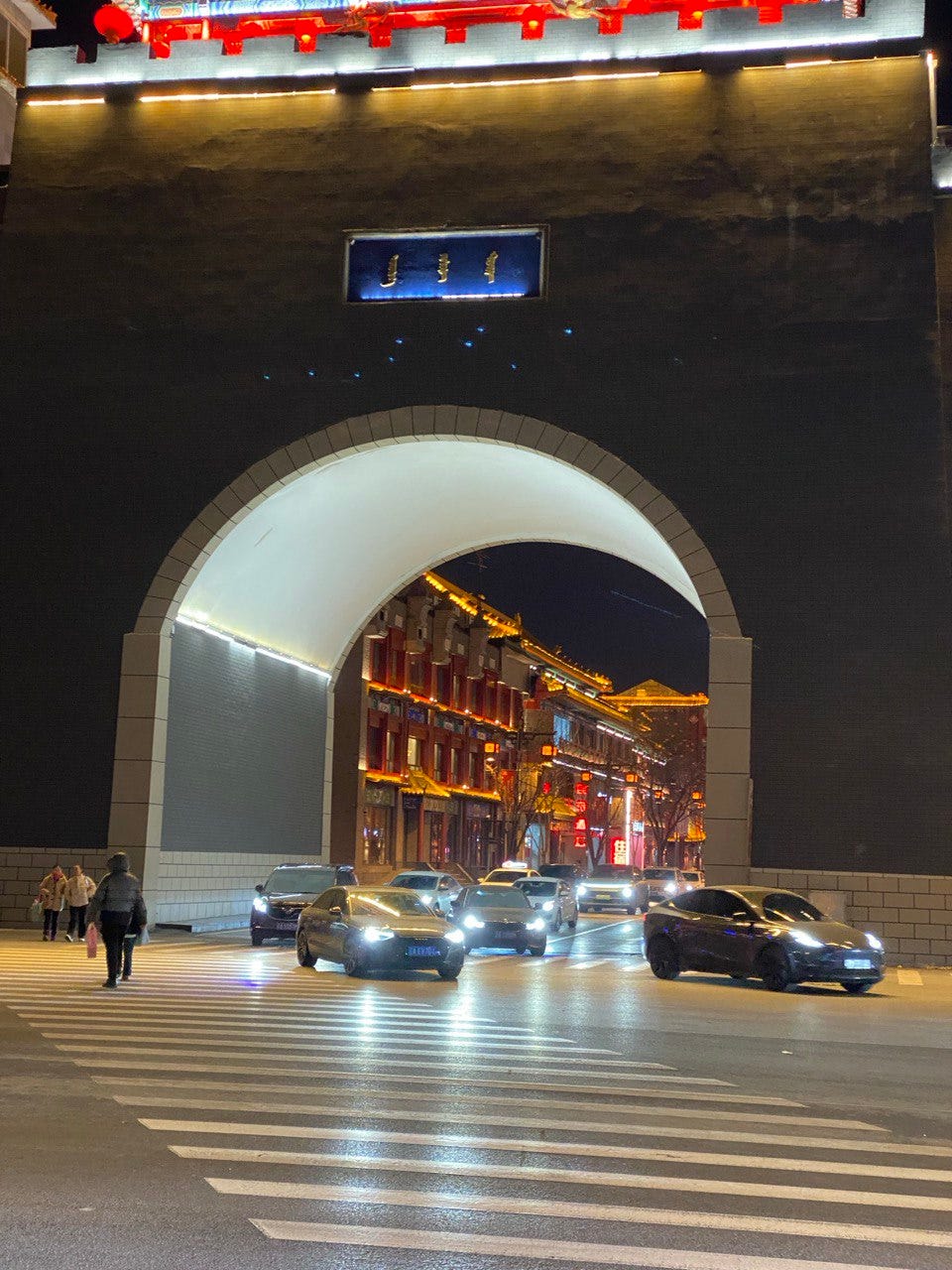
December 29th, Monday
Dalian-Shenyang
I woke up to find two new matches on Tinder. Being a foreigner, seemingly, is an advantage on dating apps. One of the girls was looking for a hook-up. She did not seem to be a scammer, judging from her looks: somewhat pretty, but not too pretty, simply put. I will not say that I have been chaste all my life—“What I do, I do not understand. For I do not do what I want, but I do what I hate,” quoth St. Paul. Still, it is not a good idea to commit a cardinal sin during Christmas time (I say this as if it were a good idea at other times). Even if I had wanted casual sex, it would not have happened unless she was willing to rush into my hotel room straight away for a morning quickie. I had to check out of the hotel to leave for Shenyang.
What is the point of swiping on Tinder when you are leaving the city in 24 hours and not up for casual sex? To see if it is possible to build a serious relationship within a day? Possibly, it is just because I enjoy swiping on the phone in bed, not necessarily with a genuine intention to meet the girls that I swipe right. Some postgraduate French student of philosophy must have written a dissertation on how dating apps have transformed dating into a simulacrum of itself.
I read from the other girl’s profile that she enjoys travelling and texted her that she should come to Korea. She has not answered back yet. I doubt she ever will. If she ever answers and visits Korea, I am willing to bore her by talking about Baudrillard and Frederic Jameson.
After leaving the hotel, I walked around the old Russian street near Dalian Station. It had some buildings built by Russians in the late nineteenth century and the early twentieth century, but the street was unimpressive overall. All it had was gift shops, vaguely Russian-themed with matryoshkas and Alyonka chocolate. I enjoyed the small market next to it far better: jujubes, sunflower seeds, peanuts, tobacco, incense, and firecrackers. All genuine and Chinese, unlike the poorly done simulation of the age when Dalian was a concession surrendered to Russia and called Dalniy, which just means ‘far’ in Russian. So, Russians did not really care much to give the port city a proper Russian name. No wonder Russia lost it to Japan soon.
At a bench in front of Dalian Station, I had a humble lunch with a hongchang, Northeastern Chinese sausage, and mantou, Chinese steamed bun. My dad once said that his grandfather had complained that he could not find mantou in Korea. Mantou, made from wheat, is often found in Northern China. Historically, Koreans have been rice eaters, not wheat eaters. (My English sounds funny now, as if I were describing some anteaters.) My great-grandfather, a Korean who was born and lived in Manchuria, grew up eating mantou.
Another thing I heard about my great-grandfather is that he had been called a “learned man”. He was one of the few people in his town who had finished high school. In fact, he had already been married for a decade when he was in high school. At age 8, he married my great-grandmother, who was 13.
My great-grandfather did not have extramarital affairs or secret lovers, as far as I know, but I sometimes wonder if he had ever wanted to date someone else other than my great-grandmother, whom he did not choose on his own. He belonged to the generation of Korean, Chinese, and Japanese men who revolted against arranged marriages. The more learned or more Westernized they were, the more likely they were to desire free love. A problem was that when they reached the age to understand what love is, they were often already married, like my great-grandfather. The solution for those not brave enough, or not irresponsible enough to dump their wives, who could not survive by themselves, was to stay married but have affairs with the so-called “modern girls”: educated girls in short Western dresses with cute bobs, the East Asian adaptation of American flappers.
Lu Xun was also a victim of an arranged marriage, although less so than his wife selected by his family. He later chose to live with another charming and intelligent woman in a de facto marriage, supporting his uneducated wife only financially. When Lu Xun died, a group of researchers visited the house of his birth to collect relics of the great modern Chinese writer. His wife was still living there after decades of serving her parents-in-law in silence, never having lived together with her husband for more than a few weeks. She screamed at the researchers: “I am a relic of Lu Xun, too! Take me!”
The bench in front of the railway station was a good spot to think about my great-grandfather, Lu Xun, the ‘learned men’ of early 20th-century East Asia, and their women. On the train to Shenyang, I read Swann in Love from Proust’s In Search of Lost Time. It was a splendid choice to take it with me to Manchuria.
It was already dark when I arrived in Shenyang. Unlike Dalian, Shenyang’s first impression was cold. Ice and snow were in the streets. I took a walk around Shenyang Station and the building that had housed the South Manchurian Railway Company’s Fengtian branch (Fengtian is the old name of Shenyang), the Japanese equivalent of the East India Company. After eliminating the Russian politico-military presence in Manchuria, the Empire of Japan exerted its influence through railways. Many red-brick buildings from the era of Japanese rule were intact in the city center, in the middle of which the railway station was situated. I was walking the streets in the heart of the Manchurian modernity.
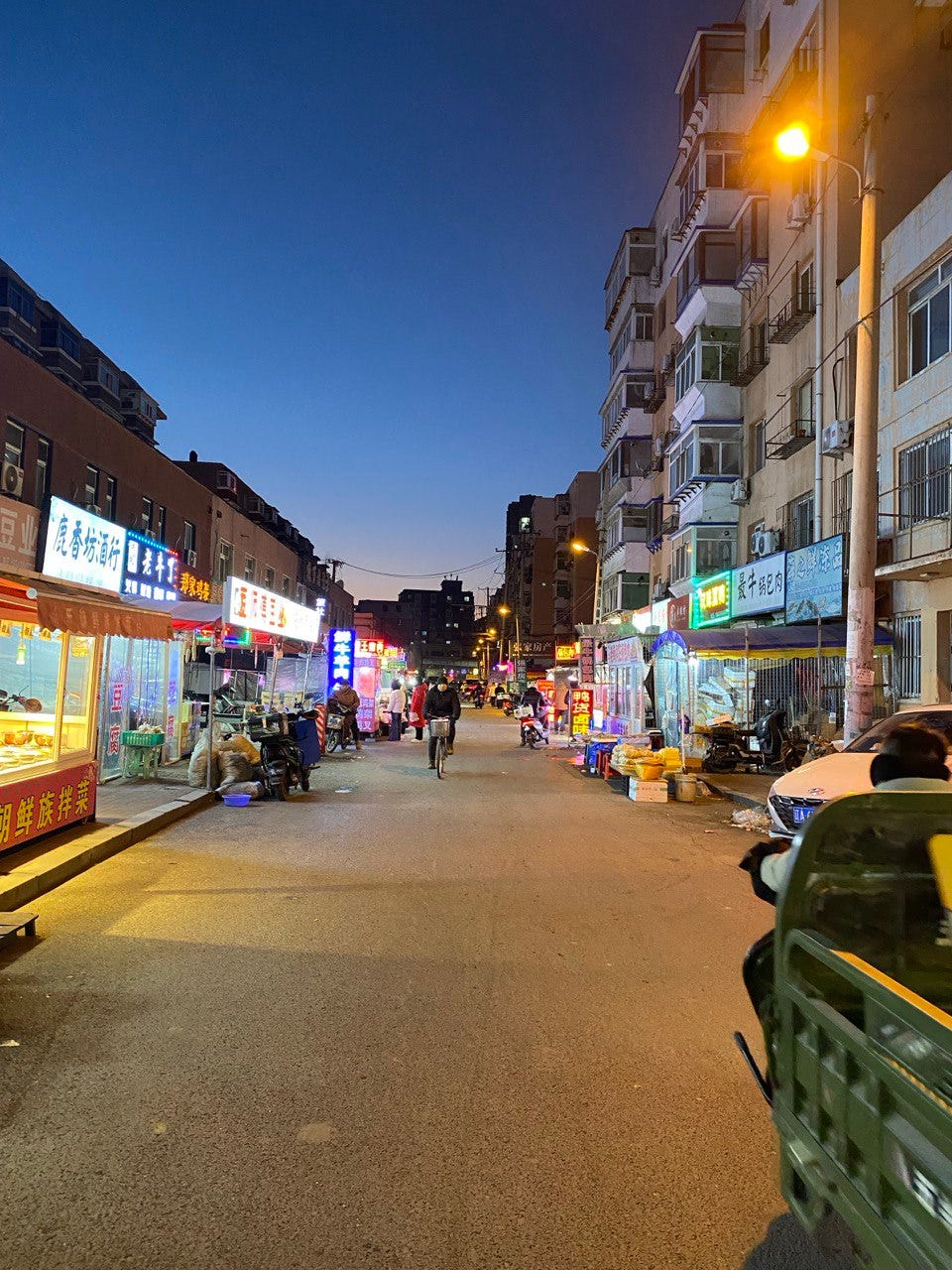
December 30th, Tuesday
Shenyang-Changchun
Although I wrote yesterday that Shenyang/Fengtian is the heart of the Manchurian modernity, I had seriously considered skipping it in my travel. It is an important city in the history of Manchuria indeed, but my novel is not going to depict it. What I want to write is a Western novel set in Manchuria. Los Angeles is important in the history of the Wild West, with the California Gold Rush and so on, but it is not a city you will want to visit if you have to check out some cowboy stuff.
I decided to visit Shenyang in the end because of a father and a son: Zhang Zuolin and Zhang Xueliang, the warlords who led the Fengtian Clique and ruled the Chinese Northeast in the early 20th century. As is obvious from the name of the military faction they commanded, they had their base in Shenyang/Fengtian.
There were two spots in Shenyang that I wanted to visit: where Sandong Bridge used to be, in Huanggutun, and the Zhangs’ former residence, also known as General Zhang’s Mansion. In 1928, Japan assassinated Zhang Zuolin by blowing up Sandong Bridge when his personal train was crossing it. What Japan wanted was to establish a new ruler in Manchuria. Zhang and Japan had cooperated with each other until he began to approach the US and the UK, which led Japan to conclude that he should be removed to secure the Japanese interests in the region.
At a below freezing temperature, I walked for about two hours since it was not easy to reach the location of Zhang’s death on foot due to the ongoing construction. I had to make many detours, and when I reached the spot at last, there was not much other than a memorial stone that indicated what had happened there. The railway was still nearby, but it was rather hard to imagine what the place had been like a century ago. The tun in Huanggutun signifies a small village, or a hamlet. Now, the place is called Huanggu District, with many apartment buildings.
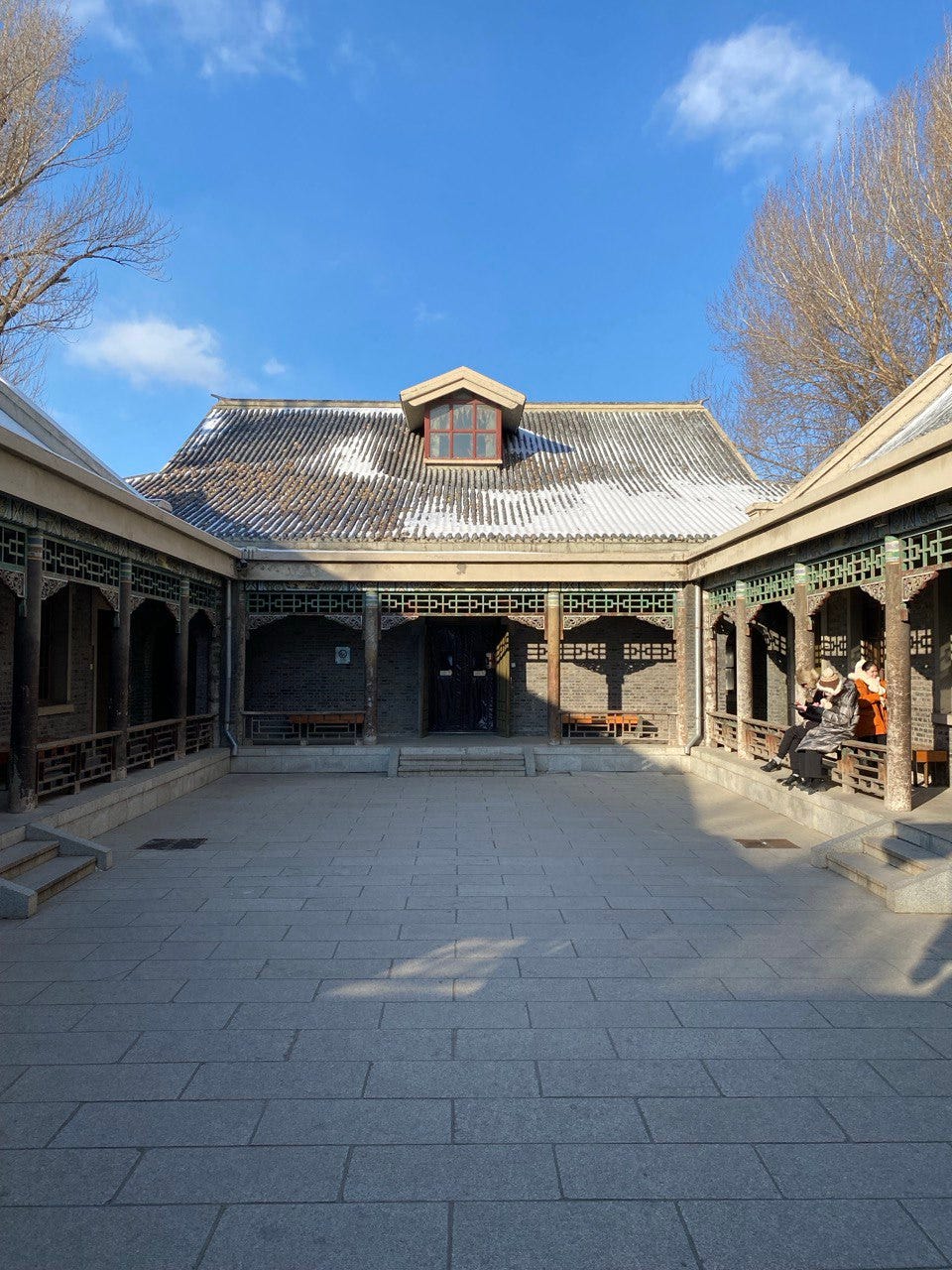
General Zhang’s Mansion, in contrast, made the visit to Shenyang worth it. Perhaps it is better to call it General Zhang’s Residential Complex. Zhang Zuolin had two wives, four concubines, nine sons, and seven daughters. (In many ways, Zhang Zuolin was a romantic man, who started out his career as a horse-riding outlaw. Even after he became the ruler of Manchuria, it seems he and his men kept romantic attitudes more befitting for outlaws than modern policy makers. Once, he sent one of his men to Shanghai to make arms purchase, who lost all the money by gambling. Zhang laughed it off, sent him more money, which he used for gambling again. This time, he won big, and the Fengtien Clique got new arms. Such men either need a lot of women or do not need them at all.) His eldest son, Zhang Xueliang, had an ex-wife, a wife, a concubine, four sons, and a daughter. No wonder the residence needed so many buildings and rooms, even if we ignore the fact that their servants also needed quarters to stay and the father and the son worked there as well, which required spaces for visitors and the regular staff.
The look around the residence gave me vivid imagery of how a Manchurian man of power would have lived in the 1920s. I could come up with many scenes and plot devices on the spot, though I am not sure as of now how many of them I will actually use. However, on a personal level, what moved me the most was a Mickey Mouse cap on display that Zhang Xueliang had worn. Born in 1901, he died in 2001. A century was long enough for a warlord born before the fall of the Qing Empire to become an old man with a Mickey Mouse cap on.
Having left Zhang’s place, I walked a bit around the plaza in front of the Mukden Palace: it was the palace where Qing emperors lived before they conquered China and moved into the Forbidden Palace in Beijing. I did not have time to go into the palace because I had a train to catch. I might have been the only traveller to Shenyang who gave up the Mukden Palace, the top tourist spot in the city, to see where Zhang Zuolin died. (I confess that I also used a precious hour at a café that I entered because it was too cold, but the dog there was so friendly. What kind of cold-hearted monster leaves such a dog to see some palace that does not interest you for now?) Maybe one day, when I decide to write a novel set in 17th-century East Asia, I will have to visit the palace. I saw the eaves of the old palatial buildings behind the walls, though. It felt somewhat eerie to see them against the backdrop of high-rise buildings in the dawn of the setting Sun.
To retrieve my luggage at the hotel I had stayed at last night, I walked with quick steps along Lejiao Street. The street was filled with residential buildings and mom-and-pop shops. It was getting dark, and people were going back home, talking, shouting, greeting each other, buying groceries, cooking, and eating out. The whole street smelled nostalgic, even though I am not Chinese or from Manchuria.
In the Japanese animated film Crayon Shin-chan: The Storm Called: The Adult Empire Strikes Back, Ken, the villain of the movie, believes that the 21st century is ugly and plots to make adults live as if they were in the 70s by spreading the “smell of the 20th century”. The adults begin to act like children they used to be under the influence of the smell. For Shin-chan, the main character who is a kindergartener, this regression into the past century means he will no longer have future. In the climax scene, Shin-chan’s father decides that he will live in the future for his son, in the ugly 21st century. Still, running away from the town of the reenacted 70s that Ken created, he sheds tears and exclaims: “Damn it! Why does this town smell so warm and nostalgic!” I remember some places that smelled like that, but I no longer have them with me.
On the train to Changchun, I read more from In Search of Lost Time, drinking tea without madeleine, thinking that one thing that would make me miss Shenyang and come back to it was Lejiao Street, not the Mukden Palace.
Changchun felt even colder than Shenyang, at -17℃ or 1.4℉ when I got out of the train. (Ironic, considering that the name Changchun means ‘long spring’.) I had been moving further up North, further inland. The air reminded me of winter in Moscow, and Shenyang Station also contributed to my reminiscence of the Russian capital with its watered-down Stalinist style. It was another type of modernity, a post-Minguo and post-Manchukuo one.
The hotel room I had reserved in Changchun turned out to be horrible. It had looked fine in the photos online, but in reality, it was filthy. It also stank, and I found a cockroach climbing up the wall as soon as I entered. I had planned to stay in Changchun for two days, and I did not want to celebrate the New Year with cockroaches in a stinking room. I lit a cigarette and began to search for another hotel on the phone. A cigarette could not make its stench any worse or better. The room had a no smoking sign and an ashtray. There is a Chinese writer who said: in every hotel room in China, there is a no smoking sign, but there is also an ashtray. It was his answer to the question what kind of country China is. I could not remember who he was.
After a long confrontation with the manager, I got a partial refund, grabbed a taxi, and ran away to a fancy hotel. The room charge at the new hotel was way over my budget, but I did not want to care for the time being. I let out a sigh of relief as soon as I entered the room. It was clean and even well furnished. A little to my surprise, I could not find an ashtray in it. Only a no smoking sign was there on the nightstand.
On my way out to have late-night hot pot, I asked the receptionist if I could change my room for a smoking room or if there was a designated smoking area in the hotel. He said I could just smoke in my room. The Chinese writer whom I cannot remember proved himself to be correct about China again, directionally.
December 31st, Wednesday
Changchun
A year ago, as soon as the clock struck midnight and the year 2025 arrived, S— texted me and said: whatever I was doing at the very moment, I would be doing it for the rest of the year. I was smoking then. It turned out to be true. I would have smoked around seven thousand cigarettes in a year. In order not to ruin the achievement on the last day of the year, I smoked a cigarette right after opening my eyes and crossing myself.
I am now in a Starbucks at a mall in Changchun, writing, because I was reminded of what S— had said. The mall’s closing time is 9:30, but it seems the New Year can make an exception. It is now about half an hour before 2026 here in China, and there are a lot of people inside the mall. Through the glass in front of me, I can even see the stage set up by the mall. A singer is singing a song the lyrics of which I cannot comprehend. This is where and how I will jump into 2026, along with all the Chinese around me. I do not fancy writing at Starbucks much, but if I get to write all year in Changchun, that does not sound too bad.
This morning, having breakfast at the hotel felt great. (I wish I could always live idly in a luxury hotel in a foreign city. Hotels are great precisely because they are not your home.) What felt even better was that I did not have to pack up and leave for another city after a day. Instead, I left for the Manchukuo Imperial Palace, where Puyi, the last emperor of the Qing Empire, lived as a puppet of Japan.
The rooms and halls where Puyi and his concubines frequented were charming enough, but what fascinated me the most at the palace was the Imperial Household Department building. The department was in charge of the daily activities of Puyi and his family and hired about a thousand people in total. The building that housed it was a traditional Chinese one but had Western style offices inside. In an agitated tone, the exhibition there condemned the high-ranking Chinese officials who worked in the department for cooperating with the puppet state of Manchukuo.
(Starbucks kicked me out at this point, at 11:40. Seriously? The mall stayed open, and I joined the New Year countdown with hundreds of Chinese. Will I get to be around a lot of Chinese this year? On the bright side, I am relieved that it seems I am not going to spend the year 2026 writing at Starbucks. Entering the New Year, writing in my room at a fancy hotel that will celebrate its seventieth anniversary this year. Not a bad start.)
What I find fascinating about the Imperial Household Department is its theatricality. Even though Puyi was the emperor of Manchukuo in name, he was not the real ruler of Manchuria. The Kwantung Army commander was unofficially called Taishang Huang—a term which means retired emperor, technically, but a Taishang Huang would often wield more power than the reigning emperor in Chinese history. Manchukuo was an independent state on paper, distinguished from Japan, and the Kwantung Army was a part of the Imperial Army of Japan. However, the Japanese army commander always had the last say in Manchukuo. He lived in the same palace with Puyi, even. Everything in Manchukuo worked the same way: all the heads of government offices were Chinese (mostly Hans, sometimes Manchus or Mongols), but the real decisions were made by their Japanese ‘advisors’ or ‘aides’.
Nonetheless, at the Imperial Household Department, a thousand people were at work to make Puyi appear as a genuine sovereign. They even planned out in what order the “honored guests from abroad” would pay tribute to the puppet emperor for the New Year, who were Japanese officials and officers working in Manchuria. Right below the hall where Puyi received the “guests”, the Kwantung Army commander had his office. I wondered if the commander would have just walked out of his office and climbed up the stairs on that New Year’s Day. I would prefer him to have deliberately left the palace, even for a few minutes, and come back in a graceful equipage. The show must go on.
There is strange beauty, I believe, in devoting one’s days to maintaining the world of make-believe, where every little act, costume, and prop has a meaning. It is an elegant world of semiotics, a somewhat Proustian world of free-floating signs and symbols not grounded by ontological reality, but still full of meanings: the fruits offered to the emperor’s Manchu ancestors twice a month, the set number of kowtowing for different occasions, the peony flowers that decorate the carpets and ceilings in certain rooms, and what uniforms an official may wear, depending on his rank, the season, and the time of the day. Such a world will break down as soon as the script is not acted out accordingly. Its beauty is delicate, and thus more beautiful.
Naturally, the People’s Republic of China will never permit such a reading of Manchukuo. The exhibitions at the palace continued, and their narrative showed how even a man like Puyi, a former emperor and a national traitor, could repent of his sins and be “reformed” into a proper communist citizen, also not forgetting to display the Chinese people’s struggle against the Japanese imperialism. I do not dislike the Chinese Communist Party’s narrative either. It is another beautiful plot, beautiful enough to consolidate the legitimacy of the regime. Again, the show must go on—Japan/Manchukuo couldn’t keep it running, but China is still running it well, isn’t it?
Before leaving the palace, I encountered a very touching painting in the Socialist Realist style, depicting a crowd of Chinese that fought against Japan. On subway, I jotted down the first two paragraphs of the following note on the phone:
There is something so awe-inspiring about Chinese history. I am not expressing a nationalist or patriotic sentiment. I am not even Chinese. My impression of the Chinese is that they are often too philistine, realistic, and obedient only as far as it is beneficial to them. Lu Xun, the great Chinese novelist, would agree with me, at least in part. Otherwise, he would not have written The True Story of Ah Q or Outcry. The reason might be that there have always been so many people in China. The Chinese have long likened history to the Yangtze River—even dynasties come and go like mere waves on the river, and the river of history will keep flowing as if nothing had happened; what can you do about it, as an individual tinier than a drop of water?
Mao reportedly said to the Yugoslavian ambassador, regarding the potential nuclear war with America: “Even if they kill 300 million of us, so what? We have plenty of people.” True, kind of, but not a comforting truth, especially if you are among the 300 million that will die in the war, just a number. The last lines of Romance of Three Kingdoms: “The split [of China] into three like a three-legged cauldron, has already become a dream;/Those who came after, under the mask of condolences, needlessly grumble.” Luo Guangzhong, after writing a gripping tale of heroes that fought against each other to unify China, declares that all their achievements have “become a dream” and feeling sad about is merely a “mask”, a “needless[…] grumble.” The Chinese are raised to become cynics when it comes to history or anything bigger than their personal interests.
Despite all the restraints, however, China never ceases to produce its extraordinary heroes that exceed their counterparts of its neighboring nations, such as Korea and Japan, in their greatness. Lu Xun wrote that his literary practice was like shouting at people asleep in a room made of steel. The room lacks a window, and the people in it would soon suffocate to death. A few of them might wake up, and there might be hope that they would be able to demolish the room.
In China, some people always wake up and never go back to sleep again, even if it is only to die conscious, suffering. Koreans never risk their lives unless they grasp the cause; neither do the Japanese, unless their death can be aesthetic. The Chinese heroes, even when they do not fully understand what they are doing or they are going to die seemingly in vain, do not stop banging the steel wall. “A man of strength leaves once to never return,” said Jing Ke, when he crossed the Yi River on his way to assassinate Qin Shi Huang. The assassination attempt failed.
Such heroic Chinese do not care if they will succeed, or if they will be remembered. They just do what they do and what they have to do, like a minute spark flying into the dark of the night. And sometimes, it is such foolhardy drops of water that change the current of the river. China is the only East Asian country where the people overthrew the monarch.
The next place I visited was Jilin Museum. More inspiration for my novel, so another productive day. I planned to walk around after that so as to take a look at the government buildings built during the Manchukuo era, but trips rarely go as planned. The zipper on my jacket broke, and it was definitely not a good idea to walk around with a jacket that could not be zipped up when the temperature was getting close to –20℃/-4℉. I tried to find a place that could repair it (I couldn’t fix it myself since the slider had decided to leave me and stay in Manchuria forever at a certain point), but it was in the evening of New Year’s Eve. Another problem was that the next day was New Year’s Day, which meant it would be even harder to find a shop to fix my jacket, and I was going to leave for Harbin, a city even colder than Changchun.
I asked a receptionist at the hotel if there was anything they could do, which turned into an emergency meeting of four receptionists. At last, they found somewhere still open, about ten minutes away on foot from the hotel (thank you, my own Chinese heroes). When I got there, the lady at the shop told me to leave the jacket and return in two hours. Now, I had to walk back to the hotel even without the unzippable jacket. As soon as I stepped out of the shop, I thought of The Overcoat by Gogol. It was bestial indeed to take someone’s overcoat away in St. Petersburg or in Changchun. In the middle, I entered a noodle place and ordered Hunan noodle along with a drink. I thought of Tolstoy: Simon says it is cheaper to drink vodka than to buy a coat in What Men Live By. What I drank was not vodka, but it still helped. To my dismay, the heat from the alcohol did not last till it was time to return to the shop. Men do not live by coat alone, though. The hope for a zippable jacket can keep a man walking through the cold.
When I got my jacket back at last, the year 2026 was drawing nigh. I did not want get back to the hotel—I had a jacket! That was how I ended up in a mall at the beginning of the New Year.
January 1st, Thursday
Changchun-Harbin
The first day of the year 2026, and the Solemnity of Mary, the Holy Mother of God. Went to morning mass at St. Thérèse Cathedral. As always, I tend to understand only the important parts from homilies in Chinese: womende jiemei Maliya, Shengmu—our sister Mary, the Holy Mother. I believe that was good enough, all we need to know.
On the train to Harbin, I got a message from N—. “You are always on a train,” she said. That’s not true, but I have never been on Chinese trains so often all my life before.
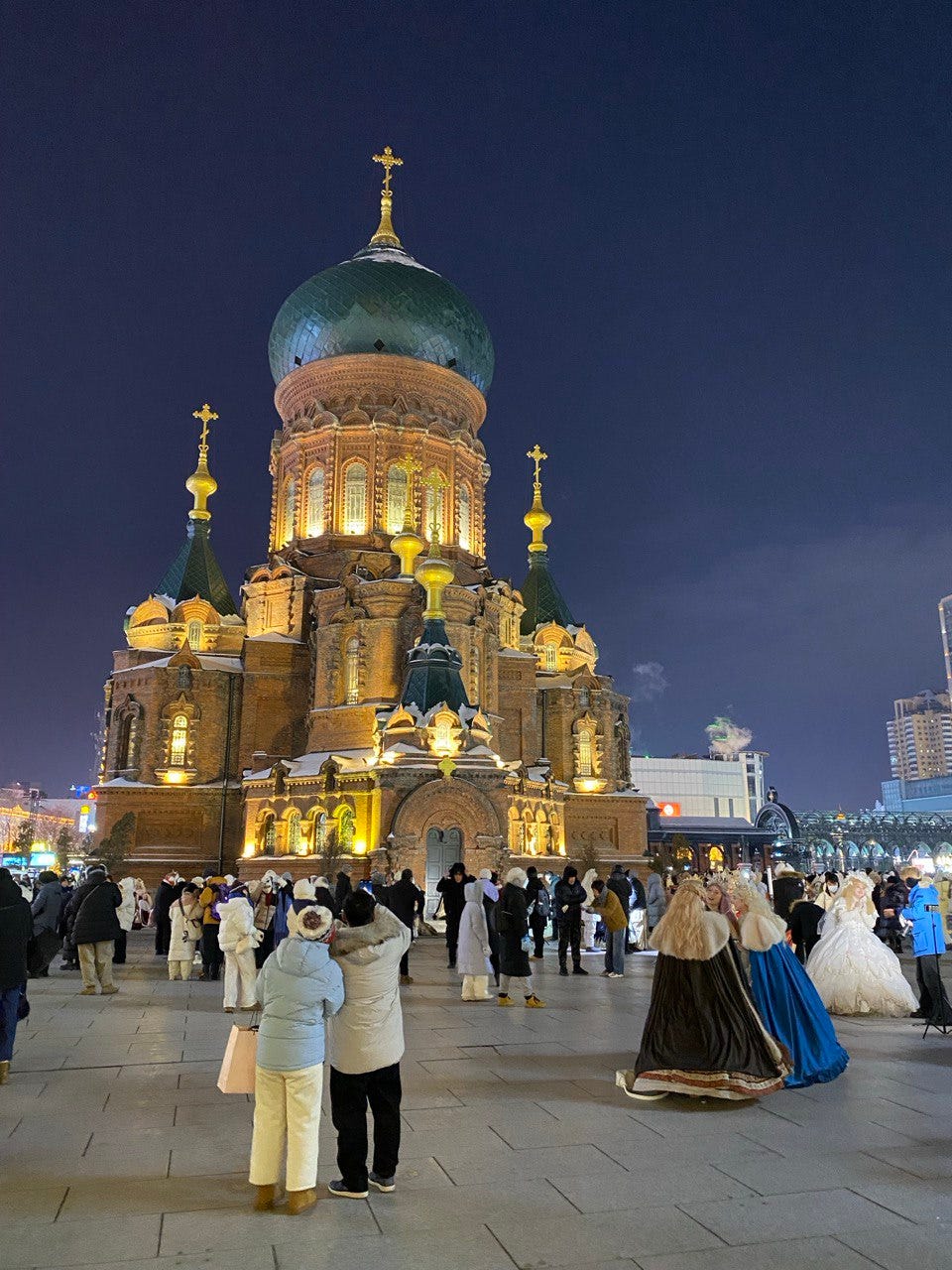
As soon as I left my luggage at the hotel, it was time to go to the place that every tourist in Harbin runs to: the former St. Sophia Cathedral. Harbin had been a small outpost until the railways built by Russians transformed it into a cosmopolitan metropolis in the early 20th century. Of course, Russians built an Orthodox cathedral when they came here. To this day, it is the best-known landmark in the city. The cathedral was an hour away from my hotel on foot. I decided to walk to take a look at the streets. On the way, I got frost on my mustache. It had happened only once in my life before, in Veliky Novgorod.
St. Sophia Cathedral became my first spot of deep disappointment after coming to China, regretfully. The cathedral is now officially known as St. Sophia Cathedral Museum since it is no longer used for liturgies. From the way I see it, however, it is not even a proper museum. Even though a plaque inside it claimed that “systemic research and restoration of the murals” had taken place, I very much doubt that the Russians who built the cathedral would have painted a copy of The Last Supper by Da Vinci on the wall of the Holy of Holies; the iconostasis was not restored at all; the murals on the other parts of the ‘museum’ showed poor understanding of, and poor skills in Christian iconography; and what enraged me the most was that on the stage where the altar would have been, a Chinese guy was playing Moscow Nights on the saxophone, and a white guy, supposedly a Russian, was playing a bayan in another corner.
To be clear, I was not enraged because the cathedral had been desecrated. It would have been nice if the cathedral could stay a cathedral, but a church cannot continue to function as a church when there are no believers. What enraged me was its cheapness, philistinism, or unseriousness. In Soviet Russia, many churches were turned into so-called museums of atheism. Still tragic, but those who did it were at least serious about it, so serious that they created museums to effectively show how backward religion is, and you have to treat people who are serious in a manner as serious as they are. However, what the Harbin authorities did to St. Sophia Cathedral was not serious at all: creating a vague Russian ‘vibe’, but not even Russian enough. It would have been preferable if they had turned the cathedral into an anti-religious museum or simply blown it up.
When I came out, the plaza, where whatever that is not a cathedral nor a museum stood, was full of TikTokers, many of them cosplayers in pseudo-Russian costumes using the deformed building as their background. It is a pity that the Cultural Revolution ended and could not prevent all this from happening, I thought. I walked away. Central Street, the main street bustling with tourists, was full of Russian commodities, or commodities supposed to be somehow Russian, whatever being Russian is supposed to mean.
It was New Year’s Day, and the streets were full of festiveness. I returned to the hotel, severely depressed, again thinking of Gogol and his city. St. Petersburg was an imitation of Western Europe. What would have Russians who had experienced the time before the existence of St. Petersburg thought of the theatrical city? At the convenience store near my hotel, I bought a can of Harbin Beer. I felt thirsty.
January 2nd, Friday
Harbin
Last night, I seriously considered leaving Harbin right away. I decided not to. The first impression of Harbin was terrible, but taking another day in it was going to help me write the novel. My novel, though set in Mudanjiang and not in Harbin, is going to feature characters of various national backgrounds: American, Japanese, Russian, Korean, Chinese, Swedish, French, and perhaps more. I thought Harbin would still help me imagine better the interactions between different people in a strange land. In addition, they would be continually aware of Harbin’s presence as the nearest big city.
What changed my impression of Harbin was Heilongjiang Museum. It was not an impressive museum, objectively speaking, but still a good museum in that its attempt at representing the past of Harbin felt authentic. At the beginning of the exhibition, there were lines from Elena Nedelskaya, a Russian poet of Harbin: “The years going all further away…/A foreign sunset burns over us./I have seen the beauties among cities/But you, my dusty city, are dearer than all…” This is what I call authenticity. The photos and relics from the world of yesterday in Harbin were very touching as well. Among them was a tiger skin, collected by Russian naturalists. It was my third time seeing a tiger taxidermy during this travel, the other two occasions being at General Zhang’s Mansion and the Manchukuo Imperial Palace. I do not have a concrete idea how it will work as of now, but my intuition is that Manchurian tiger will become an important motif for my novel.
Thinking that maybe I should visit Siberian Tiger Forest Park in Mudanjiang, I headed to Harbin Station. It is a place where almost all Koreans who come to Harbin visit, even if they are not taking a train. This was where An Jung-geun shot Ito Hirobumi to death.
Ito was a Resident-General of Korea, who played a major role in the Japanese colonization of Korea. On October 26th, 1909, Ito arrived in Harbin to negotiate the Japanese and Russian zones of influence in Manchuria with Vladimir Kokovtsov, the Finance Minister of Russia. When Ito got off the train and stepped onto the platform of Harbin Station, three fatal bullets hit him. An was arrested on the spot by Russian policemen and shouted in English: “Korea, hurrah!” (There is a somewhat amusing record from his interrogation report. When the interrogator asked An what he had shouted after the incident, he answered that it was “Korea, hurrah!” in English. The interrogator asked back: “Is ‘Koreya, ura!’ not Russian?” An explained that it sounds the same in English, too.)
The small memorial hall of An Jung-geun at Harbin Station explained his life and beliefs fairly well. One of the reasons for the assassination that An stated in the trial was that Ito had “destructed the peace of the Orient.” It seems An did not have much antipathy against Japan itself: in fact, before his execution, An claimed in his unfinished thesis that Korea, China, and Japan should issue a common currency and even build up a joint army. As long as Japan was willing to reflect on its past aggressions against Korea and China, the three nations could build a bloc together.
Korea was fully annexed by Japan in 1910, less than a year after the death of Ito and the execution of An. Until then, the idea of Korea, China, and Japan joining forces to fight against the West, including Russia, was commonly shared among the intellectuals of East Asia. In a sense, An’s grand strategy for East Asia did not differ much from that of the Japanese policy makers. The key difference might have been that the Japanese plan to ‘save’ East Asia, so to speak, was by making Korea, and then China, succumb to its leadership, thus building the so-called Greater East Asia. Later, during the Pacific War, some Japanese literati would claim that the war was a struggle to overcome the Modern/West with the throbbing Asian energy of life.
To contemporary Chinese and Koreans, their claim sounds like absolute bullshit, because they know how the history went. Even far-right Japanese do not buy their claim in that despite defending the Empire of Japan, they rarely approve of Pan-Asianism anymore. In the hearts of East Asians, the history of the 20th century planted a strong distrust of the idea that East Asian unity is possible. In this day and age of the New Cold War, people who make claims that slightly sound like Pan-Asianism in Korea or Japan are prone to being regarded as brainwashed by CCP propaganda.
Meanwhile, An was deeply admired in his age by well-known Chinese literati and even by some Japanese. Ishikawa Takuboku wrote in his poem, referring to An: “I know/The sad heart of the terrorist/[…]/That it is the sadness a sincere and ardent person always has”.
Manchuria, or East Asia in general, was a Romantic place in the early twentieth century, where “a sincere and ardent person” would take a gun and be admired for the “sadness” in his heart. Such Romanticism is long gone.
Quo vadis, Asia Orientalis?
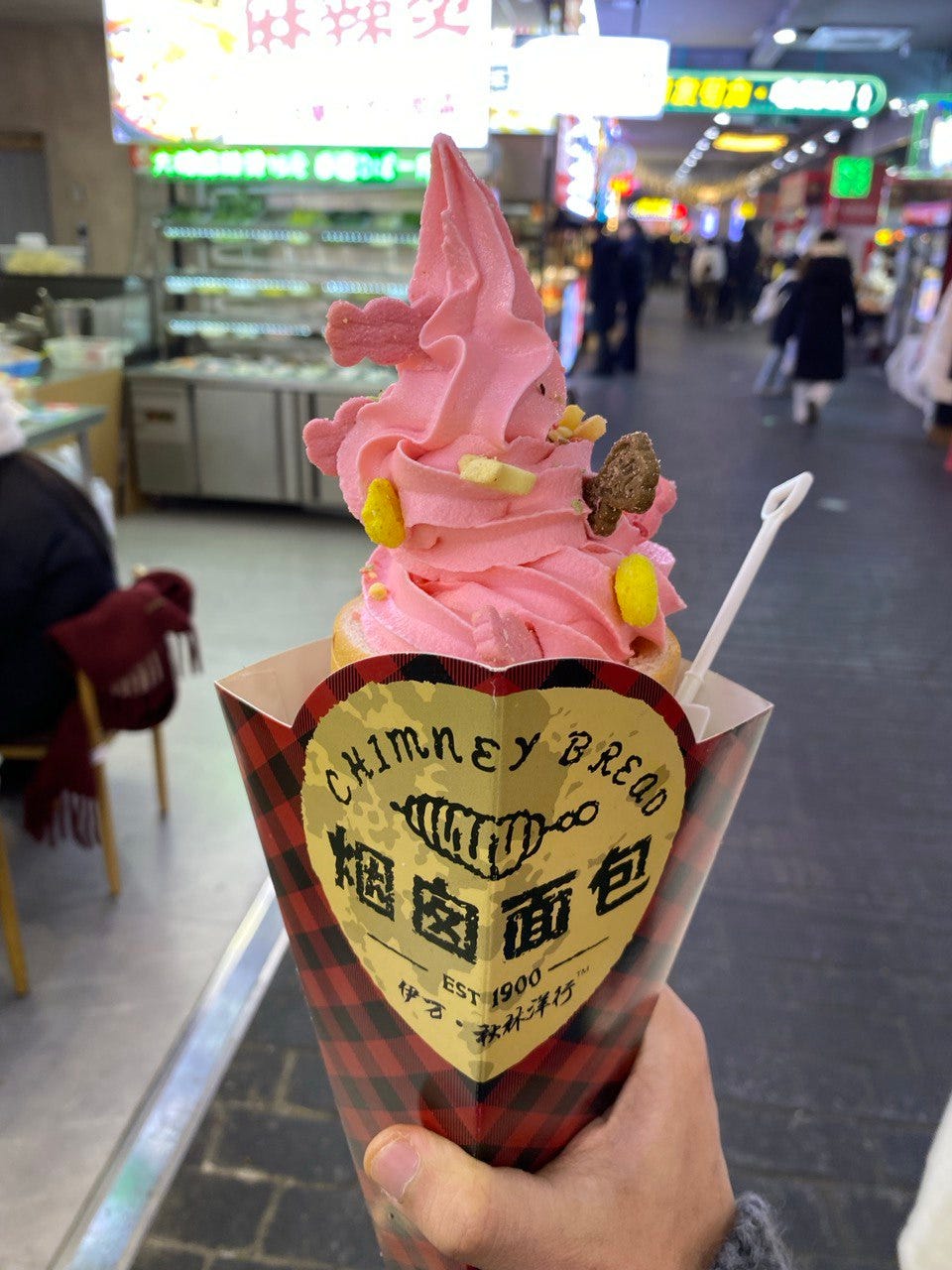
Strangely enough, Heilongjiang Museum and reflecting on the early 20th-century East Asia helped me open up to Harbin of now, which sells its vulgarized Russian and cosmopolitan past to tourists. I bought hongchang and dalieba, which originated from Russian rye bread (lieba comes from the Russian word khleb). I also had chimney bread ice cream that Chulin sells, which first opened its shop in Harbin in the year 1900. The sinified name Chulin comes from the company’s Russian founder, Ivan Yakovlevich Churin. The sweet Chulin ice cream tasted superb after a long day, and I took a selfie with it in front of the shop’s sign, as every other tourist does. Having seen my selfie, my brother replied: “That ice cream was there even when An Jung-geun went there lol”. I doubted that Chulin would have sold the same ice cream in 1909, but it did not seem impossible that it had sold the chimney bread under the ice cream even then.
How nice it would have been if An could try the chimney bread ice cream, I thought.
If you enjoyed my work, you can buy me a cup of tea. I am not a coffee person, by the way.
No posts
Comments
Nothing yet. Say the first thing.
Sign in to join the conversation.