
The morning I was to pour the water, I did not know how to do it.
I had carried it from Tucson across an ocean: water blessed at St. Andrew’s, sealed in a travel tube, meant for the Tarn. The plan had a destination but no method. You cannot, it turns out, simply walk up to a river. The bank of the Tarn at Moissac is steep, and most of it is private. I sat at an outdoor café in the shadow of the cathedral with the water in my bag and no idea how I would reach the river it was meant for.
Then Pauline sat down across from me.
I had met her along the pilgrimage, a Parisian in her thirties, queer, quick, her English sharpened by a British girlfriend so that we could banter in a slang that belonged to both of us. We had crossed paths several times on the road, the way pilgrims do. Now here she was again, with two hours before her train, and when I told her what I needed to do that day she was all in before I finished the sentence. She understood it at once as sacramental and logistical, both, with no seam between them.
We studied the map on our phones. There was a campground half a mile downriver with gentler access to the water. Being French, and being Pauline, she talked us through the gate, and we found a perch on the bank where the river was close and the footing was good.
It was her idea to rehearse.
I had told her, on the walk down, why it had to be this river.
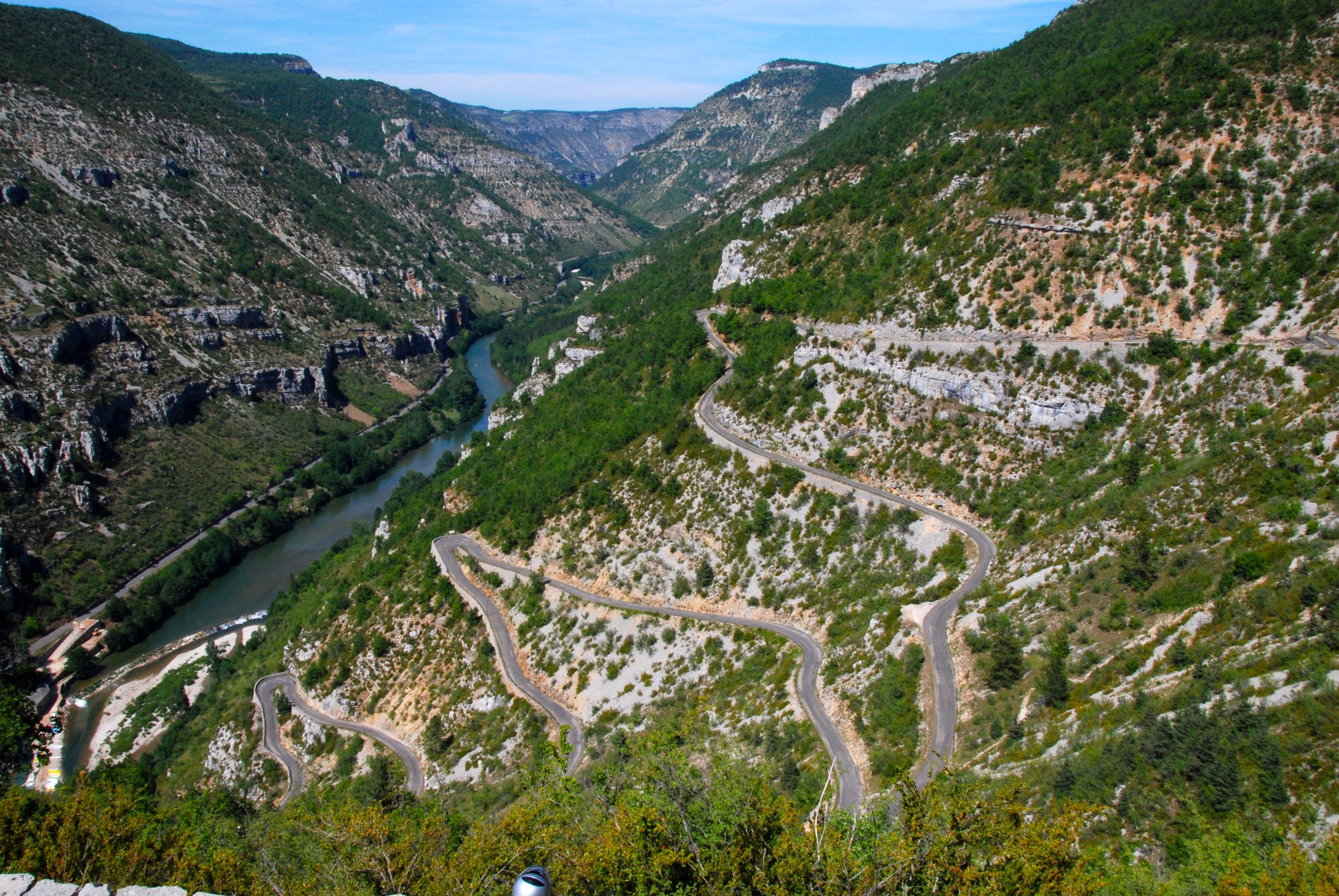
In 1979 I rode through this landscape with Diana, who I still talk to regularly, on a bicycle. We had been riding for weeks, gladly, away from everything that was waiting to be decided. But September was coming on. The money was running low and the days were getting shorter, and my attention began to turn, the way it does at the end of a long freedom, toward the question I had been outriding: what I was going to do with my life.
I knew I could get into a PhD program. That was never the question. The question was whether I could give myself to the work in a way that made a life rather than a credential, whether I could commit to the kind of immersive attention, sustained over years, that my mentors had taught me was the only thing that paid. Henry Lardy, Diana’s father, had told me as much: that the real rewards, the ones that have nothing to do with accolades, come only from attention given to one thing over a long time.
I learned the answer on the bicycle, though I did not know that was where I was learning it. Every day we ground up the passes, slow and breathing hard, the loaded bikes heavy, baguettes wedged under the bungee cords, the Michelin map gone soft at the folds. And every day, at the top, the road gave it all back: the long curving downhill, earned, the payoff for the grind. The body was learning what depth costs and what it pays. The river ran alongside us the whole time, patient, going where rivers go.
I said yes to the PhD several months later. But I had already said yes, in my legs, on those passes, beside this water.
The night before I poured in Moissac, I called Diana. We have been talking on the phone for over forty-seven years, and we talked again that night, and there was a quiet in it. She knew which river I had reached. She was the only person alive who knew, from the inside, what I would be standing beside in the morning. We did not have to say much. The two ends of a long time were on the line together.
I told Pauline this as I walked down to the water. She understood.
Back at the bank of the Tarn, we rehearsed. I tipped tap water into the little pottery cup the way I would when it mattered, and began to say the prayer aloud so she would know when to film.
I did not get through it. Somewhere in the middle, over water that was not the water, in a rehearsal that was not the thing, I began to cry.
It surprised me. I had not planned to weep at the dress rehearsal. There was nothing holy in the cup. But the body does not check whether the water is real. It had been carrying this since 1979, and it was not going to wait for the official version. It wept at the practice because there was no practicing it. The thing I thought I was rehearsing had already happened, a long time ago, and was only now catching up to me.
When it was time, the real pour was almost quiet.
I tipped the Tucson water into the Tarn, the water blessed at my church into the water that had blessed me first, and the two became one water and went where rivers go. Pauline filmed. I cried again, of course, but gently now, the storm already spent on the rehearsal.
What I felt was not accomplishment. It was wonder. Something closer to this: I was given the chance to live the way I once hoped I could live, and I did not waste it, and here I am, forty-seven years later, at the same river, pouring thanks into it with my own hands. I have been so fortunate. The river did not need the water, and it did not need my tears. I offered them anyway. There is nothing else a body can do when it recognizes what it has been doing all along.
Pauline had two hours. She caught her train.
No posts
Comments
Nothing yet. Say the first thing.
Sign in to join the conversation.