
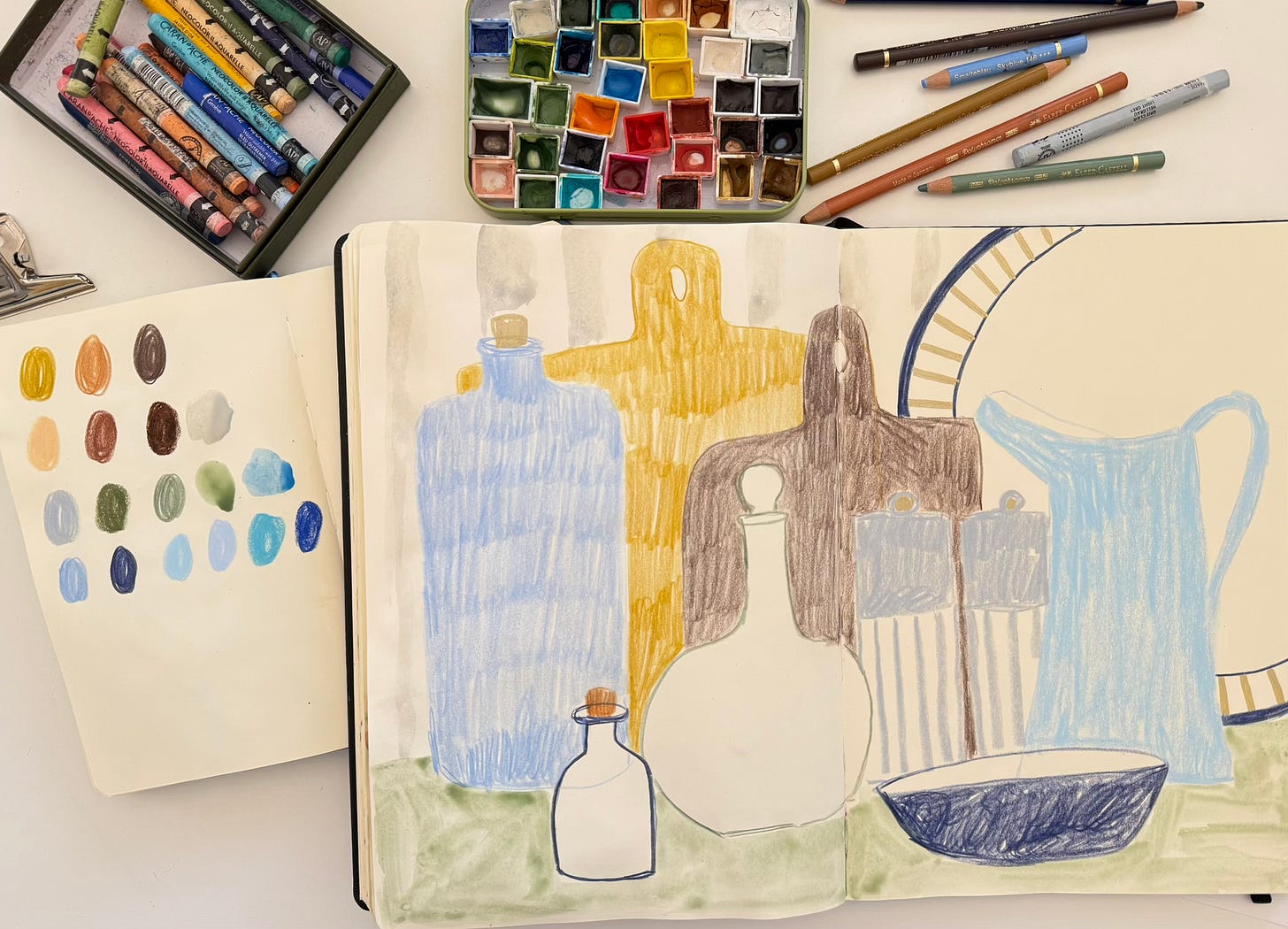
I recently stumbled upon an article about how contemporary artists don’t organise themselves intellectually anymore - establishing new movements, art directions or writing art manifestos.
When we think about art movements as we know them from art history books, we should not forget that previously art making was accessible to a fraction of society, often from privileged backgrounds. If we simply compare the amount of people who are making art nowadays to the amount of people who were making art 100 years ago, it becomes obvious that it used to be much easier to spotlight specific groups. Groups like the Blue Rider (Der Blaue Reiter) or directions like Fauvism were united by a common creative idea, but our knowledge of those is also a result of few exclusive groups having more access to making art and to institutions, hence, having more visibility.
A big shift happened during the 20th century, when people in many places finally started having more spare time and money. More and more people could choose art not only as a hobby, but as a profession, and it has become increasingly professionalised in the post-war decades. Art has also become increasingly institutionalised in the sense that art galleries, exhibitions, museums start being more widespread and accessible than ever before.
This institutionalisation, in my opinion, led to over-intellectualising art and creative practice. I asked myself this question: What would be the most recent art group or movement you can remember? What comes to your mind?
For me it is the Young British Artists in the 90s with Damien Hirst and Tracey Emin coming to mind. I am sure other movements and groups appeared after the YBAs, but I am not actively aware of those. There seems to be a connection between the rise of social media, and resulting lower visibility or discernibility of specific groups or directions. Also, there is so much art being made and it’s all happening right now in the present, that we cannot clearly distinguish specific groups anymore, apart from those few put forward by the biggest institutions.
If being part of a movement is something you personally find attractive, feel free to create your own group. Collaborate with art friends with similar creative interests, write your manifesto, call yourselves the Green Rider or the new Fauvists, or whatever, really, have fun! Establish rules if you want, create a lot of work, share it and exhibit if you can.
However, I don’t think it’s helpful to focus on creating immortal masterpieces that necessarily have an intellectual foundation to them. Maybe artists can feel more validated belonging to an intellectual movement, but I think it can actually be a distraction from the craft itself. The basis for organising into an art group should be common creative interests and building a community.
If you just take a look around, you will immediately find a ton of brilliant artists who have a small practice, exhibit locally and don’t have a (comparatively) huge audience. They are not exhibited in big museums but they create interesting, beautiful, important work.
I think that this is the modern art movement - focusing on how art and creativity help us to connect to ourselves. This is more important than galleries, styles, recognition, or talent. Each artist has a unique vision to share with the world, and there is room for everyone.
This movement is about the practice of making art, experiencing art and understanding its place in our lives. It’s not institutionalised because institutions focus on exclusion, but this movement is all about inclusion.
It’s a new and maybe even radical idea about what is art!
Thank you for reading and being a part of this space. If you enjoyed this post, feel free to give it a like, leave a comment, or share it with someone who might appreciate it.
I always love hearing from you in the comments - how would you call your art movement?
If you haven’t yet, consider subscribing to stay connected. Everyone is welcome here!
Until next time!
Lisa
Comments
Nothing yet. Say the first thing.
Sign in to join the conversation.