
Walk into the quiet reading room of any national archive, and you are surrounded by an illusion of perfect order. Row after row of cataloged folders, bound books, and preserved letters create the impression that everything of value from our past has been neatly filed away.
But the most striking parts of history are the blank spaces where the files simply stop.
Priceless artifacts rarely vanish through simple carelessness. They disappear when empires collapse, maps are burned, and state record-keeping experiences a total collapse. When a royal dynasty falls in a revolution, when a heavy galleon breaks against an unmapped reef, or when a fleeing army hastily buries its gold in the dark, the fragile connection between geography and human memory is broken.
The physical landscape turns into an unforgiving vault, holding billions of dollars in unrecovered wealth simply because the documentation vanished.
An object does not stay missing because it is physically invisible. It stays missing because it has dropped out of human knowledge.
Constructed in Prussia during the early 18th century and gifted to Peter the Great, the Amber Room was a brilliant monument of Baroque art. It consisted of over six tons of pure Baltic amber panels, meticulously carved, backed with gold leaf, and accented with mirrors.
In 1941, invading German forces dismantled the entire room, packed the panels into 27 crates, and shipped them to Königsberg Castle.

As the war turned in 1945 and Allied bombing advanced, the paper trail tracking the crates completely vanished. Königsberg Castle burned, yet no charred remains of the amber panels were ever definitively confirmed among the ash.
The treasure did not dissolve into thin air. It disappeared because the administrative chaos of the collapsing Third Reich broke the chain of custody. Decades of searches in underground salt mines and Baltic shipwrecks have turned up nothing because the final recorded coordinates were destroyed in the chaos.
Consider the pride of the early Portuguese maritime empire: the Flor de la Mar. In November 1511, the massive vessel took on the entire looted treasury of the Sultanate of Malacca. The cargo included dozens of tons of solid gold bars, chests of precious gemstones, and thousands of fine metal works destined for the royal court in Lisbon.
When a violent storm broke the vessel against a reef in the Strait of Malacca, the immense weight of the gold plunged it straight into deep water.
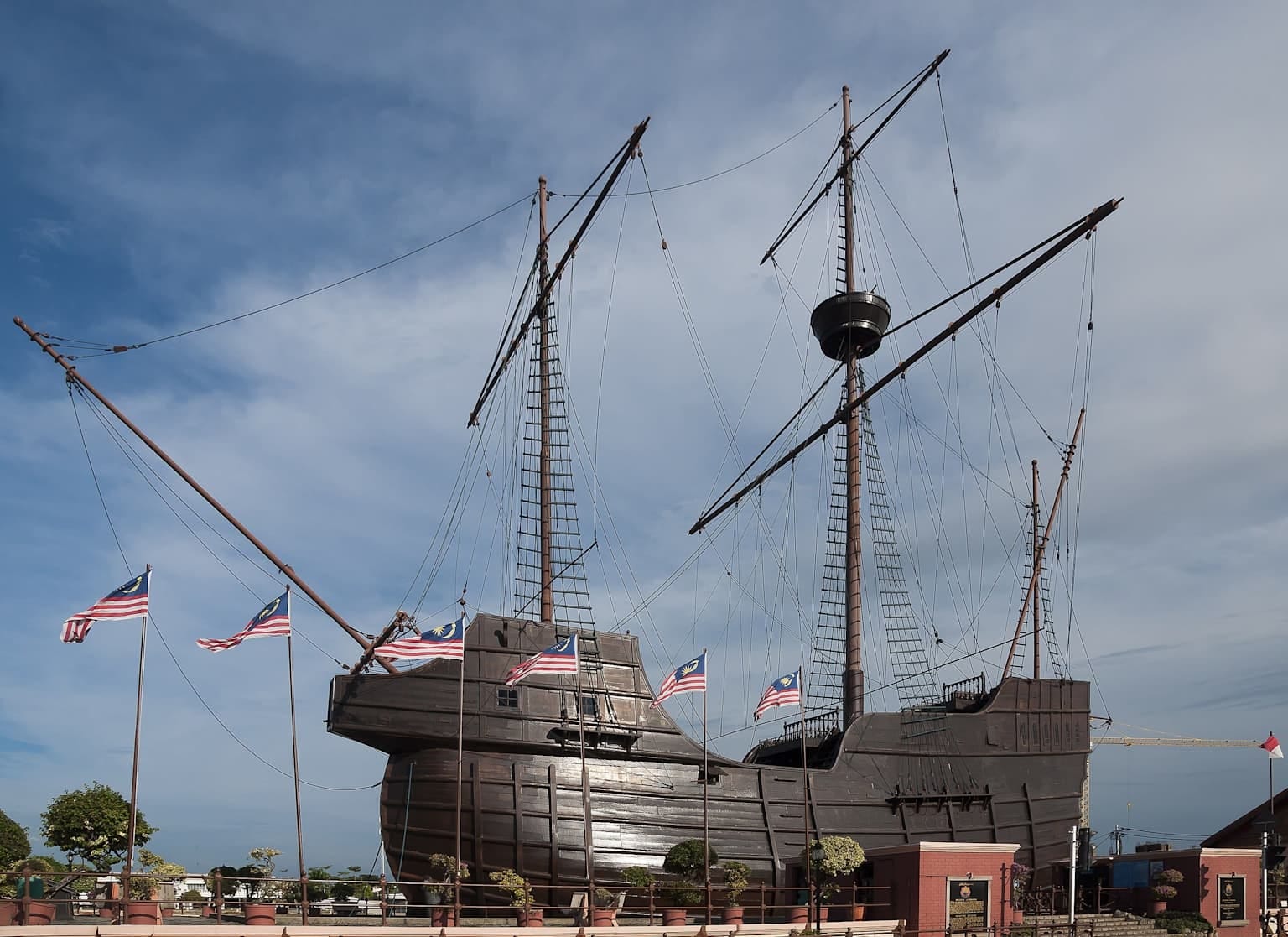
Dynamic coastal currents and high sedimentation rates quickly buried the wreck beneath thick layers of shifting mud. It is not lost because the ocean is impossibly deep; it is lost because the moving seabed continuously rearranges the physical landscape.
Modern salvage operations fail because without accurate mapping logs from 1511, locating a hull buried under centuries of marine silt requires searching an area that shifts with every seasonal tide.
Sometimes the physical record survives, but the language it uses dies.
Discovered in a limestone cave near Qumran in 1952, the famous Copper Scroll stands completely apart from the leather and papyrus documents that form the rest of the Dead Sea Scrolls. It is a sheet of hammered copper listing 64 precise locations where the sacred treasures of the Second Temple were buried to hide them from advancing Roman legions.
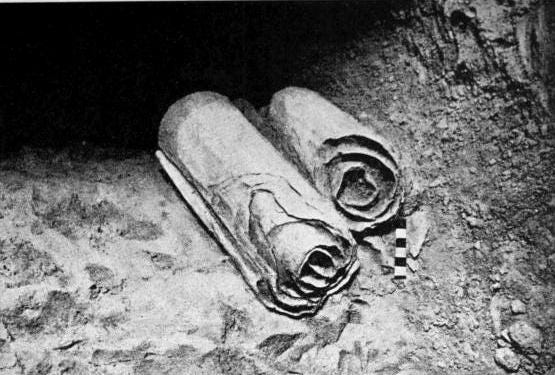
The inventory lists gold bars, silver talents, and ritual vessels worth well over a billion dollars today. The catch is that the text relies entirely on temporary local markers:
“In the cave that is next to the fountain, in the third gully, dig three cubits.”
Two thousand years of desert erosion, flash floods, and earthquakes have completely erased those landmarks. The copper document remains perfectly legible, but the reference points are gone forever. Without a fixed starting point, the directions are unsearchable. It shows exactly why historical objects become priceless: their true value is tied to an unbroken context that time can easily wipe out.
The myth of El Dorado arose from a real political ritual practiced by the Muisca people of high-altitude Colombia. During the inauguration of a new chieftain, the leader would coat his body in gold dust and submerge himself in the center of Lake Guatavita, while attendants cast hundreds of gold figures and emeralds into the water as sacred offerings.
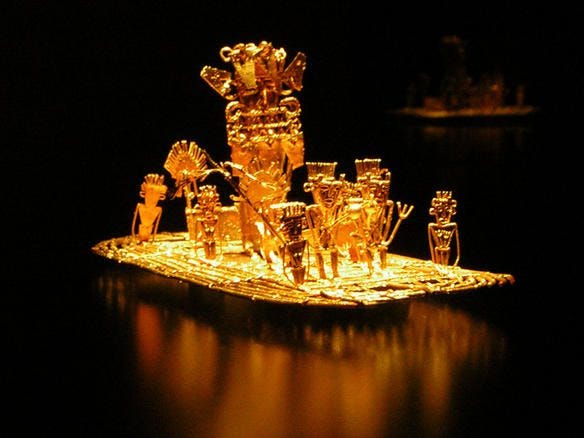
Spanish conquerors recognized the massive wealth resting on the lake bed. In 1580, an engineer named Antonio de Sepúlveda attempted to drain the lake by cutting a deep notch into the crater rim. He lowered the water level enough to recover several valuable gold pieces, but then the mud walls collapsed, killing the laborers and sealing the deepest deposits beneath a layer of unstable clay.
The Muisca left no written maps or coordinate logs. They relied entirely on oral traditions. When that community was disrupted, the physical location of the hidden deposits detached from human memory, leaving millions in pre-Columbian gold secured by a wall of high-altitude wilderness.
We inherit our maps, our street layouts, and our archives as if they are permanent facts of nature. They are not. They survive only because each generation maintains them, much like the modern municipal systems that dictate why addresses have numbers to keep our physical world legible.
When the knowledge needed to locate an object disappears, the object itself can effectively vanish from history. A chest of gold hidden in a cave becomes no different from a legend if nobody knows where to look. It slips into the background noise of everyday commerce, much like the missing Romanov treasures that occasionally resurface as unrecognized assets among the most expensive historical items sold at modern auctions.
The complete investigation detailing all 20 of the rarest missing artifacts, complete with their documented values and historical manifests, is available in our comprehensive analysis.
👉 Read the Full 20 Treasures Investigation on The Historical Insights
If you enjoy deep investigations into the hidden patterns running history, consider upgrading to a premium Archive Member. Your support directly funds the weeks of primary source research required to unearth these records without corporate ad networks.
✓ Ad-Free Reading: Complete immersion across our entire research index.
✓ Downloadable PDF Archives: Clean, print-ready files formatted for your personal offline library.
✓ Topic Voting Power: Help choose which historical mystery we explore next.
No posts
Comments
Nothing yet. Say the first thing.
Sign in to join the conversation.