
From Notes on Material and Time
⸻
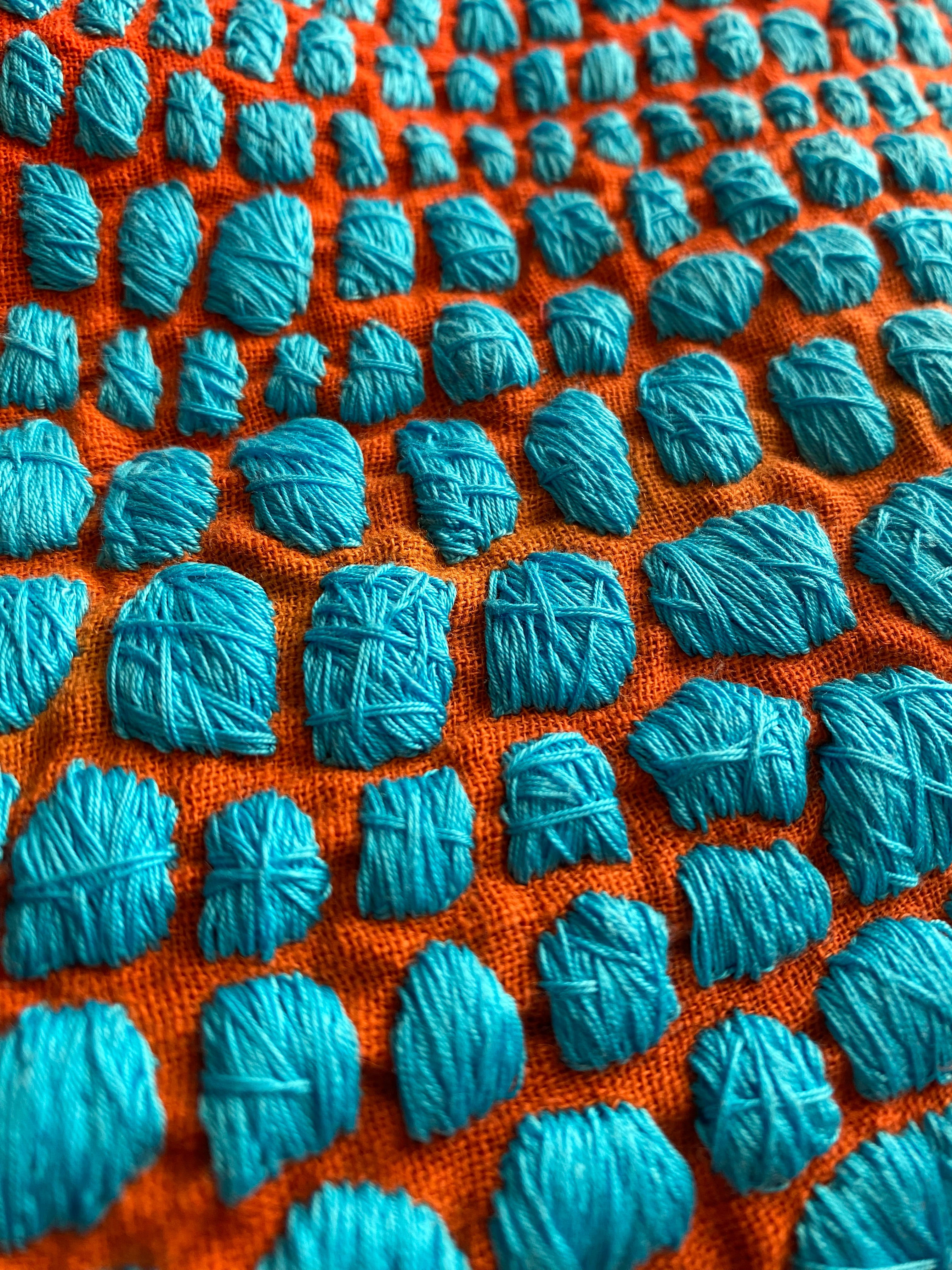
The Through-ness of the Mark
I have been thinking about how textiles complicate the traditional concept of mark-making— the idea that a mark is something applied to the top of a surface, a gesture that rests upon rather than penetrates the material. The mark doesn’t rest; it passes through. Each passage of thread pierces and binds, altering the fabric’s internal structure in ways that reverberate beyond the visible surface. The tool creates a momentary wound that immediately becomes a connection. Where a pencil moves across paper, leaving graphite behind, the threaded line enters, emerges, returns—engaging with both faces of the material, with the warp and weft, with the negative spaces between fibers.
The line is not simply applied but integrated, like an incision that joins rather than depicts.
Being able to identify and articulate this feeling of through-ness, to me, changes a lot.
A drawn line can be erased, painted over, obscured. But a threaded mark cannot be removed without leaving evidence, a puncture, a distortion in the weave, a memory held in the material itself. The textile remembers every gesture, even the abandoned ones. Pull out a line of thread and you’ll find the ghost of your intention still visible, the fabric slightly puckered where it once held tension, the fibers permanently rearranged by your passage through them.
The permanence isn’t just physical, it’s structural.
When you make a mark in this way, you’re not adding to the surface but reorganizing its architecture. The fabric gathers where the thread pulls it together, creating subtle pleats and dimples that catch light differently. It stretches where tension moves in one direction, distorting the regular grid of the weave into something more organic. These aren’t flaws; they are evidence of force—of your hand’s pressure transmitted through thread into cloth. The material bears witness not just to whereyou were, but to how you moved, whether your hand was steady or exploratory.
Your existence in that moment.
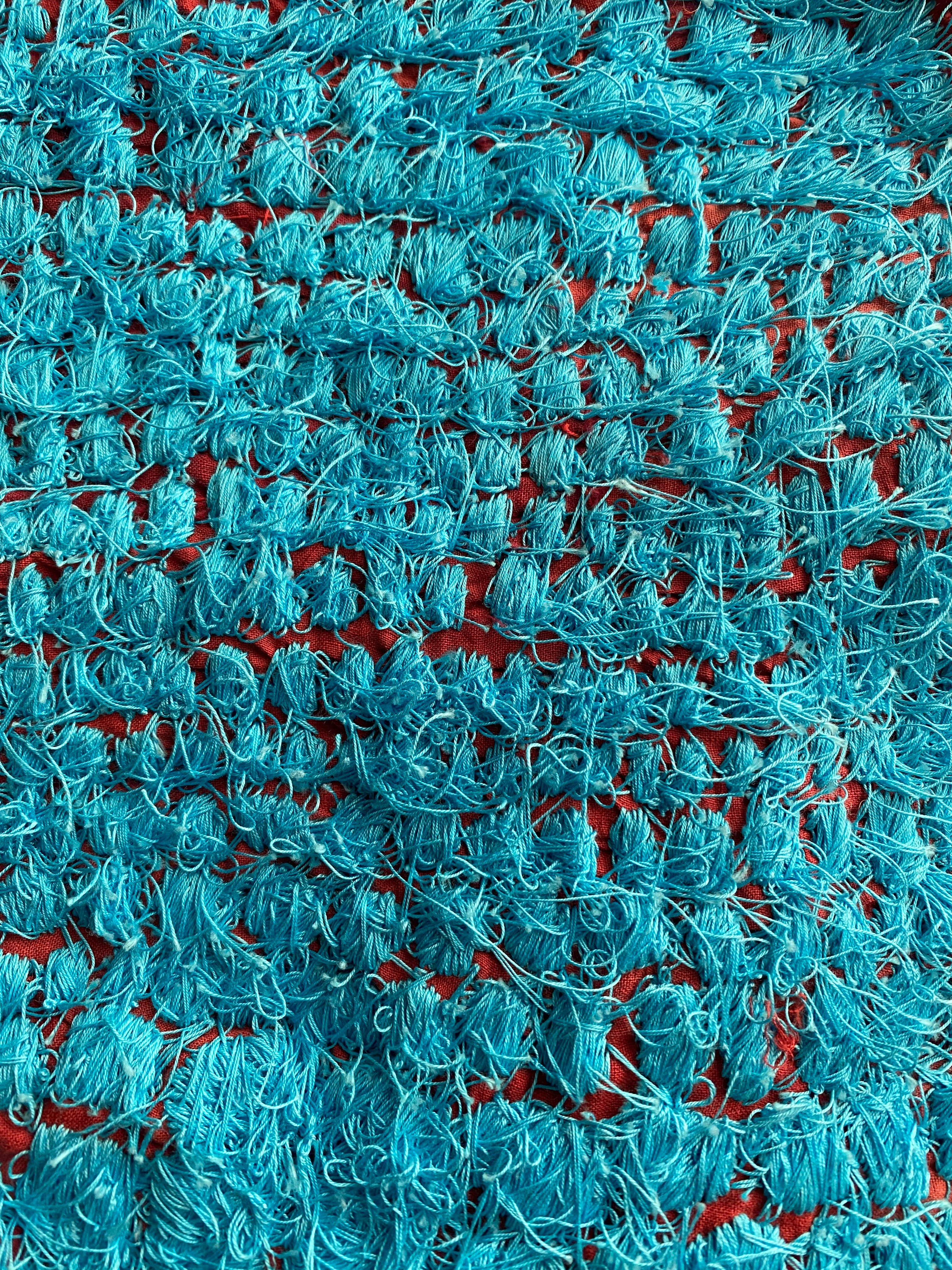
In this way, textile mark-making transforms what a mark even is. The material is not passive ground but active, it’s absorbing, resisting, and reshaping the gesture. It has grain and bias, stretch and stability. Some fabrics welcome the threaded line; others require persuasion, pressure, negotiation. The mark is always, to some degree, a collaboration, intention meeting the material’s resistance, control tempered by the material’s own structural logic.
There’s something humbling in realizing that what I thought I was controlling is always also controlling me. That my precision is not command but negotiation.
⸻
To understand this through-ness more fully, we have to look closer—at what happens when the material begins to speak back, when mark-making shifts from gesture into architecture.
Continue reading for Part II: The Architecture of Contact →
Comments
Nothing yet. Say the first thing.
Sign in to join the conversation.