
Substack recommends that you write a post introducing yourself and your content.
I never did this. I tried. But I had the worst writer’s block.
I scrapped it and jumped straight into dissecting content.
But something happens to me every December.
I need to be introspective; reflective; overly dramatic with my words.
Strangely, I’ve had this feeling every year since I was 11.

I would stay up for hours every Christmas Eve frantically writing in my journal. As I got older, I upgraded to a laptop—saving documents on my home screen—and then Xanga, and then Penzu.
Even today, I have this compulsion to write and reflect and pour everything I’ve been feeling and thinking onto paper.
I assume this compulsion is not common.
In fact, I assume many of my friends and family would tell me this is a strange way to spend my time the night before Christmas.
But it’s this small insight into my life that explains one of the reasons I created this Substack, where I break down why a startup got covered:
To understand stories—even if they are our own—we have to spend time tearing them apart, writing about them…until they makes sense.
Only then can we learn from them.
Unfortunately, what I learned from my hours of self reflection as a kid was that I wanted to reinvent myself, year after year.
I wanted to escape my current reality—write a new story for myself and be seen differently.
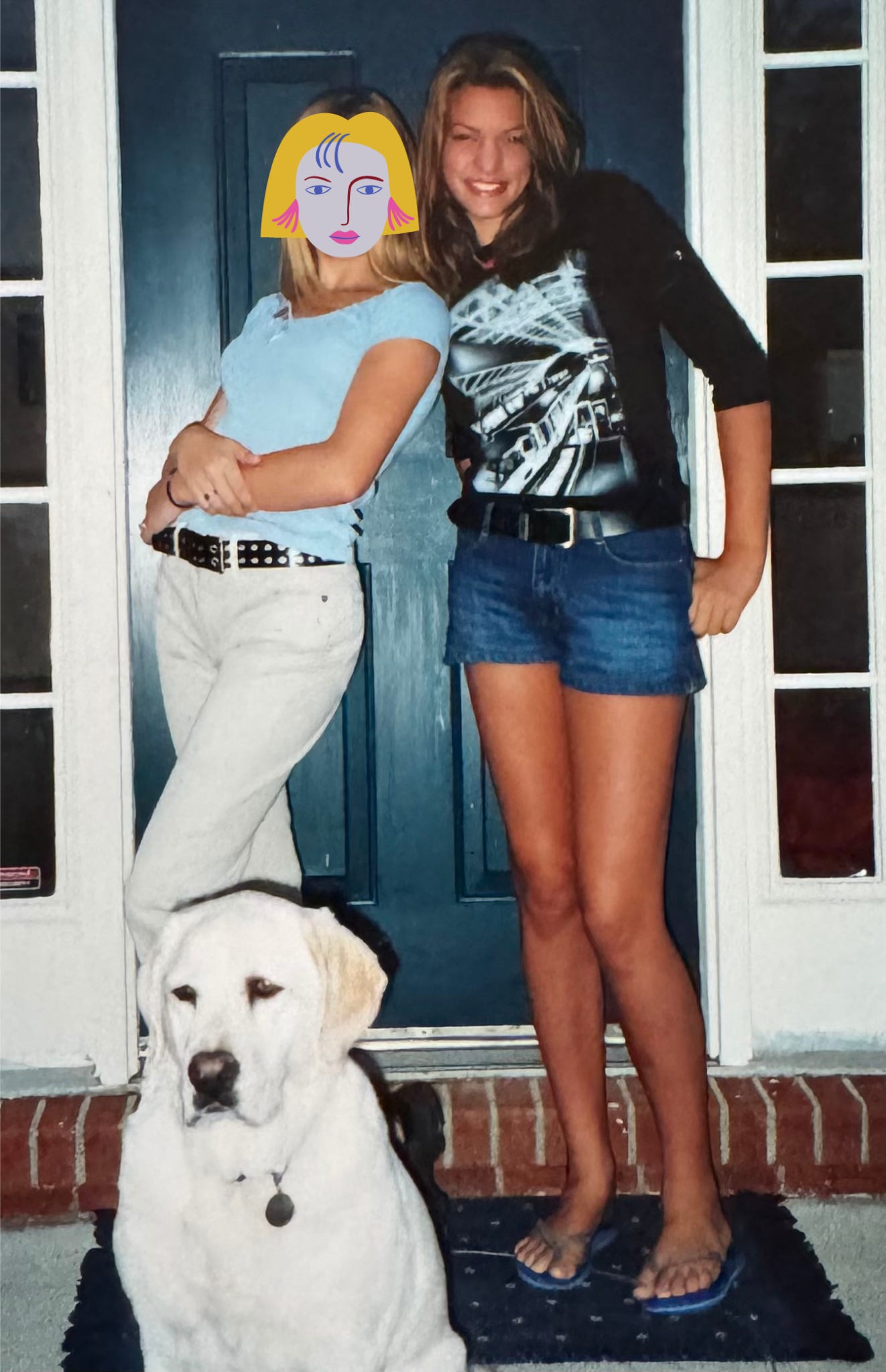
One year, I bought a lips necklace and black shirts, convinced people would assume I was rebellious.
I was fascinated with the idea of picking only parts of your self and story to show to the world—and how these deliberate reveals would change the way people related to you.
I wore that necklace of rebellion all year until I switched it out for a shell hemp necklace, naturally.
And this necklace, in a way, is my second reason for this Substack: What you choose to share—through your words, your look, your actions—shapes how people see you.
Senior year of high school, I took AP English. We spent the year dissecting books until we hated them.
I would scribble epiphanies in the margins; highlight phrases I wanted to internalize; color code symbols.
I turned my books into graffiti.
Storytelling became a puzzle—an adrenaline rush—as the pieces started to fit together.
In college, my books became littered with colorful tabs—and most of them—were devoid of scribbles so I could get the max buyback price.
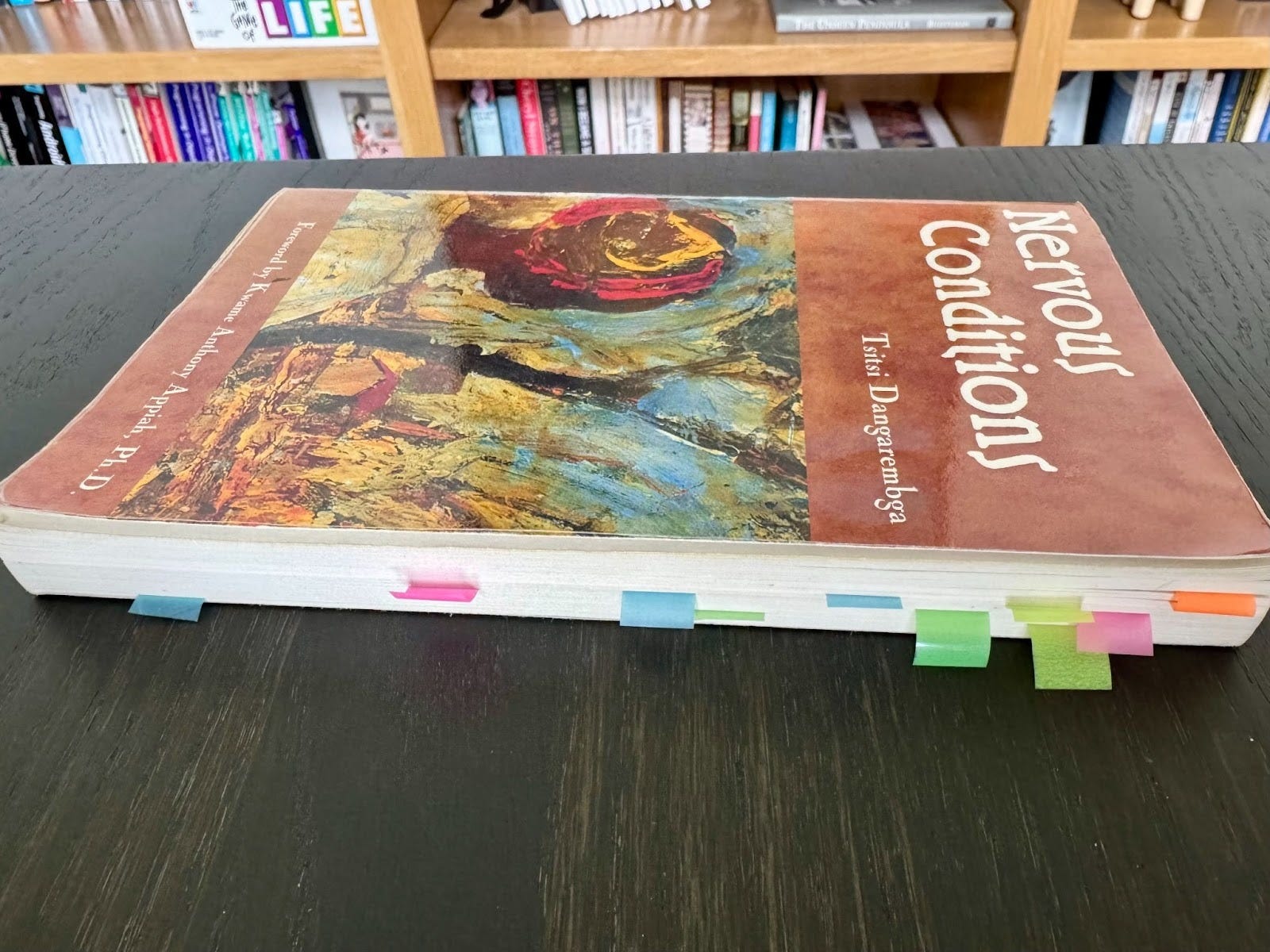
But all of these tabs, scribbles, and highlights helped me depict how a reader—one so completely different from the author—could connect deeply with a story. (Reason #3.)
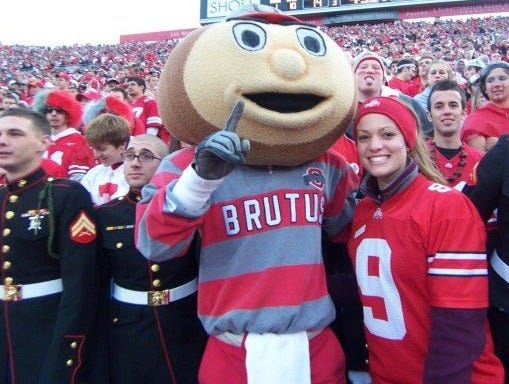
I went to the Ohio State University and majored in communications. Unsurprisingly, it was a popular major with football players.
(I would be in lecture rooms with hundreds of people, and the football players would be piled into the last row loudly talking with their girlfriends.)
The classes were easy, and there were so few mandatory classes that you could fill your schedule with random classes to accumulate credits.
(The last quarter of my senior year, I took yoga, African literature, and the study of film and literature, where I had to read The Exorcist and then watch the movie.)
I didn’t learn much about communications from my communications classes; the curriculum felt outdated. For one assignment, I had to sign up for a Twitter account, follow five people, and tweet twice.
Twitter had already been around for years.
There was one class that was the exception to ‘not learning about comms in comms classes.’ The course was taught by a professional, not a professor—one who worked day-to-day on the comms team of a local hospital.
He would often bring his week’s work into the classroom—explaining a timely crisis and breaking down how he thought about representing it to the public.
In college, this is the most I learned about how comms and brand building works: by him reverse engineering his work. (Reason #4.)
There’s a reason #5 buried in here too.
I would have loved to be a college student for the rest of my life. (For the classes, not the ice luges or flipped cars.) This Substack is my own independent study—providing an outlet for me to be a student.
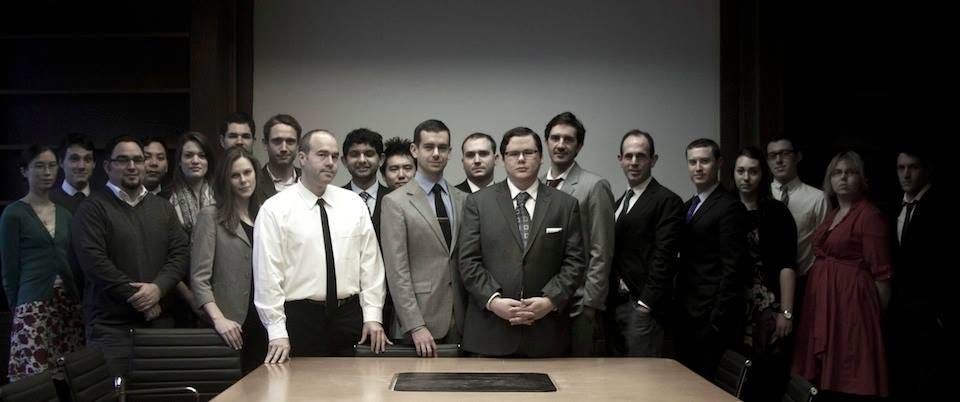
One of the best storytellers I’ve worked for was Jack Dorsey.
As one of the first employees of Square, I have a natural kinship with early Twitter employees. Every time we cross paths, we compare notes.
They’re surprised that I loved working with Jack. I’m surprised they didn’t.
By the time he founded Square, though, he knew how to build a company and communicate a vision. I always knew who we were building for and why it mattered—from day one until I left after we went public.
As a founder, your legacy is shaped by the messages you share and the clarity of those messages—and you get better at this by studying those who do it well. (Reason #6.)
Square was a creative place. (One of the first acquisitions we made was video production company.) When it came to comms, I had a long leash on storytelling—leading me to land headlines like:
Square’s Man On the Street Desperately Wants to Know the People Behind Your Business
How Square’s Transparent Office Culture Pays Dividends
What’s Really Going On Inside Square’s Secret R&D Cafe?
Square gave me creative agency to spend time inside the company and with customers to find stories worth telling. This part came naturally to me.
I could easily find stories worth telling in conversations. One sentence would rattle around in my brain for days; I’d dive deeper, look at every angle, find supporting details—and then pitch it to a reporter.
I remember our head of engineering said something like, “I consider it a bug if teams have more than 12 people.” That rattled around—and eventually led to How Square Is Structured For Rapid Decisions, Awesome Products.
But what was less natural to me—and what I learned from the people around me—was how to pull every storytelling lever.
Don’t just interview people to find stories; look at the data. Don’t just write out a story; use video and graphs to help tell it. Don’t just conduct a press interview; bring the story to life at the ice skating rink—or by making Marcia Dorsey cry.
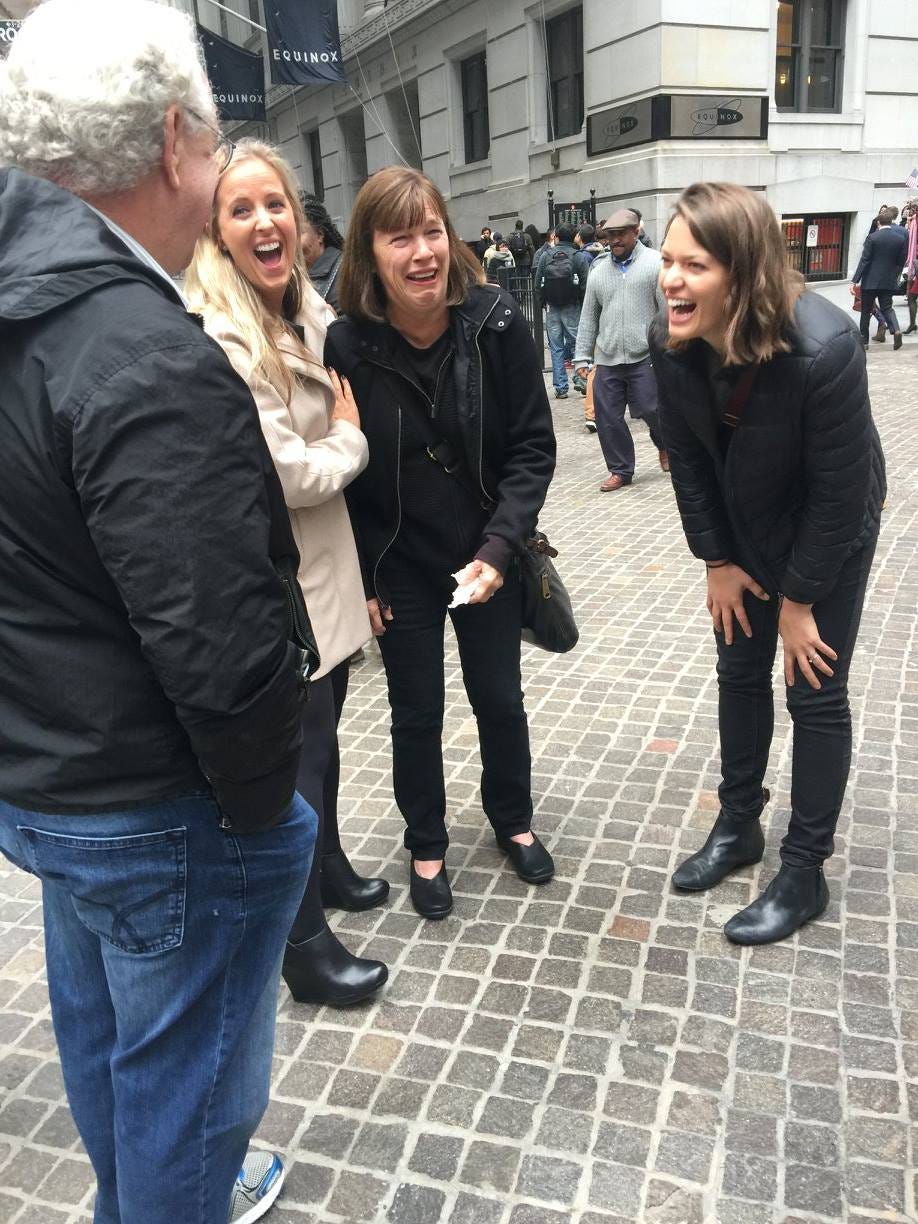
Ah, yes, my favorite cocktail story.
It was Thursday, November 19, 2015. I had barely slept for days, as we were preparing for Square’s IPO.
We had flown our first Square seller, Cheri Mims, to New York. Cheri owned a flower cart—which normally lived in Mint Plaza but was recreated in New York for our IPO. For the big event, someone would buy flowers from her cart, and the “ding” of the sale going through would serve as the opening bell at the stock exchange.
Beautifully on brand for us.
But who would buy the flowers? Jack Dorsey’s mom, Marcia.
Beautifully on brand for Jack.
Jack’s mom was an integral part of his founder narrative. He often shared the story about working in his mom’s coffee shop in St. Louis, and how it showed him firsthand how complicated payments were for small businesses.
Jack never told his mom that she would play a role in our IPO. So, I was given this assignment. When I shared with her that she would ceremoniously ring the opening bell, she cried.
I learned a lot about creativity in storytelling from Square and from Jack—and to this day, I continue to be influenced by others thinking outside of norm (reason #7).
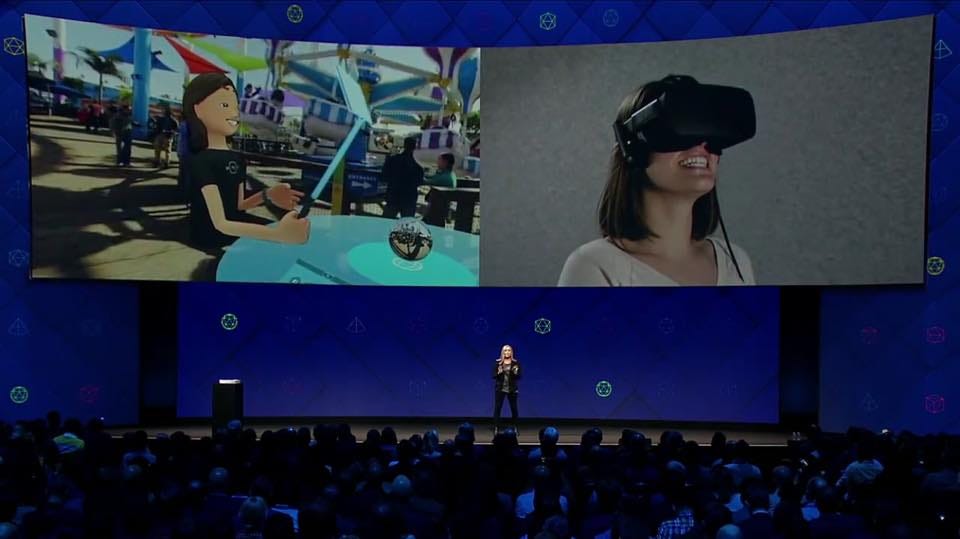
I have plenty of cocktail stories when it comes to Facebook.
I started months before the 2016 U.S. election, when Facebook’s impact was a complex and highly debated topic. I was also there when the Facebook-Cambridge Analytica data scandal broke.
I have stories.
But there’s a reason the shortest stint of my career took place at Facebook. Crisis comms work and other toxicities aside, I missed startups.
And that passion for startups has a huge influence on why I started this Substack. (Reason #8, of course.)
There was another reason my stint at Facebook was short: I had no time or space to breathe. I was traveling constantly—sometimes on a plane to Seattle at 6:00 AM and heading home on the 6:00 PM flight. I was battling jet lag in Odense or catching another cold on a plane to London.
To be creative, you need to be in the right headspace. To clearly see your story, you need to be able to disconnect from the chaos around you and let your mind wander.
At Square, I would spend an hour unplugged in the company library, only my notebook and pen. I’d let my mind connect recent learnings and find stories in those connections. Even though I was working 10-12 hour days, I was still giving myself the space to be creative—and, something you can’t underestimate, I was surrounded by the right team: supportive, collaborative, creative—wonderful people.
I never broke, despite the long hours.
Facebook, I broke. I was so burnt out, despite seemingly having endless creative outlets because of the number of responsibilities given to me.
As a founder, you need to create an environment conducive to creative thinking.
This Substack—reason #9—is my “company library.” It’s where I unplug from day-to-day work (often at 5:00AM) to think, breathe, and be creative.
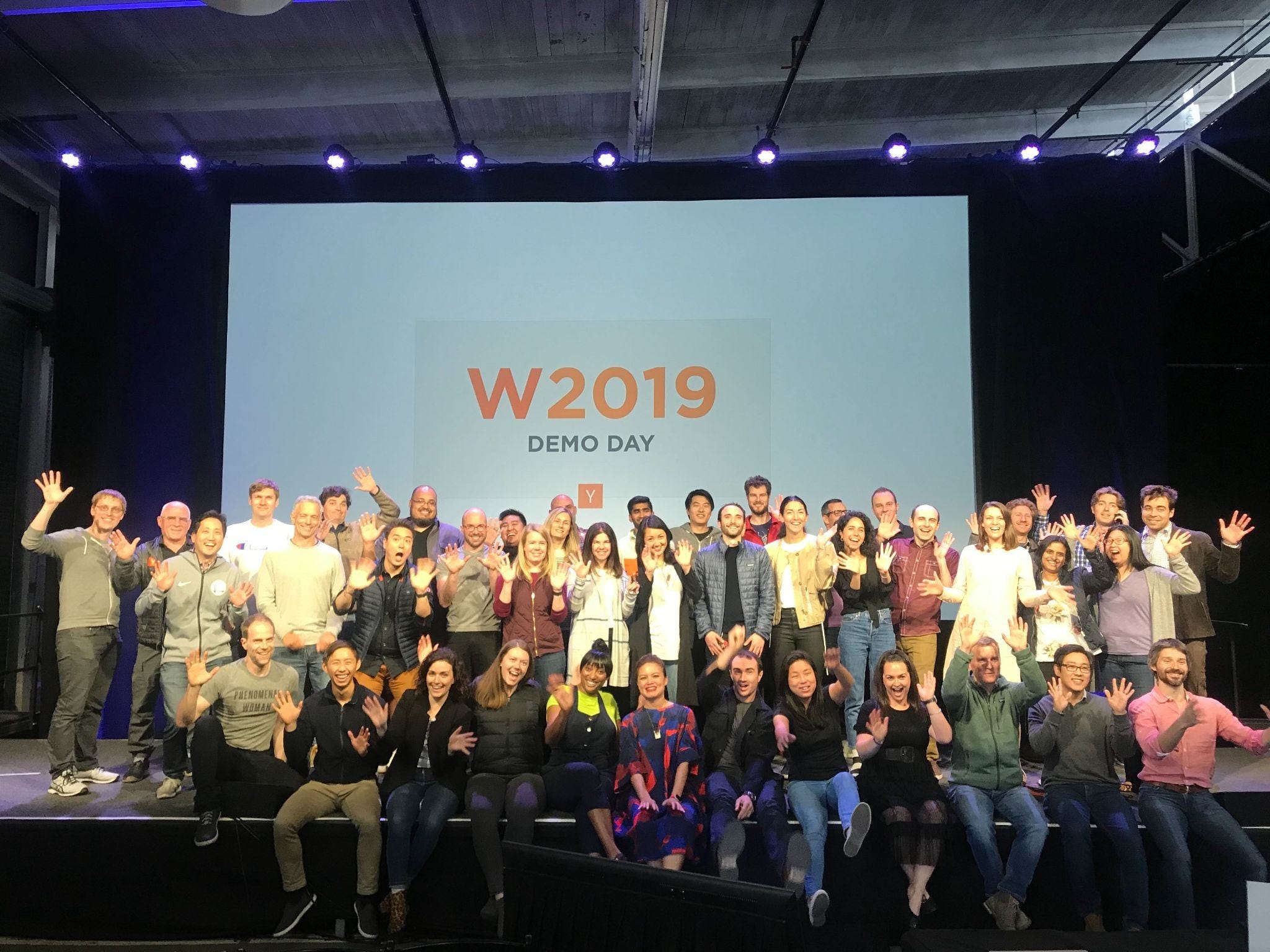
At Facebook, I finally gave myself time to think, and that space made it clear that I needed to go back to startups.
Y Combinator was my dream job. With no head of comms listed anywhere for YC, I pitched Jessica Livingston on creating the role.
(Well, my husband sent her an email that I drafted, since he knew Jessica from when he went through YC in 2009.)
She’s drawn to all aspects of YC—helping founders shape their brand and their company stories, and building the brand of YC partners and YC itself through PR. I think someone with her skillset would be beneficial to YC.
I started in 2018 and spent nearly six years working with founders.
Unsurprising to anyone who knows him, I learned the most from Michael Seibel. I would often get on calls with him—thinking we’d be talking about one thing—only for him to play devil’s advocate and take me in a completely different direction.
In one of the first meetings, we were talking about how my comms expertise would show up in the batch—how could I positively impact hundreds of founders.
I don’t remember my initial ideas, but he said something like, “You need to scale yourself. You need to create a repeatable machine.”
I spent hundreds of hours over the next six years creating content that could be used by YC founders—resource guides, timely Bookface posts, presentations, live AMAs.
Reason #10 for this Substack is heavily influenced by Michael: I wanted to create something repeatable—something that scales—which is why I focus on one thing: reverse engineering startup coverage.
But also (reason #11), I want to provide equal access to information.
Michael and I often talked about the importance of equal access to quality startup information—how to bridge knowledge gaps for all founders.
To quote Michael:
One of my most strongly held beliefs is that lack of access to quality information/advice about startups prevents founders with great potential from building the startups that will make the world a better place.
I believe the future of innovation lives within startups. Of course I would create a Substack that tries to bridge the knowledge gap for founders.
Eleven reasons is an odd number to land on for why I started this Substack. Especially because I really wanted to create a “12 Days of Christmas” parallel with twelve reasons for this Substack.
But maybe that in itself is the twelfth reason.
You can’t force content, a brand, or a voice and expect it to feel genuine.
I once worked with a founder who was upset that a blog post I edited didn’t sound like him. I was confused, given I had pulled the formatting and language directly from his original draft—until he shared the entire post had been written by Claude.
Of course the project felt off.
And honestly, that moment was the final straw that pushed me to create this Substack. I needed an outlet that felt genuine. One that felt like me, not something forced.
There’s a common thread that ties all twelve reasons together: I’ve spent my entire life storytelling—experimenting with my own story, studying stories, helping founders tell theirs, and even now, making up stories for my young girls.
The Angle is where I get to bring everything I’ve learned about storytelling—and everything I’m still learning—and make it useful for anyone who wants to tell their own.
No posts
Comments
Nothing yet. Say the first thing.
Sign in to join the conversation.