
It was some day in March, and we wouldn’t know it at the time, but we were at the last in-person YC batch event for 2020. Some of us sat, some paced, some sprawled on the floor as we debated the future of Demo Day.
There was no way we could pack thousands of people in a warehouse at the start of a global pandemic. (And actually, large gatherings were soon banned in San Francisco.)
Michael Seibel, as always with his calm, confident presence, outlined how we’d finish the batch virtually. Then we all went to work to make it happen.
That day I relearned something from Michael: the power of staying present in chaos.
Founders face the same choice: you can crumble, or you can fight.
Fighting1, for me, meant helping founders make sense of the moment—teaching them how to join the conversation rather than exploit it.
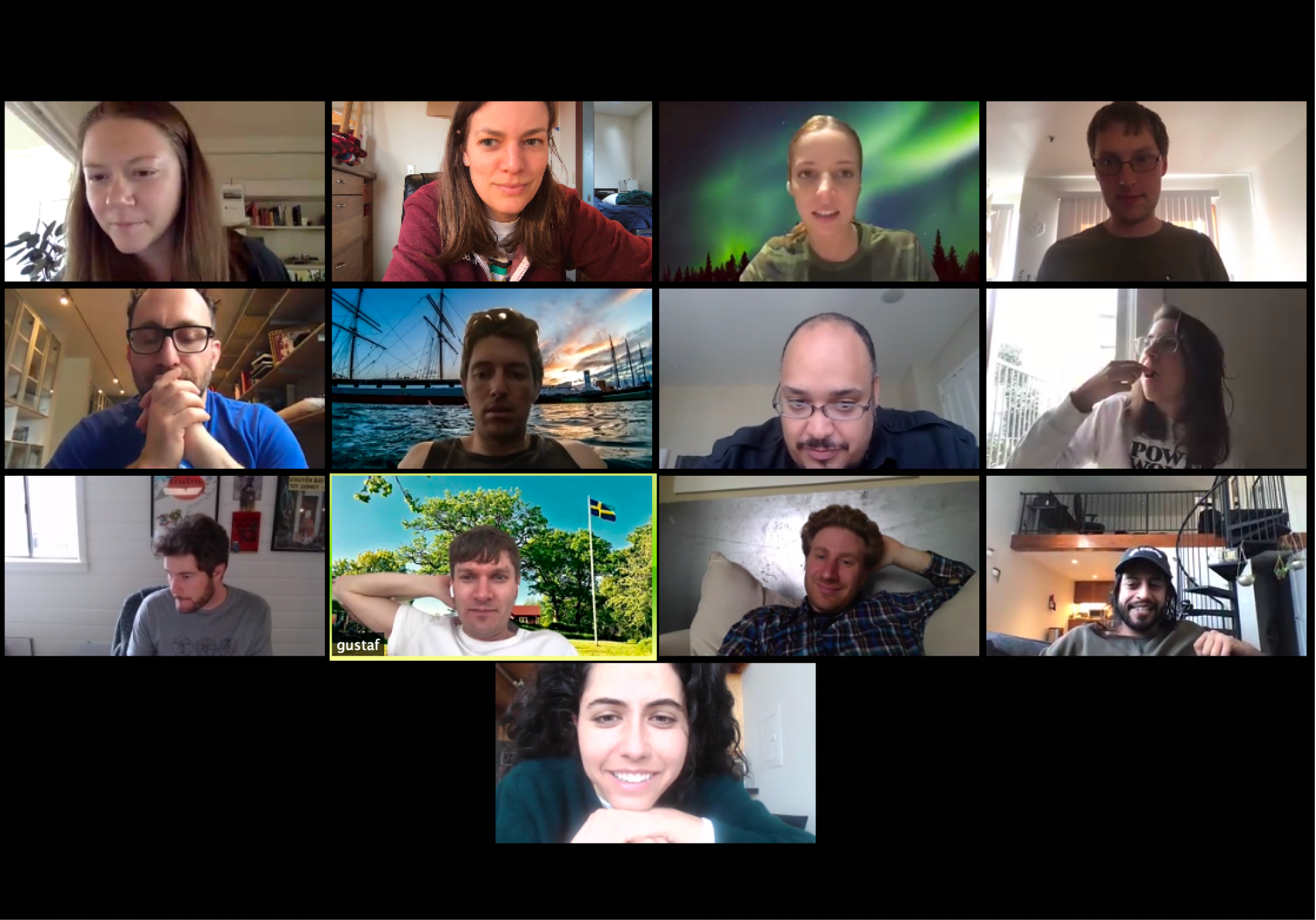
As a founder, being hyper aware of narratives happening on a global scale and in your industry is extremely important.
During the pandemic, the startups that broke through were those who framed themselves as part of the future: the future of work, education, community, and health.
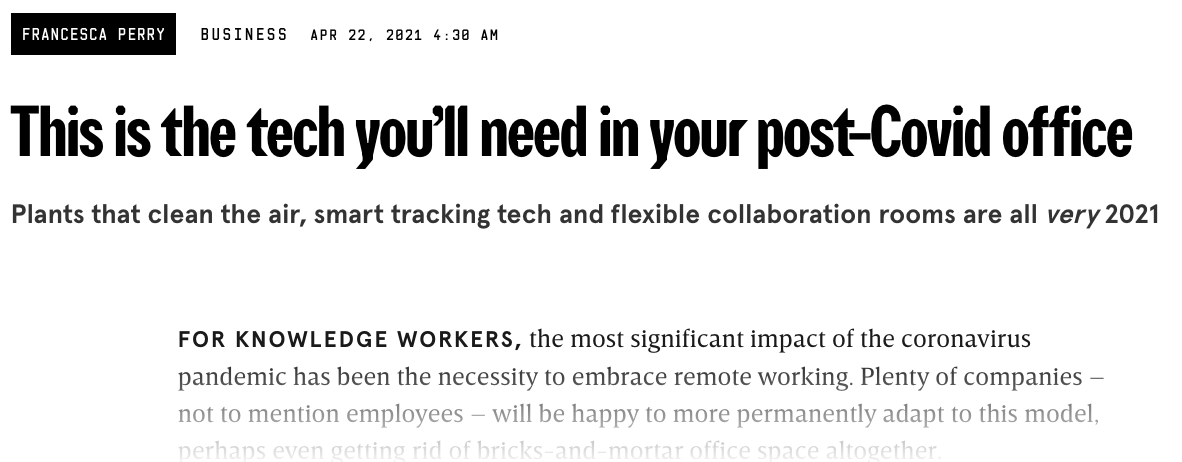
Today, other narratives dominate the media, and finding ones—or waiting for ones—that position your company as important to the conversation, make it easier to break through the noise.
The companies that are successfully reaching an audience today are leveraging narratives that are a complete 180 from our pandemic days.
It shouldn’t be a surprise to anyone that there’s been a big push for all-things in person: in-person events, in-person interviews, return to the office—9-9-6 work schedule, baby.
The narrative: IRL is better.
Hello, Sweatpals: A social fitness and wellness event platform that “wants to help people get off their phones and to in-real-life (IRL) experiences where they can meet new friends.”
I discovered them in Business Insider, and the timing for their seed announcement is perfection.
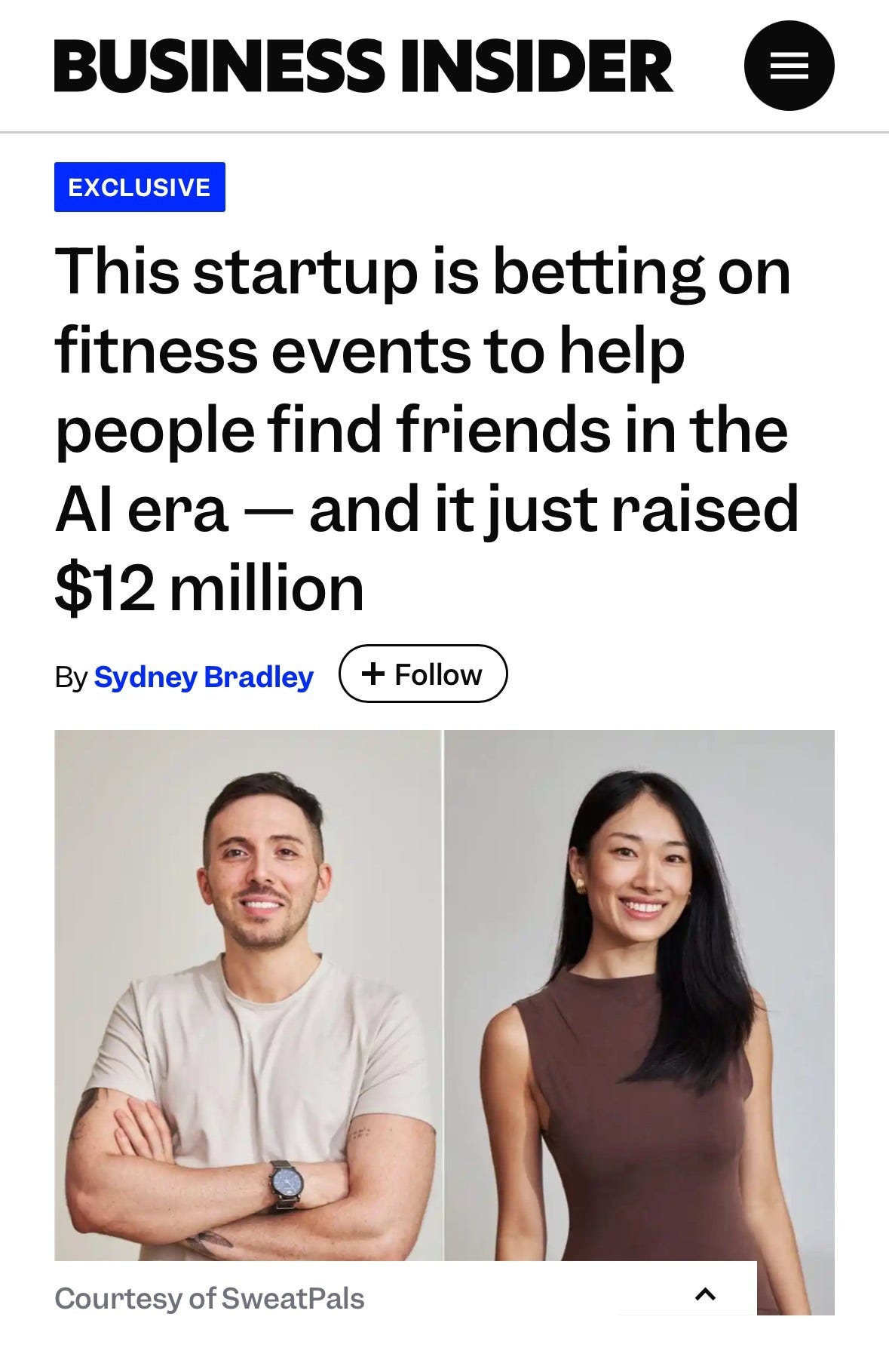
As always, I have no insider knowledge here, but I was surprised to read that they were founded in 2022 and are only now announcing a seed round.
They could have bootstrapped their company until recently—or they could have held their seed round announcement until now—when the “IRL is better” narrative dominates.
Because, while being “too early” can often be used as an excuse for why a product has yet to find product-market fit, it can sometimes be valid.
Now, with the push to do all-things in person, what an ideal time to thrust yourself into consumers’ minds, find product-market fit, and land your seed announcement—leveraging the narrative that IRL is better.
As an early-stage founder, it’s easier for you2 to hold a funding announcement until you need to leverage it to get in front of candidates, investors, and customers. Sometimes, all you need to do is go heads down after funding; but sometimes you need to shout loudly about your startup.
As I used to say at YC: make the timing of your funding announcement work for you.
My guess is that the timing was right for Sweatpals, and it was at that point they pitched the exclusive to Business Insider’s Sydney Bradley.
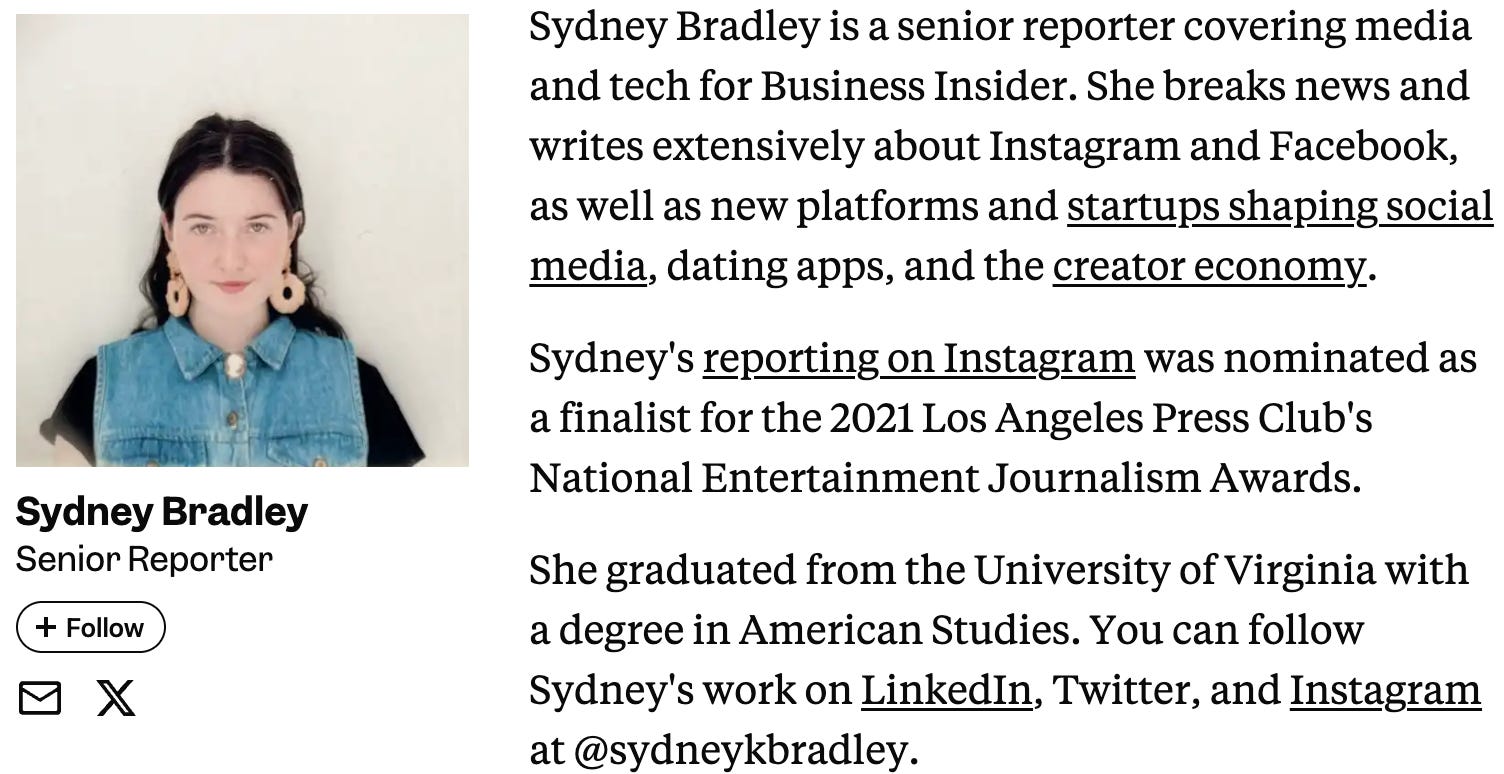
Reporter bios are often pointless because most of the time they say generic things like, “Sydney Bradley is a senior reporter covering media and tech for Business Insider.”
If I had zero comms background, I would think she’s the perfect reporter for my [biotech/fintech/SaaS] startup news.
Keep reading her bio, and I’d think she solely covers FAANG: “She breaks news and writes extensively about Instagram and Facebook.”
No way would she cover a startup.
But there’s one more line: “[...] as well as new platforms and startups shaping social media, dating apps, and the creator economy.”
I took the time to copy and paste this all to show you why you need to read reporters’ coverage to understand whether your news is right for them.
How does “shaping social media, dating apps, and the creator economy” show up in her coverage?
Since September, she’s published:
A new AI matchmaker will set you up and plan the first date — skipping the swiping and DMs
These founders built a map app for Gen Z to discover new places like restaurants and shops.
Read the pitch deck a 25-year-old startup founder used to raise $14 million for her friendship app
Her recent coverage hits consistent themes: loneliness, friendship apps, IRL social startups. She’s not writing about FAANG; she’s writing about the next generation of social experiences.
That’s exactly why Sweatpals fits her world.
Don’t only read the headlines. Read the articles so you don’t accidentally pitch a reporter who is hypercritical of all-things tech.
In my first year at YC, I had coffee with a reporter who was new to writing for a top global news outlet. They spent the hour ripping on the tech industry—acting as if we were on the same team, with the same negative perspective. I walked away from that coffee date noting that I would never pitch them. I was floored they were on the tech beat despite obviously having disdain for it. When their work started to be published, that disdain leaked into their stories.
Sydney Bradley though? She should be on peoples’ radar.3
I love her reporting—especially when she inserts herself into the story and goes behind the scenes so she can capture the energy and any relatable context. Example:
“Are you here with 222?” people asked one another, quickly jumping into conversations about where they’re from, how they’ve tried (and maybe failed) to make friends as adults, and where they ate dinner an hour earlier.
While it can be risky to invite a reporter to your event, office, or in-person demo, that color Sydney adds throughout her pieces is valuable to hook in a reader and find ways to capture the impact of your product. Worth thinking about what access you can give if you ever work with Sydney.
One more thing about her reporting: She has a pulse on the trends—the topics that are very top of mind for people—and she’s going to cover startups that are highly relevant in those areas today.
A reminder of the questions to find your angle:
What’s the news hook?
What cultural shift does this reflect?
What trending story can you plug into?
What about your founder story or background is unique?
Do you have a partnership with a recognizable company?
Do you have surprising growth or customer data that gives a new perspective on the market?
Do you have investors with strong name recognition?
Here’s what likely made the story coverage-worthy to Business Insider:
News hooks: Exclusive product news, i.e. developing its product offerings for gyms and studios and expanding into more US markets, and exclusive funding news, i.e. raising a $12 million seed round.
Cultural shift: How people socialize in the AI era. An investor quote in the article: “Sweatpals fit very squarely in that thesis area for us: How are people going to make friendships, relationships?”
Trending story: “Sweatpals is at the center of two trends shaping tech and culture right now: wellness and IRL experiences.”
Founder background: Not shared in the story, so likely not relevant to get coverage.
Partnerships: While not “partners” per say, the founder does talk about the “hosts” or creators that are now a priority for the company. This is relevant because part of Sydney’s beat is the creator economy. Smart for Sweatpals to play this up.
Data: More than 1 million monthly users and about 170,000 weekly users. 60% of users are women, and the typical typical user is a young adult between 20 and 35 years old.
Investors: Patron, A16z Speedrun, Kevin Hart’s HartBeat Ventures, Antler, Pear, and investments from angels like Instacart cofounder Max Mullen and WndrCo’s Jeffrey Katzenberg.
I like to keep the copy short in the above bullet points. But I have a not-out-of-character-for-me yearning to dive deeper into the trending story section: “Sweatpals is at the center of two trends shaping tech and culture right now: wellness and IRL experiences.”
Founders, if you’re building in these spaces, now is the time to insert yourself into these conversations. Find your news hook and then find the right reporter. Because once every startup pitches their vision for wellness and IRL experiences, it’s over; the media is too saturated. (We saw this with pitching around the future of work during the pandemic.)
This is also a reminder to pay attention to tech news and conversations, and spot these emerging trends. I mean, look at this beautiful summary of this emerging trend from Sydney:
People are meeting the loves of their lives at run clubs and networking in saunas. Strava, the popular running app, announced it acquired two fitness startups this year and is eyeing an IPO. Numerous IRL social startups have launched in the past few years with the goal of getting people to gather and meet up instead of scrolling online. Larger companies are also tapping into the trend, like Airbnb, which rolled out new “experiences” and social features this year (and recently announced a partnership with Strava on “run-cations”).
Imagine if you, the founder, found commonality in all of these individual announcements, pitched the trend, with your company as another data point. Helpful to the reporter, and helpful to your startup.
Soon after reading about Sweatpals in Business Insider, this post—written by Sweatpal’s investor Amber Atherton—surfaced in my feed:
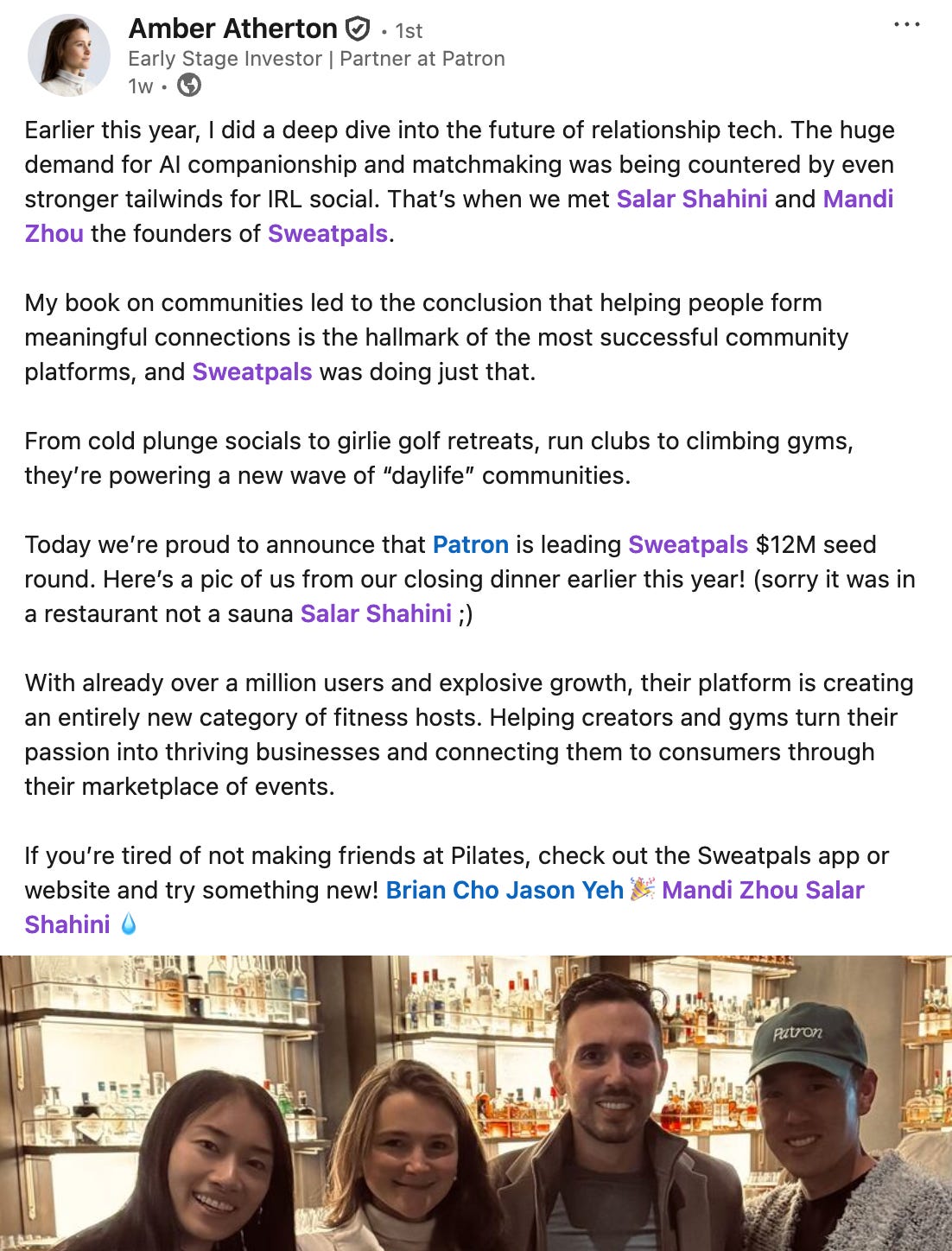
I met Amber through YC. She was the founder of the marketing platform Zyper (W18). Obviously she’s incredible at understanding the media landscape—and as Sweatpals’s investor, it would be in her best interest to give them a warm intro to the reporter.
Tip: Always leverage your investors’ relationships. Ask for warm intros to reporters and content creators and ask them to promote your news to their network—reshare, comment, create new commentary. Don’t miss this step.
Ok, let’s imagine they didn’t get a warm intro. What would the pitch look like?
Hi Sydney,
Loved your recent pieces on IRL connection and the creator-led events scene—couldn’t be more relevant to what we’re building at Sweatpals: a social fitness and wellness events platform that helps people meet new friends offline through group workouts and hikes.
We’re announcing $12M in seed funding led by a16z Speedrun and would love to offer you the exclusive ahead of our U.S. launch.
Sweatpals sits at the intersection of two cultural shifts shaping consumer tech right now:
The loneliness epidemic and Gen Z’s growing appetite for in-person connection, and
The post-pandemic wellness boom, where fitness is less about performance and more about belonging.
Traction:
1M+ monthly users, 170K WAU
4,500 active hosts (creators running IRL events)
Expanding to Los Angeles and New York this winter
If you’re interested in the exclusive, I can set up a quick call, share product visuals, and arrange access to an event (plus intros to hosts and participants). Let me know, thanks!
If you’re building in wellness, social, or community, now’s your moment.
Watch the narratives, find your entry point, and make yourself part of the story.
As always: make the timing work for you.
Here, “fighting” = my work. The larger fight—safety, vaccines, public health—mattered to me, too, but is outside the scope of this post.
This is trickier for later-stage companies because of the required filing of Form D, which is public record. This filing can trigger coverage even if you’re not ready to announce.
Who are “people” in this scenario? Founders, VCs, comms professionals, readers... ALL. THE. PEOPLE.
No posts
Comments
Nothing yet. Say the first thing.
Sign in to join the conversation.