
[Part 1]
There’s no question about it, Canada’s Maritime region is no place for a leatherback sea turtle in November. By the time the cold, dark, gloomy days take hold, the endangered reptiles are typically well on their way back to their summer nesting grounds in the Caribbean, fuelled by energy stores from a summer of feasting on an abundance of protein-rich jellyfish found in northern waters.
Satellite tracking data reported by the Halifax-based Canadian Sea Turtle Network shows the migration route taken by five tagged leatherbacks in 2015. By early November, the turtles are swimming southward, in warmer waters, with the Atlantic Ocean wide open in front of them. Migration is hard-wired into these turtles, not unlike other marine species that are drawn to places to forage or reproduce: humpback whales and salmon are some that immediately come to mind.
This is how it should be.
But for Dina, in the fall of 2024, things had gone terribly awry. Perhaps due to her location in the Gulf of St. Lawrence when her instinct to head south kicked in, the DFO-tagged leatherback swam south toward the Canso Causeway. Nine failed attempts to exit that way meant she was in the increasingly frigid Gulf very late in the season. By the end of November, DFO staff had started to notice.
As previously reported in Part 1 of this series—based on documents obtained through Access to Information (ATIP)—DFO had a plan in place to intervene before Dina ended up stranded on a beach, and the plan was to go ahead on December 11, 2024:
If sea conditions allow, and her [Dina’s] location is along the southwest coast of Cape Breton, St. Georges Bay, or northern Nova Scotia, a vessel could be deployed to attempt to locate, board and move Dina to the Atlantic side of Nova Scotia where she will be released to continue her southward migration.
So, the day before, three vessels, two shore teams with trucks and trailers, one helicopter, and numerous support people were ready to go. The sea turtle unit had permission from DFO’s Maritime science management to participate, and Lara Cusack, a veterinarian was on hand to coordinate Dina’s care.
The “weather window was perfect,” writes C&P fishery officer Philippe Chiasson. All of DFO’s Conservation and Protection (C&P) resources were “ready to go first thing at day break.”
The plan received the green light.
But that same evening, according to Mike James, head of DFO’s sea turtle unit, the operation was called off.
“MAR [Maritime] Science Management instructed DFO Sea Turtle Unit not to participate in the recovery operation for Dina…the recovery operation was disbanded,” writes James.
According to C&P’s Chiasson, “At approximately 17:30… MAR chief of science called the operation off, as he/ she wanted the nature [to] take its course.”
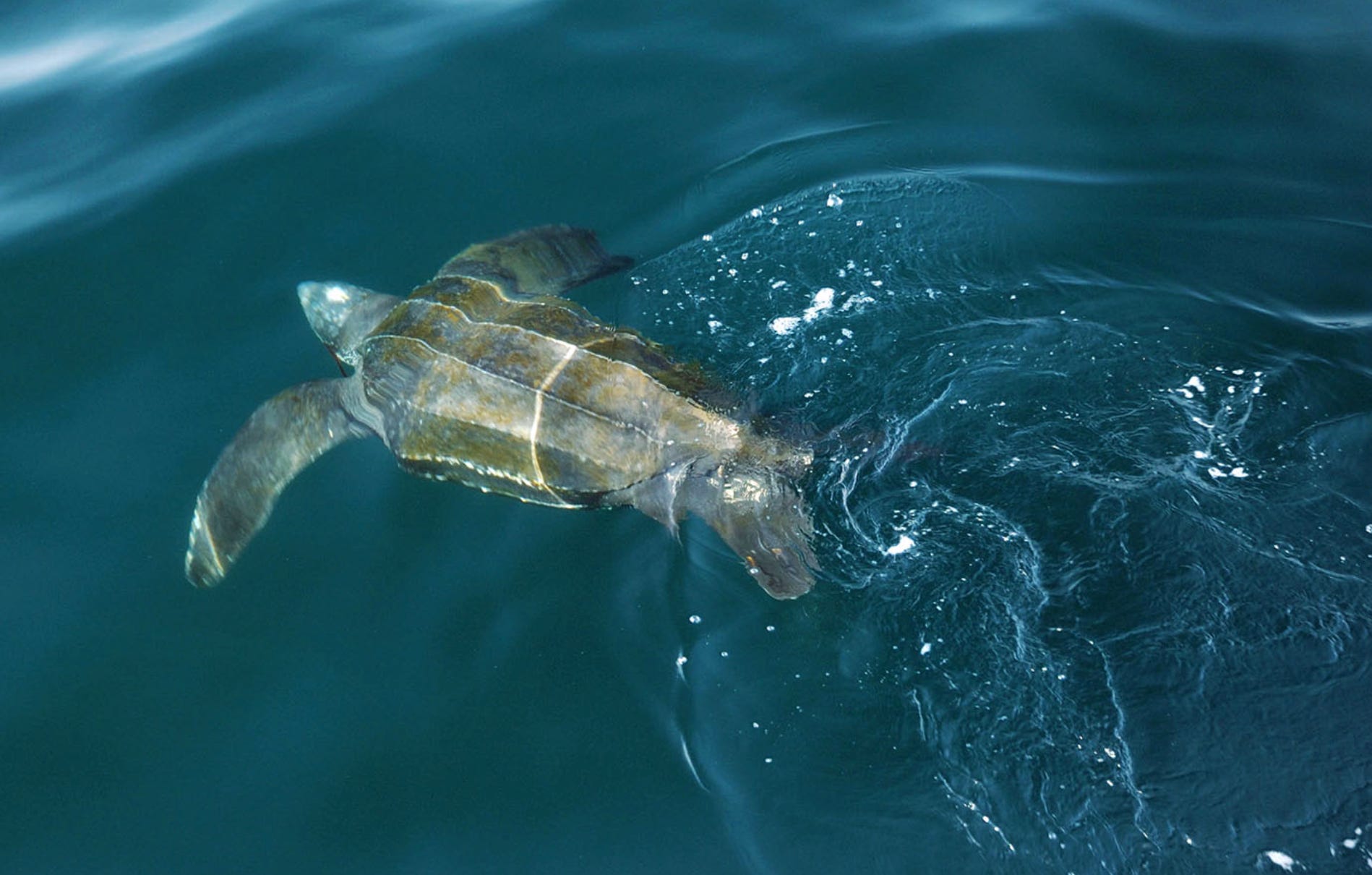
A leatherback sea turtle swimming near the ocean surface. Source: Canadian Sea Turtle Network, 2017.
Since nothing in the ATIP emails indicates definitively why the at-sea rescue mission was called off, I reached out to Fisheries and Oceans Canada and asked, why did MAR Science Management first approve the recovery operation for Dina, and on the same day decide against it? What happened in those few intervening hours to make them change their minds?
DFO’s communications advisor, Rachael Mahoney replied:
Through the Marine Mammal Response Program (MMRP), Fisheries and Oceans Canada (DFO) works with conservation groups and non-governmental organizations to respond to injured, stranded, entangled or dead animals.” According to Mahoney, “the MMRP has never conducted a response involving the capture of a leatherback sea turtle at sea. In this case, the turtle’s condition, including if it was healthy enough to survive being captured at sea and relocated, was unknown when a decision had to be made to intervene. Given the low likelihood of success, the Department decided to suspend the proposed response. [italics mine]
It should be noted here (though we are jumping ahead), that according to the ATIP release, the “low likelihood of success” cited by Mahoney was not a view shared by everyone, especially James, who, apart from Cusack, was probably the one with the most expertise about leatherbacks. As we’ll see, in an email dated towards the end of December—when Dina was no doubt suffering—James writes: “Earlier on there was a reasonable probability that Dina would have survived capture, some degree of rewarming, and relocation to the opposite side of the Canso Causeway.” [italics mine]
I pressed Mahoney and followed up with this question:
Through the MMRP, Fisheries and Oceans Canada is actually “responsible for assisting marine mammals and sea turtles in distress.” In light of the fact that Dina was also a valuable member of a listed endangered species— with all the legal obligations that come with that—I’m wondering why there was no effort made at all. The MMRP site is clear that the department has a responsibility to assist, regardless of whether it’s ever been attempted before, or the likelihood of success. Why did those two considerations trump the “responsibility for assisting,” in this case, a listed endangered species?
The Quaking Swamp Journal did not hear back from Mahoney in time for publication, but once a response is received, it will be reported in this series.
Mahoney tells me the Maritime head of science at the time the plan was called off was Francine Desharnais, but says the decision to suspend the at-sea intervention was a group effort.1
“One management decision was made regarding the potential rescue operation,” but it was not “one individual [who was] solely responsible.”
Mahoney:
“The decision was taken following discussions amongst Fisheries and Oceans Canada (DFO) staff and partners, and after all the information was provided for consideration. As reflected in the ATIP materials you have received, a number of employees provided their knowledge and information on the matter to inform the decision. The management decision made was based on that information and for the reasons we have previously outlined.”
Despite Mahoney’s assurances that a collective decision was made to call off the effort, the ATIP indicates that the “team” in the aquatic ecosystems sector, which includes the species at risk program (SARP) and the sea turtle unit, had been pushing for the opposite outcome, and had come up with a “rationale for mounting a late season leatherback sea turtle response” in the Gulf.
Among the reasons given by the “team”:
Leatherbacks are listed as endangered
DFO has the tools, customized equipment, and expertise needed to capture, board, move and monitor Dina
Gulf C&P has indicated that they have the tools and capacity needed to undertake the response
Canada is signatory to several international agreements to support their conservation
Dina was valuable based on her long-term nesting history
The DFO’s sea turtle unit runs Canada’s only dedicated sea turtle research program and leads research to address DFO’s legislated responsibilities under the Species at Risk Act
DFO could risk poor public perception for not responding to this situation. Leatherback sea turtles are an endangered and charismatic species of great interest to the public.
There are concerns about this sea turtle from an animal welfare perspective that have been raised to DFO by a veterinarian (Lara Cusack)
“This sea turtle’s ability to complete a southward migration has been inhibited by the Canso Causeway which is an anthropogenic structure presenting a barrier to the migration of an endangered species.”
Clearly the “team” was vying for an at-sea intervention, and Dina’s chances were boosted by the fact that she was tagged and could be located, unlike other turtles that may end up in a similar predicament.
Only a small fraction of sea turtles are satellite tracked by DFO—by the end of 2024 only 13 had tags. Some years there are as many as 20.
“Attempting a response in this situation is a unique opportunity and would not result in setting a precedent or need to respond to all sea turtles that become trapped in the Gulf in the fall,” writes the “team.”
But, giving DFO management the benefit of the doubt, it appears its decision was most heavily influenced by the probability of success—perhaps to the exclusion of all else.
But without the benefit of the doubt—and I’m speculating here—DFO management could also have been motivated by a desire to keep the suffering, endangered turtle, and the problem of the Canso Causeway, under the radar.
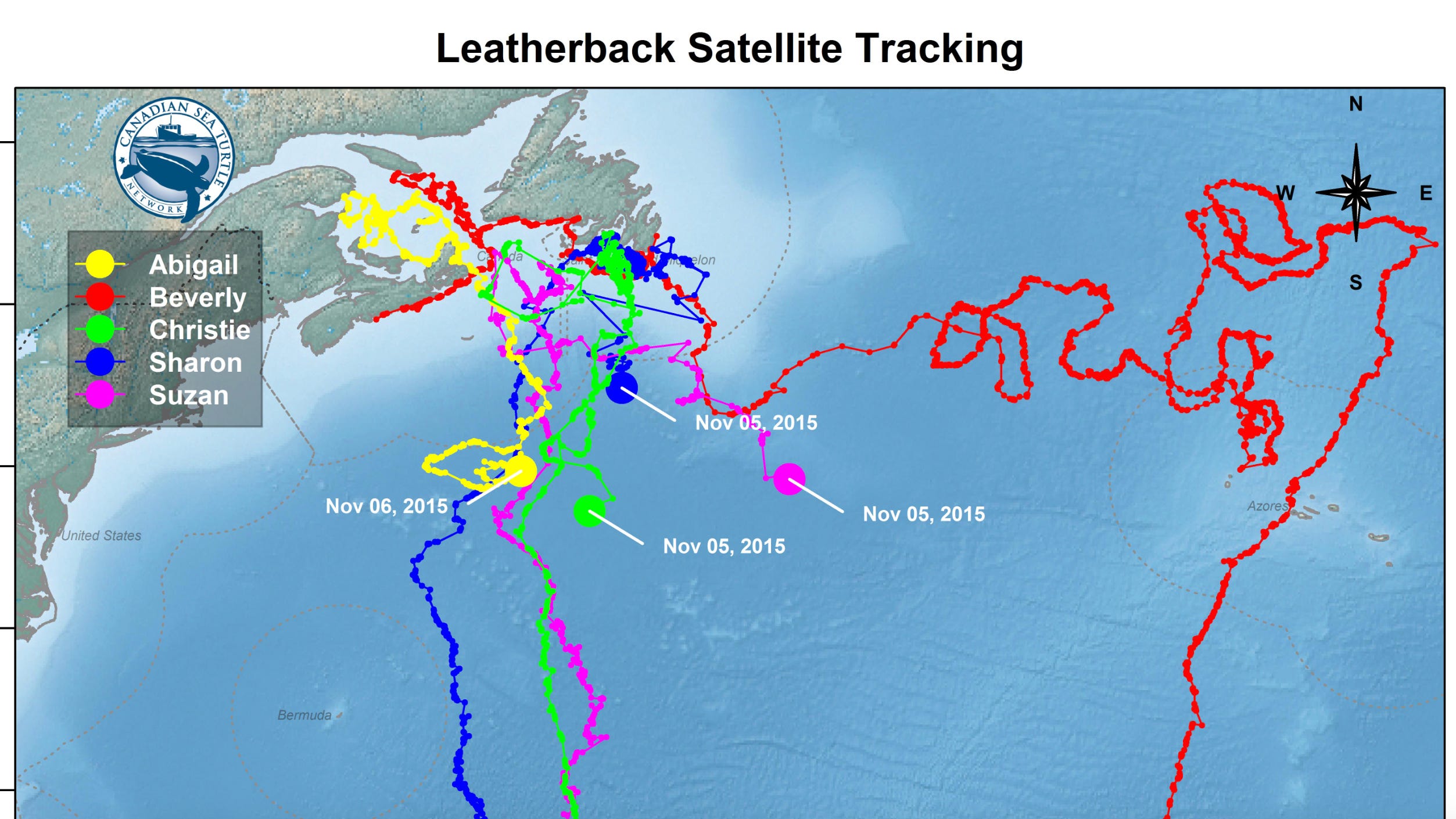
Leatherback sea turtle tracking of five satellite tagged turtles shows their return migration south to Caribbean beaches, and the location of four of them in early November, 2015. By comparison, in November, 2024, Dina was still trying to exit the Gulf of St. Lawrence. Source: Canadian Sea Turtle Network
Without being able to speak directly with the DFO management, or the scientists who were trying to help Dina, what happened behind the scenes to result in suspending the operation is anyone’s guess.2
The ATIP results don’t shed much light on the machinations taking place at the management level, but they do indicate there was some confusion about which DFO sector was taking the helm in the rescue operation.
On December 12—the day after DFO management called off the operation— the team lead from the aquatic species at risk program, Marie-Hélène Thériault, writes that she was informed by the director of ecosystem management that it was Gulf Conservation and Protection (C&P) that would be taking a lead role in the response effort.
“The Species at Risk Program plays a minimal role in marine mammal responses, but we do fund C&P through Standard Level Agreements to support leatherback sea turtle stranding operations,” explains Thériault.
But in his response to Thériault, Matthew McDaniel, the C&P area chief explains that he was being updated by Mike James of the sea turtle unit, who “received approval to request our assistance to attempt an at-sea intervention.”
“We were prepared to provide substantial assistance,” writes McDaniel, but “C&P would not take the lead or initiate a response of this sort. We were going to provide assistance and play a supportive role.”
In other words, the species at risk program (SARP), which includes the sea turtle unit, is managed within the aquatic ecosystems sector, and funds conservation and protection (C&P) to support leatherback sea turtle stranding operations. That sector thought conservation and protection was taking the lead. Conservation and protection thought it was the other way around.
Some additional detail appears in a December 20 email from director of Gulf C&P, Christine LeBlanc-Maillet to Marc LeCouffe, the regional director of fisheries and harbour management in the Gulf region. There appears to have been financial constraints at the C&P.
“If this turtle [Dina] does not survive the cold weather, we have already transported numerous turtles for necropsies, and without additional funding we will not be able to transport this turtle. We have already significantly surpassed the funding allocated for assisting with turtles.”
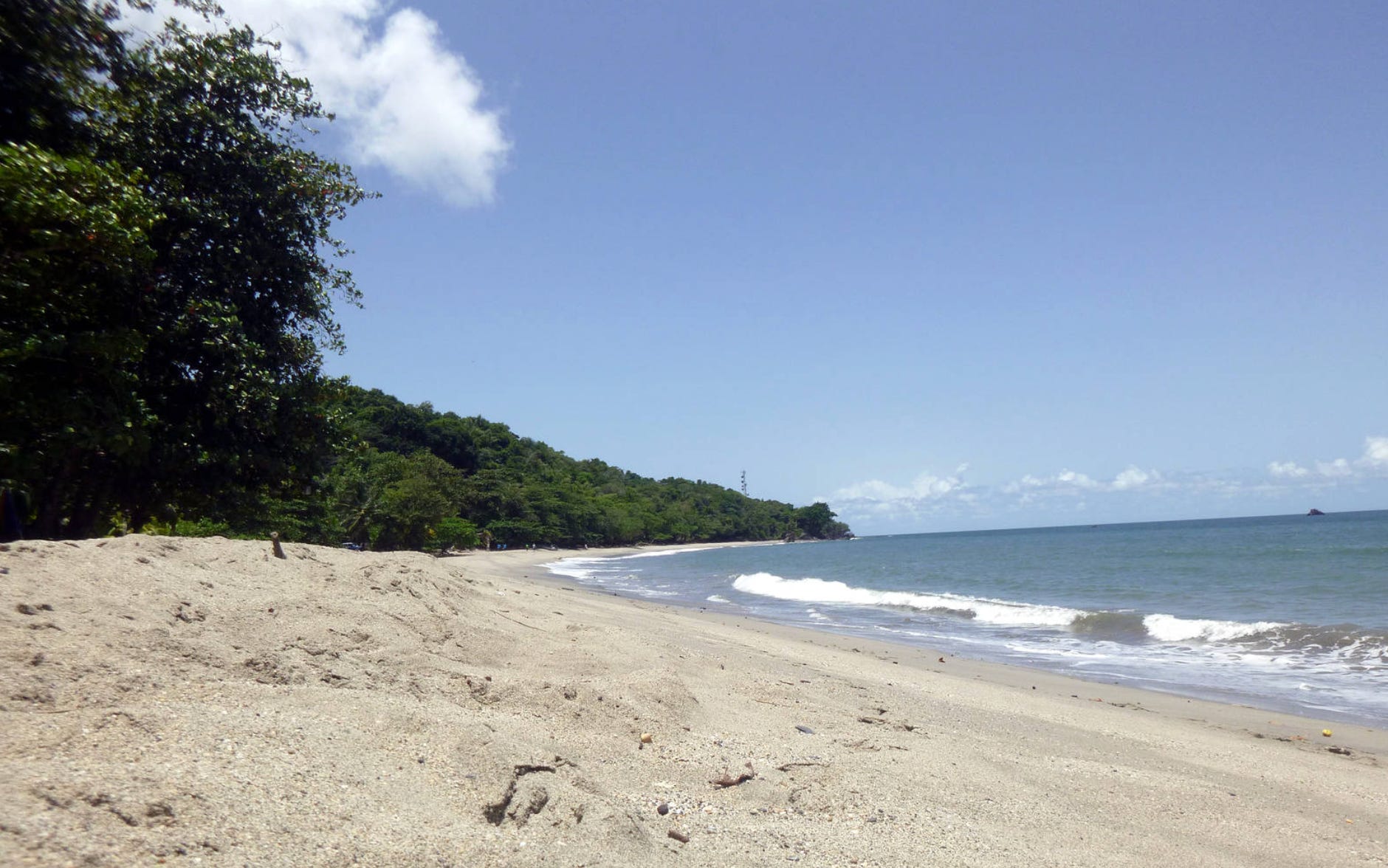
Dina’s PIT tag (microchip) traced her back to a leatherback nesting beach science program at this beach, Grande Riviere, in Trinidad, where she was first recorded nesting in 2010. In all likelihood, Dina was trying to return to this beach. Image Source
On the evening of December 17, Dina is spotted just off Cheticamp, Cape Breton Island. Wendy Williams, the regional director of aquatic ecosystems asks, “is it possible to obtain Mike James’ opinion on whether he believes Dina is likely to make her way north around Cape Breton?”
The next day—about a week after Dina’s rescue effort was called off—Lara Cusack, a veterinarian who teaches at the Atlantic Veterinary College at the University of PEI, emailed James to express her concerns for the animal.
Recall from Part 1 of this series, that Cusack’s advice was instrumental during the “evolving discussions” about the potential options for recovering Dina at sea and relocating her to the opposite side of the causeway where she could continue her southward migration. Cusack was also notified of the at sea rescue mission, as she planned to coordinate animal care procedures during turtle transport.
For Cusack it was all about the animal’s welfare, and preventing unnecessary suffering.
On December 18 Cusack sends this email to James:
I continue to have animal welfare concerns about this animal’s persistence in the Gulf past the normal migratory timing for this population. As a wildlife veterinarian and specialist, and part of your research team, it is obvious to me that her prolonged stay in our waters poses significant welfare concerns such as loss of body condition, hypothermia, and ultimately, death. Without assistance, this animal will undoubtedly suffer and experience a prolonged deterioration prior to her death. Recognizing that, like all of wildlife medicine, there is no guarantee of success, I think the ability to prevent animal suffering makes it very much worth the effort to try and save this animal. Are there options available to assist this leatherback in returning to a more normal migratory route (given that the Canso causeway is her main obstacle)?
By December 19, James reports that Dina is swimming south again, down the west coast of Cape Breton Island.
“I expect she may appear back in St. George’s Bay – Canso Causeway area. Her tag is starting to log some time at 0-3 degrees C, and nothing above 6 degrees C. At this point I don’t think it’s likely she will exit the Gulf.”
The next day, James tells his colleagues that Dina has made her way back up to the north tip of Cape Breton Island. He says the turtle is unlikely to strand on the shoreline from this location and that because of the current he’s not able to tell if she’s floating, or moving under her own power.
James didn’t think Dina made her way out of the Gulf on her own. It was the current that likely moved her out, exposing her to warmer water.
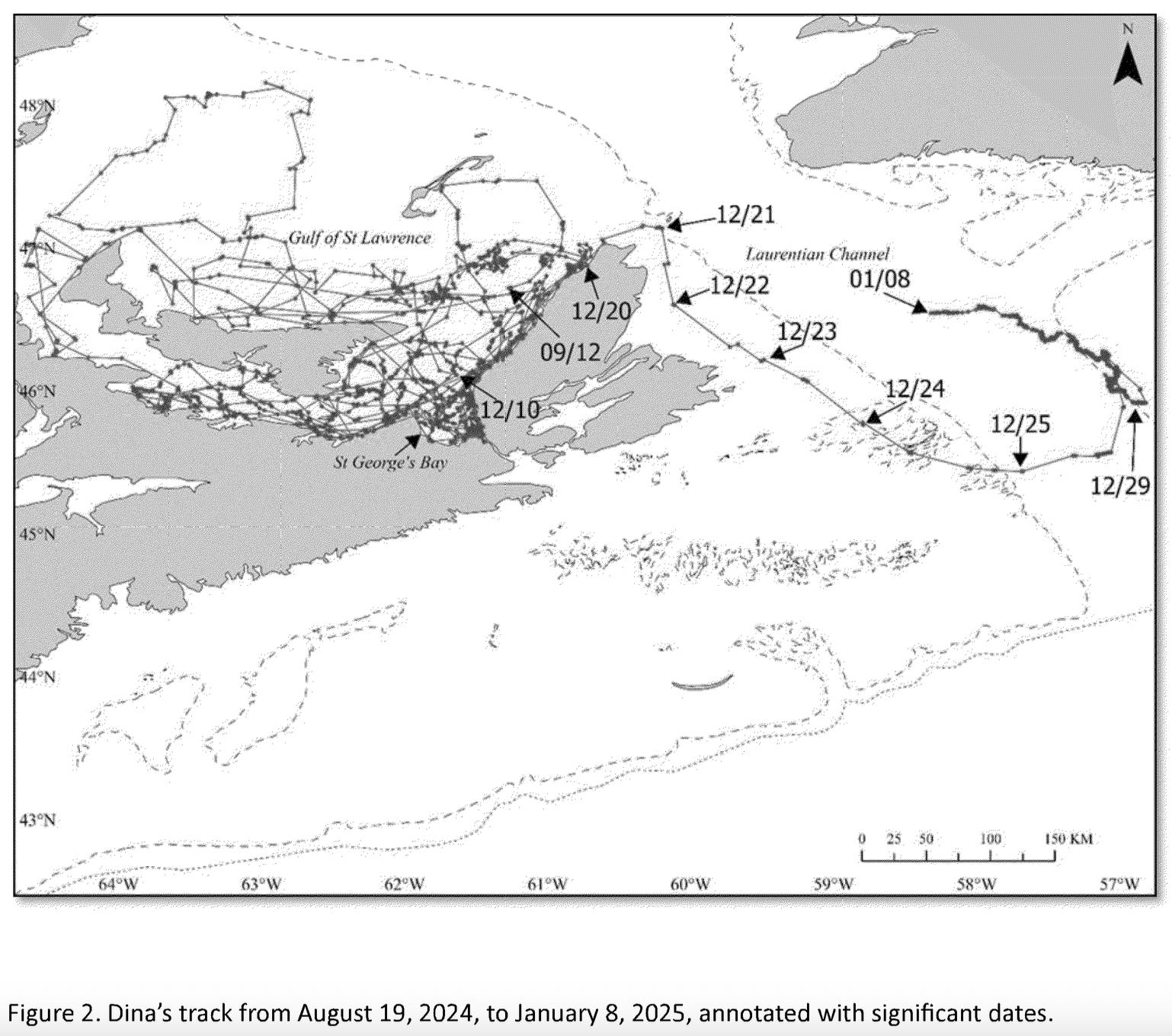
Satellite tracking data map released as part of the ATIP request shows Dina’s movements since DFO sea turtle unit tagged her on August 19, 2024, off Cape Breton Island, near the entrance to the Gulf of St. Lawrence. Notice how congested her movements are in St. George’s Bay, where she tried to exit the Gulf nine times, but was blocked by the Canso Causeway. Source: ATIP release
On December 23, there seemed to be some good news.
“Beginning yesterday afternoon-evening the data we are collecting has hinted, quite remarkably, that Dina may be starting to show some signs of life. I am cautiously optimistic that she may ultimately recover,” writes James.
Dina was located east of Sydney. She had gotten around the tip of Cape Breton and was headed in a southerly direction. Her tag was logging temperatures 3-6 degrees C. According to James, the key to rewarming hypothermic sea turtles in captivity is that it happens really gradually. James writes, “the scenario unfolding now in-situ with Dina is hopefully progressing in a similar manner.”
“She is a huge animal, so even in an emaciated state she won’t warm quickly, which is a good thing under the circumstances.”
James writes:
By the end of last week, Dina’s locomotion had slowed considerably, then appeared to stop. This was an expected progression as the water temperature was extremely cold and these animals are reptiles, after all. I anticipated hypothermia was a likely outcome.
Regarding the probability of Dina surviving a rescue attempt: I suppose this was ultimately a moot point by the end of last week, and, importantly, I am not aware of analogous previous rescue attempts for leatherbacks here in Canada, or anywhere else. Earlier on there was a reasonable probability that Dina would have survived capture, some degree of rewarming, and relocation to the opposite side of the Canso Causeway.
Then on New Year’s Eve, despite the fact that she had made it out of the Gulf and started showing some signs of life, data collected from her satellite tag indicated Dina was in fact dead, her body drifting with the current.
By January 15, 2025 Dina was floating in the centre of the Laurentian Channel, approximately 100 km northeast of Sydney, Nova Scotia.
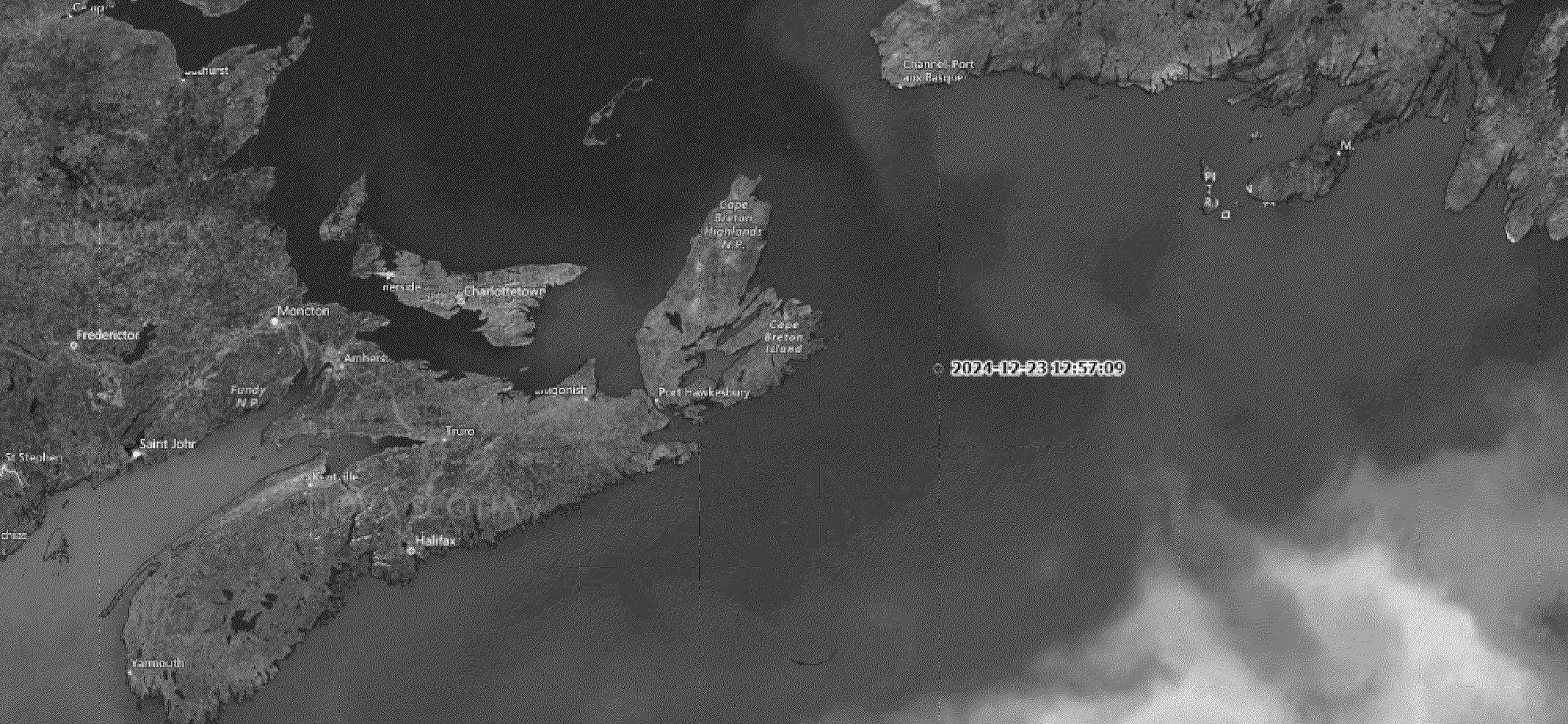
On December 23, 2024, Dina’s satellite tag was picking up signs of life. But if Dina was alive, her condition was likely so poor after weeks of trying to exit the Gulf, that she couldn’t muster the strength to save herself.
[Note to readers: The parts in this series are being posted as they are written – as opposed to the series being completed first, and then the parts posted. Since I’m researching various aspects as I go along, and don’t know the full scope of the story, I’m aiming for four parts in the series with Part 3 ready in 2-3 weeks and Part 4 ready to go sometime in March. Thank you for your patience. If you value this work, please consider taking out a paid subscription, or sharing on a social media platform or via email — there is no paywall at The Quaking Swamp Journal, and I plan to keep it that way.]
Francine Desharnais currently works as a chief scientist with the Department of National Defence (DND) within Defence Research and Development Canada (DRDC).
When I first began looking into what happened with Dina, I reached out via email to speak to Mike James directly. But that email was quickly re-directed to DFO communications. There was a time when a reporter could speak directly to a DFO scientist, without it being mediated by a gatekeeper. I wrote about this in my 2013 book, The Devil and the Deep Blue Sea. Essentially, starting in the 1990s, it became glaringly apparent that non-science influences were interfering with the dissemination of scientific information as well as the conduct of science. In five years of government under Stephen Harper, the number of communications officers in the federal government increased by 16%. The objective was to effectively control and disseminate the information the government wanted disseminated. It was called messaging. But the public had a right to all the information since the research was being funded by the public purse, theoretically in the public’s interest. It was in Harper’s time that scientists, particularly at the DFO, were muzzled. The policy on granting interviews shifted—they were no longer easily accessible to reporters and all communication was mainly through communications staff. Don’t get me wrong – with some perseverance I have been granted in-person interviews in the past with DFO scientists, but each time they were provided with “media lines” and were shadowed by a communications manager. Not only is our access to public servants being impeded, but the occupational free speech of government scientists is being eroded.
I have requested an interview with Mike James, through the proper channels, but have yet to hear back.
No posts
Comments
Nothing yet. Say the first thing.
Sign in to join the conversation.