
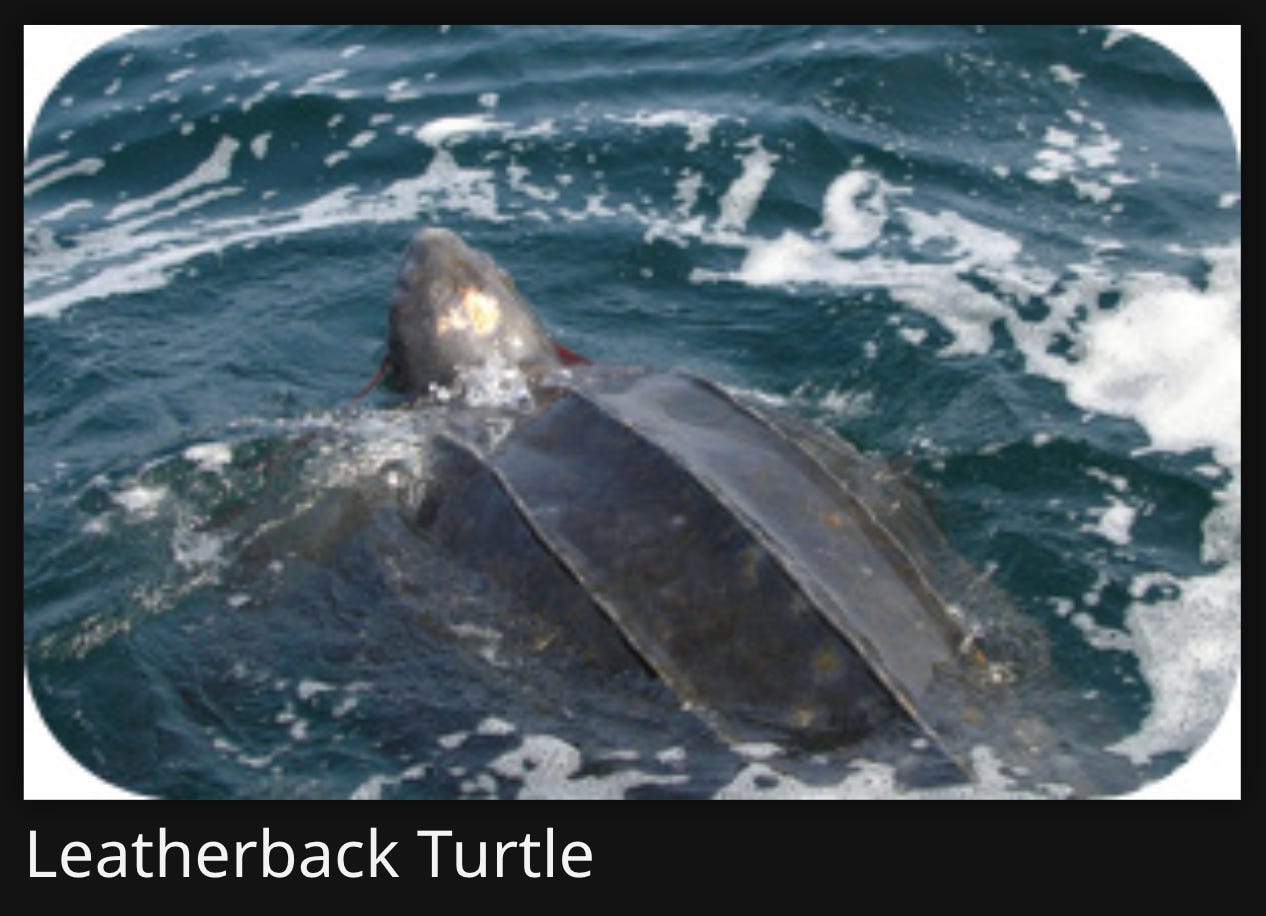
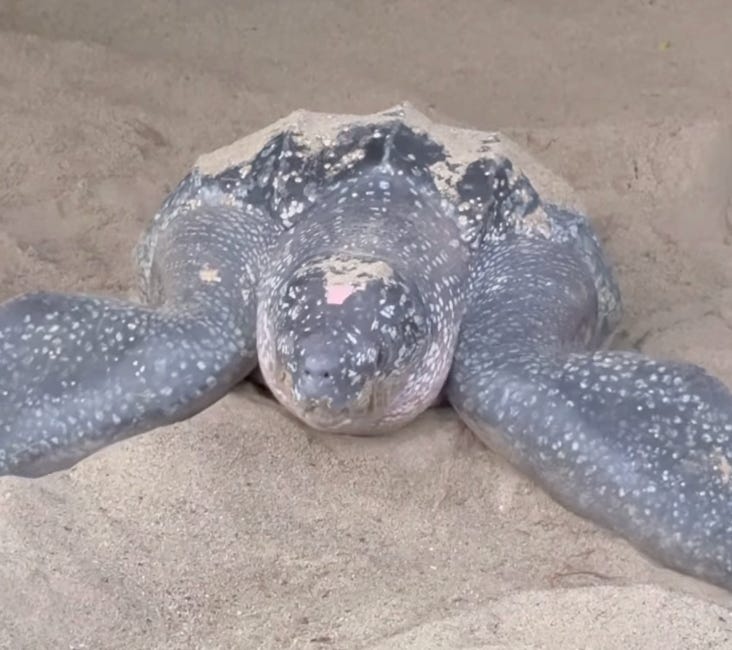
Sometimes there are stories that just grip your heart and mind. For me, the story about Dina is one of them. In January 2024, the 30-year-old, roughly 1,000 pound leatherback sea turtle died after trying—frantically it seems—to migrate out of the increasingly frigid waters of the Gulf of St. Lawrence to get back to her Caribbean nesting grounds. Documents obtained through an Access to Information Request reveal the remarkable lengths Department of Fisheries and Oceans staff were willing to go to save the rare reptile.1
Atlantic leatherback sea turtles were listed as endangered in 1981, and legally listed under the Species at Risk Act in 2003, and the population is still in decline. Dina was valuable, not only because of her stellar reproductive history and age, but because she was satellite tagged and could shed light on the movements of sea turtles when in Canadian waters. She also had a lot of life left to live in her vast ocean habitat: leatherbacks are known for their long life spans, sometimes exceeding a century.
But DFO brass ultimately aborted Dina’s recovery effort, and she eventually died after a prolonged period of deterioration, likely involving hypothermia and starvation.
Within the ATIP documents we learn that the beleaguered sea turtle attempted to exit the Gulf of St. Lawrence at St. Georges Bay nine times – each time being blocked by the Canso Causeway, which impeded her passage to the Atlantic and her route back to the beaches of Trinidad.
I’ll be exploring this and much more in this 5-part series titled, “Right of Passage.”
·
Feb 5
By the time alarm bells started ringing among some of the staff at Fisheries and Oceans Canada (DFO) about a satellite tagged leatherback sea turtle named Dina, the beleaguered 1,000- pound reptile had been trying to exit the increasingly frigid Gulf of St. Lawrence—to return to her Caribbean nesting ground—for ten weeks.
No posts
Comments
Nothing yet. Say the first thing.
Sign in to join the conversation.