
Part 3 of a 10-part series on Iran
On August 19, 1953, the United States and Britain overthrew Iran’s democratically elected Prime Minister — not with armies, but with cash, hired mobs, and propaganda.
His name was Mohammad Mosaddegh. His crime was trying to give Iran’s oil back to Iranians.
Everything that followed — the Shah’s dictatorship, the 1979 revolution, the hostage crisis, four decades of sanctions and mutual hatred — traces back to that single afternoon.
If you’re new here: the first two parts of this series covered Iran’s constitutional order (and the deliberate mislabeling of it as “theocracy”), and the deeper history of Western involvement in Iran that most readers were never taught. This piece picks up the thread with the single event that set everything else in motion.
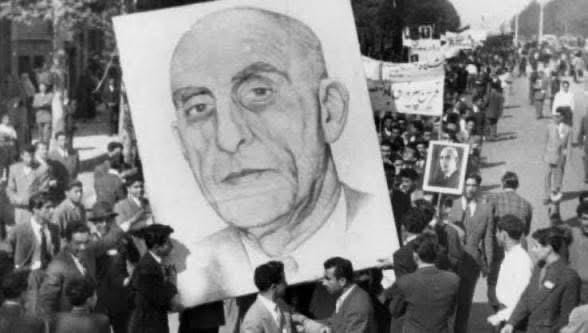
I want you to remember a date: August 19, 1953.
On that day, the United States and Britain committed one of the most consequential acts of political violence in modern history — not with bombs or tanks, but with money, propaganda, and hired mobs. They overthrew the democratically elected Prime Minister of Iran, Mohammad Mosaddegh, a man who had committed the unforgivable sin of trying to reclaim his country’s oil for his own people.
Everything that has happened between the West and Iran since — the Islamic Revolution, the hostage crisis, the sanctions, the nuclear standoff, the hatred — has its roots in that single act of imperial criminality.
The West never told you this. They buried it. Classified it for decades. And when the documents finally emerged, they hoped no one was paying attention.
I am paying attention. And after reading Parts 1 and 2 of this series, so are you.
Mohammad Mosaddegh was not a revolutionary. He was not an Islamist, a communist, or an extremist. He was a Swiss-educated lawyer, a constitutional monarchist, a democrat in the most literal sense of the word — a man who believed, with quiet ferocity, that Iran belonged to Iranians.
He came from aristocracy. He could have lived a comfortable life as a collaborator with British interests, as so many of his class did. Instead, he chose something far more dangerous: principle.
When he became Prime Minister in April 1951, Iran was effectively a vassal state. The Anglo- Iranian Oil Company — which would later become BP — was extracting Iran’s oil and paying the Iranian government a royalty of roughly 16%. Sixteen percent. Of Iran’s own oil. The rest went to London.
Mosaddegh looked at this arrangement and said: no more.
On May 1, 1951 — May Day, with magnificent symbolism — the Iranian Parliament voted unanimously to nationalise the Anglo-Iranian Oil Company. The oil beneath Iranian soil would belong to Iran. The workers who extracted it would work for Iran. The profits would flow to Iran.
It was a perfectly legal act. It was a democratic act. It was, in the fullest sense of the word, a legitimate act.
And it was, from that moment, a death sentence.
Britain’s response was immediate and vicious. The Anglo-Iranian Oil Company pulled out its technicians — most of them British — making it impossible for Iran to operate the refineries. Britain imposed a blockade. British warships sat in the Persian Gulf. London threatened any country that dared buy Iranian oil with legal action.
Iran was being strangled. And Britain went to Washington.
The British case to the Americans was straightforward: Mosaddegh is soft on communism. Iran is in danger of falling to the Soviets. We must act.
It was a lie. Mosaddegh was a liberal nationalist, deeply suspicious of the Soviet Union. The Iranian communist party, the Tudeh, was a minor player that he kept at arm’s length. But this was the early 1950s. McCarthyism was at its peak. The word ‘communist’ was a magic key that unlocked American paranoia — and American money.
The CIA and MI6 got to work. The operation had two names: the Americans called it AJAX. The British called it BOOT. The objective was identical: remove Mosaddegh by any means necessary.
What followed was a masterclass in imperial subversion.
CIA operative Kermit Roosevelt Jr. — grandson of Theodore Roosevelt — arrived in Tehran with a suitcase full of cash. Bribes flowed to military officers. Newspaper editors were paid to run anti-Mosaddegh propaganda. Religious figures were recruited. Thugs were hired to create chaos in the streets — to stage riots, to make it appear that Mosaddegh had lost control, that Iran was ungovernable.
The Shah — weak, frightened, morally hollow — was pressured to sign the decree dismissing Mosaddegh, even though he had no constitutional authority to do so. When the first attempt failed and the Shah fled to Rome in panic, the CIA simply doubled down. More money. More chaos. More hired violence.
For decades, Washington and London denied any involvement. It was a spontaneous uprising, they said. Popular discontent. The Iranian people turning against a failed leader.
They lied.
In 2013, the CIA finally declassified documents confirming what historians had known for years: the agency had planned, funded, and executed the coup. The internal CIA history described it plainly as an act of United States foreign policy, conceived and approved at the highest levels of government.
The highest levels. That means Eisenhower. That means Dulles. That means the elected government of the United States of America, in peacetime, using taxpayer money to overthrow the elected government of a sovereign nation because that nation dared to nationalise its own oil.
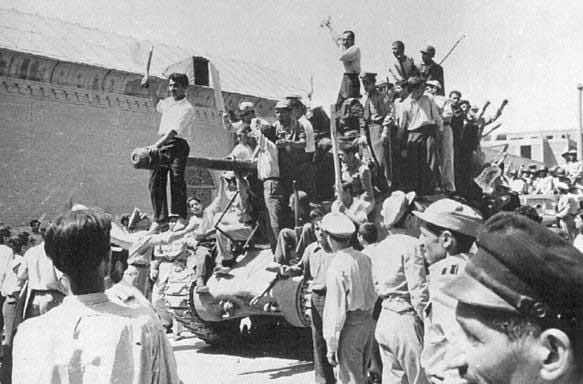
After the coup, the Shah was returned to his throne — now fully dependent on American support and therefore fully pliant to American wishes.
Torture. Disappearances. Political prisoners. Execution of dissidents.
All of it, funded and supported by Washington in the name of ‘stability’ and the ‘free world.’
For 26 years, the Shah held power through fear. The moderate nationalists who had followed Mosaddegh were imprisoned or exiled. The secular left was crushed. The only space for opposition that SAVAK could not fully penetrate was the mosque.
And so, when the revolution finally came in 1979, it came from the mosque.
The West created the conditions for the Islamic Revolution. Britain and America destroyed the moderate, democratic, secular alternative — and then expressed shock and horror when the Iranian people turned to the only opposition that had survived.
When Iranian students stormed the American embassy in Tehran in November 1979 and held 52 Americans hostage for 444 days, the Western world was outraged. Barbaric.
Uncivilised. Fanatical.
But inside the embassy, the students found something the Americans had not managed to destroy: shredded CIA documents, painstakingly reconstructed by hand. Documents detailing American interference in Iranian affairs. Names. Networks. Operations.
The students called the embassy ‘the Den of Spies.’ Given what the documents revealed, can you really argue they were wrong?
The audacity is breathtaking.
In Parts 1 and 2 of this series, I showed you that Iran is not a theocratic chaos but a sophisticated state with a coherent constitutional architecture and deep intellectual traditions. In this part, I want you to understand something equally important: the West’s campaign against Iran is not about democracy, human rights, or nuclear weapons.
It never was.
In 1953, Iran had a democracy. A real one. A parliament. A free press. An independent judiciary. A Prime Minister who commanded genuine popular support. The West destroyed it
— not because Iran was undemocratic, but because Iran’s democratic government had made a decision that threatened British oil profits.
The lesson of 1953 is this: the so-called rules-based international order has never been about rules. It has been about power. About who gets to write the rules, who gets to break them, and who gets to be punished for daring to claim their own sovereignty.
Mohammad Mosaddegh died on March 5, 1967, in his village of Ahmadabad, having spent the last 14 years of his life under house arrest. He was 84 years old.
Time, however, has rendered its own verdict.
Today, Mosaddegh is revered across Iran — not just by the secular left or the nationalists, but by millions of ordinary Iranians who understand that he was the last leader who tried to build a truly independent Iran within a constitutional framework. His image appears on murals. His name is spoken with reverence.
And the Americans who destroyed him? Their embassy is now a museum of imperialism. The CIA documents that proved their guilt are public record. The historical judgement is in
— and it is damning.
No posts
Comments
Nothing yet. Say the first thing.
Sign in to join the conversation.