
I was both thrilled and depressed by the recent Democratic convention—thrilled to feel like we just might be coming out from a very, very dark time. Depressed because there was so little mention of the climate crisis. Depressed because millions of electric cars and electric stoves and solar ovens and sun-reflecting mirrors and carbon-capturing technology are perpetuating a dangerous myth—that reducing carbon emissions is going to turn a dying planet back towards recovery. Yes, reduce carbon. But the fact remains, the world is on a track towards self-annihilation, all because of a tragic mistake, which began in Carter’s administration:
Walter Jehne is an internationally renowned Australian soil microbiologist, climatologist, and the founder of Healthy Soils Australia. And he’s got a very different view about what is driving the climate crisis.
Back in Jimmy Carter’s presidency (that enlightened moment when there were solar panels on the White House), scientists briefed Carter about a growing threat to humanity: the planet was heating up due to ever-increasing greenhouse gas emissions in the atmosphere.
What are these gases and how best to introduce this troubling news to the American public, Carter wondered? Ninety-five percent is water vapor, he was informed.
(Are you surprised? How come the answer wasn’t CO2?) Well, says Jehne, only the remaining 5% is CO2 and assorted gases like methane and nitrous oxide.
It was suggested that the public would most easily grasp the problem with a timeline graph, showing how greenhouse gases have been rising over the years.
But the cycling of water vapor is too variable to render this way!
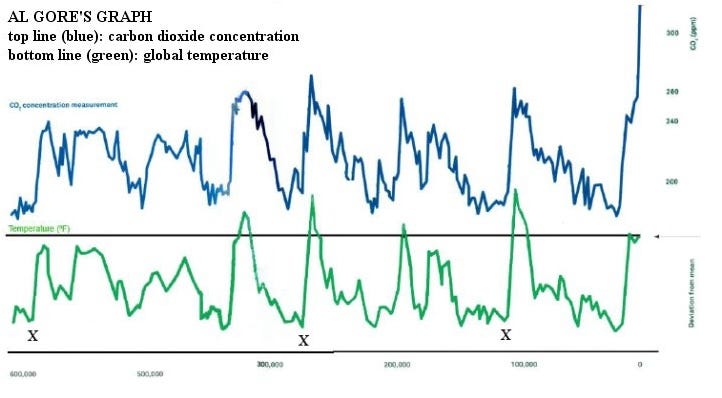
It was decided to present a graph about how CO2 has been accumulating as an increasingly dense barrier to planetary cooling. (Remember that graph? In 2007, Al Gore amplified the same message).
“While considerable effort has been spent on understanding the role of carbon dioxide as a greenhouse gas, its role in the overall heat dynamics of the planet is dwarfed by the role of water,” writes John Feldman, a NY filmmaker who produced the powerful film “Regenerating Life: How to cool the planet, feed the world, and live happily ever after,” about Jehne and this topic. “Water is not only the most abundant greenhouse gas, its flow through the system is the primary way that the planet cools itself.”
This overlooked 95% has frustrated me ever since I started learning about the water cycle. Obviously, we need to deal with carbon emissions, especially those from transportation, manufacturing, and industrial agriculture.
And let us not forget all of the wars on the planet. Just imagine, we can’t have wars because they will hasten the end of all.
But even if these were stopped today, the earth will continue to dry up and die.
It will keep on dying not only because CO2 remains in the atmosphere for up to 1,000 years, but above all because the most crucial part of the equation is basically misunderstood and discounted by policymakers.
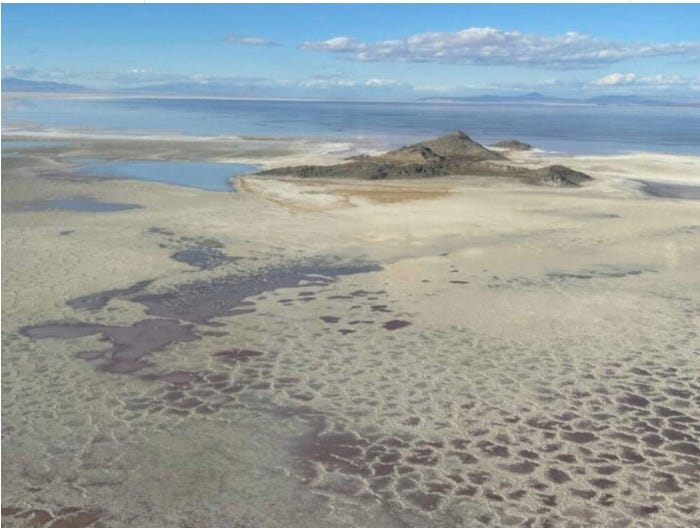
Two years ago, there was a New York Times opinion piece by economist Paul Krugman, which was a typical example of our mistaken CO2 narrative. Krugman’s work is titled What a Dying Lake Says About the Future. He was writing about the shocking disappearance of The Great Salt Lake in Utah, which had by then already lost two thirds of its surface area.
Krugman's headline was wrong. It should have read What a Dying Lake Says About Our Ignorance of Nature's Laws.
California's Central Valley used to be a wetland. The Sahara Desert used to be green--the oldest cave paintings show herds of cattle, the later ones, camels.
What happened? Destruction of soils that hold water and sequester carbon, removal of green cover, poor irrigation practices--and today, we can add the heat-radiating effects of cement and asphalt around the world.
The earth has lost nearly 50% of its green cover, as well as the animals, birds, bugs and bacteria that sustain its ecosystems--how could anyone believe this is not the bigger crisis--and also where the greatest hope lies?
The work of individuals like the ecologist Allan Savory, whose 2014 TED talk about desertification sparked the development of regenerative agriculture, and hydrologist Walter Jehne, with his lectures about regreening the planet by restoring the "soil-carbon sponge" need to be front and center in policy-making--but are there people out there who have the capacity to "get it?"
Kamala Harris promises a building boom to take care of America’s housing shortage. How many trees will be felled and ecosystems destroyed to fulfill this commitment?
And how many more houses will be needed in the future if Trump gets in and birth control is outlawed?!
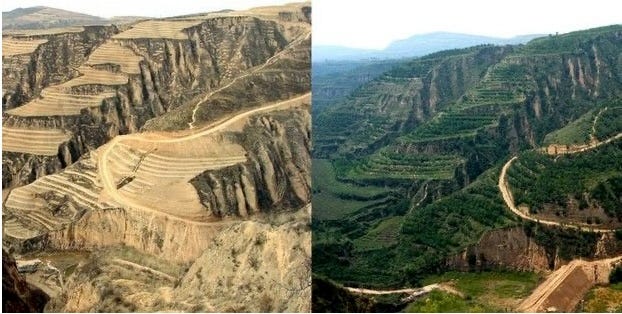
“In 1994, China and the World Bank restored biodiversity and life-systems on 4 million acres of over-grazed, over-harvested lands in north-central China, lifting millions of people out of poverty in less than 10 years. The regrown ecosystems also absorbed a lot of carbon and restored watersheds, reduced the impacts of global warming, and improved overall quality of life.” (Regrowing China’s Loess Plateau —John D. Liu AllCreation.org/home/regrowing-loess-plateau)
Comments
Nothing yet. Say the first thing.
Sign in to join the conversation.