
This article is co-written by Hélène Heath and Chloe Crane-Leroux.
Ramp season is in full swing here in the upper Hudson River Valley. And lucky for me (Hélène here), my property is rampant (see what i did there) with these little wildlings.
Last year, John and i used them haphazardly in pastas and sauces, but this year i thought i’d kick it up a notch. So i roped in Chloe Crane-Leroux for a cute ramp romp at Heathland, which inspired a brilliantly fresh, equinoctial dish.
Below, I’ll go through the foraging and prepping process, and Chloé will share the wonderful recipe she created to culminate our rampedition.
Please enjoy!
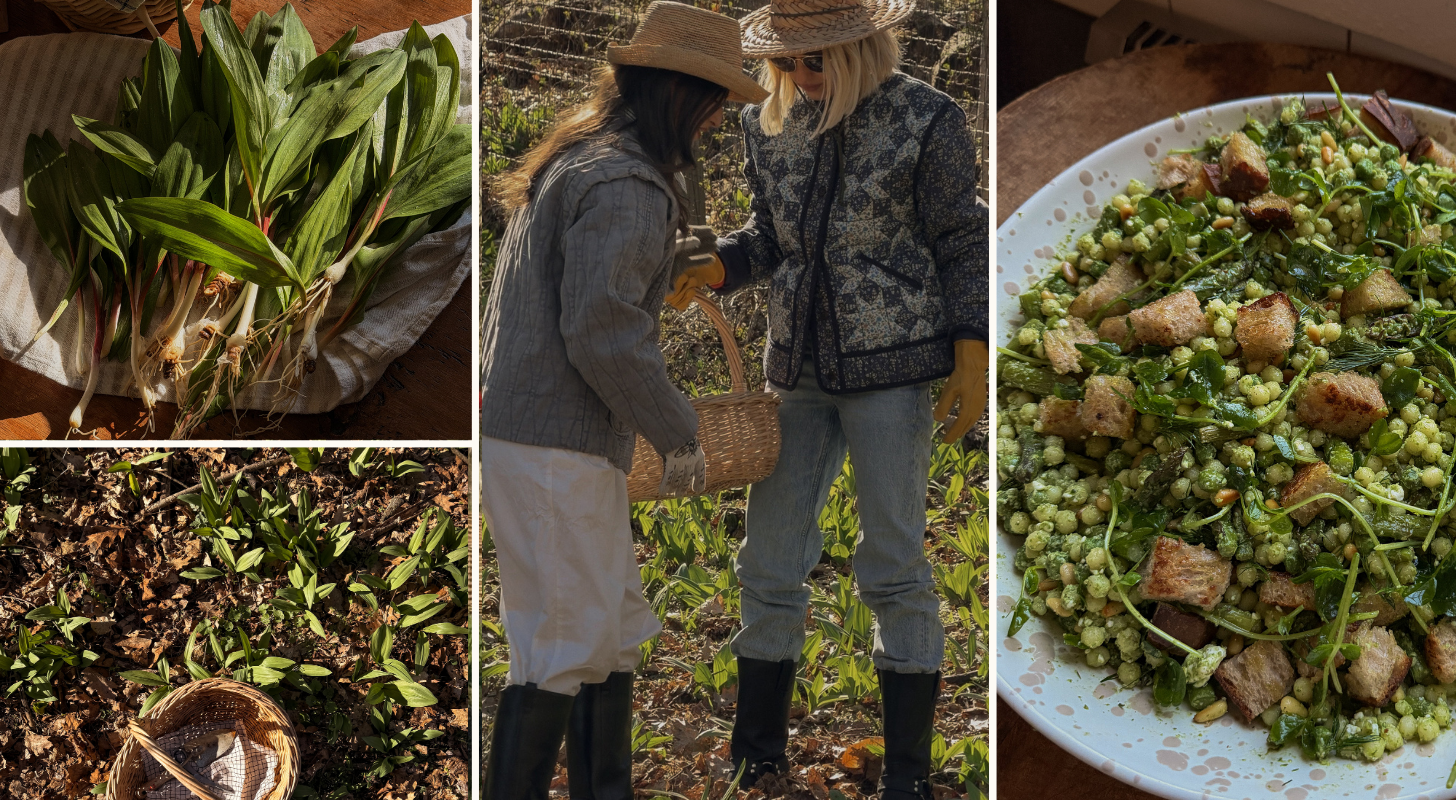
For the uninitiated, ramps are small wild leeks that grow on forest floors. While their leaves look like very early stage tulips, the buried part reveals a stalk similar to a scallion, forming a delicate garlicky flavor.
Spotting ramps in the wild is a little joy that stirs up one's sense of wonder, for a few reasons:
Typically among the first pops of green in the spring, always very elating.
That pure feeling of delight from finding something edible in the wild.
Their window is short! They might be the firsts, but stick around for only 3-4 weeks before dying back.
Their ephemeral nature makes them even more special, and especially thrilling to catch at the farmer’s market. Not just a vegetable, they’re a symbol of spring and the miracle of nature’s cycle. The mere sight of them triggers thought spirals about the ecosystem and how amazing the earth is. Yes? Just us?
How fortunate that we discovered swaths of them blanketing Heathland’s wooded areas when we moved here 5 years ago. Come the end of winter, clusters of bright green leaves poke through the masses of decomposing ones left behind by the deciduous trees under which they hide.
The timing was precociously right during Chloé’s mid-April visit to Heathland, so we suited up and got to work.
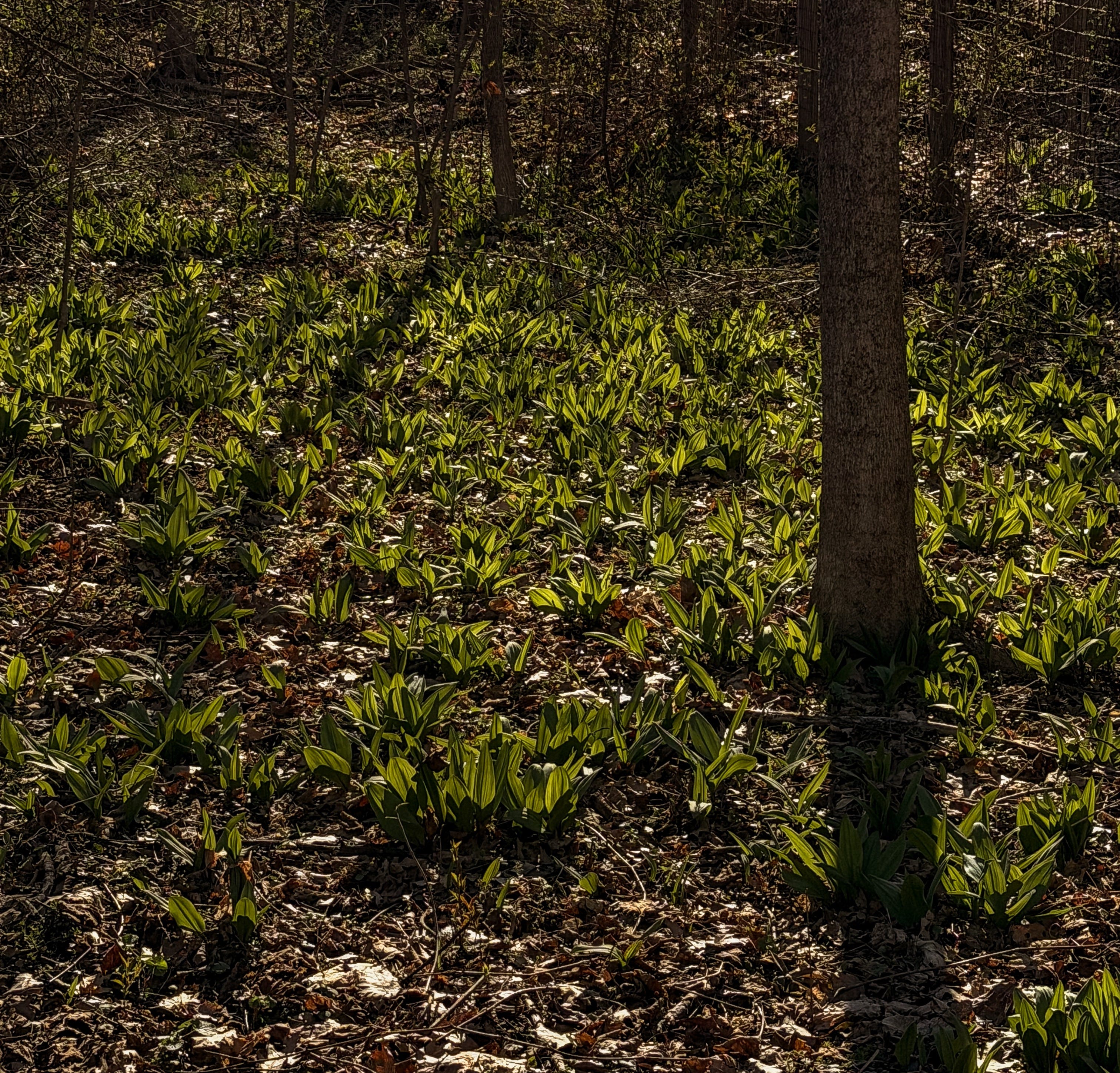
IMPORTANT! WHEN FORAGING RAMPS, TAKE ONLY THE LEAVES AND LEAVE THE BULB TO KEEP THE PLANT ALIVE. REMOVING THE BULB MEANS THE END FOR THAT RAMP!
My home sits on 13 acres of land ranging from marshy to hilly to meadowy to wooded to moist to well-drained. It’s its own little ecosystem where native flora and fauna cohabitate and thrive (for the most part). Well-established plants commingle with newbies added by moi, all while we try to keep the invasives under control (grr).
All this to say: ramps are RAMPant on my property. They grow in several areas all over and in very dense patches. For that reason, we feel comfortable harvesting some in full, bulb and all.
On y va!

A basket to gather the harvest (mine is vintage but i love this similar one)
A pair of scissors or pruners (something sharp and precise)
Gloves (optional) — Chloé is wearing my trusty bee gloves and i’m wearing a leather pair
A garden trowel (not necessary for leaf-only harvesting!)
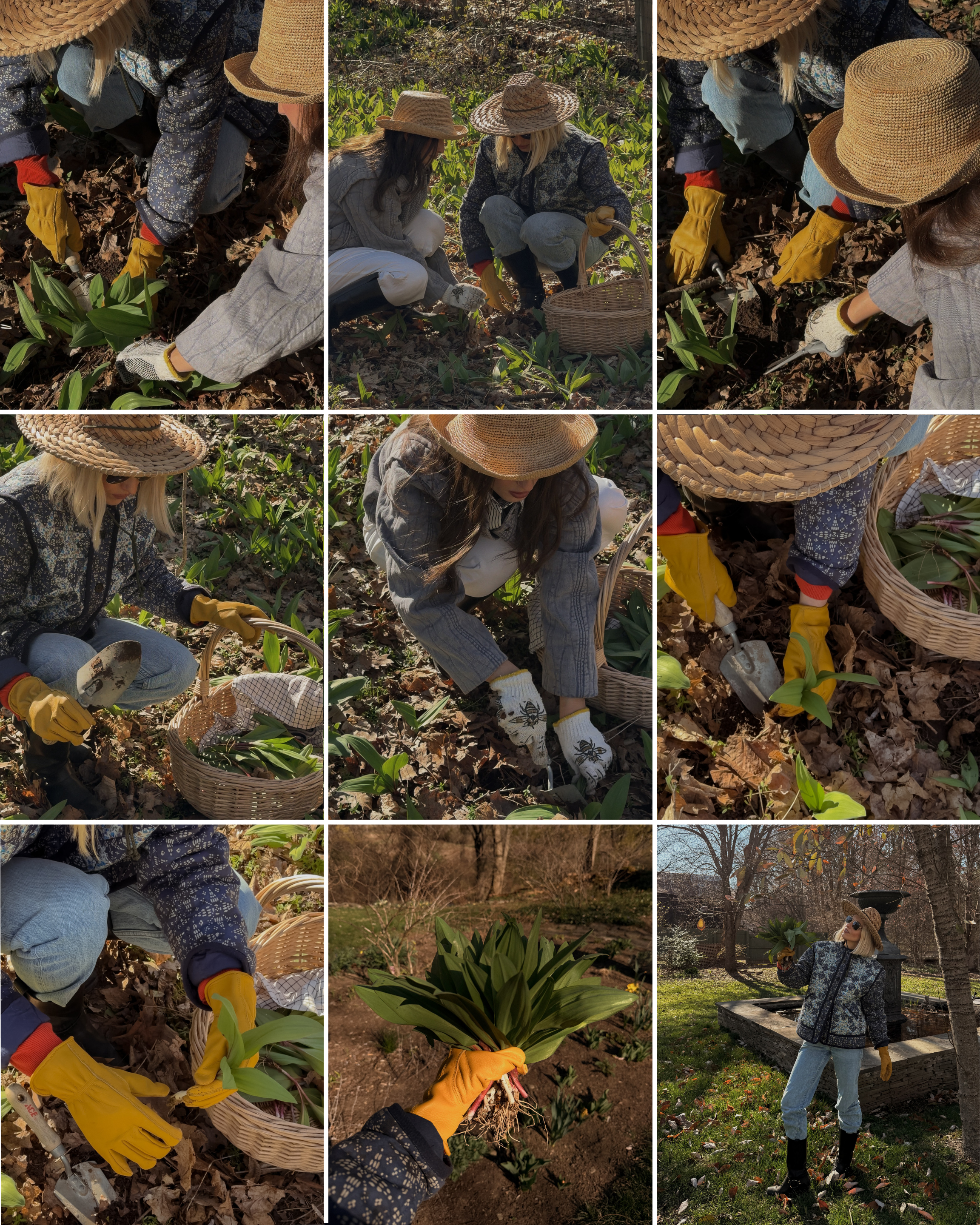
Pro tip: tall boots are a must to avoid ticks.
We made our way downfield to an easy access foresty bit, where ramps go on for as far as the eye can see. With excitement in our eyes and flutters in our hearts, we got right in there.
Making sure to cut an equal amount of leaves to each full plant we dug up, using scissors to snip the greens and the trowel to gingerly loosen up the surrounding dirt and prop up the bulb.
Note: If you simply must have the bulb but want to be gentle with nature, you can snap off the stalk right before the roots. Leaving the dangly tip ensures the plant’s survival.
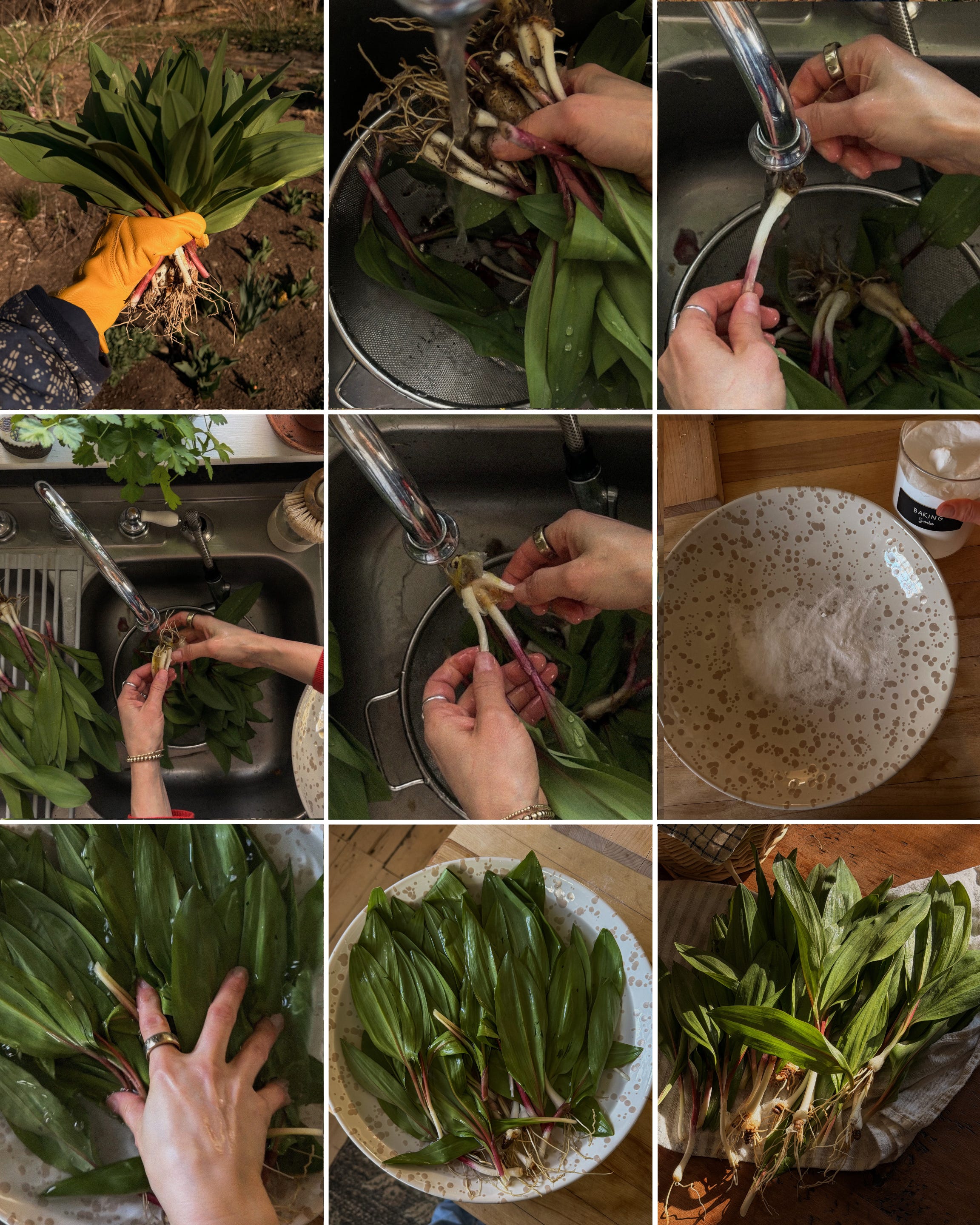
Since self-foraged ramps come from the literal forest floor, you shouldn’t be concerned with pesticides or gross germs… that being said, i still believe in giving them a bath. You never know which critter did what on what, plus no one wants a sandy bite of dirt.
Having just the leaves makes for a quicker process, as the bulbs and roots require a very thorough rinse. Under running water, I peel back any slimy layers (so scallion-coded) and rub away every last morsel of earth i can see.
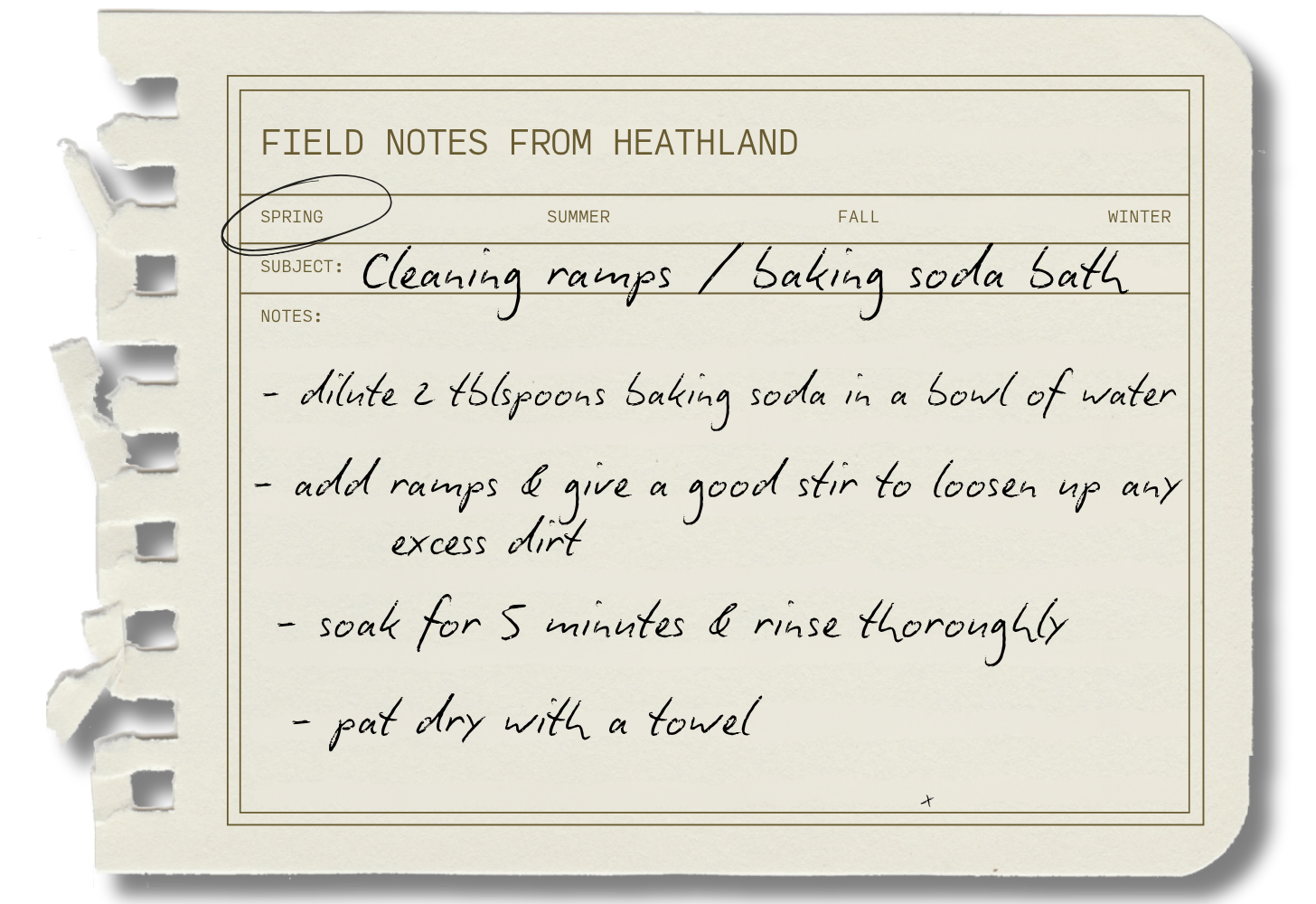
The real sprucing comes c/o a baking soda bath — which is how i prep all my fruits and veggies. I’ve found it to be the most effective, both in method and in cost.
Instruction card below for squeaky clean ramps / visual demonstration above.
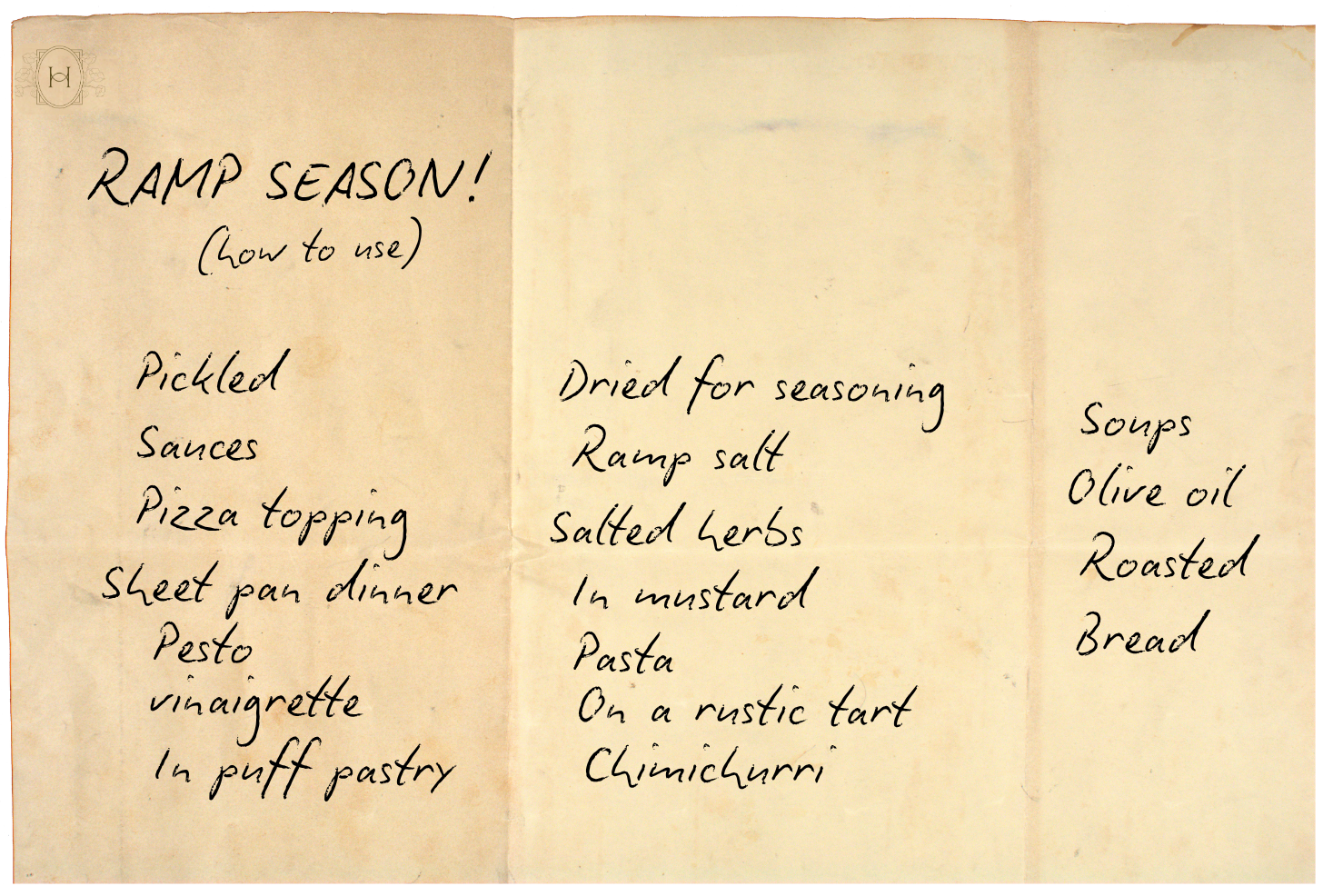
Bright, fresh, and ready to use for all your seasonal cooking! Ramps are surprisingly versatile, enhancing pretty much anything you can dream up with their zippy flavor. Here’s a rough list for how you can use ramps in your spring cooking.
How fortunate to have Chloe Crane-Leroux as my foraging partner to chef us up a gorgeous ramp-forward dinner — a feast for both our eyes and stomachs, equally important if you ask us.
Without further delay, voici her recipe.
Hi! Chloé here. Ramp season is one of my favorites. It feels a little magical… and a little chaotic, because if you blink, you miss it. They show up for what feels like five minutes, tucked between herbs at the market, or if you’re lucky, hidden out in the wild… and then, pouf, they’re gone.
I get so excited when they arrive. It’s my unofficial start to spring cooking. That garlicky, slightly wild flavor just wakes everything up.
So take this as your sign. If you see ramps, grab them. Don’t overthink it. Buy a bunch, go forage if you can, just lean into it while they’re here. Because they won’t be for long, and recipes like this are exactly why they’re worth the hype.
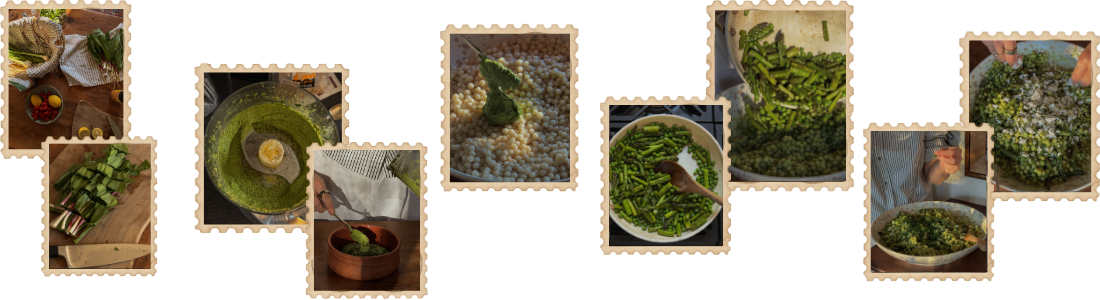
My pearl couscous with charred spring vegetables and ramp pesto is bright, herbaceous, and exactly what I crave this time of year. Happy ramping!
Serves 4-6
For the couscous:
2 cups dried pearl couscous
10–12 asparagus spears, trimmed and cut into 1–2-inch pieces
1 cup sweet peas (fresh or frozen)
2–3 tablespoons extra virgin olive oil
Sea salt and freshly cracked black pepper
For the ramp pesto
10 ramps, cleaned and roughly chopped
2 tablespoons extra virgin olive oil
1/3 cup pine nuts
1/4 cup nutritional yeast
1 teaspoon sea salt
1 teaspoon freshly cracked black pepper
To finish
1/3 cup feta, crumbled
1/3 cup pine nuts, toasted
1 handful fresh dill, roughly chopped
1 bunch pea shoots
2 cups sourdough bread, cubed
1–2 tablespoons olive oil
Cook the couscous
Bring a large pot of salted water to a boil. Add the pearl couscous and cook until tender, about 8–10 minutes. Drain and set aside.Make the ramp pesto
In a blender or food processor, combine the ramps, olive oil, pine nuts, nutritional yeast, garlic, salt, and pepper. Blend until smooth but still slightly textured. Taste and adjust seasoning if needed.Char the vegetables
In a large pan, heat the olive oil over medium-high heat. Add the asparagus and peas, season with salt and pepper, and cook for 5–8 minutes, stirring occasionally, until tender with a light char.Toast the pine nuts
In a dry pan over medium heat, toast the pine nuts for about 2 minutes, tossing frequently. Keep a close eye—they can burn quickly. Remove immediately once golden.Make the croutons
In the same pan, add olive oil and the cubed sourdough. Toast until golden and crisp on all sides.Bring everything together
In a large bowl, toss the warm couscous with the ramp pesto until evenly coated. Fold in the charred vegetables, feta, dill, toasted pine nuts, and pea shoots—letting them gently wilt into the warmth.Serve
Top with the crispy sourdough croutons and an extra drizzle of olive oil if you like. Serve warm or at room temperature.
TL;DR — Are ramps worth the hype? It’s an emphatic YES.
There’s something whimsical and enchanting about sourcing an ingredient in the wild, especially because it fosters our connection with seasonality. Feeling in sync with the cycle of nature is both grounding and gratifying — plus ramps don’t make you work that hard for them, yet the satisfaction is all the same.
May our foraging adventure compel you to look out for vernal produce, and please drop us a line with your own rampecdotes if you have any.
Bon appétit et à bientôt,
Hélène & Chloé

Comments
Nothing yet. Say the first thing.
Sign in to join the conversation.