
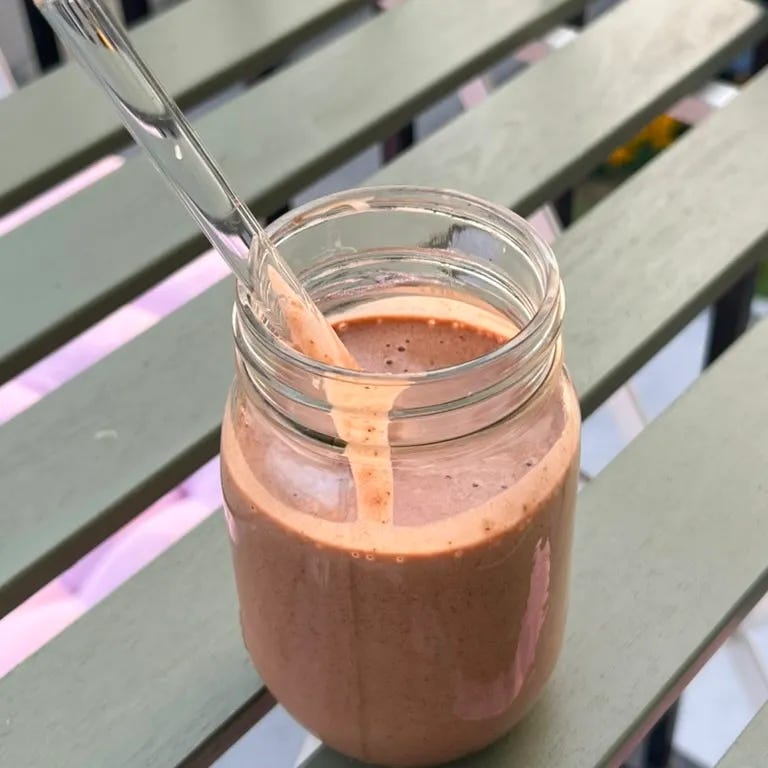
Did you know you can just put beans in your smoothie? And you won’t even taste them? And you’ll be doing your gut and hormones a huge favour by doing so?
Black beans are extremely nutritious, but a lot of people don’t really know how to eat them. They’re packed with fibre, plant protein, magnesium, iron, folate, potassium, and polyphenols — and they’re also food for your little gut microbes.
“But Naomi, beans make me gassy.”
So glad you brought that up. Beans contain certain carbohydrates that our own human-made digestive enzymes can’t fully break down. Instead, they travel to the large intestine, where our gut microbes break them down. If you’re unable to digest beans, it’s actually not a problem with the beans themselves — it’s a problem with your gut microbiome.
Your gut microbiome (the collection of different bacteria that live in our guts) is a living ecosystem. We have a symbiotic relationship with it — for us, they help us break down parts of plant foods that we can’t fully digest alone. Different microbes thrive on different types of fibre and plant compounds (they all have a different favourite food), which is why diversity in your diet is so important and why I always recommend aiming for 30 different plant foods per week to support your gut. When we regularly eat a diverse range of plants, we feed and cultivate a more diverse ecosystem in our gut — and the more diverse the ecosystem, the more resilient and efficient our digestive system will be.
Black beans, for example, provide fermentable fibers and resistant starch that become fuel for beneficial gut bacteria. Those microbes produce short-chain fatty acids (SCFAs), which are incredible little chemical compounds that support the gut lining, immune system, metabolism, and the communication between your gut and your brain.
Our modern lives aren’t great for our microbiomes. Chronic stress, alcohol, ultra-processed foods, carnivore diets, low plant diversity, and environmental chemical exposures can all disrupt the ecosystem. When your gut is struggling, removing more and more “trigger” foods can absolutely make symptoms feel better in the short term — but it doesn’t address why your tolerance to these foods is low in the first place. It’s not a long-term solution.
My philosophy is a little different.
Rather than living in constant fear of foods that might make you bloated and having a laundry list of foods to avoid, I want to help you work towards true food freedom and gut resilience: a world where you can eat anything and everything without symptoms. Yeah, it’s possible.
That might mean spending 3-6 months gradually rebuilding your gut ecosystem, increasing plant diversity, supporting digestion, and figuring out the actual root cause of your chronic bloating and digestive issues. Foods can become a normal, delicious, nutritionally-supportive part of your life instead of a source of fear — for EVERYONE.
If you still don’t believe me that you need beans in your life, here are some rapid fire facts on how beans support your whole health:
For your hormones → more stable cycles and fewer hormone-related symptoms
The fibre in black beans supports regular bowel movements and healthy estrogen elimination through our gut, while magnesium and other nutrients support the processes your body uses to make and metabolize hormones. IRL, that can look like less constipation, less bloating around your period, more predictable bowel movements, along with fewer pre-period crashouts, less luteal phase anxiety, and fewer breakouts.
For your pre-period anxiety → a calmer, more steady second half of your cycle
Beans give you a combination of magnesium, fibre, protein, and complex carbohydrates that can help create more stable blood sugar. And because your gut and brain are constantly communicating, a healthier gut ecosystem also supports your nervous system. This means fewer blood-sugar-crash mood swings, less “I feel like I’m losing my freaking mind” PMS, steadier energy, and a more resilience when life gets stressful.
For your gut → better digestion and more food freedom.
The fibres in black beans feed your gut microbes, helping support a more diverse and resilient microbiome. Over time, building tolerance to a wider variety of plant foods can mean more regular + bulkier poops (that’s a good thing), less digestive unpredictability, and being able to eat at a restaurant or travel without constantly wondering what food is going to wreck your stomach.
For your brain → better support for focus, mood, and stress resilience
Your brain needs a steady supply of energy and nutrients to function well. Black beans provide magnesium, folate, iron, and other nutrients involved in energy metabolism and nervous-system function. This means fewer hunger-induced mood dips, and more stable energy to get through your day.
Look at all those bean benefits you’re missing out on! And this is why I care so much about adding foods back in, rather than living in constant fear of what we should avoid.
I am taking four (yes, only 4!!) new 1:1 nutrition clients starting in September. There are a lot of really exciting things happening behind the scenes in my nutrition work right now, so I’m not sure if I’ll keep applications open beyond this fall. These fall spots usually fill up quick. All this to say is, if you’re looking for 1:1 nutrition help with healing after hormonal birth control, acne, period problems, ADHD management, endometriosis, PMOS/PCOS, supporting your sensitive body — I invite you to apply to work with me below.
And if you’re not sure yet, but just need more information on how nutrition actually helps with these things, start by booking a free call here.
Read on for the black bean chocolate smoothie recipe that will feed your gut and calm pre-period anxiety :)
Comments
Nothing yet. Say the first thing.
Sign in to join the conversation.