
Welcome to Lib Dem Newswire #207, which includes a look at why the Lib Dems need more local election candidates, a discussion of James Graham’s hit play This House, news of how the Cabinet Office moved very slowly to correct an error in government pay and more.
First, however, congratulations to the new Lib Dem councillors since last time, and their teams - Chris Shank, Caleb Pell, Paul Evans and Barbara Jayson.
The seat changes across the principal authority by-elections since last time are Reform +3, Conservative +1, Green +/-0, Labour +/-0, Lib Dem +/-0, Plaid +/-0, SNP +/-0 and Independent/Other -4.
A reminder that you can get more Lib Dem news from me via WhatsApp throughout the month without waiting for the next edition of this newsletter. The WhatsApp service is broadcast-only and people signed up to it receive around three to five batches of messages a week with the latest news about the party, by-election results, and the like. It’s a free service and all members and supporters are very welcome to join.
You can sign up to the WhatsApp updates here.
One final preliminary: I have recently switched to using the online Keeper password manager, which makes it easy to create secure, unique passwords for all your logins, while also keeping them easy to use. You can get a free trial and then 30% off your first year with this affiliate link.
Best wishes,
Mark
P.S. If you haven’t yet had time to read it, last time’s edition is available online: It’s boom time for bar charts and MRPs (LDN #206).
The government’s new strategy guidance for Ofcom has very little to say about improving the performance of parcel delivery firms. Yet, mention the topic to most people and they will have a tale of woe, a claimed ‘sorry you were out’ message when they were in all day, a parcel thrown over a fence, or their local Facebook group being home to regular messages as people ask ‘the delivery company claims they left a parcel with me but that’s not my doorstep in the photo; does anyone recognise it?’
This is why I have put down a motion in Parliament:
The latest episode of Political Fictions is all about governments struggling with small majorities in the 1970s:
Mark and Cory talk about James Graham’s play This House. The hit play, available to stream from the National Theatre, is about party whips trying to prop up a government without a secure House of Commons majority in the 1970s. Mark and Cory marvel at the kipper ties and rotary dial phones, discuss the importance of treating your political opponents with respect, and ponder whether works of art would be improved if they spent more time celebrating the achievements of Labour governments.
Regular listeners will know we have a ‘Phil Woolas award’ segment in the show. Our sincere condolences therefore to his friends and family on the news that broke just before publishing this episode of his death from cancer at 66.
You can also find this episode on Spotify, Apple Podcasts, YouTube and all the usual podcast places.
Next time we’re reviewing the first series of The Thick Of It, which UK listeners can currently watch on BBC iPlayer.
With another set of local elections almost upon us and much hard work going into increasing our candidate numbers, it is a good moment to remember why that work is so valuable.
If you are taking part in it, thank you, and here is why your efforts are so valuable, while if you are asked to help, such as by being a candidate yourself, here is why saying ‘yes’ is so helpful.
It boils down to one simple thing. When we debate party policy, strategy or election tactics, questions about what might attract or put off voters often – and rightly – come up.
But there’s one sure-fire, guaranteed, rock-solid way of repelling voters, and it’s one we use far too often.
It’s not having a Liberal Democrat on the ballot paper. Zero votes for the party guaranteed.
Even in wards with multiple seats up for election and where we stand someone but not a full slate, it is still a problem – we’re still forcing people to vote for someone other than us.
(There is an important exception with STV local council elections in Scotland, of course, where the way the voting system works means standing ‘too many’ candidates can harm our election chances in a way that doesn’t happen under first past the post. So in Scotland, it’s at least one candidate in each ward that’s the equivalent of the full slates we should be aiming for elsewhere.)
The party has collectively been on a long journey over the last few years to raise our candidate numbers. We’ve made good progress catching up with the Conservatives and Labour, and now Reform and Green candidate numbers are also there to spur us on.
We regularly see our candidate numbers in council by-elections on the up and in last May’s local elections we continued our improving trend.
So we are making progress – but we are still short of where we want to be. Remember – every single voter gets a ballot paper, showing them whether we are standing or not.
Putting up candidates is not only about credibility and relevance. It’s also the way to get more people into the habit of regularly voting for the Liberal Democrats – a crucial step in building the sort of larger core vote for the party that will help us succeed more often.
It is also an important stepping stone for smaller local parties in building up their presence and activity. Getting some additional vacancies covered this time is one of the more straightforward and tangible pieces of progress that everyone can take pride in, and use to pick up some extra experience along the way. Even someone filling in a nil expenses return for the first time has chalked up some useful additional experience.
And you never quite know when putting up more candidates, or failing to do so, will turn out to be rather more important than you thought at that election.
That is just what happened in North Shropshire. Back in Spring 2021, the local party successfully put great effort into increasing its number of candidates. Then when an unexpected Parliamentary by-election took place, that boost in our local credibility – and the improved bar chart it provided – was vital for Helen Morgan’s campaign. A clear-cut case of us making our own luck.
Where our candidate numbers have increased in the last few years, it’s notable that this has happened across the board – from weaker local parties through to the strongest. It is part of how we are continuing to spread our local organisational strength more widely.
So, whatever your local situation, if you have elections coming up this May, let’s all do our best to make it a record-breaking year for the number of candidates.
Or if this has inspired you personally, you can find out more about standing here.
Good luck with your candidate numbers and let’s make this year a record-breaking one for the number of candidates our party puts up.
Ed Davey’s conference speech: A new Magna Carta to save our country from Farage.
Lib Dems table Parliamentary motion calling for the King’s state visit to the US to be cancelled. Petition on the topic here.
Jess Brown-Fuller: “David Lammy’s plans to slash jury trials are an insult to victims left waiting for justice and will do nothing to tackle the spiralling backlog.”
Sarah Teather gave a cracking maiden speech in the House of Lords.
Congratulations also to Wendy Chamberlain, Daisy Cooper and Caroline Pidgeon for making it into Women in Westminster’s top 100 list which “highlights one hundred individuals who are making a significant and lasting impact across the Westminster landscape over the past year”.
The English Council voted by 85%-15% to give the go-ahead to reforms to our candidate process which had previously been passed by Federal Conference and by the Scottish and Welsh parties. For the background, here’s the piece I wrote at the time of the Federal Conference debate.
The Federal Communications and Elections Committee (FCEC) has a new chair following Kath Pinnock stepping down. It’s, ahem, me.
The Lib Dem Campaign for Gender Balance (CGB) has a new team of officers.
Ed Davey is advertising for a Chief of Staff.
A lovely tribute to Arthur Preece has been published by Lib Dem Voice. I remember with affection working through his old electoral records to help on a by-election many years ago. Many condolences to his family and friends.
📲 You can get more updates like the above in real time through my WhatsApp updates three to five times a week. Sign up details here.
In case you missed them first time around, here are some of my blog posts and assorted pieces since the last LDN:
How many councillors has Reform UK lost since May? Updated, yet again.
Courts grant Reform legal relief over missing imprint.
An early handwritten election letter: Charles Curtis Craig in 1910.
A fine example of how to point at two potholes at once.
And one from the archives:
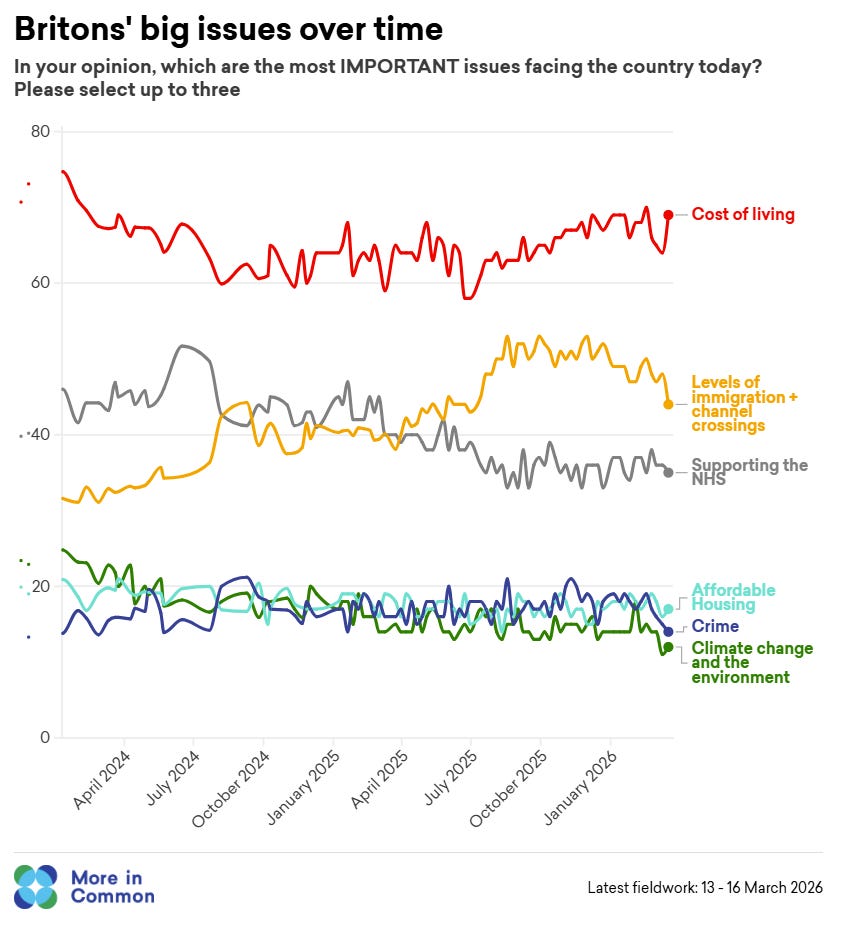
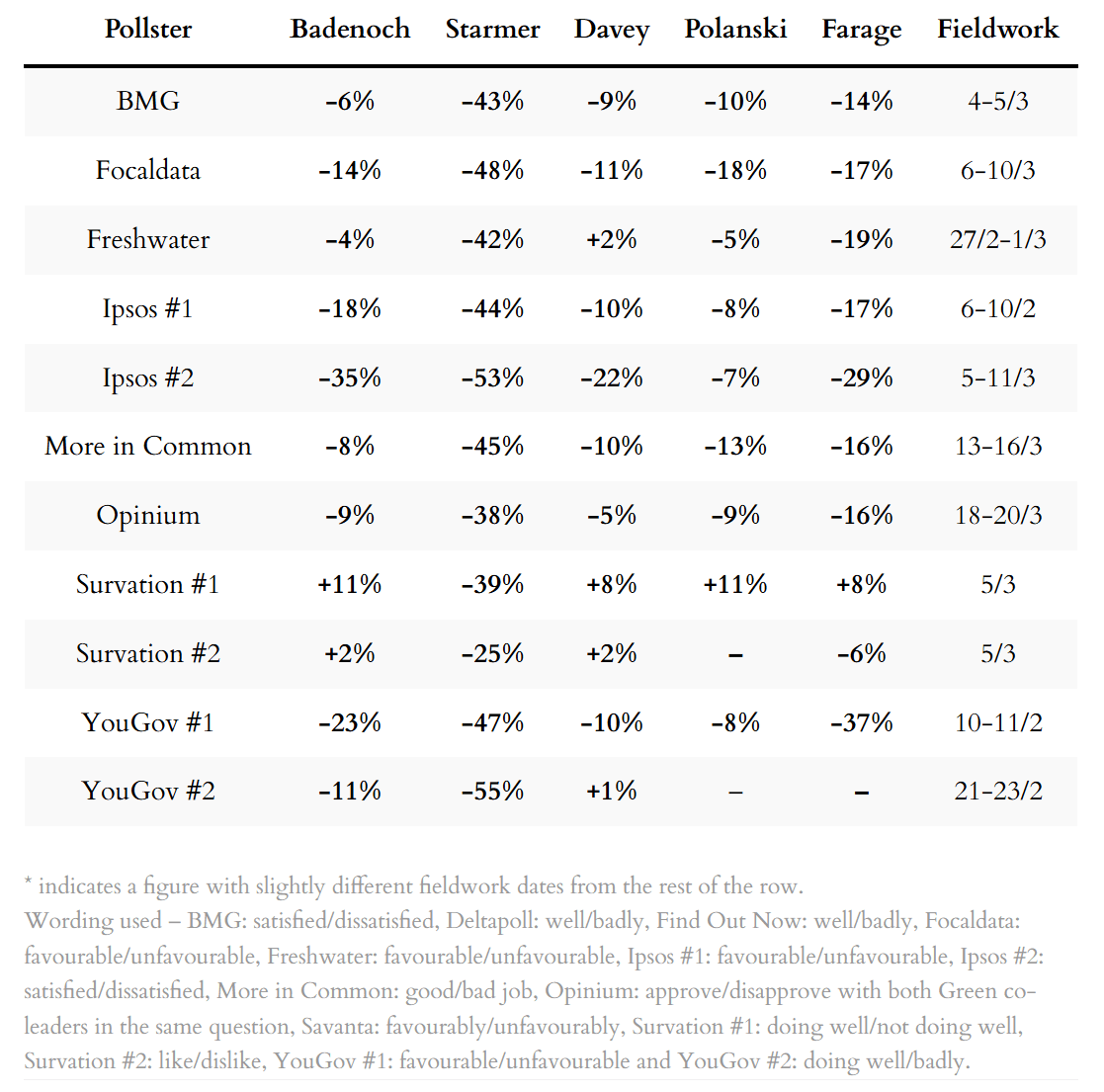
For more details on both voting intention and party leader ratings, and for updates in-between editions of LDN, take a look on my website.
Reform’s standing in the polls with all the pollsters has been slipping. But YouGov is one of the pollsters with the lowest ratings for the party, and Nigel Farage was not happy at all about that:
Selections since last time have included Lisa Smart’s reselection in Hazel Grove and the completion of the team for the Scottish Parliament elections.
Meanwhile, Reform is down a candidate in Scotland.
No further Westminster constituencies have advertised for selection since last time.
See all the Liberal Democrat Westminster PPCs selected and publicly announced so far here.
Contests since last time have included the Lib Dems just seeing off Reform in Southampton, the first Labour gain from Reform in a council by-election (the first Lib Dem one was last year), an exchange of seats with the Greens and a Welsh contest with a Lib Dem on the ballot paper after the previous no-show.
The seat changes across those contests are Reform +3, Conservative +1, Green +/-0, Labour +/-0, Lib Dem +/-0, Plaid +/-0, SNP +/-0 and Independent/Other -4.
This brings the total net seat changes since the last May local elections to Reform +68, Lib Dem +21, Green +3, Plaid +1, SNP -2, Independent/Others -14, Conservatives -25 and Labour -52.
For more details, see my table of net seat changes since the last May local elections.
A Labour councillor has joined the Lib Dems in Flintshire as have two independents in Swansea and two more in Huntingdonshire. A councillor is also back in the party in Sheffield after a complaint against him was dismissed, and a councillor has similarly returned in Luton.
However, a Lib Dem has left to sit as an independent in Warrington as have ones in Norfolk, Surrey, Sutton, Tewkesbury, Welwyn Hatfield and Woking. One has also joined the Conservatives in Buckinghamshire and a councillor who was suspended last year in Oxfordshire following a complaint has now decided to join Reform.
Finally, a councillor in North Somerset who previously quit the Lib Dem group but remained in the party has now quit the party but plans to remain in the Lib Dem group.
The latest of my reviews of books about the general election is out, and this one is a great introduction to the work of serious academic experts for the more casual reader:
Liberal Democrat Newswire is provided for free but isn’t free to run. Thank you so much to all the kind readers who donate to help cover its costs. It is quick and easy to sign up for a small regular donation with your debit card using GoCardless:
£10 per month / £5 per month / £2.50 per month / £1 per month
Thank you! (Other donation options, including by PayPal or cheque, are here.)
Can you guess which Liberal Democrat councillor accidentally discovered a hidden Sudanese military base?
If you enjoyed this newsletter, please forward it to a friend or share it online:
Thank you and best wishes,
Mark
Note: Links to books in the newsletter are usually affiliate links that generate a commission on sales made.
Comments
Nothing yet. Say the first thing.
Sign in to join the conversation.