
Welcome to Lib Dem Newswire #206 and a big thank you to everyone who has already responded to my annual appeal to help cover the costs of producing this newsletter and related activities.
This year I’ve gone for something a little different, and instead encourage you to take out a subscription to the paid-for edition of my weekly newsletter about opinion polling, The Week in Polls.
It is similar to a donation appeal except this time you get something in your email inbox once a week in return as well as the glow of goodness in your soul.
If you sign up now, you’ll also get 30% off The Week in Polls forever. That discount will carry over into future years if you decide to keep subscribing.
With that discount, it costs only £24.50 a year or £2.45 a month to get The Week in Polls each Sunday, including both the free lead article and also the paid-for round-up of 10 key insights from the latest polling data and analysis:
If you would be happy to help support Lib Dem Newswire but prefer a more traditional type of donation, that too would be lovely:
Either way, it’ll only take you a few moments but your support will be greatly valued for many more than a few moments.
Back to usual business, and congratulations to the new Lib Dem councillors since last time, and their teams - Andy Przybysz, George Western, Richard Pinnock, Jay Mitchell-Bunce, Ben Langmead, Craig Thurling, Helen Clements, Katie Pettman and Alison Barnes.
The seat changes across the principal authority by-elections since last time are Lib Dem +3, Reform +3, Green +1, Plaid +1, SNP +/-0, Independent/Other +/-0, Conservative -1, Labour -7.
Thank you to the readers who help keep me posted with news of more councillors leaving Reform. The list keeps growing! And it is always better to hear something twice than risk not hearing it at all - so please keep those messages coming.
One final preliminary: do you know others who might find these updates useful, interesting or both? Just point them here.
Best wishes,
Mark
P.S. If you haven’t yet had time to read it, last time’s edition is available online: 5 ways to build on our success (LDN#205).
When the government’s plans for the new Representation of the People Bill were originally published, I pointed out how they still left the door wide open to overseas financial influence.
Now the Bill has been published, we can see that it is a little better than those plans, tightening up controls on corporate donations somewhat more than was trailed. But the Bill still leaves the door wide open to foreign money. It is just that the foreign billionaire or government will need someone in the UK to cooperate with them. Which is no real barrier at all.
Read more in my piece here:
First-past-the-post really isn’t designed for five or six party politics. It’s why the party whose leader is Prime Minister after the next general election is likely to secure that outcome on a vote share that would have been a landslide suffering, career-ending failure at previous general elections.
Add in the motivations people will have to want to vote tactically against Reform, to continue to vote tactically against the Conservatives, to start voting tactically against the Labour government, to vote tactically for or against independence movements - to give just some examples - and it is very possible that we will have hugely varying voting patterns across constituencies, depending on which candidates manage to successfully present themselves as being in with a chance of winning in each seat.
New data from YouGov illustrates this powerfully:
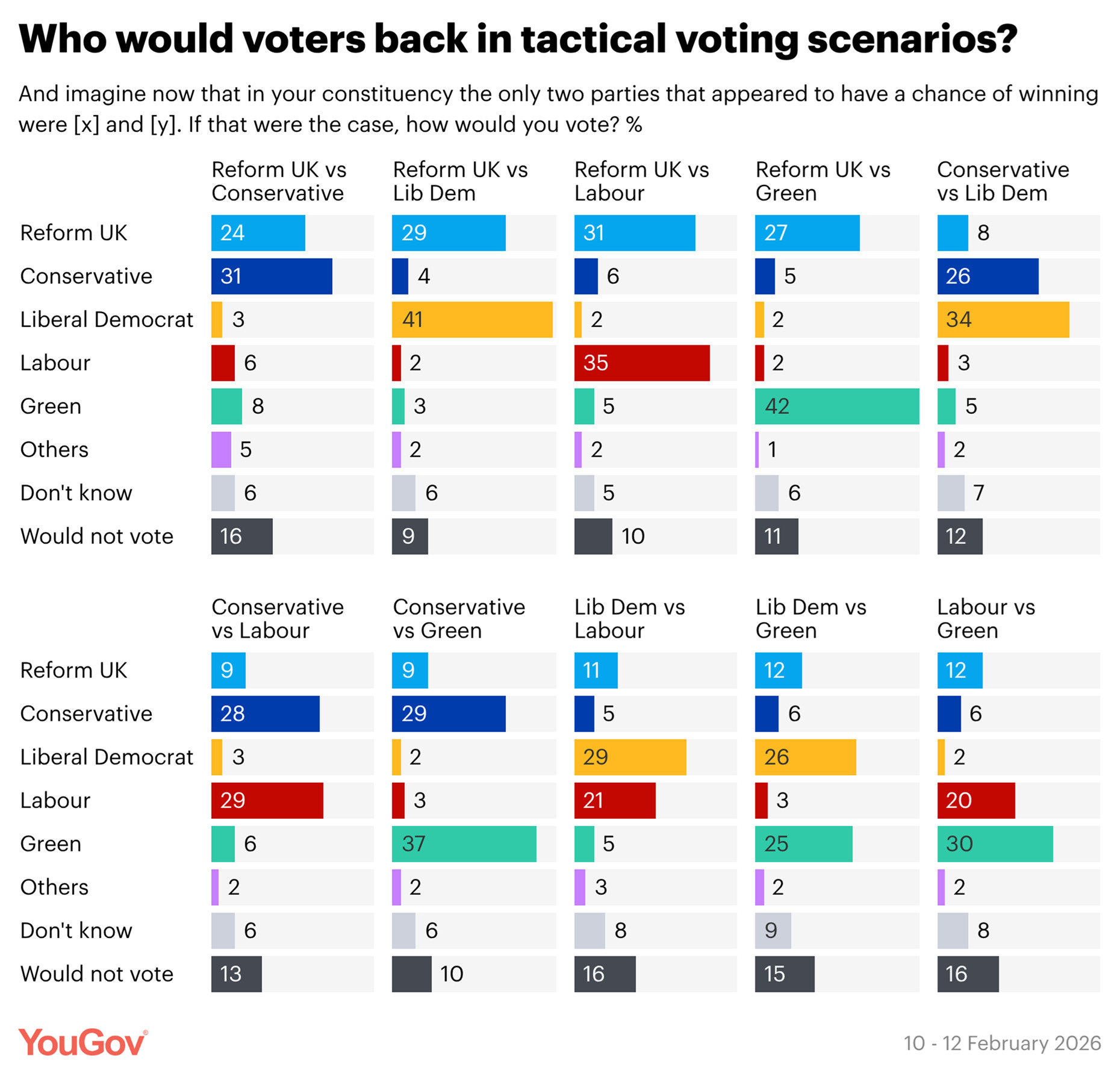
The use of “the only two parties…” in the question wording does, of course, focus people’s thoughts more tightly than they will be in reality at a general election. Even so, it shows just how much the fate of parties can be shaped by tactical voting. Reform, for example, are ahead in none of the hypothetical head-to-heads while the Lib Dems are ahead in them all. (One though is so close it’s better to view it as statistically tied.)
It also illustrates why, for all the importance of tactical voting against the Conservative government in 2024, it would be wrong to see tactical voting in general - or even tactical voting against the Conservatives specifically - as something in the past.
Tactical voting is very much part of the future too.
A quick digression to 2001 is instructive: after anti-Conservative tactical voting played a significant part in the large Lib Dem gains at the 1997 general election, and with a Labour government now in place rather than a Conservative one, some thought that such tactical voting was now in the past and the Lib Dems were bound to fall back. That didn’t happen at the 2001 election, and nor did anti-Conservative tactical voting suddenly slump either.1
So unleash those bar charts. (Responsibly, please.)
This is all also why it is good news that MRPs now have an established track record in British elections, with the best MRPs being good at predicting who are the main candidates in contention in individual seats. (If you’re wondering how on earth a poll can do that, my MRP explainer from before the previous election is still useful.)
Even the best MRPs are not perfect and I’m sure I’ll have the odd blog post or three about why MRPs are getting some specific constituencies wrong in the run-up to the next general election. But they are much better than projections based simply on national voting intention polls and, leaving aside any partisan self-interest, if lots of the public are going to want to vote tactically, it is good for democracy if there is a steady supply of reputable information to help voters with those decisions.
The first episode of my new podcast, Political Fictions, is out! Here’s the blurb:
In the first episode of Political Fictions, Cory and Mark talk about the 2011 film The Iron Lady. They discuss how the film presents the human side of politicians, what it says about Margaret Thatcher and her legacy, and ponder the appearance of some mysterious milk.
You can take a listen in your favourite podcast app, as well as on Spotify, Apple Podcasts, YouTube or the web.
Not about the Liberal Democrats, but I suspect people will find interesting this piece from the BBC explaining what ‘misconduct in public office is’ and why it is hard to convict people of it.
A good question to ask, and here is some fresh data to help answer it:
Daisy Cooper unveils Lib Dem economic plans to get Britain growing.
Lib Dems set out plans to stop SEND services being ‘cash cows’.
The Lib Dem plan to fix the student finance system and support graduates. (See also motion F10 for the York Spring Conference, the notes to which explain which parts of the proposals are England-only.)
Max Wilkinson: “The proscription of Palestine Action was a grave misuse of terrorism laws.”
We might love to joke about Lib Dems pointing at potholes, but Adam Dance points out the connection with the serious issue of local government funding.
South Cambridgeshire District Council smashes record for new council houses.
Daisy Cooper has won a Patchwork Foundation MP of the Year Award as has Josh Babarinde.
Choose a brighter future with the Liberal Democrats: election broadcast. The party’s latest Welsh broadcast is also out: Stop Independence and Save The NHS.
Howard Sykes is retiring as a councillor.
Good luck to Neil Fawcett, who has been elected Chair of the English Candidates Committee (ECC), succeeding Dave Raval, and to Tim Pickstone, who is the new Federal Council Chair, succeeding Antony Hook.
Tributes paid to Jim Wallace who died at the end of January.
📲 You can get more updates like the above in real time through my WhatsApp updates three to five times a week. Sign up details here.
In case you missed them first time around, here are some of my blog posts and assorted pieces since the last LDN:
Labour drops plan to cancel local elections.
Agenda published for Lib Dem Spring Conference 2026.
A quite glorious Conservative bar chart.
1 kilometre of road has had 164 pothole repairs in 5 years.
Why point at a pothole when you can punch it?
And one from the archives:
How political leaflets used to look: Should you be a nosey neighbour?
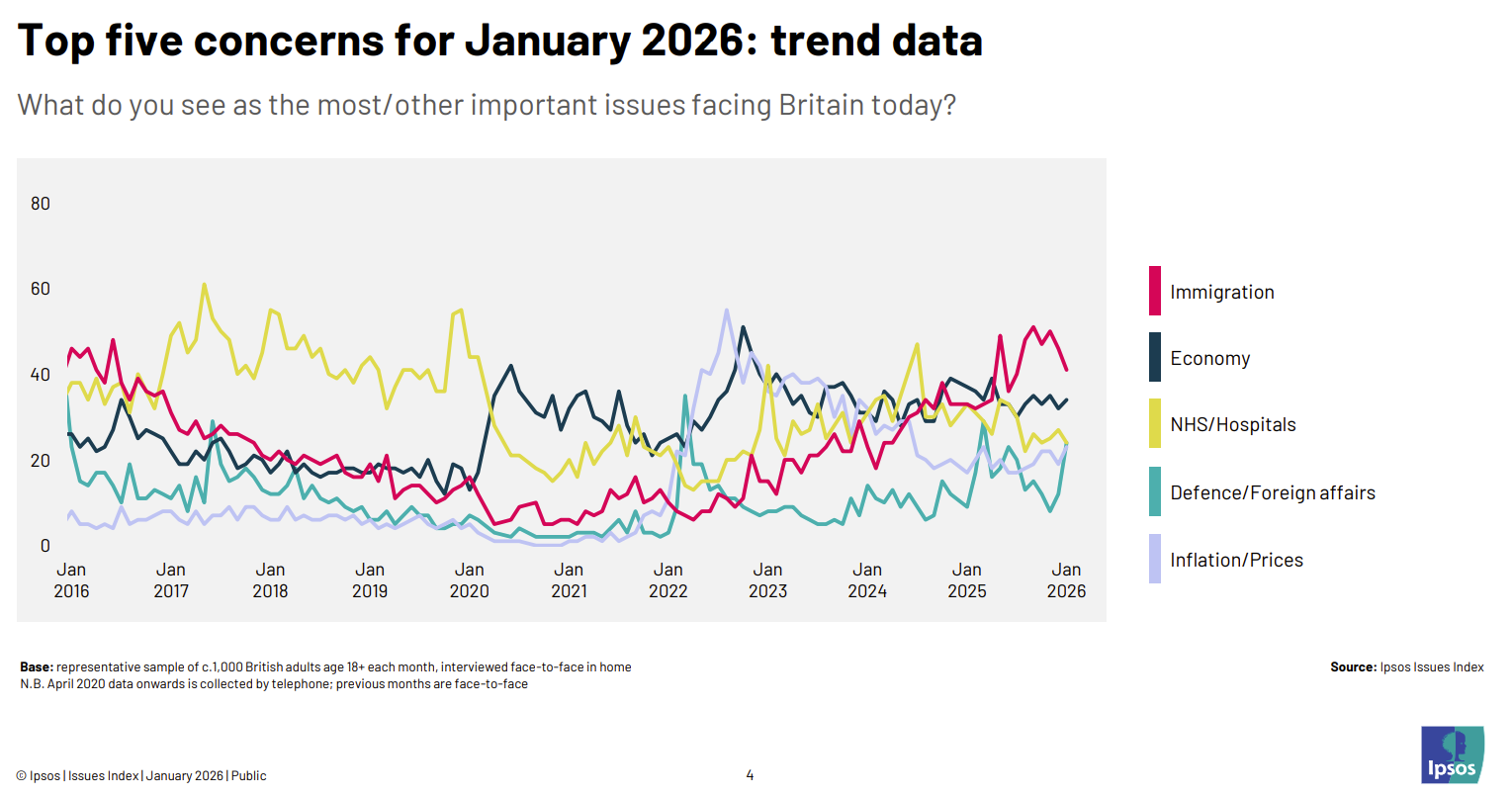
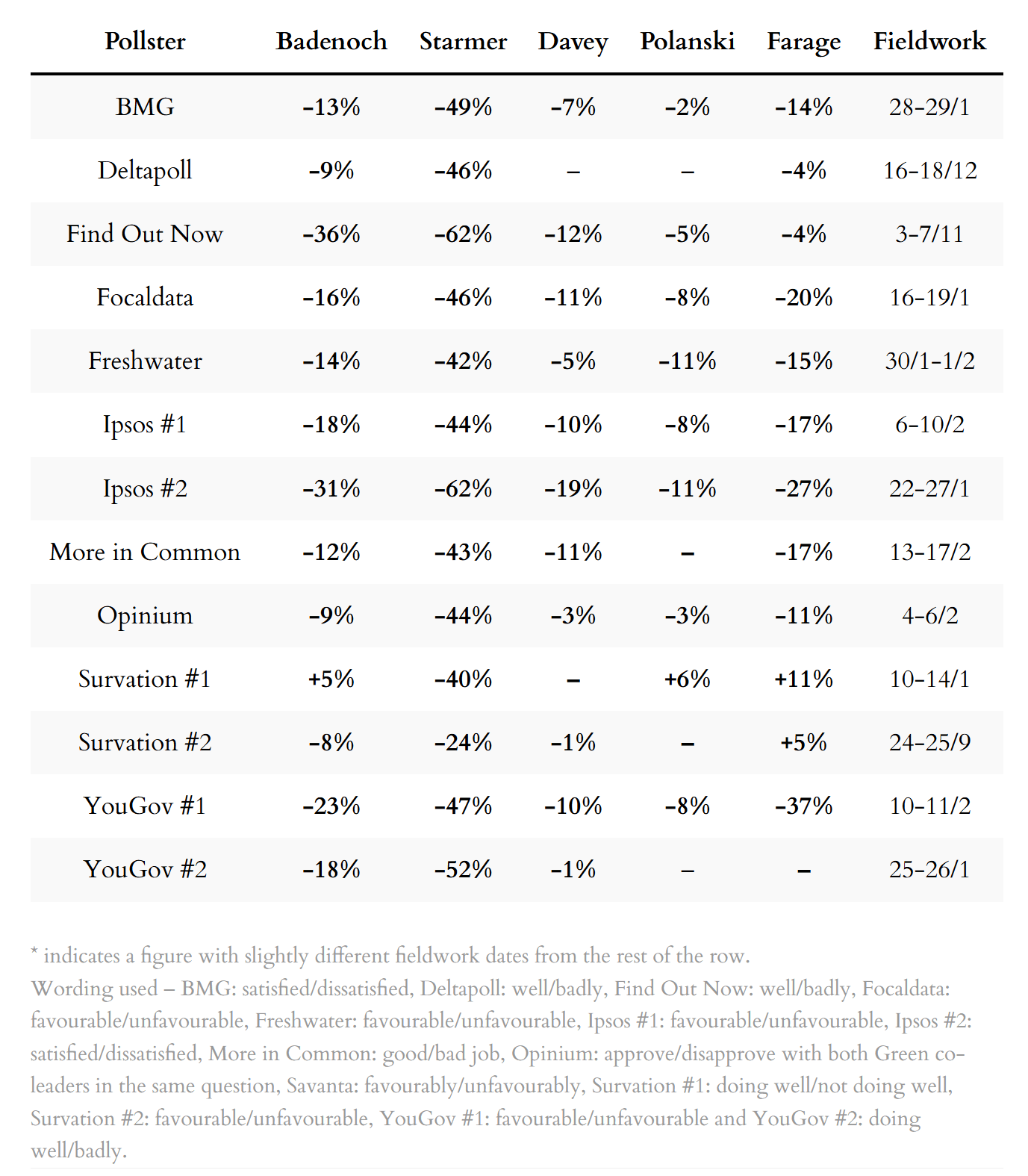
For more details on both the above tables, and for updates in-between editions of LDN, take a look on my website.
Reform have been in the lead for over 200 national voting intention opinion polls in a row. But scratch under the surface and there are numbers moving in the wrong direction for Nigel Farage’s party:
Selections since last time have included Jackie Pearcey for the Gorton and Denton by-election and also the Edinburgh and Lothians East list for the Scottish Parliament elections.
The latest Westminster constituencies to advertise for selection are Beaconsfield, Hereford & South Herefordshire, South West Hertfordshire, North Hertfordshire and the five Liverpool constituencies of Garston, Riverside, Walton, Wavertree and West Derby.
See all the Liberal Democrat Westminster PPCs selected and publicly announced so far here.
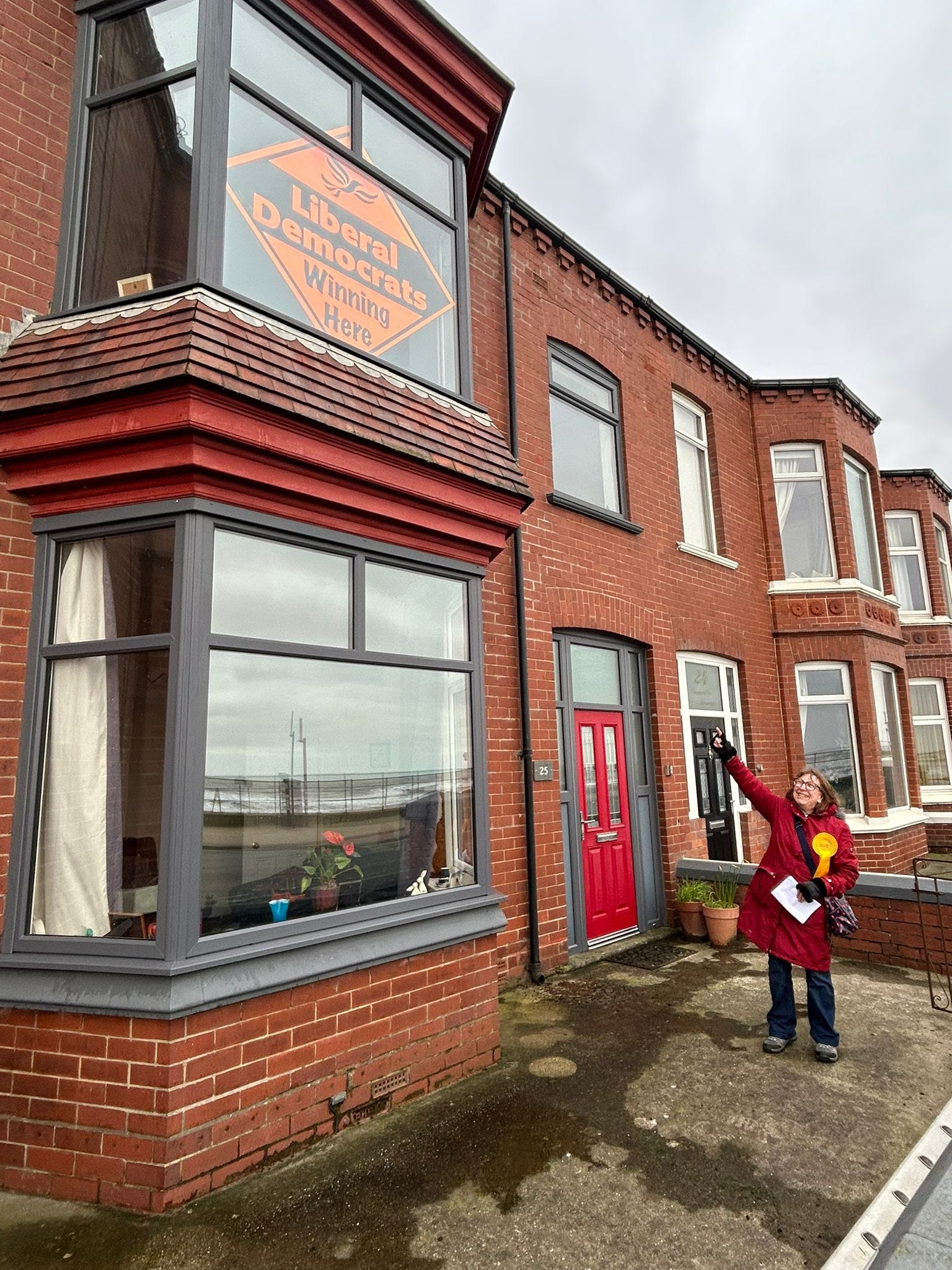
Contests since last time have included a Lib Dem gain from the Greens, a Lib Dem gain from the Conservatives, a City of London contest, the Lib Dems beating Independents for Frome in a town council contest for the first time in over a decade and a Lib Dem gain from Labour in North East England.
The seat changes across those contests are Lib Dem +3, Reform +3, Green +/-1, Plaid +/-1, SNP +/-0, Independent/Other +/-0, Conservative -1, Labour -7.
This brings the total net seat changes since the last May local elections to Reform +65, Lib Dem +21, Green +3, Plaid +/-1, SNP -2, Independent/Others -10, Conservatives -26 and Labour -52.
For more details, see my table of net seat changes since the last May local elections.
A councillor has joined the Lib Dems in Runnymede (from the Greens) as has one in Huntingdonshire (from independents), adding to the two reported last time. But a Lib Dem is now an independent in Luton and one has joined the Greens in East Sussex.
And in town council news, a new Lib Dem councillor is a former Labour council leader.
Earlier this month I questioned the government about why it gave the go-ahead to Capita taking over the administration of civil service pensions, a takeover that has gone disastrously wrong, and which it had been repeatedly warned about:
You can read more about it here.
Liberal Democrat Newswire is provided for free but isn’t free to run. Thank you so much to all the kind readers who donate to help cover its costs. It is quick and easy to sign up for a small regular donation with your debit card using GoCardless:
£10 per month / £5 per month / £2.50 per month / £1 per month
Thank you! (Other donation options, including by PayPal or cheque, are here.)
I think I have found the most inaccurate page on the internet.
If you enjoyed this newsletter, please forward it to a friend or share it online:
Thank you and best wishes,
Mark
Note: Links to books in the newsletter are usually affiliate links that generate a commission on sales made.
The academic sources I have just rechecked to refresh my memory on this point are frustratingly vague about whether or not anti-Conservative tactical voting went up a bit, went down a bit or stayed the same in 2001. But they all paint the same picture of it not falling sharply in response to the Conservatives being out of power.
Comments
Nothing yet. Say the first thing.
Sign in to join the conversation.