
Earlier this year, I moved my writing on science, climate, and science policy from Facebook to Substack and Lia Fáil. The reason was simple: Substack offered a much better medium for writing essays in greater detail and more complete form. It also gave me the possibility of reaching a more serious audience than people scrolling past cat pictures and advertisements for smart scales.
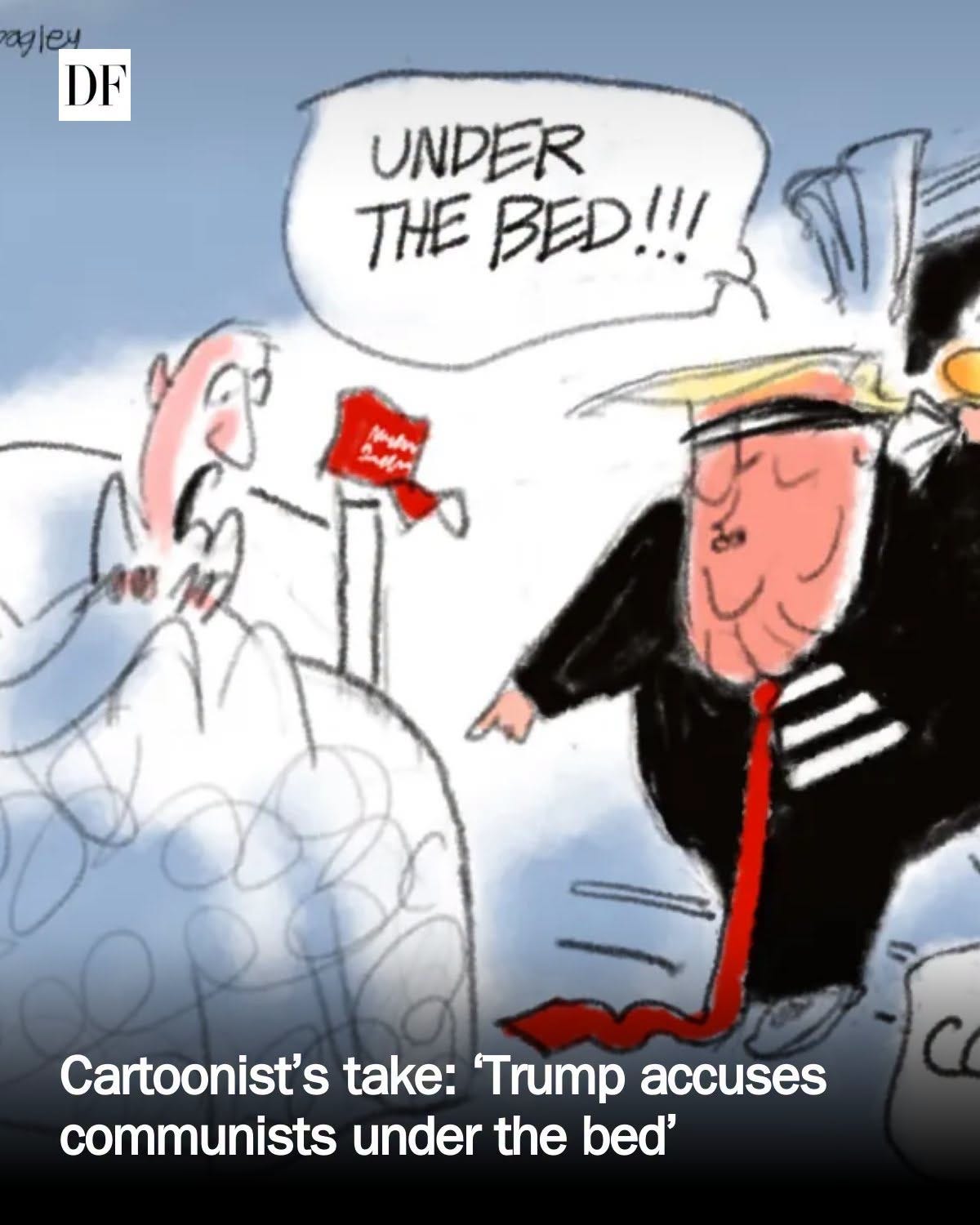
I expected that my writing would still be scrutinized by bots and trolls, and indeed it has been—although less than I feared. The particular ad hominem attack depends upon the subject. Writing about climate change brings pronouncements about fake science and my own supposed stupidity. Writing about inequality, environmental protection, or the Trump administration brings accusations that I am “woke.” Most recently, an increasing number of commenters have declared that I am a communist.
These comments are largely predictable, so I do not take them personally. I usually ignore them, knowing that the bot or troll has already moved on to its next target. But the increasing use of the word communist has made me wonder why it remains such a powerful insult—and even a threat—in American political life.
It is, of course, laughable that I would ever be considered a communist or communist sympathizer. I spent much of my career supporting the security of the United States and ultimately served as director of Los Alamos National Laboratory—the institution born from the laboratory that built the first atomic bomb. Yet I also understand that the facts of my life are almost beside the point. The label is not intended to describe me accurately. It is intended to place me outside the boundaries of legitimate American belief.
The word communist still strikes many Americans with an almost instinctive mixture of disgust and fear. It evokes the horrors of the Soviet Union: the dictatorship, confiscation, atheism, political repression. It reminds of the cold war with its not so “cold” deaths in the battlefields of Korea and Vietnam. To call someone a communist is therefore not merely to say that the person is wrong. It is to suggest that the person is alien, disloyal, and dangerous.
That is what made me think again about William Frauenglass, Albert Einstein, and the political power of a single word.
The Case of William Frauenglass
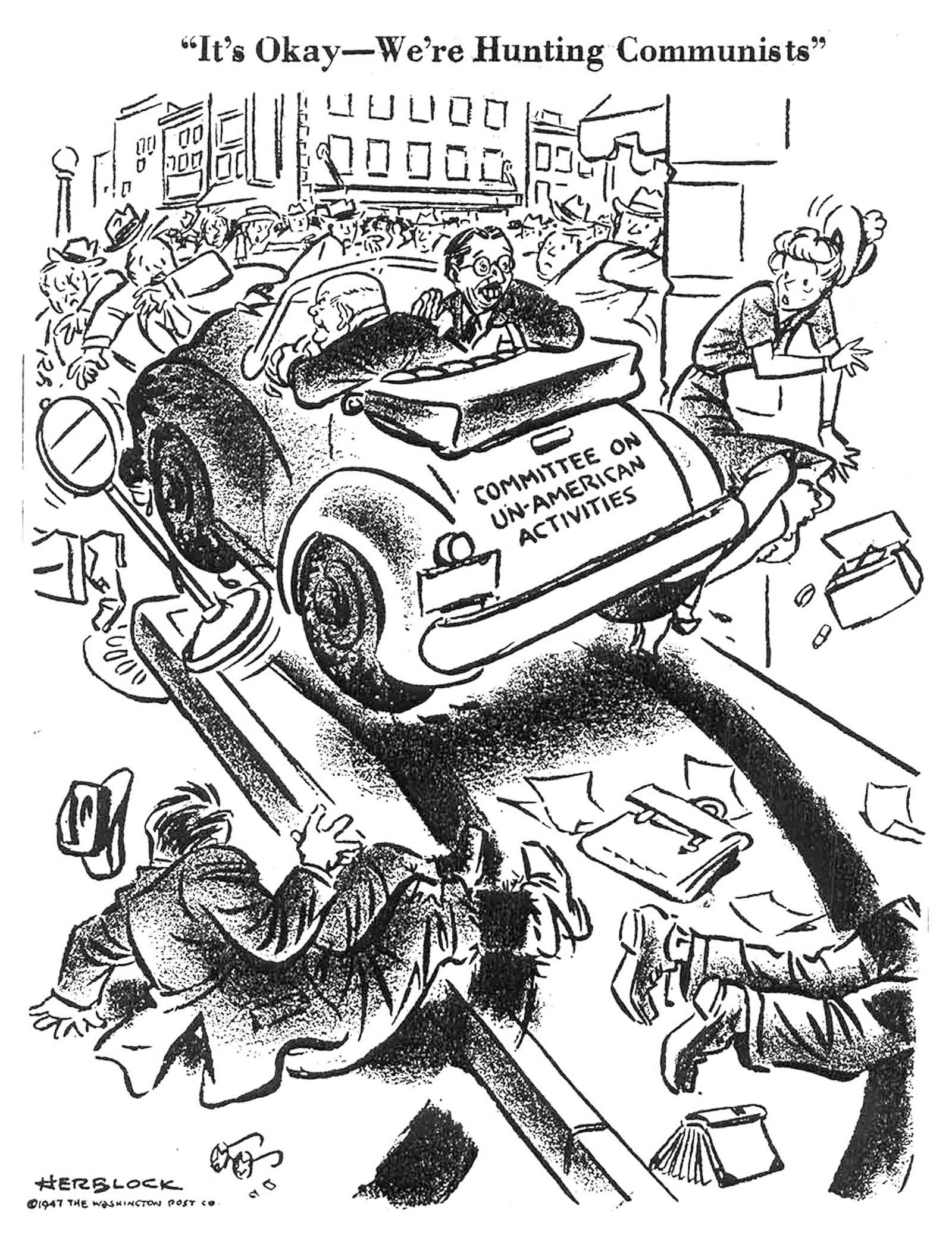
In the spring of 1953, William Frauenglass, a New York City public-school teacher, was summoned before the Senate Internal Security Subcommittee — a committee that mirrored Joe McCarthy’s Senate Permanent Subcommittee on Investigations that was busy blacklisting supposed communists in the US government. Six years earlier, he had taught a course for other teachers called Techniques of Intercultural Teaching. Its purpose was to help teachers reduce racial and cultural tensions in their classrooms. In the political atmosphere of the early Cold War, even that noble title could be made to sound subversive. One witness told the committee that such teaching was contrary to the interests of the United States.
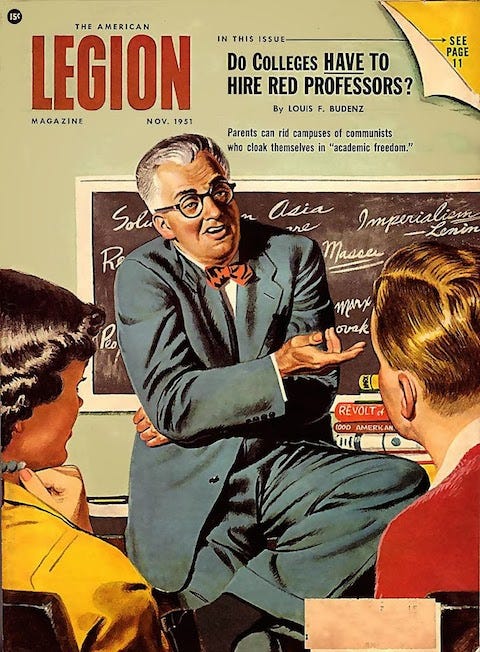
Academics, universities and intellectuals have long been the target of “hating America”.
The accusation against Frauenglass was not that he had harmed a student, betrayed his country, or committed some crime. It was that he might have associated with communists. When the senators demanded that he identify his political affiliations and those of others, he refused to answer.
Frauenglass understood that the committee was not merely gathering information. It was asking him to participate in the public branding of colleagues, friends, and fellow teachers. Facing the loss of his position, he wrote to Albert Einstein.
Einstein was then seventy-four years old and almost certainly the most famous scientist in the world. He was also a refugee from Germany who had watched a democratic society surrender itself to nationalism, conformity, and political fear. He immediately recognized that the danger was larger than the fate of a single teacher.
In his May 16, 1953, reply, Einstein wrote that reactionary politicians had succeeded in creating “suspicion of all intellectual efforts” by continually pointing to an external enemy. Once the public had been frightened by the danger from outside, that fear could be turned inward. The politicians could then “suppress the freedom of teaching” and punish those who refused to prove themselves submissive.
Einstein advised Frauenglass to refuse further cooperation with the investigation, even if doing so meant jail or economic ruin. This was not because Einstein was indifferent to communism. Only months earlier, he had publicly condemned the Soviet Union’s staged trials and persecution of Jews. He opposed authoritarianism whether it came from the political right or the political left. What he refused to accept was the claim that the defense of America required the abandonment of American liberty.
Frauenglass followed Einstein’s advice and lost his teaching position.
The reaction to Einstein was immediate. Senator Joseph McCarthy called him an “enemy of America” and later a “disloyal American.” Newspapers that celebrated Einstein’s scientific genius dismissed his political judgment. Hostile letters poured into Princeton. Einstein’s archive preserves two folders of favorable responses to the Frauenglass letter, but also an entire folder of unfavorable responses and another of anonymous correspondence.
The idea that Einstein did not truly belong in America had been circulating for years. In 1950, Representative John Rankin of Mississippi stood in Congress and said Einstein “should have been deported” for his supposed communist activities. The FBI accumulated an extensive file on Einstein because of concern about his political associations and his involvement in questions surrounding atomic energy.
Consider the absurdity. Einstein was a Jewish refugee who had fled Nazi Germany. He had warned President Franklin Roosevelt of the possibility that Germany might develop an atomic bomb. He had become an American citizen. He had condemned Stalinism and the political repression of the Soviet Union. Yet none of this protected him from being declared an enemy of America.
That is because the accusation was not intended to describe Einstein accurately. It was intended to classify him politically.
Once Einstein became a communist, or a communist sympathizer, his ideas no longer needed to be answered. His defense of civil liberties could be dismissed as communist propaganda. His advocacy of international cooperation could be treated as evidence of foreign allegiance. His opposition to racial discrimination could be added to the list of suspicious associations. Even his scientific fame could be turned against him as the dangerous influence of an intellectual elite.
The label did the work that evidence could not.
What the Word Meant
There is an important difference between calling someone a communist in 1950 and doing so in 2026. In 1950, communism described an actual political system governing the Soviet Union, China, and much of Eastern Europe. The Soviet Union was a powerful adversary of the United States. Espionage was real and China had fallen to a communist rebellion. The Communist Party of the United States existed, and some Americans were members of it. Thus, the fear was not entirely invented.
McCarthyism depended, however, upon erasing every meaningful distinction within that fear. A Soviet spy, a member of the Communist Party, a former party member, a socialist, a labor organizer, a civil-rights advocate, a liberal professor, and a teacher who promoted interracial understanding could all be placed along the same continuum of suspicion.
An actual danger was expanded until it became a general license for accusation.
McCarthy claimed that hundreds of communists had infiltrated the federal government, but repeatedly failed to provide any evidence proportionate to his allegations. His investigations became exercises in character assassination in which accusation itself created guilt. Hundreds of witnesses were called, careers were ruined, and teachers across the country were investigated or dismissed because they had been named by anti-subversive organizations.
The question was no longer simply whether someone was a communist. The question was whether the person could prove sufficient loyalty to those imagined empowered to judge loyalty.
This made academics and intellectuals especially useful targets. The purpose of scholarship is to examine evidence, question inherited assumptions, and complicate simple stories. Historians discover that national heroes were imperfect. Scientists produce results that may be economically or politically inconvenient. Economists question who benefits from a particular tax structure or regulation. Teachers ask students to consider experiences different from their own.
None of this makes academics inherently virtuous. Universities can be insular, arrogant, bureaucratic, and wrong. Professors are no less susceptible to intellectual fashion than anyone else. But the academy is one of the institutions in which claims are expected to survive evidence, criticism, and argument.
That makes it troublesome to political movements that demand loyalty to a preferred conclusion.
The Not-So-Curious Case of J. D. Vance
For several years, woke served as the preferred epitaph for discrediting American universities. It was applied so broadly that it could mean almost anything: teaching the history of slavery, acknowledging structural racism, recognizing transgender students, promoting diversity, studying climate change, or questioning the distribution of wealth.
The word mocked academics as fashionable, self-important, and detached from ordinary Americans. But ridicule has its limits. A woke professor may be irritating. A communist professor is dangerous.
Vice President J. D. Vance has now made that transition from woke to communist explicit .
This is not a sudden or accidental development in his thinking. In 2021, before becoming a senator or vice president, Vance delivered a speech to the National Conservatism Conference titled “The Universities Are the Enemy.”
The title was deliberately provocative, but it also announced a political program. The university was no longer simply an institution in need of reform. It had become an adversary.
In June 2026, Vance supplied the ideological charge that completed the accusation. Appearing on Fox News, the vice president said that the Democratic Party had become “run by the universities and by the professors.” These academics, he claimed, regarded the United States as “an evil country” that must be dismantled. “That’s communism at its core,” he concluded.
This is an extraordinary chain of accusation.
Universities and professors supposedly control the Democratic Party. Professors teach that America has committed injustices. Criticism of those injustices becomes hatred of America. Hatred becomes a desire to dismantle America. And the desire to dismantle America becomes communism.
No membership in a communist organization must be shown. No allegiance to Marx, Lenin, Stalin, or the Soviet Union needs to be demonstrated. No advocacy of one-party government or state ownership of the economy is required. The professor becomes a communist simply by examining the country critically and finding injustice within it.
The substitution of communist for woke is therefore an escalation. Woke makes the university ridiculous. Communist makes it treasonous.
The word carries the inherited horrors of the Soviet Union—the police state, political prisons, confiscation, repression, and the destruction of individual liberty. These associations do not have to be explained each time the word is used. They live in the historical memory of the accusation.
Once those associations are attached to universities, professors, scientists, and teachers, ordinary disagreements over education become an existential struggle for the survival of America.
An institution that is misguided can be corrected. An institution that is failing can be improved. But an institution that is communist must be defeated, purged, or destroyed.
That is why it is so significant that these words come from the vice president of the United States rather than from an anonymous troll beneath a Substack essay. Vance is not merely insulting a few professors. He is providing an intellectual framework for treating the academy itself as an internal enemy.
His argument transforms a disagreement over ideas into a test of national loyalty.
The professor who teaches the history of racial discrimination is no longer offering an interpretation that can be challenged with other evidence. He is teaching that America is evil.
The climate scientist who concludes that fossil-fuel emissions are warming the planet is no longer presenting the result of measurement and physical theory. She is participating in a scheme to destroy American prosperity.
The economist who studies inequality is no longer asking who benefits from the existing economic order. He is motivated by resentment and preparing the confiscation of private wealth.
The university that protects these inquiries is no longer fulfilling its role in a democratic society. It is producing communism.
This rhetorical structure is enormously useful because it eliminates the need to answer the substance of academic work. Climate science does not have to be rebutted if climate scientists can be dismissed as communists. Historians do not have to be answered if their accounts of slavery, segregation, or Indigenous dispossession are evidence that they hate America. Economists do not have to be challenged if concern about inequality is merely a disguise for confiscation.
The accusation moves the argument away from evidence and into the realm of loyalty.
The Ghost of the Soviet Union
The Soviet Union has been gone for thirty-five years, but its ghost remains politically useful.
When commenters call me a communist because I write about climate change, environmental degradation, or economic inequality, they are not making a serious claim about my political affiliations. They have not examined whether I belong to the Communist Party or advocate state ownership of industry. They almost certainly know nothing about my career or my views on authoritarian government.
They are using the word as a label — a boundary between a good American and a disloyal no-good. A person placed on one side of that boundary is a legitimate American with whom one may disagree. A person placed on the other side is hostile to America and need not be heard.
That is the continuity between 1953 and 2026. The literal content of the accusation has changed, but its political purpose has not.
In 1953, congressional committees asked teachers and professors to identify their associations and prove their loyalty. In 2026, the accusation is less formal and more elastic. There may be no committee, no membership list, and no actual Communist Party connection. The word can be applied instantly to anyone whose conclusions fall outside an approved political narrative.
In that sense, the modern accusation may be even more convenient. It requires less evidence than McCarthy demanded, which was actually never very much.
Einstein understood the mechanism perfectly. Political leaders first create fear of an external enemy. They then redirect that fear toward intellectual life at home. The academy becomes suspect precisely because it encourages people to examine evidence, question authority, and recognize complexity.
Einstein called it the creation of suspicion toward intellectual effort itself.
That is the larger danger in Vance’s formulation. The vice president is not only claiming that some academics hold foolish or radical ideas. He is linking professors, universities, political opposition, hatred of America, and communism into a single narrative. Once that narrative is accepted, academic independence no longer appears to be a democratic virtue. It becomes evidence of subversion.
A democracy does not require citizens to revere professors or bow down to expertise. It does not require universities to be immune from criticism, reform, or accountability. But democracy does require that ideas be answered with other ideas and that evidence be met with evidence.
It cannot survive if disagreement is routinely converted into disloyalty.
I am not particularly troubled when an anonymous commenter calls me a communist. The accusation is too detached from my life to carry much personal force. But I am troubled when the same word is deliberately applied to universities and professors by the vice president of the United States.
The danger is not that Americans will suddenly believe that every climate scientist or historian is secretly an agent of a nonexistent Soviet Union. The danger is that they will learn to regard intellectual independence itself as foreign, hostile, and dangerous.
William Frauenglass taught other teachers how to reduce racial tension in their classrooms. That was enough to make him suspect.
Albert Einstein defended Frauenglass’s freedom of conscience. That was enough to make him an enemy of America.
Today a professor examines the failures of the nation, a scientist describes an inconvenient physical reality, or a writer argues that America can do better. Once again, the word is waiting.
Communist.
Its meaning has changed. Its intention has not. It is still a word used to make an enemy of the nation.
No posts
Comments
Nothing yet. Say the first thing.
Sign in to join the conversation.