
You can’t scroll Instagram without stumbling across one controversy or another. Or, as it appeared last week, experts hawking their wares.
Dr. Mary Claire Haver, a reputable menopause expert whose work I’ve featured here in the past, was recently ensnared in a controversy over wearing a weighted vest while deadlifting 😣
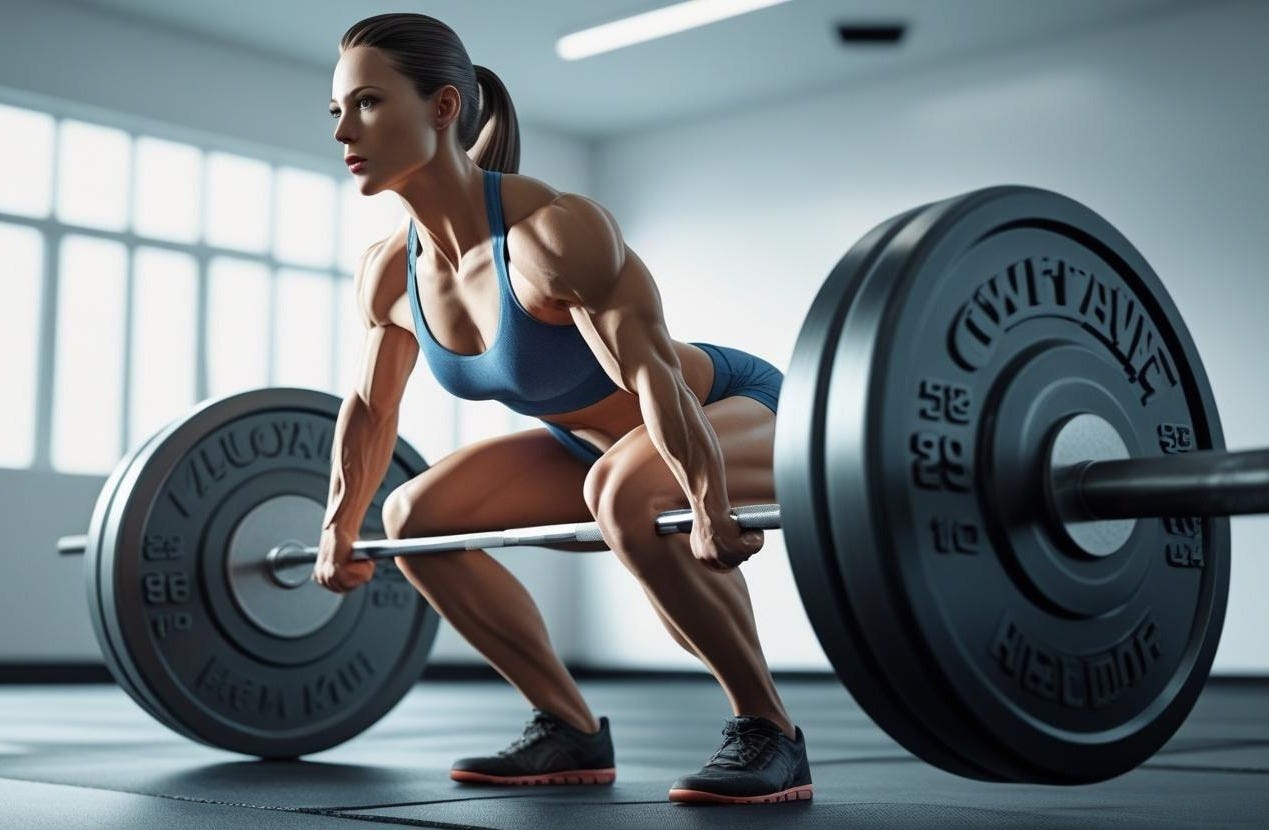
As an experienced weight lifter (and participant in a science-backed program for people with osteoporosis), that made me jump out of my skin. The controversy stemmed less from wearing the vest while weightlifting (please, don’t do this) and more from the fact that as an influential expert, she is compensated for every vest bought through her affiliate link.
Besides Dr. Haver, I follow many legitimate voices in health & wellness, including Dr. Susan Brown (Bone Health), Dr. Mark Hyman (Functional Health), and Dr. Annie Fenn (Brain Health), to name some. They all follow the science and are experts in their respective fields. That said, they all promote and/or sell products & supplements for which they earn income. Although I respect and agree with their health & wellness perspectives, I carefully wade through and sidestep a lot of what they promote.
REMEMBER:
Just because a reputable health & wellness expert endorses a product or supplement, it doesn’t mean it is right for you! Always check with your healthcare provider.
For more context, I want to emphasize the importance of understanding your unique health profile. I say this all the time: wellness is not one-size-fits-all. Besides the fact that supplements are not FDA-approved and have no regulatory compliance requirements, they may contain ingredients not right for YOU.
For instance, as much as I’d love to use AG1 (formerly Athletic Greens), a popular green powder used for providing functional nutrition and filling nutritional gaps in a healthy diet, the product contains spirulina, chlorella, and ashwaganda. These ingredients are also commonly found in many smoothies and health drinks, supplements, and other products—none of which I can use.
Nor should most people with autoimmune (AI) diseases. In a future post, I’ll discuss a scientific study published by the Myositis Association on this topic, and how these ingredients target specific disease pathways for Lupus and other AI diseases.
Lessons: Know your body, and read labels.
Another reason for caution in this age of increasing deception and misinformation…
Yesterday, I received a newsletter email from Dr. Mark Hyman warning his followers about a deepfake AI-generated video featuring him interviewing Rebel Wilson on social media as part of a scam promoting a “strange gelatin trick” to lose weight. That said, be skeptical and do your research.
To hear more about HaverGate and some science behind weighted vests, consider listening to Dr. Sarah Court, PT, in Movement Logic’s Episode 103: Do Weighted Vests Do Anything For Us? The short answer? They do seem to help.
As a bonus, if you want to learn how to weightlift safely, check out the links to Sarah & Laurel’s Movement Logic Free Tutorials.
Finally, because truth is stranger than fiction, and you just can’t make this stuff up…
Substacker Julia Hubbel was mistaken for an ICE agent while hiking in Oregon wearing a black weighted vest, and for a terrorist while doing the same in Colorado. If you decide to buy a weighted vest, consider a bright color 😎
Share Unapologetically Creating the Life You Want
Protein, protein, protein…I can’t scroll two posts on Instagram without some midlife influencer shouting at me about protein intake.
No denying there’s legitimacy to striving for protein levels above the Dietary Reference Intakes published by the government, which is 0.80g/kg/day (RDA) for anyone over the age of 18. Even the National Institutes of Health (NIH) discusses 1.2g-2.0g as a more Acceptable Macronutrient Distribution Range (AMDR) for “elderly” adults to achieve optimal nutrition and muscle synthesis. For a 140-pound woman, they recommend getting ~30g to 35g of high-quality protein/meal.
This can be a struggle. Real or perceived. As a result, this trend is fueling a skyrocketing demand for protein powder supplementation and energy bars to fill the gap. In a recent NYT article, they estimated the whey market alone to be $5B-$10B.
One thing to remember with this whole eat lots of protein craze: Your body can’t stockpile protein like it can carbs and fats, so what you don’t use gets converted to…you guessed it, carbs and fat.
Not only is protein leading in discussions with social media influencers, but Big Food is jumping on the bandwagon. They’re not stopping with protein bars. They’re developing protein-enriched everything.
Mark my words: it’s this decade’s “low-fat” food industry bubble. Don’t be fooled by these protein-Franken products; it’s all still ultraprocessed food.
So, as tempted as you are to lean into protein-enhanced products, the best way to obtain protein is through real, whole food sources such as eggs, low-fat dairy products (yogurt, cheese, milk), nuts, seeds, legumes (beans, lentils), fish, poultry, soy, and lean meats, which should make it achievable for most people.
However, if you’re like me—unable to eat dairy, eggs, or soy—obtaining all your daily protein can be more challenging. I’m targeting 70-90g (1.2-1.5g/kg for my weight). For a man weighing 200 pounds, the same range is equivalent to 109-136g.
Which brings me to…
Protein powder is showing up everywhere these days. Not only is it folded into smoothies, it’s being added to baked goods, pancakes, protein bars, and many new ultraprocessed foods.
But how safe is it?
As I researched vegan protein powders to mix with my smoothies, I stumbled into an unexpected minefield of toxic heavy metals and BPA (plastics) research 😳
There has been controversy surrounding evidence since the early 2010s about contaminants found in consumer protein powders, specifically heavy metals: arsenic, cadmium, mercury, and lead. Consuming heavy metals in sufficient quantities has been associated with adverse effects on human health. More recently, bisphenols (plastics) have been targeted as endocrine disruptors that pose significant health risks, including metabolic issues and increased risk of Type 2 Diabetes.
Keep in mind, as mentioned in the Clean Label Project’s latest report, there are no federal testing requirements to ensure heavy metals don’t end up in the food supply, although California created Prop 65, requiring businesses to provide warnings about significant exposures to chemicals that cause cancer, birth defects, and other reproductive harm. Additionally, California and Maryland have enacted transparency laws regarding heavy metals in baby food.
Heavy metals are released into the environment through soil erosion and other natural processes, as well as man-made hazards such as mining, industrial processes, and agricultural practices.
As a result, these contaminants are ending up naturally in water, plants, and animals, so you are already exposed to heavy metals and chemicals through your diet.
Keep in mind that these exposures are additive.
In 2018, the Clean Label Project, a non-profit dedicated to product safety and transparency, tested over 100 protein powders for heavy metals and bisphenols (BPA & BPS), exposing the potential risks associated with these products. Their report was named in this 2020 Study.
Fortunately, they have just released their latest research, Protein Study 2.0 (2024-25 Protein Powder Category Report), which reflects current market offerings.
A few key takeaways:
Packaging improvements since 2018 have nearly eliminated BPAs
Organic products offer no protection from heavy metals
Plant-based products are higher in heavy metals than whey or collagen-based products
Chocolate flavoring increases the risk (not surprising given recent testing on heavy metals found in cacao)
Here are the key findings:
Over 70 Top Brands & 160 Products tested, representing 83% of the market
258 different chemicals and heavy metals tested, inc. Bisphenols (BPA & BPS)
47% of products exceeded the federal or state regulatory standards for safety
Products testing over Prop 65 for Lead:
77% Plant-based protein powders
79% Organic protein powders
69% Chocolate protein powders
28% Whey protein powders
26% Collagen protein powders
21% Products tested 2X over Prop 65 for Lead:
41% Organic protein powders
29% Chocolate protein powders
Let me repeat, heavy metal exposure is additive. Consider getting your heavy metal levels tested every couple of years. You can either ask your healthcare provider or go directly to Quest or Labcorp, unless you live in NJ, NY, or RI, where specific restrictions apply.
First, read labels. As I was looking for a decent vegan option, I noticed many with the Prop 65 Warning beneath the standard food label. HARD PASS.
To help narrow down your choices, consult the NSF, which certifies products to the NSF/ANSI 173, the only American National Standard for testing and certifying dietary supplements. See the NSF.org website for certified protein powders. That’s where I found mine.
Finally, check out the Clean Label Project’s “Clean 16” for the products that stood out for “non-detectable” levels of all four heavy metals.
Knowledge is power. Use it wisely! Best of luck on your weighted vests & protein journeys.
In Health & Wellness,
Liz
Like this post? Please “Heart,” Comment, and Share with a friend. If you are not a subscriber, consider a free subscription 😉
Share Unapologetically Creating the Life You Want
Not because I want to, but because I have to—Legal Disclaimer:
This post is provided for educational purposes only. The content, including any products and services mentioned or offered, represents my opinion based on my research and experience and does not constitute medical advice, nor is it intended as a substitute for treatment or services by a licensed healthcare provider. Any content should be taken at your sole risk and discretion. Using the content posted does not create a client-coach relationship, which can only be formed with a signed contract by both parties, nor does it create any liability.
No posts
Comments
Nothing yet. Say the first thing.
Sign in to join the conversation.