

If you have read my previous article, you know that I credit my mother with inspiring my interest in writing and visual art, and have used those skills to make a living all my life. Despite my father’s certainty that I had no aptitude for auto mechanics or construction, he did inspire me to pursue those disciplines and become competent enough to restore my 1960 Thunderbird, replace the steering rack in my Jaguar XJ6 and rebuild my home after extensive storm damage.
Both my parents contributed to my interest in music. While pregnant with me, Mom studied for college classes seated beside a portable phonograph, hoping the strains of classical music would reach me and improve my intelligence.
Dad’s family were immigrants from Wales and upheld the Welsh musical tradition. Grandma sang, Pop Pop sang and played drums. Dad was a tenor, as was his older brother when he was sober. Dad’s two sisters were sopranos, the younger was a coloratura soprano who could take your breath away and bring tears to your eyes when she sang.
Mom tried to teach me to play the piano, but it resulted in raised voices and tears. Instead, I was hauled off to take lessons from a farmer’s wife. She wore gingham shirts and jeans with a hunk of clothesline for a belt. Of the beat-them-until-morale-improves school of teaching, she counted along in tune with the voice of a honking goose and rapped my knuckles with a ruler when my fingers went astray. I learned to play, but not well. Being able to read music helped when I joined the school band, but I resented the band teacher for railroading me into playing the baritone horn.
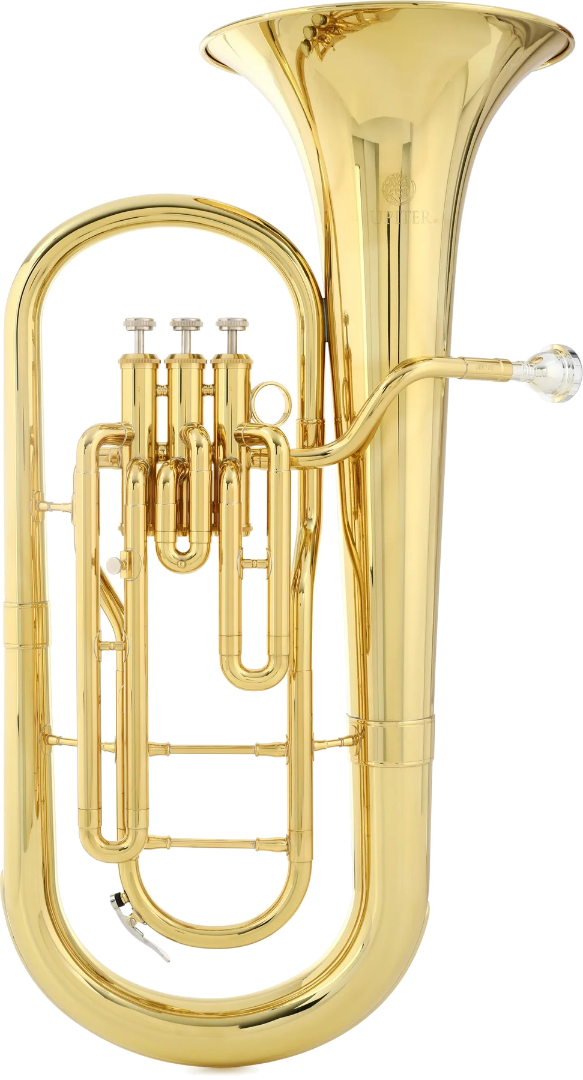
I wanted to sit with the cool boys and play trumpet, but got stuck with a 30-pound tangle of brass tubing that was bigger than I was. When we marched, the mouthpiece banged on my mouth with every step, making my lips tingle, swell to twice their normal size and turn bright red. A month after I started Sixth Grade, we moved to a different city. Returning that borrowed horn to the school was the only thing I liked about the move. A few years later, my parents bought an organ and gave me a teach-yourself course. Surprisingly, I had an easier time playing the organ with two manuals (keyboards), a pedalboard and swell (volume) pedal to keep track of.
Great art and literature inspire me, but it’s music that moves me. It’s been almost 50 years since I’ve touched a keyboard of the musical variety, but music is still a part of my every day. There are 4,700 songs on my Apple Music playlist. That means I could play songs around the clock for 11 1/2 days with never a repeat.
The other day, I decided to make a list of 100 of my most favorite songs and share it here on Substack. Rather than merely sharing my Apple Music “Favorites” playlist, I decided to provide links to YouTube videos. Not only is an account not required, but it is more interesting to see the artists actually perform their music. The availability of decent YouTube videos helped me eliminate over 4,500 songs. Still left with 171 songs, I made another pass and deleted 40 more wonderful songs by worthy artists which deserve to be on the list. But this is supposed to be the “Top 100.” If you’re good at math, you know I still overshot the mark. Fine. I’m not giving up any more.
Being mindful of Substack’s limits to article length, I knew I had to break the list into groups. I considered just creating groups in alphabetical order, but given my wide-ranging musical taste, that would have produced some awkward adjacencies. So I’m listing the songs by genre. Those esteemed experts who classify music by genre will undoubtedly take exception to my designations, but I’ve tried to keep it simple.
It’s my hope that you encounter some old (or new) familiar favorites. It’s my greater hope that you discover music you’ve never heard before that you’ll love. If so, let me know in the comments below or a reply to the emailed article. Starting with the Classical genre, here we go:
I’m starting with a blockbuster. I have almost every song in Aretha Franklin’s discography on my playlist, so it was difficult for me to choose just one. She has shown her prowess in Gospel, Pop, R&B and more. But unless you happened to be watching the Grammy Awards on February 25, 1998, as I did, you might not know Aretha could sing Opera. Her friend, Luciano Pavarotti was scheduled to sing “Nessun Dorma” during the show, but at the last minute, he fell ill and couldn’t sing. Aretha was in town, and agreed to step in. Her performance brought tears to my eyes, and still does.
A few years ago, I went to see a performance of Requiem for the Living at St. Andrews Episcopal Church in Hot Springs, Arkansas, and was stunned. Here is a performance by Bel Canto in Raleigh, NC. The whole performance is worth experiencing, but if you’re short of time, you can skip to “Agnus Dei” at 16:15. (Kleenex suggested.)
In the mid-1980s, Freddie Mercury, the frontman of the band, Queen, and Spanish soprano, Montserrat Caballé, met by chance and established a close friendship. The stars aligned and the song, “Barcelona,” was written for them. The studio performance was released in 1987 and became a hit in Europe. In 1988, they performed the song live at the Magic Fountain of Montjuïc, marking the arrival of the Olympic flag in advance of the 1992 Olympic Games. It was adopted as the theme for The Games, but Mercury died before he could perform it with Caballé.
Another heartrending piece is “Adagio for Strings,” composed by Samuel Barber. It has been played at numerous high-profile funerals, including Barber’s own. It was also included in the soundtracks of The Elephant Man (1980) and Platoon (1986). Here is a rendition by contemporary solo cellist, Hauser.
Even if you don’t care much for Opera, you have probably heard “The Flower Duet” from the first act of the tragic opera Lakmé, composed by Léo Delibes and premiered at the Opéra-Comique in Paris on April 14, 1883.
In 1968, Mason Williams was the head writer for The Smothers Brothers Comedy Hour. He was also a composer and guitarist. He premiered his composition, “Classical Gas,” on the Smothers show and it charted in the Top 10 of popular American Music.
It could be argued that my next favorite isn’t Classical, but the rendition I’m sharing makes it seem so. In the late 1970s, I was climbing the ladder of success at the Leggett Department Store in Charlottesville, VA, and had some extra spending money. To celebrate my dad’s birthday, I treated my parents to a concert at University Hall, a.k.a. “U Hall,” a.k.a. “The Ripple Nipple.” (Do you need to ask why?)

The concert was a performance of the Royal Scots Dragoon, a drum and pipe corps in service to Her Majesty the Queen. I remember vividly, the arena was plunged into darkness save one spotlight on a lone piper in full dress Stuart regalia, who began slowly marching around the perimeter of the circular floor as he played “Amazing Grace.” After his solo, he was joined by the rest of the pipers and drummers. There were no dry eyes in the audience. I couldn’t find a reproduction of that performance, but this is a good alternative.
I first learned of Tokio Meyers (given name: Torville Ashburn M. Jones) watching a video of his audition on the 2017 season of Britain’s Got Talent, which he won. The experience launched his career. He rose from a “rough neighborhood,” where at age 11, he witnessed the gang-murder of his school’s headmaster. In this piece, titled “Bloodstream,” Meyers demonstrates his musical creativity and versatility.
So concludes the Classical series of my favorites. Watch this space for Part 2.
Comments
Nothing yet. Say the first thing.
Sign in to join the conversation.