
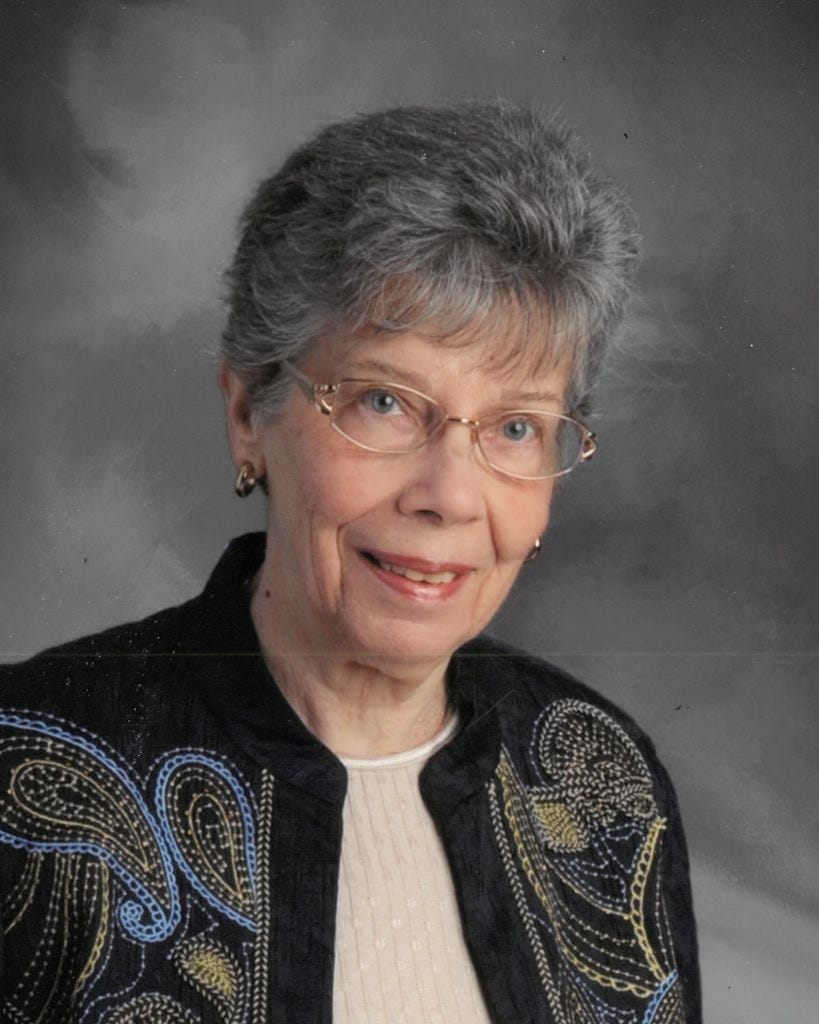
When I started my business, I created my branding tagline, “The Words and Pictures Expert,” as it succinctly describes my expertise without limiting the scope or nature of projects I will tackle. I owe my proficiencies in large part to my mother, Laura Jeanette Moler Rowett. She was known as “Jean” by everyone for her entire life. Except me. From the time I learned to speak, I called her “Mommy.” When I became an adolescent, “Mommy” sounded too childish for someone as I was becoming, so I began calling her “Mother.” Until I was in my 30s, when Life taught me a bit of humility. From then on, I just called her “Mom.”
Mom was born on January 30, 1933 to Frederic Wishart Moler and Elsie Large Moler in Pittsburgh, Pennsylvania, the eldest of four siblings. After graduating from Pittsburgh’s South Hills High School, Mom studied a visual arts curriculum at the Carnegie Institute of Technology (now known as Carnegie-Mellon University). She later transferred to Nyack College, an evangelical institution with a picturesque campus established on a bluff overlooking the Hudson River at the end of the three-mile-long Tappan Zee Bridge in the sleepy town of Nyack, New York. There, she completed her education and met Tom Rowett, my dad. At the start of their second year of college, they were married in a large wedding on October 18, 1952 in downtown Pittsburgh. As a poor college student, Dad didn’t own a car, but he managed to borrow an old LaSalle Model 50 for their drive away from the church.

Mom grew up with all the comforts of a Bell Telephone Company executive’s home. She married the son of a coal miner, far below her social station, and her parents never let her – or my dad – forget that.
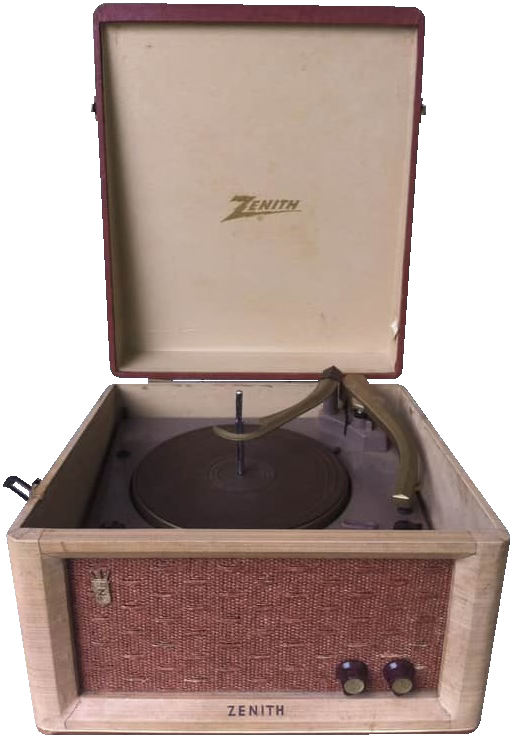
Following the evangelically prescribed gender roles of the day, Dad was responsible for providing the income, so he worked as a teller at a branch of the Nanuet Bank while taking classes when he could. Mom was responsible for running the household, as well as child production and management. Since I was their first, Mom followed all the latest expert advice on prenatal care. One such recommendation was listening only to classical music during pregnancy, as this was thought to elevate the unborn child’s intelligence. So Mom studied while sitting beside this portable phonograph while I sloshed around inside her, vibrating to Debussy, Rachmaninoff, Stravinsky and Tchaikovsky.
Did music therapy make me smarter? Some would argue that it didn’t. But to this day, those classical composers are my favorites. In the following September, I made my appearance at Rockland County Hospital and my parents brought me home to their tiny apartment in the basement of a Victorian mansion just three doors down from the home of actress Helen Hayes. It should be noted that most twenty-something college coeds have all they can do just to keep up with their studies and maybe hold down a part-time job. But Mom cared for newborn me, managed her studies, cooked, cleaned, did laundry and sold sweaters – the ‘50s fashion rage – to the other coeds on campus for supplemental income. Fortunately, Mom had several girlfriends who volunteered to take turns looking after me without pay while she attended classes.
Mom followed the rules and she made some rules of her own. She forbade anyone to use “baby talk” around me. She insisted that everyone address me in the same way they would talk to an adult. She justified this rule by quoting some child development expert who claimed that using baby talk around small children hindered formation of their verbal skills, which in turn, hampered development of their other skills. Was she right? I don’t know, but I can tell you that I was reading at First Grade level when I was four years old. That was when we moved away from the college to Dad’s first pastorate. It had taken him 7 years to graduate because he worked at the bank and couldn’t take a full load of courses.
The house we moved to was literally on the back end of a church building in the back end of Kittanning, PA, a working-class town about 36 miles northeast of Pittsburgh. The town’s most notable feature is its having no notable features, which has made it desirable to filmmakers needing an anonymous, shabby, small-town setting. Many years after we moved away, The Mothman Prophecies, My Bloody Valentine 3D, Justified, One for the Money, Mindhunter and Manhunt were shot there.
No other children lived in our humble neighborhood except for a boy my age, Wayne Cunningham, who always looked like he needed a bath, and his older brother. They lived with their father a few doors down the street. Mom described the Cunningham boys as “juvenile delinquents” and didn’t allow me to associate with them. Which meant that I had to amuse myself alone.
In those days, virtually all wearing apparel was made of cotton. The miracle fabric treatment, “Permanent Press” wasn’t yet available. That meant that housewives spent many of their waking hours laundering and pressing everything their families wore. Considering that Dad wore a starched white shirt every day for work and didn’t have enough money to drop them off at the dry cleaners, Mom’s laundry burden more than average. Mom, an accomplished artist herself, decided that learning to draw would help me pass my solitary, friendless hours, so she made that her mission.
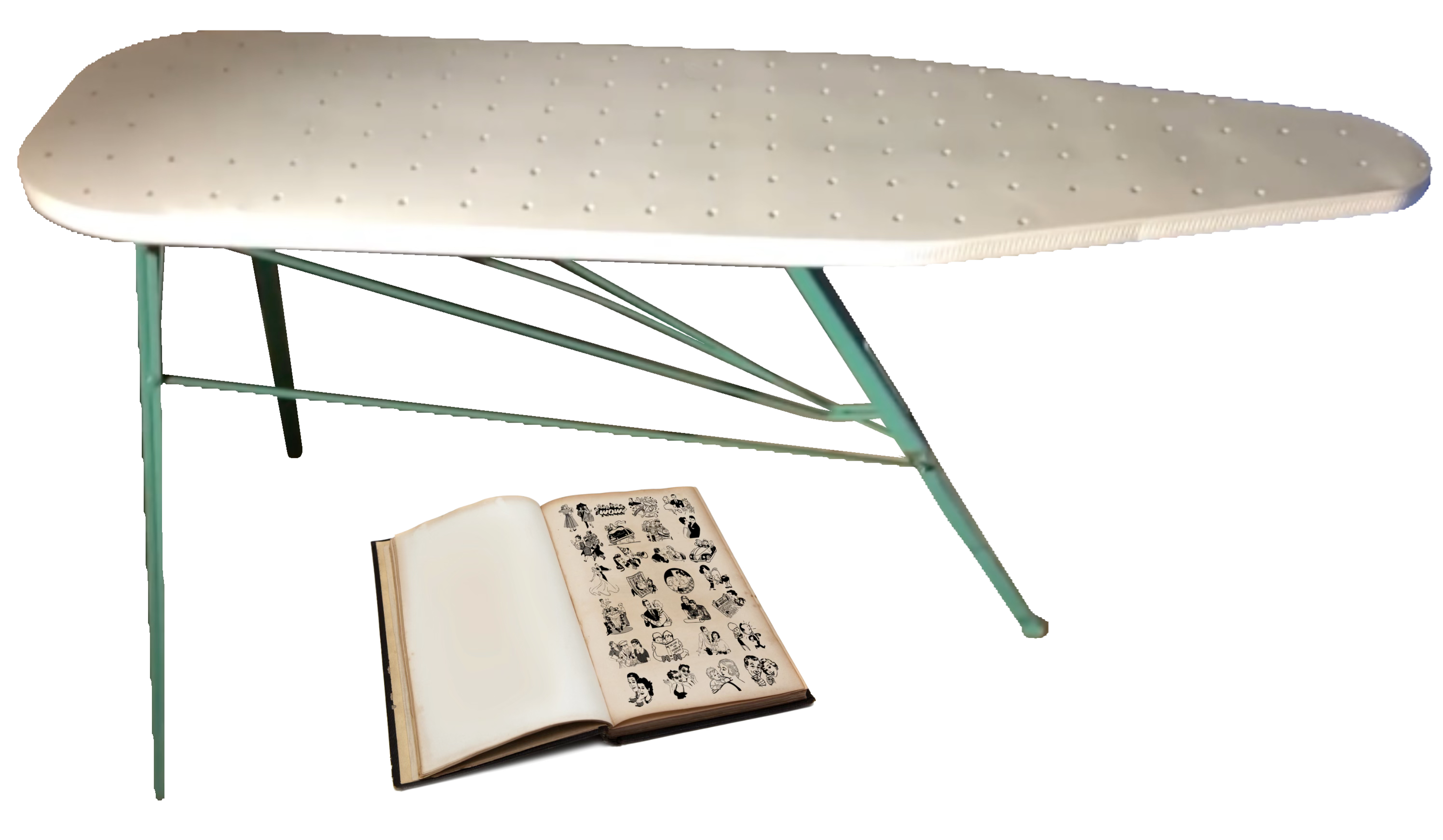
Small-town newspapers couldn’t afford to employ staff artists so they used “clip art,” printed reproductions of pen & ink illustrations of every imaginable subject that could be used to spice up news features and display advertising. These reproductions were printed on one side of pages bound into large books that were sold to newspapers across the nation. Staff page-layout mechanics would search the clip art books for appropriate images, cut out an illustration and paste it onto a layout page, which was then photographed with an enormous camera. Negatives were used to create the metal plates that transferred ink to newsprint on the presses.
When art became obsolete, making the books useless, they were discarded. Mom went to the local newspaper and begged for a couple of these heavy, cast-off books and brought them home. Then she assigned me – it was more of a command, really – to copy the illustrations on the righthand page to the unprinted back side of the lefthand page until all the blank pages in the book were filled. I was to work on this assignment every day while Mom ironed the family laundry. Unlike modern ironing boards supported by a tubular “X,” ironing boards of that era were supported by three legs braced with steel rods, leaving just enough room for a small child to huddle underneath. I remember spending hours on the floor under Mom’s ironing board, steeped in the fragrances of steaming cotton and spray starch, diligently copying black-and-white illustrations in pencil while Mom’s feet paced back and forth a few inches from my work. I literally learned to draw at my mother’s feet.
Thanks to Mom’s persistent enforcement of my drawing regimen, I skipped the stick-figure-and-lollipop-tree stage of my childish artistic development and went directly to complex drawings that actually resembled what they were supposed to illustrate. In fact, I could draw decent pictures before I could print my own name. My kindergarten teacher, Mrs. McGurdy, always smiled and called me “her little artist.” Of course, I still had a lot to learn about art, but Mom gave me a sizable head start.
During my boyhood, my family relocated every 4 years on average. Dad always claimed it was “God’s will,” but I strongly suspect that he got either bored or frustrated (or both) with his pastoral situation and thought a change of scenery would relieve the tension. And I suppose it did. When I was 8 years old, our second relocation took us to Connellsville, PA, a railroad town about 45 minutes’ drive southwest of Pittsburgh. The Baltimore & Ohio Railroad operated a huge rail yard there, where they “humped” rail cars around the clock. As a railroad hub, this is where freight trains arrived to have cars decoupled and reconnected to different trains, then continue to their final destinations. A locomotive “mule” would push the decoupled car over a raised section of rail, or hump, then the car would roll downhill and slam into the back of the new train being assembled, causing the coupler to automatically engage with its mate. No matter where you were in town, you could hear the distant, relentless “thumps” as rail cars slammed into trains every minute or so. After a while, the thumps became part of the background noise we didn’t hear.
We moved into an enormous Victorian house on Carnegie Avenue, with high ceilings, pocket doors that separated the parlor from the vestibule and the dining room, and thundered when they were rolled into the walls. All the light switches had pushbuttons, one above the other, the upper buttons inlaid with mother-of-pearl to signify “On.” In the vestibule was a grand, switchback staircase and landing which still left room for an armchair and ottoman, a lamp table and Mom’s desk. The dining room featured a gas fireplace, a spectacular stained-glass window and a heavy, swinging door that concealed the clatter and clutter of the kitchen. In the far corner of the kitchen was a door revealing a secret winding staircase that allowed the disheveled hostess to dash upstairs without being observed by guests. Upstairs were four bedrooms that opened off a central hall, a room in itself, plus the lone bathroom. (For reasons I can’t explain, there was a shower in the basement, apparently original to the house.) In the upstairs bedroom hall was another door that opened to another stairway leading to the attic with finished hardwood floors, dormer windows on all four sides and a single room in the center, its interior walls lined with cedar. A couple old evening gowns and a tux were hanging on the rails in the cedar room when we moved in. The attic was a great observation spot from which to watch when the fireworks factory in nearby Dunbar blew up every couple of years.
Every window in the house was equipped with interior, double-hung shutter sashes. Unlike familiar folding shutters, these were solid oak louvered panels that slid up and down inside the window casing to expose or conceal the glass beyond. Shutting them made the room pitch black, only dimly lit when the louvers were opened using an attached wooden rod. I presume these were the Victorian predecessors of storm windows. However, operating the shutter sashes would provoke a stern scolding from Mom because moving the panels caused soot to sift out of the tracks and settle on the sills, a reminder of a railroad town built by coal-fired steam locomotives belching soot-laden smoke that had filled the air years earlier.
Mom had a wicked-sharp sense of humor that sometimes came out on inopportune occasions. In this kitchen in this house, she and I were having a “discussion,” which I was losing. Exasperated, I spouted off, “You don’t love me. I’m adopted!” and wheeled out of the kitchen. Without skipping a beat, Mom shot back, “You’re not adopted. We never would’ve picked you!” Ouch!
Our house was directly across the street from the back side of the Carnegie Public Library, which was next door to Cameron Elementary School, where I attended Third, Fourth, Fifth and one month of Sixth Grades. The library was a gift to the city from Andrew Carnegie, the steel magnate who benefitted from the Gilded Age of the late 1800s, then soothed his conscience by giving away his wealth near the end of his life. Established in a park bordered by a colonnade of oak trees, the library was a granite-clad temple to literacy that was filled with the aroma of old oak, old paper and old bookbinder’s glue.
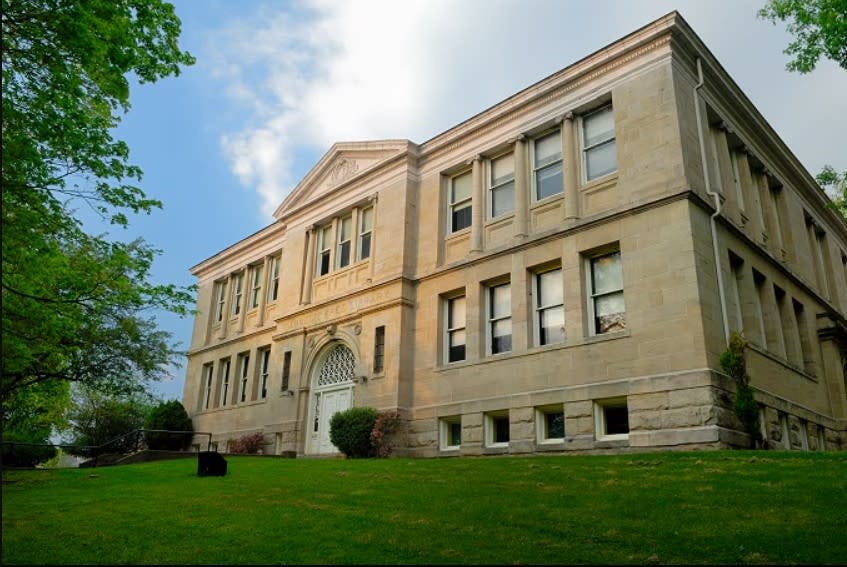
During summer vacation from school, I virtually lived at the library. After breakfast, I strolled across the street, down the brick-paved service drive to the back entrance of the library, greeted the librarians on duty and wandered among the shelves until I found an interesting book. Then I sat on a kid-sized chair at a kid-sized table and read for hours, until a librarian would find me and let me know that Mom had called and summoned me home for lunch. After I’d eaten, I often went back to the library to continue reading. The librarians also taught me the Dewey Decimal System so I would know how to find books on a particular subject by searching in small drawers full of index cards tethered on rods built into the bottoms of the drawers.
Mom instituted several rules pertaining to the television. We were fortunate to live in a house-full of priceless antiques and fine furniture, thanks to the generosity of Mom’s Aunt Alma, who’d inherited the contents of a mansion owned by a tycoon she’d cared for as a live-in caregiver. Among the furnishings was an enormous console television, a mahogany hulk with doors that concealed the roundish screen and controls discreetly, a real advantage for a pastor whose evangelical parishioners regarded television as “the work of Satan.”
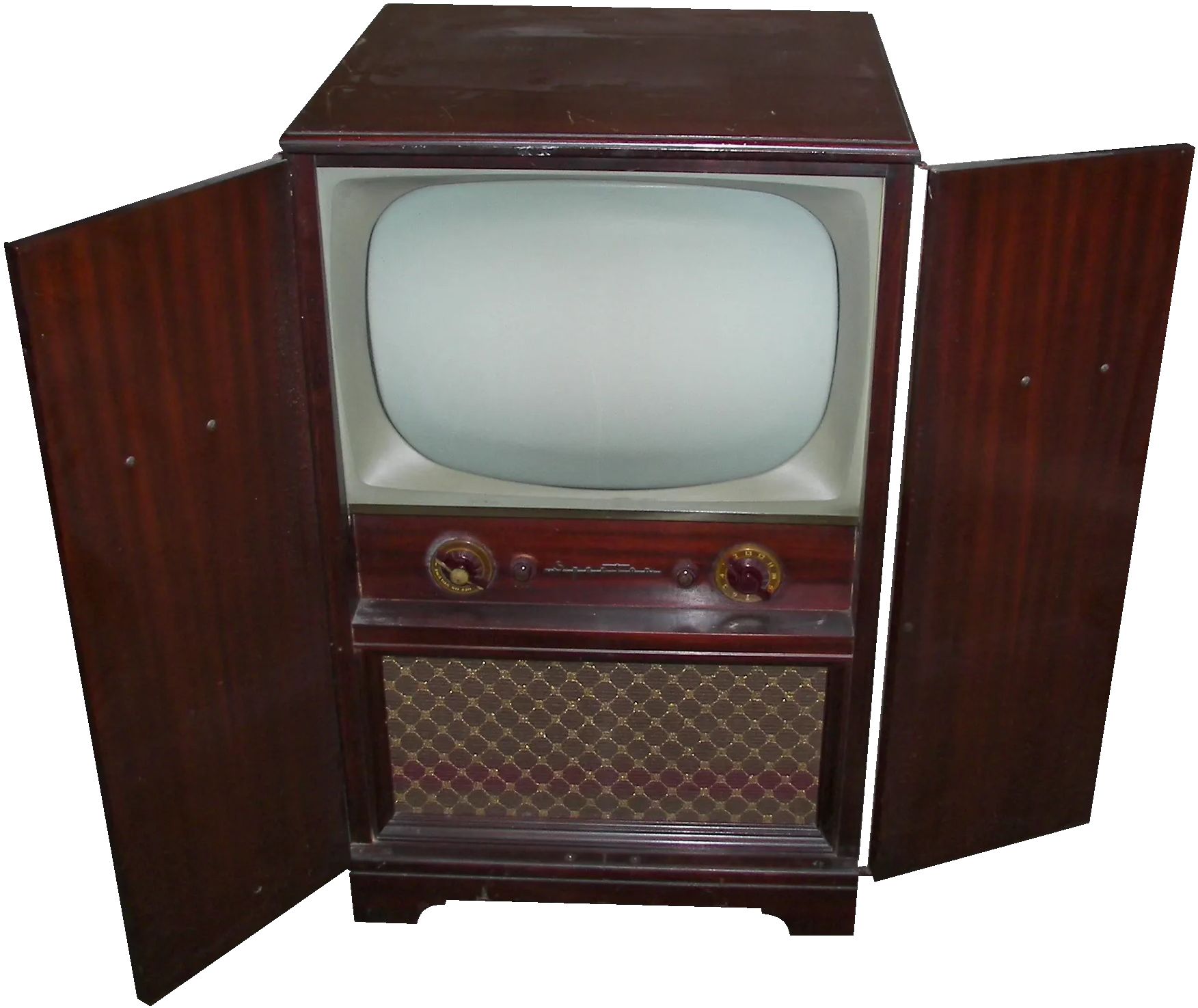
Mom’s first TV rule governed quantity. I was allowed a maximum of 1 1/2 hours per day of TV-viewing. The time wasn’t bankable; I had to use it or lose it. In other words, I was not allowed to watch only on hour one evening so I could watch two hours on the next evening. This meant that I often had to make difficult decisions, juggling and prioritizing half-hour versus one-hour shows. I always ended up missing a show I really wanted to see because of network broadcast overlap in a world without video-recording or DVR. On extremely rare occasions, my TV-viewing time was extended for very special programs, such as airing of The Wizard of Oz.
Mom’s second rule governed quality. I was allowed to watch only programming that was “uplifting.” That was, no violence, no guns, no sexual innuendo, and no Three Stooges, which didn’t fit into the other categories. Mom had seen enough other boys imitating the Stooges’ slapstick rudeness, and she wasn’t having it from her own son. Profanity wasn’t a thing in those days, but it would have been on the forbidden list. On Sundays, I enjoyed watching In the Kitchen with Julia Child and Leonard Bernstein’s Concerts for Young Listeners. Apparently, these viewing choices bothered some of Mom’s friends, whom I overheard expressing their concern to Mom that something was wrong with me for enjoying those programs. I’m pretty sure something was wrong with them for being concerned about an issue that was none of their business.
With rare exceptions, evangelical congregations expect their pastors to be men – and married. If an evangelical pastor is “called” to a church while single, he’d better get married … pronto! In that culture, the pastor is a package deal; he is the paid employee and his wife is an unpaid volunteer who must do something to keep her husband in good standing with the local church board. Dad had nothing to worry about with Mom. She played a vital role in the churches’ programs, calling on her extraordinary talents in both visual and musical arts. At various times, she served as church pianist, organist and choir director, leading weekly choral presentations during worship as well as directing Easter and Christmas cantatas. At times, she also served as a Sunday School teacher and superintendent. Occasionally, Mom presented “chalk talks” in which she created pictures using colored chalks on large sheets of paper, accompanied by scripture readings or vocal solos by Dad. Congregations were fascinated as the sketch suddenly became a complete picture at the last moment.
In addition to her other church ministries, Mom was active in the denomination’s ministry by and for women, with chapters in each local congregation. She was elected as a director of the Western PA District, which afforded her the opportunity to tour the denomination’s missions operations across South America, where she was able to speak with locals in Spanish. Mom also led women’s activities at the denomination’s global conventions.
When Mom wasn’t busy with church work, she was busy creating something at home. An accomplished seamstress, she made most of her own clothing as well as garments for her family. She also sewed furnishings for the family home, including curtains, draperies, tablecloths and more.
Mom also enjoyed cooking and baking, frequently trying new recipes from her sizable collection of cookbooks that filled an entire bookcase. Mom’s table was always a dining event. No matter how casual the meal or humble the fare, the table was always dressed with complete place settings and every course was offered in the appropriate serving vessel. With the exception of the occasional casserole, cookware never made an appearance at Mom’s table, nor was anyone allowed to serve themselves from the stove. And there was always dessert after every meal.
Dad’s career culminated at a retirement and elder care community in Carlisle, PA, and Mom joined him there as director of the social and activity programs for the community of residents. She spearheaded the creation of a craft and activities room on the campus where residents could socialize as they worked on various craft projects and other activities.
When Dad retired from the nursing home, Mom also left her position there, but she didn’t retire. Instead, she joined the staff at Carlisle’s Hamilton Elementary School, where she was a paraprofessional who helped First and Second Graders struggling with “new math” or behavioral issues, giving them love and encouragement until she officially retired at age 83. Mom’s years at Hamilton weren’t her first stint in teaching. She was an expert swimmer and taught swimming and handcraft classes at a local YMCA in the 1960s. Later, she directed a preschool, where she created a developmental curriculum for children aged 1 to 6. It is said that you can’t stop a teacher from teaching, and Mom was no exception. Even after her official retirement, she organized ESL classes in conjunction with her church and helped adult students from Iraq and several South American countries become conversant in English.
Mom also applied her teaching skills to the canines who joined our family. She was partial to long-haired Collies, and over the years, taught Caesar, Royal, Night Train and Dakota the five basic obedience commands. Depending on the dogs’ temperaments and aptitudes, Mom taught them to perform additional “tricks,” including singing and solving simple math problems. The dogs were just part of the menagerie that revolved through the household, from guinea pigs to tropical fish to cage birds to Bantam poultry to ponies to a white cat to a black Suffolk lamb rejected by his mother. This prompted her to declare, “Never in my wildest dreams did I think I’d be standing over the stove at three in the morning, warming a bottle for a sheep!”
Even as a senior citizen myself, I was fortunate to have both my parents living until Thanksgiving Day 2023 when Dad died. This Mother’s Day and Father’s Day, both my parents will be gone.
Although Mom died on October 29, 2025, I lost her about a year earlier to dementia. If anyone needs proof that deities and religions are manmade creations, dementia is that proof. Mom followed all the rules of her faith, had a handful of Bibles she read from several times a day, prayed in the morning – long prayers of gratitude and supplication for everyone she knew – prayed before every meal, at bedtime and several times during the day. She was in church twice on Sundays, Wednesday evenings and other times during the week. I can’t imagine that anyone could have lived a more exemplary Christian life. One would expect that if anyone had earned an end of life that was dignified and peaceful, it was Mom.
Instead, she descended into a hell of confusion, delusion, delirium, terror and pain, where she lost her memories, lost control of her bodily functions, lost her focal vision, lost her privacy. The woman who’d taught English to families from around the world only five years earlier lost her ability to speak. She even lost her ability to choose what she would wear – the woman who always left the house with every hair in place and dressed to the nines. I am thankful to the nursing home staff who respectfully and lovingly did everything they could to make Mom comfortable and preserve whatever shred of dignity she had left. But no amount of theological pretzel logic will convince me that any just deity would decide Mom should become an adult-sized rag doll for the final months of her life.
Bottom line: We are on our own. Some of us get what we deserve and some of us don’t.
It has occurred to me that we need to rethink our mawkish holidays like Mother’s Day and Father’s Day (and Valentine’s Day), organized by religious busybodies whose white lives were perfect in every possible way, without regard for people whose lives aren’t so perfect. Here in the good ol’ capitalistic USA, holidays have been turned into retail bonanzas where advertisers guilt people into spending fortunes on buying stuff to convince people we love them.
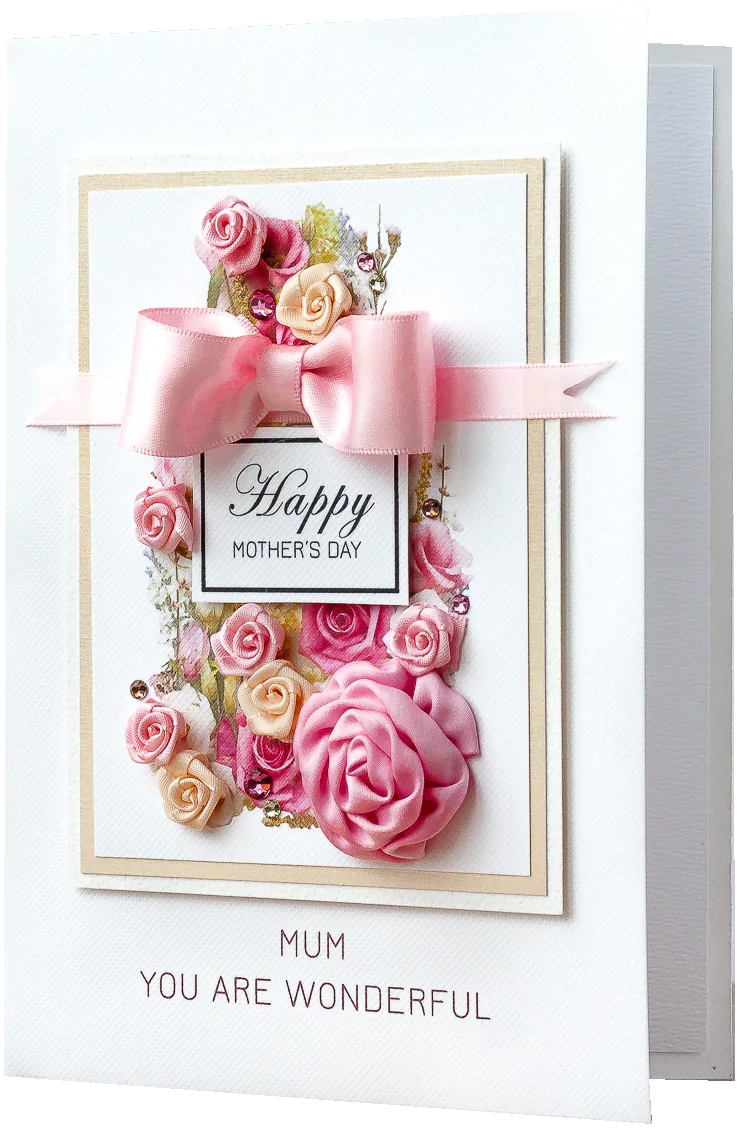
While masses of consumers are spending a fortune on stupid cards and expensive gifts, there are a whole multitude of people for whom these holidays are painful and exclusionary. Besides those whose parents are deceased, many have mothers who abandoned them and/or fathers who abused them, or parents who were just crappy people. For them, there are no Hallmark memories to celebrate.
Maybe people who have parents they love and appreciate should express those feelings all year ‘round in a low-key manner, rather than splashing money around one day out of the year. I suspect most parents would prefer this.
Comments
Nothing yet. Say the first thing.
Sign in to join the conversation.