
With the recent passing of Sonny Rollins (1930-2026), we have lost one of the great masters in the history of music. Rollins had a huge impact on everybody in jazz—including me, well before I became a Coltrane disciple. And over the years I did enough research that I could have written a book on Sonny (which is also true of Miles and Billie). But I’m happy to share my findings here—already fifteen essays to date, with lots of rare audio (please use the Index). And I was happy to open my archives to Aidan Levy while he was creating the definitive biography of Sonny Rollins.
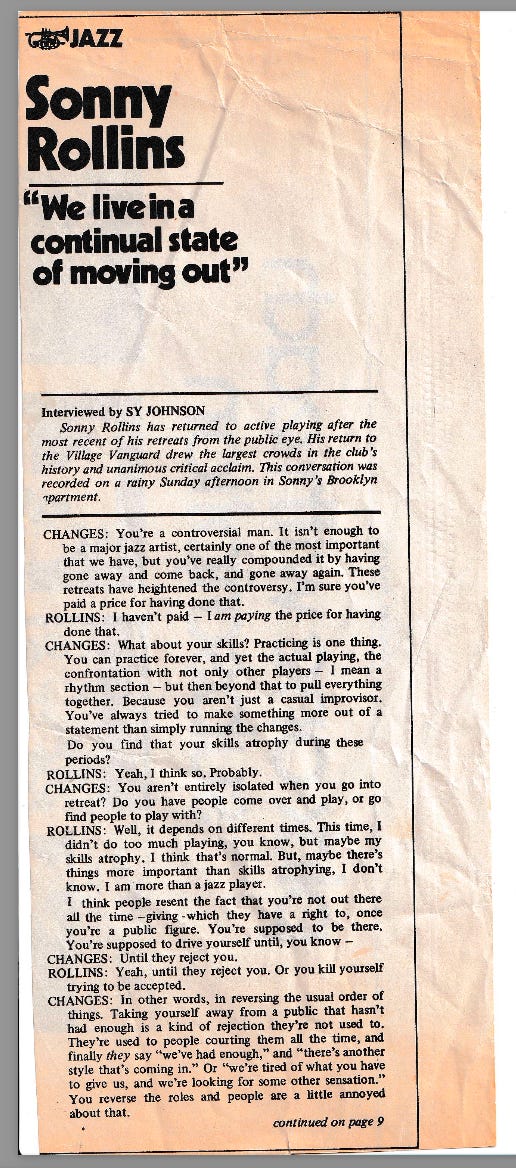
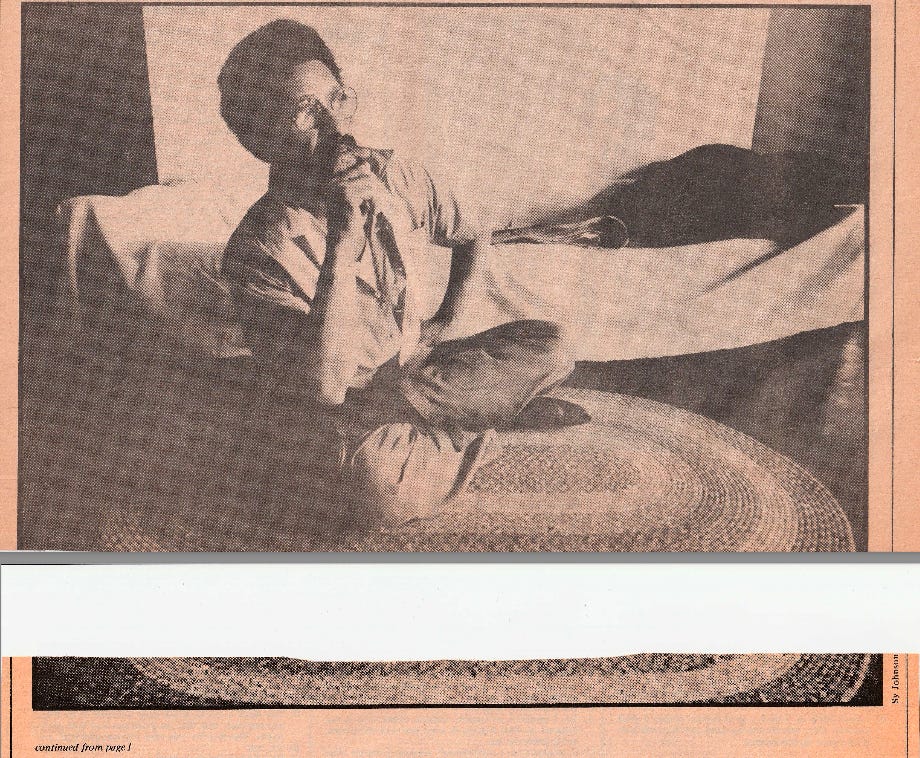
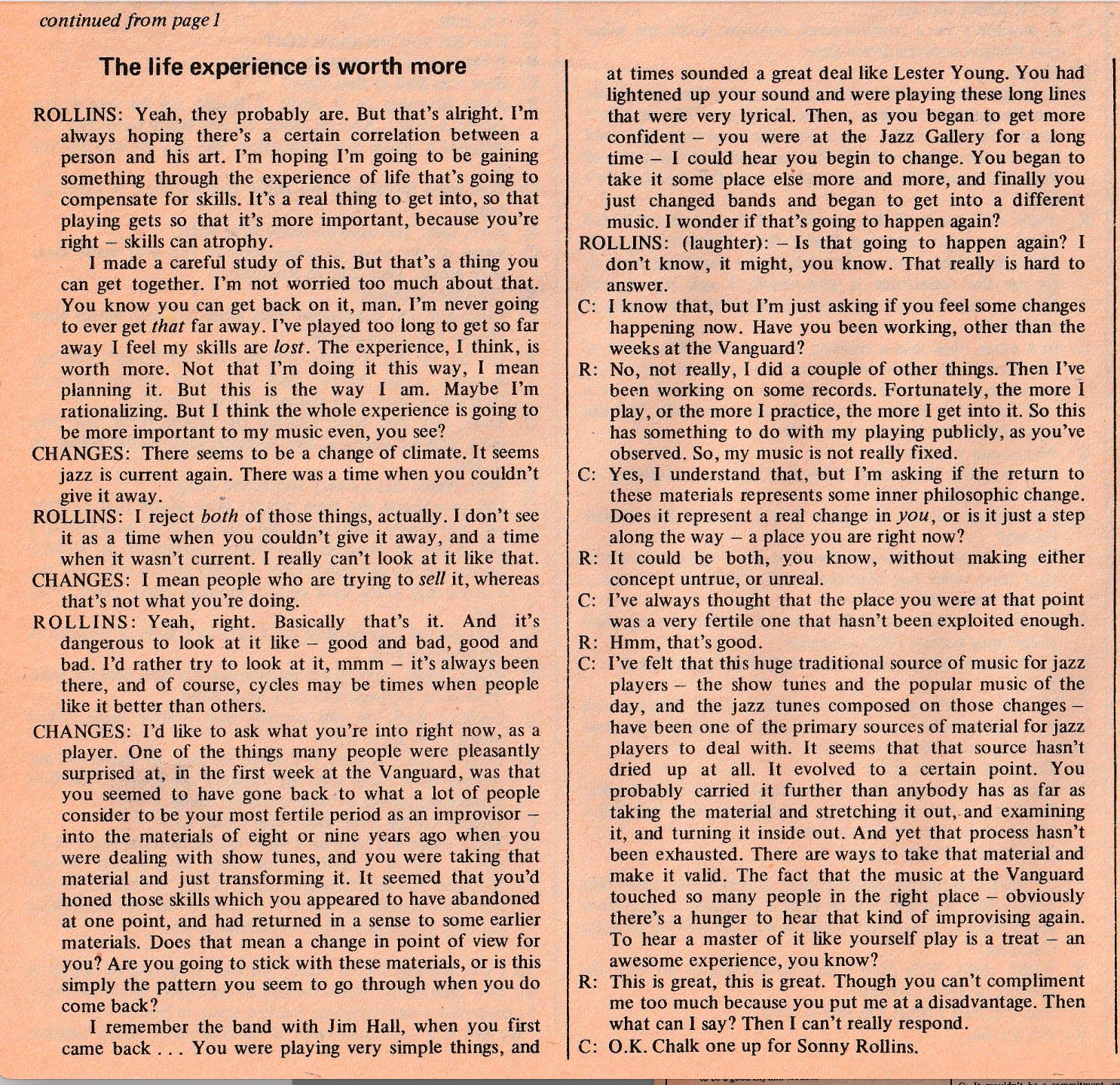
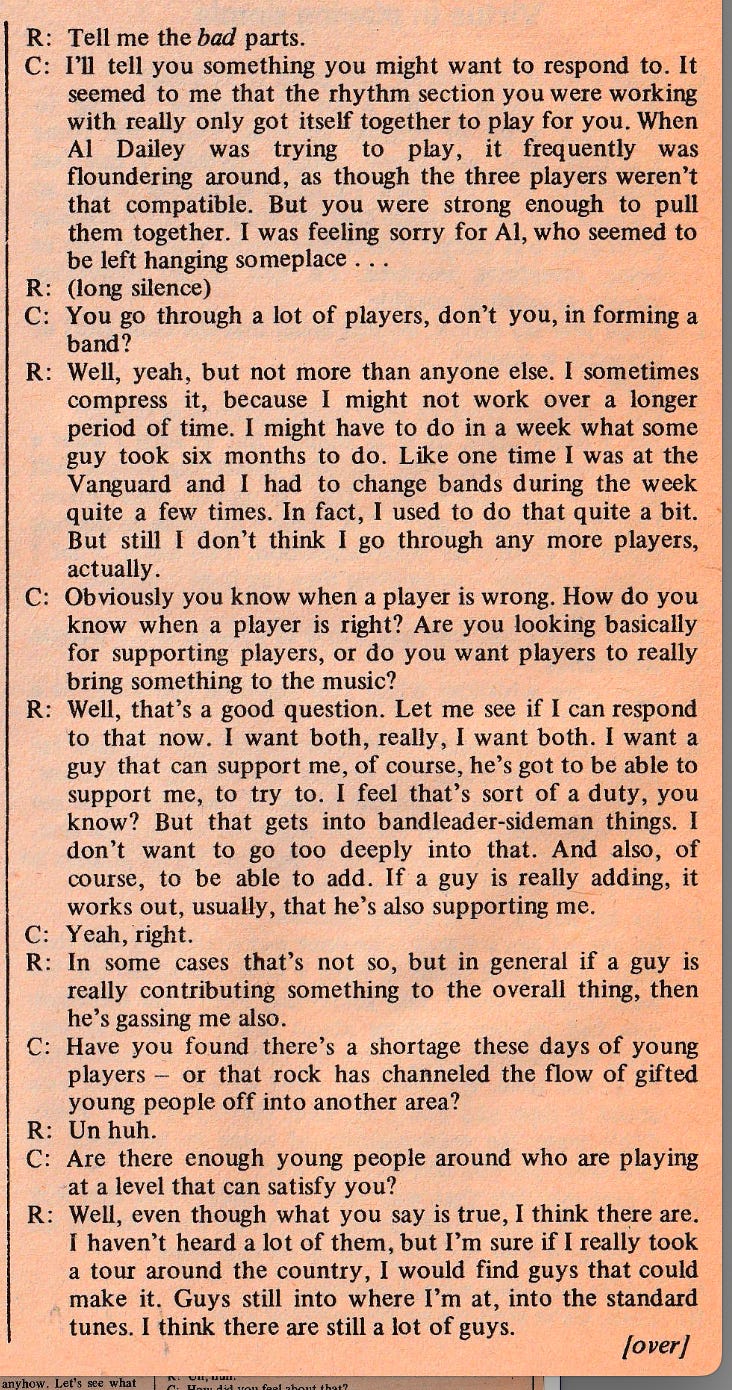
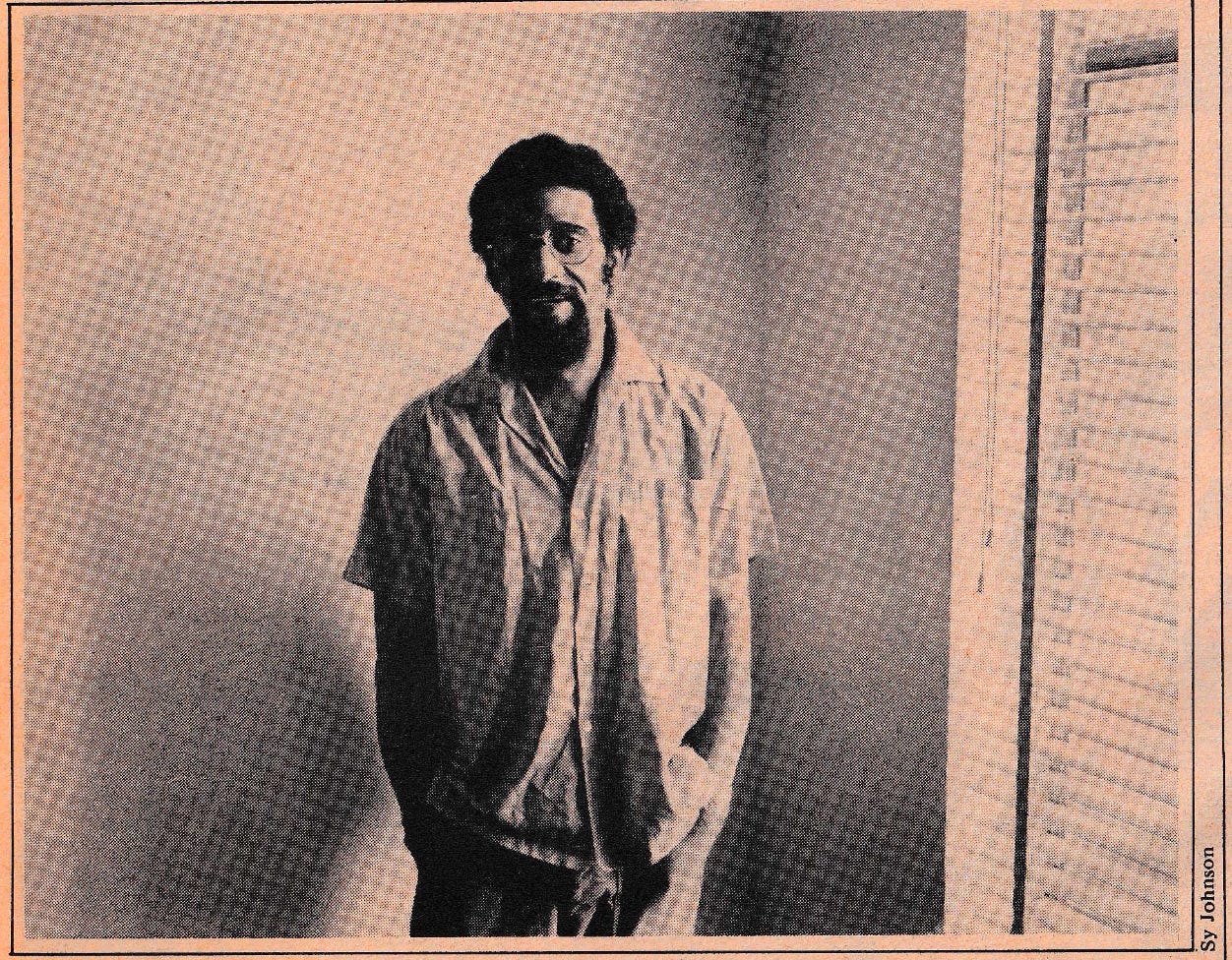
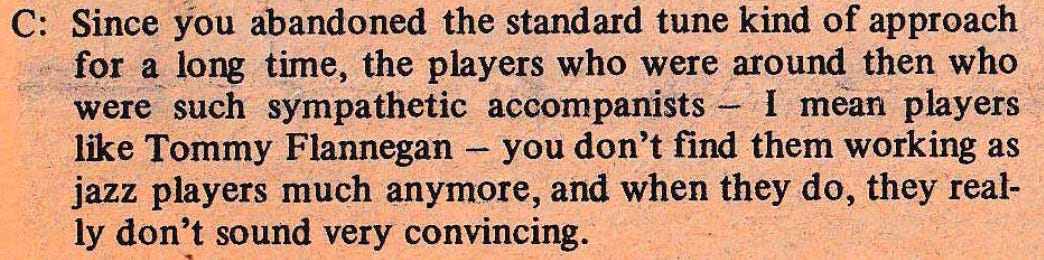
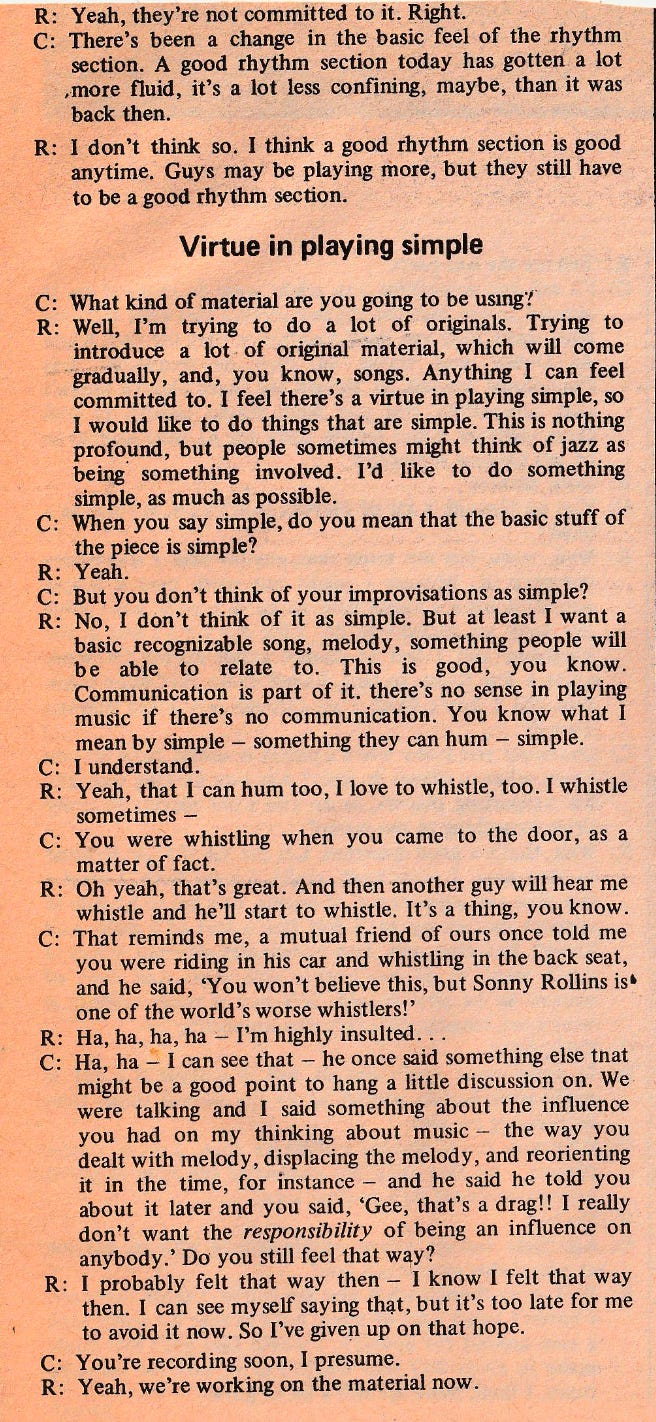
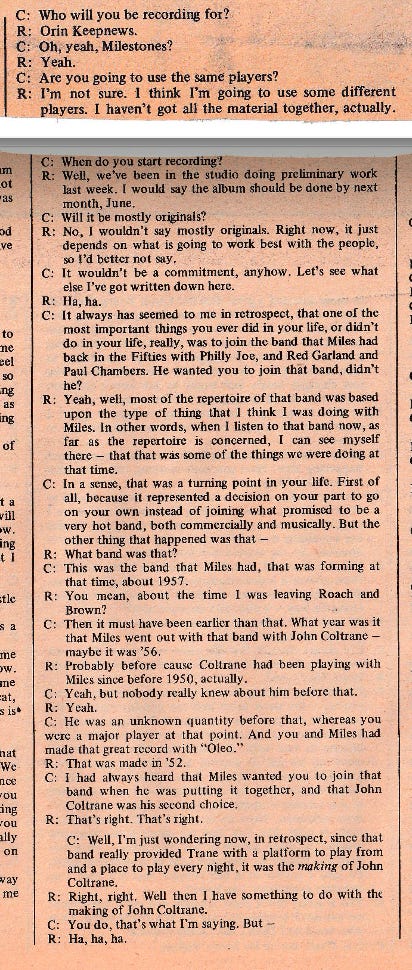
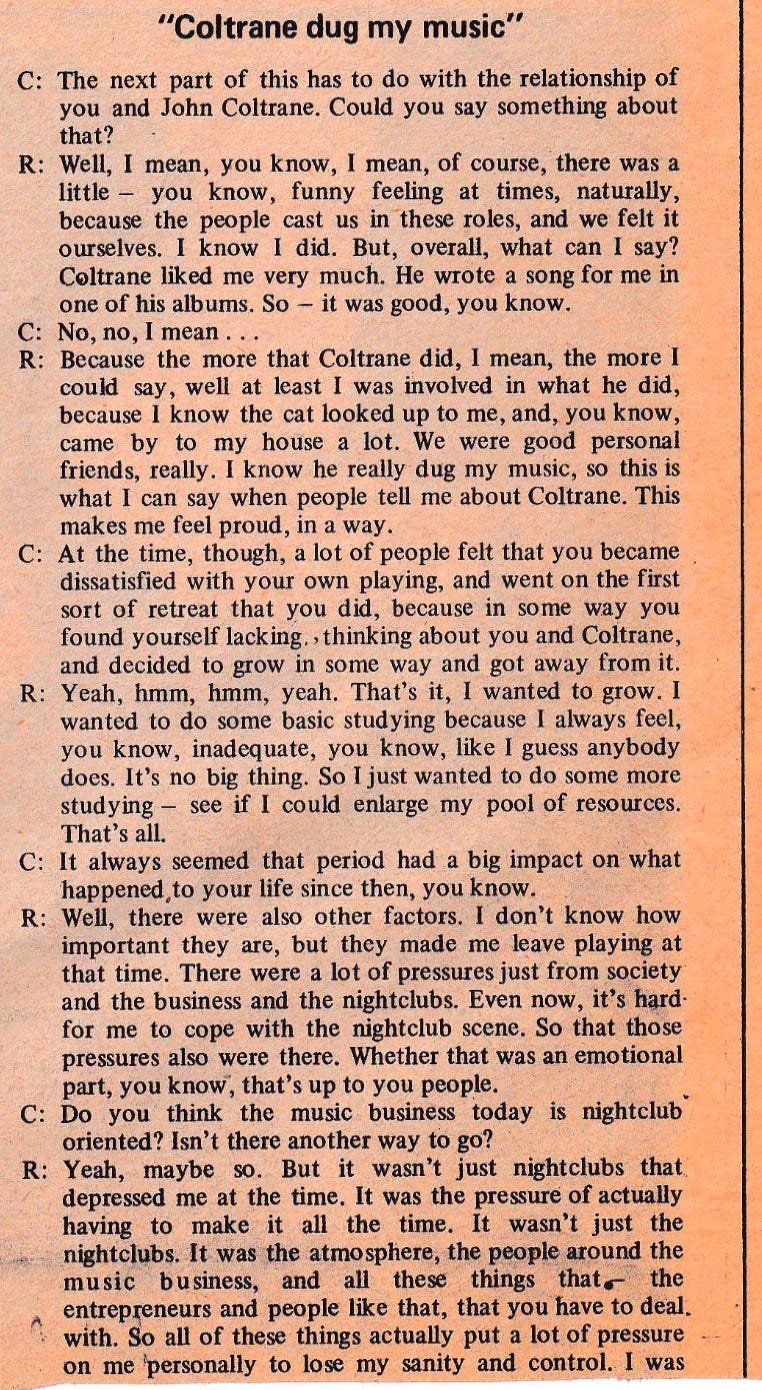
I will continue to post on Rollins, and let’s begin today with what is almost certainly his most rare print interview, and it’s an extensive one. The interview was conducted in May 1972 and published in the July 1972 issue of Changes, a primarily rock magazine that lasted from 1969 until 1975. It was edited by Susan Graham, who became Sue Mingus during those years. We will enjoy the interview today thanks to subscriber Jim Goetsch, a saxophonist based in Santa Fe.
The late Sivert Bertil “Sy” Johnson (1930-2022) was a very busy pianist and arranger in jazz—best known for his work with Mingus, which is how Sue knew him— as well as in the world of radio and TV commercials. He was a very likeable man and I always enjoyed my interactions with him, and with his wife Lois Mirviss, who is still in N.Y.C. During the 1970s, Sy was also a journalist, writing mostly for Changes and for Jazz Magazine (the short-lived American one, not the long-running French one). Among other things, he published interviews with major artists. But—may I be honest?—Sy was not a good interviewer. He often talked too much, almost lectured, argued for his own opinions, and sometimes showed up without any plan. You already read his interview with Miles Davis, and listened to Sy’s own tape of it. In that one, he begins without any agenda and gets into some arguments with Miles, and it is Miles who eventually makes the effort to work things out. For this Rollins interview, Sy does have some questions prepared, but he still lectures. (I don’t have Sy’s tape of this one.) On the other hand, because Sy was a fellow musician, he sometimes brought out things that other journalists did not, and that happens in the Miles interview and here.
Right at the beginning, Sy confronts Rollins with the idea that his skills might have wasted away, “atrophied,” during his break from performing. Sonny agrees with him, but it seems to me that Sy pushed him into saying that. Then Sonny says “You’re supposed to drive yourself, you know..” and Sy interrupts with, “Until they reject you.” Sonny accepts that, but then goes on to say what he was really planning to say. Finally, when Sy says that “jazz is current again,” Sonny says “I reject” that. He’s realizing that he will have to assert himself, faced with Sy’s strong personality.
There are two points that are raised here but basically go unexplored: For one, Sy notes that Sonny “goes through” (hires and fires) a lot of players, and Sonny says “Not more than anyone else.” But he admits that during one gig “I had to change bands during the week quite a few times”! In fact, Sonny was notorious for hiring and firing his sidepersons all the time—much more so than Mingus, despite the bassist’s reputation. Just read through Levy’s biography of Sonny and notice how many times it happens. The other point is Sonny’s competitiveness with Coltrane. Sonny refers to it very indirectly by saying that there was a “funny feeling” because “people cast us in these roles”—that is, other people—I assume he means critics mostly— stirred up their competitive feelings. But many years later, he finally opened up some more about it, and on February 27, 2020, the New York Times ran the headline “Sonny Rollins Is at Peace. But He Regrets Trying to One-Up Coltrane.” I’ll be exploring their relationship further in another essay.
Here is some background on events that are mentioned in the interview: Sonny’s most recent album at the time was East Broadway Run Down on Impulse, recorded and released in 1966. (There are “live” recordings from 1967 and ‘68 but they were only released years later.) Sonny’s break from performing started in September 1969 and lasted until he played at the Kongsberg festival in Norway on June 25, 1971. But he didn’t perform much after that, until he returned to the Village Vanguard from March 14 to 19, 1972. It was such a successful and acclaimed engagement that he appeared there again for about a week in mid-April. The interview was conducted in May 1972 and Sonny says that he thinks that his new album will be finished “next month, June.” It took just a little longer than that. Sonny Rollins’ Next Album, as it was called, was recorded in July 1972, and released in November. Okay—please enjoy!:
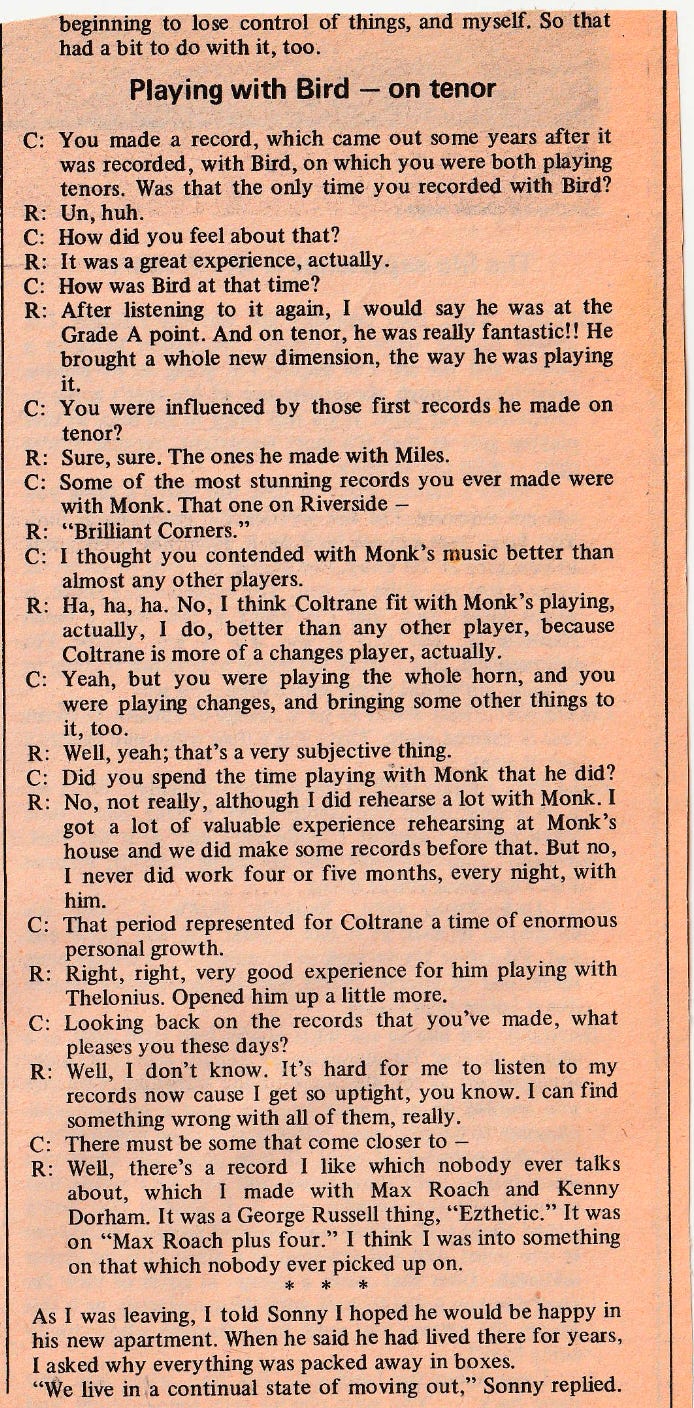
I love that ending. By the way, the recording of Russell’s brilliant “Ezz-thetic” (sic), based on “Love for Sale,” is here. And of course the session with Sonny and Bird on tenors is this Miles Davis date from 1953. I hope you enjoyed this unusual interview.
All the best,
Lewis
Comments
Nothing yet. Say the first thing.
Sign in to join the conversation.