
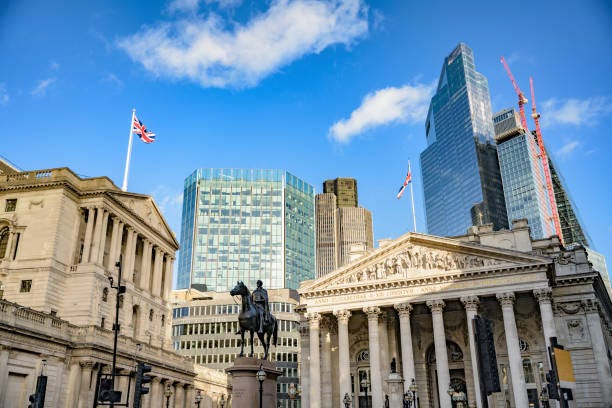
It’s been a busy few weeks for UK economic data - we’ve had a Bank of England rate decision that wasn’t as straightforward as it first looked, fresh GDP numbers hinting at slowing momentum, inflation easing further, unemployment claims jumping sharply and, interestingly, retail sales showing surprising strength.
Taken together, these numbers tell a coherent story about where the UK economy currently stands. This week’s newsletter is about stepping back and connecting those dots. Where is pressure building? Where is resilience holding? And most importantly, how might markets react if this data continues in the same direction?
The numbers themselves matter, but how policymakers and investors interpret them matters even more.
Firstly, before we dive into the UK, I wanted to quickly address the current tensions in the Middle East. As always, the world is once again in a state of unease and I send prayers and well wishes to all those impacted, especially our friends and families situated in these regions. In my humble opinion, the essence of war is just a measure filled with hidden agendas from the aggressors and any supporting parties. Agendas based around money, power and greed - unfortunate elements that can’t be avoided as humans.
Although everything is tied to the financial markets, I don’t see the need right now to write a detailed post on how the current escalations could impact the general markets as it’s the same formula over and over again:
Conflict and unease = “risk-off” environment.
Risk-off environment = decline in the stock market and decline in “risk-on” currencies (such as GBP and EUR).
Risk-off environment = rise in safe haven commodities (such as gold) and safe haven currencies (such as the US dollar). Oil’s volatility also rises and when it’s supply chains are impacted, it tends to increase in value.
With this general rule of thumb, should the tensions escalate further or if cease-fire deals are made and there isn’t further escalation, you should be able to make informed decisions in how to navigate the evolving environment with your portfolios/trades.
So with that being said, no need to flog a dead horse - let’s return to the topic at hand and chat about the UK economy.

The Bank of England has recently kept interest rates unchanged at 3.75%. The decision itself was widely expected by the market, but what wasn’t expected was how divided the Monetary Policy Committee appeared to be.
The Monetary Policy Committee (MPC) is the group at the Bank of England that decides the UK’s interest rates to help keep inflation close to the 2% target and support the economy. It has nine members, including the Governor, senior Bank officials, and independent economists. They meet regularly and each member casts one vote on whether interest rates should go up, down, or stay the same.
The decision is made by majority vote, and the voting breakdown is published so markets can see how members voted.
The vote split came in at 0-4-5 ; four members voting for a cut and five voting to hold. That’s far narrower than many anticipated and signals a meaningful shift in tone inside the Bank. When nearly half of policymakers are ready to ease, it tells us the debate has moved. We’re no longer in a firmly hawkish environment, instead we’re now transitioning towards a more dovish narrative.
Governor Andrew Bailey’s remarks reinforced this shift. His message that disinflation is “on track” and that inflation progress is encouraging suggests confidence is building within the Bank that the worst of the inflation fight may be behind us. Central banks rarely pivot abruptly. Instead, they soften language first and that’s what we’re beginning to see.
Markets will now start asking a different question. Not whether rates are restrictive enough but how long they need to remain this restrictive.
Taking a look at the recent GDP figures we see that they further reinforce the rate cut narrative.
Year-on-year growth slowed from 1.2% to 0.7%. Month-on-month growth edged down from 0.2% to 0.1%. These are not dramatic collapses, but they are clear signs of deceleration.
An economy growing at 0.7% annually is not exactly booming, it’s essentially treading water. And when interest rates are still elevated, the risk of stagnation becomes more real. This is where the lag effect of monetary policy comes into focus. Higher rates don’t impact the economy overnight. They work slowly through mortgage refinancing, business investment decisions, consumer credit and confidence; the pressure builds gradually.
What we’re likely seeing now is the cumulative effect of that tightening cycle. Businesses are becoming more cautious. Households are feeling the strain of higher borrowing costs. Momentum is softening and if this trend continues, the case for maintaining restrictive policy weakens.
At the same time, CPI has declined from 3.4% to 3%. While still above the Bank’s 2% target, the direction of travel is what matters most at this stage. Inflation falling alongside slowing growth is exactly the combination policymakers need to justify easing rates.
The inflation fight has defined the past few years. But once inflation convincingly rolls over, the focus shifts toward supporting economic activity rather than suppressing it.
For households, lower inflation restores purchasing power. For businesses, it stabilises input costs. And for the Bank of England, it opens the door to flexibility. The tone from policymakers suggests they’re increasingly comfortable with where inflation is heading. That confidence changes the risk calculus.
Perhaps the most concerning recent data point pushing for lower interest rates is the jump in unemployment claims - rising sharply from 2.7k to 28.6k.
A rising claimant count doesn’t immediately mean a deteriorating labour market, but it does raise questions. The labour market has been one of the UK’s strongest pillars throughout recent volatility. If that pillar begins to weaken, broader economic resilience comes into question.
Higher unemployment claims reduce wage pressures over time, which supports the disinflation narrative. But they also undermine household confidence and spending power.
For policymakers, this creates a delicate balance. Leave rates too high for too long, and labour market weakness could accelerate. Cut too soon, and inflation risks re-emerge. The vote split at the Bank suggests some members believe that balance is already shifting.
If you’re enjoying the read so far, why not click the like button and share it with a friend? It takes just a few seconds and would be greatly appreciated!

Well, not all is pointing downward…
Retail sales surprised strongly to the upside. Year-on-year sales jumped from 1.9% to 4.5%, and month-on-month growth accelerated from 0.4% to 1.8%.
This shows us that the UK consumer is still active. Whether driven by improving real wages, easing inflation or delayed demand, spending remains resilient.
This complicates the narrative of immediate economic contraction. It suggests that while pressure is building, the slowdown is gradual rather than abrupt. But it also strengthens the argument for a cautious easing cycle. If consumers are still spending despite elevated rates, lowering rates slightly could sustain momentum rather than stifle it.
When we put all of these factors together, it paints a clear picture:
Growth is softening, inflation is cooling and labour market pressures are beginning to surface.
The Bank of England’s internal vote is edging toward dovish territory. Yet the consumer remains surprisingly resilient.
So rather than the usual doom and gloom of the UK looking like it’s an economy in crisis, it could actually be an economy at a turning point. Markets will now begin positioning for what comes next. If the data continues along this trajectory, expectations for a rate cut will move from speculative to probable.
The GBP currency may face downward pressure if easing expectations accelerate as rate cuts tend to result in a weakness in the currency in question. UK equities, particularly rate-sensitive sectors, could find support. Bond yields may drift lower as markets price in future cuts.
For savers, today’s attractive fixed rates may not be around indefinitely. For investors, turning points in monetary cycles often present significant opportunities but only for those paying attention before the move becomes obvious. In short, the story of the UK economy right now is one of transition.
Policy has done its job in cooling inflation. Now the question is whether it has cooled growth just enough, or slightly too much. The coming months will be critical as we watch the data, but language from the Central Bank will matter even more.
We may not have seen the first cut yet. But the groundwork for it is clearly being laid. And markets, as always, will move before the headlines confirm it.

I hope you’ve learned something new, and if you have any questions or want anything to be clarified, please leave a comment below and make sure to follow us on all social media pages.
Instagram: @lets.speculate / TikTok: @lets.speculate / X: @_LetsSpeculate
No posts
Comments
Nothing yet. Say the first thing.
Sign in to join the conversation.