
This is Part Three of a three-part series on the current state of the Amphibious Reconnaissance Community in the Marine Corps. Published here and at The Connecting File, Parts One and Two covered the current operational employment and historical challenges over the last twenty-five years for Amphibious Reconnaissance, creating a frame of reference for dissecting a proposal to adapt the current training pipeline for Amphibious Reconnaissance Marines during entry-level training.
As discussed, the proposal has the potential to create positive change. However, the service must examine whether the proposal’s effects will positively reinforce and modify the lethality of the Amphibious Reconnaissance Community for the better, and, if not, what else can be done?
Part Three will describe the change proposal and illuminate six key areas of concern for further refinement or discussion.
The Proposal for Change - Recommendations for Planning and Execution
Force Design 2030 represented a serious bet - wholesale changes across certain elements of the Marine Corps requiring a thoughtful approach. Proposals and directives created worthwhile debate amongst senior decision makers, both past and present. Regardless of opinion, one element received wholistic agreement: appropriate risk calculus will reside at the epicenter of change. Amphibious Reconnaissance Battalions were absent from Force Design-directed change, but presently there is a strong case to be made for modernization. Should the service consider modernizing Recon, one factor is critical regarding risk – manpower. Specifically, the ability to produce the number of Marines necessary to accomplish reconnaissance missions in competition and conflict. Reconnaissance Marine production remains a challenging task. This must be addressed if the service is to ‘bet on Recon’ and modernize at scale.
Summarized in previous installments, the community maintains historic operational success spanning the continuum of conflict, all the while being affected both directly and indirectly by service level changes from the past twenty-five years. Considering the capabilities within the formation, range of missions they assume, service and joint level concepts which require their participation, and the evolving character of war, the Amphibious Reconnaissance Community deserves focused attention.
Amphibious Reconnaissance formations are one of many manned elements within the Marine Corps Intelligence and Surveillance Enterprise (MCISR-E). The distinguishing factor between Reconnaissance Marines as opposed to other formations exists in the specialization of capabilities Recon Marines achieve over time. Beginning with a rigorous accession and production process, Reconnaissance Marines acquire individual infantry-based hard skills, SOF equivalent specialized insertion and extraction capabilities (SPIE), and partake in unique unit-level training. Although the unit of action exemplifies a versatile tool required for the joint force, there are simply not enough of them. The question has and will continue to be one of quantity, not of quality.
In the fall of 2025, the Reconnaissance Operational Advisory Group (ROAG), led by representatives of the Active-Duty Reconnaissance Battalions, created a new concept of employment for reconnaissance, dubbing it the Marine Air Ground Task Force (MAGTF) Recon Enterprise. The concept incorporated all elements of the MCISRE but focused specifically on the Amphibious Reconnaissance Battalions and the requirement to incorporate an ability to sense in multiple domains, as well as facilitate multi-intelligence discipline collection. These multi-domain and disciplined units of action are positioned forward of the MAGTF during the competition phase to sense, battlespace shape, and if necessary, conduct kinetic or non-kinetic action as required during crisis or conflict on behalf of the Marine Expeditionary Force (MEF) or Joint Task Force Commander.
Initial feedback from commanders within the Marine Corps Ground Combat Element (GCE) was positive. Conceptual agreement was not difficult to achieve. A multi-function unit of action comprised of complementary intelligence disciplines/domains in theater before a Crisis Response Element’s arrival represents a powerful tool, one that will facilitate success during the transition from competition to crisis or conflict.
Despite agreement, there is a limiting factor in realizing this concept to its full potential, the mass required to achieve the desired impacts. Realizing the critical linkage between the concept and fully aware of the shortfalls of Recon Marine production, a proposal surfaced from USMC Training Command with the following end state: create a model to provide sustainable, consistent reconnaissance capability for the Marine Air Ground Task Force (MAGTF), Combatant Commander, or the Joint Task Force (JTF). Operating within the confines Training Command could impact, the lever for change was standardized entry-level training. The desired effect is an increase in both the population of Marines who conduct reconnaissance and the coupling of reconnaissance assets on the modern battlefield. An expected byproduct of the proposed reorganization would be a reduction in training attrition for the Amphib Reconnaissance community without sacrificing current quality.
Since the proposal’s release, operational planning teams explored the Doctrine, Organization, Training, Manpower, Logistics, Personnel, and Facilities (DOTMLPF) Pillars. As is the case with many initial courses of action, staff estimates guided refinement. In its current state, the concept received favorable endorsement amongst Marine Corps senior leaders. However, from the perspective of Recon community leaders, limiting factors exist, and further refinement, staffing, and decisions are necessary. Optimistically, these limitations equate to opportunities for the service. In recent history, the Reconnaissance community worked diligently without significant service-level action to support the growth and modernization of capability. With Marine Corps senior leaders’ attention squarely focused on the issue of future concepts regarding MAGTF Reconnaissance employment in the Corps, the system is primed for action.
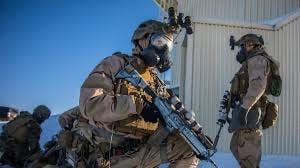
The current proposal is nominally named the “Infantry-Scout-Recon Pipeline Proposal.” It is summarized as follows: entry-level Marines begin with Infantry skills as a foundation, are taught Reconnaissance skills pertaining to Ground Warfare during the Ground Reconnaissance Course (GRC), and subsequently finish the pipeline with Amphibious Reconnaissance skills during Amphib Reconnaissance Course (ARC). Marines who complete GRC are awarded the 0315 (Scout) MOS. Marines who complete the full pipeline are awarded the 0321 (Reconnaissance) MOS. The Course in its entirety is purpose-built to service the manning of two distinct categories of reconnaissance: Ground and Amphibious. Marines who attain the 0315 MOS will be placed within Infantry or Light Armored Reconnaissance (LAR) Battalions. Marines who achieve the 0321 MOS will man the Amphibious Reconnaissance Battalions.
Two examine the proposal, two critical questions exist:
Does the proposal represent a valid correction that will create worthwhile, lasting change?
Should the service expand its view on the Amphibious Reconnaissance community’s modernization by taking an approach beyond the proposal, creating wholesale change for the future of Reconnaissance Marines?
The course of action represents a valid correction. The production model for Reconnaissance Marines illustrates sustained levels of attrition that fail to meet the mark. Although the instructor staff at Reconnaissance Training Company and Advanced Infantry Training Battalion of the School of Infantry West have methodically and consistently manipulated the program of instruction in hopes of decreasing attrition, collective actions have yet to produce the change desired by the service. Tweaking the margins of the program of instruction has created minimal, positive change. A bold correction reinforced by service action and oversight has never been attempted. Despite the validity of attempting bold corrections, the sequencing of change, pace of change, and collection of data is a specified task to ensure the measures of effectiveness and performance are achieved.
This can create worthwhile change. The proposal integrates a military occupational specialty whose skills are aligned to ground reconnaissance-related tasks, like an 0321. The creation of training efficiencies at an entry level between manned sensing elements has high potential to facilitate a tighter linkage between our reconnaissance elements throughout the Division and MEF. This can close the current sensing gap that exists between infantry organic manned reconnaissance assets and reconnaissance at higher echelon commands. Over time, as growth occurs within the infantry battalion's organic Scouts, the Recon Battalions will naturally realign positioning as a Division and Marine Expeditionary Force (MEF) asset. Should the course of action realize catastrophic success in growth and retention for Amphibious Reconnaissance formations, this can lead to the Force Reconnaissance Companies realigning doctrinally as the MEF’s premier reconnaissance element.
At its core, the proposal seeks to create positive change for both an increase in quantity and increase in quality of Marines who contribute to Reconnaissance for the future of the Marine Corps. Yet, refinement is required during detailed planning and manipulation must be managed acutely during initiation and implementation. To ensure lasting change, certain elements of the proposal must remain paramount in planning and throughout the longevity of execution. Of the many considerations, this essay will identify six areas for focused consideration, which, if not addressed appropriately, leave gaps that could lead to ineffective execution, falling short of the proposal’s goals. These six areas are: review of training standards, definition of the main effort, pipeline length and impacted military occupational specialties (MOS), manning and supervision, service intervention on the periphery, and finally attrition.
Training Standards
Ground and amphibious reconnaissance training standards must be reviewed and re-baselined for the future of recon support to the Ground Combat Element (GCE) and Marine Air Ground Task Force (MAGTF). This will naturally be done through the Training and Readiness Manual rewrites and Course Content Review Boards (CCRBs) for the MOS and the Program of Instruction. As this occurs, the Reconnaissance community and the command echelon they support must critically examine reconnaissance tasks required on the future battlefield. When doing so, the collective is cautioned to conduct three critical actions. First, it must protect our amphibious linkage to littorals and naval integration. Second, the reconnaissance community must challenge legacy mindsets, which may add unproductive resistance to necessary modernization. Finally, technological advancements require consideration for inclusion or exclusion. This includes service level vehicles and systems belonging to the MAGTF, which Recon will sense for as well as specific reconnaissance-related equipment contributing to multi-domain sensing. Even without technological development, the specialty remains inherently complex. Planners must cautiously integrate technology on top of foundational field skills without overburdening entry-level Marines.
Define The Main Effort
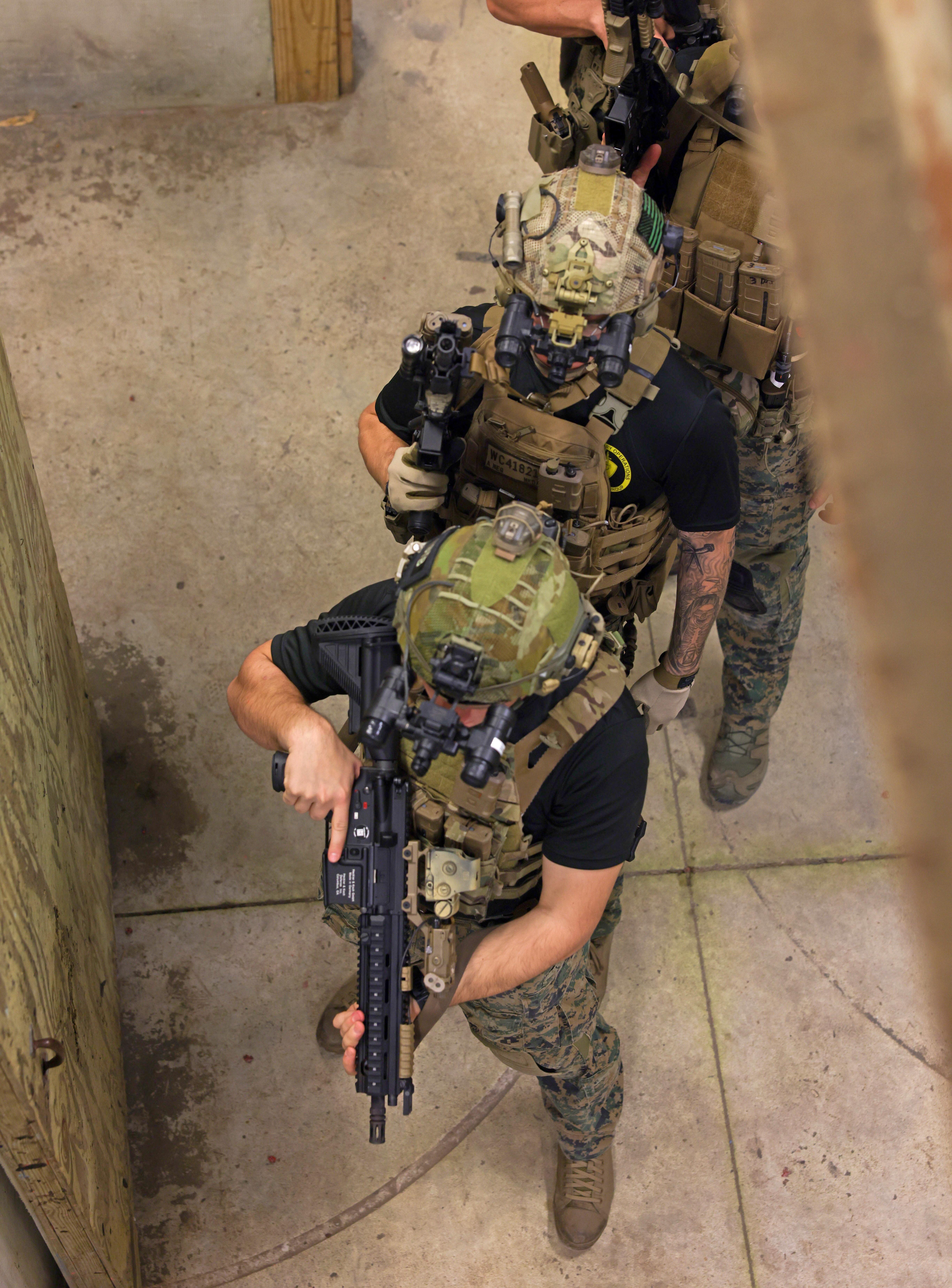
Although two primary MOSs are at the center of the proposal, the Amphibious Reconnaissance community must remain the main effort as initially discussed. Explained in previous essay installments, the Amphib Recon specialty is high in demand but naturally low density due to stringent accessions and rigorous training. However, feeding talent of two recon-related MOSs under the roof of the School of Infantry (SOI) West provides a unique opportunity – the Corps can advance the best talent. If unconstrained, this can occur regardless of the entry-level contract. Should a Marine meet the MOS-specific physical and administrative requirements, modifying a career path in stride to that of an 0321 vice 0315 is a realistic request. Additionally, it is worthwhile to expand recruitment initiatives to Marines of any MOS within entry-level training who possess the aptitude and physicality. Some MOSs within the service are suppressed from conducting lateral moves for numerous reasons, but considering the current Recon MOS health, moratoriums defined within manpower management practices warrant exploration at least for an interim period to right-size the MOS. Unfortunately, in practice, this is unlikely to occur in mass because of the Marine Corps’ manpower management system.
Pipeline Length
Manipulating overall course length is a critical factor as it pertains to the infantry-based foundation and preparation for aquatic-related competencies. In the current proposal, Infantry Common Core (ICC) and Infantry Rifleman’s Course (IRC) are considered prerequisites prior to starting the Ground Reconnaissance Course. If this remains foundational, a Marine will spend six weeks at Common Core and an additional six at Rifleman’s Course – equating to just over three months. Adding on the reconnaissance-related instruction at Recon Training Company (RTC) for Scouts and Recon Marines (eighteen weeks in total), the pipeline completes seven and a half months after boot camp graduation. Critical for consideration, the established time frame above does not include the required follow-on schooling Amphibious Reconnaissance Marines attend for specialized insertion or extraction or individual specialty skills. Although the time frame of the new proposal is roughly the same as the current one, adding elements creates ramifications, both positive and negative. Impacts include but are not limited to maximization of the time of contract and longevity health concerns due to the physicality of the course. Overall length must be scrutinized and examined during pilot courses. Measures of effectiveness can be tied to any extended timeline, being justified by the return on investment.
There is overwhelming support for the inclusion of common infantry tasks; however, the depth requires attention. Integrating three months of training on the front end will come at a cost. Marines and Sailors are still required to achieve a level of competency in the water, which prepares them for the Amphibious Reconnaissance Course yielding the 0321 MOS. The current solution is Reconnaissance Training and Assessment Program (RTAP). Roughly four weeks of physical conditioning, which facilitates students achieving the water survival advanced (WSA) qualification, as well as finning exposure, and land-based physical fitness. In combination, the land and aquatic-based skills mentally and physically harden students for success during the Basic Reconnaissance Course. It remains an unconfirmed planning assumption that infantry training at the genesis of the pipeline will increase physical toughness and resiliency, thereby decreasing attrition. This requires focused consideration, specifically as it pertains to students being prepared for amphibious-specific tasks and standards as well as physical resiliency concerns.
Impacted Military Occupational Specialties (MOS)
Additionally, impacted by future course length, contract utilization concerns exist for each MOS involved in a future pipeline change. Three enlisted specialties from two branches of service are currently attending the course. If Scouts were added, the pipeline would include four. The current Basic Reconnaissance Course pipeline not only includes 0321s, but a mission-critical asset contributing to decreased risk for reconnaissance missions, the Special Operations Independent Duty Corpsman (SOIDC). Field medical training and the Special Operations Combat Medic (SOCM) school remain requirements to attain the L02A Navy Enlisted Code (NEC). These two courses total eleven months in addition to wherever a Corpsman phases in the pipeline. SOIDCs are specifically nominated as a principal concern of consideration for two reasons. First, future operational concepts require exquisite medical capability for prolonged casualty care. Second, this pipeline feeds entry-level, tactical training for L02As who not only serve in Amphibious Reconnaissance Battalions, but also Marine Corps Special Operations Command. As described in Part Two, this high-demand specialty is shared between MARSOC and Amphibious Reconnaissance Battalions.
Thanks for reading Lethal Minds! This post is public so feel free to share it.
Beyond enlisted MOSs, there are two officer specialties that are pipelined alongside enlisted students. Both Infantry Officers and Ground Intelligence Officers attend the current Basic Reconnaissance Course to attain the 0307, reconnaissance officer MOS, after their first initial tour in the fleet. As the future commanders of our reconnaissance formations, this population’s initial training exposure and integration to recon peculiar tasks are integral to the unit’s employment within Marine Corps operating concepts. As described in previous essays, Recon tasks incorporate high-risk elements and a Recon Marine’s job continues to demand technological complexity in modern warfare. The knowledge required for leadership to effectively plan and supervise operations is initiated during entry-level training. Although the Infantry Officer’s Course (IOC) is a prerequisite for attendance, the differentiation of conditions and standards for recon training remains relevant for a Reconnaissance Officer’s development prior to leading a tactical formation.
Considering the variance in an initial fleet tour for an officer after IOC, baselining both ground and amphibious reconnaissance skills during entry-level training provides tangible benefits for future platoon commanders and their Company or Battalion Commanders. Although an intangible variable, it is worth adding that entry-level training is where the climate of a close-knit, niche community initiates. Threading a common baseline between the officer and enlisted populations during ELT is valuable. During the re-write, efficiencies will undoubtedly be sought, but they must be staffed effectively, keeping the intent of the course modifications in mind; reduce attrition and create a more lethal reconnaissance formation. The numerous MOSs of both officer and enlisted, Navy and Marine, illustrate numerous equities requiring consideration. As a planning restraint, it is strongly advised that they not be divorced from entry-level reconnaissance-related training.
Manning and Supervision
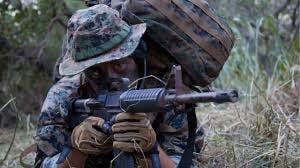
For change of this scale to be effective, it must be appropriately manned and supervised. Increasing the target population will balloon demands on the school's capacity not only for Marines conducting training, but also the Marines Awaiting Training (MAT) Population. If the transition from initial infantry training to reconnaissance training is not sequenced appropriately, it may diminish the effectiveness of the proposal. To combat this, the solution will undoubtedly require additional instructor staff. However, with 0321 MOS health already strained, a complicated program re-write underway, and high-risk POI training continuing, increases in residual risk are a given. As this is a bid for success of a community, the service should consider appropriately organizing for both a successful transition and long-term success. This may include surging personnel, overstaffing during times of expected friction, or potentially including contracted solutions for manning. Additionally, although ancillary to the proposal, a key pillar to reinforce success is increasing the level of officer supervision from a Major (O4) to a Lieutenant Colonel (O5). Advocated by the reconnaissance community for years prior to this proposal, this is likely to bring stability by way of an experienced reconnaissance officer for the program of instruction.
Service Intervention on the Periphery
The fifth area of consideration resides external to the pipeline proposal. With service level attention, opportunities exist for the Corps to direct action from elements external to Training and Education Command. Training Command exemplified a drive to reinforce the success at Reconnaissance Training Company by working through Marine Corps Recruit Depots (MCRDs) to advance water survival training beyond the Water Survival Basic (WSB) level for Recon contracts. Linking external actions to the future Ground and Amphib Recon Course, which reinforces programmatic success, should be an explicit task. In a similar fashion, the service should consider any action to the left of the pipeline that contributes to higher quality candidates, thus driving down attrition. This includes but is not limited to how Reconnaissance recruiters engage and inject themselves into Marine Corps Recruiting Command (MCRC) and how the service could maximize lateral move populations both at the entry level immediately following Boot Camp, or during a Marine’s first or second enlistment. To the right of the proposal, the service has an opportunity to synchronize reconnaissance-related career fields beyond initial alignment at entry-level training. If done correctly, this can contribute to longevity, impacting retention and the amphibious reconnaissance population health over time.
Attrition
The final area worth considering is attrition. Typically, attrition statistics of the current pipeline are rarely discussed as a positive thing. It is, after all, a central factor in the impetus for change. However, it is worth stating the Manpower Management Integration Branch (MMIB) of the Marine Corps relies upon attrition. Drops from the pipeline reclassify into ‘hard to fill’ specialties for the Marine Corps because of the stringent administrative requirements to even attempt to join Amphib Recon. This manpower model is not unique to Marine Recon; the same applies to entry-level Navy washouts from Basic Underwater Demolition School (BUDS) in the SEAL pipeline.
Attrition will undoubtedly continue to be a byproduct because of the necessity for the future Amphibious Reconnaissance Course to remain a high-risk training program. Due to the nature of the training and expectations of graduates, students must retain the same option as current candidates, dropping on request (DOR). Not only is this quality required because of the classification of training, a student’s option to quit also allows the service to keep the correct talent for the future mission. When chartering the course’s evolution, the service would be wise to refine expectations for tolerable levels of attrition. As the course’s pilots occur, an unwavering stance must be kept. During the longevity of execution, the same prescription is mission-critical. As illustrated from Marine Recon’s history of employment, the product is solid. Considering the tasks the service expects Reconnaissance Marines will have in the future, the mission is likely to remain as, if not more, complicated and high-risk.
Although not a direct comparison, it is worthwhile to contrast Amphib Recon’s entry-level attrition to other high demand low density MOS’ in sister services. The mission of Amphibious Reconnaissance maintains high-risk concepts of employment like elements within the Special Operations Command (SOCOM) enterprise. After all, Force Recon is the foundation of our own service’s SOCOM element. Historical attrition for similar entry-level pipelines for the Navy SEALs, Army Rangers, and MARSOC illustrates levels strikingly similar to Marine Reconnaissance. Like the SOCOM community, difficult standards and high-risk elements are a part of the allure and attraction to join in the first place. Just as Special Operations espouses in the SOF truths, senior leaders are encouraged to remember that a product with these qualities cannot be mass-produced. Taking this into account, during execution of the pipeline changes, the service must be cautious about removing elements that impact the bottom line of the product for the sake of simply making more.
Although the description of the pipeline above is purposefully simplified, the course of action, detail, and execution will be inherently complex. Success requires both the Reconnaissance community and the service to follow through. Initial actions are well underway as two pilot courses are scheduled to be completed prior to Fall of 2026, providing valuable data from which to pivot for future modification. During the writing of this essay series, discussions with Commanders from the School of Infantry East and West as well as Training Command illustrate the initiative possesses service-level buy-in and willingness to invest. Actions underway include additional contracted personnel solutions at Recon Training Company, empowerment and training for Recon Recruiters coupled with advertising and recruitment campaign initiatives, and in-stride pipeline MOS re-coding. Although in process and unrealized to its full potential, the work thus far does not illustrate a successful fire for effect mission. The Recon Community has an opportunity it must exploit. The collective service level tools and attention send a clear message; the Corps is willing to reinforce a community that needs it.
Sustained, continuous observation of the effectiveness of both planned and currently executing changes is required for success. If done right, this will take time. The service and reconnaissance community must fully commit and exercise tactical patience. If phased over time and steered by quantifiable facts from evidence-based data, the MCISRE has the potential to grow in manned sensing elements. Amphibious Reconnaissance will not only retain but reinforce its proposition to the Marine Corps and the Joint Force.
The modern battlefield requires this high-demand, low-density asset to sense, strike, and survive. It is beyond time to invest in service-level solutions and advocacy. Creating efficiencies in entry-level training by removing all barriers to success is a prime start to achieving the goal.
This is the final installment of a series published in conjunction with The Connecting File. Lethal Minds Journal exists to bring forward challenges, opportunities, ideas, and opinions for service members and veterans. We are proud to have been a part to be a part of this critical discussion. Thanks for LtCol Eppes and The Connecting File for working to make it happen.
No posts
Comments
Nothing yet. Say the first thing.
Sign in to join the conversation.