
PIlot Nick — ✈️ 8 min read
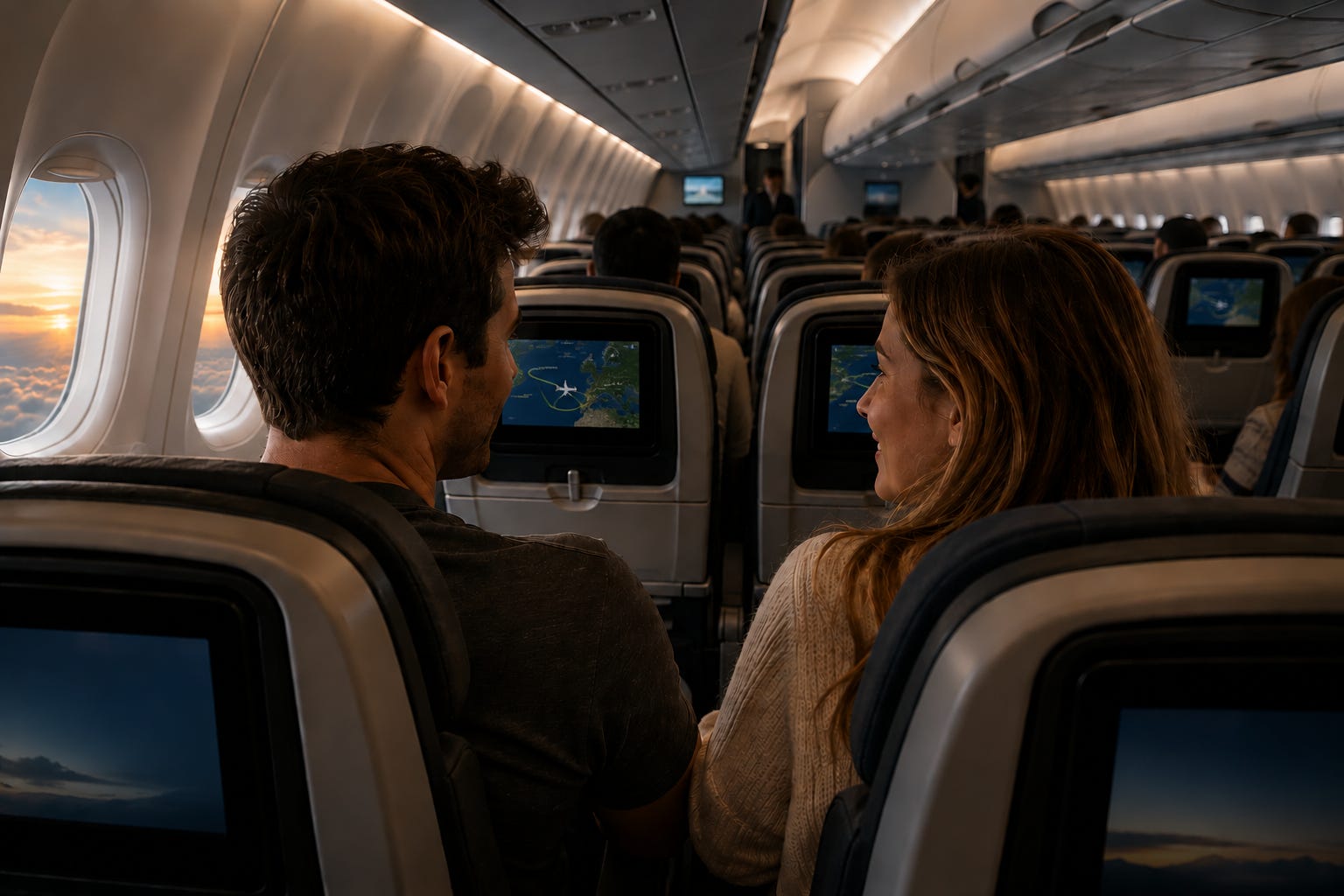
You’re in 27A, halfway through a flight, and the captain comes on to say we’ll be holding for twenty minutes before landing.
The cabin does that small collective shift. And somewhere in the back of your mind, a question surfaces that nobody says out loud: do we have enough fuel for that?
You picture a gauge. You picture a needle. You think about your car on the motorway with the orange light on.
Up in the cockpit, I’m not thinking about a needle at all. I’m thinking about a number I calculated ninety minutes before you boarded and twenty minutes of holding was already in it.
Here’s the part that surprises almost everyone: we don’t fill the tanks.
Not usually. Not close. A long-haul jet leaves the gate with tanks that are often nowhere near full, and a short regional flight can leave with less fuel than the trip to the airport used in your car proportionally speaking.
People assume this is about money. Airlines being cheap. It isn’t, or at least it isn’t only that.
It’s physics. Fuel is heavy. Every kilo of fuel you load has to be lifted off the runway, accelerated to 500 knots, and held up in the air for the entire flight and lifting it and holding it burns fuel. Carry an extra ton across the Atlantic and you’ll burn a meaningful slice of that ton just transporting the rest of it. It also comes straight out of what the aircraft can carry in passengers and cargo.
We call it the cost of carriage. Fuel you don’t need isn’t free insurance. It’s ballast you pay for by the mile.
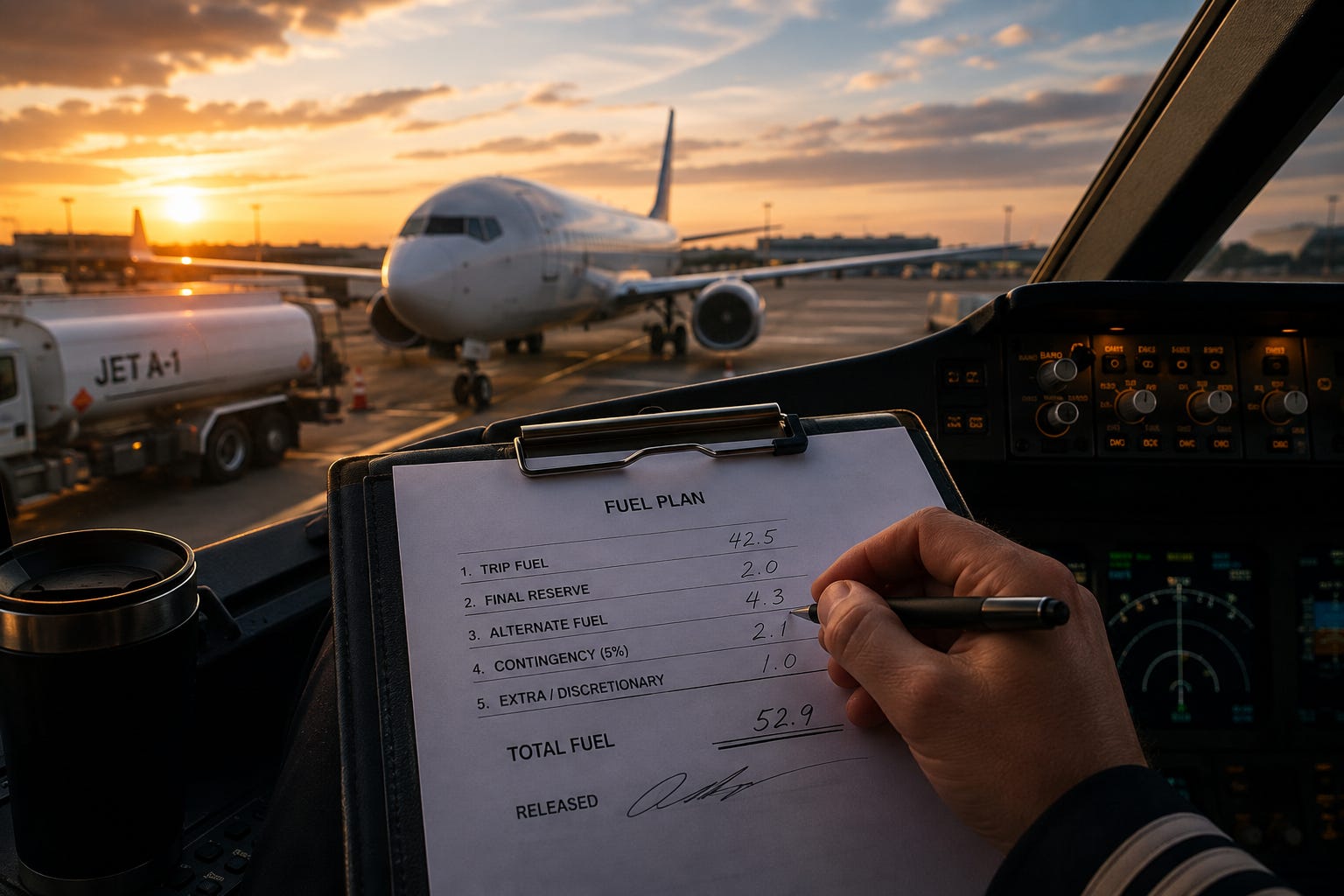
So instead of filling up, we build a number. And the number gets built the same way every single time, on every airline, on every flight in the world.
Thanks for reading Lessons From The Flight Deck ✈! This post is public so feel free to share it.
A few winters back, westbound over the North Atlantic, the destination forecast was doing that infuriating thing forecasts do low cloud, a front that couldn’t commit to an arrival time, and all of it predicted twelve hours before we’d actually need it.
I’m standing at the flight plan with a coffee going cold, and I’m adding.
Two tonnes for the weather. Another for the holding I’m imagining. Something for an alternate airport I don’t much like the look of.
My first officer asked the question that reorganised my thinking: “What are we protecting against and when do we actually find out if it’s real?”
The answer was: over Ireland. Five and a half hours in. Not now, in the dark, at a gate in North America, guessing at a forecast that was still half a day from being tested.
So we carried enough to reach the point where we’d know, plus everything the rules require and not one tonne more for the stories I was inventing about what came after. As it turned out, the front cleared early. We landed comfortably.
That’s really what fuel planning is. Not “how much can we take?” but “how much do we need to still have every option open at the moment we have to choose?”
Comments
Nothing yet. Say the first thing.
Sign in to join the conversation.