
When I am not busy posting superlatively good essays to Substack, much of my time is spent administering the Mary, Mother of the Good Shepherd Institute of the Catholic Diocese of Cleveland. (Yes, the name is too long. We know that. But there are good reasons for it and you’re just going to have to trust me.) In the summer of 2026, we launched an internship program for young adults open to careers in service to the Church. Interns worked in parishes approximately three days each week, spent Wednesdays participating in intellectual and spiritual formation activities at our diocesan seminary, and attended two overnight retreats focusing on vocational discernment. On August 12th, they gathered as a cohort one last time for a formal sendoff. What follows is the speech I gave at that event. It contains a few “Easter eggs” alluding to ideas and themes from throughout the summer. Rest assured, therefore, that if any of the following doesn’t quite make sense, it’s most certainly a clever inside joke and not merely poor writing.
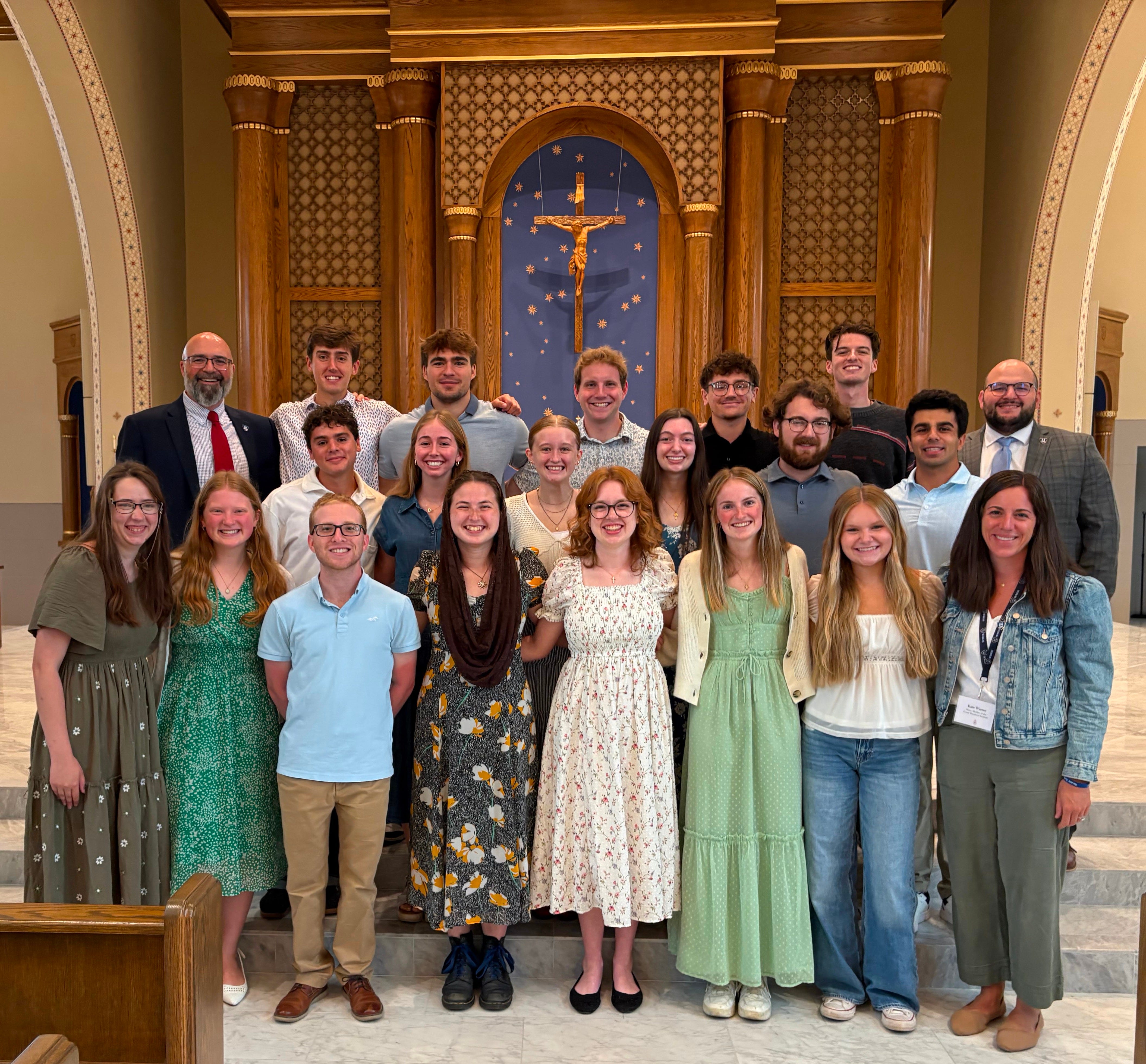
Congratulations, everybody, on a successful conclusion to the inaugural Mary, Mother of the Good Shepherd Institute summer internship program.
As we formally conclude our time together, I want to say a few words directly to our interns as you move on to wherever life and Providence take you next. Whether you’re heading back to school or into your career, there are three main things I hope this program has done for you, three things I hope you can honestly say you will take with you from your experience as a 2026 MMGSI summer intern:
First, I hope you have gained a clearer sense of your vocation and how your own unique gifts can be used in service to the Church.
Second, I hope your spiritual life has been deepened, and that you have a fuller sense of the richness and diversity of Catholic spirituality.
Third, I hope this summer has strengthened your desire and your ability to go forth unto all the world as an ambassador for Christ.
Let me say a bit about each of these.
The first point I want to emphasize is something you know exceedingly well, because you’ve been immersed in parish life all summer long, but let me say it anyway: In order to thrive, Catholic parishes desperately need laypeople exercising a diverse range of skills in a huge variety of roles. Some of you may yet discern a call to priesthood or religious life, and if you do, God be praised. But many of you are likely called to marriage or the single life, and hopefully, even if you’ve gotten nothing else out of this summer, you’ve at least gotten this. You now vividly understand that there is a desperate need for skilled laypeople to serve the Church in sundry behind-the-scenes roles: part-time and full-time, paid and volunteer, as business managers, directors of religious education, maintenance staff, youth ministers, sacristans, receptionists, PSR and OCIA teachers, finance council members, parish council members, leaders of small-group ministries, and so much more.
Whatever your gifts, whatever your passions, the Church needs you.
This is true, of course, of every Christian, but I say it with particular emphasis to you, our interns. The Church needs people of all kinds and all ages, to be sure, but at our time and place in history she has a particular need for young people who will step into the gap, take up the mantle of responsibility, and bring fresh perspectives and new energy into our parishes.
As one of the olds, myself, let me hasten to add that as you step into new roles at our parishes, you must do so with real Christian maturity, grounded in sound intellectual and spiritual formation, and with genuine humility and willingness to learn from your elders. Such humility, however, is entirely compatible with boldness and confidence. I hope you will bring both to bear on the challenges we face.
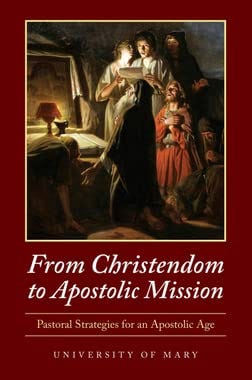
We spent the first few weeks of the summer reading and discussing Monsignor Shea’s From Christendom to Apostolic Mission, a book that challenged us to avoid the trap of preparing to fight the last war rather than the next one. One common lament heard from Generation X and Millennial Catholics in recent years has been a sense that the institutional Church has spent the last half century laboring under the false impression that the challenges, needs, and opportunities of 1970 are the same as the challenges, needs, and opportunities of today. If I may take a moment to speak to my fellow Gen Xers, and to the one or two Millennial representatives of parish and diocesan leadership with us this afternoon, let me exhort all of us not to make the same mistake. The concerns of 1990 and 2005 are no more permanent than those of 1970, and we need the eyes of those younger than we to perceive today’s challenges more clearly.
To our interns: if you won’t help us to see those challenges, who will?
Again, the Church needs you. Whether you are called to serve as a teacher in a parish school, as your parish’s social media manager, as a wealthy philanthropist, as a stay-at-home mom, or as something entirely different, I hope this summer has helped you achieve greater clarity about your own vocation and what it means for you personally to serve Christ and His Church.
It’s tempting to say that I would love to see all of our interns discern vocations to careers within the Church; for each and every one of you to wind up on a parish staff somewhere. But this is only mostly true. There’s an important qualification to be made.
If you don’t have a deep spiritual life, if you are not prayerful, contemplative, and introspective; if you do not love Jesus Christ and are not seeking to do so with greater intimacy and fidelity each and every day, then, don’t take offense, but… I don’t particularly want to see you working for the Church — not for the Catholic Church in general nor for my home parish in particular. My hope is that each of you will play your own distinctive part in cultivating parish communities where every person, in every capacity and at every level of ministry, exudes love for God, love for people, and deep personal sanctity. (No, I’m not there yet either, if you’re wondering.)
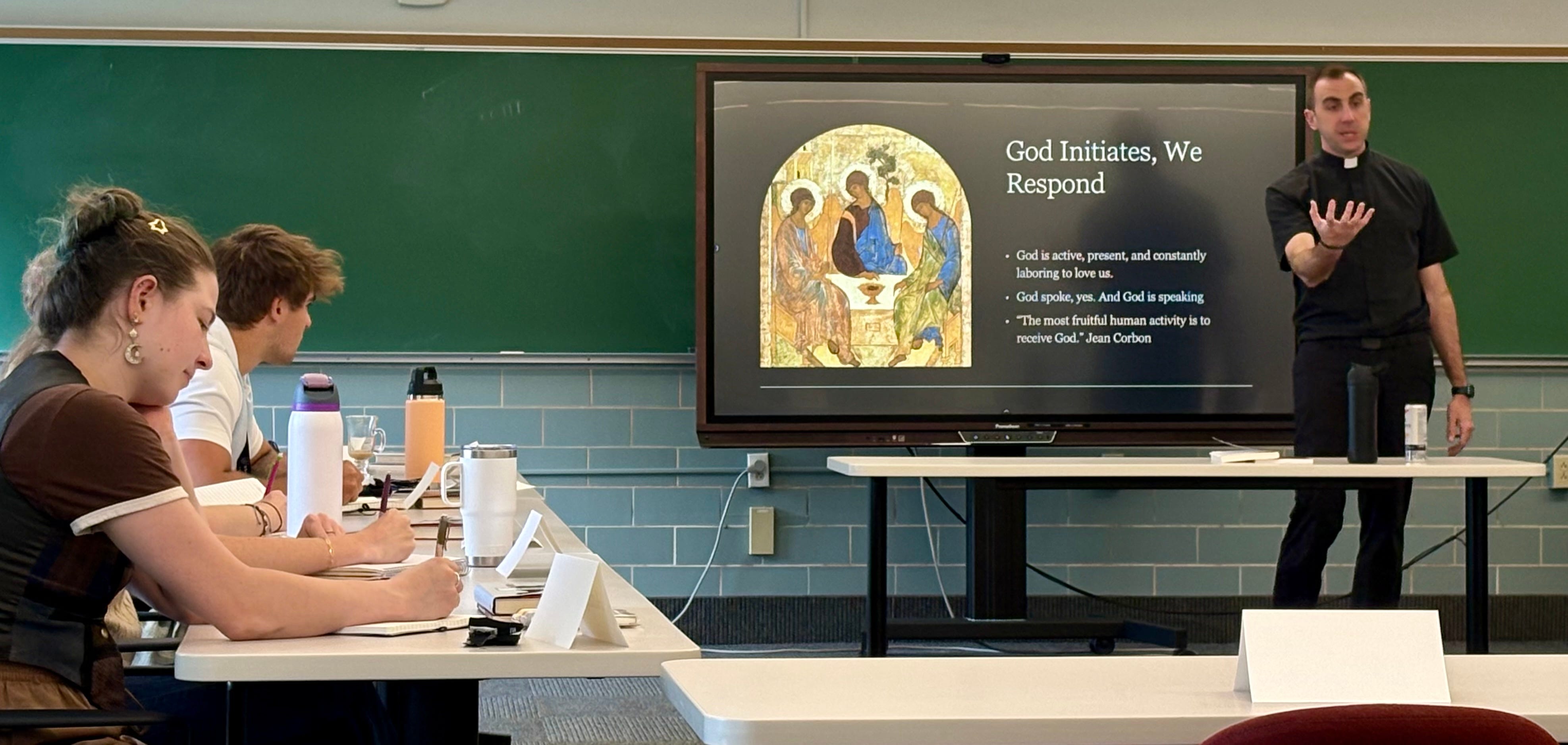
Thus the second major aspect of what we’ve done this summer. We’ve had diocesan priests, a Capuchin friar, and our auxiliary bishop leading retreats and giving you a broader perspective on Catholic spirituality. As you go forth unto all the world, I hope you have acquired a deeper commitment to personal prayer, to Eucharistic devotion, to the Liturgy of the Hours, and to becoming the kind of man or woman who faithfully discerns the will of God and follows it obediently. I hope you will fight the battles of the spiritual life with strength and vigor, recognizing that the devil really is a loser in every sense of the word. And I hope that you will invite our Lord into the very depths of your hearts, allowing Him to redeem and fulfill your deepest longings for truth, beauty, and goodness.
It has been said that “the only real sadness, the only great tragedy in life, is not to become a saint.” I hope the spiritual formation you have received this summer has reinforced for you the truth of this saying. I hope it has awakened or deepened your desire to love God and love others with joyful and unbridled passion; and that you will always remember that offering your body as a living sacrifice is a reasonable act of worship, indeed the only action that truly makes sense.
And I hope this summer has kindled within you a passion to invite others to do the same.
That, of course, is the third thing I have hoped you would take with you from your experience as a member of this cohort. The very first time we met, I talked about one of MMGSI’s patron saints, St. Paul, the Apostle to the Gentiles, and his engagement with the people of Athens as depicted in Acts 17.
Like St. Paul, we live in an apostolic age. Many of those with whom we interact—our neighbors, our peers, even our friends—are either totally ignorant of or openly hostile to the Christian faith.
Even within our parish communities, there are far too many people who outwardly profess some form of Catholicism but are inwardly atheists, agnostics, or adherents of a vague spirituality that has nothing essential to do with Christ or His Church. They see religion in all its forms as arbitrary cultural preferences or merely subjective, private experiences.
Immersed in the digital world, many have become indifferent to matters of the spirit, simply not caring about questions of God, morality, or the meaning of life. Others care very deeply but see Catholic Christianity as the enemy of human flourishing: an outdated and corrupt institution whose teachings are equal parts ridiculous and oppressive.
I say none of this to condemn, but simply to describe reality. Ask ten random Americans today what they truly think about the Catholic faith and you will probably find that seven or eight of them fall into one of those two categories: aggressively indifferent or actively hostile. If those ten people are under thirty, the number may be even higher.
What, then, are we to do, we who have encountered the risen Eucharistic Lord and found in the Catholic faith joy, beauty, meaning, and goodness?
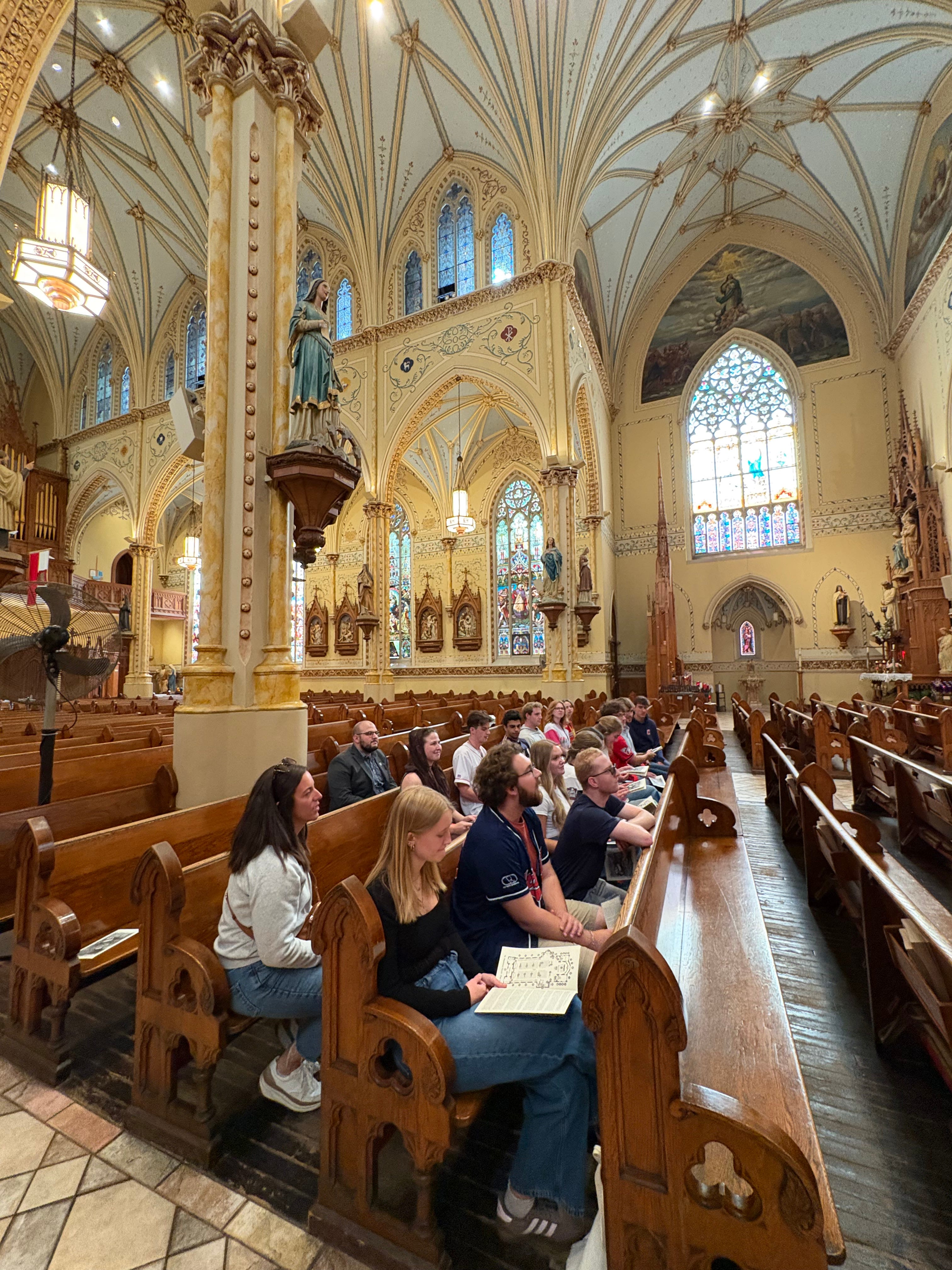
Well, in emulation of St. Paul, we can seek out the places where people are open to engaging with ideas and we can take a place at the table. We can also go further, and indeed we may need to go further: creating new contexts where big ideas and important questions are taken seriously. We can invite people into conversations about movies, literature, and art, helping them consider how these works reveal, or obscure, the magnificence of humanity, a magnificence revealed in its fullness through union with the One in whom we live and move and have our being.
This means that we, like St. Paul, must become fluent in the language of the culture around us. We need to be bilingual: able to speak the language of twenty-first-century America, understanding the lenses through which our non-Christian friends perceive the world, while also speaking the language of our faith with clarity, boldness, and conviction.
What all this means for each of you will vary from one person to another. More than once this summer, you’ve heard me quote a line from the concluding chapter of C. S. Lewis’s Mere Christianity: “How monotonously alike all the great tyrants and conquerors have been,” Lewis wrote. “How gloriously diverse are the saints.”
How gloriously diverse indeed.
The eighteen of you, O interns, come from all over the Catholic Diocese of Cleveland. You have different backgrounds, different passions, different strengths, and different vocations. You will go forth unto all the world in ways that are uniquely your own. But in a sense, you all share one calling and one only: To know Jesus Christ and to make Him known.
And that is another way of expressing those three hopes with which I began:
That you would faithfully discern how you are best suited to serve the Church.
That you would make intimacy with Him your highest priority.
That you would go forth unto all the world inviting others to do the same.
God bless you guys. Thank you for being part of this. I can’t wait to see what happens next.
Comments
Nothing yet. Say the first thing.
Sign in to join the conversation.