
I’ve been travelling quite a bit since the new year, posting about those trips and some of the terrific chefs I’ve met along the way. My book was also recently released, so that’s kept me busy too.
But one constant in my life is that I cook every day, sometimes for an hour, sometimes all day. It’s only on the rarest of occasions that I’ll break down and order a pizza. Like you, I’m sure, there are days I just don’t feel like cooking. But with four of us in the house and my aversion to letting anyone else near the stove, dinner must somehow get on the table. And once I start cooking, I’m usually gung-ho to make something delicious. Just last night, I looked into my rather empty fridge and found three leeks, a few litres of homemade chicken stock, and a block of parmesan, and within minutes I was whipping up what turned out to be a killer leek risotto. Leeks are quickly becoming one of my all-time favourite ingredients, and certainly one of the most underappreciated.
So why am I talking about leeks when this is a post about cake? Because making dinner can feel like a chore, but a cake? Well, making a cake is nothing but pleasure. At least for me. I make cakes when I need to get my creative juices flowing. If there’s a cake on my counter, it’s either because I’m baking to take my mind off something depressing (take your pick these days), there’s an occasion to celebrate, or I simply yearned to create something scrumptious — and as much as I dislike that word, in the case of cake, it fits.
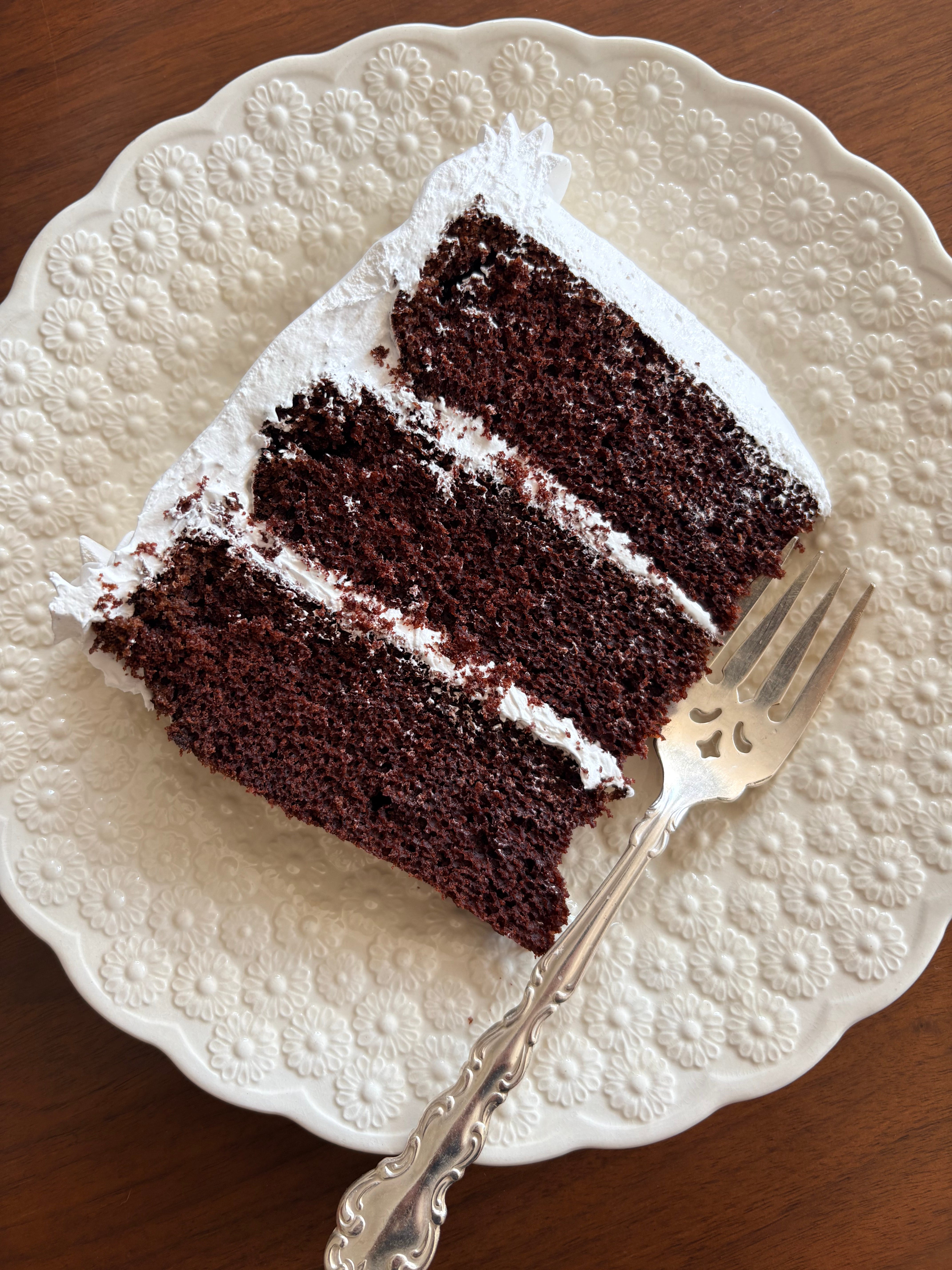
As a pastry chef, I spent my days making mousse cakes and wedding cakes. In cooking school, the only so-called later cakes we made were Marjolaines and Opéras. Birthday cakes were covered in decorating class, but we never made something like an angel food cake, yellow cake, or chocolate layer cake because my training was in French pastry and those cakes are North American. I love a good layer cake, but truth be told, they can be dull and dry.
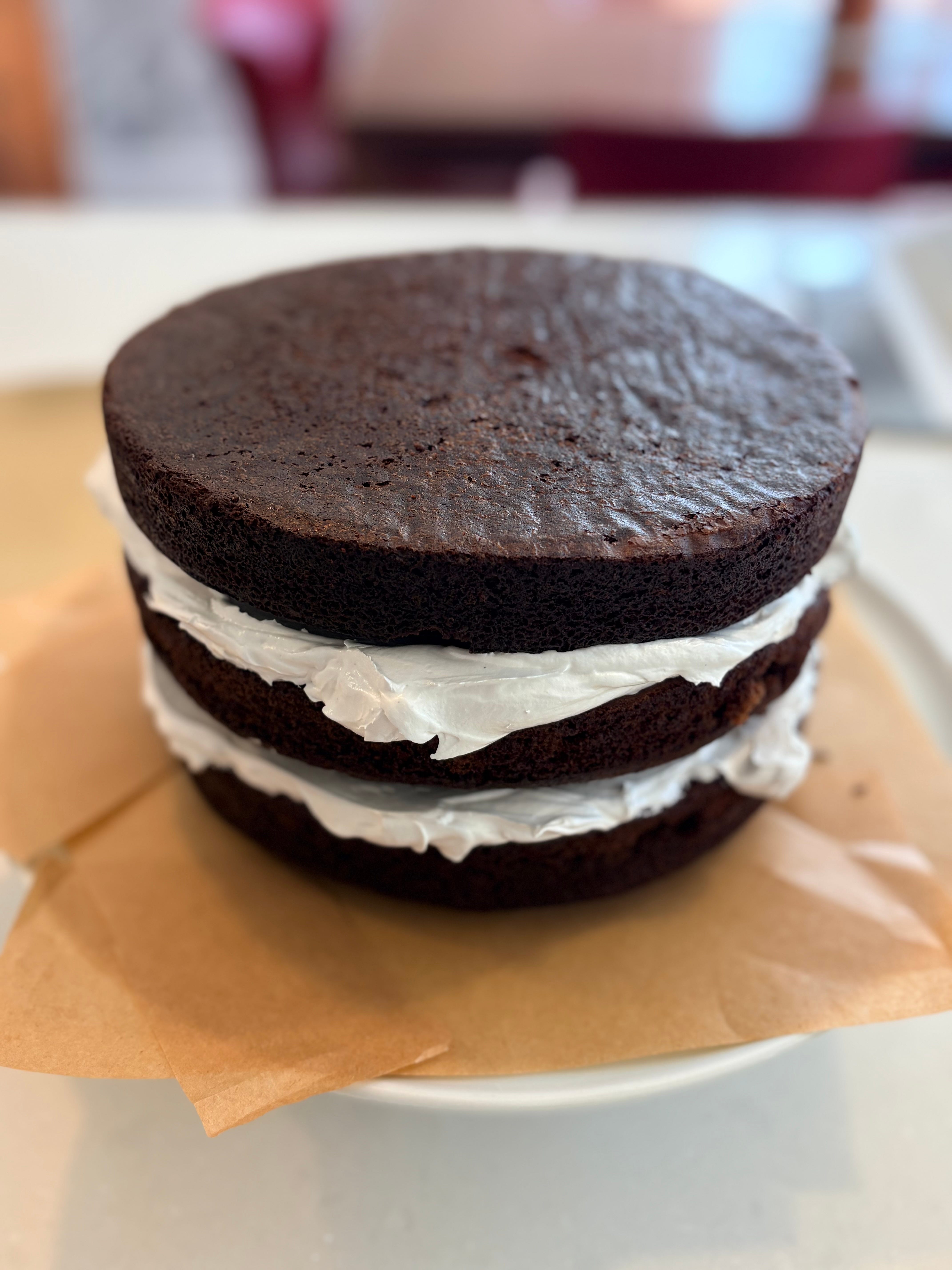
To remedy this, you might want to try a cake soak, which in french we call “sirop d’imbibage.” A cake soak is liquid that is brushed directly onto each cake layer after baking but before frosting and filling. The liquid soaks into the cake, adding more moisture to prevent the cake from drying out while infusing additional flavour and/or sweetness.
The plainer the cake, the more beneficial the cake soak. Cake soaks are also a crafty way to get booze into a cake without spending a fortune.
Cake soaks are most often made with simple syrup, a mixture of equal parts (by volume) granulated sugar and water that’s heated to dissolve the sugar. Simple syrups are a handy choice because they can easily be infused with ingredients that can enhance your cake, which is why they’re also a common ingredient used to flavour cocktails.
Cake soaks can also be made with flavoured milk or vegetable milks, and are best suited to cake with a spongy texture that absorb liquid well. I’m talking génoise, chiffon cakes, lady fingers (as in tiramisu). They can be used with just about any type of cake, but avoid cakes with a tight crumb like pound cake because the liquid doesn’t penetrate very well unless you poke holes in it. And there are some cakes that just don’t need a soak, like Angel food cake which is perfect as is.
To soak your cake you can either use a pastry brush or squeeze bottle to distribute a thin layer of liquid overtop the cake. Now don’t go crazy or your cake might fall apart so avoid pouring it on. And for ideal moistness, always soak the cake on the crumb side as opposed to the crust side.
For a chocolate cake you could use a milk soak flavoured with vanilla extract, a simple syrup flavoured with brandy or rum. For a white cake with fruit, a simple syrup with lemon juice would be nice, and on the boozy side, Kirsch would be great, but so would Triple Sec, Grand Marnier or Chambord (raspberry liqueur). A cake with nuts would ideally be enhanced with a syrup flavoured with Amaretto or Frangelico.
Here are some recipes for cake soaks:
For a milk soak:
Bring to a boil, 3/4 cup (150 g) sugar, 3 cups (750 ml) milk, and 1 teaspoon vanilla extract.
For a simple syrup soak:
Bring to a boil, 2 cups (500 ml) water, 2 /12 cups (500g) sugar. Once the syrup has cooled completely, add 1/4 cup alcohol of choice.
10 tablespoons sugar, 2 teaspoons vanilla sugar or ¼ teaspoon vanilla extract, 750 milliliters / 25.5 fluid ounces milk.
Be sure to always use cold syrup to soak cake layers or the syrup can ferment inside the cake. Not good!
Also, a cake soak will always increase the amount of sugar in your baked product, so if you don’t want to use, it, not to worry. Just be sure your cake layers are fresh and not dry once you start icing them.
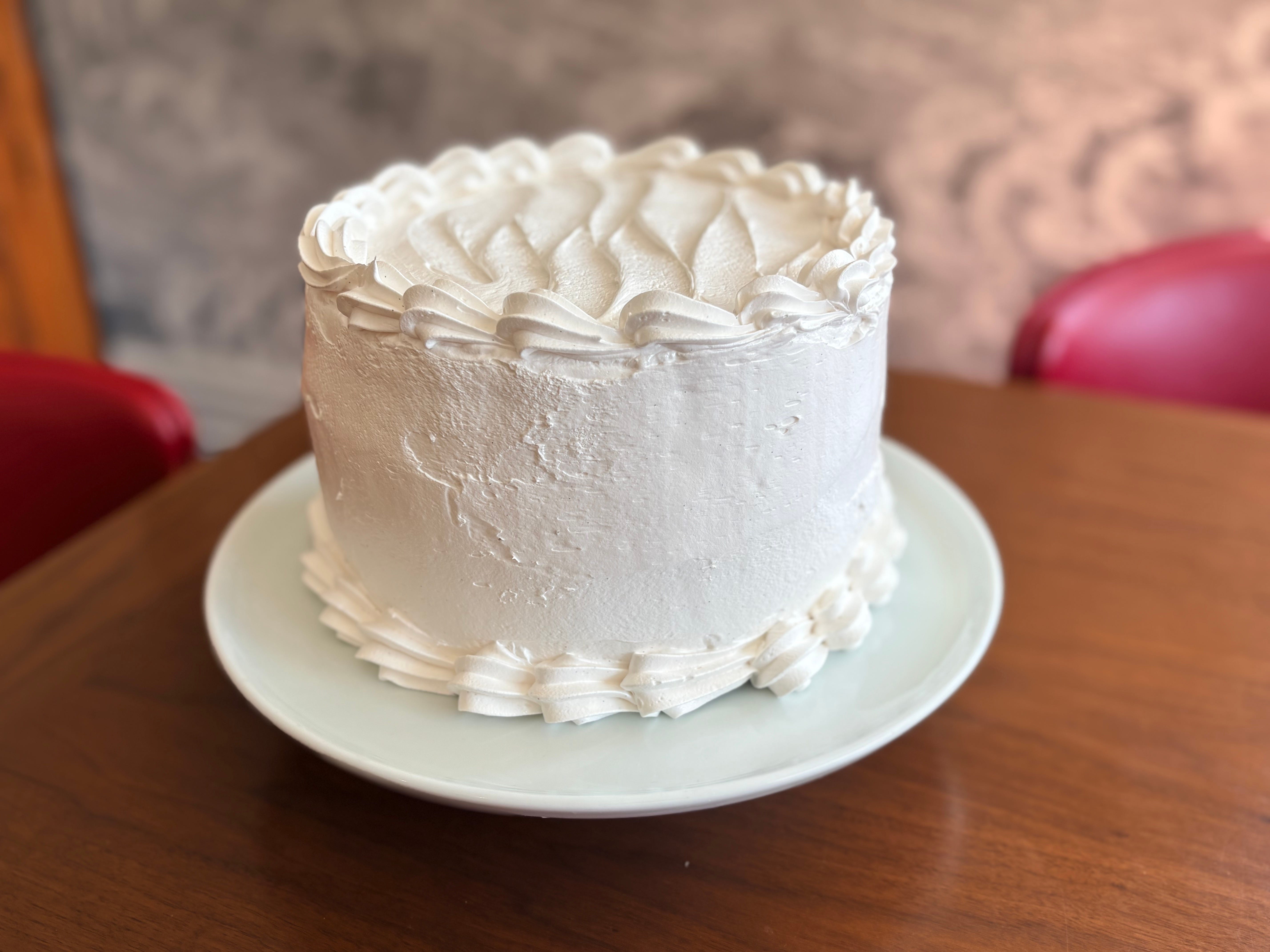
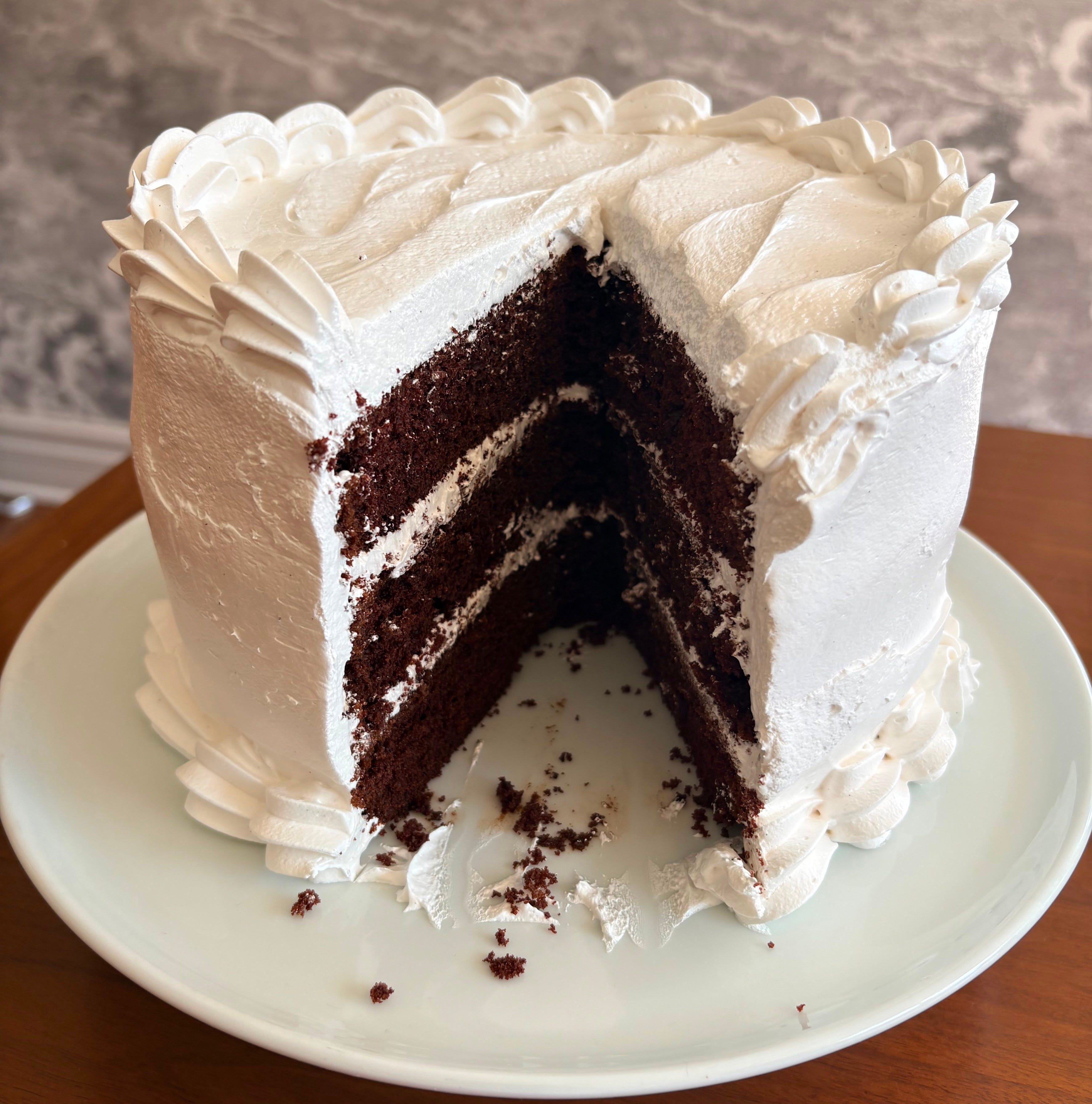
Oh and here’s the recipe for the layer cake. This time I didn’t use a cake soak, but the next time i make it, I’m thinking of a coconut milk soak and a sprinkling of toasted coconut overtop.
Scrumptious!
Serves 12
Comments
Nothing yet. Say the first thing.
Sign in to join the conversation.