
I first became aware of the Jamaica Teaching Council Bill in 2015. Since then, it has gone through several iterations, and I have followed its development closely. Throughout that time, I have consistently supported the fundamental principles behind the legislation. My support has never wavered. At the same time, I have remained concerned about certain provisions that, in my view, deserve closer examination.
Teaching is a profession.
Professions require standards.
They require accountability.
They require ethics.
They require licensing.
Doctors are licensed.
Lawyers are licensed.
Engineers are licensed.
Teachers should be licensed too.
Professional standards protect students, strengthen public confidence, and ensure that those entrusted with educating our children possess the competence, integrity, and professionalism expected of the profession.
I support the direction of the Jamaica Teaching Council legislation.
We need this.
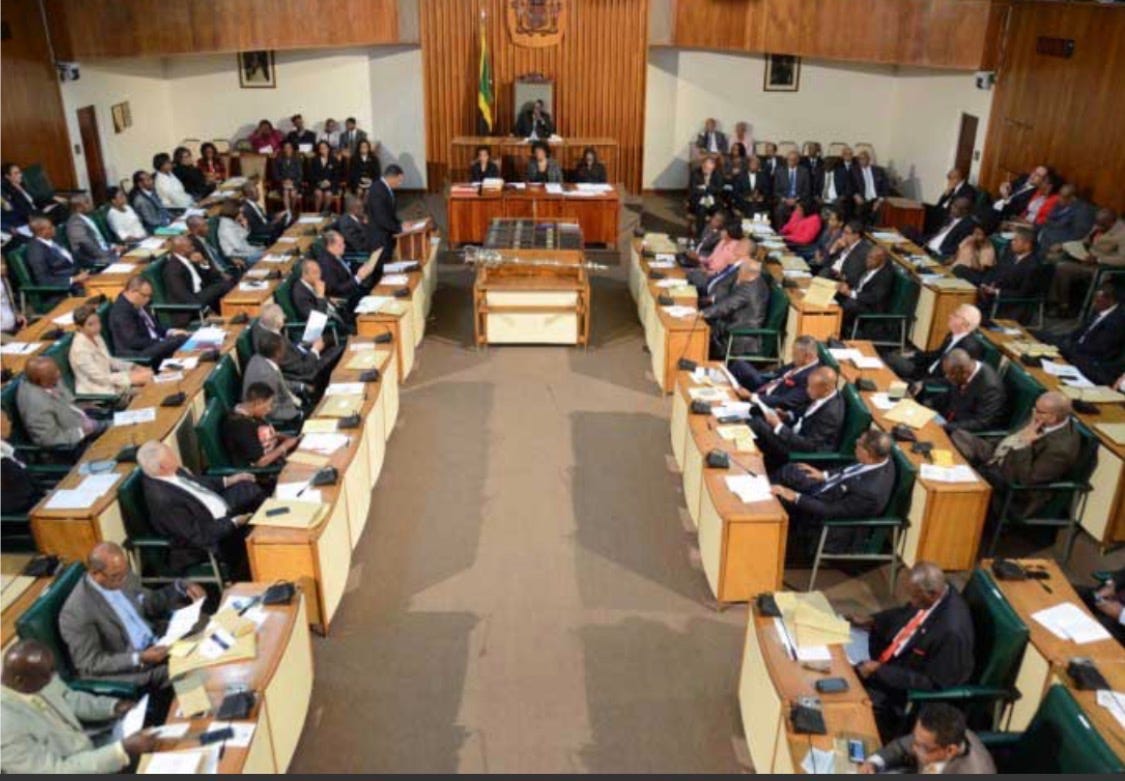
We also need legislation that is clear, proportionate and constitutionally balanced. Supporting professional regulation does not prevent us from examining how Parliament has chosen to achieve it.
However, there are a few provisions that I believe deserve closer examination.
This Is Not a Criticism of the Jamaica Teaching Council
Before proceeding further, it is important to recognize something.
This article is not a criticism of the Jamaica Teaching Council. It is an examination of Parliament’s legislative architecture.
The Jamaica Teaching Council did not create the statutory framework it is expected to administer. Parliament did. The Council’s responsibility is to implement the law enacted by Parliament. If there is concern about where Parliament has drawn the line between professional regulation and criminal law, that concern is properly directed at the legislation, not at the institution responsible for administering it.
Nothing in this article should be interpreted as questioning the Jamaica Teaching Council’s commitment to improving professional standards or its responsibility to administer the law.
My observations relate solely to the legislative choices made by Parliament in designing that framework.
Teachers Were Already Accountable
One important fact is often overlooked.
The Jamaica Teaching Council legislation does not introduce professional accountability where none previously existed.
Before this legislation, teachers were already subject to professional oversight through the Teachers Services Commission, School Boards, the Teachers Appeals Tribunal and, ultimately, the courts through judicial review.
Teachers could be investigated.
Teachers could be disciplined.
Teachers could lose their employment.
Teachers were already operating within a professional regulatory framework.
Through the Jamaica Teaching Council legislation, Parliament seeks to modernize and consolidate many of those professional regulatory functions within a single statutory body: the Jamaica Teaching Council.
The stated objective of the legislation is to professionalize, regulate and elevate teaching while strengthening quality and accountability.
That changes the question.
The issue is not whether teachers should be regulated.
The issue is how Parliament has chosen to structure that regulation.
The Criminal Offences
The legislation creates several criminal offences, including:
• practising as a teacher without being licensed;
• pretending to be a registered or licensed teacher;
• fraudulently using a teaching licence or authorization; and
• knowingly making false declarations or representations to obtain a licence.
The latter offences are relatively straightforward.
Pretending to be a teacher, fraudulently using licences and knowingly making false declarations all involve intentional dishonesty. Those offences have traditionally belonged within the criminal law because they undermine public trust.
The provision that deserves closer examination is Section 24.
It provides that a person who practises as a teacher without being licensed commits an offence and may, upon summary conviction in a Parish Court, be fined up to J$500,000.
That raises an important public-policy question.
Not because licensing is unnecessary.
But because Parliament has chosen to make the absence of a teaching licence itself a criminal offence.
This also raises another important question.
Does Parliament intend to treat every instance of teaching without a current licence in the same way?
There is an important distinction between a person who deliberately evades the licensing requirements and someone who is otherwise qualified but finds themselves without a current licence because of an administrative delay, a pending renewal, or another regulatory issue.
Those situations are not necessarily the same.
If criminal liability is to arise, Parliament should explain whether the legislation adequately distinguishes intentional non-compliance from an administrative lapse.
Accountability also raises another question.
If an unlicensed teacher is standing in front of a classroom, where does institutional responsibility begin?
What responsibility rests with the employing school, the school board, or the Ministry if they knowingly assign, permit or continue to employ a teacher whose licensing status has not been regularized, where the law requires such regularization?
Professional accountability should not focus exclusively on the individual teacher if the institutions responsible for recruitment, verification and deployment also play a role.
Parliament should therefore explain how responsibility is intended to be shared throughout the education system.
Looking at the Legislation Through Three Lenses
As I reflected on the legislation, I found it useful to separate professional regulation into three categories.
Category One — Truly Criminal Conduct
Conduct involving intentional dishonesty:
• fraud;
• forgery;
• impersonation; and
• knowingly making false declarations.
These belong within the criminal justice system because they attack public trust.
Category Two — Professional Misconduct
Conduct involving professional failures:
• incompetence;
• ethical breaches;
• breaches of the Code of Ethics; and
• conduct unbecoming of a teacher.
These affect a person’s fitness to practise and should attract professional discipline.
Whether they should also attract criminal prosecution is an entirely different question.
Category Three — Administrative Non-Compliance
Conduct involving regulatory requirements:
• licensing deficiencies;
• registration-renewal issues;
• administrative paperwork; and
• reporting obligations.
These matters may be addressed through warnings, licence conditions, suspension, administrative sanctions or other professional disciplinary measures rather than necessarily through criminal prosecution.
Parliament Has Not Applied One Standard Across the Professions
The existence of criminal offences within professional legislation is not unique to teaching.
The Medical Act regulates the registration and control of medical practitioners and the practice of medicine. The Nurses and Midwives Act similarly regulates the training, registration and practice of nurses, midwives and assistant nurses. Both frameworks combine professional regulation with offence provisions concerning unauthorized practice, false representation and related conduct.
That means the proper question is not:
Why does the teaching legislation contain criminal offences at all?
The more precise question is:
What conduct has Parliament decided to criminalize within each profession, and what principle explains those choices?
The legal profession provides a particularly important comparison.
The Legal Profession Act (1971) established the General Legal Council and provides for the enrolment, practice and discipline of attorneys. In 2007, when Parliament considered amendments addressing attorneys who practised without a current practising certificate, the Government explained that such conduct would be treated as professional misconduct attracting disciplinary sanctions rather than criminal sanctions.
That legislative choice deserves attention.
It demonstrates that Parliament has previously distinguished between practising without current professional authorization and engaging in conduct deserving criminal prosecution.
Doctors and nurses may present another consideration. Unauthorized medical or nursing practice can expose patients to direct risks involving diagnosis, medication, treatment and physical safety. That may provide a particular public-safety justification for criminal sanctions.
Teaching also carries profound public responsibilities. Teachers shape children’s development, education and future opportunities. But Parliament should still explain the principle it applied when deciding that practising without a teaching licence should constitute a criminal offence.
A more precise comparison is this.
Parliament has distinguished between an attorney who is already admitted to practise but whose practising certificate is not current and conduct warranting criminal prosecution.
Should a similarly qualified teacher whose licence has expired or is awaiting renewal be treated in the same way as someone who has never been licensed or who deliberately evades the licensing system?
If Parliament intends those situations to be treated differently, where does the legislation make that distinction clear?
What particular harm was the criminal provision intended to prevent?
And why would professional or administrative sanctions be insufficient?
These are questions about consistency, proportionality and legislative purpose.
The Constitutional Question
My concern is not simply about criminal offences.
It is about the institutional architecture Parliament has chosen for regulating the teaching profession.
Professional regulation and criminal law serve different purposes.
A professional regulator exists primarily to:
• establish standards;
• license practitioners;
• regulate professional practice;
• investigate complaints;
• enforce professional ethics;
• determine professional misconduct; and
• discipline members of the profession.
Criminal law exists for a different purpose.
It authorizes the State to investigate, prosecute and punish conduct that Parliament considers sufficiently serious to warrant criminal sanctions.
Where evidence of fraud, forgery, impersonation or other criminal conduct arises, Jamaica already has institutions specifically designed to perform those functions.
It is equally important to recognize that the Jamaica Teaching Council is not a police agency, a prosecuting authority or a criminal court.
The Council does not determine criminal guilt or impose criminal penalties.
Those responsibilities remain with the police, prosecutors and the courts.
The question raised in this article is therefore not whether the Jamaica Teaching Council is criminalizing teachers.
It is whether Parliament has appropriately connected criminal liability to the professional regulatory framework the Council administers.
The police investigate.
The prosecutor determines whether criminal charges should be laid.
The courts determine guilt or innocence.
The question I find myself asking is this:
Should a professional regulator’s primary role be to establish standards, regulate practice, investigate professional misconduct and discipline members of the profession, while leaving criminal accountability to the police, prosecutors and the courts?
If so, has Parliament struck the appropriate constitutional balance in the Jamaica Teaching Council legislation?
A Different Relationship With the State
Within professional regulation, the primary relationship is:
Teacher ↔ Jamaica Teaching Council
The regulator determines whether professional standards have been met and imposes professional sanctions where appropriate.
When conduct becomes a criminal offence, another relationship is added:
Teacher → Police → Prosecutor → Parish Court
The teacher is no longer responding only to a professional regulator.
The teacher is now subject to the machinery of the criminal justice system.
That transition carries consequences extending far beyond professional discipline.
A criminal investigation.
A criminal prosecution.
The possibility of a criminal record.
Reputational damage.
Restrictions on future employment.
Possible implications for international travel and future licensing.
That is why Parliament should exercise considerable restraint before transforming professional regulatory breaches into criminal offences.
The Questions Parliament Should Answer
This article is not an argument against licensing.
Nor is it an argument against accountability.
Teachers should be licensed.
Teachers should be regulated.
Teachers should be held to the highest professional standards.
The more fundamental question is this.
Before the Jamaica Teaching Council legislation, teachers were already accountable through the Teachers Services Commission, School Boards, the Teachers Appeals Tribunal and the courts.
Through the new legislation, Parliament seeks to modernize the professional regulatory framework and assign its administration to the Jamaica Teaching Council.
That statutory framework also introduces express criminal offences.
Why?
What deficiency in the previous regulatory framework required Parliament to move beyond professional discipline and introduce criminal liability?
Why was professional accountability considered insufficient?
Why should teachers be subject to express criminal provisions within their governing legislation when criminal conduct such as fraud, forgery and impersonation is already addressed by the ordinary criminal law?
Does Parliament distinguish between a qualified teacher whose licence has temporarily lapsed because of an administrative issue and a person who deliberately evades the licensing requirements or has never been licensed at all?
If so, where does the legislation make that distinction clear?
If not, should those very different circumstances attract the same criminal consequences?
Does Parliament also intend responsibility to rest solely with the individual teacher?
Or should employing schools, school boards and other educational authorities share responsibility where they knowingly recruit, assign or retain teachers whose licensing status has not been regularized?
These are not accusations.
They are not rhetorical questions.
They are questions about legislative purpose.
If Parliament had compelling reasons for adopting this approach, those reasons deserve to be part of the public discussion.
The questions are not directed at the Jamaica Teaching Council.
They are directed at Parliament, because Parliament determines the statutory framework within which the Council must operate.
Ultimately, this discussion is not about weakening professional regulation.
It is about ensuring that Parliament has carefully distinguished between fraud and administrative error, between deliberate misconduct and regulatory non-compliance, and between professional discipline and criminal punishment.
Those distinctions matter because they determine not only how the teaching profession is regulated, but also how the criminal law is applied to those entrusted with educating Jamaica’s children.
It is therefore entirely appropriate to ask:
Has Parliament placed the Jamaica Teaching Council, a professional regulatory body, within a statutory framework that incorporates criminal offences? If so, is that the most appropriate constitutional architecture for regulating a profession, or should professional regulation and criminal accountability remain institutionally distinct except where fraud or other genuinely criminal conduct is alleged?
Perhaps the real question is not whether teachers should be licensed or whether they should be held accountable.
Those questions have already been answered.
The question Parliament must now answer is different.
Has it drawn the constitutional boundary between professional regulation and criminal accountability in the right place?
Or has it unintentionally blurred the distinction between regulating a profession and criminalizing aspects of that profession?
That, in my view, is the conversation Jamaica should now have.
No posts
Comments
Nothing yet. Say the first thing.
Sign in to join the conversation.