
I’ve heard about Toronto’s Freedom Train on the morning of August 1 for years. Although I’m usually away at this time, I intentionally remained in Canada this year because I wanted to experience this historic train ride for myself.
We arrived almost two hours early. I never asked how many people normally attended, but there were about 100 people already gathered at the TTC station in Vaughan, the first and last stop on the subway line. They listened to live music, speeches, and poetry performed on a stage as they waited for midnight to arrive.
The Freedom Train commemorates the Underground Railroad, the network of secret routes, safe houses, and courageous abolitionists, both Black and white, who helped tens of thousands of enslaved people escape from the United States to freedom in Canada during the eighteenth and nineteenth centuries. While Jamaica’s road to freedom came through emancipation within the British Empire, the Underground Railroad symbolizes another chapter in the wider African diaspora’s struggle for liberty, resilience, sacrifice, and hope. The annual Freedom Train transforms an ordinary subway journey into a moving tribute to that shared history.
The night air was perfect. As we stood there, I watched another thousand or more people join us at the station. By then, the platform had become a sea of anticipation.
At 11:45 p.m., the announcement came. We were invited to head downstairs to board the train. My excitement immediately rose. As I walked underground with what seemed like 1,200 people, many appearing to be of Jamaican heritage, I felt something special was about to happen.
We took our seats, and about five minutes before midnight the train quietly pulled away. At that moment, I felt as though I had been thrown back in time, entering one of the most difficult chapters of history, when enslaved people risked everything in search of freedom and those who helped them had to do so in absolute secrecy.
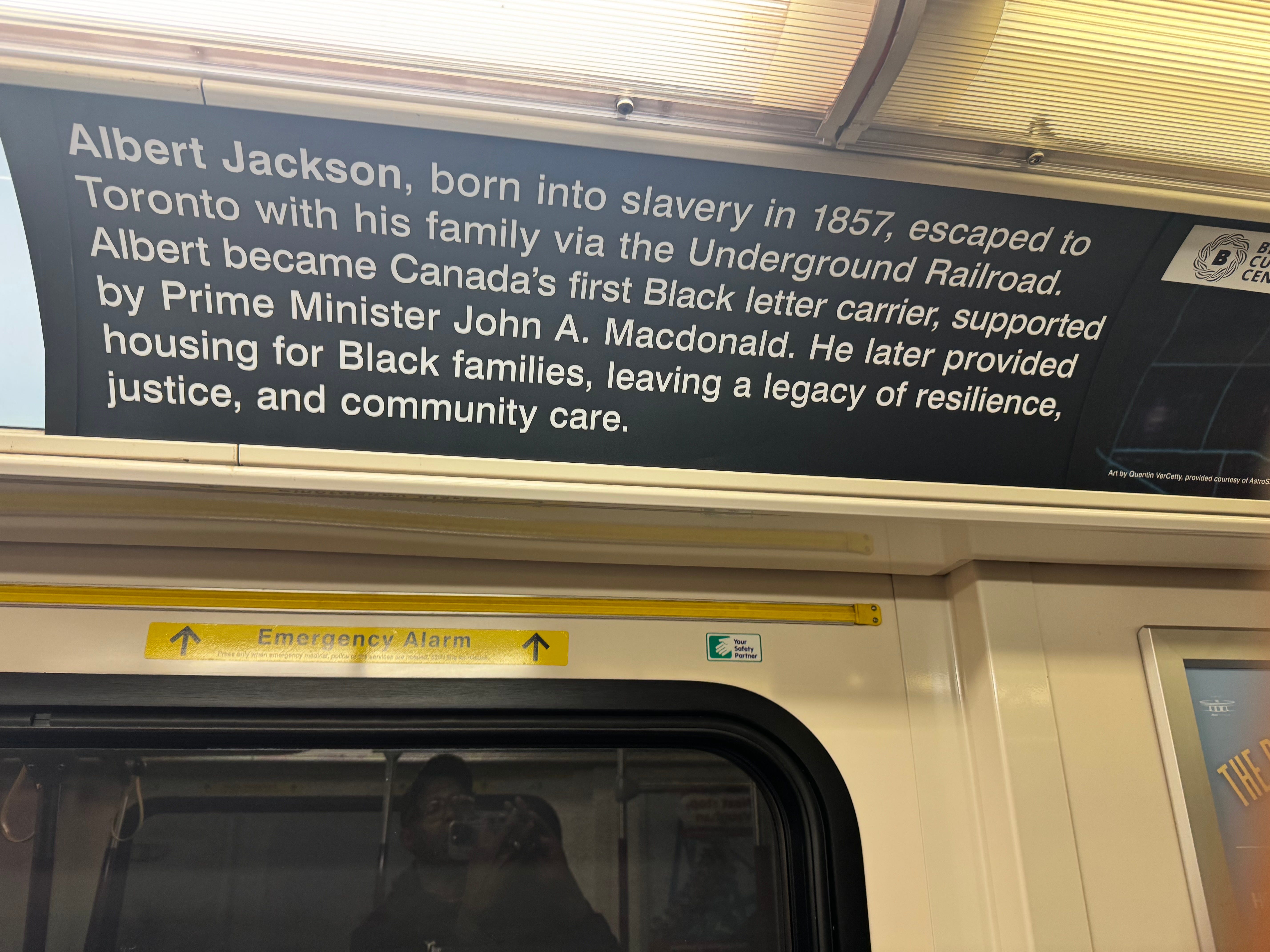
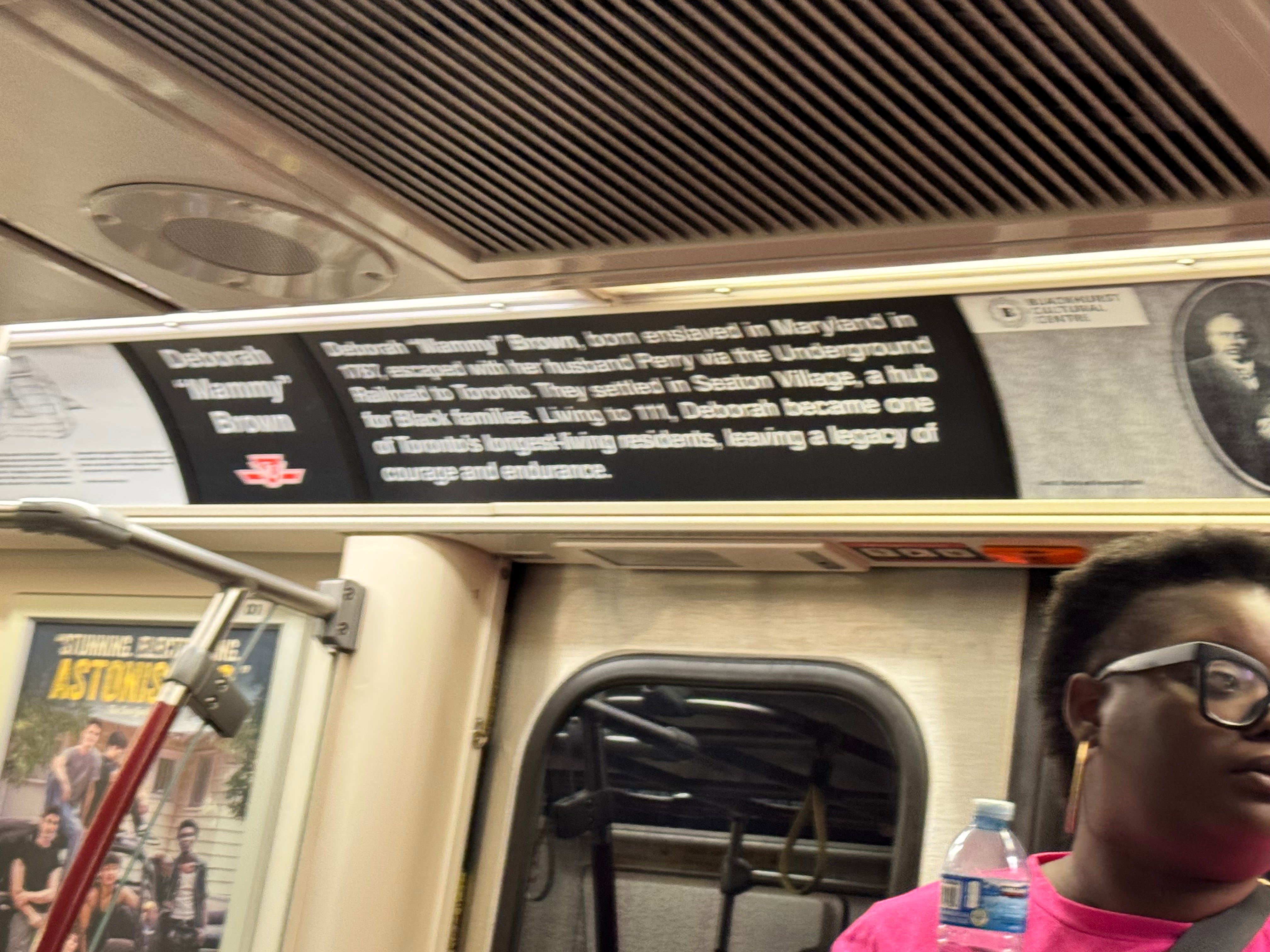
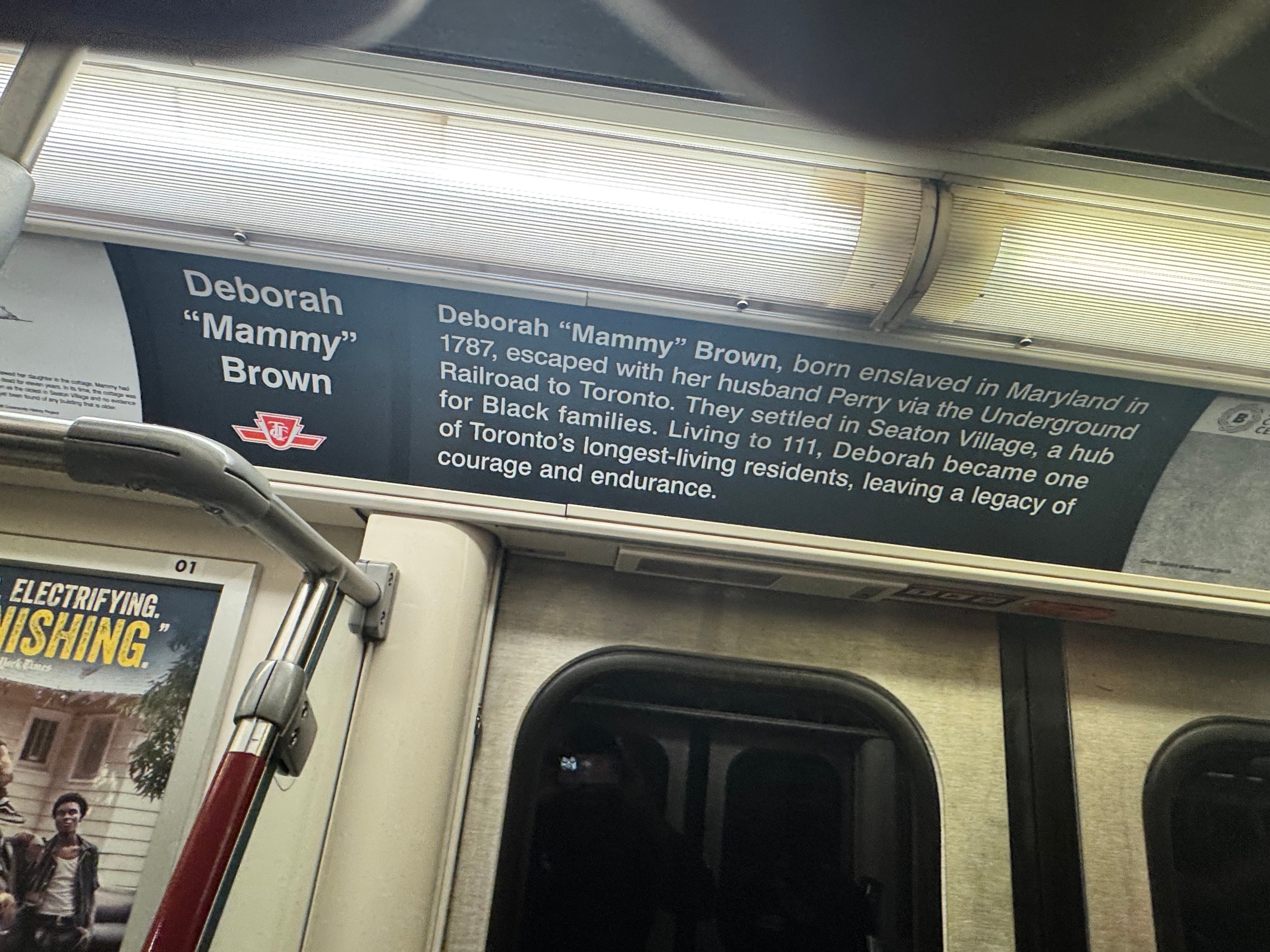
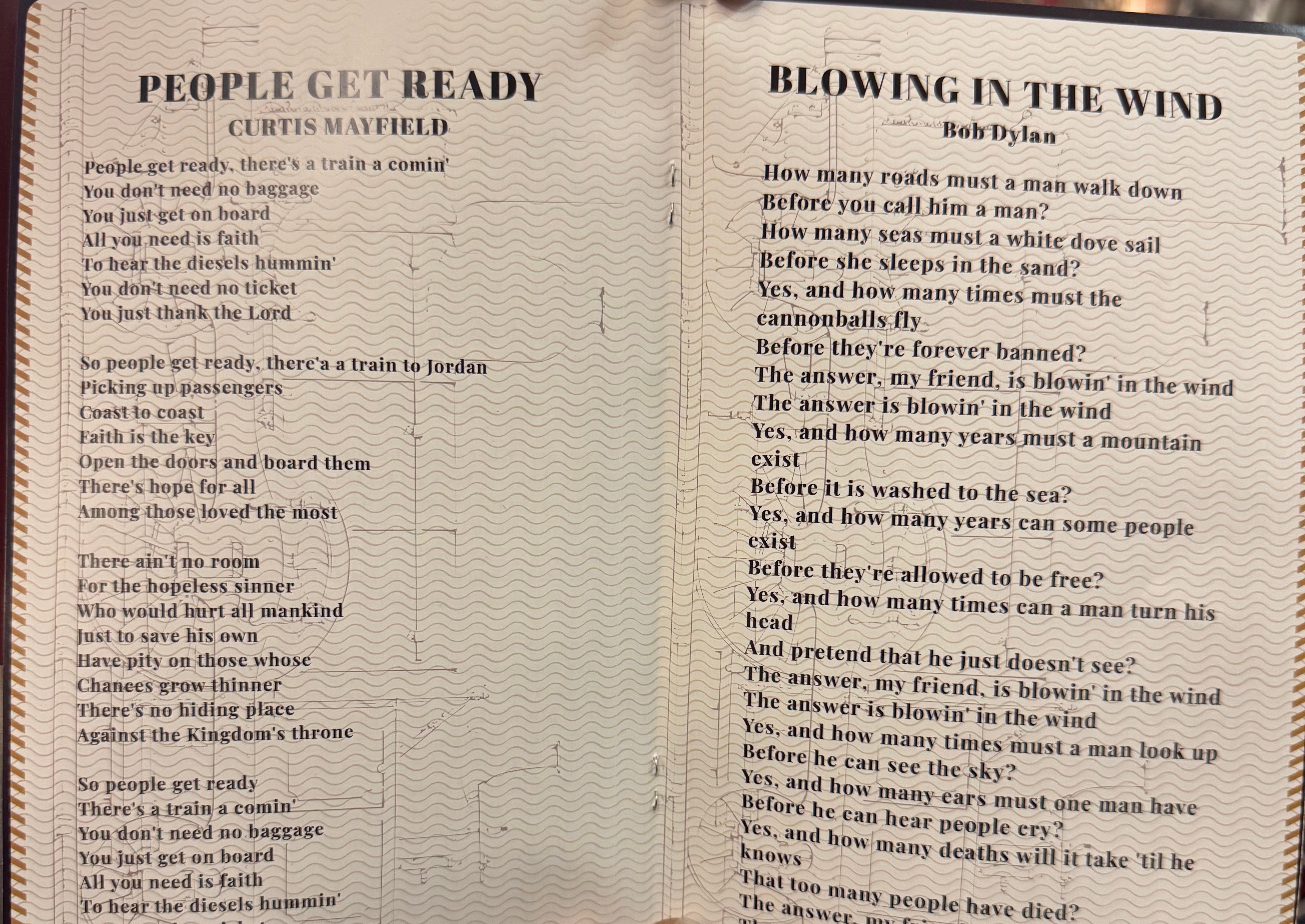
At one point, within the first few minutes, my colleague drew my attention to something I had completely overlooked. The advertising panels that normally line the walls of the train had been transformed. Instead of commercial advertisements, they displayed the names, stories, and history of the Underground Railroad and the struggle for freedom.
I couldn’t help myself. I got up, pulled out my phone, and began photographing the displays. Seeing those powerful words in spaces where commuters are accustomed to seeing advertisements reminded me that this was more than just a train ride. The Toronto Transit Commission had intentionally transformed the train itself into a moving historical exhibit, allowing every passenger to travel through history while learning from it. It was a thoughtful gesture that added even greater meaning to an already unforgettable experience, and one that I deeply appreciated.
We were asked to remain silent for the first five minutes. My thoughts drifted to those unimaginable moments when our ancestors and their allies travelled through forests, over hills and valleys, and along hidden paths, always fearing capture. In those moments, silence was not simply respect—it was survival.
Then midnight arrived.
In an instant, reflection gave way to celebration.
A voice began to sing, and almost immediately the entire train car joined in. Two bands came alive, one to my left with an amplified guitar and a box drum that echoed the sound of a Congo drum, and another to my right featuring a vocalist accompanied by guitar and keyboard.
I couldn’t help myself. I pulled out my camera and walked over to the musicians as they played Bob Marley’s immortal words:
“Emancipate yourselves from mental slavery; none but ourselves can free our minds…”
The energy was contagious.
People were no longer quietly seated. They moved throughout the train, singing, dancing, recording videos, greeting strangers, and capturing what had become far more than a subway ride. It was a living celebration of freedom. This remarkable tradition, started only a few years ago by the TTC, had transformed public transit into a moving classroom, a memorial, and a celebration all at once.
For those 35 minutes, I wasn’t simply riding a train.
I was travelling through history.
I was reflecting on the price of freedom.
And I was celebrating the resilience of a people whose journey continues to inspire generations across the world.
The ride lasted only about 35 minutes, but they were among the most meaningful 35 minutes I have ever spent on an August 1 morning.
If it to your calendar. There is something profoundly moving about beginning August 1 by honouring those who risked everything in pursuit of freedom, then stepping into the vibrant spirit of Caribana, Canada’s largest Caribbean festival, just hours later. One event grounds you in the sacrifices that shaped our past; the other showcases the creativity, strength, and enduring legacy of a people whose contributions continue to enrich Canada and the world. Together, they make for an unforgettable beginning to Emancipation Day.
Comments
Nothing yet. Say the first thing.
Sign in to join the conversation.