
Mailipilli Bhavani teared up when she recalled the day in 2019 when she and her family had to escape Cyclone Fani. She and her brother, Bangari Chitti, were carried on their parents’ backs as the wind tore off roofs and waves crashed into homes in their village along the coast of the Bay of Bengal.
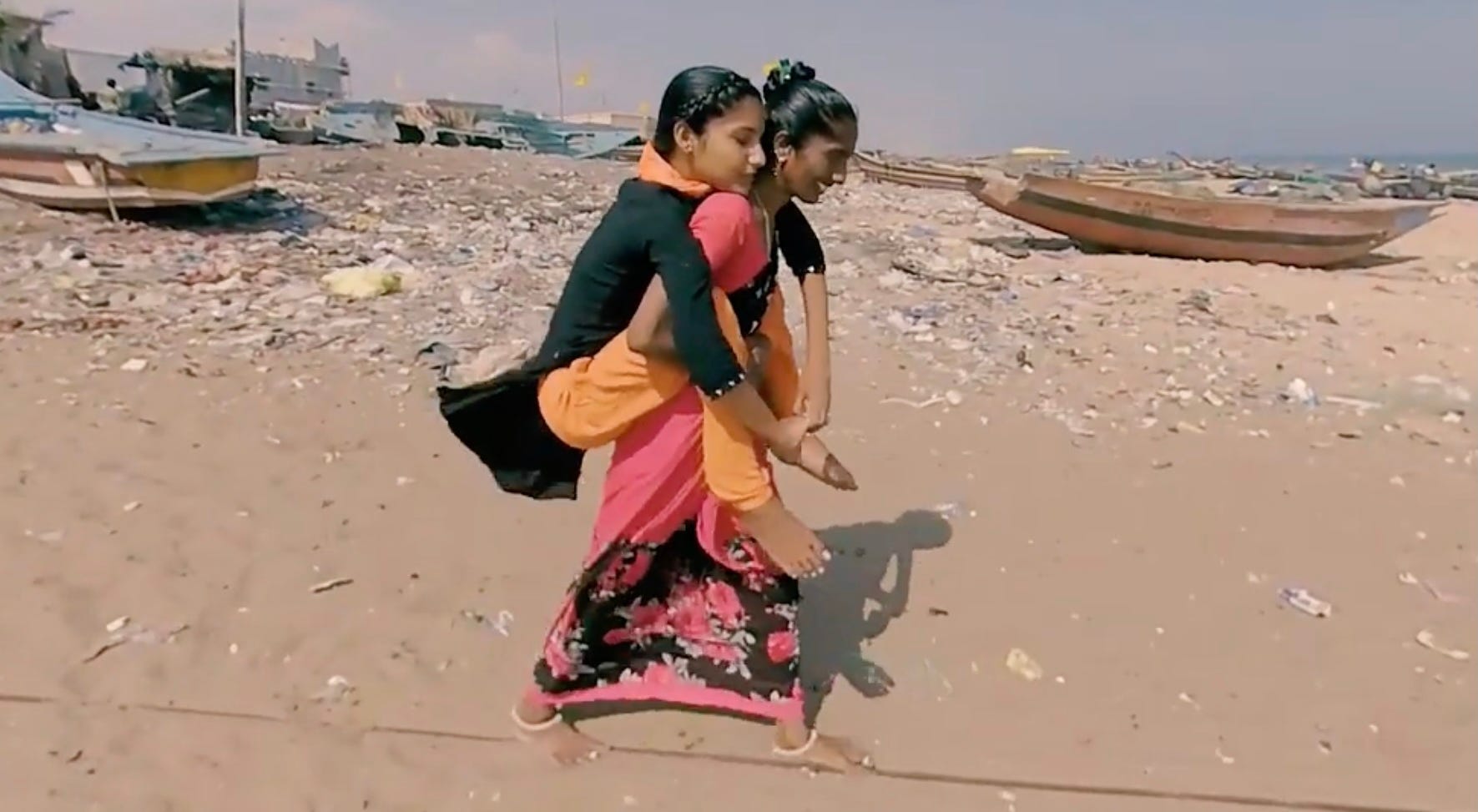
(Image description: a young, South Asian woman clutches onto the back of another, older woman who walks along a beach. Long wooden boats appear in the background.)
In those conditions, it took hours for the family to reach the storm shelter. And during the time they stayed there, the siblings, who are both in their 20s, were completely dependent on their parents to feed, bathe and provide all means of care for them.
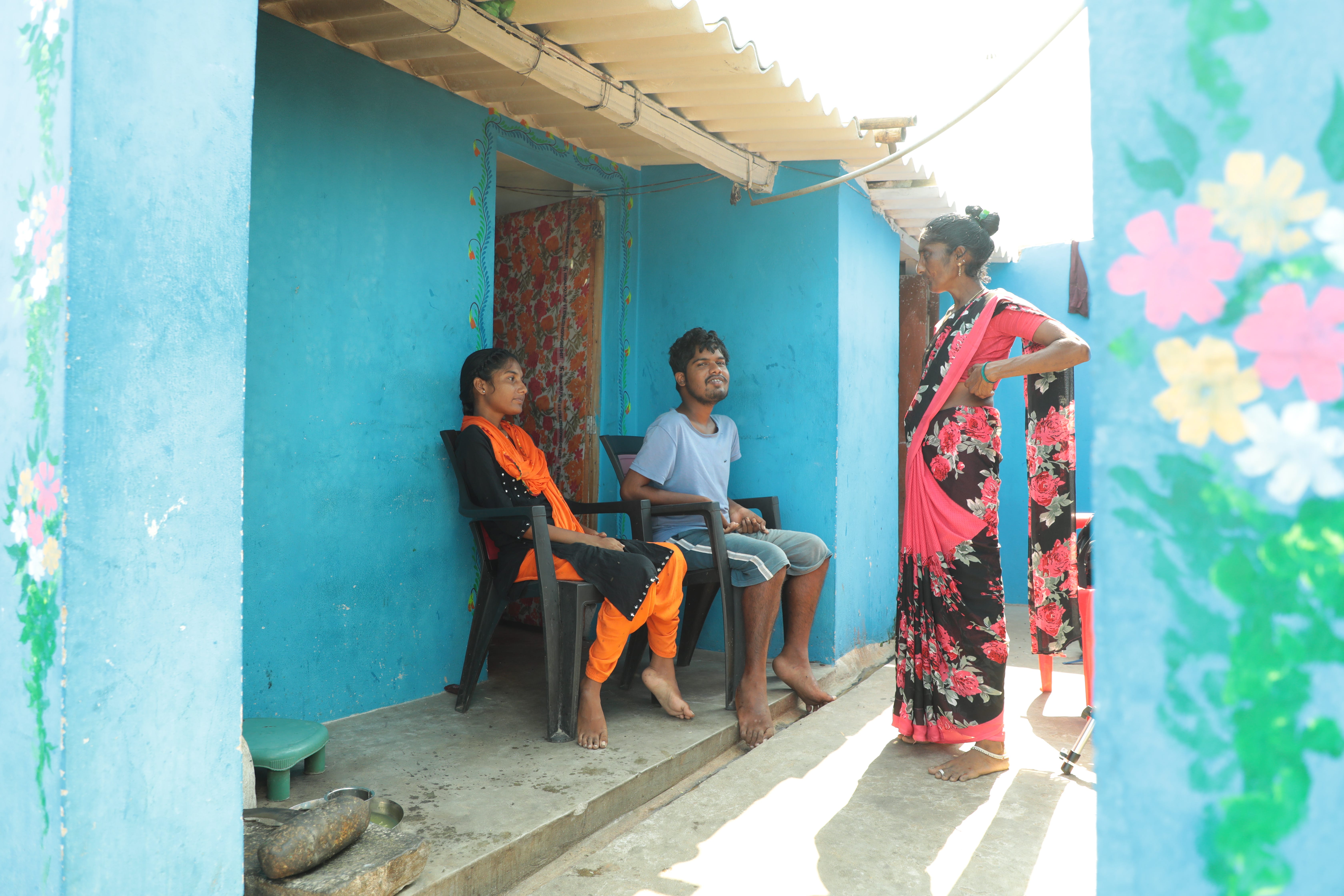
(Image description: a young woman and man are seated next to one another outside of a concrete structure. An older woman stands before them.)
During reporting trips throughout coastal South Asia, I heard dozens of stories from people with a disability who narrowly survived a weather related disaster. I included many of these interviews in my documentary Invisible Impact; Disability on Climate Change’s Frontline.
For the first time, I’m making the short film publicly available.
And because it includes six different languages, loads of text and subtitles, here is a version with audio description for my blind and low vision friends out there.
I created Invisible Impact because I wanted to raise awareness about how climate change driven disasters disproportionately affect people with a disability. They are more likely to be left behind, lose assistive devices and not have full access to shelter or services during these kinds of emergencies. And as severe storms, sea level rise, wildfires and other global warming phenomena become more frequent, the risks to the lives of these individuals also multiply.
But these concerns are often unseen by policy makers, disaster management officials and the non-disabled public at large.
Envoys from around the world are meeting right now in Belém, Brazil, for COP30, the annual United Nations climate change talks. While small contingencies of disability associations and advocates are attending the conference, they are not part of the official negotiations.
Invisible Impact will be available via the YouTube links above until November 21, the final day of COP30.
I’m always looking for opportunities to talk about my fieldwork and coverage of the intersection between climate change and Disability. Please reach out if your university, institution or association would be interested in collaborating with me.
You can learn more about this project at www.lens15.com/impact.
Lens15 will pick back up on my course on disability in media later this month.
No posts
Comments
Nothing yet. Say the first thing.
Sign in to join the conversation.