
Style Ontology is our ongoing attempt to catalogue fashion aesthetics, scenes, and subcultures—part research project, part group obsession. Each post focuses on one style: what it means, what it looks like, and the strange internal rules it seems to follow once it’s on an actual person.
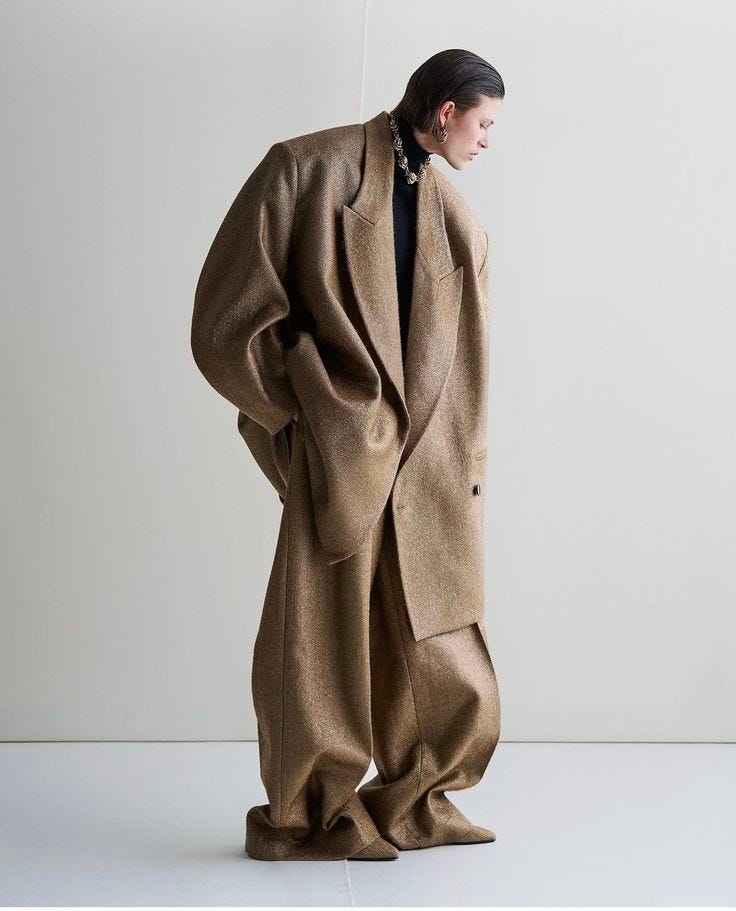
Definition. Architecture’s material honesty translated to garment: raw-edged seams, unfinished hems, exposed construction, heavyweight fabrics left untreated. Fashion brutalism borrows from post-war concrete modernism—Le Corbusier’s béton brut (”raw concrete”), the Barbican’s mass and geometry—to produce clothing that refuses refinement. The principle: let material and structure speak without decorative mediation. Silhouettes are boxy, oversized, often angular; construction is visible; linings are omitted or reversed. The body becomes scaffold; the garment, a load-bearing volume. In an unstable world, who wouldn’t want to dress like a fortress?
Where conventional fashion conceals its making, brutalist garments foreground it: topstitching in contrast thread, seam allowances worn outward, fraying edges left deliberate. The aesthetic codes as unfinished but is meticulously engineered. Volumes are geometric—cube, cylinder, trapezoid—echoing the monumental forms of brutalist buildings. The wearer occupies space with unapologetic mass: heavy, angular, structurally present.
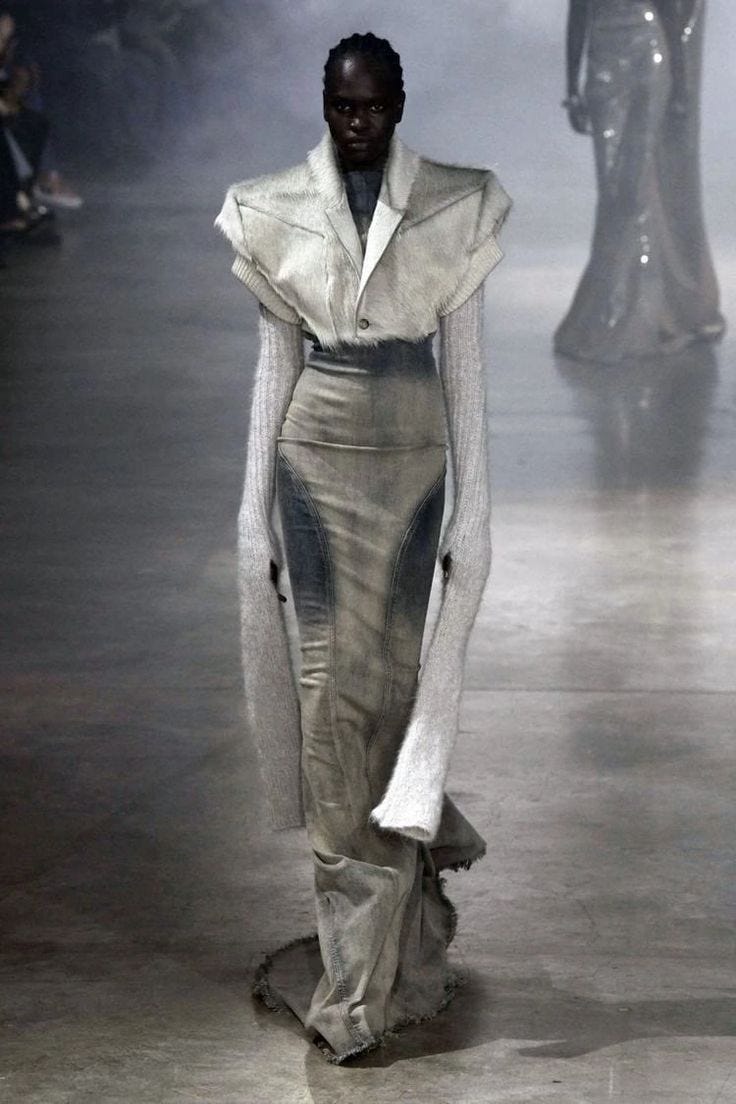
Silhouette: oversized, boxy cuts; exaggerated dropped shoulders; geometric blocking (rectangular torsos, cylindrical sleeves); cocoon coats; wide-leg trousers with substantial weight; asymmetric hems.
Materials: raw/selvedge denim, unlined or reversed leather, heavyweight cotton canvas, boiled wool, industrial felt, waxed cotton, thick linen; preference for undyed or minimally treated fibers that show wear, age, and construction.
Construction: industrial hardware (metal grommets, exposed zippers, rivets) as functional elements; unfinished hems; reversed garments showing interior construction.
Color: concrete grey, cement white, charcoal, rust/oxidized orange, raw beige, black; monochrome or tonal palettes mimicking poured concrete, weathered metal. Monochromatic severity, occasionally punctuated by industrial neon.
Footwear: chunky-soled boots, architectural sneakers with exaggerated soles, heavy leather shoes with visible Goodyear welt stitching.
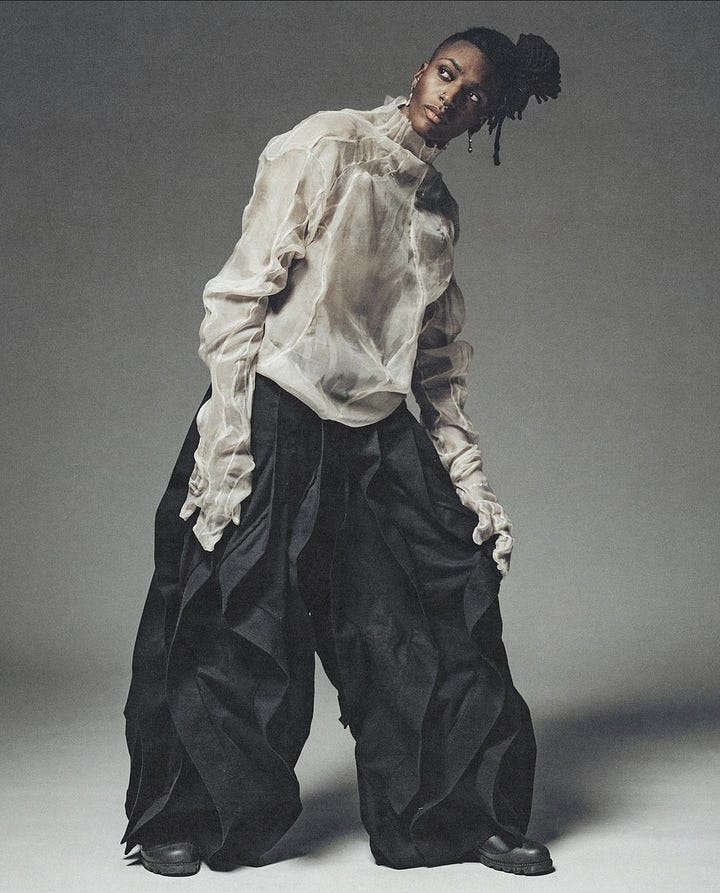
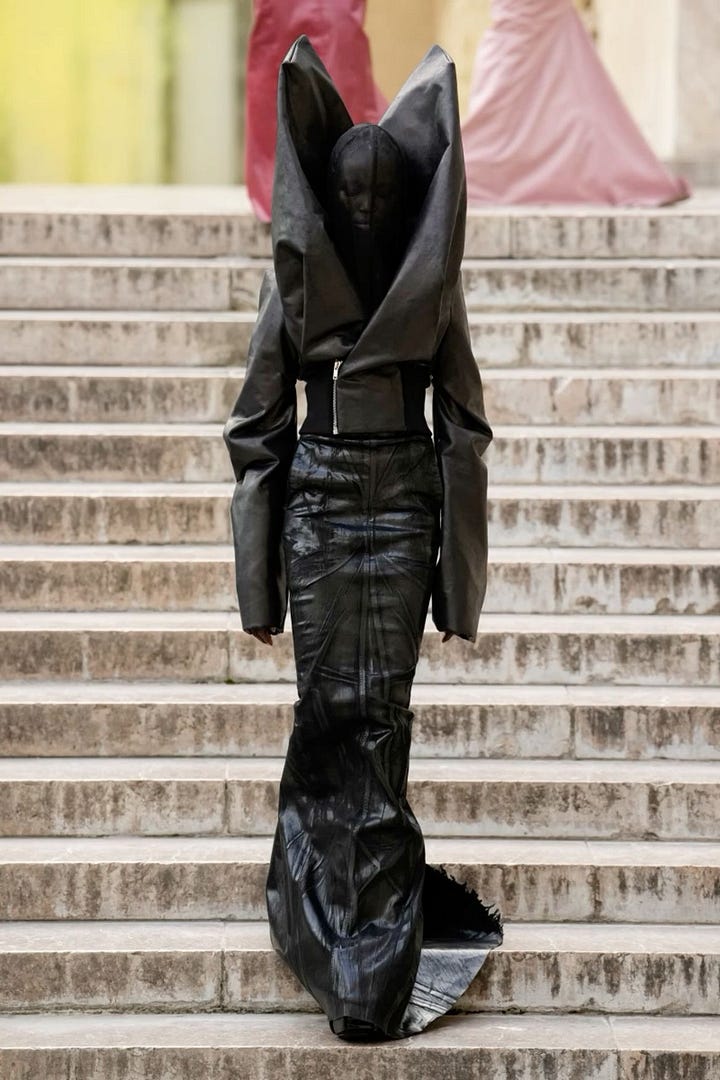
The body is treated as structural armature rather than form to be flattered or revealed. Garments create volume around the body or encase it in geometric shapes that obscure conventional gendered silhouettes. The effect is protective (armored, insulated) and spatial (occupying volume, asserting presence). Gender markers dissolve in favor of proportion, weight, and material integrity. The wearer becomes architectural: monumental, functional, deliberately imposing.
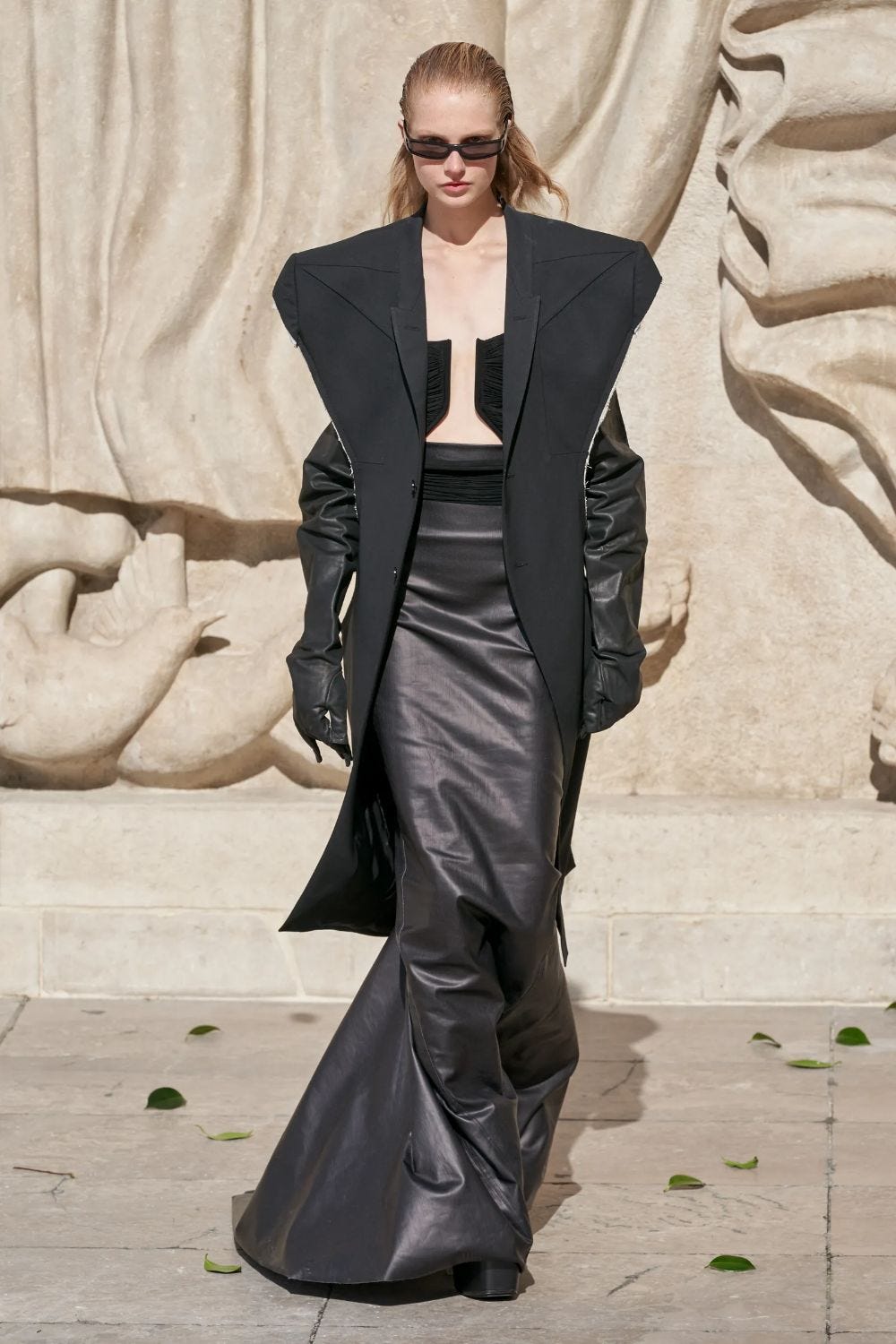
Demna Gvasalia’s early Vetements (2014–2016): oversized proportions, industrial materials, deconstructed tailoring
Rick Owens’ DRKSHDW line: raw-edged hems, heavyweight jersey, brutalist geometric cuts
Yohji Yamamoto’s structural experimentations photographed against concrete brutalist buildings
1950s: Le Corbusier’s Unité d’Habitation (1952) and term béton brut establish brutalism’s architectural vocabulary: exposed concrete, visible structure, material honesty. Alison and Peter Smithson theorize “New Brutalism” emphasizing ethics of material truth.
1960s–70s: Brutalist architecture peaks (UK social housing, university campuses, cultural centers). Simultaneous emergence of Japanese avant-garde fashion (Rei Kawakubo, Yohji Yamamoto) exploring deconstruction, raw edges, anti-fit—laying conceptual groundwork though not yet termed “brutalist.”
1980s–90s: Belgian deconstructionists (Martin Margiela especially) expose garment construction: reversed seams, visible linings, unfinished hems, garments-in-process. Margiela’s 1997 collection features garments with exposed muslin toiles. Helmut Lang’s industrial minimalism aligns with material austerity.
2000s: Architectural fashion gains traction; Hussein Chalayan, Gareth Pugh explore sculptural, geometric forms. Rick Owens develops DRKSHDW with raw-edged, heavyweight constructions that become foundational to brutalist fashion vocabulary.
2014–2016: Demna Gvasalia’s Vetements explicitly references industrial, utilitarian dress through exaggerated proportions and raw finishes. “Normcore” discourse dovetails with renewed interest in anti-fashion and architectural references.
2015–present: “Brutalist fashion” emerges as explicit critical term in fashion writing; designers including Craig Green, Jacquemus (early collections), and continuing work by Rick Owens and Yohji Yamamoto sustain the aesthetic. Term gains currency as descriptor for raw-edged, geometrically structured, materially honest garments.
deconstructivism
workwear
utilitarian
architectural fashion
anti-fashion
wabi-sabi (material honesty through different cultural lens)
industrial
Rick Owens (especially DRKSHDW)
Yohji Yamamoto
Alexander McQueen
Craig Green
Lemaire
Vetements (2014–2017)
Our Legacy
Julius
A-COLD-WALL*
Marni (Francesco Risso era)
Hed Mayner
Studio Nicholson
Blanks, Tim. “Craig Green.” Vogue Runway, https://www.vogue.com/fashion-shows/designer/craig-green. Accessed 7 Jan. 2026.
Evans, Caroline. Fashion at the Edge: Spectacle, Modernity, and Deathliness. Yale University Press, 2003.
Loschek, Ingrid. When Clothes Become Fashion: Design and Innovation Systems. Berg, 2009.
Martin, Richard, and Harold Koda. Infra-Apparel. Metropolitan Museum of Art, 1993.
No posts
Comments
Nothing yet. Say the first thing.
Sign in to join the conversation.