
A few weeks ago, I wrote a tweet naming what seemed obvious: San Francisco has money, but very little taste, and it compensates by trying to convert wealth into authority over beauty. This is the characteristic mistake of a culture that wants every judgment to have a foundation: if beauty can be made objective, then taste can become another form of expertise. But taste does not work that way. The point of an aesthetic is not to prove beauty but to stage a world.
The provincial question of whether San Francisco is ugly, badly dressed, or culturally inferior to New York (which would merely reproduce the same hierarchy of taste that I want to interrogate) is not as interesting to me as to the question of: why is a culture, so suspicious of arbitrary authority; nevertheless compelled, the moment it confronts aesthetics, to search for an authority capable of certifying aesthetic judgment?
The golden ratio, classical architecture, evolutionary psychology, mathematical harmony, “timeless” materials, some biological account of proportion. The apparent relativist who insists that nobody can tell him what to like immediately begins searching for the formula that will tell everybody what they should like.
Why? One answer might be that the fantasy of objective beauty promises to relieve us of the embarrassment of taste. If the Parthenon is beautiful because its proportions instantiate some universal law, then my attraction to the Parthenon is no longer really mine; I have merely perceived correctly. The judgment has been displaced from the subject onto the object. I do not have to say, “I desire this world.” I can say, more safely, “This world is beautiful.”
This is why the distinction between beauty and aesthetics exists. Beauty can be imagined as a property. An aesthetic cannot. An aesthetic exists only through relations among objects, places, symbols, and expectations; it is less an attribute of a thing than a structure through which things become intelligible together. Derrida’s différance is useful here because meaning, for Derrida, is never simply present inside the sign: it is generated through differences, references, absences, repetitions, and deferrals, through the entire system that allows one thing to mean something by not being another thing. The original theory of style makes a similar point when it describes style as dependent upon a flexible structure of conceptual interdependency.
The black leather jacket gives us the elementary example. There is no substance called “rebellion” contained in leather. The jacket becomes rebellious through Brando, the Ramones, punk, motorcycles, queerness, fetish, Saint Laurent, Hedi Slimane, the accumulated history of people who wore it, copied it, mocked it, commercialized it, and wore it again after commercialization had supposedly emptied it of meaning. The same jacket can signify danger, nostalgia, wealth, homosexuality, heterosexual masculinity, downtown authenticity, or the desperate attempt of a forty-eight-year-old private equity partner to communicate that he still listens to music. The object has not changed, yet everything has changed.

This is the basic movement of aesthetics: nothing means alone; and we can go further. An aesthetic organizes a fantasy about the kind of life in which those objects make sense. Ralph Lauren does not sell shirts. No, Ralph Lauren constructs a world in which horses, inherited houses, old convertibles, English setters, WASP leisure, Western masculinity, and a certain fantasy of American aristocracy become mutually intelligible. Muji stages another world. So does punk. So does a Chinatown bakery. So does the Odeon. So does the lobby of the Mercer. The objects matter because they function as evidence that this world exists.
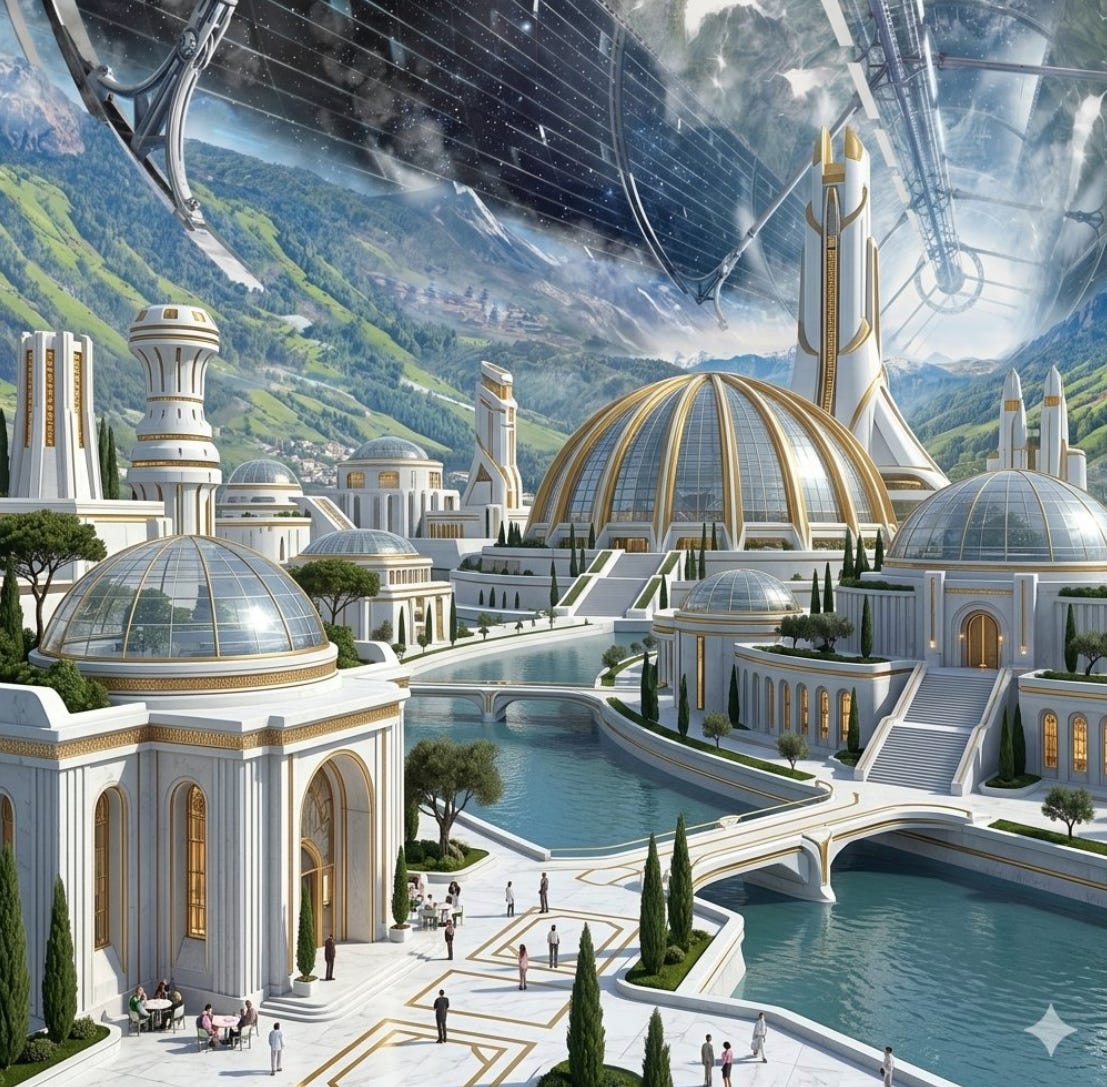
This is why the tech impulse to construct an aesthetic through first principles so often produces something strangely dead. It begins from the assumption that an aesthetic is an optimization problem. Greco Futurism becomes revealing here because it cannot simply say, “I like Greek columns; I want to put them next to computers because the combination excites me.” That admission would expose desire in its embarrassing contingency. It therefore needs Greece to be objectively beautiful. The column must arrive accompanied by a theory of civilization.
Why does a technological elite obsessed with artificial intelligence, rockets, longevity, and the future suddenly find itself obsessed with taste, marble busts, and piscinarii? This is where the attempt to ground aesthetics in beauty reverses itself. The appeal to timeless beauty presents itself as an escape from ideology, while it is often the most ideological element of the aesthetic, because it converts a historically specific desire into an eternal law. “I want Rome” becomes “Rome discovered beauty.” A personal fantasy becomes a civilizational fact.
New York generally does something different because New York makes this fantasy of purity difficult to sustain. The city is aesthetically productive because it has very little respect for the integrity of worlds. A perfect coat encounters garbage. A Beaux-Arts facade gets covered by scaffolding. A Japanese listening bar sits above a wholesale perfume store. The person in $1,800 trousers shares the subway platform with a construction worker, a teenager coming home from school, three tourists, and someone screaming about the Book of Revelation. The city keeps introducing material that the aesthetic did not request.
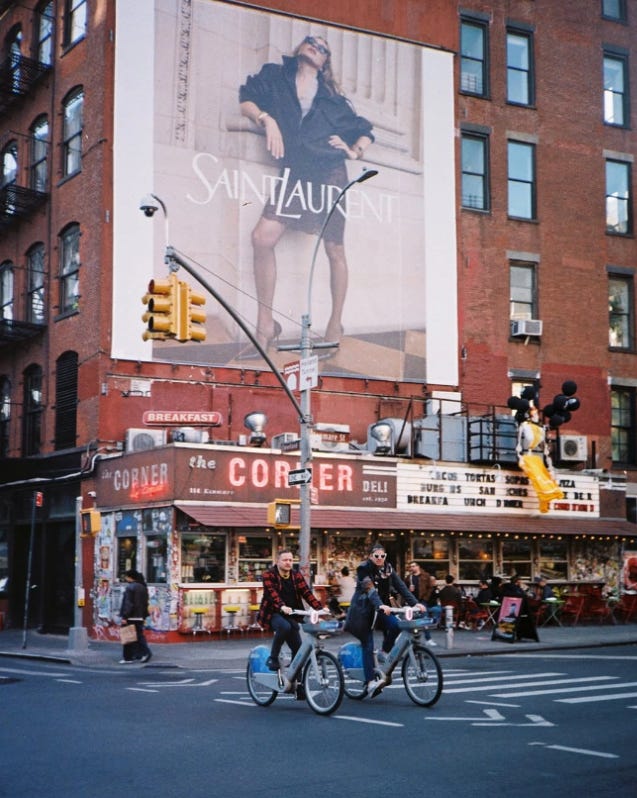
This contamination is productive.
Consider the downtown restaurant that wants to stage Paris in 1978: zinc bar, handwritten menu, candles, burgundy banquettes, slightly hostile waiter, perhaps a bathroom mirror that suggests cocaine even if nobody is actually doing cocaine. In a controlled environment, the concept could become unbearable. In New York, the fantasy is interrupted by the Con Edison truck outside, the DoorDash courier squeezing past the maître d’, the rat behind the garbage bags, the finance guy taking a Zoom call on the sidewalk. The aesthetic remains alive because the world refuses to fully cooperate with it.
This is what San Francisco, at least in its dominant technological culture, often appears to want to remove: friction, contingency, embarrassment, contradiction, the unresolved remainder that prevents a system from becoming fully coherent. The dream of technology is that everything irritating can eventually be interpreted as a problem and every problem can eventually be solved. This dream produces extraordinary software. It produces terrible aesthetics.
The paradox is that the aesthetic therefore depends upon the very world it appears to reject.
Downtown needs uptown. Minimalism needs clutter. Quiet luxury needs logos. The stylish person needs the unstylish person because style is relational before it is individual. If tomorrow everyone began dressing like Rick Owens, Rick Owens would cease to perform the same cultural function. The clothes could remain identical; the aesthetic fact would disappear.
Someone does something that seems wrong. The wrongness acquires charisma. Other people imitate it. The imitation becomes a code. The code becomes a market. The market standardizes it. The standardized version eventually becomes what the original gesture was resisting.
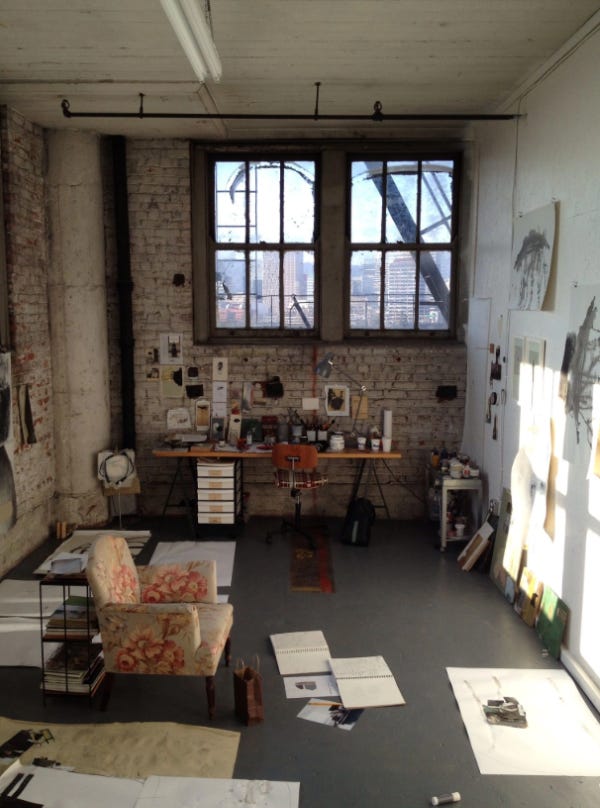
The loft is a perfect example. Artists occupy industrial buildings because they are cheap and available. Their poverty produces exposed pipes, unfinished floors, enormous windows, improvised kitchens. Those constraints acquire aesthetic value. Developers reproduce the constraints deliberately. Exposed brick becomes a premium finish. A material sign of not having enough money becomes something for which enormous sums of money are paid. At this stage we are tempted to say that the aesthetic has become fake, but this is too easy. The “authentic” loft was already staging a world. The difference is that the original situation contained a contradiction that the luxury imitation can only represent. In the first loft, the exposed pipe is there because nobody could afford to hide it. In the second, someone has paid extra to make sure the pipe remains visible. The object is identical but the social relation has inverted.

Taste is often discussed as if it were simply a refined capacity for discrimination, but taste also concerns which contradictions a society permits itself to see. A polished aesthetic can conceal the conditions that produced its objects; another aesthetic can make those conditions visible, exaggerate them, parody them, or turn them into symbols. Style becomes interesting when it does not merely decorate social reality but rearranges our perception of it.
This is why I find the language of “good taste” increasingly inadequate. Good taste implies that the problem has already been solved and that the tasteful person possesses the answer. Aesthetics is more unstable. It is an attempt to construct coherence from materials whose meanings never fully belong to us.
The chair has a history. The jacket has a history. The neighborhood has a history.
You can rearrange these things, but you cannot empty them.
Every aesthetic therefore contains an excess it cannot account for. This failure is not incidental to the aesthetic; it is the condition of its truth.

No posts
Comments
Nothing yet. Say the first thing.
Sign in to join the conversation.