
The court of Versailles was the most glamorous and intensely vicious reality show on earth. It was as if Married At First Sight and The Traitors had a baby – and that baby chose chaos. And it was, indeed, a show. Anyone, if they were suitably dressed, could go and watch. It was possible to walk into Marie Antoinette’s apartment in the morning and see her preparing for the day. She wrote to her mother, “I put on my rouge and wash my hands in front of the whole world”. All the members of the royal family ate meals in front of a crowd of onlookers. Security was not exactly tight, and homeless people found cosy nooks in the palace and set up camp, trying to avoid the spaniels trained to sniff them out.
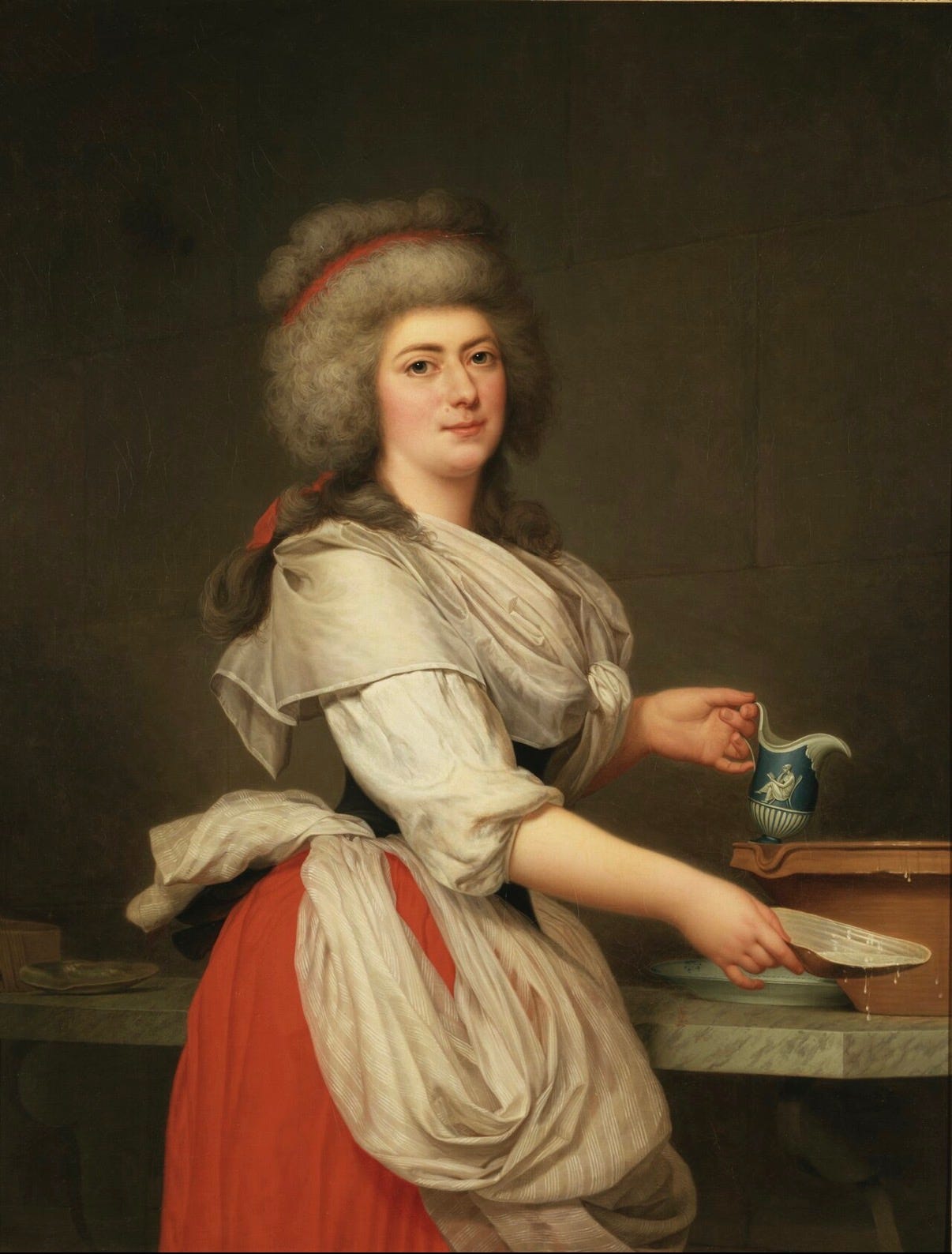
On a June day in 1768, a wide-eyed 15-year-old girl called Henriette Genet put on a new dress and joined this royal spectacle. The daughter of a big-wig bureaucrat in the Foreign Office, she spoke three languages and was so noted for her intellect that she was appointed Reader to the Princesses. Henriette found the court in mourning for Louis XV’s queen. The magnificent apartments were draped in black, the ladies covered their hair with black silk hoods, and all sparkle was prohibited. If you and I were the superstitious types, we might look back on that as an omen; Henriette would leave Versailles for the last time 21 years later as the French Revolution came banging on the gates of the palace, and a tearful Marie Antoinette told her, “We are lost, dragged away, perhaps to death”.
At first, she noticed little beyond the grandeur, which was specifically designed to stun little people. Years later, she recalled the thrones under a canopy adorned with plumes, “the caparisoned horses, the immense retinue in Court mourning, the enormous shoulder-knots, embroidered with gold and silver spangles, which decorated the coats of the pages and footmen, all this magnificence had such an effect on my senses that I could scarcely support myself when introduced to the Princesses.”

Henriette would soon find that this world, which had once centred on the godlike majesty of Louis XIV, the ‘Sun King’, now revolved around the listless, debauched, and morose Louis XV. Where the Sun King had dined every night before his gobsmacked subjects on pheasant and partridge with a charisma that spoke to his power, his great-grandson reluctantly ate boiled eggs before the public once a week. Louis XV dined with a smug dullness so keenly observed and drily recounted by Henriette that it’s worth quoting here in full:
“He [Louis XV] was very expert in a number of trifling matters which never occupy attention but when there is a lack of something better to employ it; for instance, he would knock off the top of an egg-shell at a single stroke of his fork; he therefore always ate eggs when he dined in public, and the Parisians who came on Sundays to see the King dine, returned home less struck with his fine figure than with the dexterity with which he broke his eggs.”
The egg-cracking king showed a bit of liveliness when it came to his mistress, Madame Du Barry, a good-natured but, let’s be honest, vulgar former sex worker with a heart-shaped face and large, wide-set eyes. He also perked up when he heard the 14-year-old Marie Antoinette, the youngest daughter of the Austrian Empress, was on her way to court to meet her husband. He asked his ambassador to Austria about her breasts, and when the ambassador replied he hadn’t looked, he replied, “Oh, didn’t you? That’s the first thing I look at.”
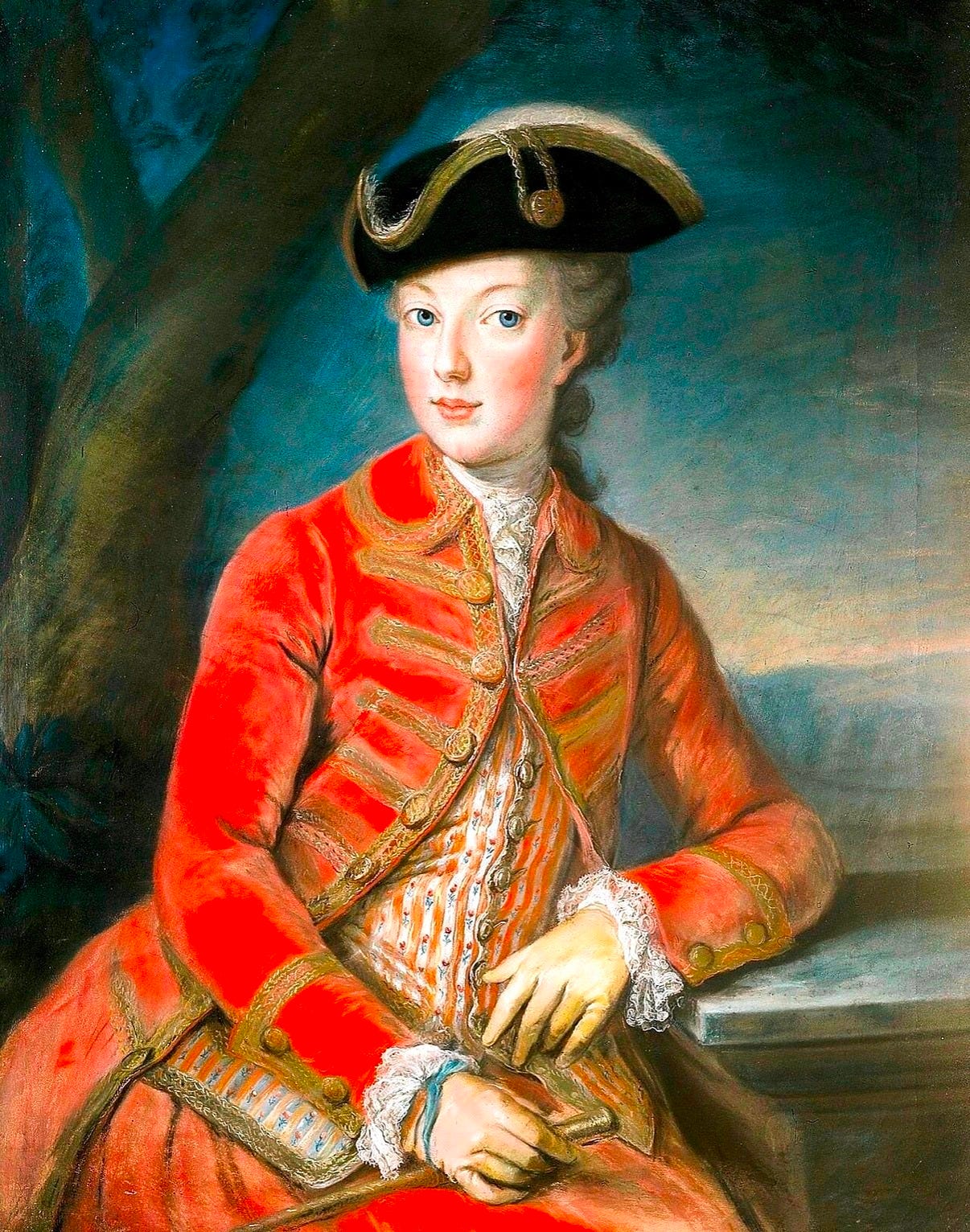
A sleazy king was the least of the young Marie Antoinette’s problems. The young Henriette - who had been promoted and would serve as the future queen’s lady’s maid- said a hairdresser and a few French fashions were dispatched to Austria, “and then it was thought sufficient pains had been taken to form the character of a princess destined to share the throne of France.” She also questioned the wisdom of sending her with a tutor who ridiculed the etiquette of the House of Bourbon incessantly. All in all, this canny lady’s maid said, Marie Antoinette was ill-equipped for her “first steps upon a stage so conspicuous and so full of danger as that of the Court of Versailles”.
Let’s not get deep into the toxic undercurrents and ancient hatreds of the court. It’s enough to know that Marie Antoinette was a child whose presence was supposed to miraculously reverse three hundred years of hatred for Austria within France. Factions were lining up to bring down the man who was the architect of her marriage, and they would soon succeed, leaving her without any allies. The king’s bored, bitter and devout sisters would encourage her not to acknowledge his mistress – a strategy they hoped would bring down both women. The future king’s cousins were jealous and greedy and eager to increase their own power by slandering her privately, and even financing pamphleteers to demonise her repeatedly and publicly, just like a troll farm today. And her husband’s brother, who was next in line to the throne, was even worse since a childless, powerless sister-in-law would keep his own path to the throne open.
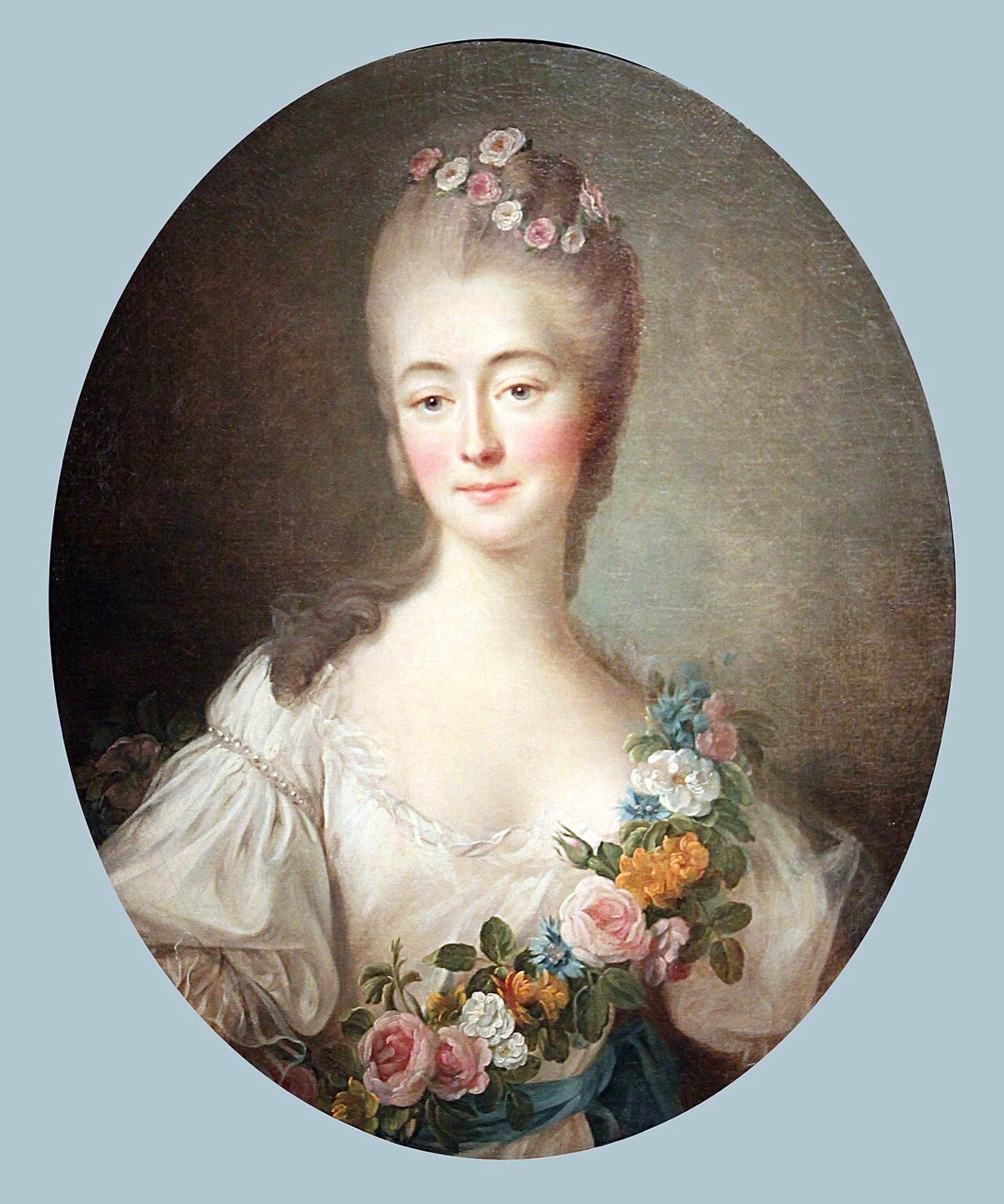
On the day the old king died, Henriette, the lady’s maid, now married and known as Madame Campan, recalled a “dreadful noise, absolutely like thunder…it was the crowd of courtiers who were deserting the dead sovereign’s antechamber, to come and do homage to the new power of Louis XVI”. She quickly noticed that the new King Louis XVI, who’d never shown much interest in his wife, began to become “exceedingly attached to the queen”. Mourning prevented him from hunting, and so he proposed walks in the garden, arm in arm.
Once again, Madame Henriette Campan is worth quoting in full on the slavish devotion of the court:
“…the very next day, several couples, who had long, and for good reasons, been disunited, were seen walking upon the terrace with the same apparent conjugal intimacy. Thus, they spent whole hours, braving the intolerable wearisomeness of their protracted tete-a tetes, out of mere obsequious imitation.”
Less amusingly, Madam Campan also observed that “the anti-Austrian party never lost sight of the young queen, but kept on the watch, with the malicious desire to injure her through such errors as might arise from her youth and inexperience.” Marie Antoinette could do no right. When the King and his brothers were vaccinated against smallpox, the terrified anti-vaxxers blamed the influence of the Queen. When she found a friend in the angelic young widow, the Princesse de Lamballe, and made her Superintendent of the Household, she made new enemies who felt they should have outranked the princess.
One evening, as the queen travelled to a masked ball in Paris, her carriage broke down, and she had to go the rest of the way in a fiacre, a standard street cab. Marie Antoinette was overheard saying to someone, “That I should be in a fiacre! Is it not droll?” Madame Campan called it a single moment of levity, but soon enough all of Paris was talking – the queen was having an affair, “the queen went about Paris in disguise”. The ‘libelles’ or scandal sheets made the most of it, whipping it up into an outrage like powdered and rouged 18th-century trolls and bots.
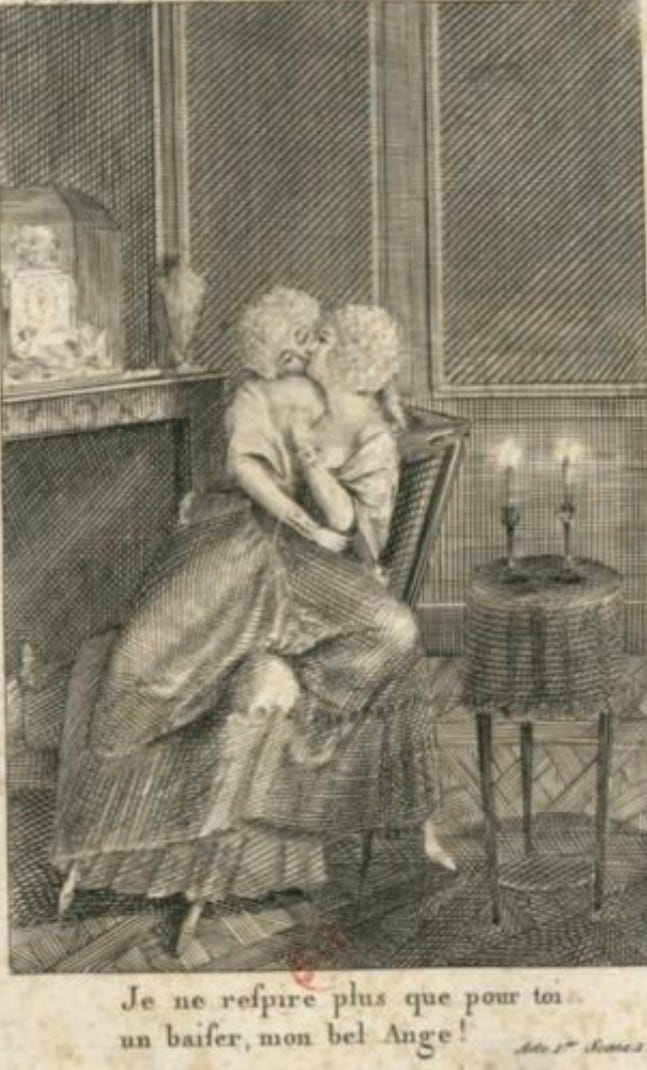
Perhaps most unfair of all was the blame laid at her feet for the young queen's lack of a child. When her sister-in-law gave birth to a son, Marie Antoinette had to “run the gauntlet of the raucous market-women…who pursued the departing queen with their cat calls: ‘when will you give us an heir to the throne?’” The queen shut herself up in her rooms with Madame Campan and wept bitterly. The king had been mystifyingly reluctant to consummate the marriage, and the pamphleteers made the most of it, accusing the queen’s friend, Princesse de Lamballe, of “working at alleviating the queen’s frustration with her little fingers.”
Madame Campan was a much quicker learner than the queen when it came to court politics. She had been told by her father-in-law, a career courtier, “to shun all kinds of confidence. ‘It procures a very fleeting, and at the same time dangerous sort of favour…. instead of setting your wits to work to discover why… use them to prevent the possibility of your knowing anything of the matter’.”
She put this into effect on one occasion when she found the queen weeping in her chambers, and recalled being told with a sob, “‘leave me… if you love me; it would be better to kill me at once.’ At this moment she threw her arm over my shoulder and began weeping afresh’.” Madame Campan quickly sent for a friend of Marie Antoinette, avoiding learning anything about the situation herself. She had been well advised; it would not be long before people too close to the queen began losing their heads; the Princesse de Lamballe’s would end up on a spike.
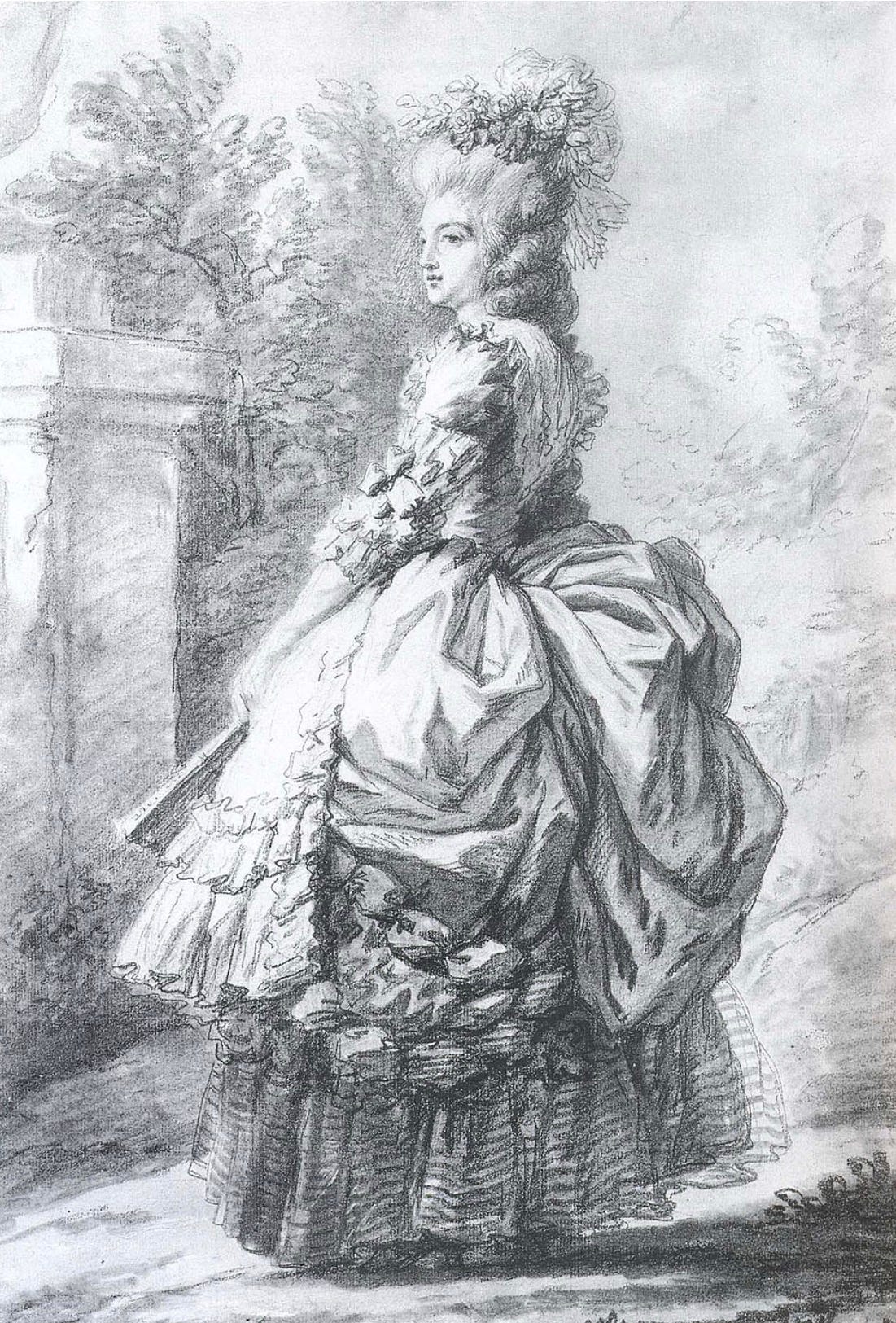
.Madam Campan tried to advise the queen, who was finally pregnant in the long hot summer of 1778, not to take walks late at night in the gardens with her friends, because they made her accessible to anyone at court, were secretly attended by agents of her enemies, and led to rumour and gossip. But Marie Antoinette completely disregarded this very good advice. “Misled by the pleasure she found in these promenades, and secure in the consciousness of blameless conduct, the queen would not see the lamentable results which must necessarily follow”. The men at court most threatened by a pregnant queen stirred up the pamphleteers, and these blameless walks became the excuse for thousands of dirty songs and scandalous stories.
As the economy went further down the plughole thanks mostly to the 11 billion dollars (in equivalent modern currency) spent on the American War of Independence, and the bread prices continued to soar, the pamphleteers’ stories became ever more pornographic and hysterical. The crown had tried to suppress them, but it was like trying to put out a forest fire with a leaky tap. At least two of the officers charged with tracking down the publishers turned out to be working with them. In the end, it was well-circulated claims that the royal couple were planning to flee to a stronghold that finally sent a mob of angry women marching towards Versailles in 1789.
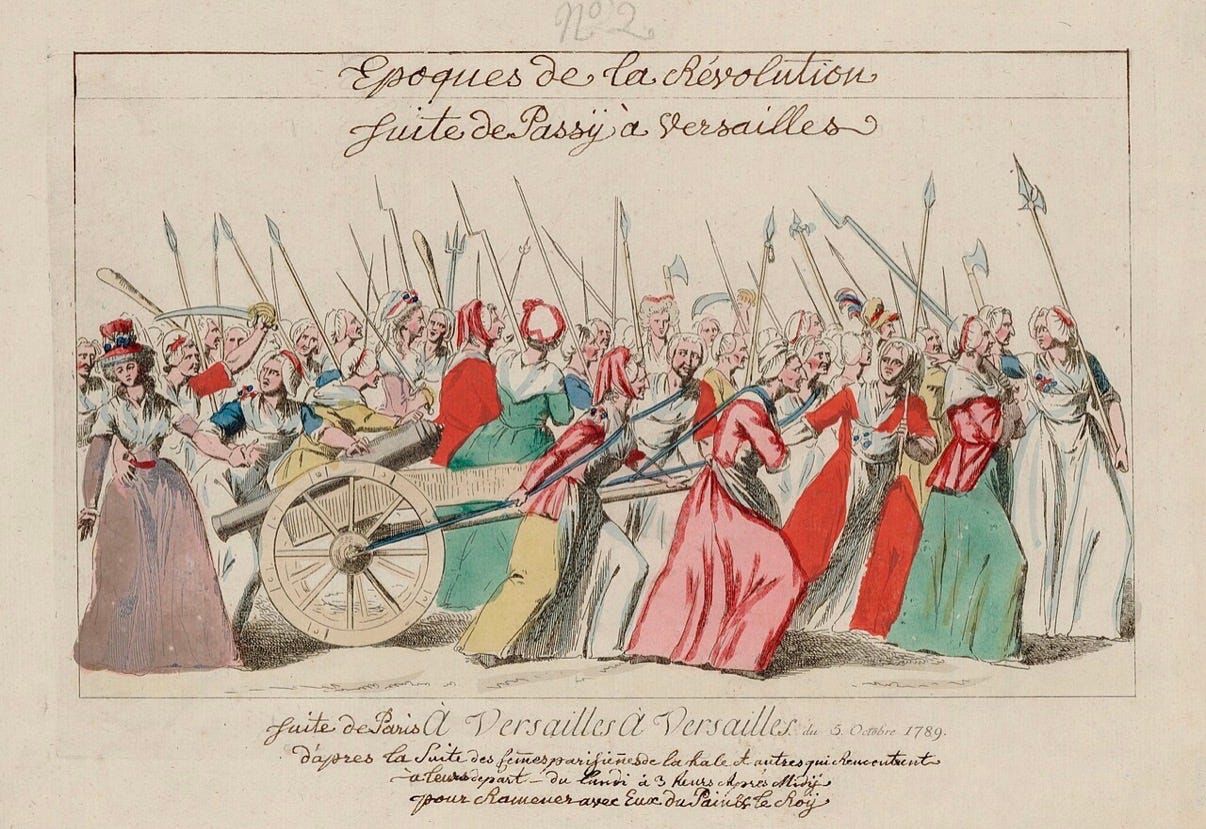
Madame Campan recalled the uproar in the court that day; she wrote that “disorder reigned throughout the interior of the palace”. The crowd had a thirst for blood, and everyone knew whose blood would be the first to run. She watched as a crowd of bawdy, working-class women or ‘poissardes ’ shouldered their way towards the palace, writing in her memoir, “I shudder even now at the recollection of the poissardes or rather furies, who wore white aprons, which they screamed out were intended to receive the bowels of Marie Antoinette.”
That night, the ladies of the queen’s bedchamber sat outside her door. Madame Campan wasn’t there, but her sister, Adelaide Auguié, was, and she later told her what had happened. At four thirty in the morning, they heard shooting and shouting, and while one woman ran to wake the queen, Madame Campan’s sister rushed through two adjoining rooms towards the noise. There she saw a guard holding his musket across the doorframe, and while the mob repeatedly struck him, he turned, his face covered in blood and exclaimed, “Save the queen madame; they are come to assassinate her.”
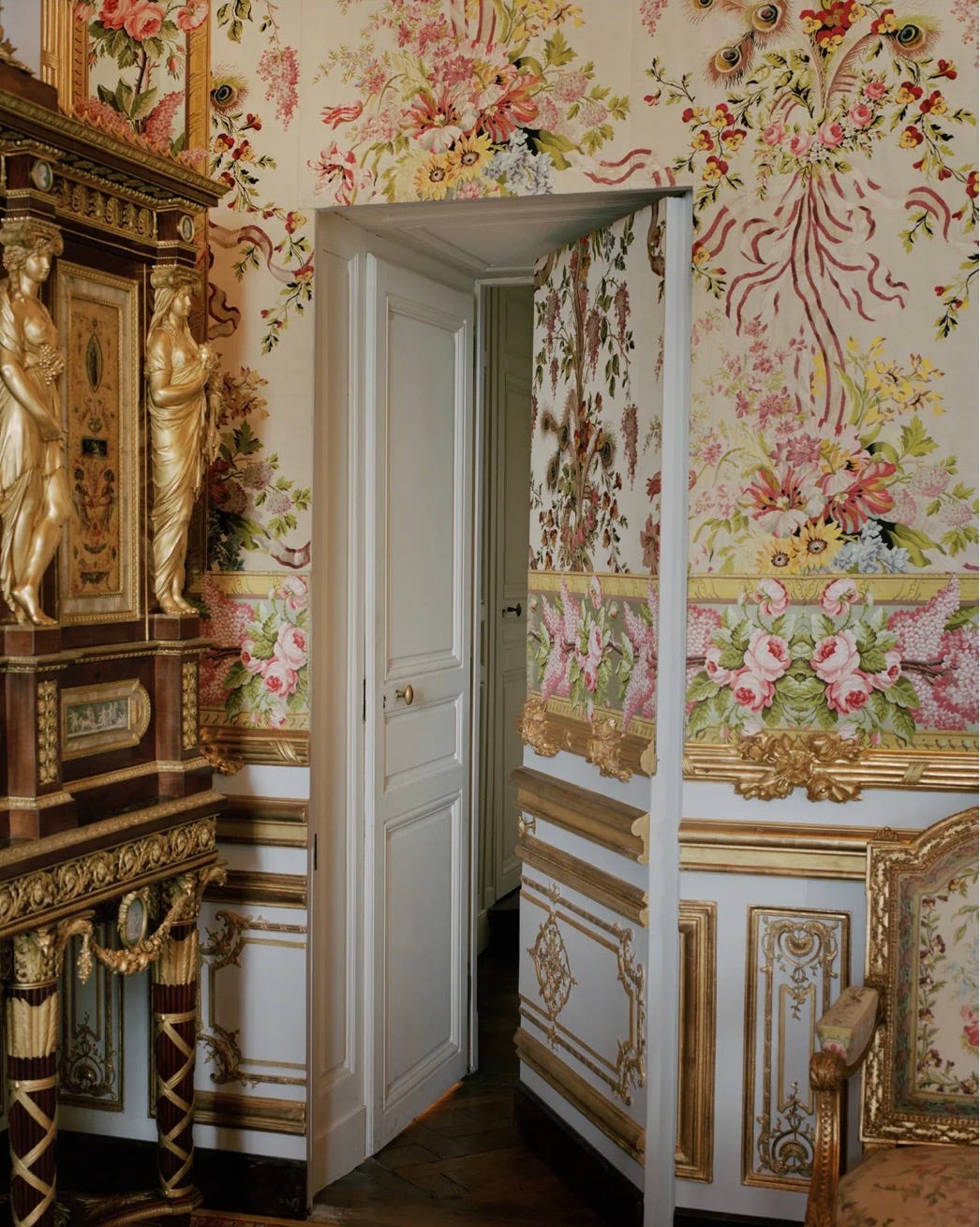
Madame Auguié ran back towards the queen’s rooms, bolting the doors behind her, and crying out to the queen, “Get up, Madame! Don’t stay to dress yourself; fly to the King’s apartment!” The queen quickly put on a petticoat, and the women ran to a door in the dressing room that led to the king’s rooms and made their escape from there. The next day, an uneasy stand-off ensued until the King agreed to go to Paris with his family. They left in carriages surrounded by the baying women who shouted, “We shall no longer want bread! We have the baker, the baker’s wife, and the baker’s boy with us.”
Madame Campan saw the queen alone for a moment before her departure, and recalled that, “she could hardly speak; tears bedewed her face, to which all the blood in her body seemed to have rushed, she condescended to embrace me…and said…come immediately and settle at Paris… we are lost, dragged away, perhaps to death, when kings become prisoners, they are very near it.” For the next three years, Madame Campan was a faithful friend to the queen, sharing her confinement in the Tuileries, burning her papers, and helping find clothing for her attempted escape.
The last time she saw her was on the day after the mob stormed the Tuileries, killing 600 Swiss guards and hacking apart anyone who stood in their way. Madam Campan had managed to escape, glimpsing her own house in flames as she made her way to her sister’s. The king and queen had finally been deposed and locked away, and Madame Campan and her sister bravely visited them in their narrow cell.
“Come,” said the queen, “come, and see one still more unhappy than yourselves, since she has been the cause of all your misfortunes. We are ruined; we have arrived at that point to which they have been leading us for three years, through all possible outrages, we shall fall in this dreadful revolution, and many others will perish after us.”
There’s a cruel postscript to the story of Madame Campan. The queen had been robbed of her purse as she was taken to her cell and asked Madame Campan’s sister, Madame Auguié, to lend her 25 louis. As the reign of terror unfolded and no one was spared, Robespierre’s agents hunted her down for this act of generosity. Madame Auguié had no choice but to leave her three daughters in hiding with Madame Campan and flee to a rented room. As the police closed in, Madame Auguié threw herself from the window to her death, rather than face the guillotine and taint the lives of her three daughters. Tragically, if she had waited one more day, she would have survived; the cart carrying Robespierre to his own execution stopped her funeral procession.
Further reading:
Antonia Fraser, Marie Antoinette: The Journey, first published 2001 by Wiedenfeld & Nicolson
Madame de Campan, Memoirs of the Court of Marie Antoinette, Queen of France, (London, Henry Colburn and Co, 1823)
Simon Schama, Citizens: A Chronicle of the French Revolution, (London, Penguin Press, 2004)
Robert Darnton, The Revolutionary Temper:Paris 1748-1789, (London, Penguin Books, 2023)
Comments
Nothing yet. Say the first thing.
Sign in to join the conversation.