

What’s up riders on the Lehi Mountain Bike team and whomever else this is shared with. I’m Spencer Gammon, a recent graduate of the aforementioned team. Recently I had the opportunity to write a research paper in my English 2010 class on a topic some of you may be familiar with called zone two training. A greater knowledge on zone two training is something I wish I could have had years ago when I started training seriously outside of practice. So that is what this essay is about. In this essay I am taking my research paper and revising it slightly to better suit you guys and help you achieve your fitness goals.
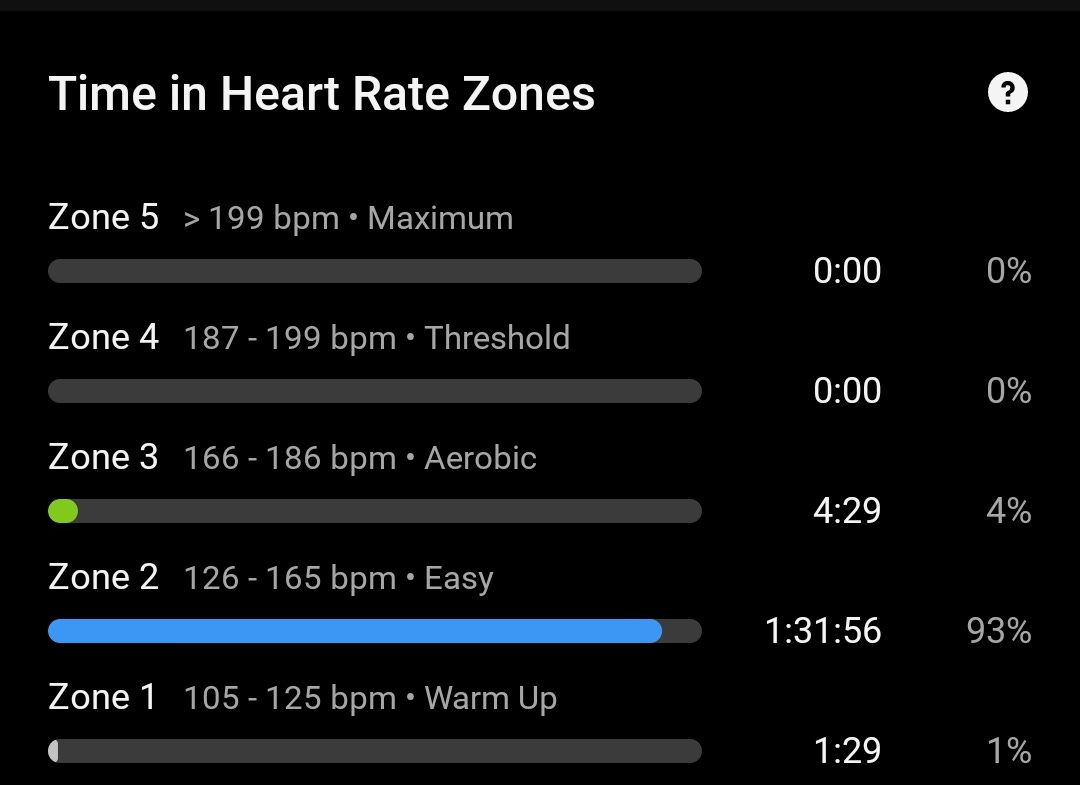
Zone two is often used to describe a low-intensity aerobic training zone (See above picture for an example of training zones). Essentially this means riding at a slow pace. This method of training has become increasingly popular in recent years among endurance athletes. Salstrand describes zone two as the fat-burning zone.1 This is backed up and elaborated by statements made by Attia and San-Millán, in which they describe zone two as the exercise intensity where you stress the mitochondria and your fat oxidative capacity the most. This is because you recruit primarily slow oxidative muscle fibers while burning more fat than any other training intensity.2 These terms will all be discussed and defined later, but in short, it means zone two is the best way to burn fat.
Some may say that zone two doesn’t improve fitness because it isn’t hard enough to elicit improvements, and if exercise isn’t difficult, it’s not worth your time. While high-intensity training is more time efficient and produces results faster than training in zone two, zone two training provides necessary fitness adaptations that can only be achieved through the zone and provides a path for longer-term gains.3
Before we discuss further, it is important to define the different types of muscle fibers. There are three major types of muscle fibers: Slow oxidative, fast oxidative, and fast glycolytic.4 One of the major aspects of zone two training is the utilization and development of slow oxidative muscle fibers.5 Going forward, this essay will refer to these muscle fibers as either slow-twitch or type I muscle fibers. Type I muscle fibers are part of the muscle with the highest concentration of mitochondria, fatigue the slowest, and are the most efficient.6 Mitochondria are commonly referred to as the cell’s powerhouse, or the part of the cell in which stored energy, such as fats or carbohydrates, is turned into energy that the cell can use to perform its function. The other muscle fibers are not strained or developed nearly as much by zone two training as type I muscle fibers. So this essay will not discuss these other muscle fibers further.

Zone two training stimulates slow-twitch muscle fibers more than any other training zone.7 This means that type I muscle fibers are the primary part of the muscle used during training in zone two, and later are strengthened. The adaptations from zone two can mostly be traced back to this development of type I muscle fibers. In higher intensity zones, the adaptations of zone two are not made, particularly fat burning.89
When you train in zone two, your body makes important adaptations, mainly by developing type I muscle fibers. These changes occur because your slow-twitch muscle fibers contain more mitochondria than other fibers. An increase in mitochondrial count is closely associated with improved oxidative capacity and enhanced resistance to fatigue. More mitochondria are also associated with more fat utilization in place of carbs, which leads to an increased lactate threshold because carbs are no longer being turned into lactate.10
Mitochondria and Fat Oxidation
Fat oxidation is a term used to describe the process used to burn fat in the body and turn it into ATP, which is energy that cells use.11 The part of the cell responsible for this process is the mitochondria.12 As you increase the amount of slow-twitch muscle fibers you have, you also increase the amount of mitochondria you have, which will then increase your body's ability to use fat as a fuel source. When you can better use fat as a fuel source, you’ll have greater endurance because they won’t be nearly as reliant on carbohydrates as an energy source. This is also important because your body can only intake a fixed amount of carbohydrates per hour when exercising, whereas when you burn only fat you have an effectively infinite fuel source. This means they can more easily lose weight by burning body fat during a later workout.13
Mitochondria and Lactate Threshold
Carbohydrates are the primary source of fuel used for exercise, however, they have one major disadvantage: when they are synthesized into ATP, a byproduct called lactate is made. This lactate decreases the muscle's ability to contract during exercise, making it harder to perform at the same capacity at a later point in a workout as you could at an earlier time.14 When you improve your fat oxidative abilities, you will rely less on carbohydrates.
The point at which exercise efficiency and ability start to decrease due to lactate buildup is known as the lactate threshold.15 Improving your lactate threshold is a key part of improving your fitness because the higher it is, the greater your performance on the bike will be. The mitochondria play two important roles in increasing your lactate threshold. As discussed earlier, the amount of mitochondria an athlete has correlates positively with the work they can perform in exercise before carbohydrates start being synthesized. In addition, the mitochondria can also synthesize lactate as an alternative energy source, decreasing the amount of lactate in the blood.16 So when you perform zone two training, your body trains itself to produce less lactate and better process the amount of lactate produced from higher intensities, allowing you to recover faster from these intensities. This will be elaborated on further, but essentially you get faster.
A natural adaptation of any form of cardio training is a stronger heart. A stronger heart means you can pump more blood per beat, lowering your heart rate at a given speed. This leads to improved endurance.17 The primary benefit of zone two training over other cardiovascular training zones is that it produces minimal fatigue. When training in zone two, you can put more total stress on your heart than at higher intensities, with a lesser amount of fatigue, meaning your cardio can improve a greater amount from zone two training than other training intensity in the long term.18
An essential component of cardiovascular training is VO2 max. VO2 max is the body’s maximum ability to utilize the oxygen it intakes.19 When exercising, you have an effectively infinite amount of oxygen you can access and intake. An athlete with a greater VO2 max will have a greater ability to perform and recover at higher intensities. A crucial part of VO2 max is the rate at which blood can transport oxygen to the working muscles, which can primarily be increased by strengthening the heart.20 While zone two training may only give an indirect increase of VO2 max, unlike high-intensity training, it helps increase it marginally, and the difference between highly competitive athletes who win and lose races is those marginal differences.
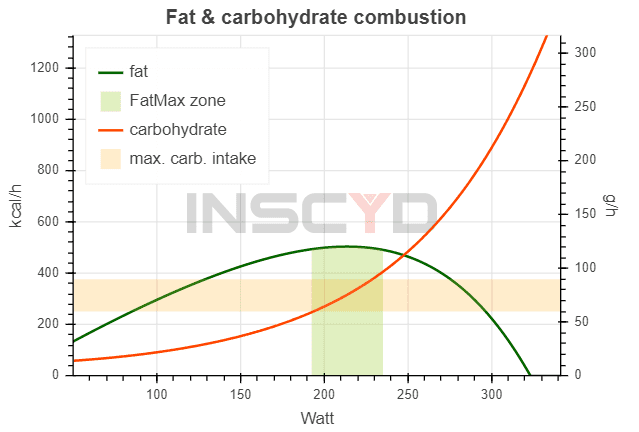
Your climbing speed on the bike is in large part determined by the amount of power you are putting through your pedals, divided by the combined weight of your bike and body, also known as Watts/Kg. This is why many of the best cross country mountain bikes are so light, as well as many professional cyclists who climb quickly. So being at a low, but reasonable, body weight will be extremely beneficial for your cycling performance. What I am not advocating for is extreme dieting and losing as many pounds as you can to get lighter, this is just high school mountain biking, it’s not that serious. However, losing excess fat will still be beneficial if you want to be as quick as you can. Zone two training is the most effective way to do this. Zone two is often also referred to as the “Fat-Burning Zone.” To complement this, the top of an athlete’s zone two is known as their fatMax, or the training intensity at which the most fat is burned.2122
As a mountain bike racer with four years of consistent training, I’ve found it useful to categorize endurance into two types when discussing fitness. The first is the more traditional definition of endurance, which is the ability to perform at an elevated level for an extended period. This means being able to go on hundred mile bike rides or racing for several laps. The second is the ability to perform at a high intensity and recover quickly from the effort to repeat it at the same elevated level shortly thereafter. Zone two training can greatly improve these two kinds of endurance.
The ability to perform for a long period is determined largely by the body’s ability to fuel itself and by how quickly it fatigues.23 With more mitochondria, the body can more efficiently convert fat and carbohydrates into energy, meaning an athlete can perform longer with the same intake of carbs. Type I muscle fibers are the part of the muscle that fatigues the slowest. When a person increases the amount of slow-twitch muscles utilized during exercise, they will have greater endurance.24
Recovery Time
The second type of endurance is the body’s ability to recover quickly after hard efforts. This type of endurance is more influenced by the ability to quickly rid your body of lactate after exercise or before more muscle exertion in your next interval. When someone’s muscles are filled with lactate, their performance will diminish.25 Zone two training aids in this because it stimulates the mitochondria and trains them to more quickly clear an athlete's blood of lactate. If your body can more quickly rid itself of lactate, your workouts can be more intense as you can put in more work and intensity before fatiguing, and can recover faster from these workouts, reducing and delaying over-training.26 Because you can train at greater intensity in your intense days, your fitness will increase more and you will get faster.

To gain the benefits of zone two training, it's important to understand how to train effectively in this zone. This will depend on many factors, including how fit you are, if you have a heart rate monitor or not, and how much time the athlete has to allocate towards zone two training. General suggestions can be made, but actual personalization requires individual advice from coaches.
In mountain biking, there are well-defined boundaries within which zone two training is done. The physiological zone in which the adaptations are made is when you are straining mostly or primarily your type I muscle fibers.27 However, current technology cannot test this while exercise is being performed. The closest metric to that is a blood lactate monitor that determines the concentration of lactate the muscle produces and can indicate the type of muscle fibers used. Once the blood lactate levels go above a certain level, this is evidence that type two muscle fibers have been recruited, and the athlete being tested is no longer training in zone two.28 Continuous lactate monitors are nonexistent, and monitoring systems can only be found in dedicated labs. The next best metrics are heart rate and perceived exertion; while neither is perfect, they provide the best accessible measures athletes can use.2930 I want to quickly note that zone two can also be calculated using FTP and monitored with a power meter, however because most high school athletes do not have access to these expensive systems I will omit further discussion on them. Refer to one of the team coaches if you have any questions regarding zone two and power meters.
Many differing opinions exist on what heart rate athletes need to be at to be within zone two.31 Formulas to calculate exactly what an athlete's heart rate needs to be to qualify for zone two training are often based on max heart rate. These formulas frequently result in zone two being within 65% and 80% of an athlete's max heart rate.3233 In addition to this, another technique exists to determine if this formula works for you individually. In zone two, you should be able to maintain a conversation with another person without trouble or breathe entirely through their nose when exercising.34 This method works even if you do not have a heart rate monitor, but in my experience, you will often find yourself drifting above zone two when only using this technique. However, this method works great when paired with a heart rate monitor to help you discover your actual top barrier to zone two in terms of heart rate, and can be used if you do not have access to a heart rate monitor.
Importance of Staying Within the Borders
Many of the adaptations of zone two depend on training type I muscle fibers. Some may argue that having your average heart rate be at the top of zone two for a workout means that the workout was trained in zone two; however, if an athlete is above zone two when training, they are not receiving the benefits of it.35 When you train above zone two, you stress your type II muscle fibers. This means the muscle development shifts away from type I muscle fibers and the associated benefits. Additional fatigue is also incurred.
In the literature of exercise science, there is much debate on exactly how much of your training needs to be done in zone two. Some scientists, such as Stephen Seiler and Matt Fitzgerald, are strong advocates for an 80/20 split between time spent in zone two and time spent training at higher intensities.3637
For endurance athletes, like mountain bikers, generally only two high-intensity workouts per week are recommended; the rest should be spent in zone two, ideally 80% of your weekly volume.3839 Generally, at least 60 minutes of zone two training per day should be done on your zone two days; this will increase as they gain more fitness.40 These are not hard and fast rules; instead, use this as guidance for introducing zone two into your training and adapt it to your needs. Please talk to your team’s coaches for further advice and recommendations.

Zone two training burns high amounts of fat and stimulates the development of type I muscle fibers, which contain high densities of mitochondria. These mitochondria can then burn more fat and clear away lactate. This lactate removal will allow an athlete to be stronger in their sport and recover faster during and after training. Zone two training will also improve cardiovascular endurance by strengthening the heart. This heart strengthening will increase an athlete’s VO2 max, and will improve overall heart health.
I strongly believe that zone two is the secret that many athletes are missing to achieve their full potential. If you want to be as fast as you can for race season, or just be able to enjoy riding more with the team in faster groups, I highly recommend finding ways to introduce zone two training into your riding. Ride slow to race fast.
Rosalyn Salstrand, “Zone 2 Cardio: What Is It and Why Is It Trending Online?,” Mayo Clinic, September 6, 2024, https://mcpress.mayoclinic.org/nutrition-fitness/zone-2-cardio-what-is-it-and-why-is-it-trending-online/.
Peter Attia and Iñigo San-Millán, “201 - Deep Dive Back into Zone 2 Training | Iñigo San-Millán, Ph.D. & Peter Attia, M.D.,” YouTube, March 28, 2022,
Stephen Seiler, “What Is Best Practice for Training Intensity and Duration Distribution in Endurance Athletes?,” International Journal of Sports Physiology and Performance 5, no. 3 (September 2010): 276–91, https://doi.org/10.1123/ijspp.5.3.276.
J. Gordon Betts et al., Anatomy and Physiology (Houston, Texas: OpenStax, 2013).
Peter Attia and Iñigo San-Millán (2)
J. Gordon Betts et al. (4)
Marty Munson, “Why You Need Zone 2 Training in Your Workout Plan,” Men’s Health, August 9, 2024, https://www.menshealth.com/fitness/a44289278/zone-2-training/.
Paul Warloski, “If I Want to Ride Fast, Why Do I Have to Do so Much Zone 2 Endurance Training?,” Medium, July 18, 2023, https://simpleendurance.medium.com/if-i-want-to-ride-fast-why-do-i-have-to-do-so-much-zone-2-endurance-training-50b138c9a853.
Craig Neal, “Training intensity distribution, physiological adaptation and immune function in endurance athletes.” 2011
Asker Jeukendrup, “Fat Burning: How Does It Work?,” My Sport Science, September 3, 2020, https://www.mysportscience.com/post/2015/04/02/fat-burning-how-does-it-work.
Institute of Human Anatomy, “The Most Effective Type of Cardiovascular Training,” YouTube, September 8, 2024,
Peter Attia and Iñigo San-Millán (2)
Peter Attia and Iñigo San-Millán (2)
Eric V Neufeld et al., “Heart Rate Acquisition and Threshold-Based Training Increases Oxygen Uptake at Metabolic Threshold in Triathletes: A Pilot Study,” International journal of exercise science, January 1, 2019, https://pmc.ncbi.nlm.nih.gov/articles/PMC6355121/.
Lewis Williams, “Does Zone 2 Running Really Work?,” Medium, October 28, 2024, https://lewwill.medium.com/does-zone-2-running-really-work-63645a7ac78a.
Peter Attia and Iñigo San-Millán (2)
Institute of Human Anatomy (17)
Matt Fitzgerald, “You’re Not Really Training in Zone 2 (You Just Think You Are),” Strava, March 20, 2024, https://stories.strava.com/articles/youre-not-really-training-in-zone-2-you-just-think-you-are.
Peter Attia and Iñigo San-Millán (2)
Adam Pulford, “Minimum Durations for Effective Zone 2 Rides, Based On Your Fitness and Experience?,” YouTube, December 4, 2024,
No posts
Comments
Nothing yet. Say the first thing.
Sign in to join the conversation.