
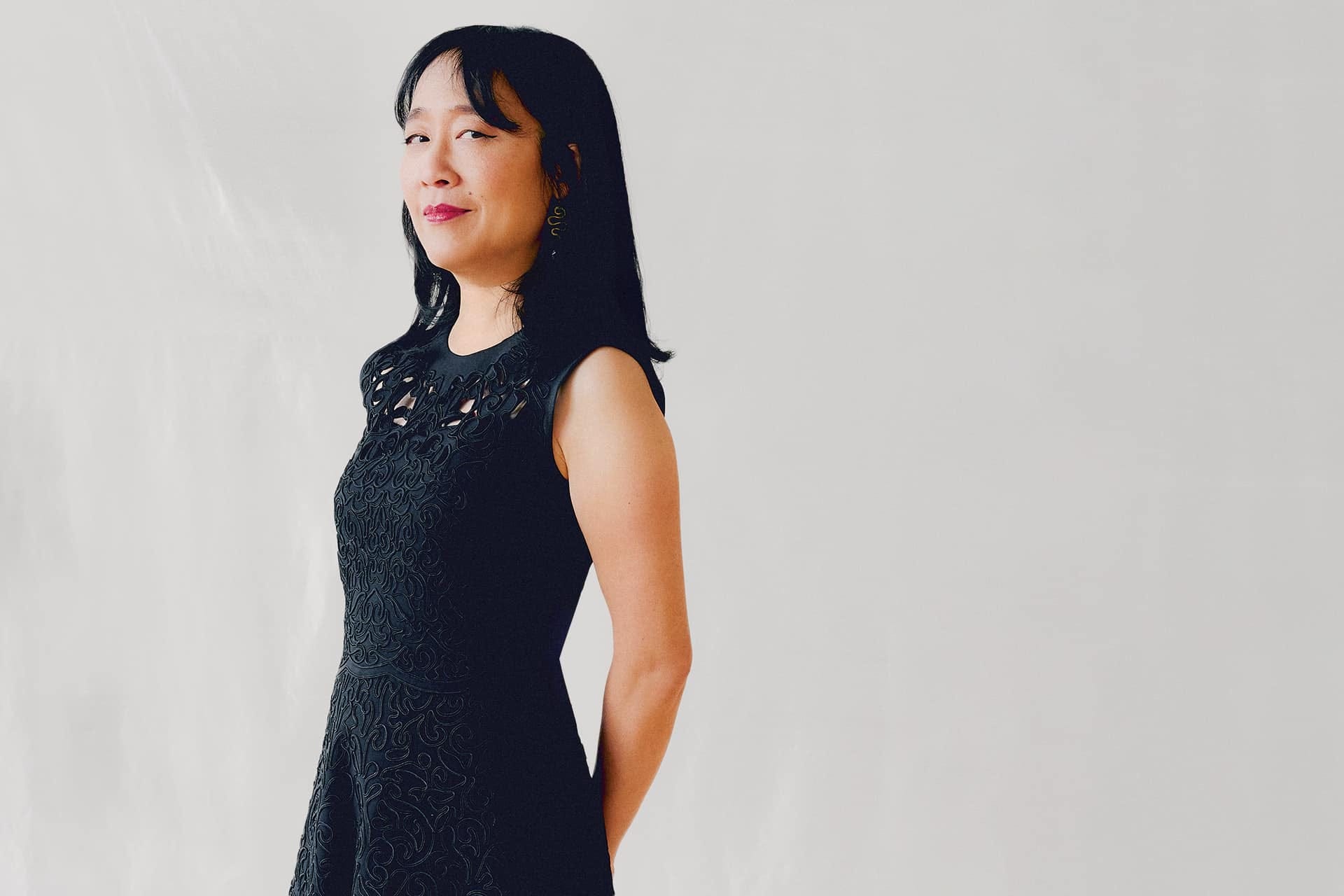
Raised as a classical pianist, Helen Sung received a crash course in jazz when she was chosen as one of the select young musicians in the prestigious Thelonious Monk Institute of Jazz program in 1995. Based at that time at the New England Conservatory in Boston, the Monk Institute brought in a succession of jazz masters to work with a small group of students from all over the world. It was through that program that Sung was introduced to the jazz community by a remarkable group of jazz elders, including Clark Terry, Wayne Shorter, Herbie Hancock, Kenny Barron, Jimmy Heath, Sir Roland Hanna and many others.
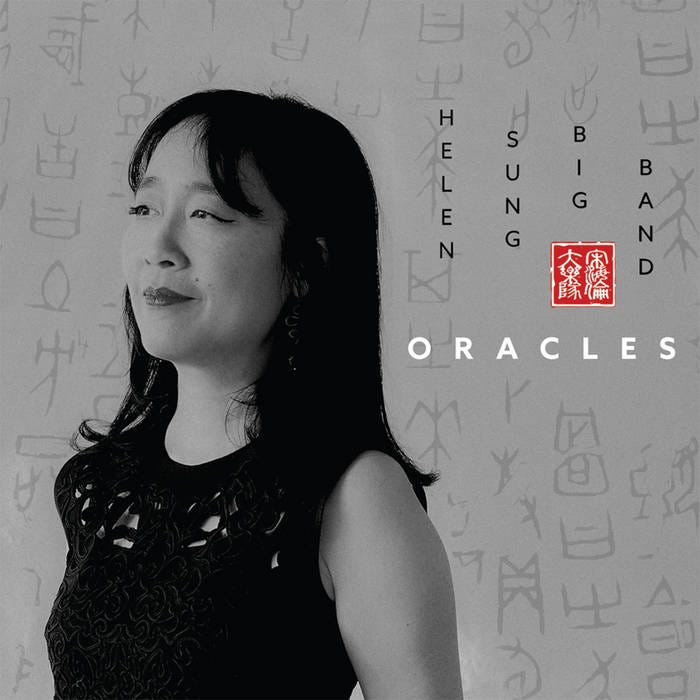
For her very first big band recording as a leader, Oracles, recently released on Sunnyside, Sung decided to celebrate the life and music of several of those storied mentors with original compositions (and arrangements) that endeavor to capture their unique life force. Sung leaned on her experience as a regular member of the Mingus Big Band since 2007, rather than any time with all those NYC-based big bands. “I studied Ellington and Basie and the big band tradition, but in terms of my own playing, it was really just the Mingus Big Band, who are a little bit different,” she explains. “There’s such a small group feel to it because he actually never had a big band during his lifetime.”
She also counts herself as an admirer of his work as a composer and arranger. “I was taken with how wide-ranging his output was in terms of different kinds of compositions,” Sung says. “I was not aware that he had such a strong classical influence in his playing. That was something he really incorporated into his music, especially with ‘Epitaph,’ with incredibly varied kinds of pieces. It’s amazing. He can write the most raucous, raw music and the most beautiful and tender melodies. ‘Sweet Sucker Dance’ is one of my favorite Mingus compositions. But I also admired his social activism and how his music spoke so powerfully to things like his very famous ‘Fables of Faubus’ and other compositions. I feel that people historically have looked to artists to express things that they didn’t feel comfortable sharing or didn’t feel like they were able to.”
In addition to the influence of Mingus and the big band, Sung leaned on her experience with the BMI Jazz Composers Workshop, in which she has been participating intermittently since 2014. “For me, the arranging was like trial and error, including taking elements of what I learned at that workshop,” she explains. “I really have to credit Alan Ferber, who is still one of the teachers there. He’s been so generous with his expertise and his incredible experience. Basically, I would show my scores to him and he would suggest this or that. He really made the charts much better. And he conducted the recording session, which was a godsend.” She also dipped her toes into the large ensemble milieu with an assignment to arrange a piece for the Jazz at Lincoln Center Orchestra, which was documented on their first Blue Engine recording, Handful of Keys.
For the aptly titled Oracles, Sung wrote a series of compositions inspired by her varied and colorful mentors, several of whom are gone now. “I think what really helped shape each piece was that I was thinking about the music of each artist, and how I felt about them and their music, not necessarily how they came to write that kind of music,” she says. “It was a very un-technical approach, very visceral and just a sound, human to human. Because one thing I realized as I do more and more of my own teaching, that with these jazz masters, their priority was not technical information, it was the sharing of their lives and the teaching flowed out of that.”
One of her earliest teachers was Clark Terry, who not only took Sung under his wing at the program, but continued that mentoring in the ensuing years. “Clark immediately came to mind, because he’s someone who really gave me a lot of opportunities after I graduated,” she explains. “He also made a huge impression at the Monk Institute, because he was the very first jazz master to come through.”
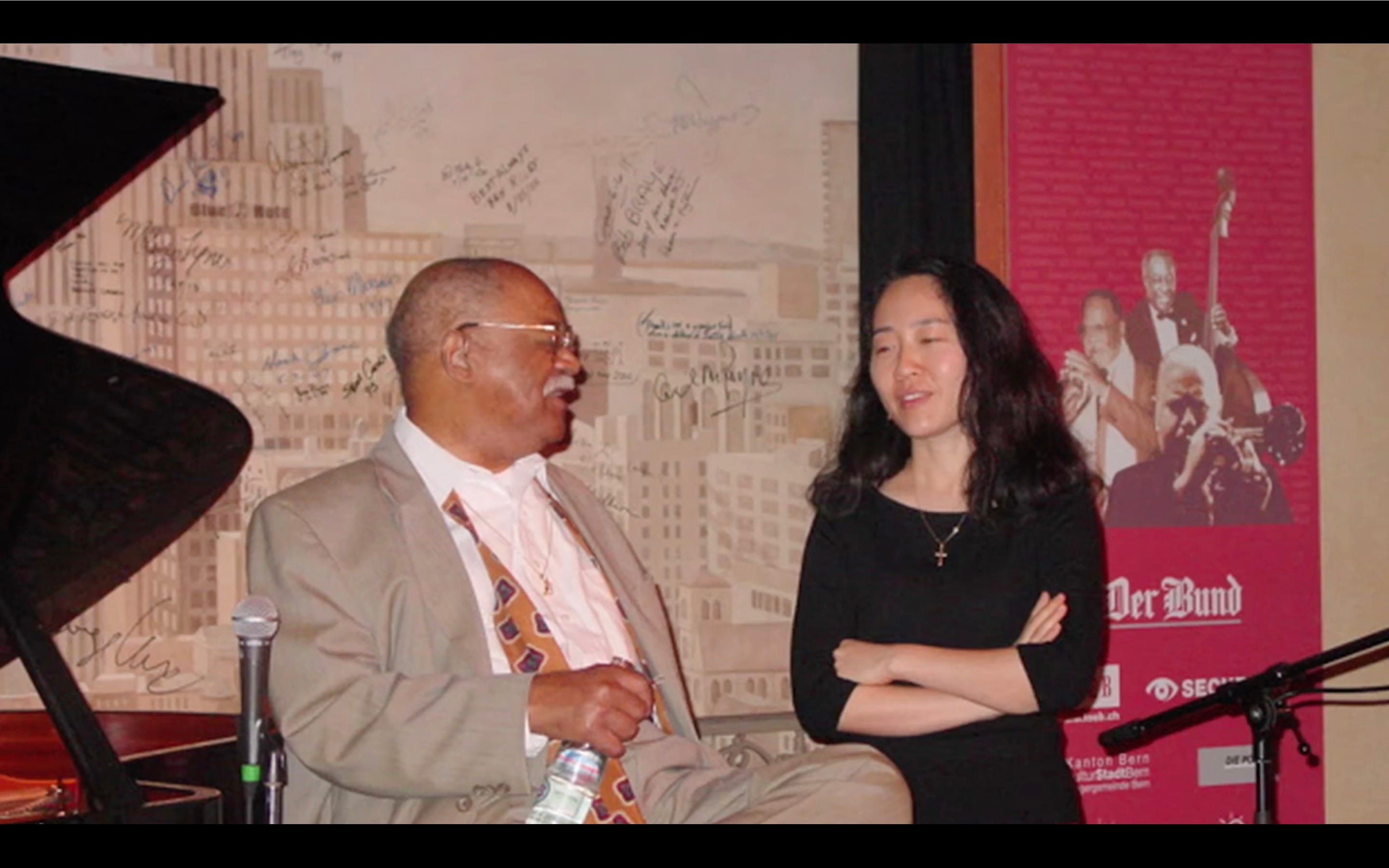
However, his impact included an early tough love incident that she’s never forgotten. “Picture a young Helen, fresh from Texas, having really played jazz for only about two to three years, and just completely new,” she recalls. “Clark gave me my first...well, let’s just say that it was equivalent to Papa Jo Jones throwing the cymbal at Charlie Parker. It was that kind of experience. Back then, artists would play like a week, wherever they were, at the jazz club in town. For the last set of such an engagement, Clark would invite local artists to come sit in. He had worked with us that week at NEC, and so he had us come down to the last set at Sculler’s, and we played two tunes. I remember I was terrified. I’d never been on a bandstand before, at least not like that. We played the first piece, a blues, which went reasonably well. Then he asked us, ‘Well, what should we end this whole week with?’ He had just been working on ‘Bye Bye Blackbird’ with us at school. Nobody said anything, so I was like, ‘Hey, what about “Bye Bye Blackbird”?’ When performing onstage Clark sat on a high stool, highly visible (and audible) to both the audience and the band, and as we played the tune I suddenly noticed that he’s yelling something. And I heard him yell to Dave Glasser, ‘Go get Don [Friedman], she’s playing the wrong changes!’
“I was horrified. I didn’t think I had lost my place in the tune. I seemed to be in sync with the band. Then Don came on stage, and stood next to me at the piano. And I wouldn’t get up. I wasn’t trying to be a jerk. It wasn’t even a conscious choice. I just kept playing. I think if I had gotten up, I probably wouldn’t have ever gotten back on the bandstand. So Don just stood next to me awkwardly for the whole rest of the piece. It was beyond embarrassing. At the time I wished that there was an elevator or a trap door on this stage, because I’d be down there, and running out. Clark never directly addressed it with me (I still had like a private lesson with him the next day), and I was too scared to ask. When I did have the lesson, I was waiting for him to tear into me. But he just said, ‘Well, I think you guys all played beautifully last night. And I looked at him like, ‘Really?’” Lesson learned - I had to figure it out, and I did (hint: it had to do with comping!).
Despite that somewhat rocky beginning, Sung would go on to work with Terry and study with him for the rest of his life. She used all that time with Terry when she composed “Positively C.T.” to honor his life and legacy. “I learned all about his perseverance not just in his early life, but also later when he had so many health issues,” she explains. “I wanted to capture his incredible sense of swing, his bluesy swagger, and the joy that permeated everything he did. I wrote a blues for him, of course, just trying to capture that incredible spirit.”
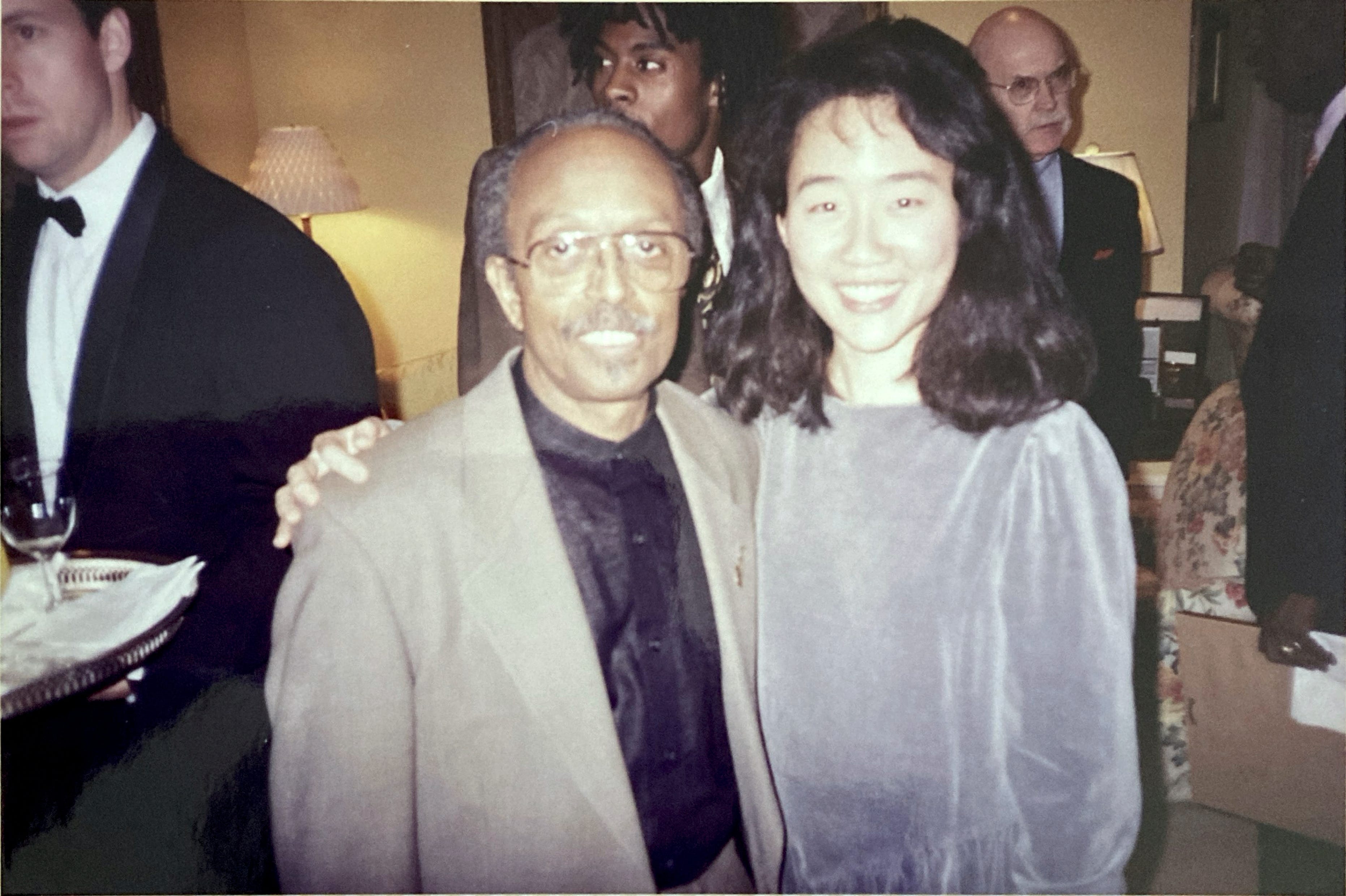
The inimitable Jimmy Heath provided the inspiration for “A Little Bird Watchin’” on Oracles. “I feel like Jimmy was an incredible player, and just as incredible educator, like the way I’d hear him play and the way he strutted on stage,” she says. “I was trying to evoke the way Jimmy would move his shoulders up and down with the melody that I wrote for him.”
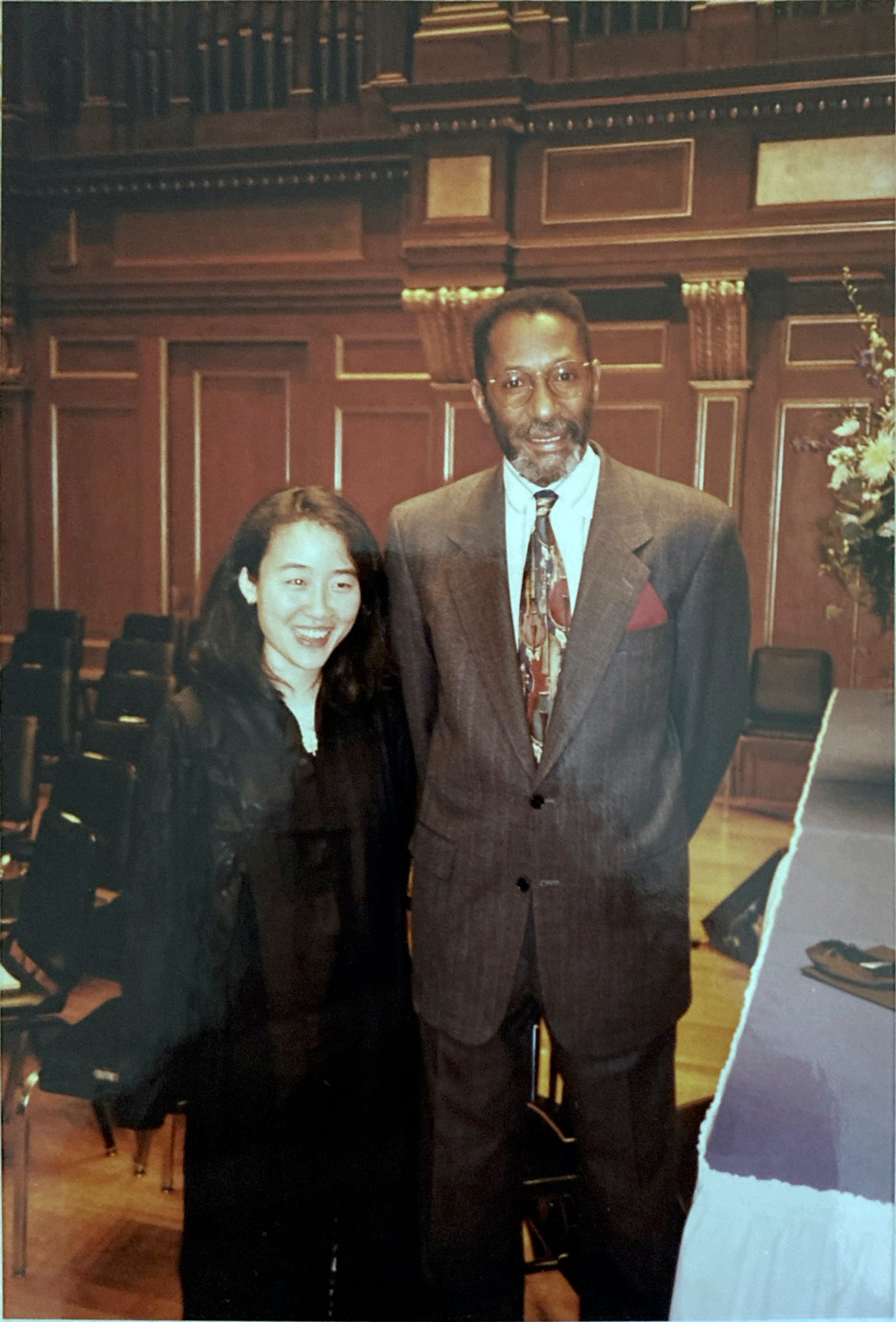
Bassist Ron Carter is another elder who provided a life-changing message to Sung during her early years. “At the beginning, when he came on and became the artistic director in the middle of the first year, he said to us, ‘If you want to find your voice in this music, you have to write your own music,’” she says. “That was just revolutionary to me, because, as a classical pianist, I always thought, ‘Well, what can I write like the great masters?’ Every time he came through, we’d have to have a new piece ready for him, and it was very rigorous for almost two years to have to do something. I really am grateful, because I feel like today I enjoy writing almost as much as performing. Just seeing him do a solo bass concert as a young student in jazz, with such a comprehensive mastery of his instrument had an impact. Given how he incorporated elements of classical and Brazilian, I felt like that was two big areas that he really liked. In ‘Mr. Virtuoso,’ I tried to incorporate his story of wanting to be a classical cellist, and I also tried to bring in the sound of an orchestra at the beginning.”
She knows she should probably not say it, but Wayne Shorter was her favorite source of inspiration. “I feel like I’ve so immersed myself in Wayne’s music such that it probably affects most everything I write harmonically,” she explains. “Also, getting to do some playing with him, I was really struck by his childlike openness and curiosity to the world, and his playfulness. He would write these incredible melodies. On Atlantis, the piece ‘When You Dream’ with a kids choir singing, he writes this melody that just keeps cycling. And he keeps changing the chords underneath it, so he illuminates different parts. To me it’s like a gem that is rotating, and you see different facets of it as the light hits it. I wrote ‘Wayne’s World’ like a dance between the piano and the soprano saxophone that John Ellis plays.”
Given the creative breadth of pianists who mentored her, Sung found it hard to write one composition to encapsulate their influence on her. It was Sir Roland Hanna who offered her the key to paying tribute to her keyboard teachers, including Barry Harris, Kenny Barron and Herbie Hancock. “Sir Roland was one of the pianists who came through that program,” she recalls. “He told me, ‘Don’t forget your classical background…that’s an important part of who you are.’ At that time, I was so consumed with learning how to comp. As I’ve gotten to know his work more, I saw how special he was. He would play the most incredible intros as part of that early Jazz at Lincoln Center band. That’s how I came up with the idea. I thought, ‘Oh, let me just do a piano concerto.’ I wrote an exposition at the top, which I feel like is his spirit, and it comes back at the very end, transformed after this journey.”
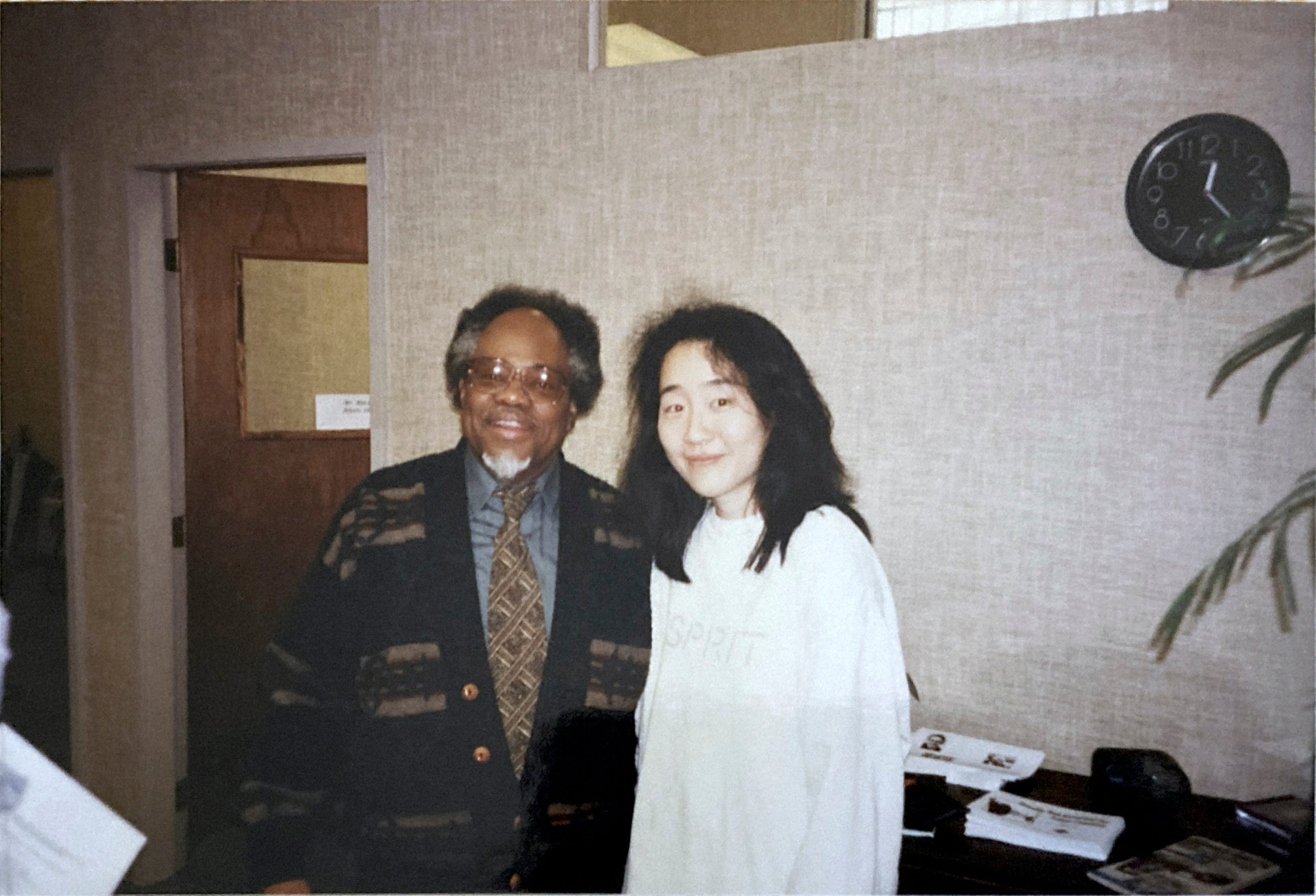
With each movement of the “Pianism” concerto, she tried to evoke the unique qualities of the corresponding elder. “Kenny Barron has written some gorgeous melodies, and it’s his elegance that I wanted to capture,” she says. “I was trying to capture some of Herbie’s funkiness, and his transcendent artistry though I don’t know if you can embrace it all in one fell swoop.”
The album ends with a beautiful arrangement of Horace Silver’s classic composition “Peace.” In part because the Monk Institute was originally based at NEC in Boston, Sung never got to meet the LA-based pianist, who died in 2014. However, she later delved into his music when Jazz at Lincoln Center tapped her to arrange material for a weekend of Silver’s music for a big band. “Somehow, I squeezed out a bunch of arrangements of his stuff,” she says. “One of them was ‘Peace.’ I really modeled it after Mingus’s arrangement of his piece, ‘Self-Portrait in Three Colors.’ This project was birthed in my mind during the pandemic. The world has been in such turmoil. I always like to include some sort of coda in my recordings, and this was my hope for our world in these fraught times. I feel like it’s heightened more now when I play in different places where I know there are people who are politically different. Music still brings people together. It always will find its way around barriers and hostilities, at least for that moment. That’s my hope for our world, because there’s just so much going wrong now. That track was like baby steps of my protest song, let’s put it that way. I’m very proud of the arrangement, too. I just thought it was a really nice way to end the album.”
“It was so much work,” Sung says of her 10th recording as a leader. “I tell people that this was my first and last big piano work.” Understandable, but that seems unlikely given her gifts as a composer and arranger. In liner notes for the album, no less than Wynton Marsalis was effusive in his praise of Sung’s talents. “Helen Sung is a shining example of the heroic journey to self-realization through the art of jazz, and this recording clearly demonstrates the power of this music to nourish and transform as it is itself also enriched and transfigured,” he wrote. “As a soloist, arranger, composer and bandleader, she has developed an expansive vocabulary that encompasses the richness, virtuosity, freedom and humanity that defines the best jazz.”
As challenging as recording a big band may be, performing live with one is even greater, because of the economics and the difficulty of keeping regular personnel. However, Sung has found a bit of a work-around by bringing the music to schools and organizations with big bands, who can perform the work under her direction. “I’ve gotten really good at whipping big bands into shape in one way or another,” she explains. “I recently went to Texas, where I had a hybrid band. I did it with the Pittsburgh Jazz Orchestra. I hope to do it down in DC with the Bohemian Caverns Jazz Orchestra. But if I win the lotto, you will see my big band on the road.”
Sung says that she feels so fortunate to have caught the tail end of an era that included so many legendary figures in the music. “It inspires me to keep pushing, searching, and growing,” she explains. “As a musician, and as a part of the human community, that’s how I honor the tradition. I feel like I was entrusted with something. Jimmy said to me, ‘Helen, we want you guys to really understand, love and know the tradition, but what we want is for each of you to carry this music forward in the way that only you can.’ And thinking inside my head, I was like, ‘Oh my god, there’s too much pressure.’ But to him, I was just like, ‘Okay, yes, Mr. Heath.’ As I get older and look back, I hope there will be something meaningful in what I do, because I never plan to retire. I want to keep making music till the end, and hopefully I’ll see that I left a mark.”
The ‘Mergner He Wrote’ logo is by Nan Parati, the Queen of Music Festival Signs. For a custom sign of your own, contact her at Nan@nanparati.com
No posts
Comments
Nothing yet. Say the first thing.
Sign in to join the conversation.