
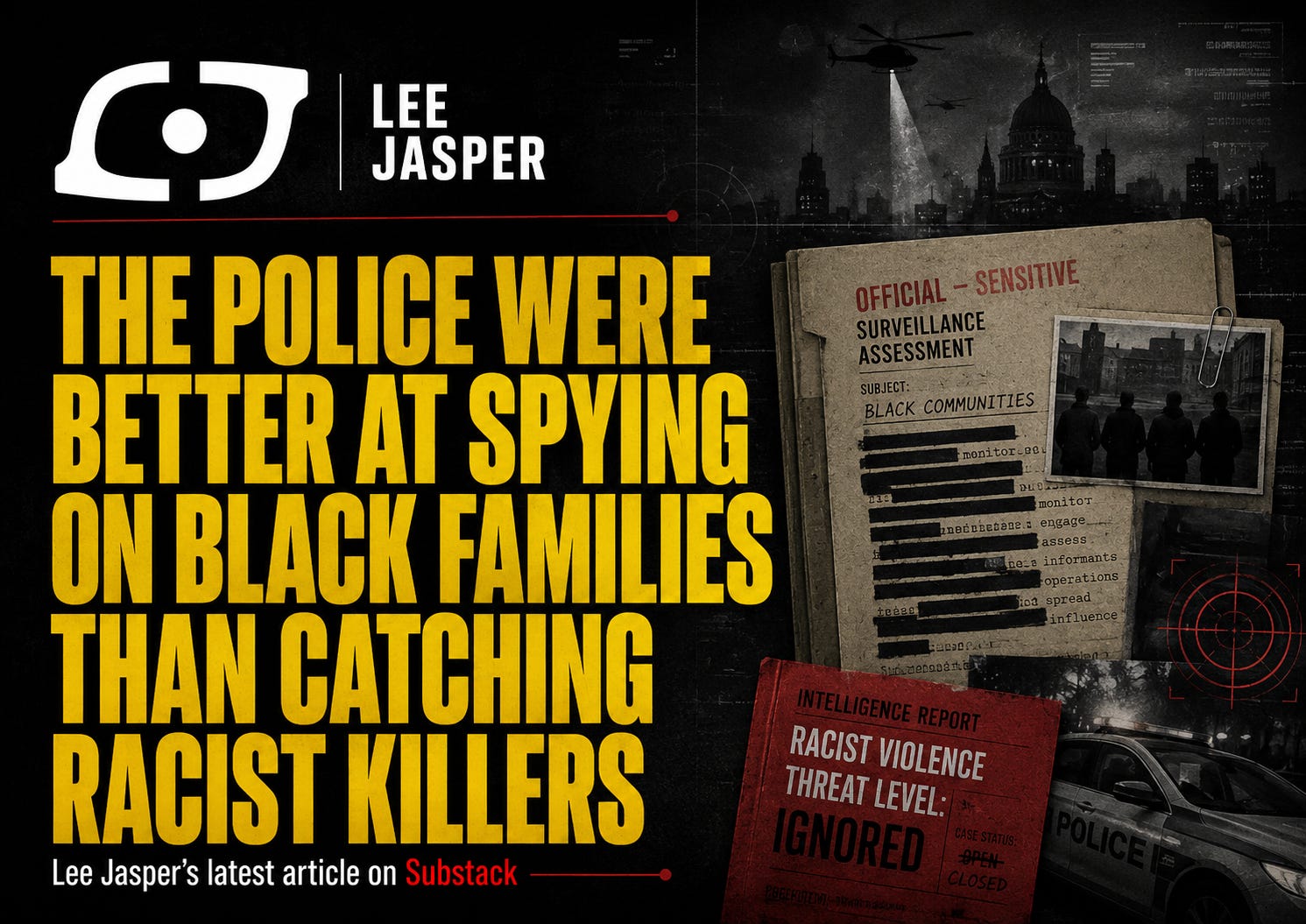
Tell us something we don’t know.
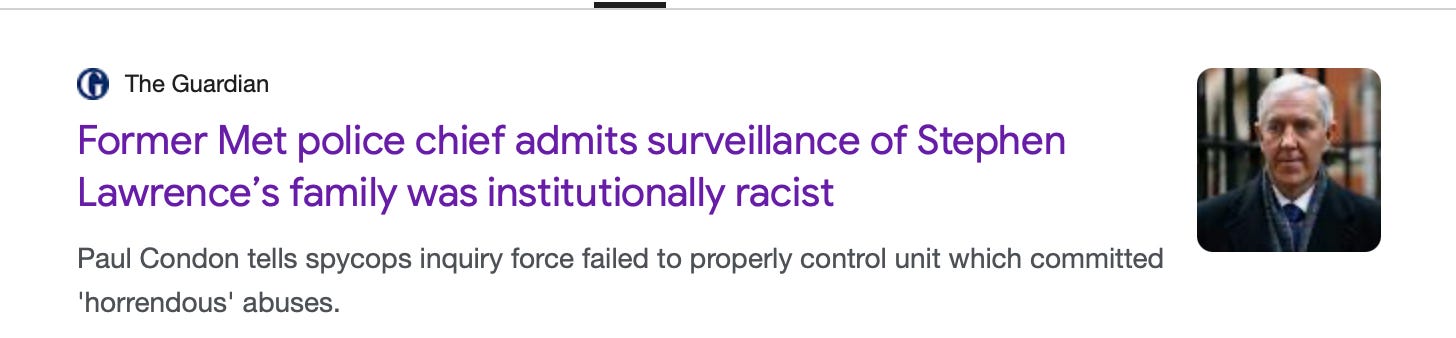
The Metropolitan Police was racist then, and it is racist now. Black communities did not need former Met Comissioner Sir Paul Condon, almost forty years too late, to tell us that the covert surveillance of the Stephen Lawrence family was institutionally racist. Appearing at the Spy Cops Inqury last week saw Condon offer his apologies to the Lawrence family and the British Black community.
We knew it because we lived it: through deaths in police custody, racist murders, fabricated charges, planted drugs, political surveillance and the relentless criminalisation of those who organised for justice.
Condon’s apology does not reveal the truth. It confirms how long the truth can be denied when the institution accused of racism controls the evidence, the process and the timetable of accountability. A day late and a dollar short does not begin to describe it. What use is an apology delivered after retirement, after decades of denial and after so many of those who demanded justice have died waiting for it?
This week, the former Metropolitan Police Commissioner accepted that the covert surveillance of the Lawrence family amounted to institutional racism. He said he was appalled by what had emerged about the conduct of undercover officers and expressed regret for the harm caused. At the same time, he maintained that he had neither known about, authorised nor acquiesced in the abuses taking place beneath him. That is the familiar defence of senior authority: responsibility without knowledge, leadership without accountability and regret without consequence.
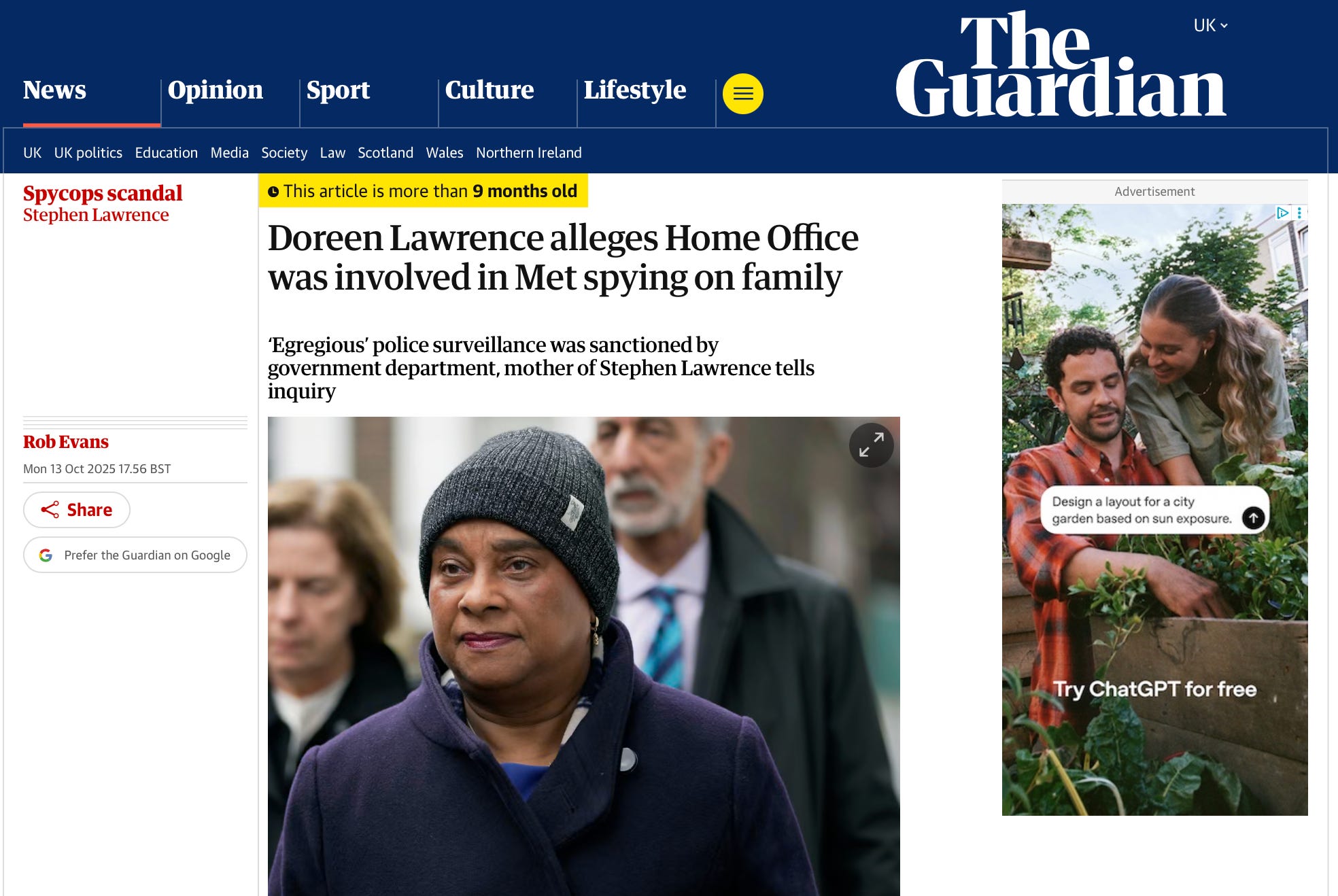
The Lawrence family were not protected from the racist violence that took Stephen’s life. They were not served by a competent, determined and properly led murder investigation. Yet while they fought for justice, the police found the capacity to gather intelligence on their campaign and report on their private grief. That inversion remains one of the most chilling expressions of institutional racism in modern British history. The state failed to pursue racist killers with the required determination, but found the resources to monitor the bereaved family demanding that it do so.
Condon’s admission arrives not as an act of courageous leadership but as history finally cornering a man who resisted the truth when he possessed the power to act upon it.
When the Undercover Policing Inquiry was announced, I seriously considered becoming an active participant and pursuing my own claim. Throughout the 1980s and 1990s I was involved in campaigns arising from deaths in police custody, racist murders and the criminalisation of Black political organisation. I was also a spokesperson for the radical and enigmatic National Black Caucus. We knew we were being watched. We did not need the state to confirm that reality. We saw how information travelled, how officers appeared around campaigns and demonstrations, and how the police treated bereaved families and their supporters not simply as citizens demanding justice, but as potential threats to public order and police legitimacy.
My calculation was that I did not want to surrender the next decade of my life to a public inquiry dominated by procedural delay, secret evidence, anonymity applications and the institutional presumption that police interests should be protected more vigorously than the rights of those they had targeted. I feared that the inquiry would become another elaborate mechanism through which the British state appeared to investigate itself while exhausting those who had already suffered the original injustice. More than a decade later, that judgement does not look fanciful.
My subsequent conversations with my dear friends Richard and the late Audrey Adams only reinforced that view. Their son, Rolan Adams, was just fifteen when he was brutally murdered in a racist attack. Richard and Audrey spent years fighting for justice and challenging the wider culture in which racist violence was minimised, tolerated or inadequately investigated. They also sought answers about the surveillance of justice campaigns and the families at their centre. Their experience of the inquiry was brutal and tortuous. They encountered continuing barriers to disclosure, unanswered questions and a process whose scales appeared consistently tipped in favour of police anonymity.
That experience reveals the moral inversion at the heart of the inquiry itself.
Those whose grief, campaigns and private lives were secretly recorded have been required to fight for fragments of information about what was done to them. The institutions and officers responsible have too often begun with the advantage of secrecy. Victims have had to prove their entitlement to the truth. The state begins from the assumption that the truth may need to be withheld. An inquiry established to expose secret policing risks becoming another layer of secrecy. A process intended to deliver accountability risks burying responsibility beneath procedure. Many of those affected have grown old while waiting. Others have died.
It is in this context that Paul Condon now asks us to accept his apology.
For those of us who knew his policing in West London, this is not an abstract argument about command structures at Scotland Yard. I knew Condon, and he knew me. I was a rising activist learning the meaning of community power at the Mangrove while he was the senior police commander responsible for an area in which Black communities were confronting repeated allegations of assault, fabricated charges, planted drugs and racially hostile policing.
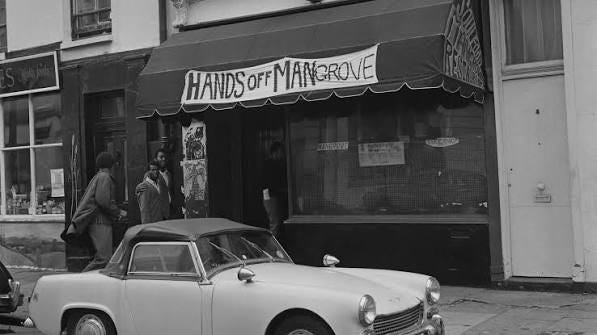
Condon hated us at the Mangrove, and the feeling was mutual. We did not hate him as a private individual. We hated what he represented: an aggressive policing culture that regarded independent Black organisation as a challenge to police authority and treated those confronting injustice as the problem. From where we stood, he presided over a rat’s nest of Metropolitan Police corruption and racial hostility in Notting Hill. That is my judgement, based not on retrospective speculation but on direct political experience.
The so-called Black Watch operated within that environment. Black young people repeatedly alleged that they had been assaulted, had drugs planted on them and were then prosecuted on fabricated evidence. The significance of those allegations was not simply that individual officers might have behaved improperly. It was that a territorial policing culture appeared capable of generating the same complaints repeatedly while protecting itself against meaningful accountability.
The later operation against the Mangrove emerged from that culture. In 1988, officers under Condon’s West London command mounted the massive raid that led to the arrest and prosecution of Frank Crichlow and eleven others. Frank was one of the most committed anti-drugs community leaders in West London. The Mangrove supported people living with addiction and the devastation drugs inflicted upon Black communities. Yet the police attempted to portray him as a major supplier of heroin and cannabis.
Thirty-six police officers gave evidence against Frank. The defence exposed profound problems in the prosecution case, including photographic evidence that raised the gravest questions about how drugs alleged to have been found on the premises had appeared. Frank spent five weeks in custody and was then prevented by his bail conditions from returning to the Mangrove for more than a year. He and the eleven others arrested with him were ultimately acquitted in separate trials. Frank later received damages from the Metropolitan Police for false imprisonment, battery and malicious prosecution. Our considered view then, and mine today, was that this was not simply a failed prosecution. It was a politically driven attempt to fit Frank up and destroy the Mangrove.
Condon’s rise to the Commissionership did not mark a break with that politics. It nationalised it.
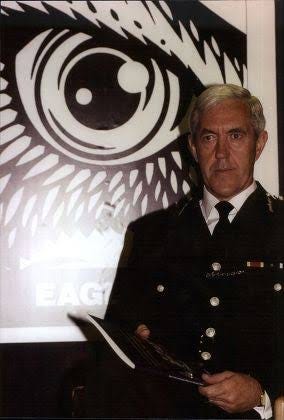
In 1995, he launched Operation Eagle Eye, a high-profile Metropolitan Police campaign against street robbery. Before its launch, he wrote to prominent Black individuals and organisations asserting that an overwhelming proportion of London street robberies were committed by young Black men. His intervention placed the figure of the Black male mugger at the centre of London’s policing debate. It prepared the public for intensified police activity disproportionately directed at Black youth and reinforced a political narrative in which an entire generation became presumptively criminal.
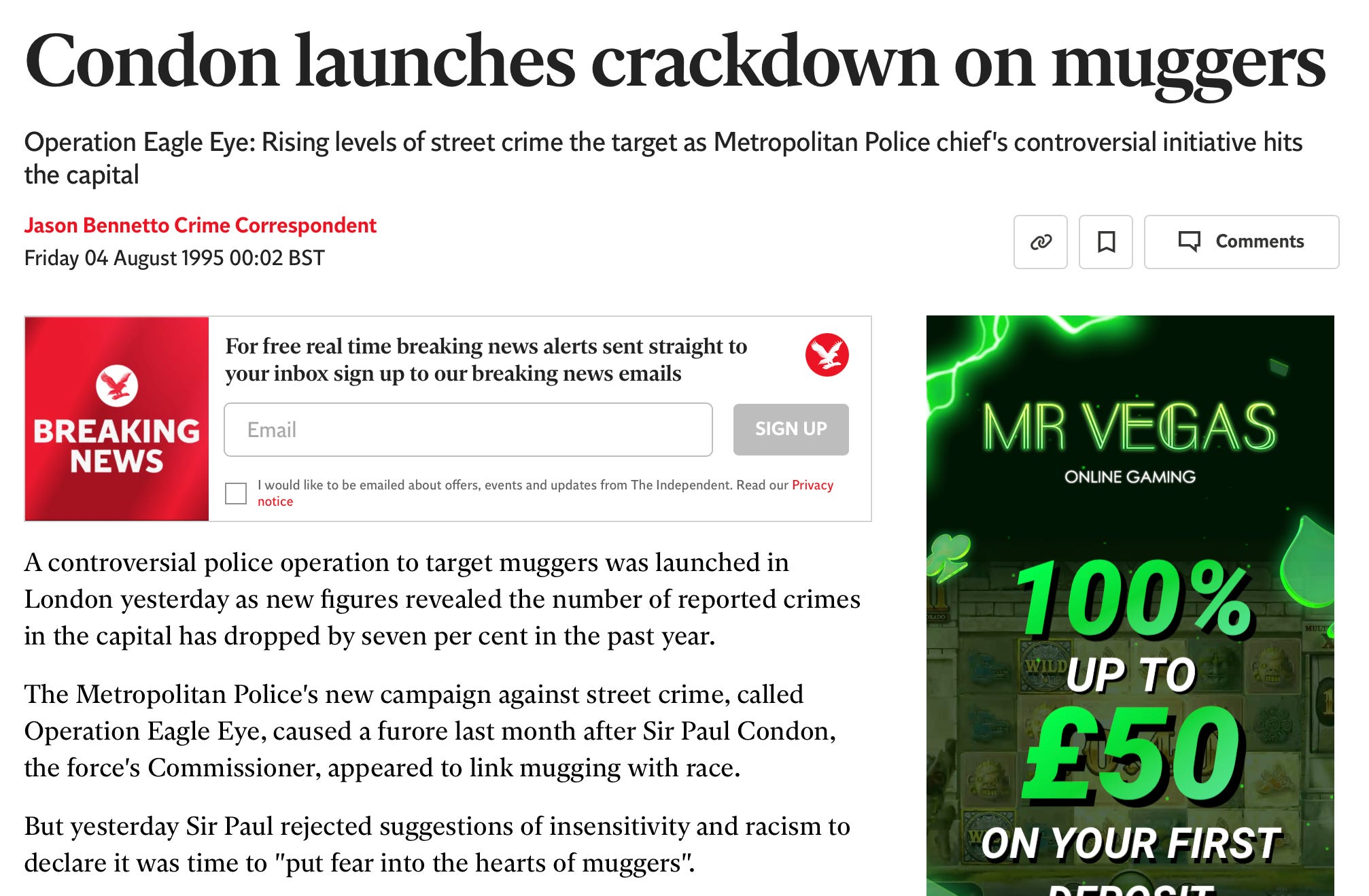
Operation Eagle Eye was not merely an operational response to robbery. It was an act of racialised political communication. Condon mobilised the coercive authority of the state around the figure of the Black suspect.
Our answer was Operation Black Vote. Operation Black Vote emerged in the political shadow of Eagle Eye and from the accumulated experience of deaths in custody, racist violence, over-policing and political neglect. Where Condon sought to place Black communities under intensified police scrutiny, we turned the lens around. We set out to organise Black citizens to scrutinise politicians, public institutions and the state. Condon launched Operation Eagle Eye to police Black people. We launched Operation Black Vote to make political power answerable to Black people.
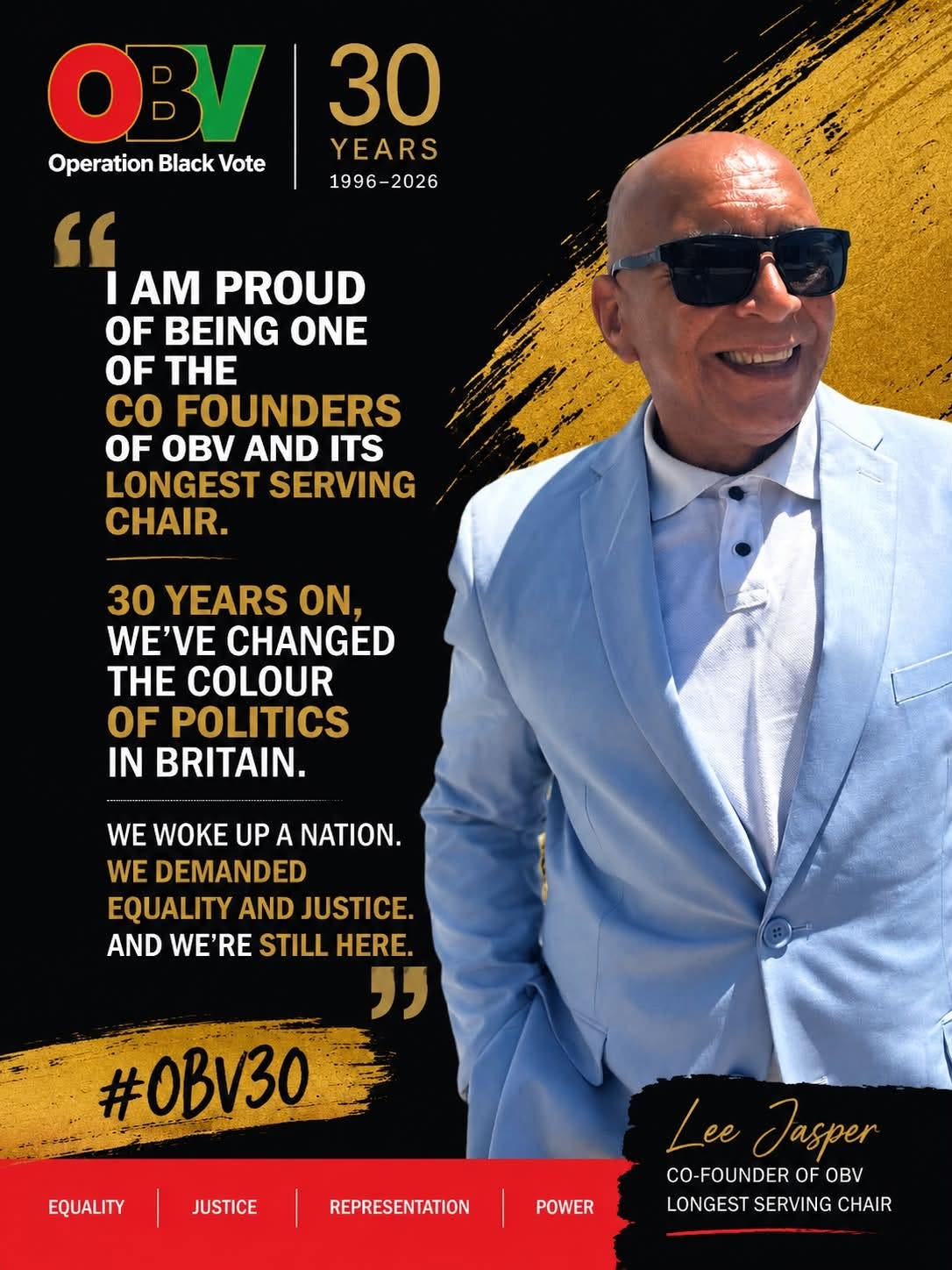
That was not simply a clever inversion of a name. It expressed a deeper political strategy. The Mangrove had taught us that grievance without organisation could be ignored, contained or criminalised. We needed to translate anger into durable democratic power.
Nor did Condon’s hostility to Black protest end there. On 12 December 1996, it was Condon who authorised the police attack on our demonstration. I remember that day clearly. It was not some regrettable operational misunderstanding. It belonged to the same policing mentality that treated Black anger, Black grief and Black political organisation less as legitimate democratic expression than as a threat to be contained and, if necessary, suppressed by force.
That is why I cannot treat his latest apology as some late flowering of insight. It comes from a man whose career repeatedly intersected with the criminalisation of Black dissent, the policing of Black protest and the surveillance of Black struggle.
Thirty years on, the contrast remains instructive. Condon’s Metropolitan Police invited Britain to view Black people through the eye of suspicion. Operation Black Vote invited Black Britain to recognise itself as an electoral and democratic force.
Condon was, in my judgement, the most ideologically right-wing Metropolitan Police Commissioner of the modern era. Mark Rowley comes closest today. The comparison is not based on personality. It arises from a shared institutional instinct: to concede individual misconduct and even systemic failure while resisting the language that locates racism in the policies, cultures and operating assumptions of the institution itself.
Condon followed that pattern when the Macpherson Inquiry confronted the Met’s failure in the Stephen Lawrence case. The institution could apologise for errors, incompetence and the misconduct of particular officers, but resisted the conclusion that racism was reproduced through its collective structures, professional norms and institutional defensiveness. Rowley follows the same path now: willing to accept racism in the abstract, unwilling to accept the institutional description that gives the problem its proper weight.
Now, when the political and professional cost to him is minimal, Condon adopts the language he once resisted. That is why his apology strikes me as insincere. Sincerity is not measured only by the emotion with which an apology is delivered. It is measured by when the truth was acknowledged, what power the speaker possessed, what action followed and what personal or institutional cost they were prepared to bear.
Condon possessed enormous power. He could have acknowledged the institutional character of racism when the Lawrence family and Black communities demanded that recognition. He could have confronted the history of covert surveillance, racialised policing and institutional defensiveness while occupying the office capable of ordering reform. He did not.
An apology made decades later, after retirement and after the evidential record has become overwhelming, cannot substitute for the leadership that was absent when it mattered. The cost was borne elsewhere: by Doreen and Neville Lawrence; by Richard and Audrey Adams; by families whose loved ones died in police custody; by the women deceived into intimate relationships with undercover officers; by campaigners whose organisations and private lives were infiltrated; by those whose criminal trials may have been contaminated by failures of disclosure; and by movements forced to organise while knowing that the state was listening.
The Undercover Policing Inquiry has exposed officers using the identities of dead children, deceiving women into long-term relationships, lying to courts and infiltrating lawful political organisations. Yet the inquiry itself risks reproducing the culture it was created to investigate: secrecy for the state, delay for those harmed and accountability postponed until it has lost much of its political force.
Condon’s apology should not therefore be received as a moment of redemption. It should be treated as further evidence of how long powerful institutions can resist the truth, isolate their critics and delay accountability until admission becomes almost cost-free.
The truth did not come into existence because Paul Condon finally named it. The Lawrence family knew it. The Mangrove knew it. The families of those who died in custody knew it. Black justice campaigns knew it. The women deceived by undercover officers knew it. Those of us organising through the National Black Caucus knew it. We lived the reality Condon now describes from the safety of retirement.
So tell us something we do not know. Tell us who authorised the surveillance. Tell us who received the intelligence. Tell us which prosecutions were contaminated, which families were monitored and which officers were protected. Tell us why the police were able to investigate those demanding justice more effectively than they investigated racist killers. Tell us why officers could lie, deceive, infiltrate and destroy lives while senior leadership remained apparently innocent of knowledge and consequence.
We already know the Metropolitan Police was racist then. We know it is racist now. What remains missing is not acknowledgement, but accountability.
An apology forty years too late is not justice. It is a confession without consequence.
Paul Condon is a day late and a dollar short. Black communities did not need his permission to know the truth. What we needed was accountability when he possessed the power to deliver it.
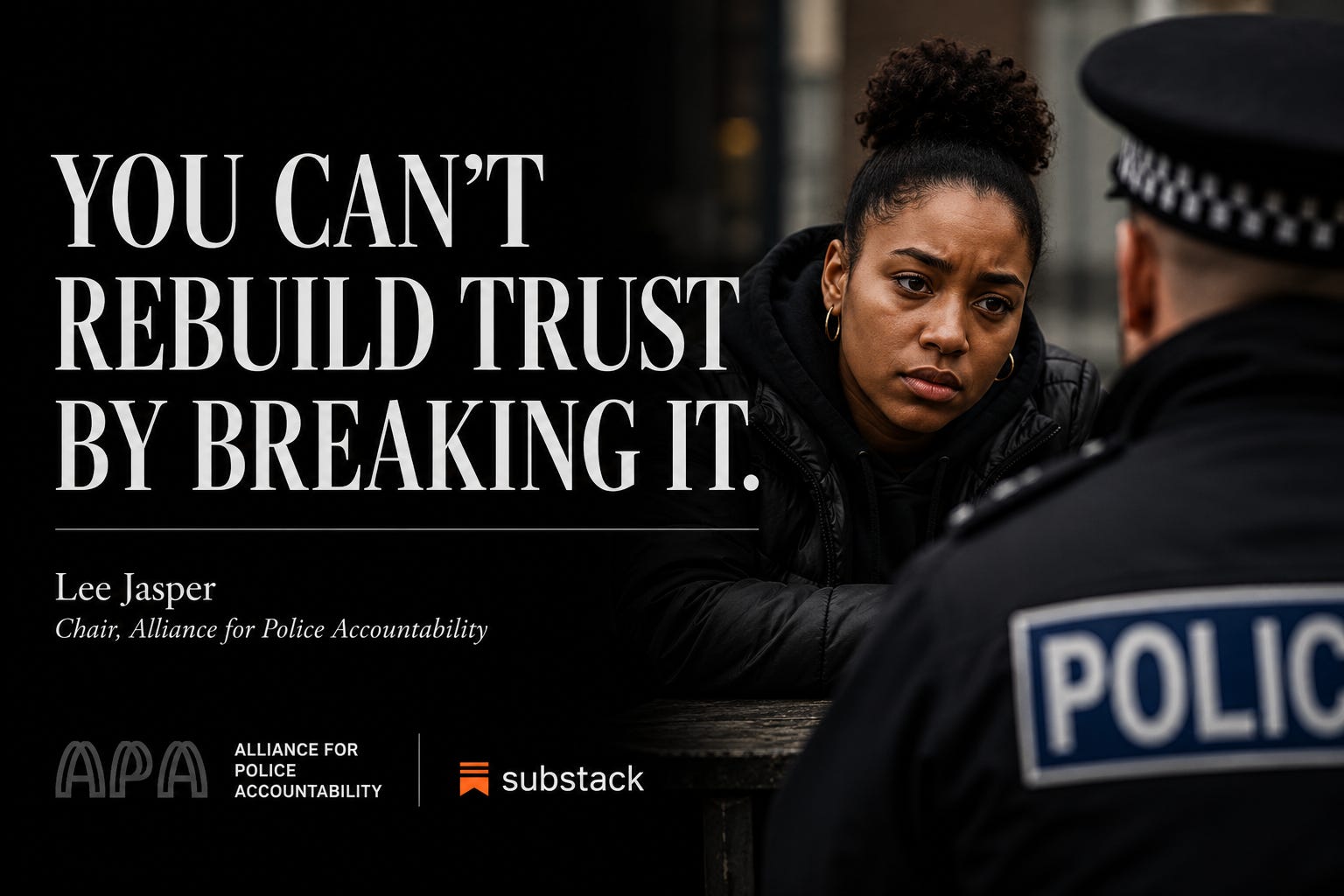
NB: Four years after the launch of the National Police Chiefs Council Race Action Plan, a plan that was eventually co-produced with Black communities has collapsed. As a result the dee[;y fractured relationship between Police and UK Black communities is close to collapse. My latest Substack article below can be read right here.
No posts
Comments
Nothing yet. Say the first thing.
Sign in to join the conversation.