
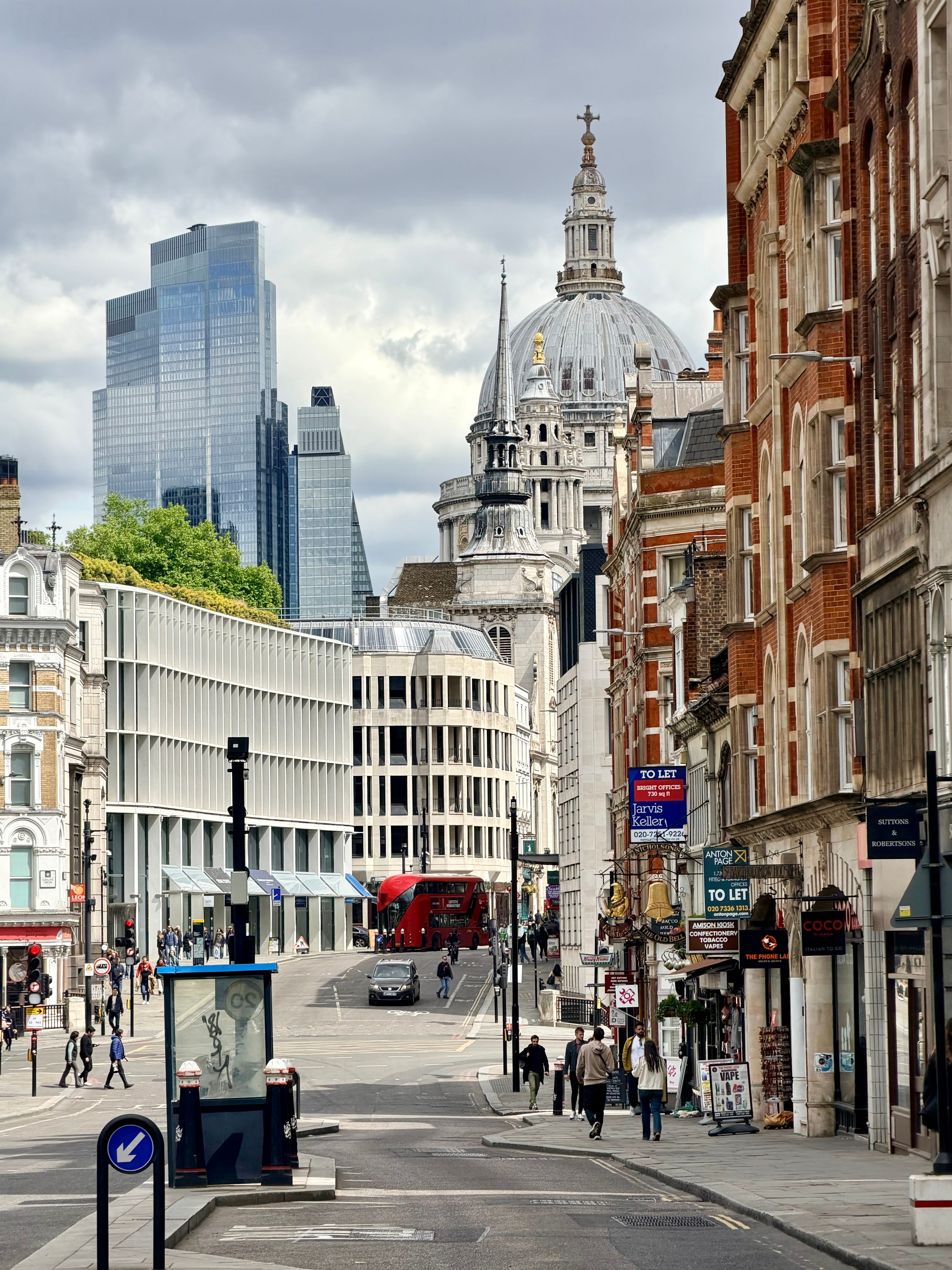
Bear with me while I showcase my research skills here, but this historic background is important for today’s walk through the old streets of the City of London. When most people say “London,” they usually mean the modern metropolis of nine million people, 32 boroughs, and roughly 600 square miles. But there is also a mini London inside the bigger London, a tiny enclave just over a square mile with its own mayor, its own police force, and a 2,000-year-old origin story. This is the City of London, known to the locals as the “Square Mile.”
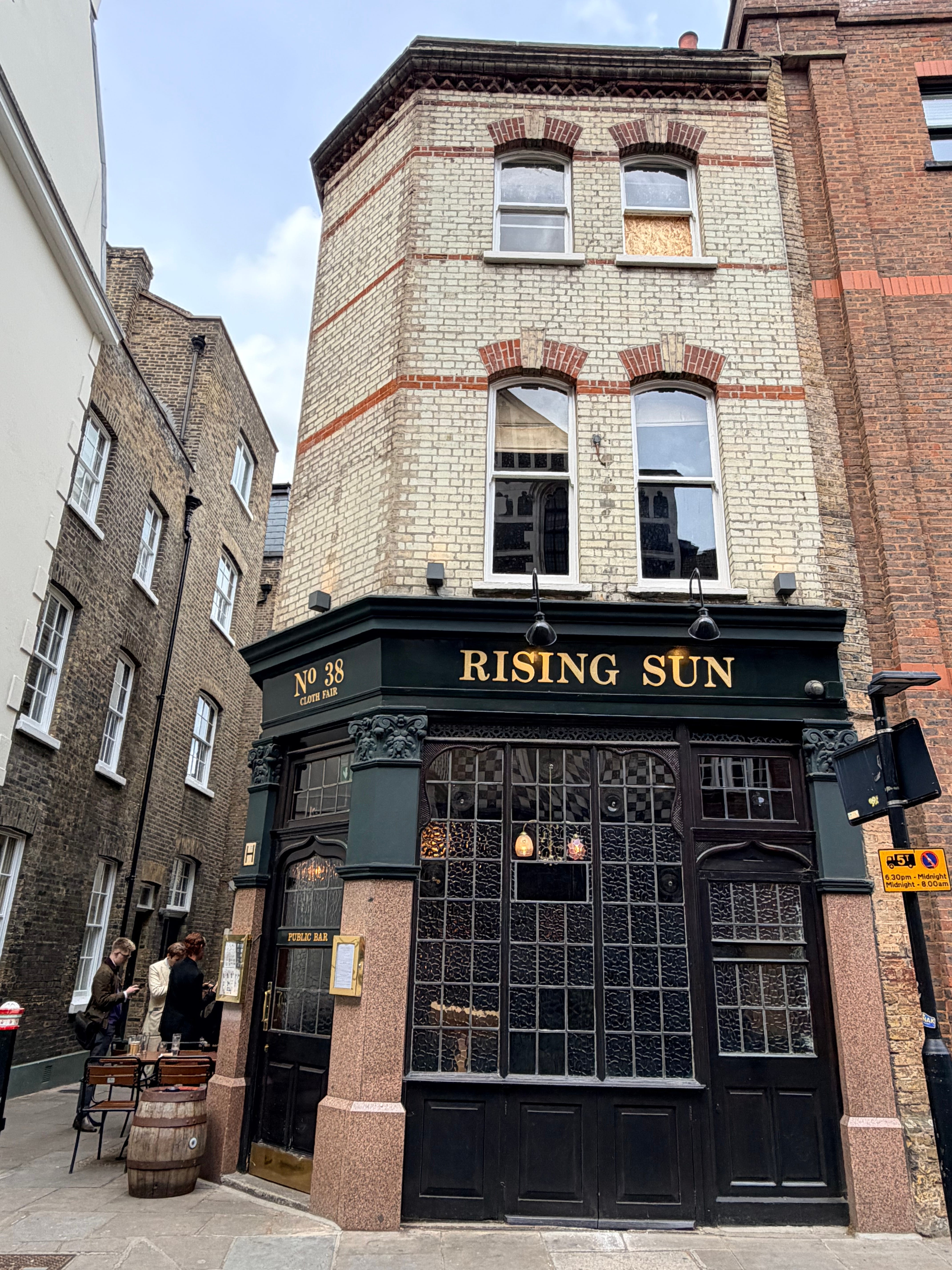
The modern city of London actually began as Londinium, founded by the Romans around AD 47-50 on the north bank of the Thames. Some time between 190 and 225, the Romans built a defensive wall around the landward side of the city. When the Romans left in the fifth century, the walls remained. And for the next thousand years, the area inside those walls was referred to simply as London. Until recent centuries, places such as Westminster or Southwark would have been considered distinct from London, the name for the Square Mile within the old Roman walls.
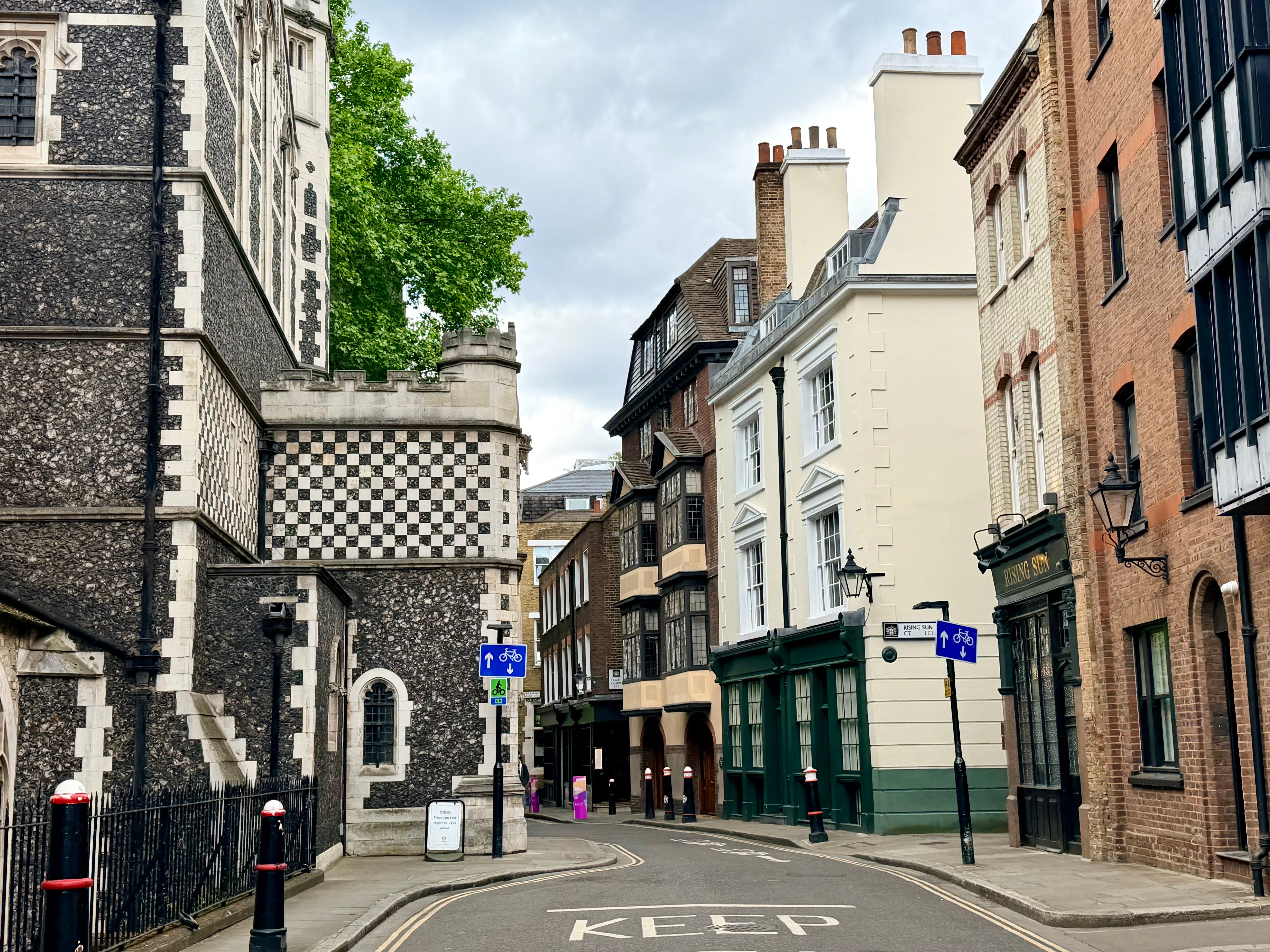
A note on the walk: Seven stops, all within about a mile of each other, taking you from the City's oldest church to its oldest house, through a Victorian memorial to ordinary heroism, past the ruined shell of one Wren church and around the most famous of them, past the home of the man who lived there with his beloved cat and defined the English language, and ending with a pint where Dickens used to write. Allow three to four hours for the basics, or make a full day of it if you want to visit St Paul's. I did this walk on a Sunday afternoon and most of the places I visited were empty of usual London crowds (besides St Pauls, of course, which is always a popular spot).
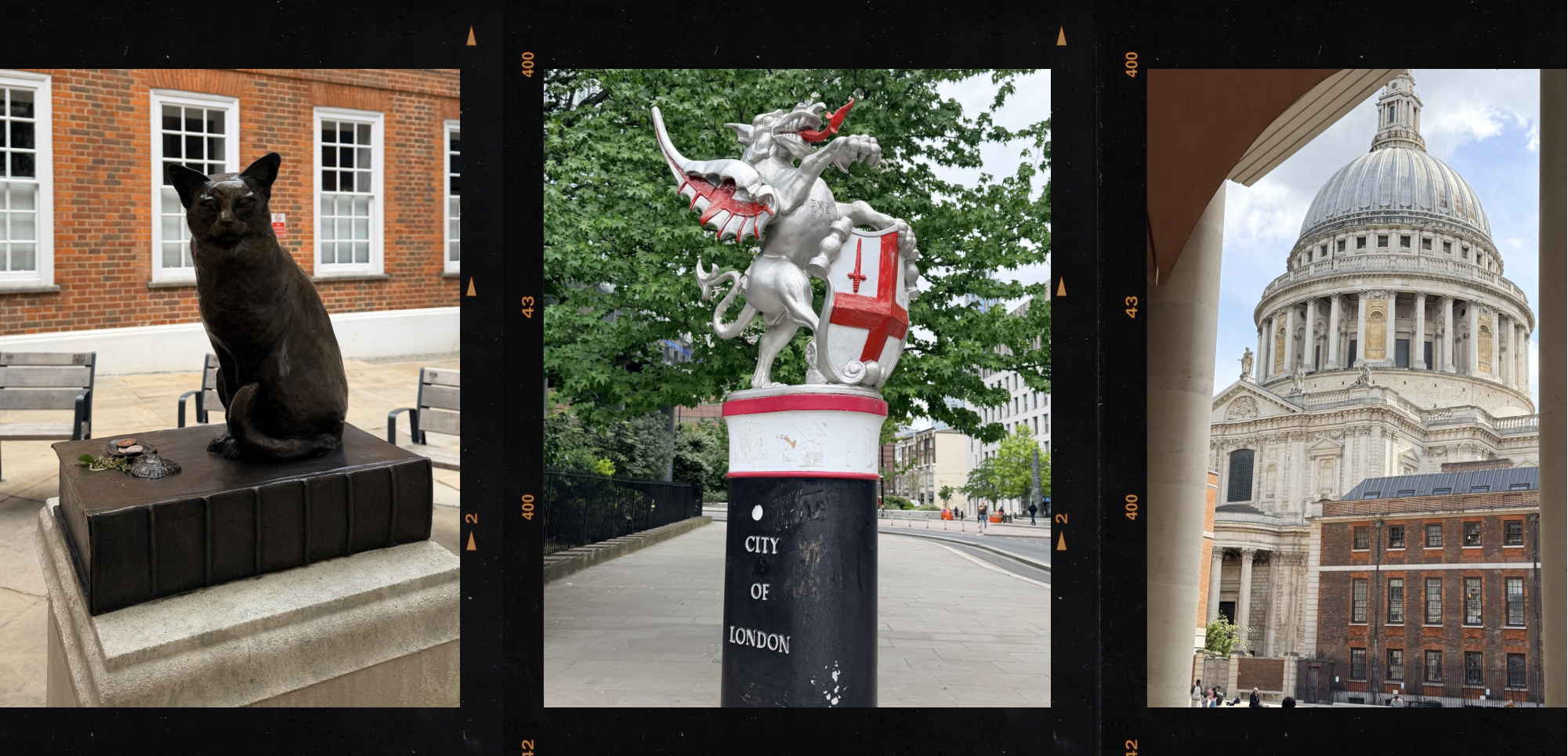
St Bartholomew the Great
Let’s begin our walk in Smithfield, where London’s meat market has stood since the twelfth century. Tucked just off West Smithfield is St Bartholomew the Great, the City’s oldest surviving parish church. St Bartholomew’s was founded in 1123 by Rahere, supposedly a jester at the court of Henry I. The story goes that Rahere fell ill with malarial fever on a pilgrimage to Rome, vowed to build a hospital if he recovered, and on the journey home had a vision of St Bartholomew telling him to find a spot in Smithfield. He kept the vow. The hospital next door is still operating on the same site nine hundred years later, making it the oldest in Britain.
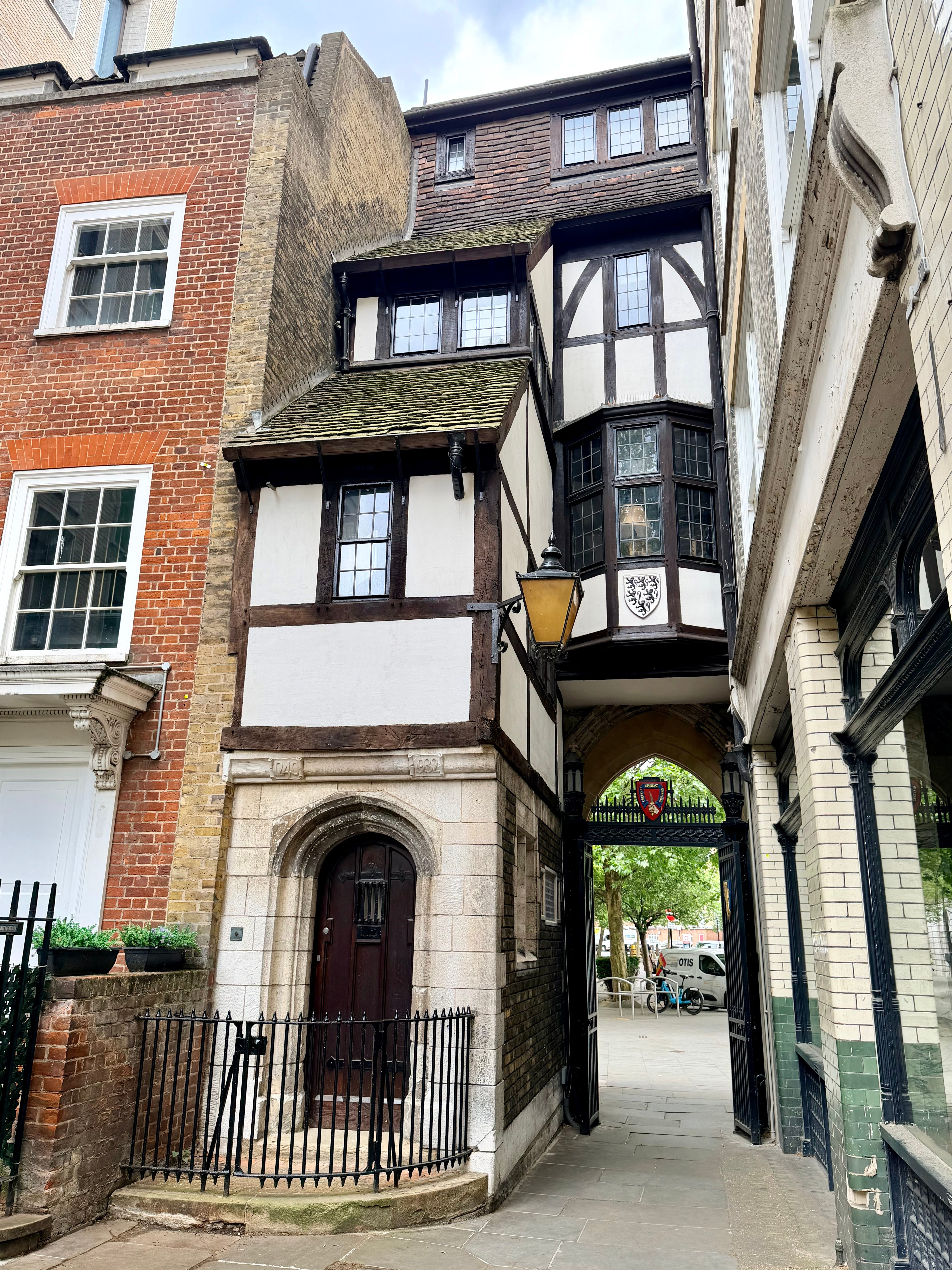
Two stories worth knowing before you go in. First, Rahere’s painted tomb. In 1866, Victorian workmen opened the back to check which way he was facing (priests are traditionally buried facing west, opposite their congregation). One of them helped himself to Rahere’s foot as a souvenir, still wearing its medieval sandal. The sandal was eventually returned. The foot was never found, however. Every July 1st at 7am (not sure why this date in particular), Rahere’s ghost is said to hobble around the Lady Chapel looking for it. Second, that same Lady Chapel was rented out as a printing shop in 1725, and an 18-year-old apprentice from Philadelphia named Benjamin Franklin took his first London job there, setting type by hand. He had crossed the Atlantic on Christmas Eve 1724 to learn from the best printers in the English-speaking world, and he later wrote that this London apprenticeship shaped him decisively.
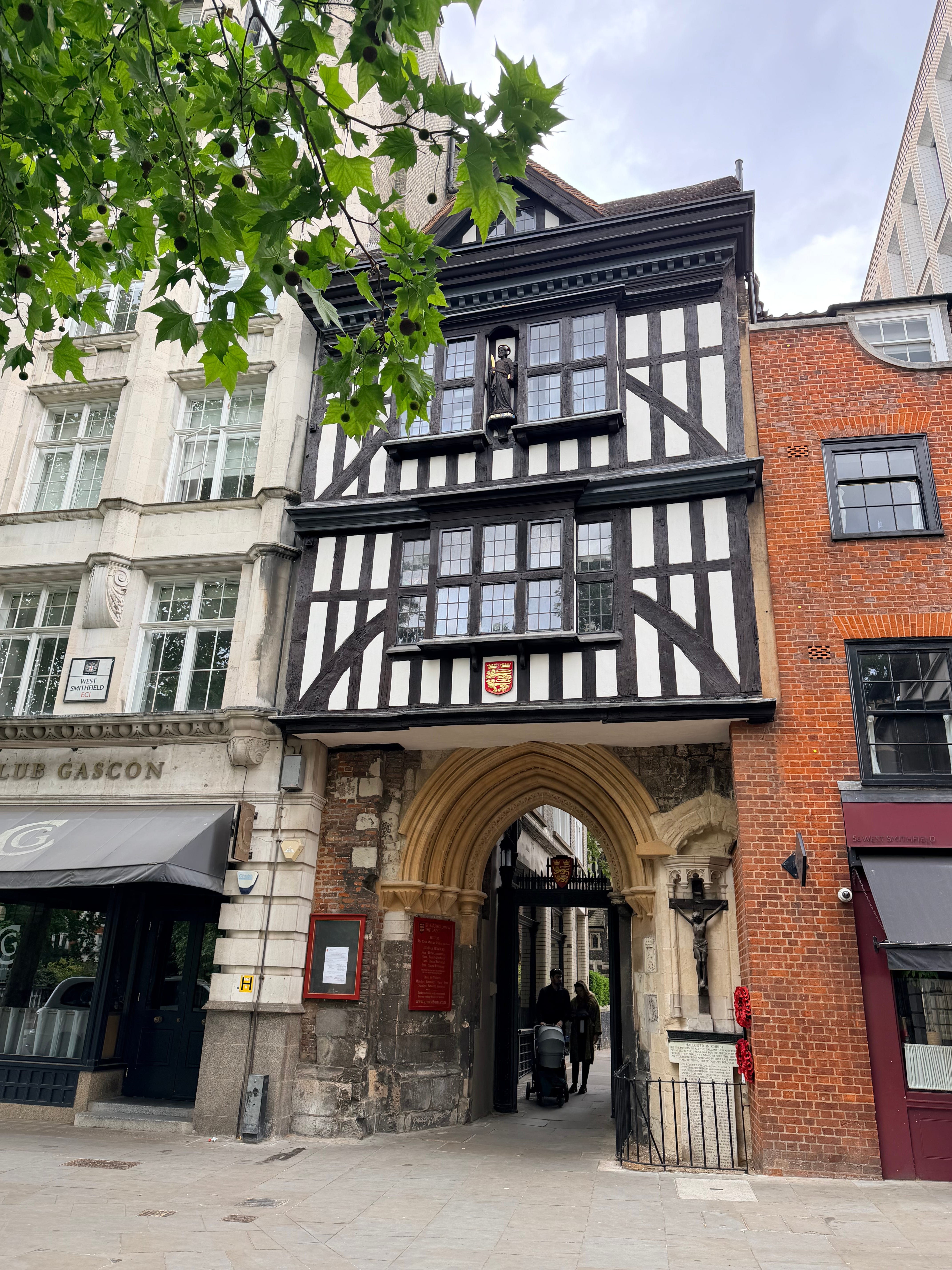
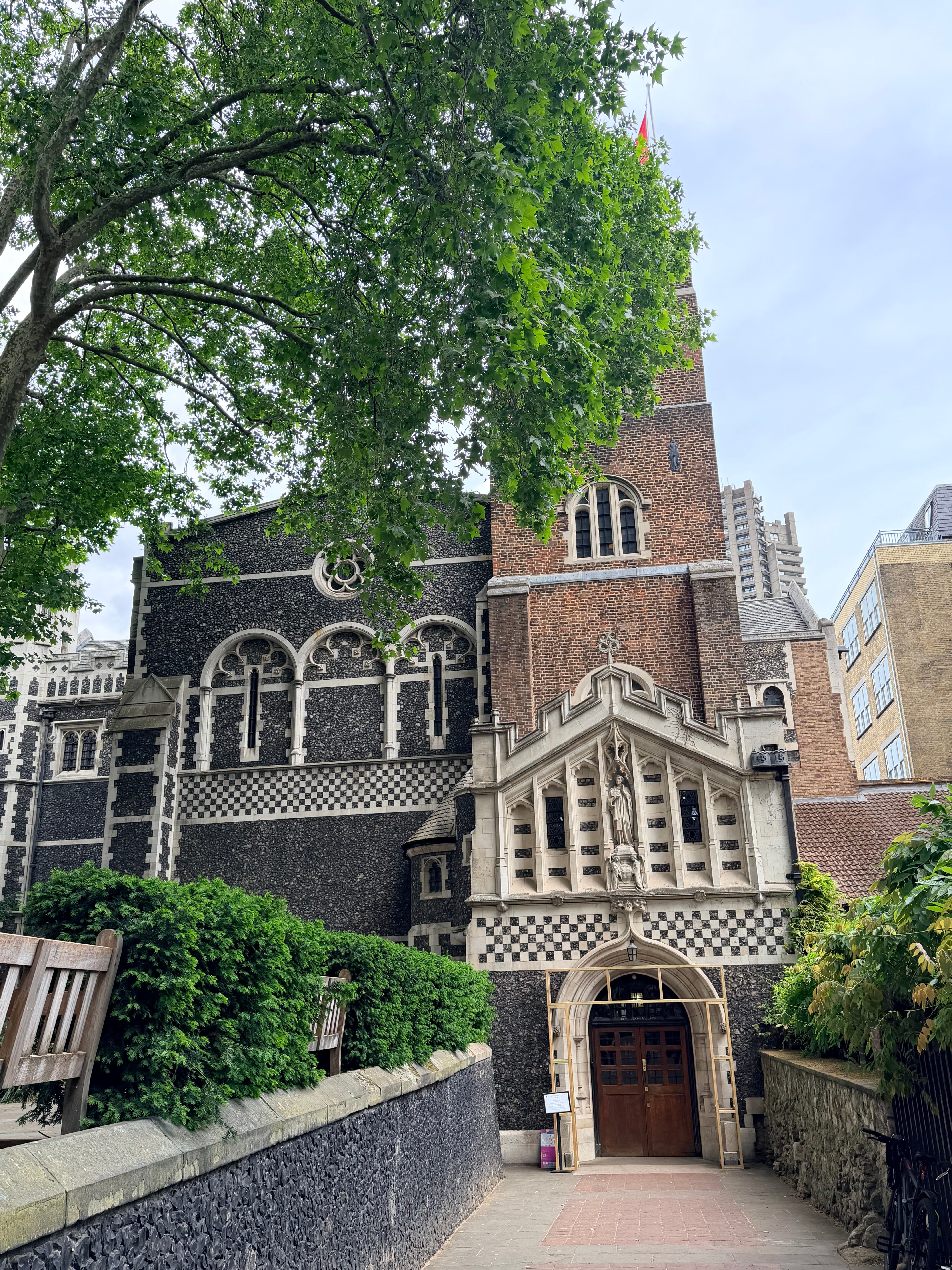
St. Bartholomew’s is unique among City of London churches in having survived the Great Fire of 1666 and the Blitz. If it looks familiar, that’s because it has often been used as a film location: Four Weddings and a Funeral, Robin Hood: Prince of Thieves, Shakespeare in Love, The Other Boleyn Girl, Elizabeth: The Golden Age, and Sherlock Holmes. I especially love the quiet courtyard with benches to enjoy your lunch or just reflect.
41-42 Cloth Fair: The Oldest House in the City
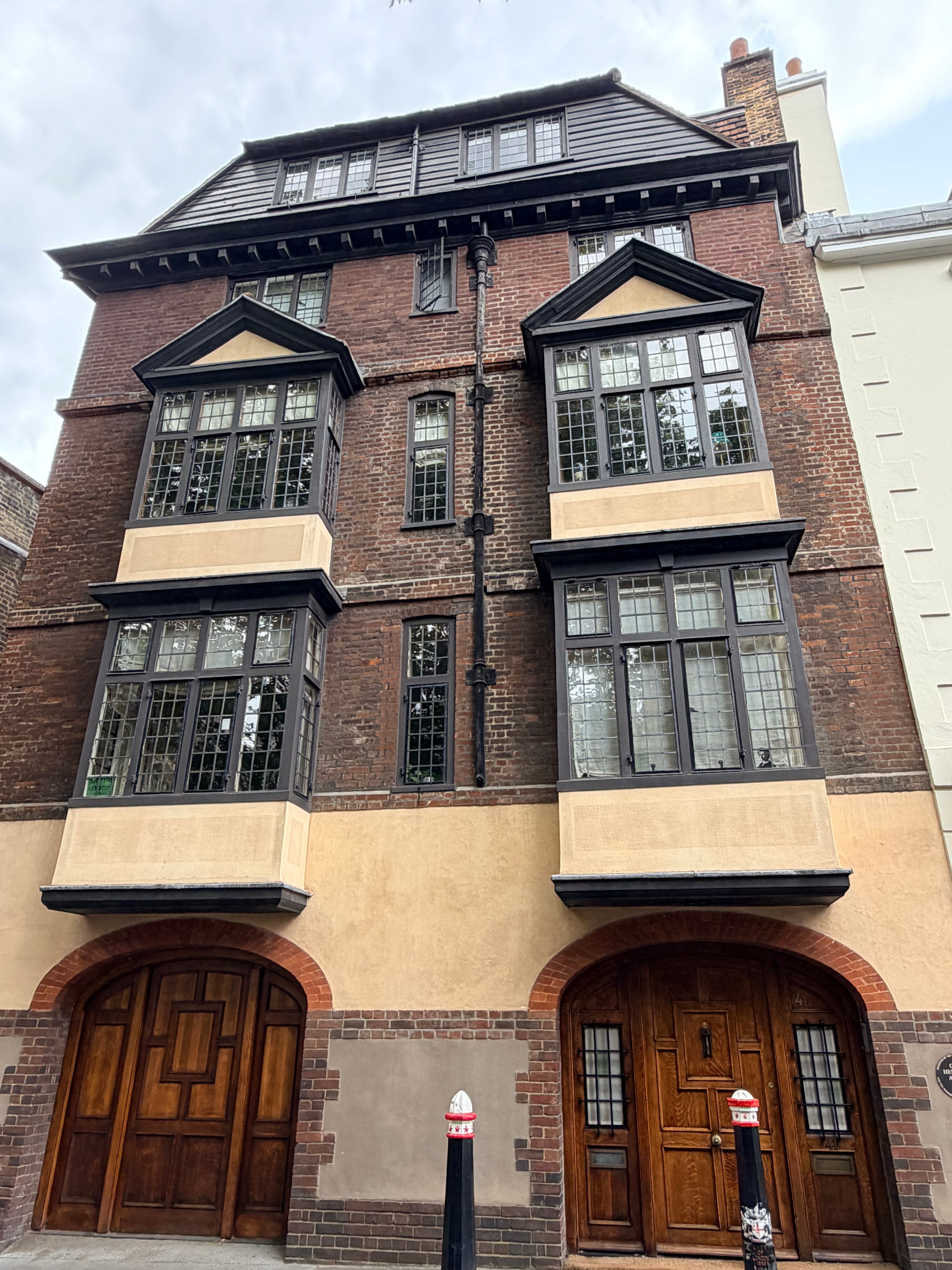
Step out of the church into the small courtyard and look across. Right there, in a quiet row of brick and timber, is what is generally agreed to be the oldest residential dwelling in the City of London. Built between 1597 and 1614, this is the only house in the City of London to have survived the Great Fire of London in 1666.
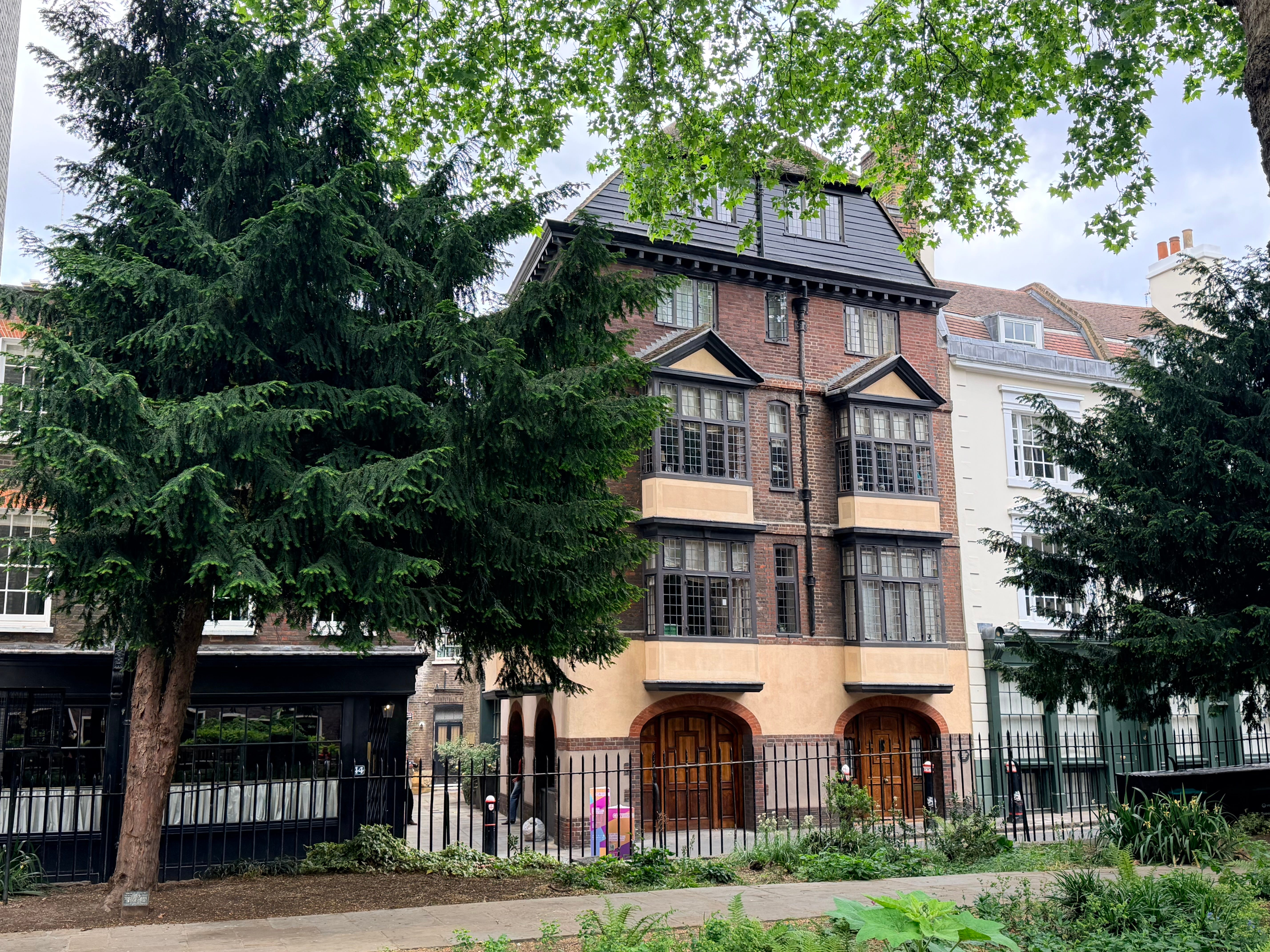
The house was due to be demolished in a slum clearance scheme in the early 20th century, but thankfully it was saved by two architects called Paul Paget and John Seely. The pair bought the Cloth Fair house for £3,000 in 1930 and it became their office and home. Paget and Seely went on to become one of the leading architectural firms of the interwar period. They allegedly had twin baths in the bathroom, so that they could chat with each other while bathing - so fun!
It’s a private home, so you can’t go inside, but you can admire from the sidewalk or from the church courtyard across the street.
Postman’s Park
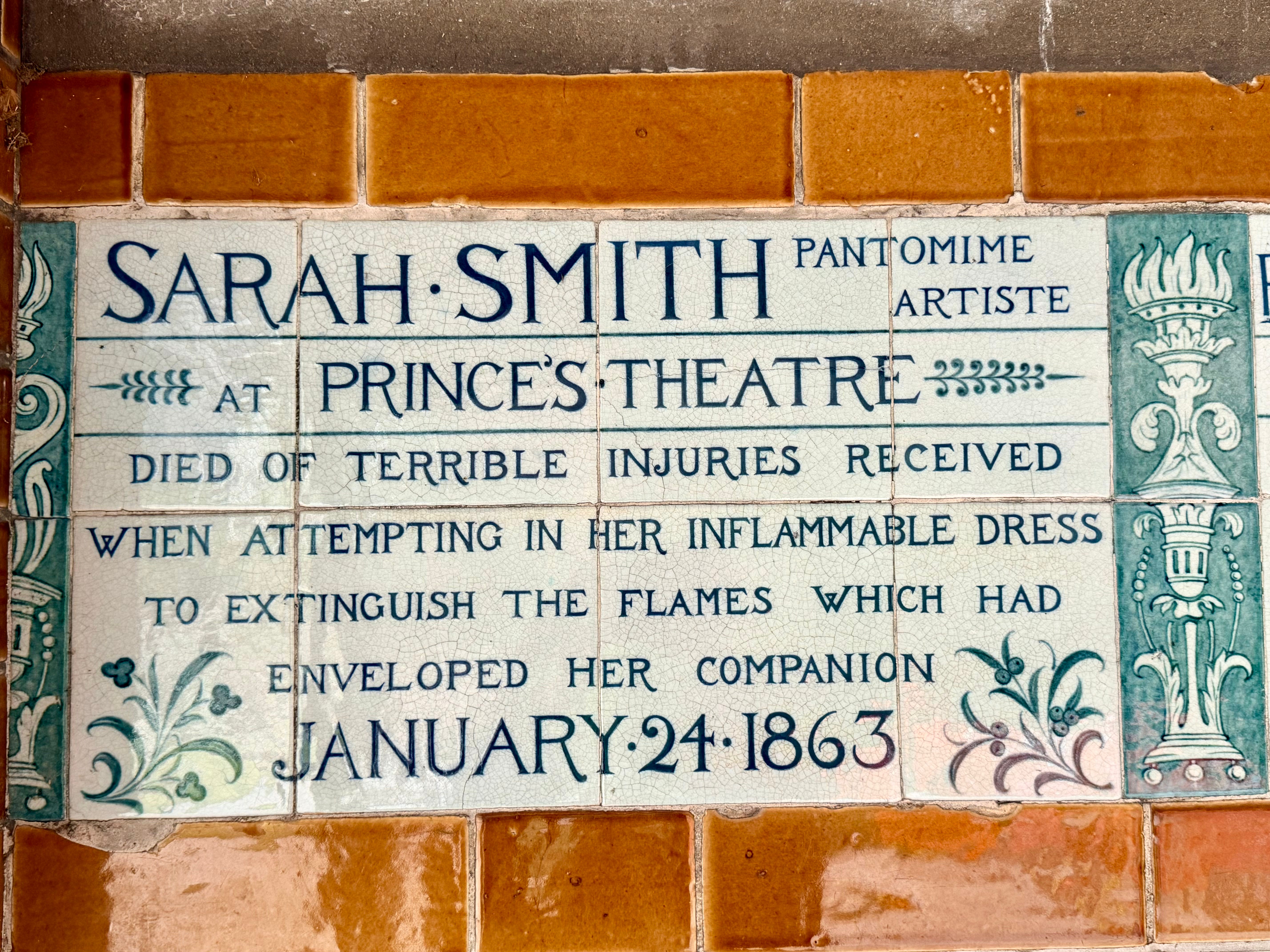
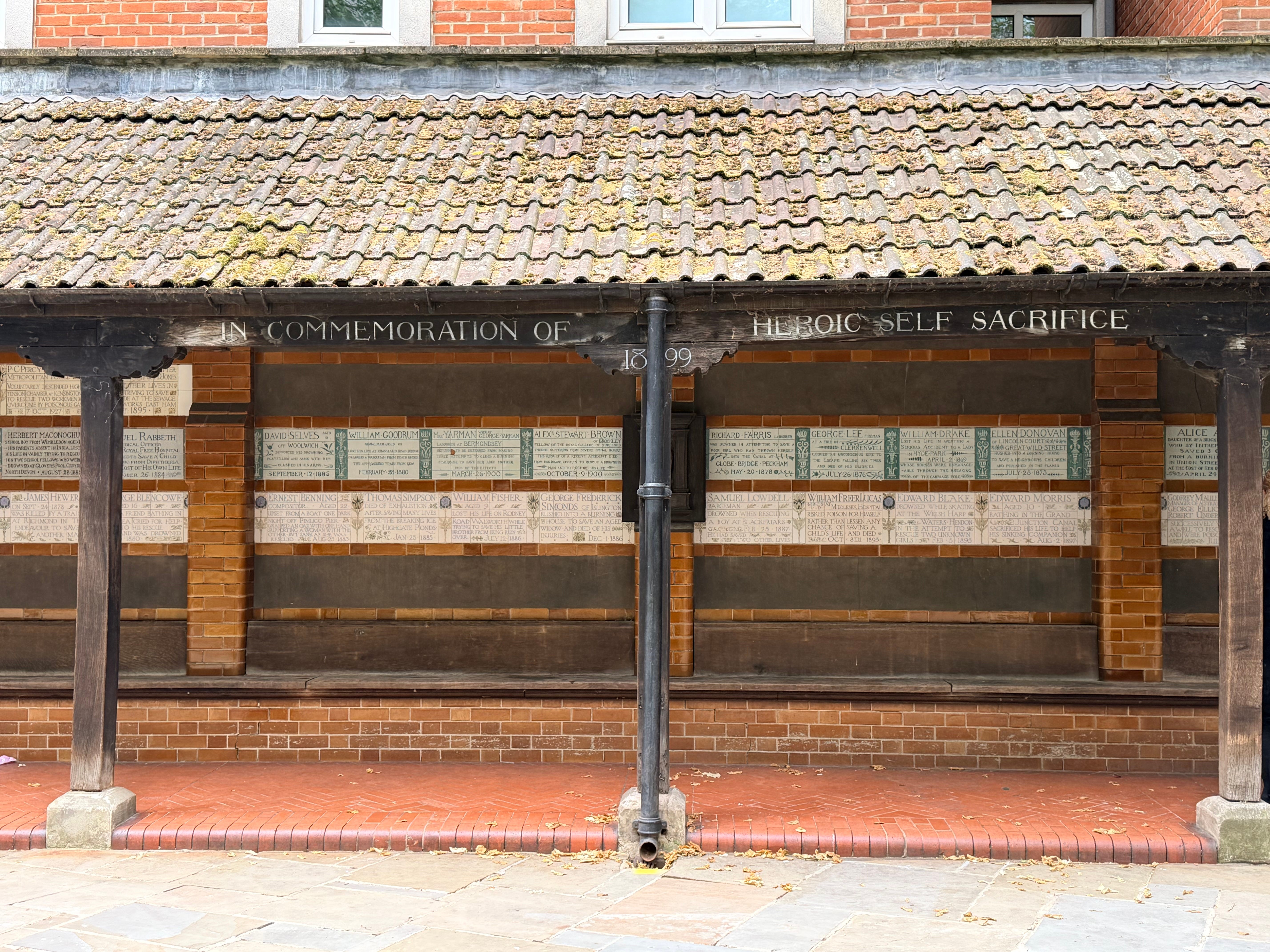
Walk south from Cloth Fair, cross Little Britain (yes, that’s the real name), and within five minutes you’re at Postman’s Park. The name comes from the post office workers who used to take their lunch breaks here. In 1900, Victorian sculptor George Frederic Watts created a memorial in the park with vibrant glazed plaques, which was dedicated to ordinary men, women and children who lost their lives saving others. Watts wished to commemorate the many brave deeds performed by ordinary civilians that had gone largely unnoticed by the general public.
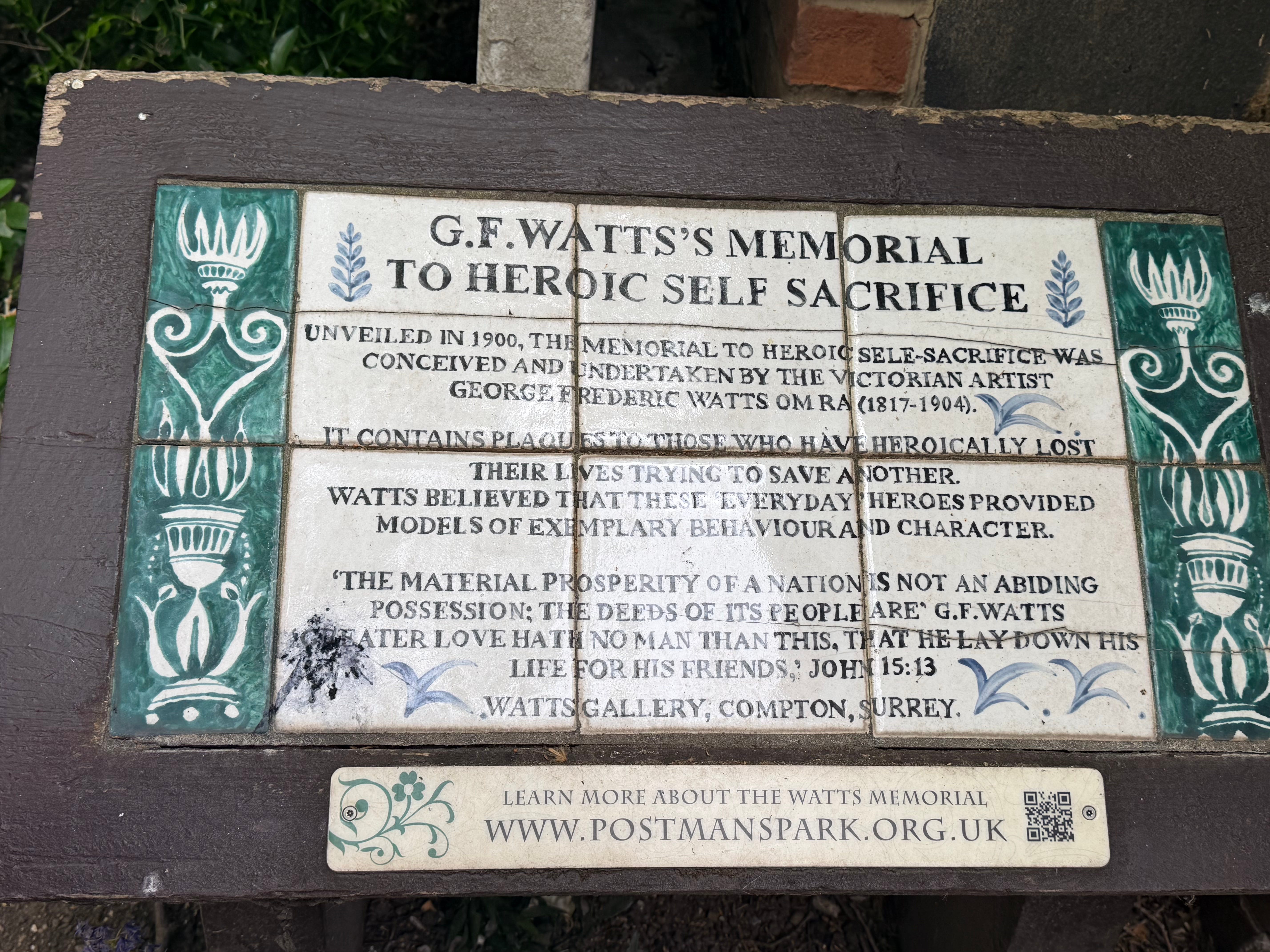
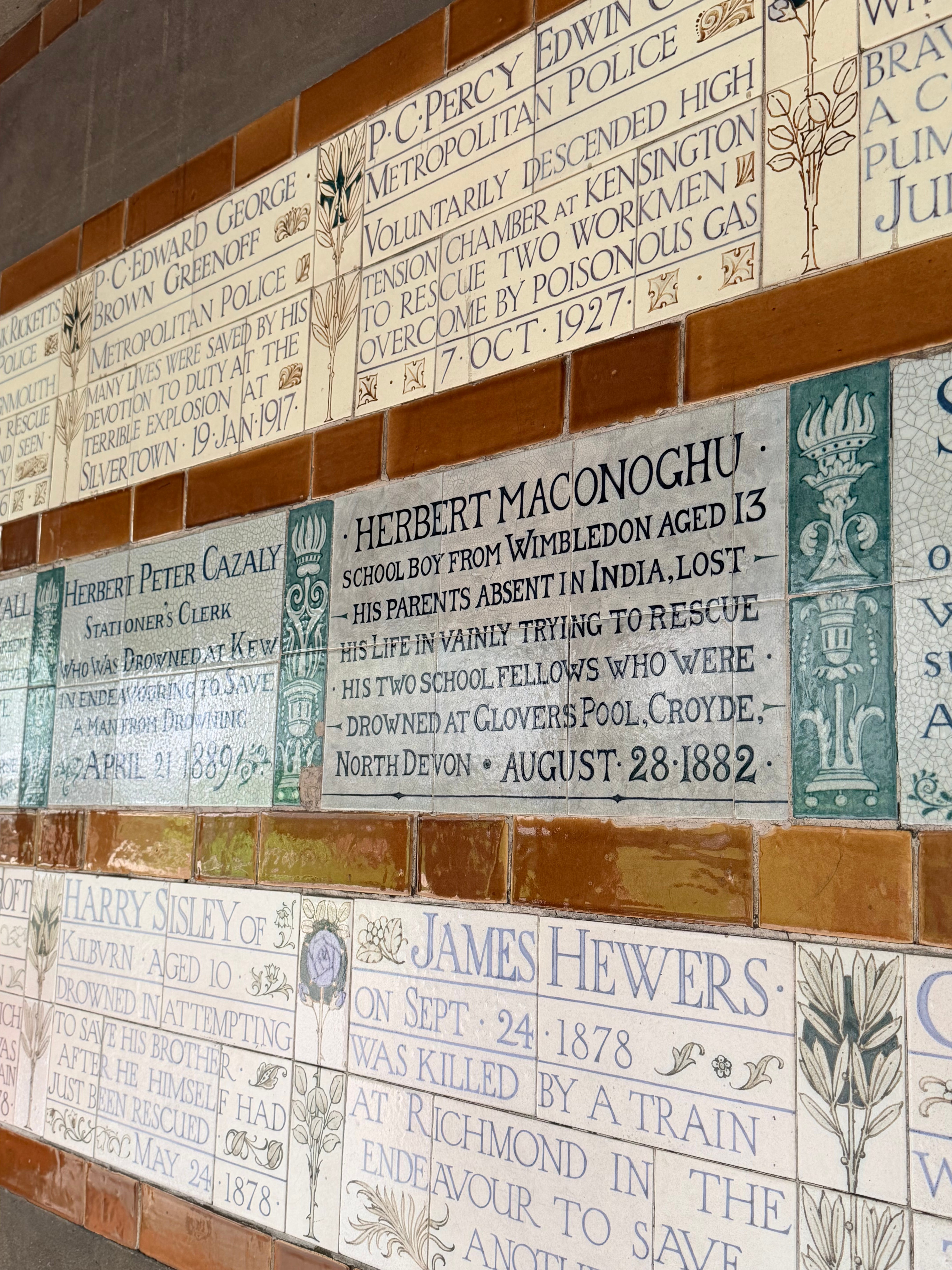
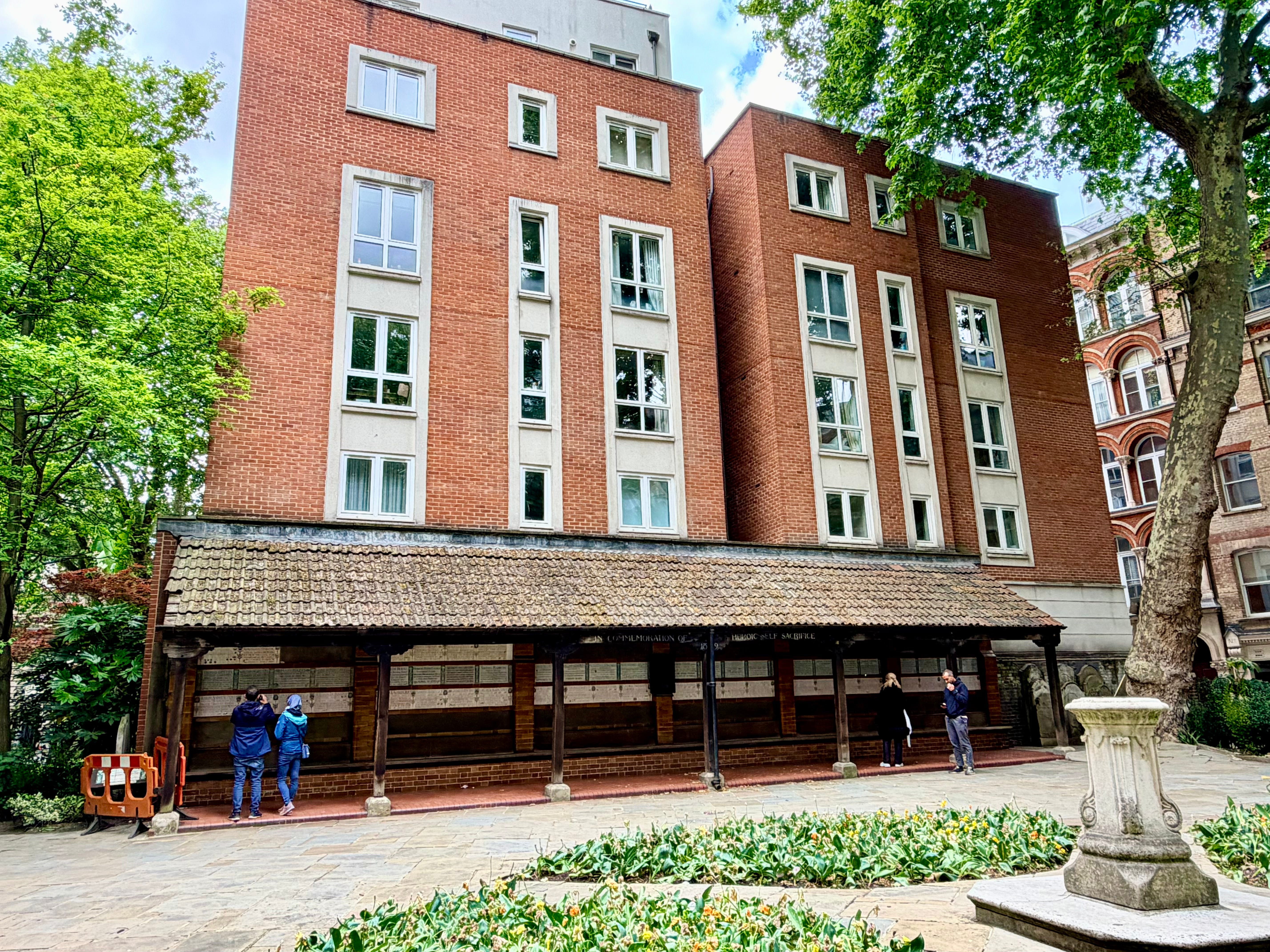
It would have been too expensive for Watts to have had the tablets carved in stone, so he approached an acquaintance, ceramic artist William De Morgan to design and make the tablets. The earliest tablet is dedicated to Sarah Smith, a pantomime artiste who died in 1863 trying to save a colleague whose dress had caught fire.
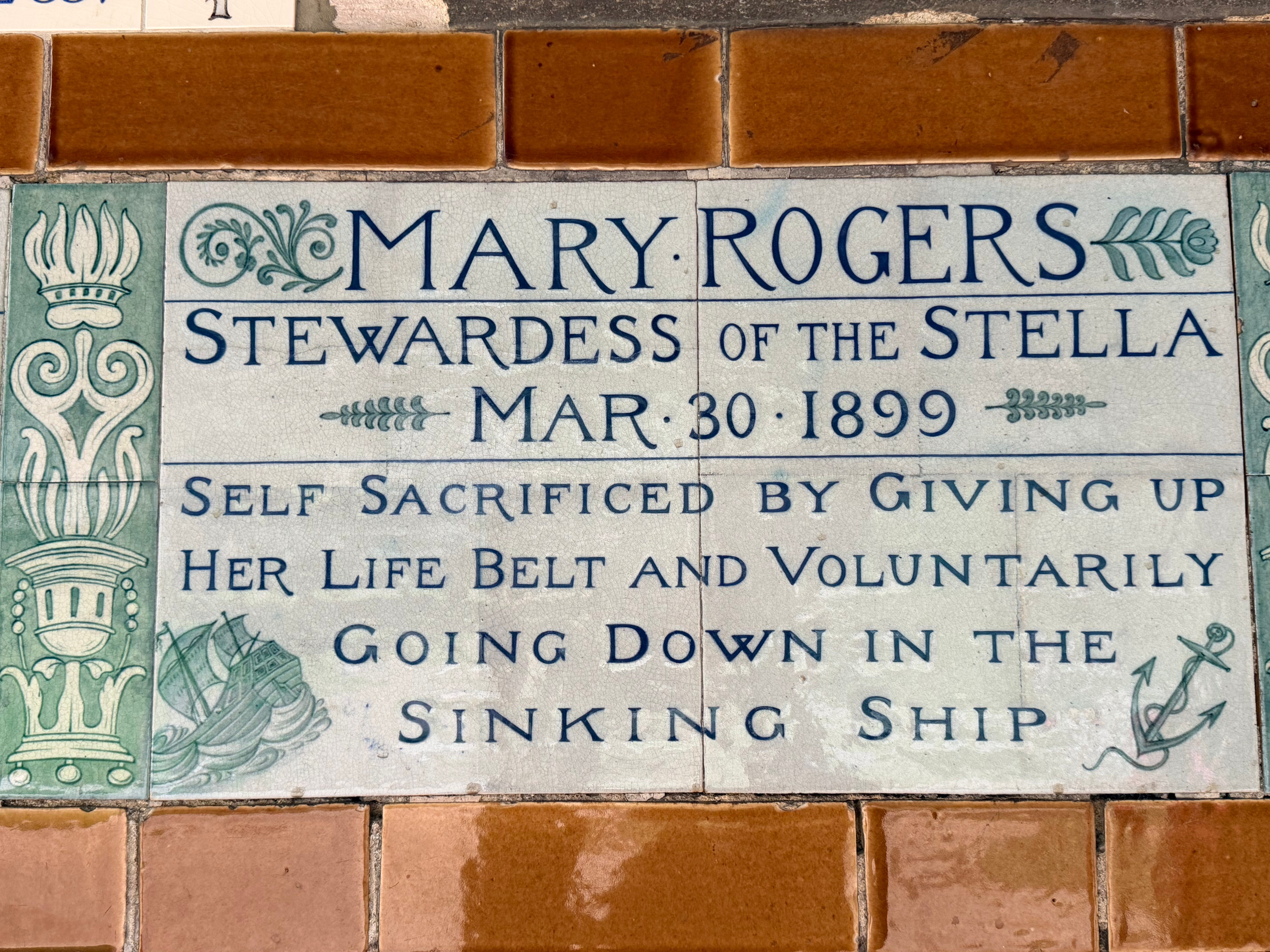
Mary Rogers is commemorated by a plaque with maritime designs given that she died saving others on a sinking ship.
It seems like most people either drown or died in house fires, which were common causes of death in the 19th century London. I found the plaques about children saving their siblings or friends the most heartbreaking.
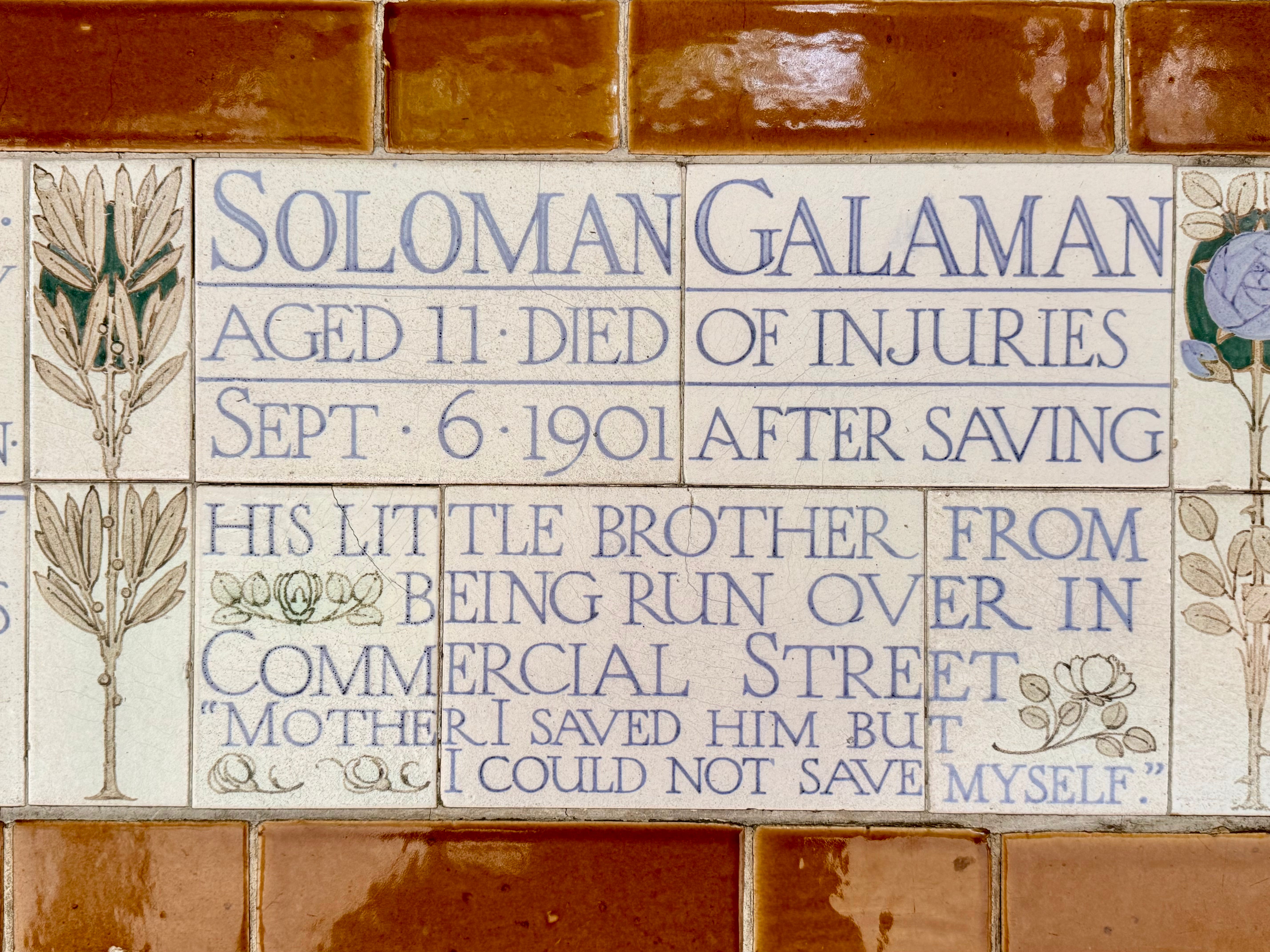
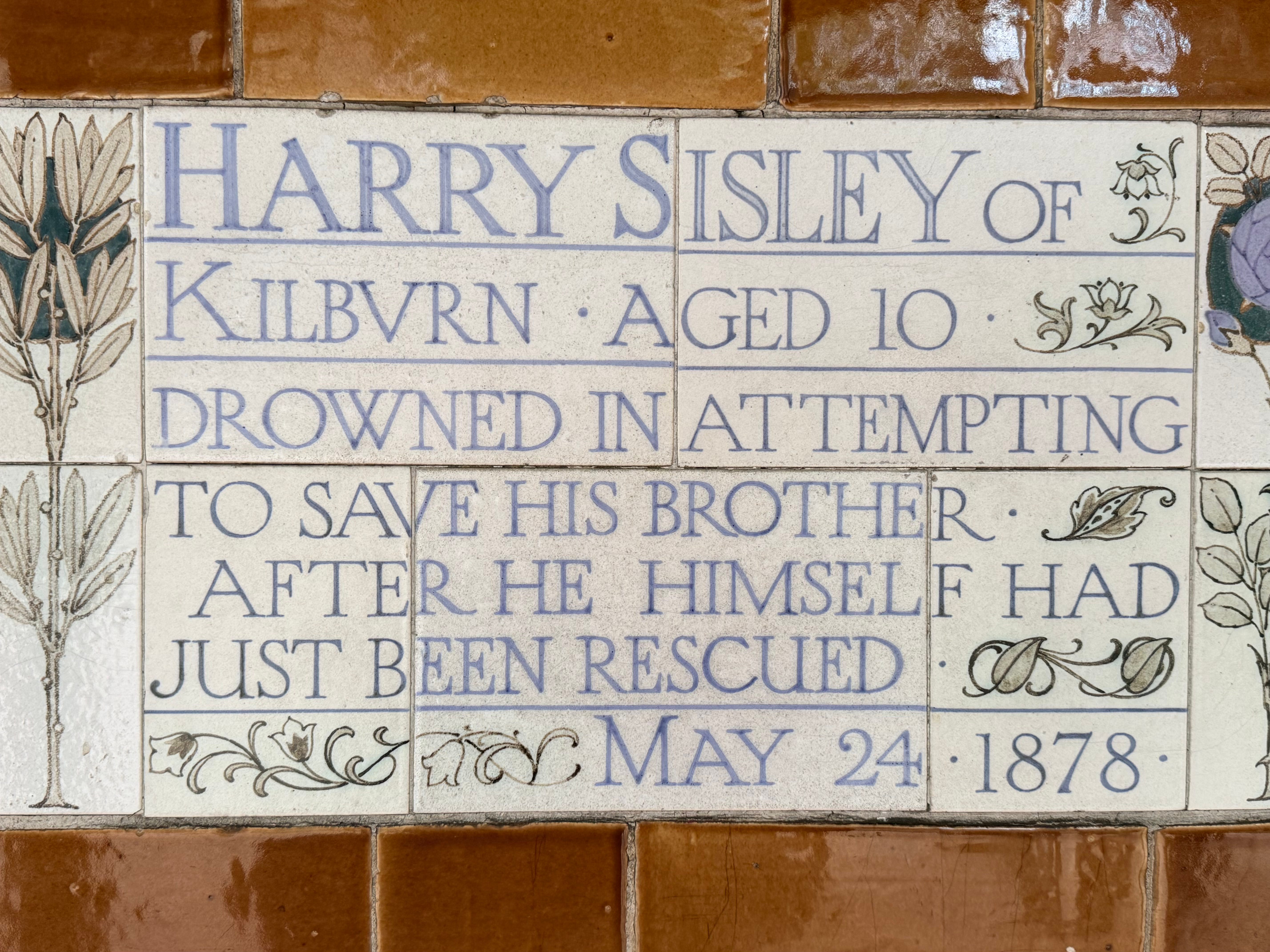
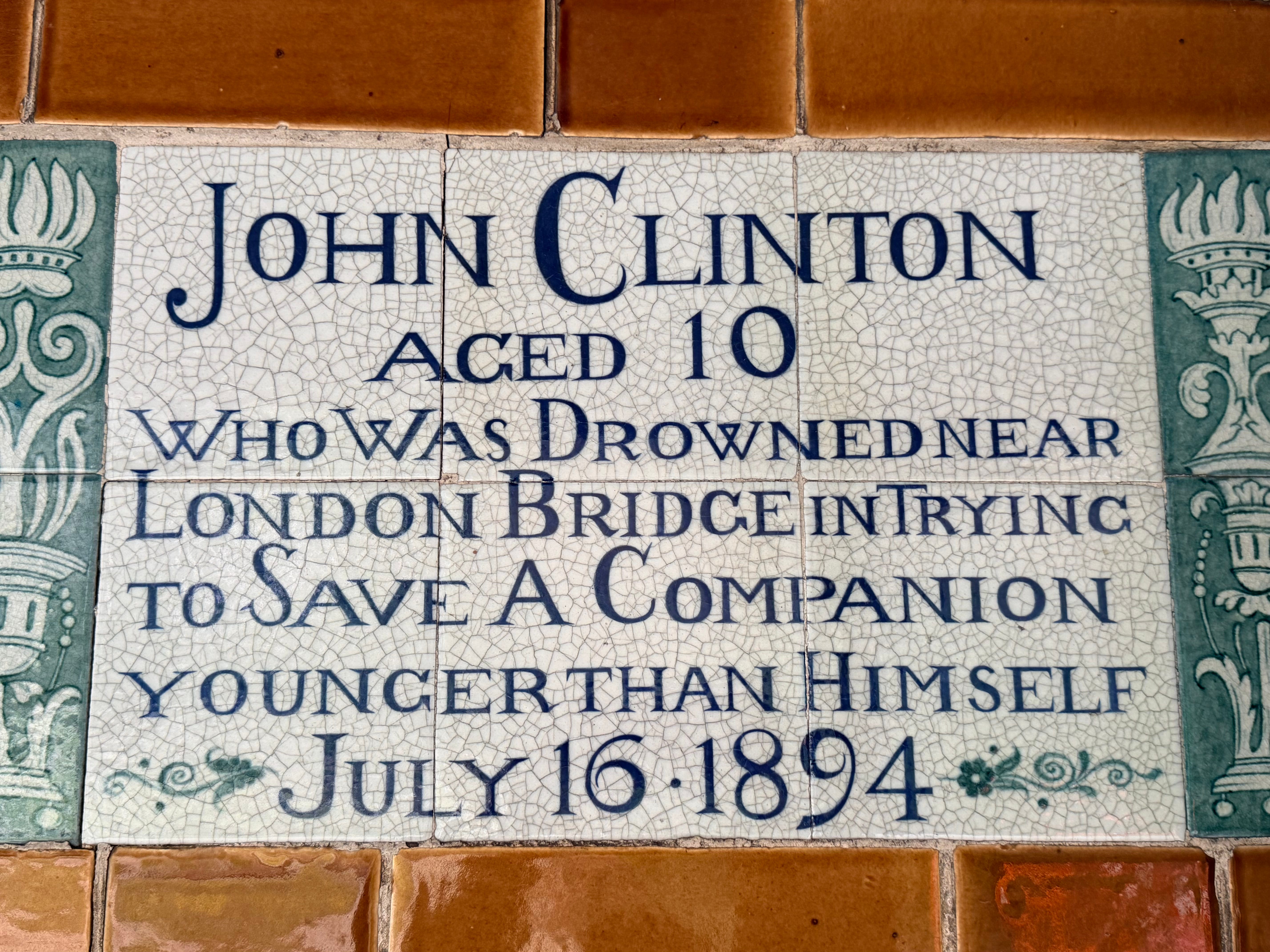
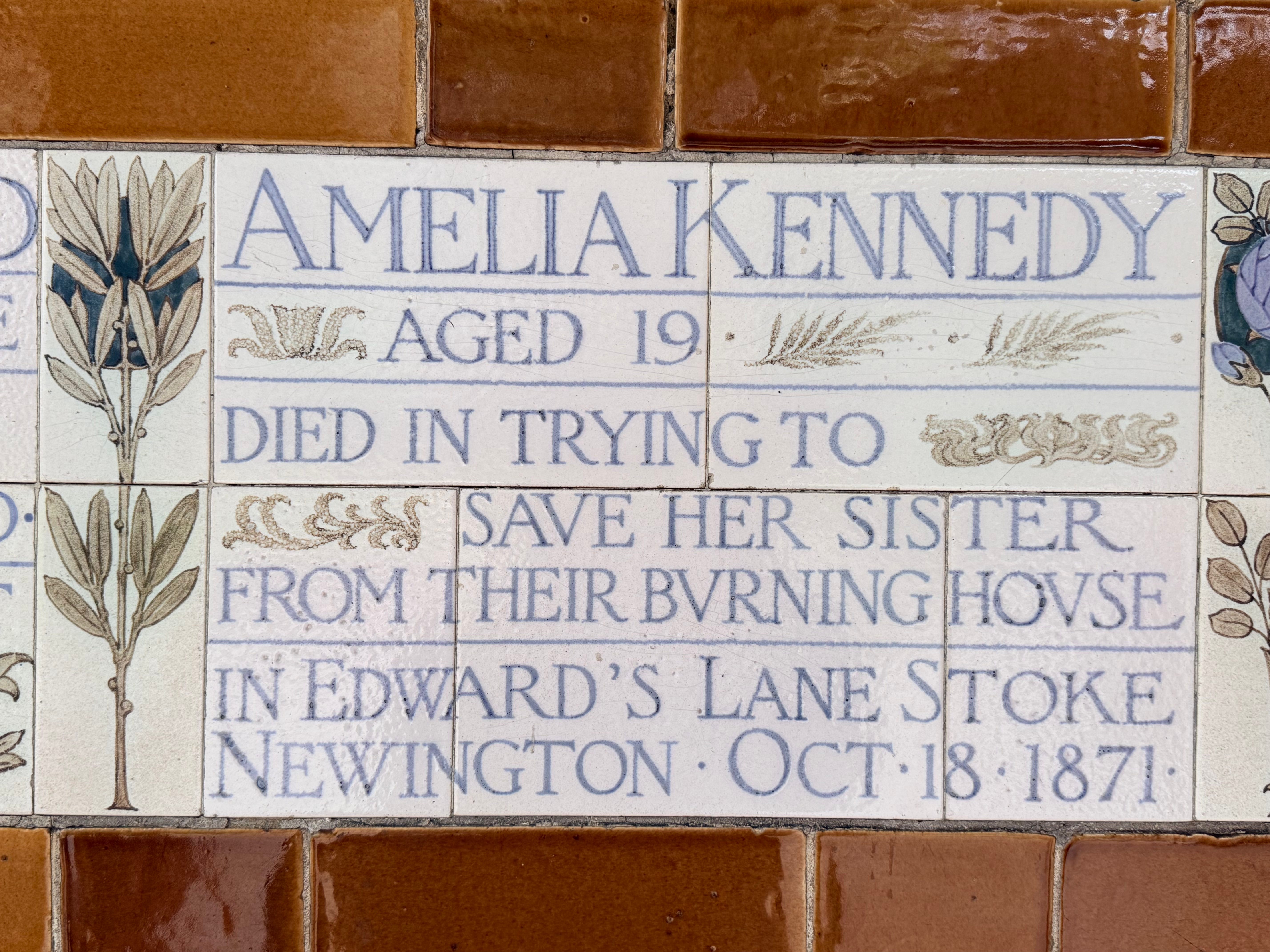
Movie trivia: You may recognize the park from the 2004 film Closer. Key scenes of both the play and the film were set in the park itself, and Natalie Portman’s character takes her name from one of the plaques.
Past the ruins: Christ Church Greyfriars
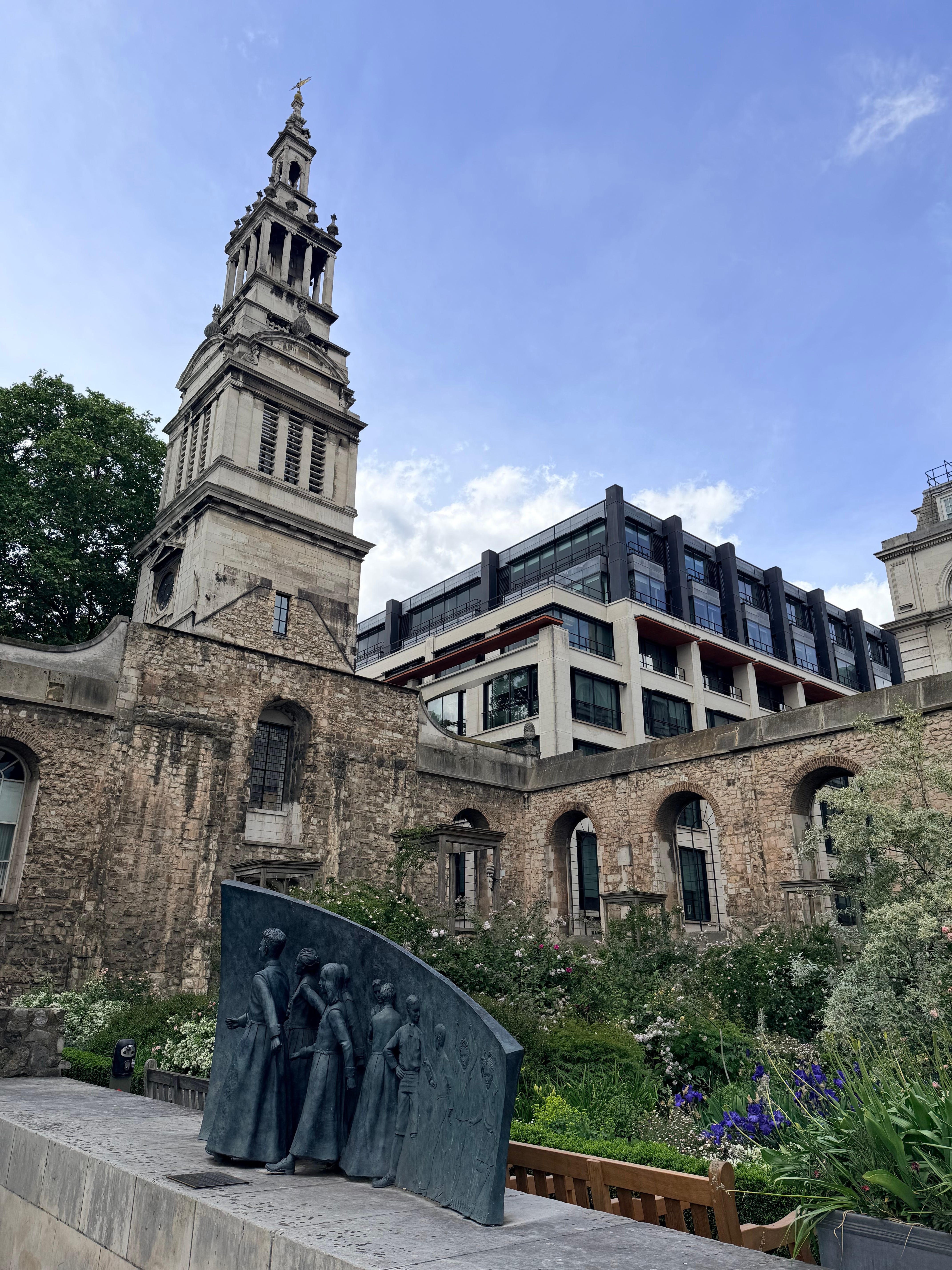
Leave Postman’s Park by the south gate, cross onto King Edward Street, and within a minute you’ll come across a Wren church steeple rising from a rose garden. This is Christ Church Greyfriars. The site has been a church since 1225, when Franciscan friars (the “grey friars” of the name) founded a monastery here.
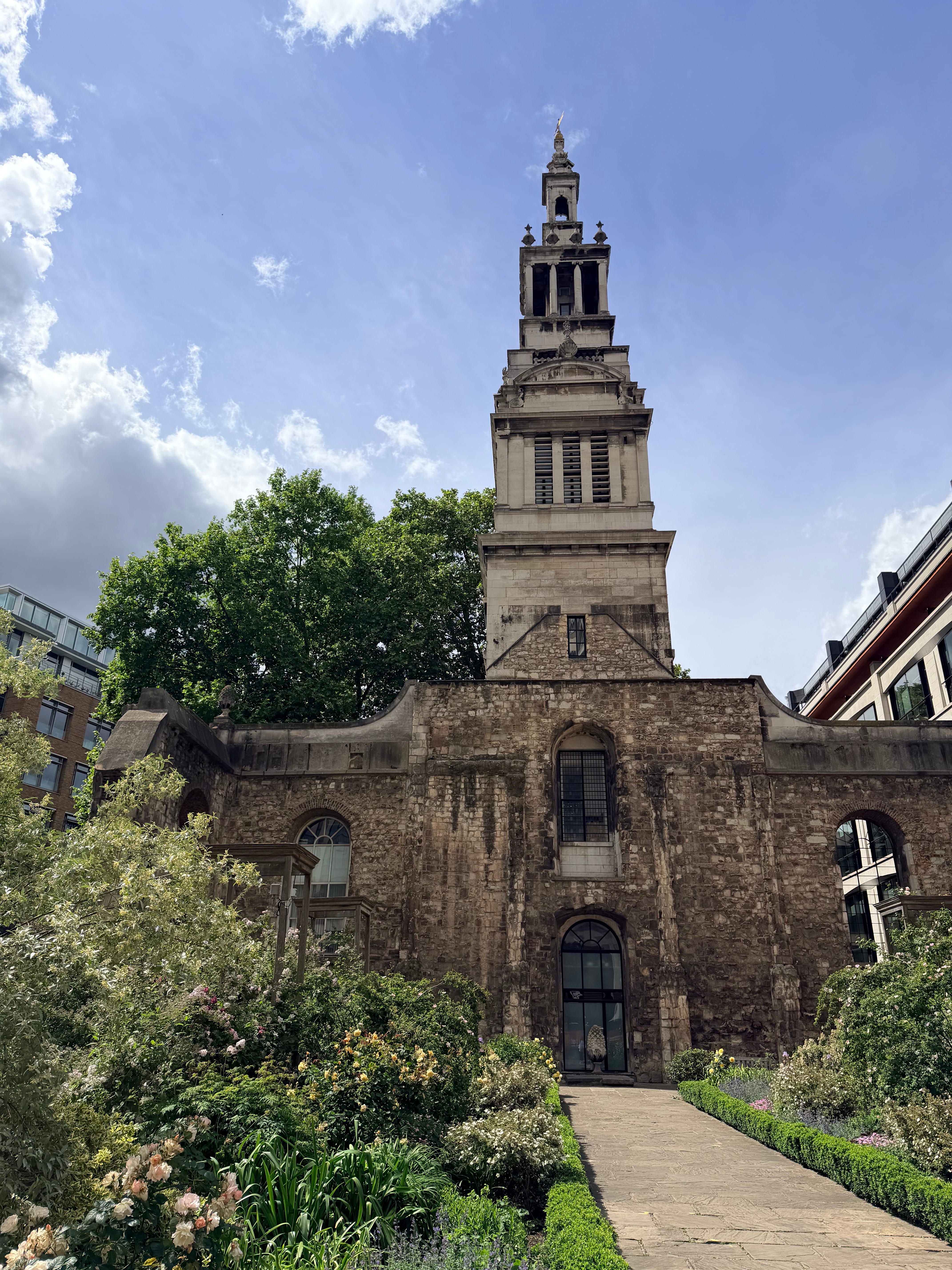
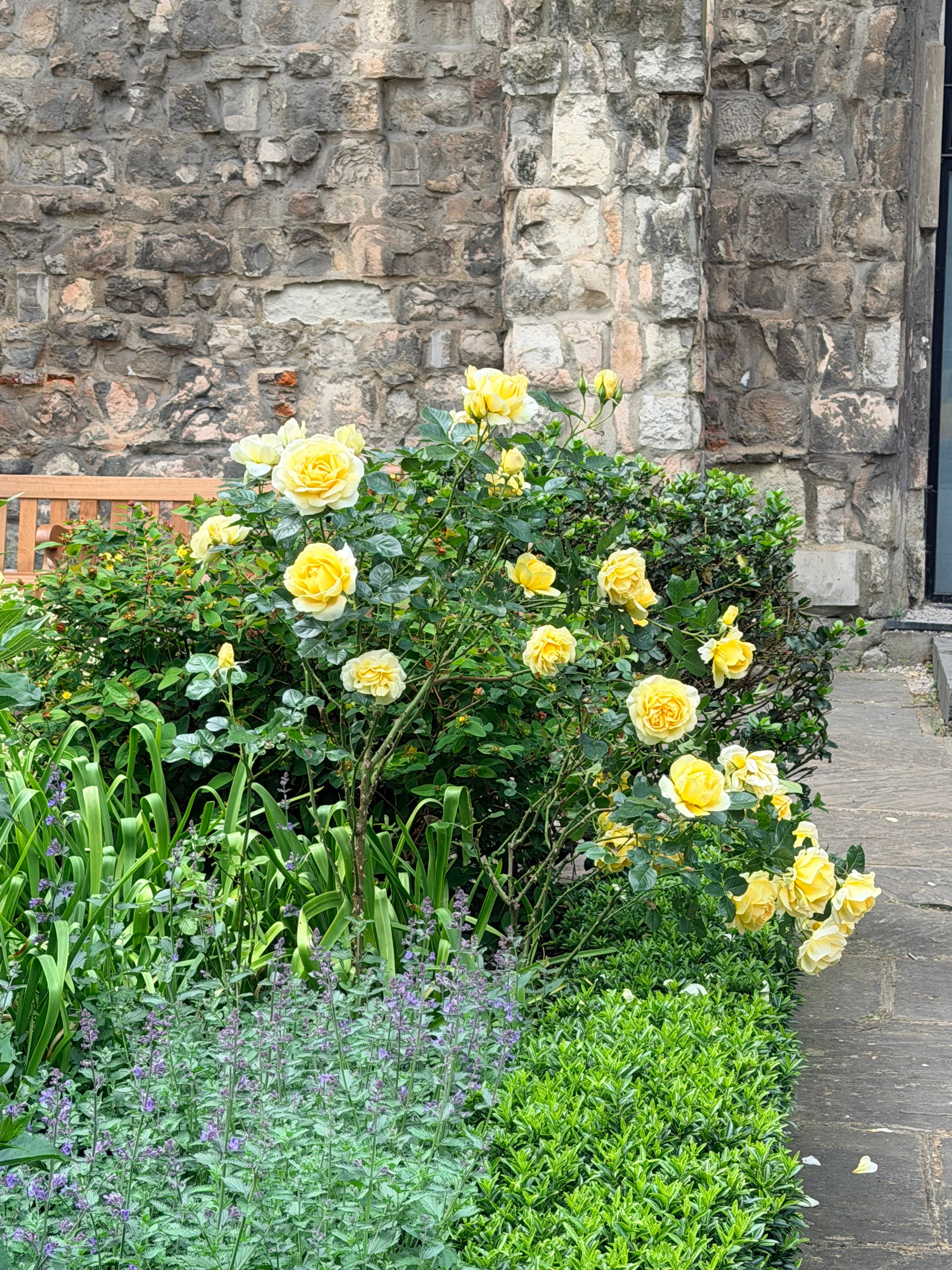
The first church was lost in the Great Fire of 1666. A new church, designed by Wren, was completed in 1704. In 1940 incendiary bombs destroyed the body of the Wren church, and only the west tower now stands. In 2001 the footprint of the church was reinstated and low walls were built to mark the missing fabric. The surviving ruins are now a public garden. The tower itself was allegedly converted into a private residence and was, at one point, on the market for £4.5 million. A great place to take a break on one of the benches and enjoy the garden.
A peek at St Paul’s
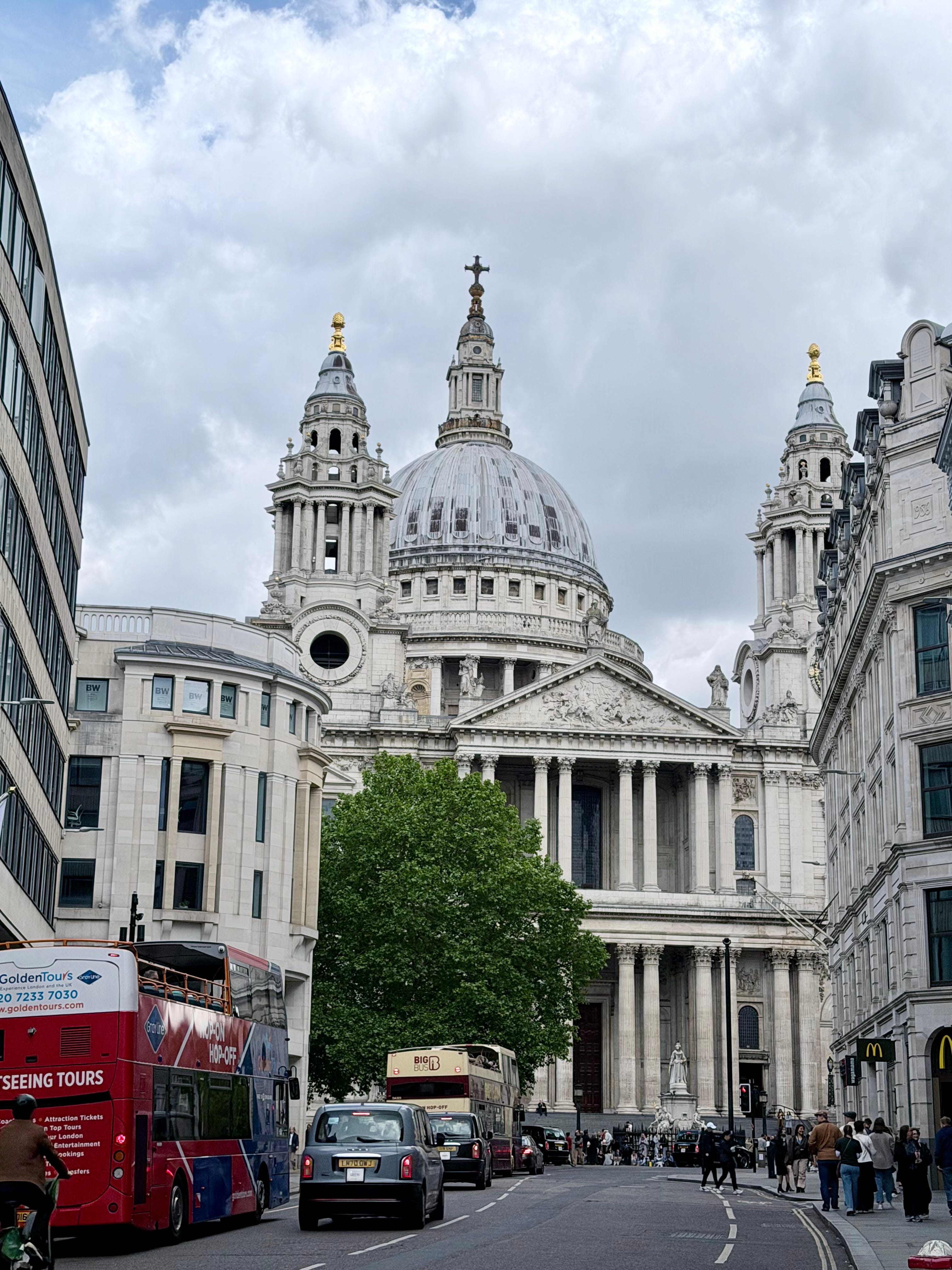
Cross Newgate Street and within a minute you’ll be in the shadow of the most famous cathedral in England. St Paul’s is Sir Christopher Wren’s masterpiece, completed in 1710 after the medieval cathedral was destroyed in the Great Fire of 1666. Its dome, the second-largest in the world when it was built, dominates the City skyline. The Germans specifically tried to destroy it during the Blitz, and the famous photograph of St Paul’s standing intact amid the smoke of December 29, 1940 (the same night that gutted Christ Church Greyfriars) became one of the defining images of British wartime resilience.
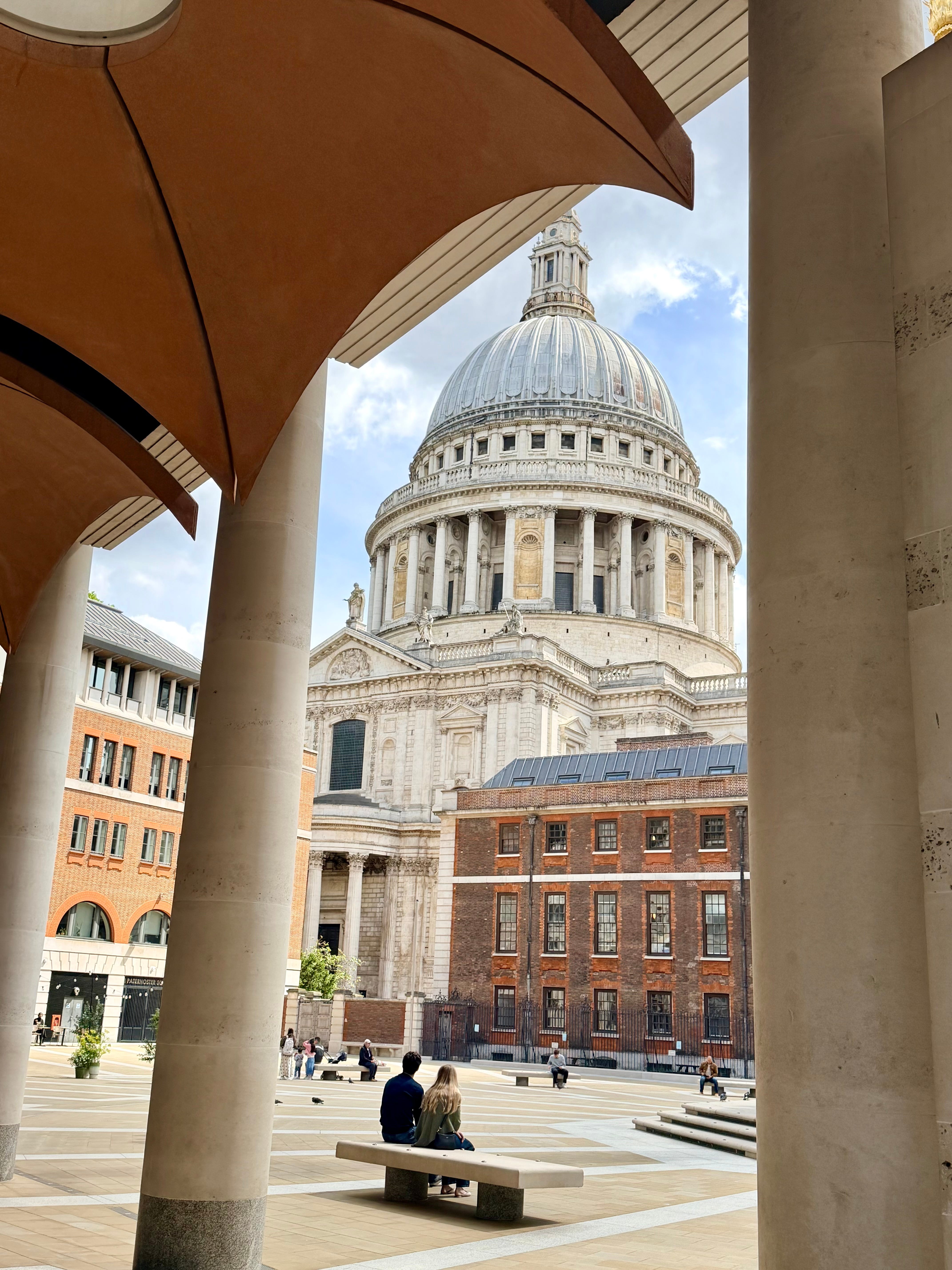
I’m not going to do St Paul’s justice on this walk as it deserves a full day of its own. The Whispering Gallery, the climb up to the Golden Gallery (528 steps but the view is one of the best in London), the crypt where Wren himself is buried alongside Nelson, Wellington, and Turner. Wren’s epitaph reads Lector, si monumentum requiris, circumspice — “Reader, if you seek his monument, look around you.”
For today, walk around the cathedral. Sit on the steps for a minute. Take it in from the outside, look up at the dome, and put it on the list for another visit. Then carry on west down Ludgate Hill toward Fleet Street.
Gough Square: Dr Johnson and his Cat
From the cathedral, head west down Ludgate Hill, across the bridge over Farringdon, and onto Fleet Street. Dive into the warren of alleys on the north side and you’ll find Gough Square.
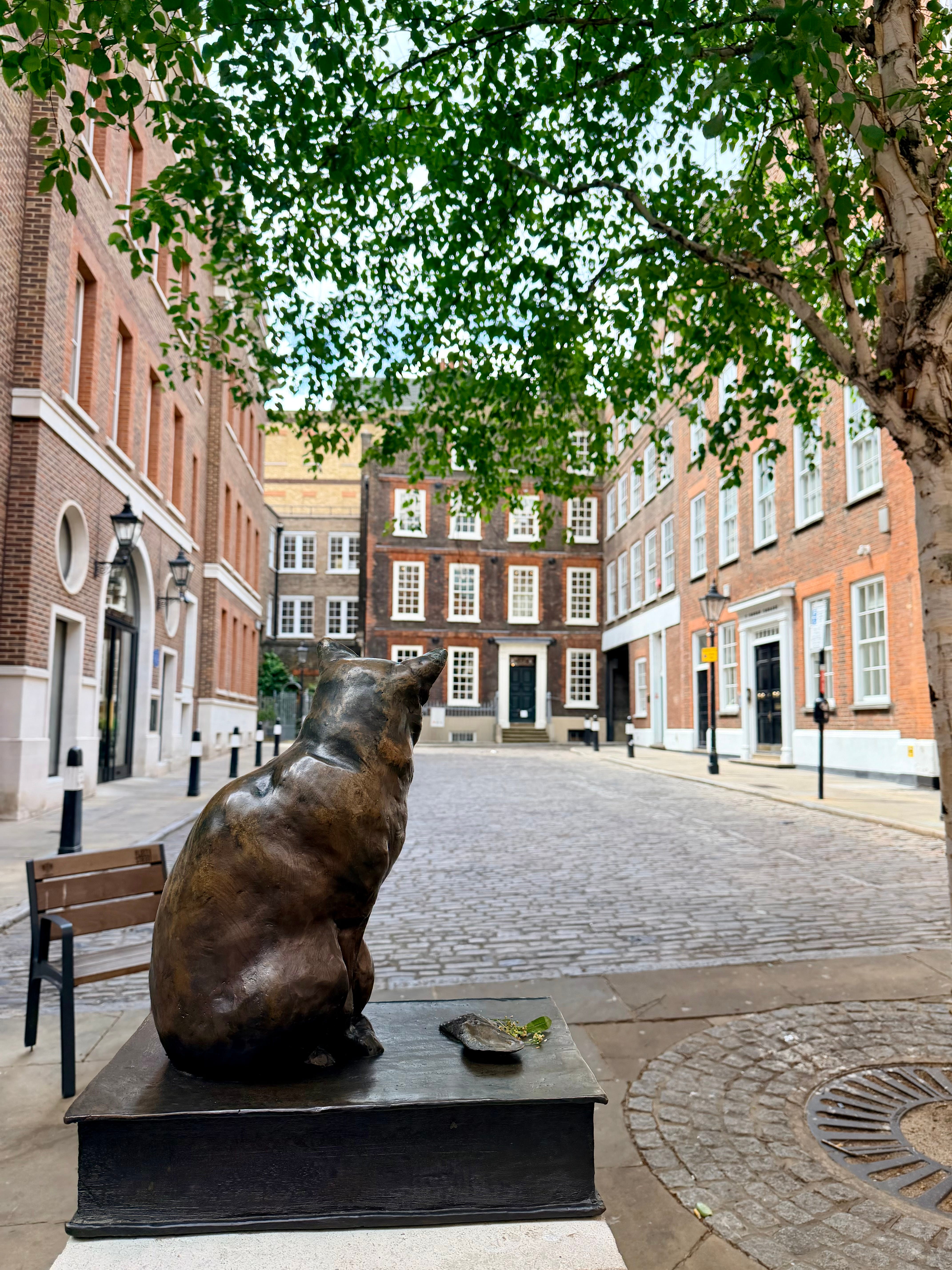
Dr. Samuel Johnson lived at No. 17, a five-story townhouse built around 1700. He was the man behind A Dictionary of the English Language, which was compiled in his attic. (The dictionary defined “lexicographer” as “a harmless drudge.” Since this must have been a reference to himself, I like his sense of humor.) The house is now a small museum that is worth a visit for £10, even for a peek at the first edition of the dictionary displayed in the room where it was written.
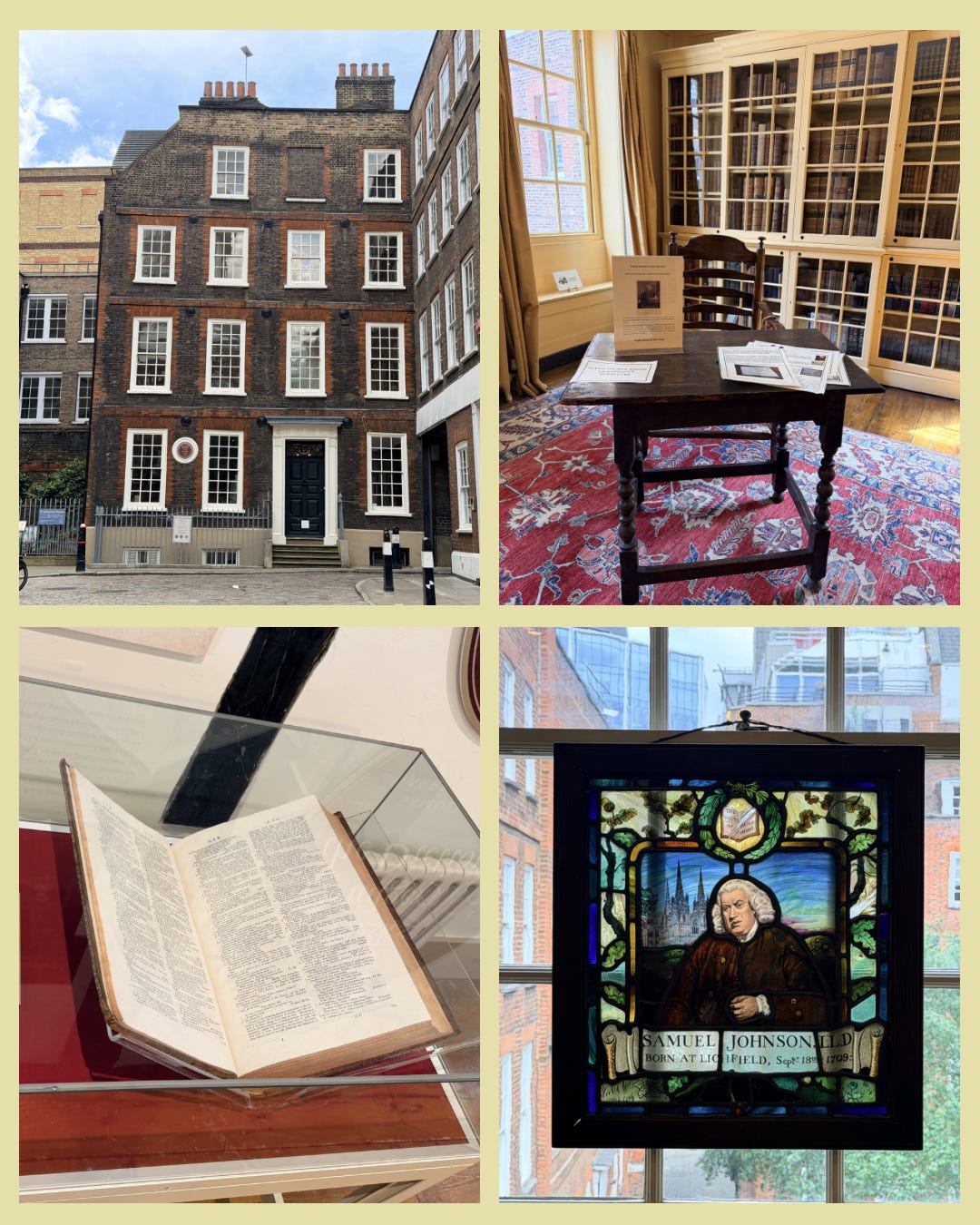
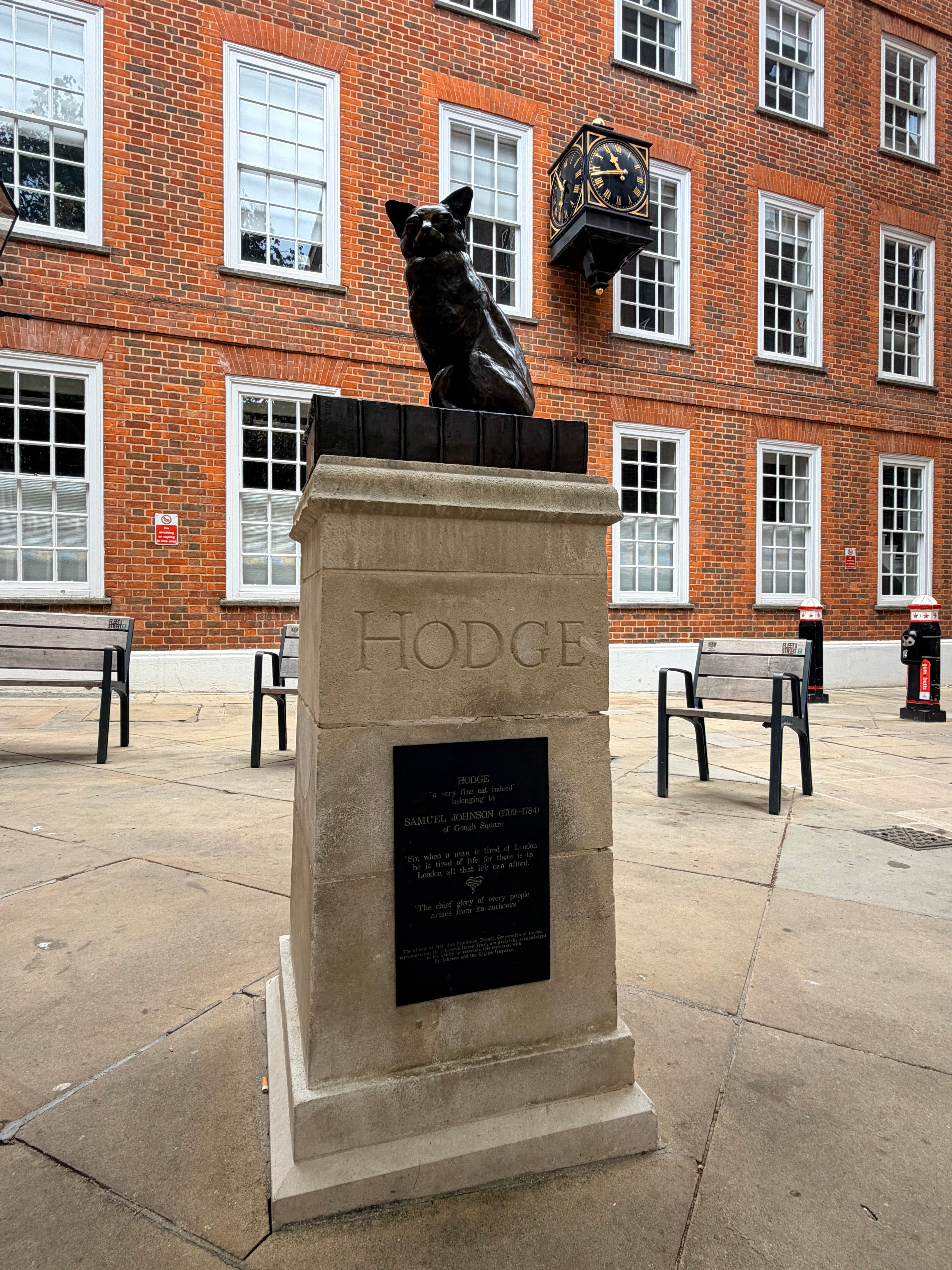
My favorite part, however, was finally meeting Hodge, Dr. Johnson’s cat, who is commemorated in the square with a bronze statue. He is perched on top of a copy of Johnson’s dictionary with empty oyster shells at his paws.
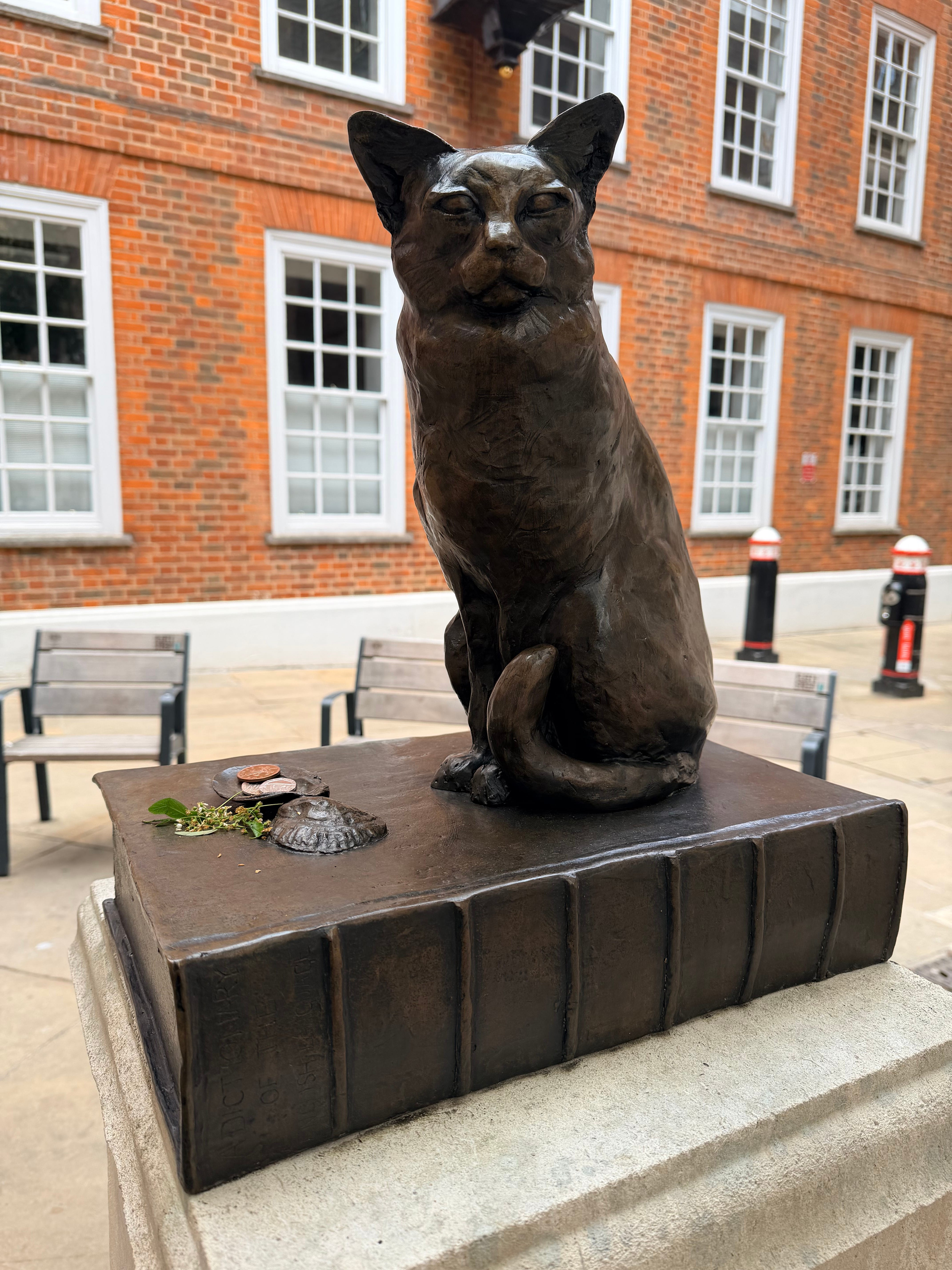
The oyster shells are a reference to one of the most quoted passages in James Boswell’s Life of Johnson biography: “I shall never forget the indulgence with which he treated Hodge, his cat: for whom he himself used to go out and buy oysters, lest the servants having that trouble should take a dislike to the poor creature.” Apparently in the eighteenth century were poor man’s food, cheap and plentiful, eaten by the bushel by both people and house cats. I love that Johnson went out himself to pick some up for Hodge, fearing that if servants were sent on an errand for the cat, they might come to resent him.
The inscription “a very fine cat indeed” comes from another Boswell anecdote. Boswell, who had a lifelong antipathy to cats, was making polite small talk by remarking that Hodge was a fine cat. Johnson replied, a touch dismissively, that he’d had cats he liked better. Noticing Hodge looking outraged in a typically cat way, he then supposedly added: “but he is a very fine cat, a very fine cat indeed.” I recognize that cat energy.
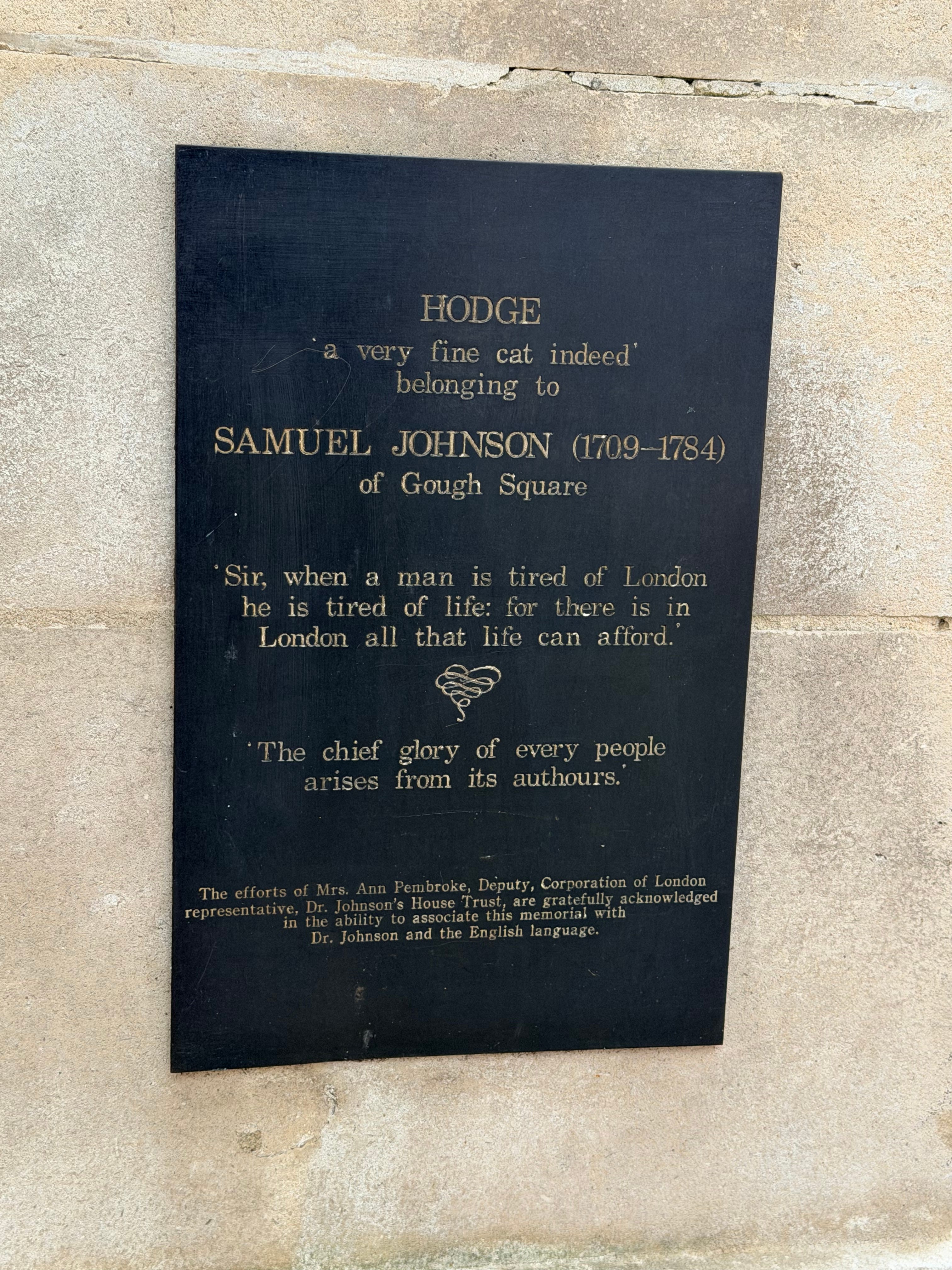
Johnson is also responsible for the single most-quoted line ever written about this city: "When a man is tired of London, he is tired of life; for there is in London all that life can afford." He said it to Boswell in 1777, and nearly 250 years later it remains the line every Londoner reaches for to explain why they put up with the weather and the Jubilee Line commute. It is also inscribed on the plaque beneath Hodge.
Put some coins into Hodge’s oyster shell for good luck and let’s keep going to our final stop!
St Bride's: The Church that Inspired a Wedding Cake
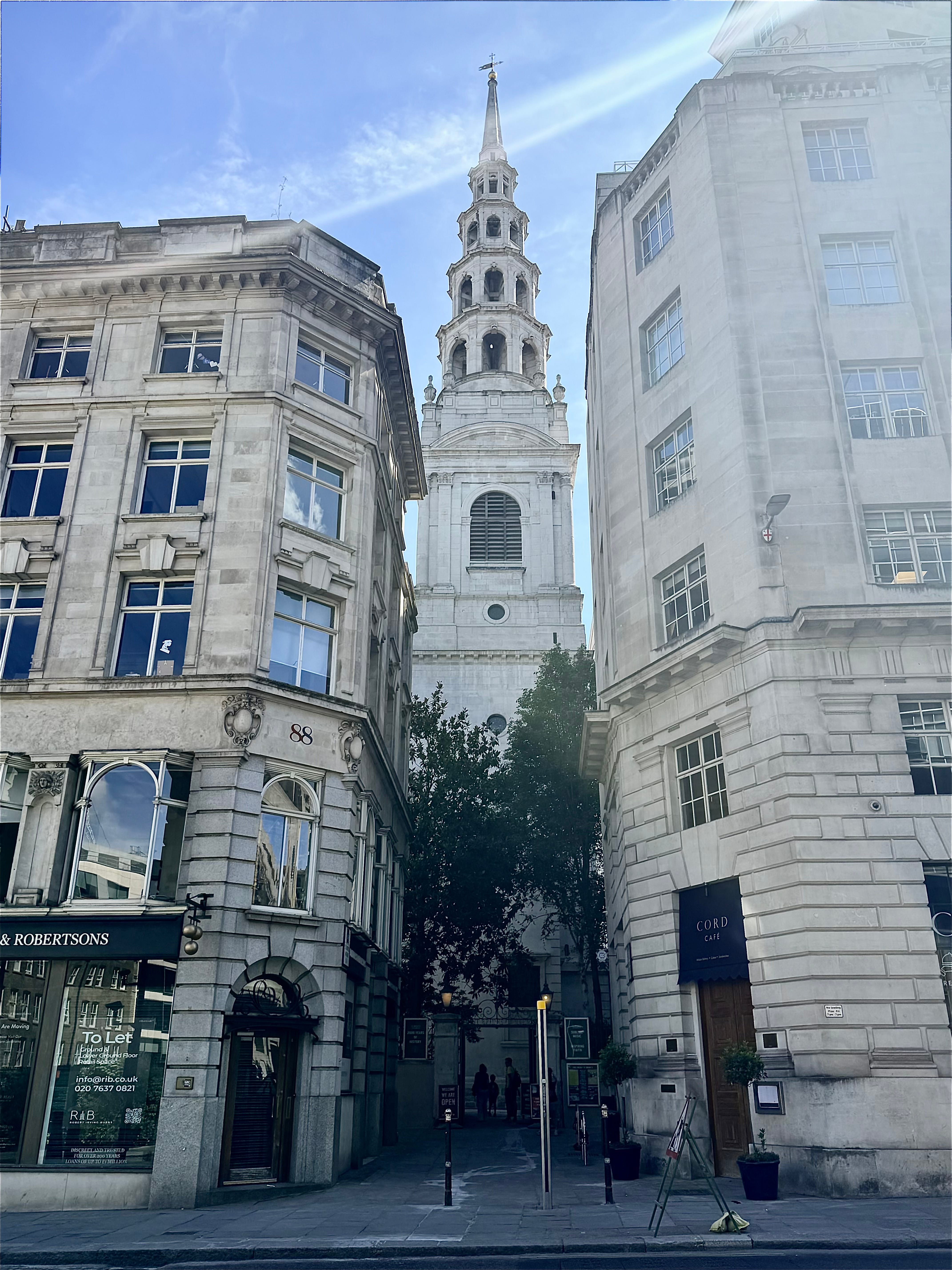
Head back down to Fleet Street and look for the church spire rising just off the south side tucked away from the street between two buildings. That’s St Bride’s, and if the top reminds you of a wedding cake, you will not be the first. Christopher Wren rebuilt the church after the Great Fire, giving it his tallest spire: four octagonal tiers, each one smaller than the last. The story goes that in the 1700s a baker living nearby on Ludgate Hill wanted to make an impressive wedding cake but was lacking inspiration for the design. He looked out of the window and saw the steeple of St Bride’s, which inspired him to create the first tiered wedding cake!
There’s an American thread here too, which I loved: Ananias and Eleanor Dare were married at St Bride’s before sailing for the Roanoke colony. Their daughter Virginia became the first English child born in America (there’s a small bust of her inside).
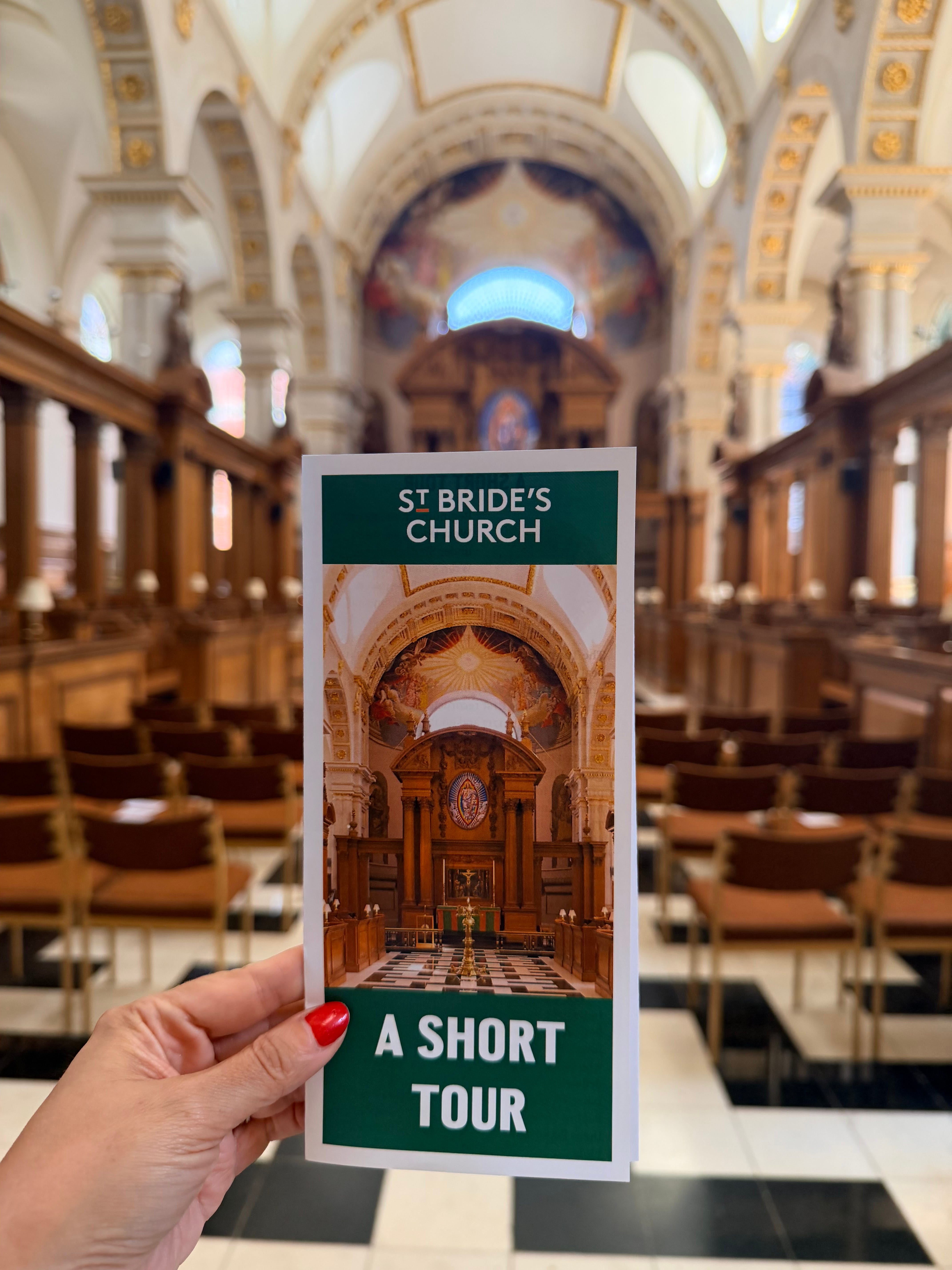
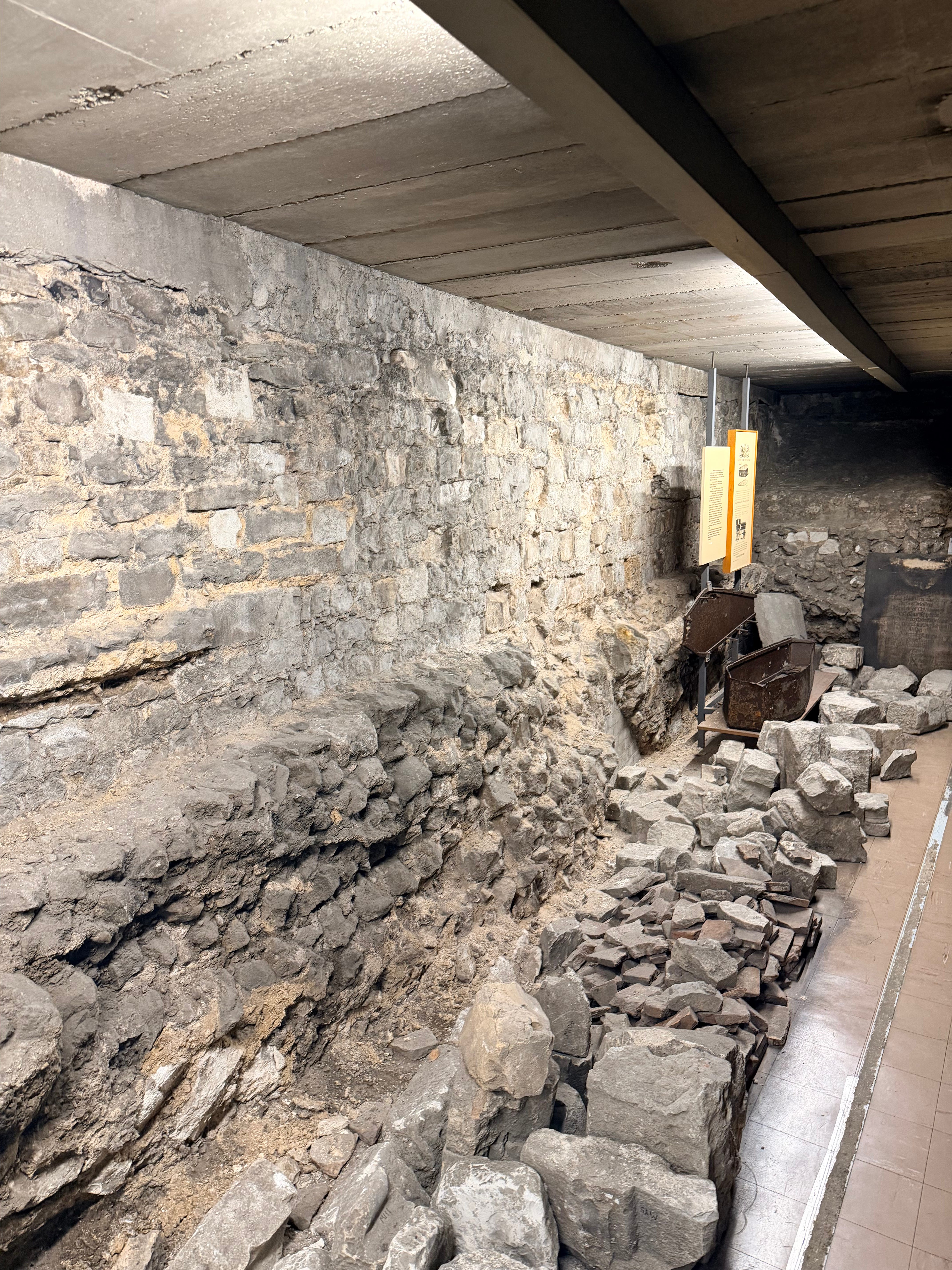
Like Christ Church Greyfriars, St Bride’s was gutted by incendiary bombs on the night of December 29, 1940, but unlike Greyfriars it was rebuilt. The excavation efforts revealed a crypt with a Roman rode and the remains of seven earlier churches that stood on the same site. The crypt museum is free and takes about 10 minutes, which is probably the right amount of museum time before ending your walk with a pint.
Finale: A Pint at Ye Olde Cheshire Cheese
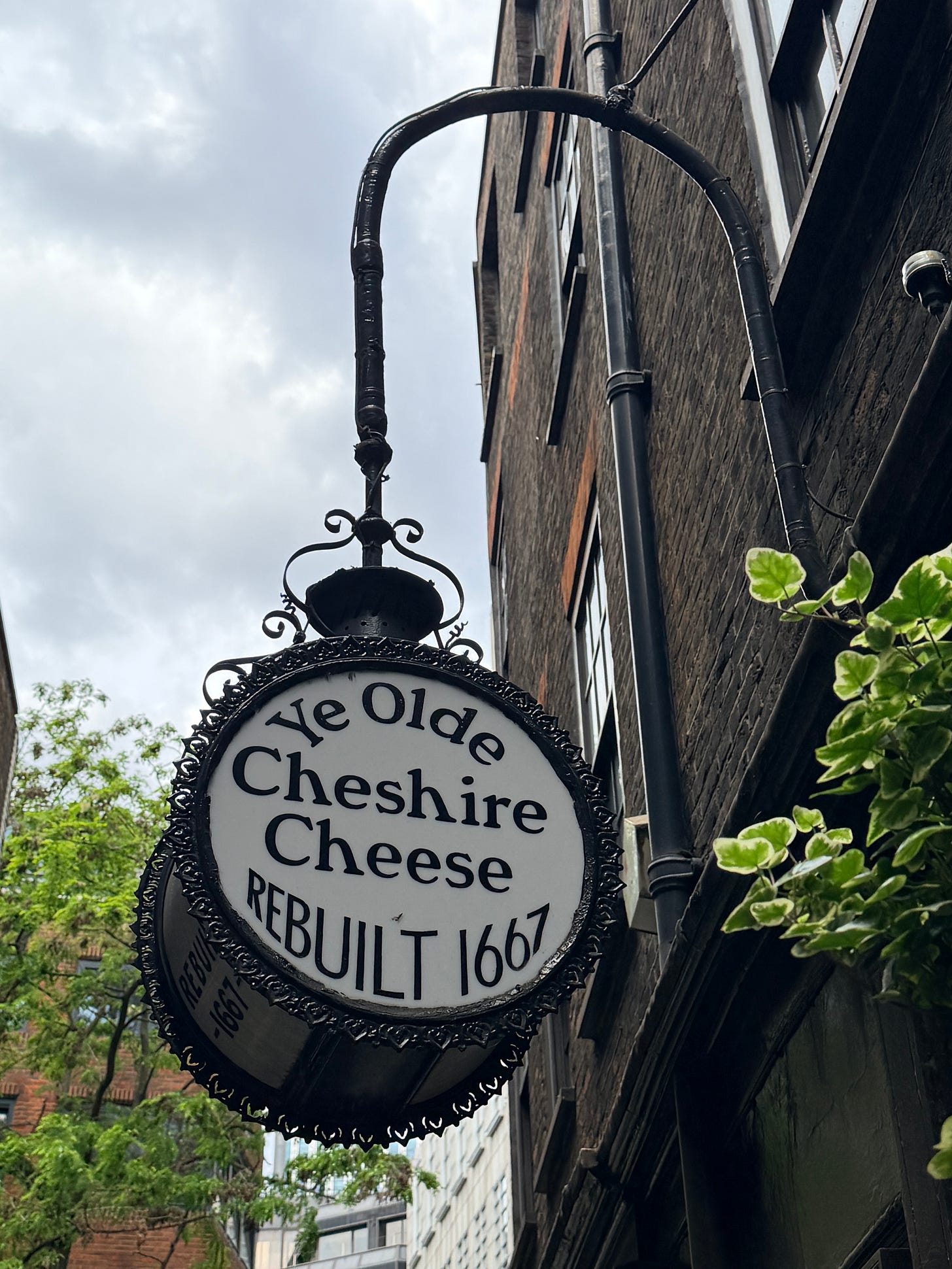
You’ve earned it. Walk back out towards Fleet Street, cross the street and you’ll see a small side street called Wine Office Court. The entrance to Ye Olde Cheshire Cheese is easy to miss, so look for the round sign above. A pub since medieval times, it was rebuilt after the Great Fire of London. Writers including Charles Dickens and Dr. Samuel Johnson were all regular visitors.
Look out for Polly the Parrot, stuffed and mounted above the front bar. She was a resident celebrity who sparked international headlines when she died in the 1920s. Although the tavern is not named in Dickens’ A Tale of Two Cities, its location on Fleet Street and access “up a covered way” have led to the conclusion that Ye Olde Cheshire Cheese is the inn mentioned in the book.
If this kind of walk is your idea of a good Sunday, heritage, history, and a pint at the end, you're in the right place. Leave It to Anna is where I write about exactly this: factory floors, market finds, secret London corners, and the kind of trips worth packing an empty suitcase. Subscribe below and come along for the next one.
Comments
Nothing yet. Say the first thing.
Sign in to join the conversation.