
I thought for a long time that I needed to attend a residency or a well-known workshop to distinguish myself as a ‘serious’ writer. I read a novel, years ago, which I cannot recall the name of now, where two artists were at a residency and it described how all the residents would meet in the evening and discuss high-brow artistic things. I found myself dreaming of spending two weeks in a room with a beautiful view, writing, only setting aside my work to be a brilliant conversationalist in the evening.
I’ve since read other books that discuss residencies both positively and negatively. Most recently, I read The Writing Retreat by Julia Bartz, a psychological thriller where a one month residency becomes something more sinister, with a dash of reality TV-like elements. However, residencies and retreats commonly pop up in the nonfiction books I read as well, most notably Anne Truitt’s journals where she references Yaddo, an artist’s retreat in New York state. The way she describes it in her writing still appeals to me, only I’ve always placed myself in New Mexico when I’ve imagined my ideal writing escape.
After years of diligently applying, I never managed to be accepted to any of these hallowed spaces. I stopped sending in applications and the accompanying fees a few years ago, focusing instead on other endeavors. I might apply again one day, but, for now, I am at peace in the desert (not my imagined New Mexico, but my own, real-life California desert), writing at my kitchen countertop with a view of the mountains. In the evening, I am a brilliant conversationalist with my husband and our bird.
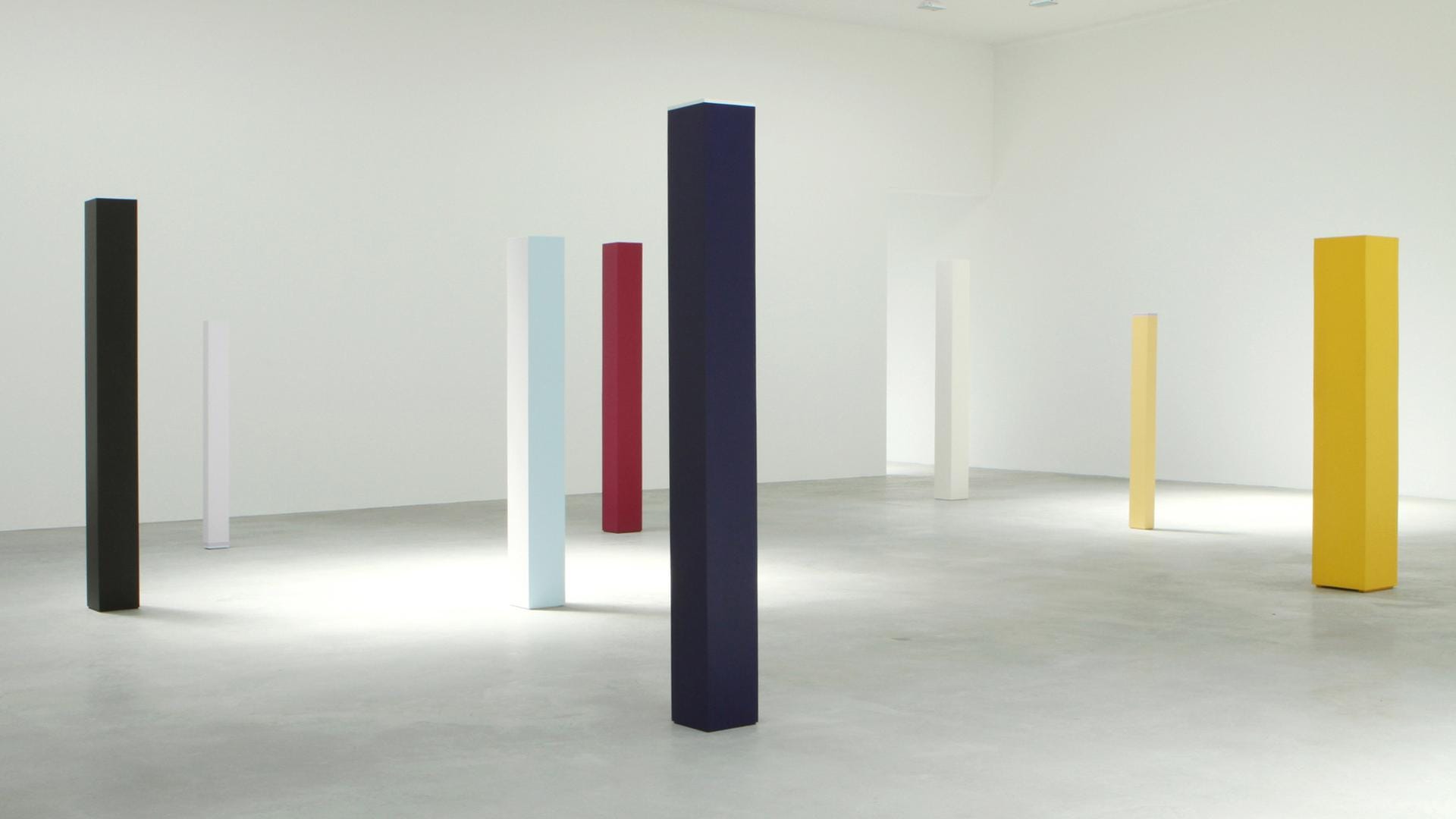
The idea of a residency wound itself into my head once more because I am reading Anne Truitt’s last collection of journals: Yield. She served as the interim president of Yaddo and much of her writing and creating took place there. She wrote most of Daybook (which I wrote about here) in residency with the goal of “letting the artist speak,” and she describes her artistic work most intimately at Yaddo.
“Yaddo is one of the foci of the planet’s energy, I always feel it as I enter the grounds, between the granite pillars that guard the narrow road winding between two lakes and up a hill toward the mansion”
Reading an author’s final work is always a bittersweet moment for me. I know there’s nothing coming after, no hope of new words — their oeuvre is entirely finite. Over the years, I’ve hoarded some of my favorite authors’ ‘last book,’ the one I hadn’t yet read, in hopes of delaying the inevitable lack that I knew would follow. I still haven’t read LA Woman by Eve Babitz, for example. But, I finally decided to pick up Yield by Anne Truitt and began reading it last week. In some part of me, I knew I needed her words this January.
She calls the book into being: “If a book, the title is Yield,” while also saying she started the journal without the intention of it becoming one. Isn’t that how it always goes?
Yield was published posthumously in 2022, Truitt passed in 2004, and the book is something of a time capsule to the period in which she is writing — a time period that I remember quite clearly. I wasn’t able to relate to her previous books, as poignantly as this one — her first journal collection was from the 70’s — and I was reading her thoughts about the summer of 2001, but I was also just… waiting. When the towers fall, she writes about the patriotism that quickly seeps into every crevice of American culture. She expresses many feelings about Bush that are so prevalent now as well, in relation to our current administration. She describes the feeling of hopelessness, of impending war, of jingoism.
“A new president of the United States, George Walker Bush, will be inaugurated today. I disagree with him on every civic, political, and psychological issue. I am anxious for the country.”
“This nation, my own, has started bombing Afghanistan. I am sick at heart. We have not evolved as a civil society. We are clever but we are not good.”
Anne Truitt had lived through World War II and worked as a wartime nurse where she saw soldiers returning with PTSD up close. She intimately witnessed the effects of war on our nation. Then, she watched in horror as America reenacted many of the things she thought we should have already learned our lesson from. How sad to empathize with her, to feel the same way 25 years later. But, her journals also offered a sliver of hope.
At Yaddo, after September 11th: “A young artist questioned his life. What did art matter now? … Like all attentive lives, the life of an artist is worth living.”
“Events are anecdotal. A life is not. I hear mine: an unwinding musical phrase in which every note evolves into every chord and every chord echoes.”
Truitt knew the end of her life was approaching — the journals end in 2002, she died in 2004 — and she writes of both accepting and anticipating her body’s limitations: “Old age is a radical situation.” Every few months, it seems, another of her close friends dies and she is left wondering if she might be next. She also writes of returning, in her twilight years, to a childlike state where her curiosity is once again piqued.
“I am somehow delivered back into the content curiosity I felt at the start of my life. Content because I was secure, curious because being alive was new. Fourteen days into my eighty-second year.”
The journals end with her ideas about new artistic work, ongoing work, and a speech she is to give at Yale — she continued working right up until her death, leaving only one unfinished piece.
Her drive and determination to live a life wholly her own, an artist’s life, is inspiring. But, in Yield, her acknowledgement of aging and of the necessity to persevere, despite the horrors, is also heartening.
“During World War II I learned to live a decent life while carrying around a load of unhappiness that could never be put down.”
Perhaps that’s all one can do — live a decent life and try to create something beautiful.
No posts
Comments
Nothing yet. Say the first thing.
Sign in to join the conversation.