
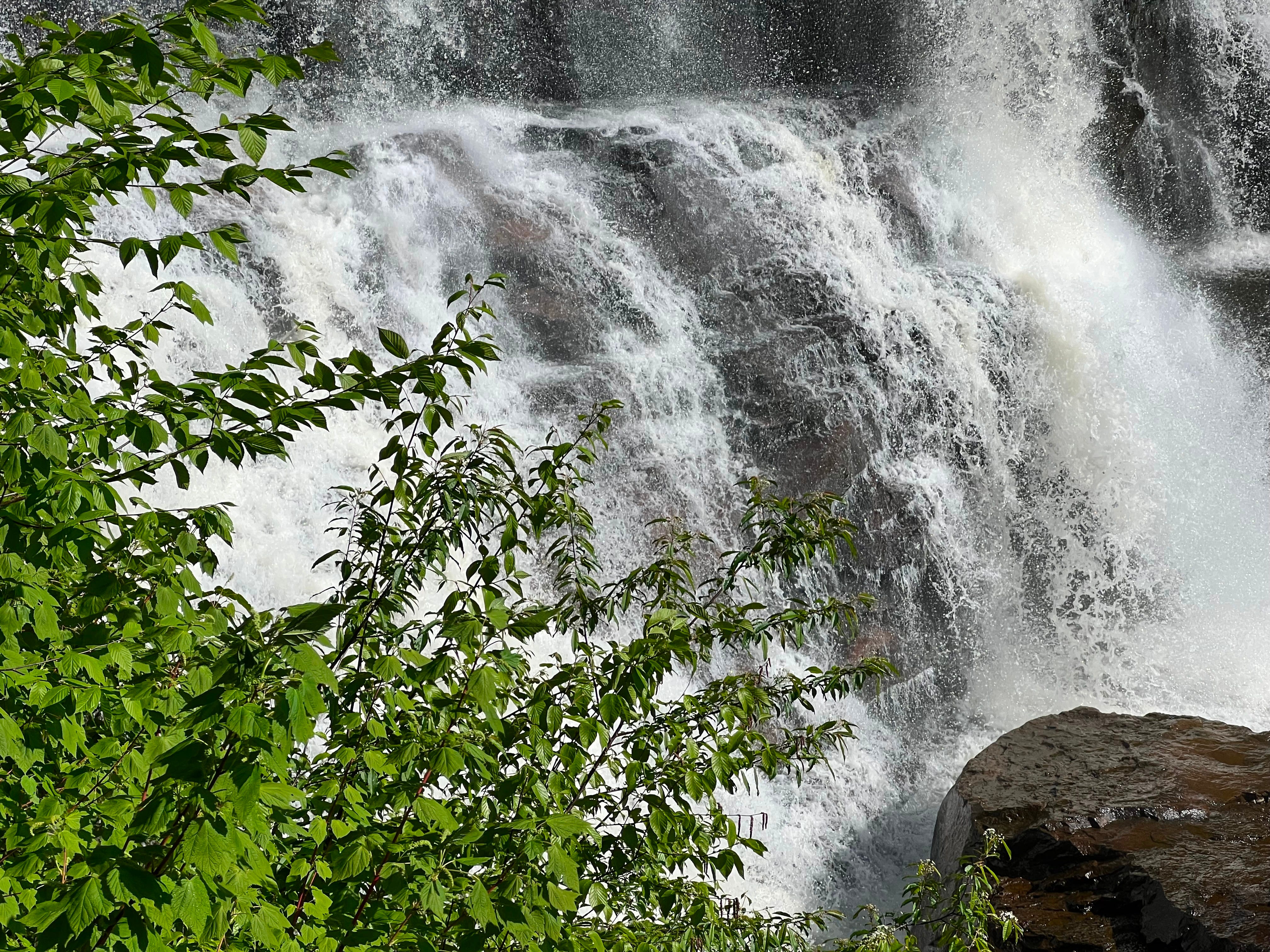
“ We say that humans have the least experience with how to live and thus the most to learn—we must look to our teachers among the other species for guidance. Their wisdom is apparent in the way that they live. They teach us by example. They’ve been on the earth far longer than we have been, and have had time to figure things out.” ~ Robin Wall Kimmerer
This is not a book review, but I want to begin by sharing about Jeremy Lent’s ambitious new book, Ecocivilization: Making a World that Works for All.1 It has been the focus of my evening reading since it arrived from Bookshop.org last week. I hope this will take us into a conversation on how we think about the future, imagine what possibilities might unfold, and consider how we might participate in that unfolding.
Ecocivilization begins with a sobering recounting of all we have destroyed. Lent details how the ongoing exploitation of people and ecosystems to establish European imperialism led to the domination of global decision-making by corporations and a greedy Windigo culture of over-consumption. Windigo, the monster Robin Wall Kimmerer introduced in Braiding Sweetgrass, is characterized by an insatiable hunger that leaves him always searching for the next victim to devour. The more he consumes, the more he must have. It is the story of modernity.
“Capitalism,” Lent writes, has “embraced and amplified the other aspects of dominion: … patriarchy, empire, militarism, debt bondage, and slavery” as well as “industrial-scale genocide and white supremacy.” Whew! And yet, we know that, don’t we?
Lent argues that achieving ecocivilization will require moving from our culture of human supremacy to “recognizing the intrinsic value of all life and honoring its right to thrive.” This is one of so many statements where I found myself saying, “Amen!” He names this as one of six shifts that will be required.
Chapter by chapter, the author lays out how to reimagine the underpinnings of an ecocivilization including the economy, agriculture, infrastructure, law, global governance, and more. The chapters entitled “Living Earth: Mutually Beneficial Symbiosis with All Our Relatives” and “Culture and Community: Cultivating Care, Dignity, and Planetary Consciousness” especially spoke to my interests.
Lent’s writing is powerful and clear; the case for total system change, compelling. I appreciate and, frankly, am in awe of this undertaking to frame a new way of living. As in all nonfiction I read, I underlined, wrote in the margins, and tabbed pages to which I wished to return; suffice it to say, this is now a well-marked book. I do encourage you to read this book. And yet…
And yet, I am concerned that spirituality is rarely mentioned. A few paragraphs reference Pope Francis and other religious traditions that have called us to care for Earth. A few paragraphs reference Gaian consciousness. The beliefs of Indigenous cultures are mentioned in several places throughout the book.2
Where is the call to reclaim our spiritual connection, our relationships to the living world as fellow travelers within the vast Cosmic unfolding? I’m missing the reminder of what Robin Wall Kimmerer termed the “Gift Economy” that calls us to gratitude and reciprocity. What of the awe, wonder, and beauty that we can find in every flower, drop of water, and expanse of sky? I want to be reminded of the invitation to journey to the depths of our soul essence so that we might re-member and return to Earth the unique gift with which we have been entrusted. What of listening deeply for Earth’s dream and discerning how we might be invited to co-create the future with her? Trying to determine the next steps without her Wisdom – isn’t that what we’ve been doing in this dominator culture? Calling on our human-centric knowledge without hearing the collective Wisdom of Land, Sea, and Sky?
Domination, destruction, and Windigo greed is a spiritual crisis. Surely, we cannot forge a path to mutual thriving without reweaving the torn fabric of Earth and soul. Ecospirituality. Is there a future without it?
~~~
For quite a while, I’ve been saying that I write at the intersection of ecology, spirituality, story, and practice.3 What does that even mean? Well, it’s easy to say the words, but not so easy to explain them. I want to try, nonetheless.
Spirituality, as I use the term, is not tied to a religious tradition. It certainly is not intertwined with a view of a dominating male creator who rules with harsh punishment. I think of it as Holy Mystery that moves within, among, and around us all, a wholeness that unifies; a unity that makes whole. Or, as has been written, “Spirituality is about Spirit connecting with spirit.”4 (Upper and lower case letters matter here!)
Placing “ecological” in front of “spirituality” affirms that this is not only about an interior journey, or even a “transcendent” one. It is at once personal, ecological, and cosmic. Our souls are deeply intertwined with the souls of trees and rocks, rain and wind, humans and more than humans. Ecospirituality is a declaration that there is no “other.”
In spite of the fact that descriptions fall short, I suspect that in some beautiful moments we all have come to know that Redwood, Wren, or Dragonfly are not “it” but “thou”; we have heard our names in the exhale of wind; we recognized that sip of water, traveling throughout our body and quenching our thirst, as holy communion.
I am struck by the words of writer Diarmuid O’Murchu as he explored ecological spirituality:
“I view spirituality as a consciousness belonging to deep time, predating formal religions by several thousand years. I will also make the bolder claim that this ancient spiritual consciousness espoused a more integrated view of life, often transcending the dualistic separation that continues to haunt the religious consciousness of the modern world. With this more integrated approach, the adjectival prefix ecological becomes somewhat redundant, because historically it seems that ancient spirituality was deeply integrated with ecological and environmental concerns…..
“I am not proposing a return to some idyllic past that, truthfully, never existed. …. I am seeking to honor the full scope of what the creative Spirit has been doing across the billions of years of cosmic and planetary evolution, including the entire spectrum of human becoming. Our species did not depart from the paradise of a long-lost garden. We have emerged in connection with Spirit and our fellow creatures over seven million years. ….
“In spite of all the negative forces to the contrary, this new world order continues to engage our species and will not let us go, no matter how much we try to resist it. In that hopeful defiance for a new world, we revisit the noting of eco-spirituality, with its dynamic, expansive horizon, to deliver a different kind of world more radiant with meaning and hope.”5
We are of Earth, penetrated with a life-force we might call Spirit that weaves all spirits into a holy web of life. Well, that’s another way to try to say what is really beyond words. For to put words to anything that is 13.8 billion years in the making and 93 billion light years in diameter (and that’s just the “observable” part) is well beyond my capacity! Yet perhaps this gives you a glimpse of what I mean when I write of ecospirituality. And why I feel called to offer stories and practices that might give us a glimpse of the worldless realm of heart and soul.
Some of you may be aware that over the past six and a half years I’ve led a monthly gathering of Church of the Wild. After reading this essay, I’m sure you’ve already guessed that this is not a typical “church.” No building, no dogma, no theological statements. We are part of the larger Wild Church Network that support ecospirituality in various forms where it sprouts.
Over the past six months, our in-person gatherings have been on hiatus as I’ve sensed that an evolution was being invited. As I wandered the woods on a recent weekend retreat, I was given a nudge toward a new way of gathering. You’ll be hearing more about that in a “newsletter” coming your way very soon. My hope is that, should you desire, you will be able to join in community with a group of like-hearted people from various locations as you connect more deeply with your own ecosystem. I also plan to offer four seasonal gatherings for those who are able to attend in person.
This is not meant to be a full explanation of these new Church of the Wild offerings; that will come your way later this week. However, I do hope with this post, you will understand why I am committed to supporting ecospirituality through stories, practices, and conversations. And perhaps you too might feel the nudge to be a part of this journey.
~~~~~~
The Substack publication Reweaving Earth & Soul now has a sister newsletter: Church of the Wild Earth & Soul. Both are free unless you choose to pay for a subscription. Please feel no pressure to do so. I hope you will enjoy both. However, you can easily choose to unsubscribe from one or the other or both should you so choose. If you have not subscribed, I hope you will. Deep gratitude for your readership.
~~~~~~~
Here, in these edge times, may we join in reweaving the
beautiful, life-giving tapestry of Earth and soul.
Jeremy Lent. Ecocivilization: Making a World that Works for All. NY: Penguin Random House, 2026.
The books is 361 pages and there’s no index so it’s possible that I missed a richer conversation or two along the way. Please tell me if you see it.
As an example, see Earth & Soul: Reconnecting amid Climate Chaos by Leah Rampy, Bold Story Press, 2024, and Discovering the Spiritual Wisdom of Trees by Beth Norcross and Leah Rampy, Broadleaf Books, 2025.
Diarmuid O’Murchu. Ecological Spirituality. Maryknoll, NY: Orbis Books, 2024, p.3.
Diarmuid O’Murchu. Ecological Spirituality. pp. 8. 14, 15
.
No posts
Comments
Nothing yet. Say the first thing.
Sign in to join the conversation.