
It’s a crisp Friday afternoon in the fall of 1999. My mom just dropped me off at my grandmother’s house, where I’ll spend the night while my parents attend a Nickelback concert at the casino for their monthly childfree date night.
I’ve gotten no further than the front door when Grandma envelops me in a bear hug, kissing my cheek just firmly enough that it leaves behind a slight imprint of pink lipstick (something that will grow to annoy me as I get older, then once she’s gone, become something I miss fiercely).
I’m giddy with excitement for the weekend ahead: for the can of Sprite waiting for me in the fridge (Mom doesn’t allow soda in our house), for the Archie comics I’ll spend the afternoon reading, and for the hour-long foot massage I know Grandma will give while we watch Shirley Temple on VHS.
Before tucking me into bed, she makes sleepytime tea, complete with no less than eight cubes of sugar, and in the morning, we heat up my favorite brown sugar oatmeal with the little dinosaur eggs that dissolve in the soupy mush. After breakfast, we sit at the dining room table and scrapbook—no TV, no phones, completely satisfied with nothing but the company of one another and the promise of a good craft.
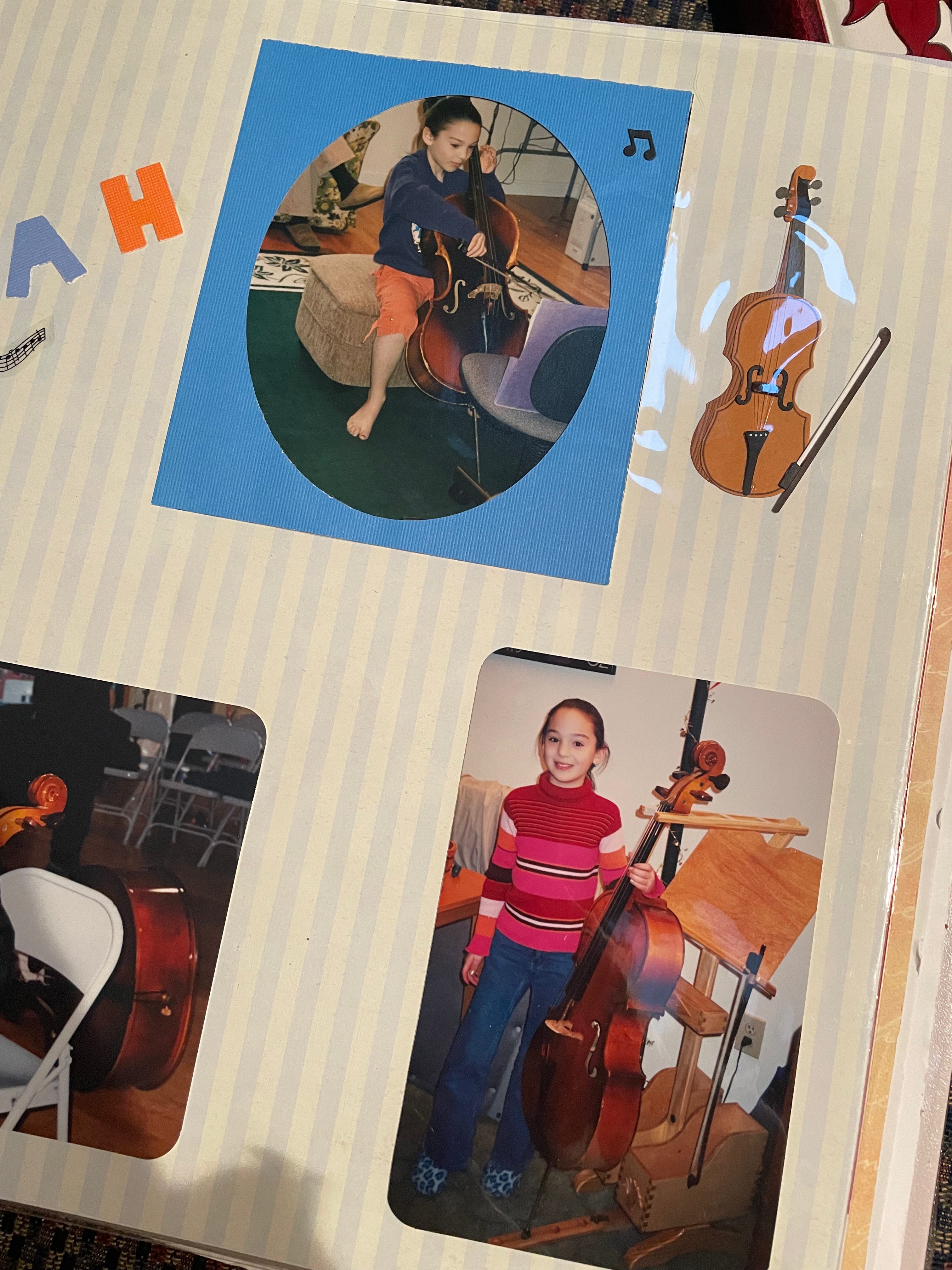

These are the memories that come to mind when I think of my grandmother. Whereas my house often felt cold, a bit lonely, and occasionally volatile, Grandma’s home was the exact opposite—warm, impeccably cozy, wrapping me in the threads of a toasty cocoon each time I entered—the only place as a child I felt I could do no wrong.
She’d whisper in my ear, too many times to count: “You know you’re my favorite, right?”
A sentence I’m pretty sure you’re never supposed to say to one of your five grandchildren, and likely one she told each of us—yet I craved it, relished it, needed this reassurance that I was, in fact, worthy of unconditional love.
Into my teens and twenties, I experienced all the normal milestones of growing up—going away to college, then moving to a different state for my first job, then eventually moving across the country—and with every box I ticked off my life’s checklist, I saw my grandmother less and less. She always requested that I call her more often, and I cherished the cards she sent for every holiday and birthday, her handwriting becoming noticeably shakier with each one.
In my grandmother’s last year of life, my mother became her caregiver. Once it became abundantly clear that her health was quickly declining, my mom arranged a spa day and my sister and I traveled home to spend what we knew could be the last bit of time we’d ever have with her.
It’d been several months since I’d last seen her. I was shocked to find that, for the first time in my entire life, my grandmother’s hair was white—no longer the copper gold color my own son has now inherited. I didn’t know this version of Grandma, the one that no longer whispered that I’m her favorite, instead repeating the same sentence three times because she can’t remember the conversation of the last five minutes.
Following the trip, I lived in the grip of anticipatory grief—a slow suffocation, its fingers already tightening around my throat.
A few months later, after my grandmother passed, I traveled back to my home state once again to be there for the services. I let the tears flow freely for days, each one proof of the love I had been lucky enough to experience.
Her house went on the market almost immediately, and with it I found a secondary grief I hadn’t anticipated. My mom, sister, and I shared the daunting task of going through my grandmother’s things. We sat on the floor, sorting through jewelry boxes, finding mostly costume jewelry but each claiming a thing or two we told ourselves she’d want us to have.
As I sat on the bed in the bedroom I'd slept in as a little girl, I found a small piece of paper tucked away in the nightstand, with a quote scribbled in my grandmother's handwriting:
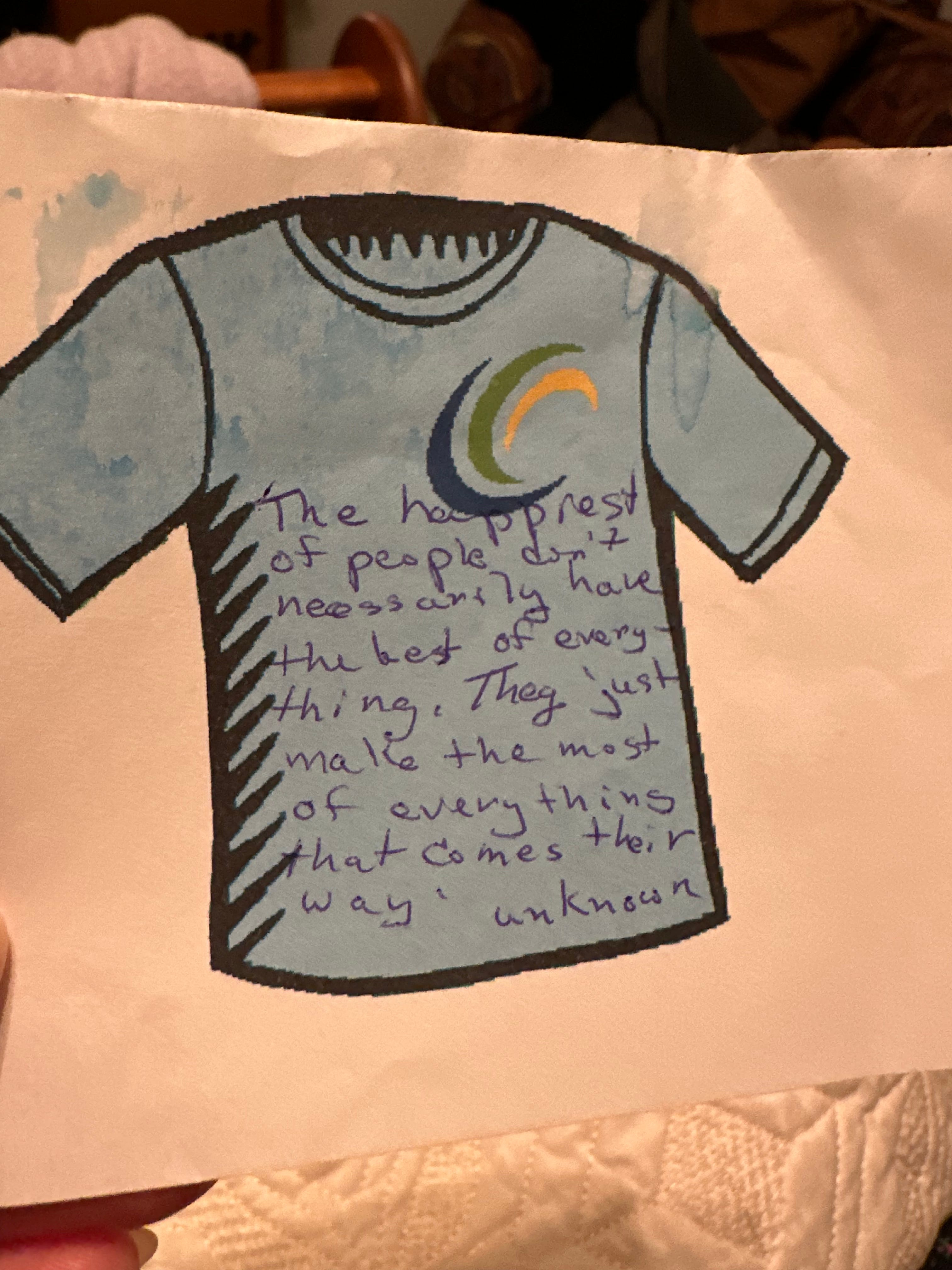
The happiest of people don’t necessarily have the best of everything. They just make the most of everything that comes their way.
As I read it, I thought: she’s so right.
I wondered then, and again as I type this now: what inspired her to write this and then tuck it away? I like to think of it as her little reminder, just for me—a reminder to choose happiness over grief. To remember her the way she was for my entire childhood—the Sprite and the foot massages and the pink lipstick, instead of the deterioration and the decline at the end.
I still cry when I think about my grandmother, about how much I miss her and would kill to have just one more of those kisses that once made me feel smothered. I wish she could have met my husband, could have seen our son and recognized herself in his copper-gold hair. I know she would have loved them, would have told my husband exactly how lucky he was, threatened him sweetly to never do me wrong.

When I was pregnant, my mom told me that she didn’t want to go by “Grandma.” Grandma was her mother, and she wanted a different identity—her own unique title for her big entrance into this new, very important role.
But all I wanted her to be was Grandma. I wanted to recreate my childhood, for her to have the exact same relationship with my son that my grandmother had with me. I’ve always felt that there’s a distinct bond a grandparent has with their daughter’s children, versus their son’s—I don’t know if it’s genetics, or what. My mother created me, then I created my own child, and there seems to be no other option besides them having the most special relationship on earth.
When my son was born, my mom spent the first four weeks living with us. Each FaceTime call, she’s completely absorbed in my son’s face. She takes any opportunity to see him, even though we live three thousand miles apart. When I call her scared or overwhelmed, she moves heaven and earth to be there. She whispers to him that he’s her favorite, even though he’s her only grandchild, and I watch my own childhood play out again—this time through him.
I’m often overcome with the love I feel for my son, and I realize I’m learning what unconditional love actually is. It’s not just one thing—not only the all-forgiving, safety-net version my grandmother gave me, and not just the firm, tough love I felt from my parents.
It’s both, and so much more. It’s my grandmother teaching me I was worthy of being chosen. It’s my father requiring thirty minutes of cello practice each day, teaching the act of self-discipline. It’s my mother traveling across the country every few months to see us, proving that love doesn’t diminish with distance. And now it’s me, trying to give my son what I was given—the knowledge that there are people in this world who will love him not because he earned it, but simply because he exists.
My grandmother’s handwriting is fading in my memory now. But her lesson isn’t: the happiest of people don’t necessarily have the best of everything. They just make the most of everything that comes their way.
And I will. When I feel overwhelmed with the constant seesaw of priorities as a working mother, get frustrated by uncontrollable toddler tantrums, or struggle to prioritize myself in the chaos of everyday life—I’ll FaceTime with my mom (who has, in fact, become “Grandma”), tell my son you’re my favorite, and wrap him in that same cocoon of unconditional acceptance that held me in that cozy house in the fall of 1999.

No posts
Comments
Nothing yet. Say the first thing.
Sign in to join the conversation.