
Hello Shakers,
Here’s what you’ll find in today’s Learning Brief:
Designing behaviour change at work: From diagnosis to intervention
Upcoming community event and meetups all over the world!
A series of juicy and practical resources
Latest news from our community


We talk about changing behaviour all the time in HR and L&D.
We want people to be more proactive.
Leaders to coach more.
Employees to speak up.
People to adopt new ways of working.
But behavioural change research raises a more uncomfortable question:
Do we actually know which behaviours need to change, and what would make those behaviours more likely to happen?
CRF’s Behaviour Change in Organisations takes a much more precise approach to this question. Rather than treating behaviour change as a matter of motivation, mindset or simply delivering the right learning intervention, it brings together behavioural science, Organisational Behaviour Management (OBM) and Evidence-Based HR.
Here are the ideas I found most useful.
CRF’s starting point is deliberately business-focused: HR should identify the organisational objective first, then determine which employee behaviours contribute to achieving it.
Instead of asking “how do we improve collaboration?”, ask: “what are we trying to achieve, and which specific employee behaviours would drive that outcome?”
For example, if the goal is product innovation, relevant behaviours might include idea generation, knowledge sharing, and championing ideas.
This matters because organisations often try to change broad concepts without linking them to performance.
Behaviour change only makes sense when it is tied to a clear organisational purpose.
Terms like teamwork, ownership, engagement or being proactive are not behaviours; they are labels for clusters of actions.
A behaviour is a specific, measurable and observable action.
And even once we have identified the behaviour, we need to be precise about what kind of change we’re looking for.
Even then, we need to be clear about the type of change required:
introduce or remove a behaviour
increase or decrease frequency
change timing or intensity
sustain behaviour over time
This shifts L&D from vague aspirations to precise behavioural design.
There are around 100 behaviour-change techniques, and no one method works universally.
Most interventions combine several approaches depending on context.
CRF highlights three useful frameworks:
Behaviour Change Wheel - identifies intervention functions (e.g. training, modelling, environmental change)
Behaviour Change Technique Taxonomy - structured menu of techniques
Organisational Behaviour Management (OBM) - focuses on observable behaviour and its triggers and consequences
So the key question becomes: given this behaviour and context, which combination of techniques is most justified?
Behaviour is shaped by:
Antecedents → Behaviour → Consequences
This shifts diagnosis away from motivation and towards context:
What triggers the behaviour?
What happens immediately after it?
Barriers are often not skill-related. They may be:
missing prompts or tools
unclear processes
environmental friction
unintended reinforcement of the wrong behaviour
Understanding the system around the behaviour is often more important than the behaviour itself.
CRF challenges the idea that changing attitudes or culture automatically changes behaviour.
Instead, behaviour change often shapes attitudes, not the other way around.
“Culture change” is also too vague to act on unless translated into specific behaviours.
For example, a “speak-up culture” becomes:
raising risks earlier
challenging decisions
escalating concerns
Only behaviours can be observed, measured and changed.
The report’s approach doesn’t end when an intervention is launched.
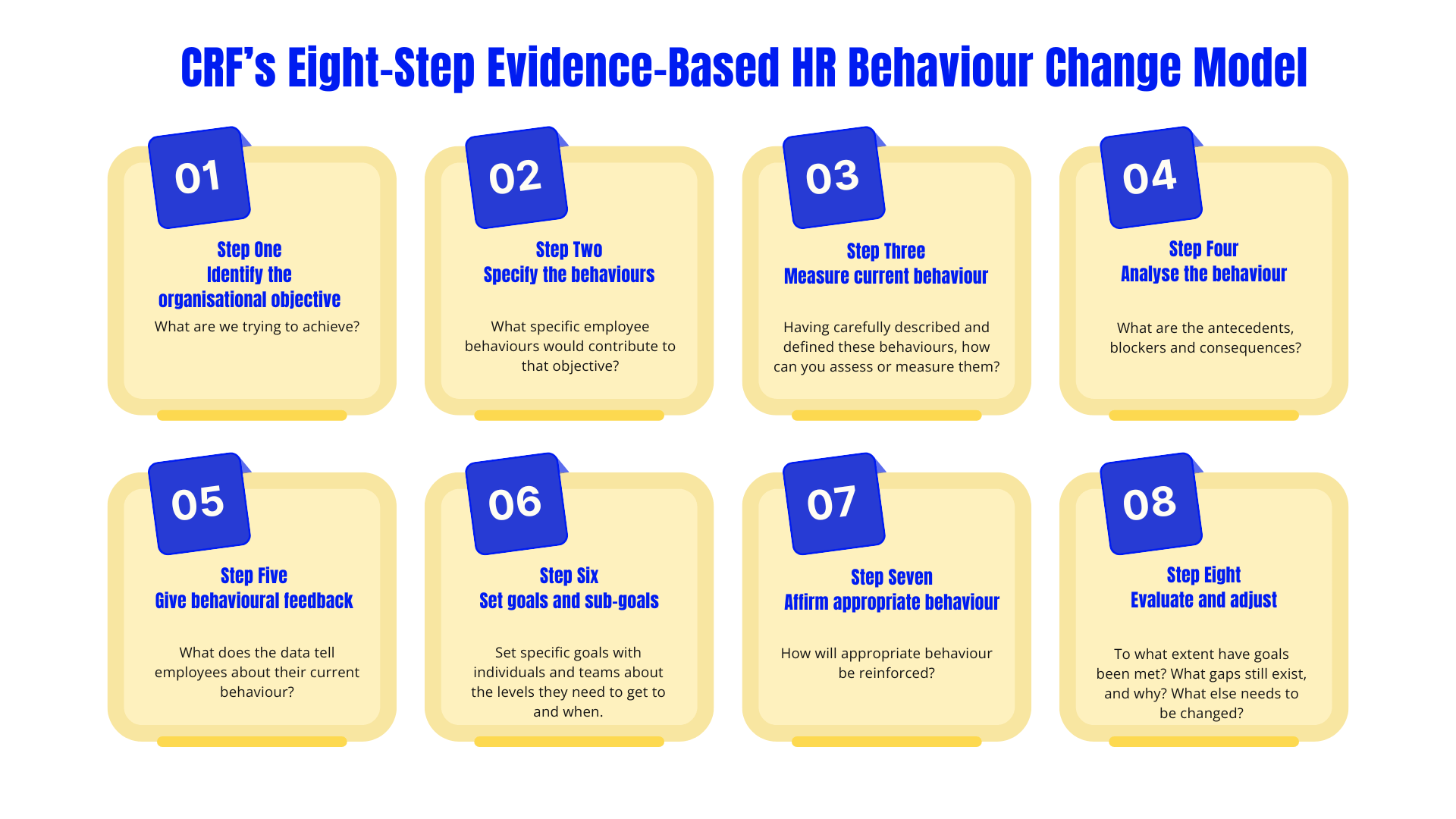
Its Evidence-Based HR Behaviour Change Model moves through:
Objective → Behaviour → Measurement → Diagnosis → Feedback → Goals → Reinforcement → Evaluation
That final step matters.
We need to evaluate whether behaviour actually changed, and then adjust the intervention based on what we learn.

I know you must be thinking: okay, but what does this actually look like when you’re sitting in an L&D role, being asked to “fix” something?
Because in reality, we rarely get neatly defined behavioural problems. We get statements like:
— people need to be more proactive
— the training didn’t stick
— we need better accountability
— teams aren’t collaborating enough
And the instinct is usually to jump straight to a solution: a programme, a workshop, a toolkit.
But the CRF approach is asking us to slow that down and get more precise first: what is actually going on in terms of behaviour, and what’s shaping it?
So I thought it might be useful to take typical problem statements and work through them using the lens from the report, just to see what it changes in how we think about intervention design.
Let’s take two.
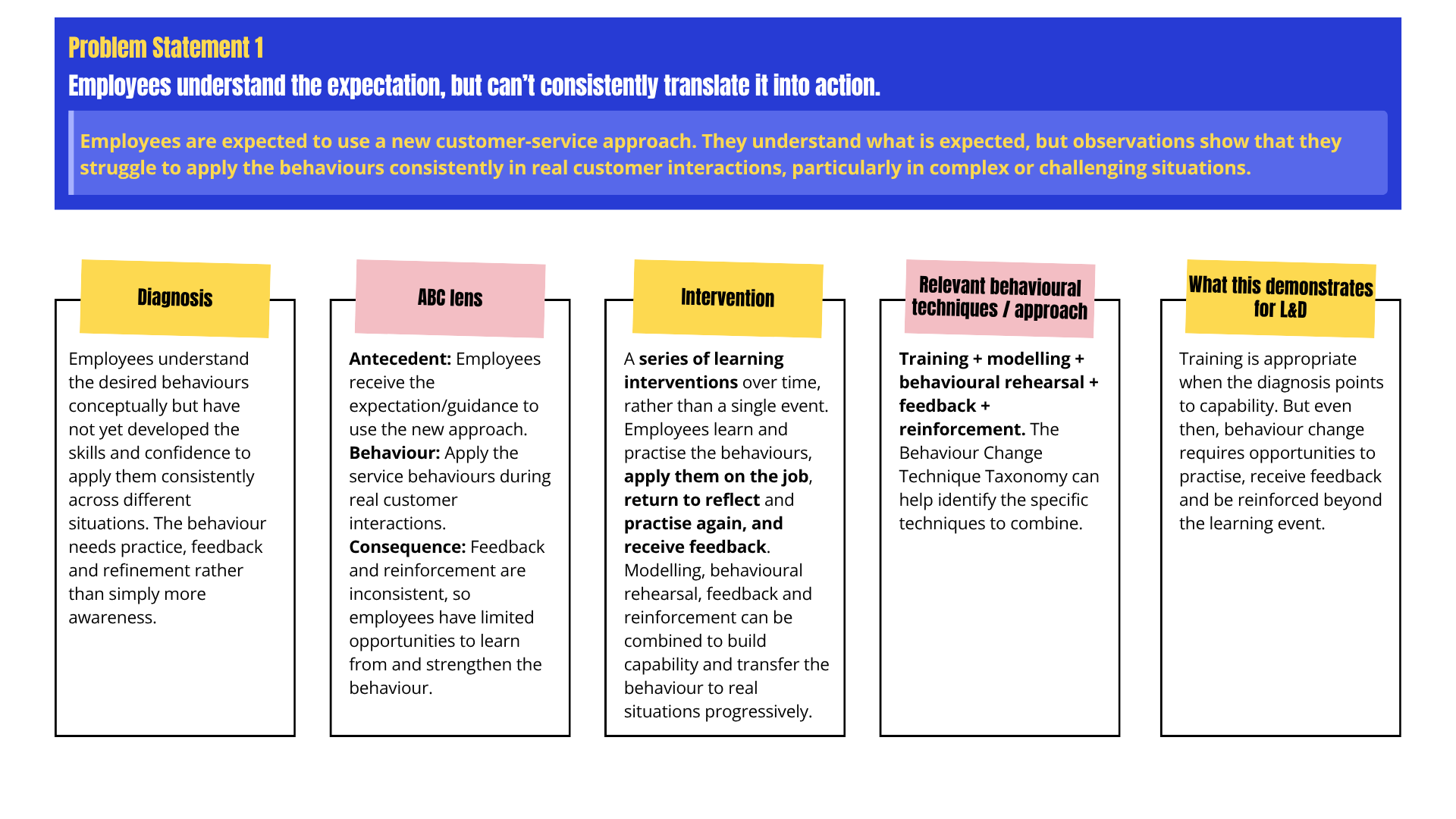
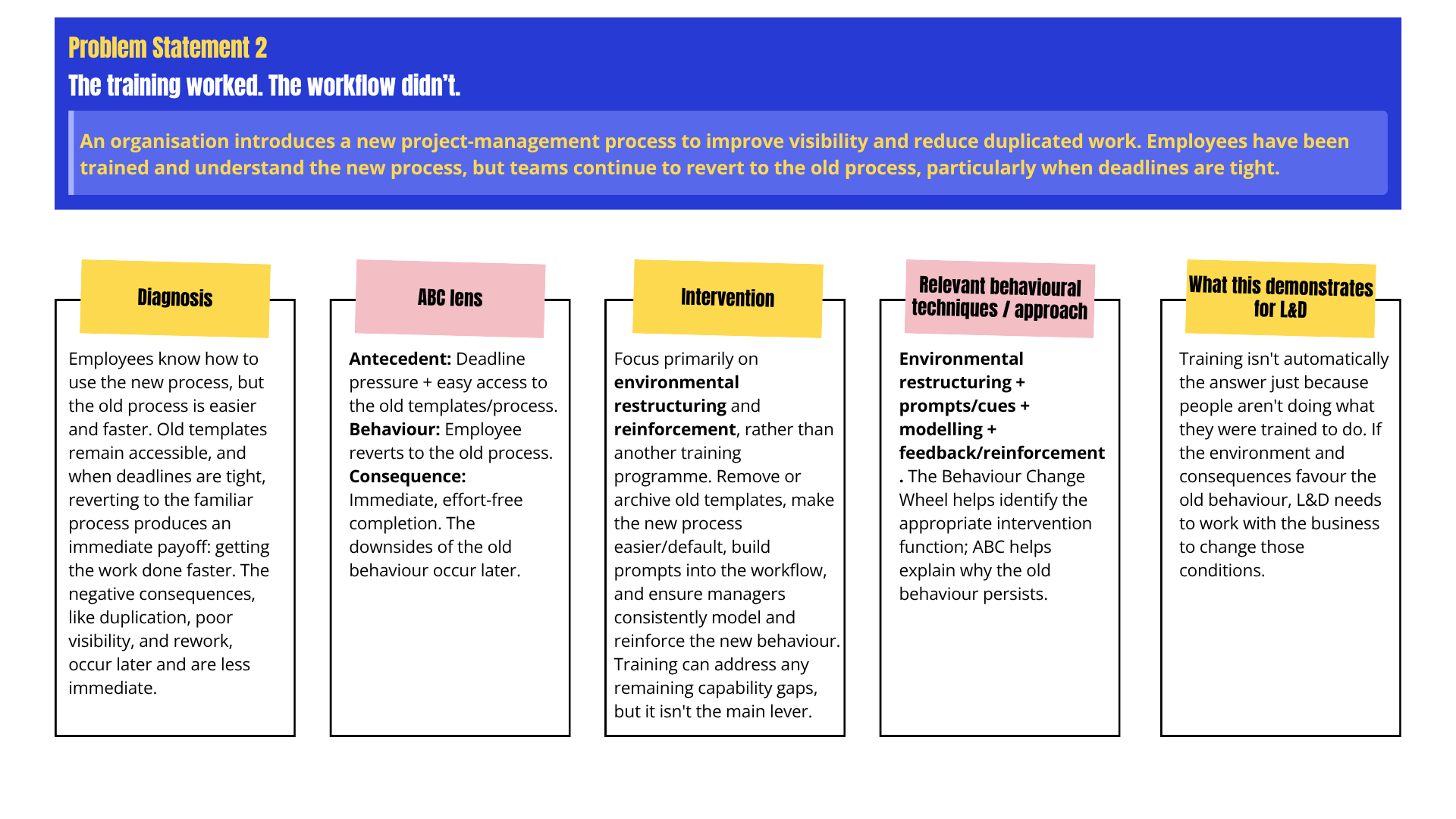
These two examples show why behaviour change can’t start with a preferred intervention. In one case, people need to build the skills and confidence to apply a behaviour consistently in challenging situations. In the other, people already know what to do, but the environment makes the old behaviour easier and more rewarding.
So how do we decide which intervention is right?
That’s where CRF’s eight-step Evidence-Based HR Behaviour Change Model comes in. It provides a practical process for identifying the behaviours that matter, diagnosing what’s influencing them, and selecting interventions based on evidence rather than instinct.
And perhaps that’s where the real shift lies, not in adding more behaviour-change techniques to our toolkit, but in getting better at diagnosing before designing.
So, the next time you hear “We need people to be more proactive” or “The training didn’t stick”, ask yourself:
What exactly is the behaviour we’re trying to change? What’s happening around it? And what would need to change to make the desired behaviour more likely?
That’s all, folks, for today’s Learning Bite.
What’s one behaviour-change challenge in your organisation that you’d look at differently using this lens?

We’ve got one session to put firmly on your radar this time!!
🌟 L&D Backstage:The Metrics That Matters: Reverse Engineering The Manager’s Effectiveness
What actually makes a manager effective? And more importantly, how do we know?
Too often, L&D teams design manager development based on assumptions about what “good management” looks like. This session takes a data-driven approach, walking you through the methodology behind the Manager Principles Index (MPI), a framework built around seven engagement criteria that managers can directly influence and that connect to team outcomes.
✨ You’ll explore:
Which assumptions about manager effectiveness might actually be wrong
What managers can influence, and what sits outside their control
How to build your own manager effectiveness index using employee survey data
How to turn the data into practical inputs for training, coaching, and long-term manager development
And if you’re looking to meet fellow Shakers offline, we’ve also got some great local events happening in Dublin, LA, Barcelona, and more!
📍 Local Hub Dublin: Summer L&D Mixer
📍 L&D Shakers LA: Social Mixer & Spotlights
📍 Barcelona Local Hub: Fall in Love with L&D Shakers


[ 👀 Read ] Galbraith’s Star Model for AI-Ready Organisation Design
This is a useful reminder that AI transformation is about far more than adding new technology. Using Galbraith’s Star Model, it explores how strategy, processes, structure, people, and rewards need to move together, and why redesigning one without the others can leave organisations stuck with old ways of working.
[ 🧭 Explore ] The Facilitation Inspiration Library
What do the world’s best facilitators read, listen to, and use? This free library brings together recommendations from 200+ facilitators, including 60+ books, 25+ podcasts, 45+ thinkers, and 40+ tools and platforms. A brilliant rabbit hole for anyone looking to refresh their facilitation toolkit.
[ 📺 Watch ] Innovative Facilitation Techniques Using Picture Cards
Think picture cards are just for icebreakers? This video offers six creative ways to use them to spark deeper conversations, build connection, explore strengths, and create memorable appreciation moments. A great watch if you want to get more out of a simple facilitation tool.
[ 👀 Read ] Less Content. Spice Up Your L&D Team. Tame the Skill Beast.
Anamaria distils two days at Learning Technologies into three signals worth paying attention to: less content and more learning, a changing L&D skill stack, and the continued rise of skills-based thinking. It’s a quick read that raises some big questions about what L&D teams need to focus on next.
[ 🧰 Use ] Meaningful Playfulness: Free Miro Template
This free Miro template brings a little playfulness into conversations through a simple combination of breakout pairs, a spinning wheel, and thought-provoking questions. It’s an easy way to help participants reflect, connect, and learn more about each other without making the activity feel forced.
[ ⬇️ Download ] 2026 Global Leadership Study: No Stable Ground
This report explores the leadership challenges emerging in a world of extreme uncertainty, with a particular focus on balancing current performance with reinvention and deepening trust while protecting the brand. A useful read for leaders navigating the competing demands of AI, growth, and constant change.
[ 👀 Read ] The Art of Culture by Dr. Ian Hallett
This thought-provoking piece challenges the idea that culture is something organisations simply inherit. Using Nvidia’s unconventional management practices as a starting point, it explores how seemingly strange organisational choices can create a very deliberate culture, and why culture may be far more designed than we think.
[ ⬇️ Download ] The Ultimate Skill Data Handbook
This practical guide breaks down everything you need to know about skill data from where it comes from and what good data looks like to how it can support HR, talent, and business decisions. A handy starting point for anyone trying to make skills intelligence more useful and actionable.
[ 👀 Read ] How Agentic AI Challenges Four Rules Your Organization Runs On
Agentic AI isn’t simply another technology upgrade, it challenges the assumption that humans will always be in control of how work gets done. This piece explores four tensions leaders need to navigate as human-and-AI collaboration reshapes work, leadership, culture, and workforce planning.

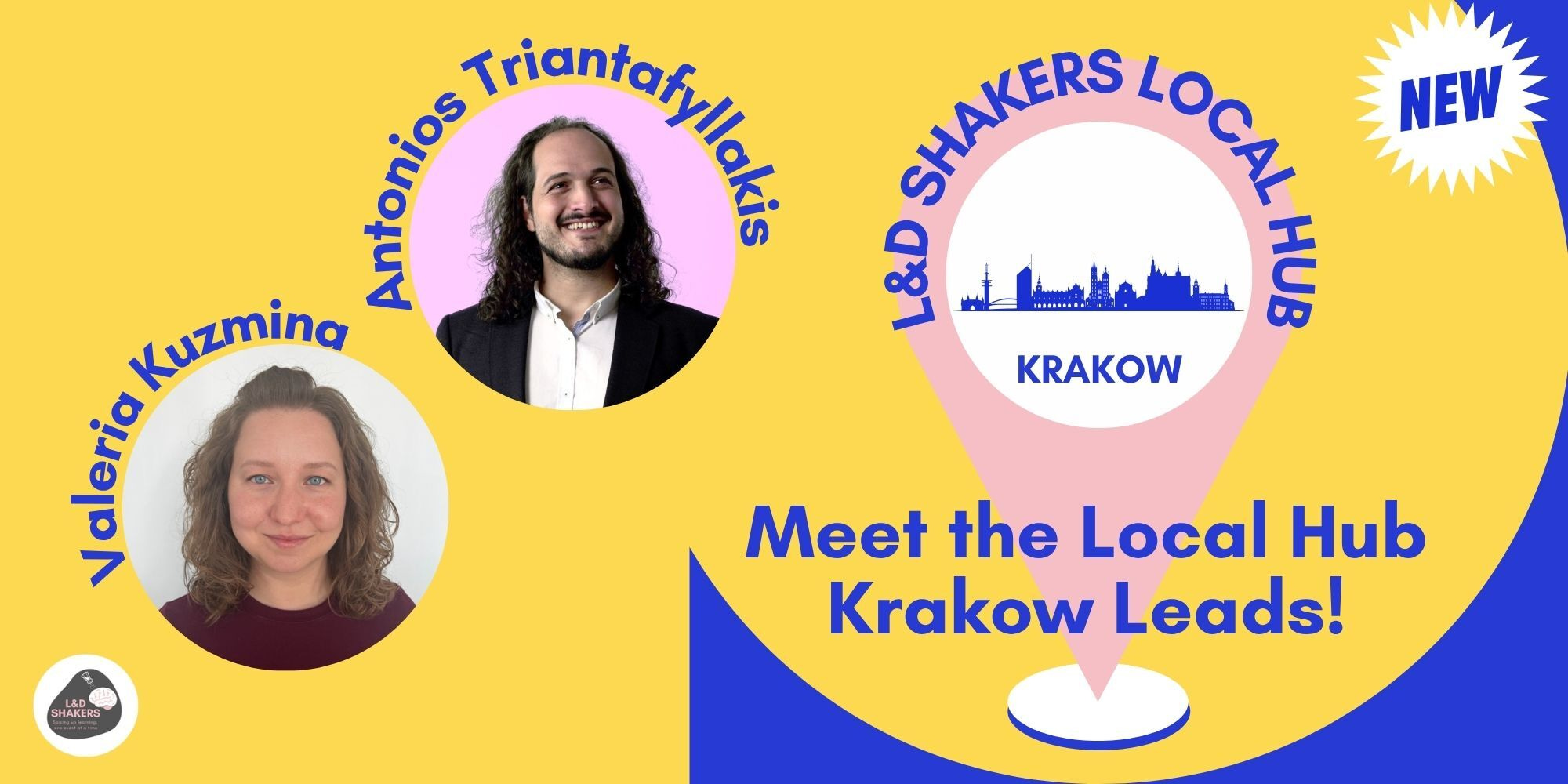
Antonios Triantafyllakis and Valeria Kuzmina joined forces to launch our first-ever Local Hub in Krakow! They’ve already kicked things off, so if you’re in Krakow or nearby, join #2-local-hub-krakow and follow along.
Huge congratulations, Antonios and Valeria, so excited to see you bring the L&D community together in Krakow. Have lots of fun on this new adventure! 💛
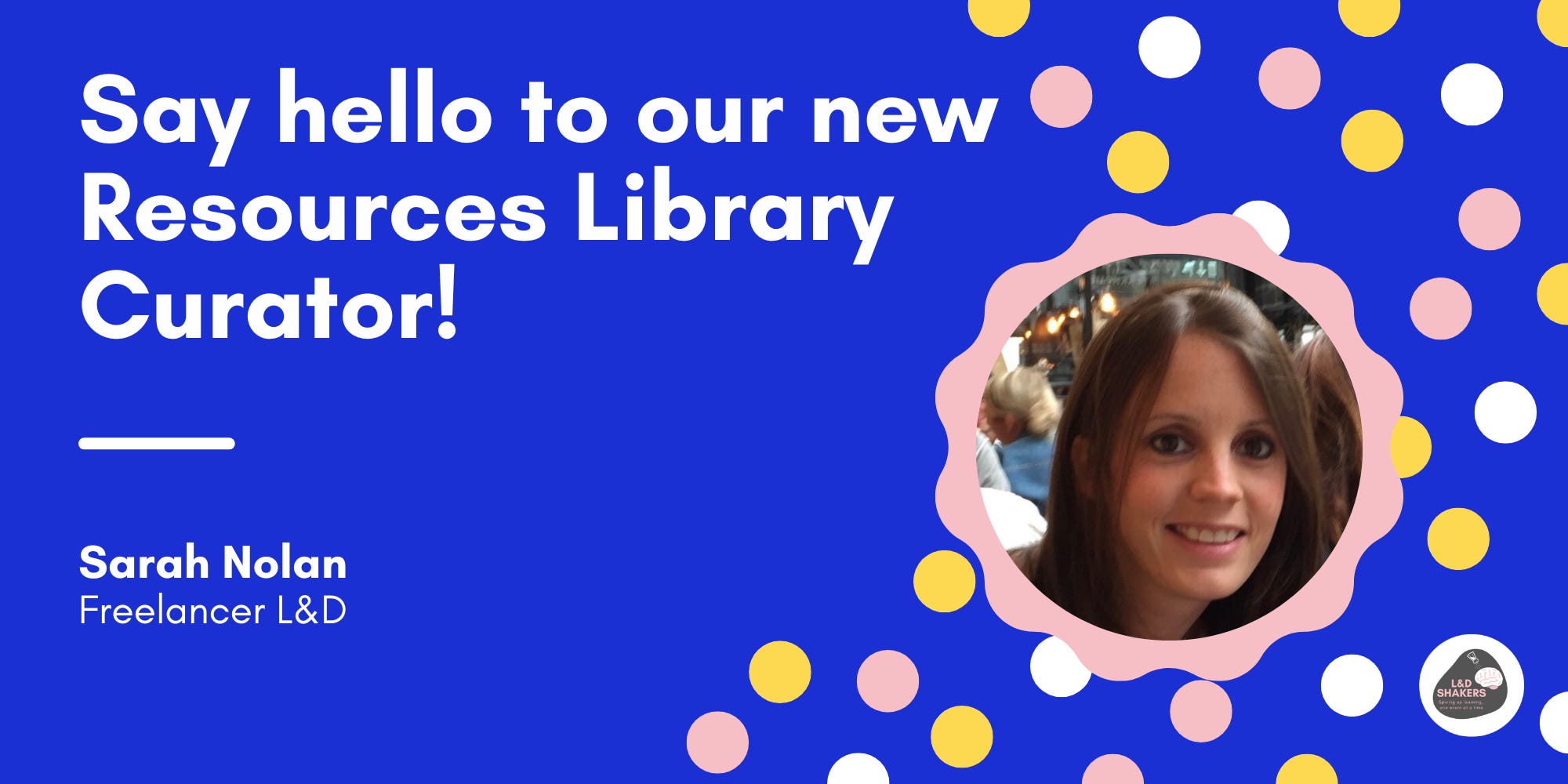
After Inês Carriço did an amazing job building and curating our Notion Library, Sarah Nolan has stepped into the Curator role and is now helping the library grow with even more brilliant resources.
Welcome to the Core Team, Sarah, we’re so excited to have you on board. Have lots of fun curating, discovering, and sharing with the community! 💛
And a huge thank you to Inês for all the time, care, and fantastic resources you brought to the community. 🫶
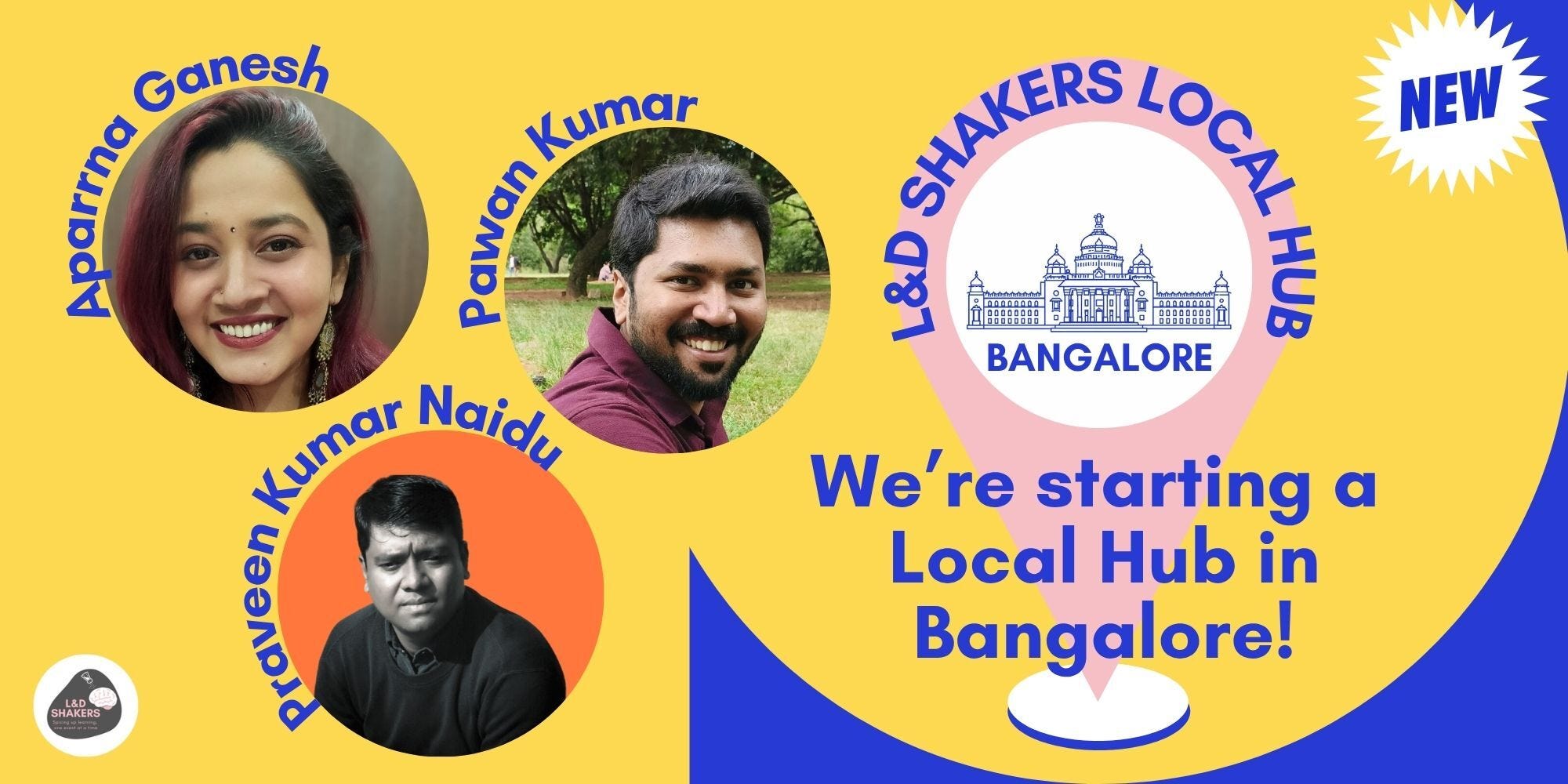
Praveen Kumar Naidu, Pawan Kumar and Aparrna Ganesh have officially launched our first-ever Local Hub in Bangalore, India and they’re already getting things moving, with the first session lined up! Join #2-local-hub-bangalore to follow along and get involved.
Huge congratulations, Praveen, Pawan and Aparrna, and welcome to the Core Team! We’re so excited to see you bring the Bangalore L&D community together. Have lots of fun on this new adventure! 💛
〜See you soon
Till then, keep spicing up your learning! 🧠🧂
Sejaal
If this edition made you think, smile, or steal an idea, pass it on to someone else too.
No posts
Comments
Nothing yet. Say the first thing.
Sign in to join the conversation.