
How are you coping with the heatwave? Reporting from Paris: it’s been completely insufferable.
Still, as spring slips into summer, we’re taking a moment to look back on a month filled with important conversations — on taboos around mental health, harm reduction, and bodily autonomy, as well as stories of resilience from the Central European region.
As always, thank you for reading, sharing, and growing this space with us.
This issue features illustrations by Dorottya Juhász and Eszter Balázs.
Your Lazies
For Mental Health Awareness month, we returned to one of our favourite formats and asked members of the Lazy Women team to share their thoughts on the topic. Their answers remind us that there is no single path toward feeling better — and that open conversations still matter.
What’s something you stopped doing that improved your mental health?
Lazy Maria: Instagram and Twitter. My anxiety was off the charts. I started to develop physical symptoms. My serotonin was travelling fast to my vomiting center — yes, I was also cracking up when I discovered it was called like that —and the nausea feeling was getting increasingly unbearable. On the other hand, Twitter was giving me a lot of insomnia. I started to question my own mind. I used to enjoy Twitter a lot. It was my favourite social media since uni. I discovered many nice — and some definitely not nice — things over there. Fun, fun, until it was not. I feel like my body hit a limit, and I’m sure there was an incubation period.
I started to be attracted to the idea of a more analogue life from last year onwards. I guess it was also my search for peace due to personal and world-constant-apocalypse reasons, but I could see materialised first-hand how the overconsumption of media can become harmful/toxic, like when we get food poisoning.
The only reason that would make me come back — at this precise moment in space and time — would be to contact some friends over there. There’s no doubt in my mind that taking those two out of the equation for the last three months has made my life feel more balanced and less saturated.
What’s your version of rest that actually works for you?
Lazy Lauren: There are two elements of rest I have been reflecting on lately.
One is the more typical version of recognising I need to switch off, withdraw, and focus on building myself up again. That might look like ignoring Whatsapp messages for a couple of days, taking a long shower and getting into my PJs straight after work, eating something comforting that isn’t necessarily entirely nourishing, and reading a book. No screen time. No scrolling. No ticking off something on the to-do list. No forced walk to get my steps in. Just what feels like quite literal rest.
On the flip side, appreciating something more active, being able to go out and experience something, being mindful of living in it throughout, can feel wonderfully restful. If my mind can take itself off from all the things to do — and it helps if I leave my physical diary at home which is a rare but increasingly intentional occurrence — and focus on the conversation with friends and the taste of food at dinner, or the sounds and scents of a day by the sea, or even take in a scenic commute to somewhere, it can feel restful. I might be walking and talking, but if I can get my mind focused on that and that alone, it’s a welcome change from the usual dance of planning and plotting over at least 15 things at once, as the internal chatter converses silently. It’s basic and cliche, but when I inevitably get back to the to-do list, I feel all the more able — and willing — to tackle it.
What’s one thing you wish people talked about more honestly regarding mental health?
Lazy Zsofi: I wish people were more open about medication. I have been recently prescribed antidepressants, and it was only when I shared this with people close to me that I found out how many of them have also taken them at some point in their lives. While I feel like the idea of seeking therapy has become more acceptable in certain circles (especially amongst women of my generation), the concept of needing more acute medical help is still very much taboo. I wish we treated it less as a secret, especially given that antidepressants can have pretty horrible side effects, and it might take a while to find one that works for you. In the meantime, you might be struggling even more and thus in need of friendly support.
What’s one piece of advice about mental health that didn’t work for you?
Lazy Paulina: Even on the best of days, living with an OCD diagnosis is not the most fun, as you can well imagine. It is a disorder that is hard to understand — most days I even question if I even have it in the first place, which might be a compulsion in and of itself — and explain to others because what I often get in return is “don’t overthink things” or “just chill” or “that’s silly”. Yeah, maybe you’re right, but on the other hand, I feel I might just die all the time.
I’m supposed to write something positive about what has helped me feel better, but I’m not sure anything is helping me at the moment. Medication did, at some point, and I highly recommend exploring this option to those with the same diagnosis who are still on the fence. But what I would really like to do instead is tell YOU, non-OCD readers, what you can do to help (or at least not trigger) your friends and family living with OCD.
Don’t taunt us with the opposite of what we struggle against
I cannot tell you how many times friends have gone into detail about how little they care about germs when the mere thought of holding a doorknob can make me spiral for hours or days. So please don’t tell me “c’mon, you have no idea how many people have touched that without washing their hands after going to the loo”. Believe me, doesn’t help.
Similarly, don’t try to “outsmart” us
Chances are, we have already spent hours obsessively thinking things through or researching random symptoms online (don’t recommend, btw, but I’m in no position to judge). Chances are, too, you’re just bringing our every concern to the surface and leading us into a crisis by making us overthink the thing you don’t want us to overthink about. Not very smart, is it?
Don’t throw it in our faces when we do something that doesn’t seem to fit into your idea of OCD
There’s no manual or rulebook we have to follow. Even when it comes to germs or illnesses, people with OCD experience and deal with their intrusive thoughts and compulsions in many different ways or have dissimilar concerns altogether. If anything, my fear of germs and contamination has made me be less tidy in some instances because I cannot put contaminated things away in uncontaminated spaces. So no, pointing out one thing to invalidate our other plethora of symptoms isn’t the gotcha or cure you think it is. We’ll be the first to acknowledge OCD is oftentimes NOT logical.
Don’t use “like” or “dislike” to describe our triggers
Now, there might not be ill-will behind using these words, but used constantly, they start to grate on us - especially when you use them to anticipate a thought we haven’t begun to form about you. “Oh, you wouldn’t like me not to wash my hands before I eat my fries.” I don’t “like” obsessively washing my hands myself; it’s a compulsion! You using it to imply a moral judgment from us towards you, or an enjoyment we get out of a real disorder, gets real tiresome real fast.
The bottom line is, we don’t like OCD. We don’t like our symptoms. We don’t want to think about them. Don’t use what you do or don’t do, or what we do and don’t do, to… what? cure us? make us realise we’re being silly or illogical? While you don’t have to enable or encourage our obsessions and compulsions, doing all of the above just makes us feel ashamed and isolated. Really, who likes being told they’re wrong or stupid for something they can’t help for the most part?

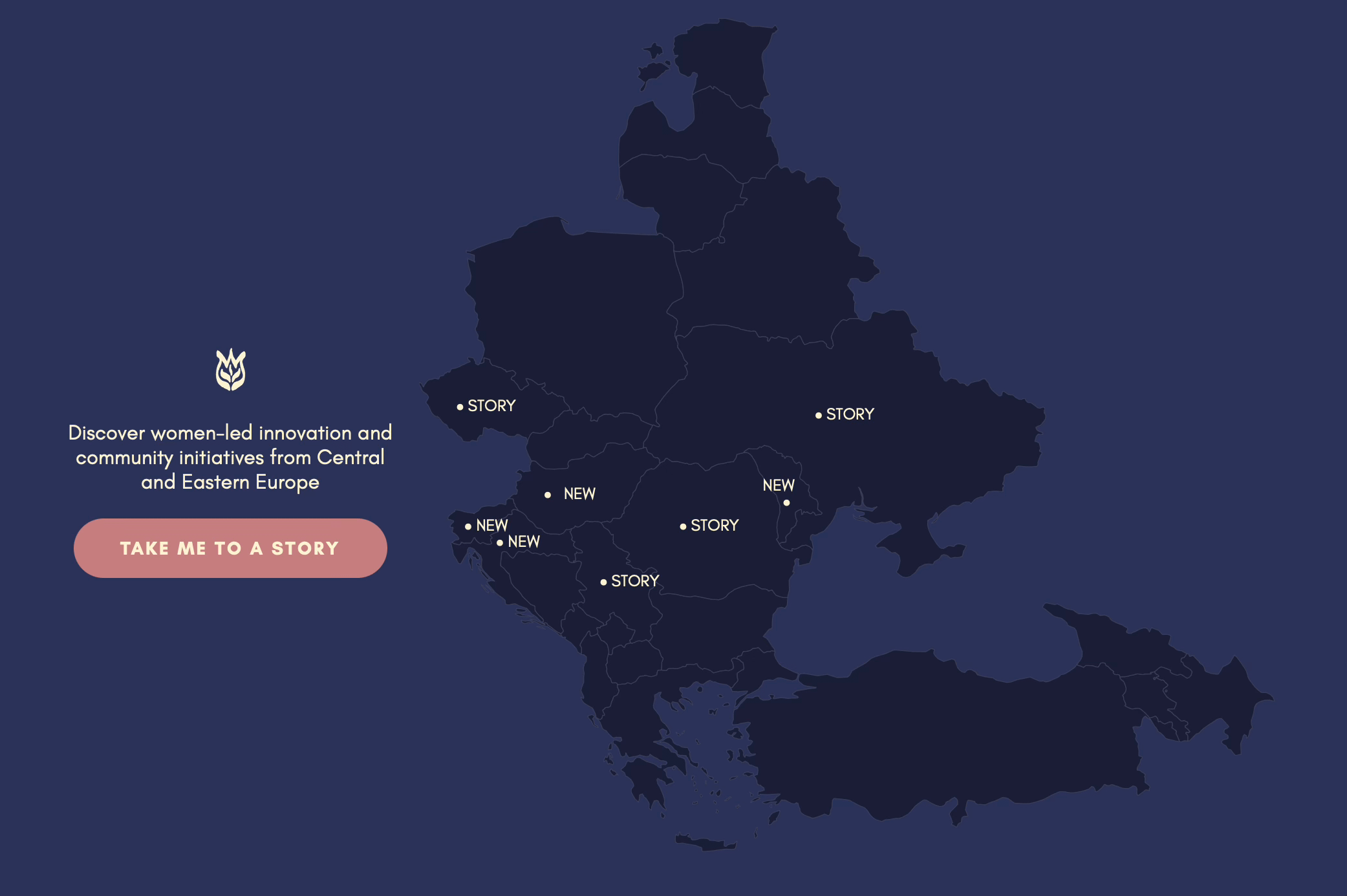
A quick update on our ongoing Making It in Eastern Europe project: this month, we published our first story from Croatia. We’re excited to continue expanding the project and highlighting experiences from across the region. Visit our website to explore previous stories and discover voices from countries already featured.
🇭🇷 Mother and Daughter on the Frontlines: Shaping Harm Reduction in Croatia – from Needle Exchange to Drug Checking by Jelena Ratko
From the heroin crisis of the 1990s to today’s nightlife culture, a mother and daughter duo care about Croatia’s harm reduction policies. The approaches evolve across generations, as stigma, especially toward women, persists.

Don’t forget to follow us on Substack and Instagram to be the first to hear about new stories.
Would you like to submit a story and become our local correspondent? You can do so here. Countries that have not yet been covered by the project (such as Bulgaria, Poland and the Baltic countries) will be prioritised!
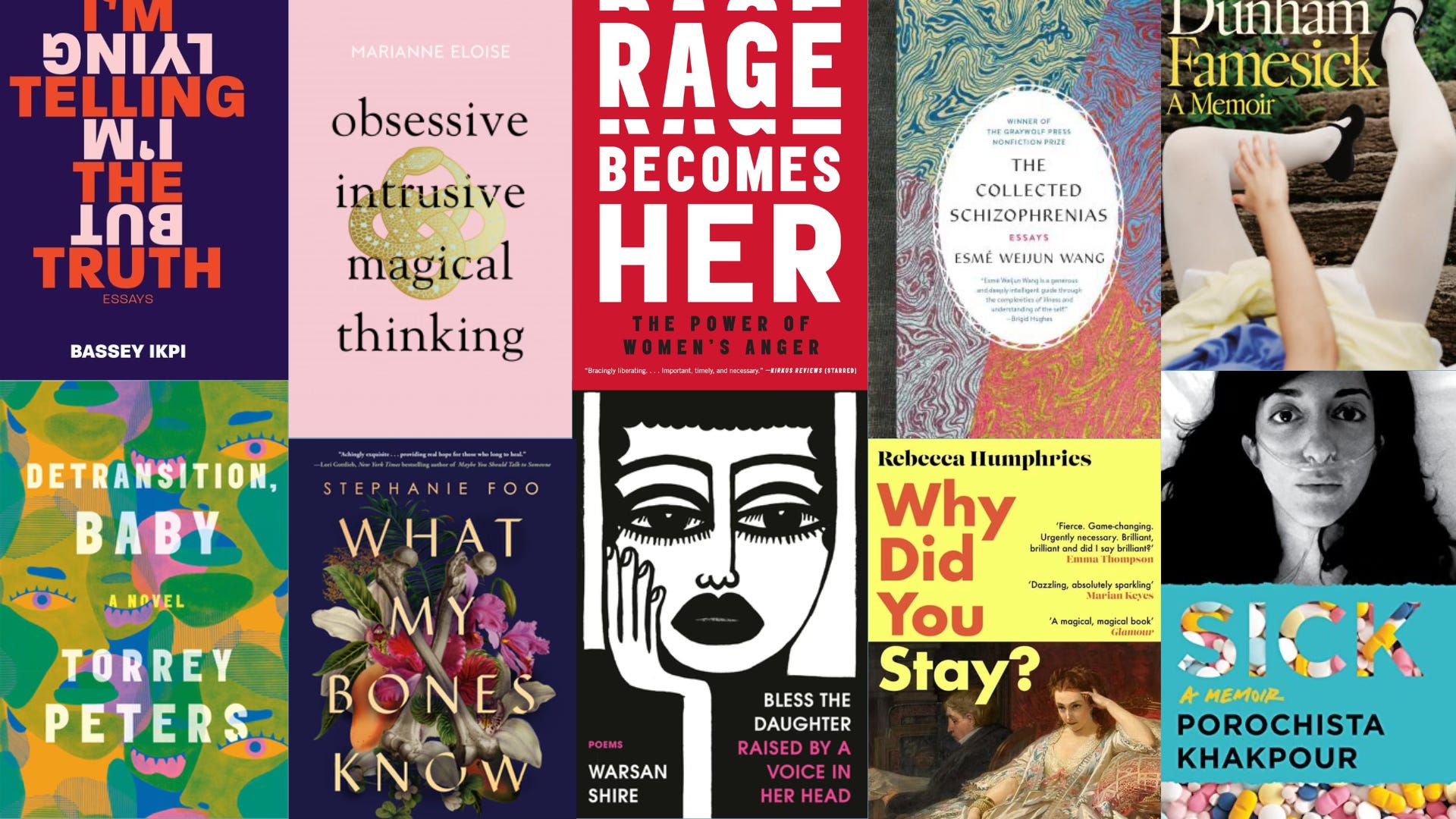
And last but not least, we'd like to share our reading list on mental health journeys, selected and curated by Lazy Farah:
Detransition, Baby by Torrey Peters
Long-listed for the UK’s prestigious Women’s Prize for Fiction in 2021!
Obsessive, Intrusive, Magical Thinking by Marianne Eloise
An exploration of the intersection of neurodivergence, obsession and disorderBless the Daughter Raised by a Voice in Her Head by Warsan Shire
Poems of migration, womanhood, trauma, and resilience from the celebrated collaborator on Beyoncé's Lemonade and Black Is King, award-winning Somali British poet Warsan Shire.
The Collected Schizophrenias: Essays by Esmé Weijun Wang
An intimate, moving book written with the immediacy and directness of one who still struggles with the effects of mental and chronic illness, The Collected Schizophrenias cuts right to the core.Sick: A Memoir by Porochista Khakpour
In the tradition of Brain on Fire and Darkness Visible, an honest, beautifully rendered memoir of chronic illness, misdiagnosis, addiction, and the myth of full recovery that details author Porochista Khakpour's struggles with late-stage Lyme disease.I’m Telling the Truth, but I’m Lying: Essays by Bassey Ikpi
In I’m Telling the Truth, but I’m Lying Bassey Ikpi explores her life—as a Nigerian-American immigrant, a black woman, a slam poet, a mother, a daughter, an artist—through the lens of her mental health and diagnosis of bipolar II and anxiety.
What My Bones Know by Stephanie Foo
By age thirty, Stephanie Foo was successful on paper. But behind her office door, she was having panic attacks and sobbing at her desk every morning. After years of questioning what was wrong with herself, she was diagnosed with complex PTSD—a condition that occurs when trauma happens continuously, over the course of years.
Rage Becomes Her: The Power of Women’s Anger by Soraya Chemaly
A transformative book urging twenty-first century-women to embrace their anger and harness it as a tool for lasting personal and societal change.
Why Did You Stay?: A Memoir About Self-Worth by Rebecca Humphries
Actor, writer and hopeless romantic Rebecca Humphries had often been called crazy by her boyfriend. But when paparazzi caught him kissing his Strictly Come Dancing partner, she realised the only crazy thing was believing she didn't deserve more.
We have also published Zsofi’s review of Famesick — tune in and share your thoughts!

Alongside our Eastern Europe content, we also published a series of pieces examining power, autonomy, creativity, and gendered experiences from different angles. From the politics of women's pain and the limitations of "good men" to the insight into independent fragrance creation in Prague, these articles invite us to look more closely at the systems and narratives that shape our lives.
Noelia Castillo’s Death By Euthanasia And What It Reveals About The Dismissal Of Women’s Pain And Bodily Autonomy by Lazy Paulina
Opinion: Why “Good Men” Are Not Enough by Lazy Nicola
p.s. Don’t forget about our Instagram — you can find a shorter form content there!
As always, thank you for reading, sharing our work, and being part of this community. Whether you’ve been with us from the beginning or joined recently, we’re grateful to have a space where feminist stories, honest conversations, and underrepresented perspectives can find a home.
Take care of yourselves this month, stay hydrated if you’re also melting through a heatwave, and we’ll be back soon with more stories from across Europe and beyond.
P.S. Our newsletter is run on a voluntary basis. If you like what we do, you can support our work via a paid subscription option on Substack and get access to our Dear Lazies column.
Comments
Nothing yet. Say the first thing.
Sign in to join the conversation.