
Hi there, and welcome back to another edition of the Founder’s Diaries! ✨
Whether you’ve been following Lazy Women for years or just stumbled upon it, you might ask yourself: how does such a media actually function, and what does it take to keep it going? Who are the people behind it, and how did they get here? This column, Founder’s Diaries, takes you through exactly that.
It’s been a busy few weeks at Lazy Women.
We’ve somehow managed to tap into virality on Instagram, gaining 3K+ new followers in just a couple of days, bringing us to a whopping 18K. It’s crazy how much easier it gets to gain followers after crossing the magical 10K mark — which we only reached a couple of months ago after 5 years (!) of regular posting. So, to those struggling to grow their audience: be patient. Post a lot. Experiment. Don’t be afraid of long captions — and no, you don’t have to make Reels for things to work. (But perhaps this topic deserves its own post in the Founder’s Diaries series!)
We also received our first-ever Erasmus+ grant, which will allow us to take part in a fully funded exchange with four other small, independent media organisations across Europe. We’ll learn from one another, with a particular focus on sustainable media practices; something desperately needed in a world where niche European media is still struggling to survive and fighting for resources that don’t require us to sell our souls.
Before we dive into the 5 tips, please take a moment to consider becoming a paid subscriber. Your support – for less than the price of a coffee each month – helps Lazy Women grow, compensate its contributors, and uplift feminist voices from all over the world. It also unlocks subscriber-only content, including our Dear Lazies column.

Read here for the first edition of this series, where I shared the first five “lessons” I’ve learned and gave a bit of background and intro into Lazy Women’s creation.
…which relates to a bigger question: who actually reads articles today?
Most people who come up to me saying they “loved” our latest article usually mean that a Lazy Women post appeared on their Instagram feed, they swiped through the first three slides, and gave it a like. This is how most of us (myself included) consume information in the attention economy, of course. But there is still something slightly shocking and frustrating about it when the original concept behind your media platform was long-form editorial writing.
When we started out, the maximum word count I gave contributors was 2,000 words. Over the years, that has gradually shrunk to around 1,000–1,300. And even when people do click through to the website, they spend, on average, just two or three minutes reading (or, more realistically, skimming) a piece.
My advice is that while you should never compromise on quality writing, it’s equally important to think carefully about whether a topic is genuinely relatable. More often than not, that’s what captures people’s attention in the first place.
A good example is Vogue’s “Is Having a Boyfriend Embarrassing Now?”, which managed to trigger a global conversation without most people necessarily reading the article itself. A similar example from Lazy Women would be one of our recent pieces, “Why Good Men Are Not Enough”, which seems to have blown up our Instagram. People are so intrigued by the title that they actually end up reading the full article to understand the argument behind it.
When I first started Lazy Women, I did it with some of my best friends, naturally. And while this made sense at the time (it was lockdown, after all), over the first few years, as things accelerated for us and “real” life picked up too, with all the decisions we had to make as early-career professionals, it got a bit too much. In the sense that we only talked about the project. We became colleagues, and it was extremely hard to prioritise “pure” friendship when there was always so much to discuss. The managerial tone that running a collective required also often misaligned with the silliness and unstructuredness of true friendships. It was difficult, and while it didn’t lead to conflict per se, there came a time when I had to accept that it was time to let go of running this together and find new people to help push Lazy Women forward.
And this is where the true magic happened. I developed strong bonds with the people who became volunteers on the platform, some of whom have become my absolute besties in Paris. To me, the dynamic was easier to manage this way. Things were easier to separate, and there wasn’t any baggage or history. Meeting Lazy Teodora for the first time in Bratislava after spending a year together online was a lovely highlight of last year: sharing a flat for five days with someone you had only ever seen through a screen. We had deep chats, pushed each other to work, and enjoyed the process of going beyond what a collegial relationship requires.
It’s a lesson I didn’t expect to learn, but sometimes it’s easier to turn colleagues into friends than friends into colleagues - especially in the long-run.
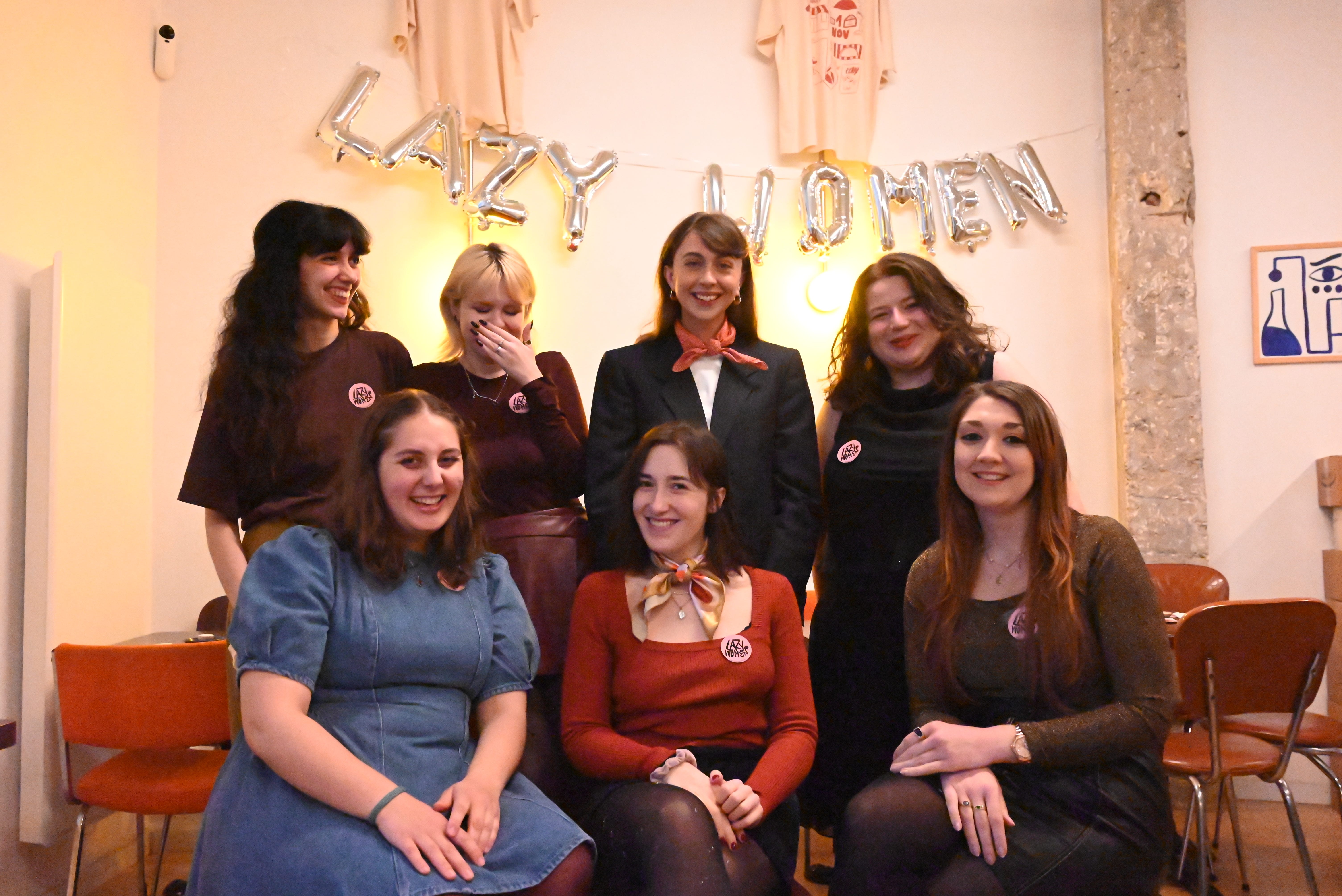
Here’s what I mean: for a long time, I was so focused on the fact that Lazy Women doesn’t have a hierarchy, that I became frustrated when people were still waiting for my instructions to move projects forward or make big strategic decisions. Or when people didn’t show the same motivation for Lazy as I did, and let things get sloppy or disorganised.
Then, over the years , I realised (and this is an ongoing process, btw): I am the founder, and I can own up to that without dominating others’ voices. If anything, I have the responsibility to lead in a way that elevates other voices, gives them space and agency.
But this only comes with appropriate guidance and showing up with the right attitude and motivation myself. Making some of the toughest decisions, saying the things that others don’t feel like it’s their place to say. Owning that role can actually move things forward without feeling authoritarian. But it’s a difficult balance to strike, and one I’m still learning every day.
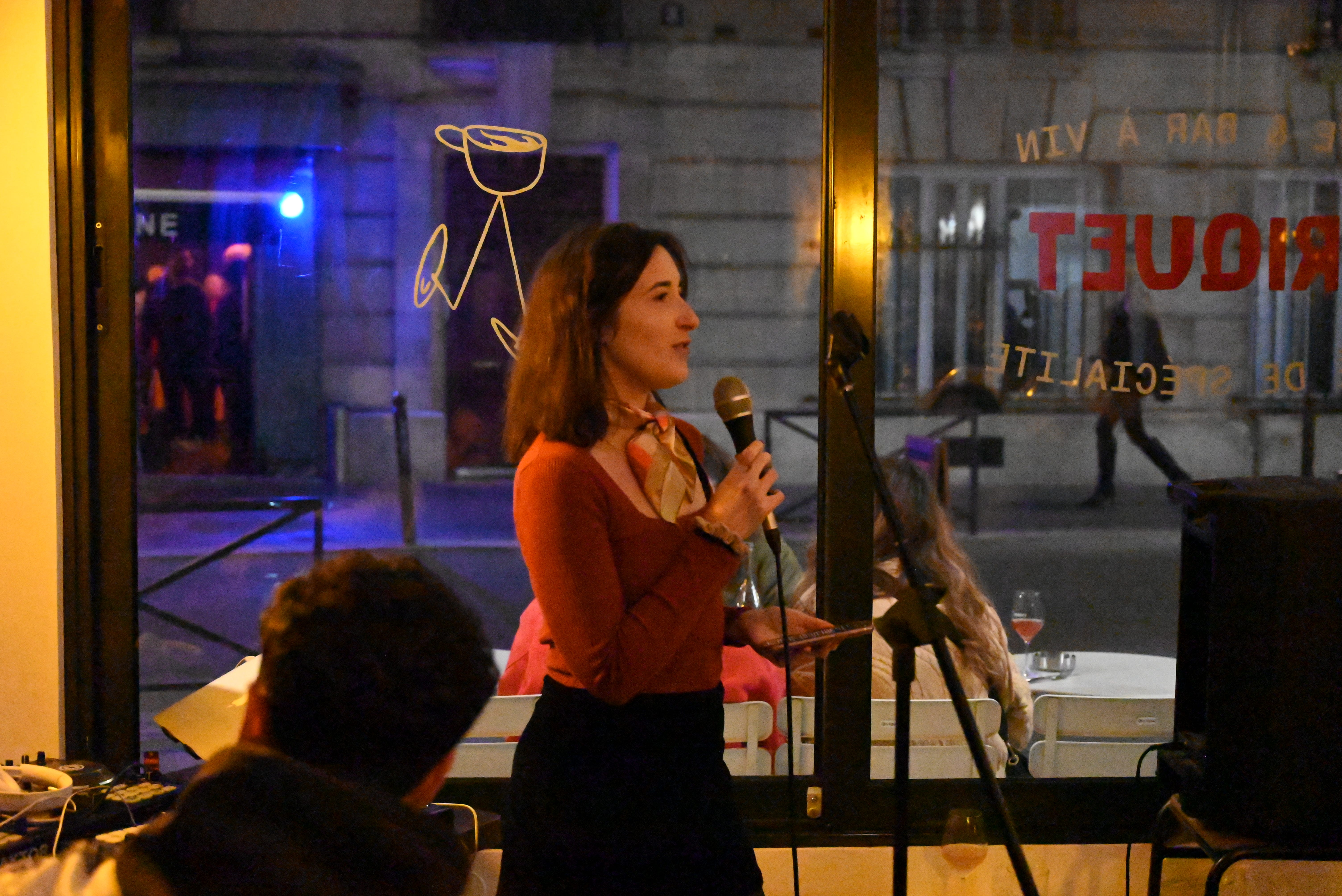
founder’s duties: speaking on stage, even if you’re not the best at this
Just like with any other job, as a founder, you need to accept that different contributors (especially when they’re volunteering their time) will have different levels of attachment to your “baby”.
Of course, you do your best to involve them and make them feel like they are truly part of the mission, but that doesn’t mean they won’t eventually move on or discover their own creative passion.
Over the past 6 years, I’ve watched talented young women who contributed to Lazy Women go on to launch fantastic projects of their own. To name just a few: Eszter Sólyom started Nemazért, de... Podcast in Hungary; Lili Rutai became a political reporter for NYT and the Guardian; Lucie and Julie started their own bookish podcast No Plot Just Vibes; Frosso launched Stylé - The Paris Edit and is becoming a rising star on Substack, and the list goes on.
I’m genuinely proud of every single person who ever felt empowered by Lazy Women enough to dare to start something of their own, to find their own niche, or for whom our platform simply provided those first publications — which are always the hardest to get through. Many have shared with me that without this experience, they’re not sure they would have had the guts to do what they do now.
This is one of the reasons we often call ourselves a creative playground. We elevate talented — albeit often shy or unconfident — women, encouraging them to trust themselves and choose the creative path over more “traditional” career routes.
Despite our recent growth, here at Lazy Women we are increasingly concerned by our reliance on Meta’s products, given how it literally shadowbans half of the tricky and difficult subjects we are here to talk about. Whether it’s queerness, abortion policies, or anything that’s not “cool and sexy” - we are startled to see how our posts only reach a couple of hundred people instead of the usual thousands.
The effects of this don’t immediately kick in, but I have recently started observing self-censoring editorial thoughts when looking through article pitches - do we really want to write about Noelia’s euthanasia, abortion doulas, or PCOS, all that effort to then not be visible to those who might need these articles the most? While the answer is still yes, there is an increasing pressure to “compensate” for these pieces with more cool-girl content, simply so that people can find us in the first place.
I don’t yet know what the takeaway from this lesson is. We’re currently exploring the issue further through the Reset! Network and its Digital Ethics Working Group, sharing experiences and best practices, although not necessarily in a feminist media context. If any readers have thoughts or advice on this, we’d love to hear from you.
That’s a wrap on the first 10 lessons of a feminist founder. 💜
The next editions of this column will zoom in on specific topics and practical guides: how to start your own media platform, navigating the changing media landscape, finding your niche, creating a magazine, building and managing a team, and developing feminist working practices.
These future editions will be available exclusively to paid subscribers, so if you’d like to support Lazy Women and gain access to the next chapter of the Founder’s Diaries, consider upgrading your membership today. Your support helps us continue building independent feminist media — and gives you access to all the other subscriber-only content created by our team. 💌
Comments
Nothing yet. Say the first thing.
Sign in to join the conversation.