

“$500 is insane.”
That’s the first email reply I got from a customer when we launched The 5–9 TV Tray Table. I wasn’t necessarily surprised, but it did sting.
I spent three years figuring out how to get it made, and it was always important to me to keep the price down as much as possible. As a small business, this was the best I could do.
But I agree—$500 is not cheap. It’s a price that requires consideration, and no matter the cost, it’s a lot to ask someone to give you their hard-earned money.
What I want people to know is that as a business, we keep less of it than you think. There’s a myth that most brands are marking up their products 10x just because they can. And in some cases, that’s true (e.g. luxury fashion brands).
But to do that successfully, it requires decades, sometimes centuries, of building credibility. We call them legacy brands for a reason. Newer small businesses don’t have that luxury (pun intended).
Over the holidays, I read Emilia Petrarca’s piece on what creators actually make from affiliate links, and it inspired me to write this piece on what brands actually take home after a purchase is made. By the end, you may not think $500 is so insane.
Our TV tray table is made in the U.S.—I wish I could say there was some altruistic reason for why, but really it came down to viability.
At first, I tried to manufacture in China, thinking that it would keep costs low. I had three different prototypes by three different manufacturers made there, and each time, they changed crucial aspects of the design without telling me to increase manufacturability.
A larger business with a dedicated research and development department will spend tens of thousands of dollars dialing in a design with low-fidelity prototypes. They are also working with initial order volumes in the thousands, so they have more leverage. They can go to a factory and say: make exactly this.
Even still, there’s a reason why so much of the big-box furniture made overseas is devoid of any personality. It’s because anything design-driven is harder and more expensive to make.
I ended up working with four different American manufacturers across Colorado, Wisconsin, Minnesota, and Michigan—each producing a different part—and shipping them to my fulfillment center where it all gets put into a box. Working with domestic manufacturers costs ~50% more than overseas, but they are also more willing to take on lower quantities.
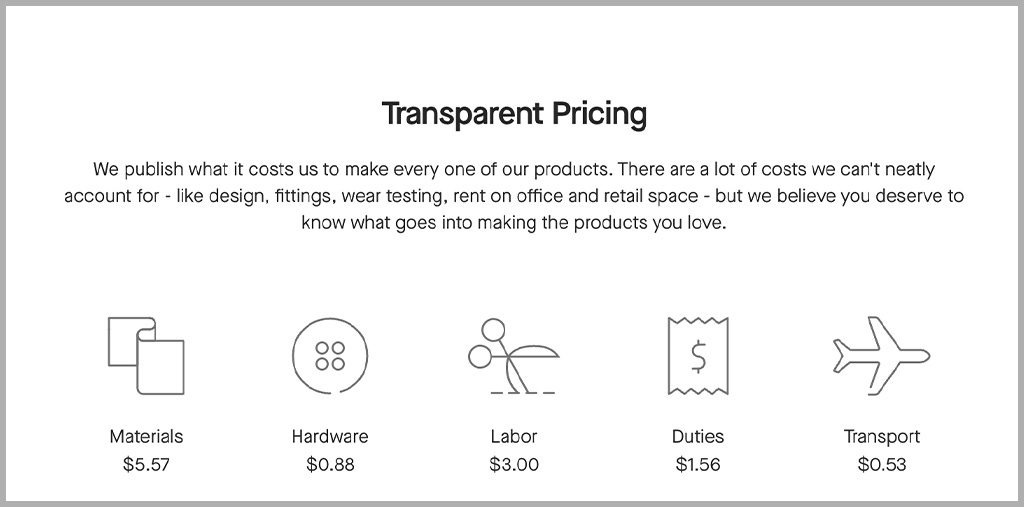
We all know from the 2016 Everlane, Casper, and Away era that prioritizing direct-to-consumer over wholesale allows brands to offer better prices. Or at least it used to. With unsustainable costs of acquiring new customers on Meta, brands have reverted back to focusing on wholesale expansion mixed with selling directly via their website.
What fewer people are aware of is why selling through wholesale accounts (i.e. multi-brand retailers like Target, Bloomingdale’s, or local boutiques) is so expensive.
On average, retailers buy a product from a brand for 50% of its retail price. So if something sells for $500 in-store, the brand receives $250. This can be even higher—up to 60%—for premium retailers that offer brand halo by association. Most will also ask for additional marketing fees on top of that.
Increasingly, more retailers are switching from buying on wholesale to consignment or dropshipping. Consignment means the brand keeps a higher percentage (usually around 60%) but only gets paid after a customer buys—meaning inventory is tied up with no guarantee it sells. With dropshipping, the brand ships directly to the retailer’s customer and absorbs those costs.
Direct-to-consumer is better, but not free. Shopify charges 2.9% plus 30 cents on every transaction—$16.13 on a $546 sale. Add in the monthly subscription, and you’re looking at $100–200 per month in platform costs.

Some brands will say otherwise, but for my business, creators remain the best way to generate awareness and sales. We’ve been lucky that so many influencers I admire genuinely love the brand and have organically followed and shared.
Even with that organic growth, ShopMy remains the best way to expand that network and get product in the hands of tastemakers. If you read Emilia’s piece, you know how it works from the creator side—they generate a link, and if someone buys through it, they earn a commission. Here’s what it looks like from the brand side:
ShopMy charges a monthly platform fee (anywhere up to $2,799+) plus their own small processing fee on each sale. Then there’s the commission the creator earns—usually around 8–15% of the retail price; and the cost of gifted product. A good way to strengthen relationships with creators is to offer them a personalized discount code for their audience, typically an additional 10–15% off.
So on a $546 sale that comes through an affiliate link, the math might look like:
Creator commission (12%): ~$65
ShopMy processing fee: ~$16
Discount code (if used): ~$55–80
This also applies to affiliate links in publisher articles—Condé Nast, Hearst, etc.
Is it worth it? For my business, yes. These are customers I wouldn’t have reached otherwise. And unlike paid ads—where you spend money and hope it works—I only pay when a sale actually happens.
After packing my own orders for a year, I know firsthand that fulfillment centers (3PLs) are a godsend for brands. But they come at a cost.
In addition to pick and pack fees, there are also inventory storage costs, receiving fees, and of course, shipping charges.
For a large item like the TV tray, the shipping charge is calculated by dimensional weight, not actual weight. My TV tray weighs about 15 pounds, but the box dimensions mean it bills closer to 25 pounds. Shipping one tray via UPS Ground runs about $65, and that’s with a negotiated discount.
Returns are part of selling online. When something comes back, there’s return shipping, plus the cost of inspecting and repackaging. Sometimes packages get lost or stolen.
Chargebacks are the one that surprised me. When a customer disputes a charge with their credit card company, we pay a $15–30 fee regardless of the outcome. The majority of disputes are what’s called friendly fraud—the customer received the product, they just decided to dispute it anyway.

So what's left? On a direct sale, after everything listed above—around 30%, which is standard for a small business selling a physical product. On a retailer sale, the math is much tighter.
Before starting lazy jamie, I worked in brand marketing. Every brand I ever worked with was terrified of talking about pricing because they felt it cheapened the product or opened them up to criticism. If you follow lazy jamie, you know I like to do things differently. But I’m also sharing this with you because I believe consumers are conscious and appreciate knowing why something costs what it does.
Or maybe I’m insane.
No posts
Comments
Nothing yet. Say the first thing.
Sign in to join the conversation.