
I thought it would be fun to return to a topic I enjoy writing about, mentoring young men. It..erm..helps that the first article I wrote performed pretty well:

This time, I’m marginally older and wiser. I’m married now, with a kid on the way. So, I think now is the time to strike while I’m an “old young guy” instead of waiting 5 years when I’m really old and can no longer relate to the incoming Gen A (?) kids. My advice here will range from the oddly specific to the broadly applicable, but I’ve taken care to ensure they’re all useful or at least interesting to read. Enjoy!
PKMs are lokirkuinely supremely underrated tools for success, particularly for the budding (and quite sensitive, I might add) young man who is being exposed to a lot of new ideas, places, things, dates, responsibilities and people. Around ages 18-23, this can be a really tiring experience— particularly if you know you’re not going to remember everything you want to through brute force. The feeling of details I know I once remembered perfectly i.e. that guy’s name, her major, the street the bar is on, becoming fuzzy over time and slipping away has always been quite frustrating to me.
Enter the Personal Knowledge Manager.
As the name implies, PKMs are software designed to morph into catch-all repositories of knowledge. I use mine for any task with a degree of information cataloguing involved: organizing home chores, grocery lists, notes about acquaintances and friends, recipes, gun maintenance logs, an address book, my reading list, eDocument storage, and perhaps a dozen more uses that I shan’t tarry on with. If you find a good one and stick with it, you can truly orient your business affairs on one platform and have a single searchable, private database for your entire existence. It’s weirdly satisfying feeling to be able to conjure 2021’s tax forms on your phone for your accountant because you can just search “W-2” on your PKM. Most people have a de facto PKM in their email inbox, but they’re not built for this purpose.
There are many free and paid softwares available for this task and I’ll list some below. It’s important to note, however, that the mere concept of “personal knowledge management” predates internet connected computers by about 50,000 years and there’s absolutely nothing wrong with having a notebook or other non-electronic way to keep track if that’s what you prefer.
![Metal shopping list from 1940-1945 [843X1132] : r/ArtefactPorn](https://substackcdn.com/image/fetch/$s_!MdSU!,f_auto,q_auto:good,fl_progressive:steep/https%3A%2F%2Fsubstack-post-media.s3.amazonaws.com%2Fpublic%2Fimages%2Fd14d5000-e69d-402f-832d-2b96123e4c61_843x1132.jpeg "Metal shopping list from 1940-1945 [843X1132] : r/ArtefactPorn")
There’s an old guy at my church, for example, that has a massive file cabinet of 3x5 index cards that he’s used for decades. Every time he wants to share something with me (a quote, a website link, a story, a name, a phone number), it appears in the form of a crisp white 3x5 card adorned in perfect cursive that I’m sure previously lived in a physical folder labeled “give to [name] next time you see them”.
My mind doesn’t work that way, and I do unapologetically like the convenience of having it on my phone. Also, if my house burns down I won’t lose 50 years of collected wisdom. Anyways:
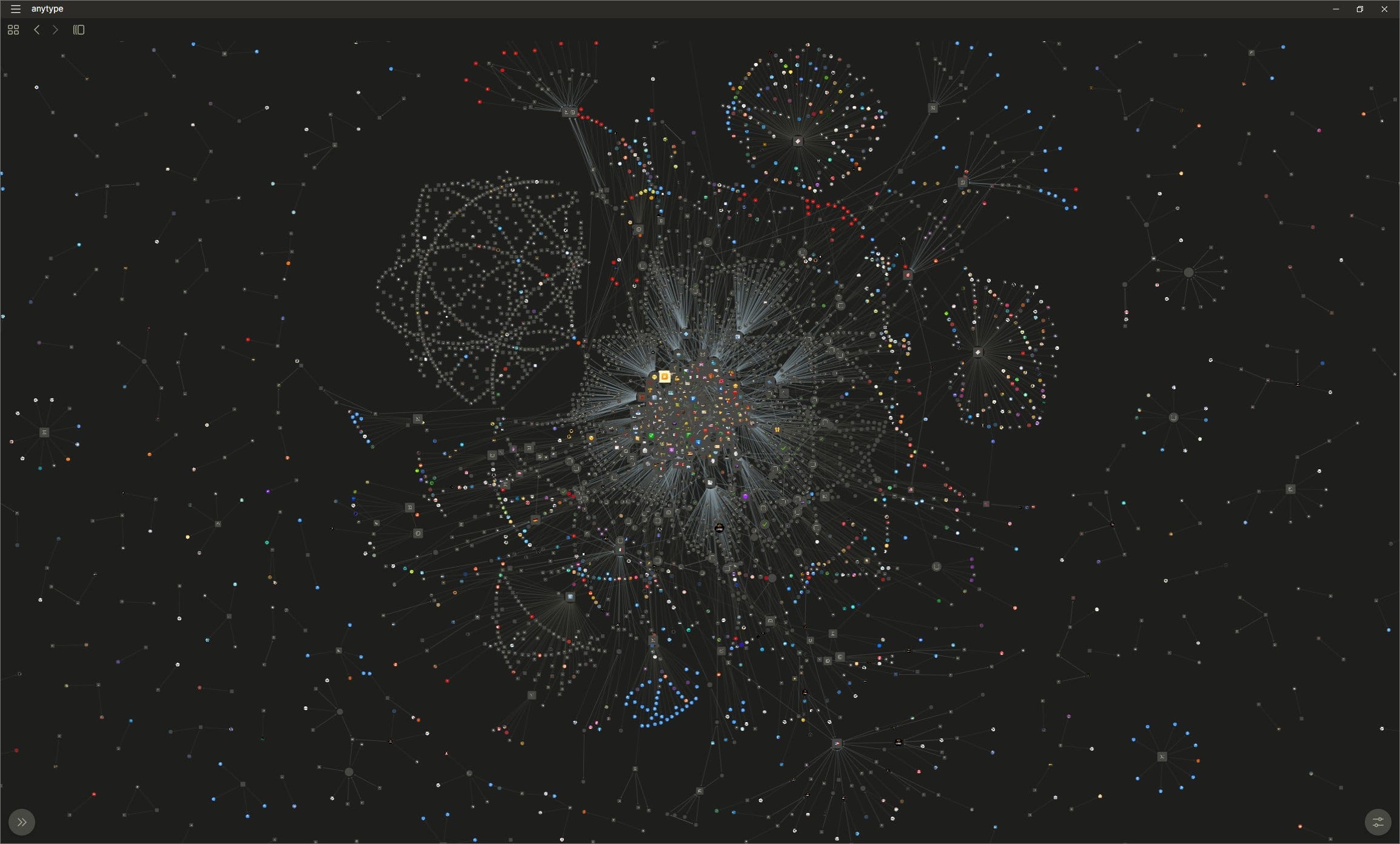
AnyType: I use this one so it gets recommended first. AnyType is a free PKM that emphasizes privacy. Mine sits in “cold storage”, completely offline, until I use only approved devices to sync on a P2P (peer-to-peer i.e. no central server) connection. The vault key is also hundreds of characters, so the chances of somebody connecting to your instance and guessing the key are effectively nil. The interface a little complicated because it uses the language of programmers and data scientists instead of normies, but that also means it’s rewardingly powerful if you thug out the learning curve. It’s useful enough to be used in an enterprise setting as well, you could standardize a company on AnyType if you really wanted to. Take a look at their gallery and see if any of the templates look interesting. I like it over other information categorization services (Google and Microsoft Suite) because it’s FOSS (Free Open Source Software), it’s private, it’s easy to query, and it’s very useful for basically any application. You also never need to pay a dime for it or worry that the servers will be turned off without warning. Because it’s FOSS, you can download it once and use that edition forever. No forced updates, no relying on the company to stay in business (though their support team is pretty good), no forced AI integration, nothing will change unless you want it to. Powerful! Anytype will work on any device (desktop, tablet, phone, idk about smart watches) and computer I’ve ever tried it on, including edge cases like Linux (Ubuntu) desktops flatpaks.

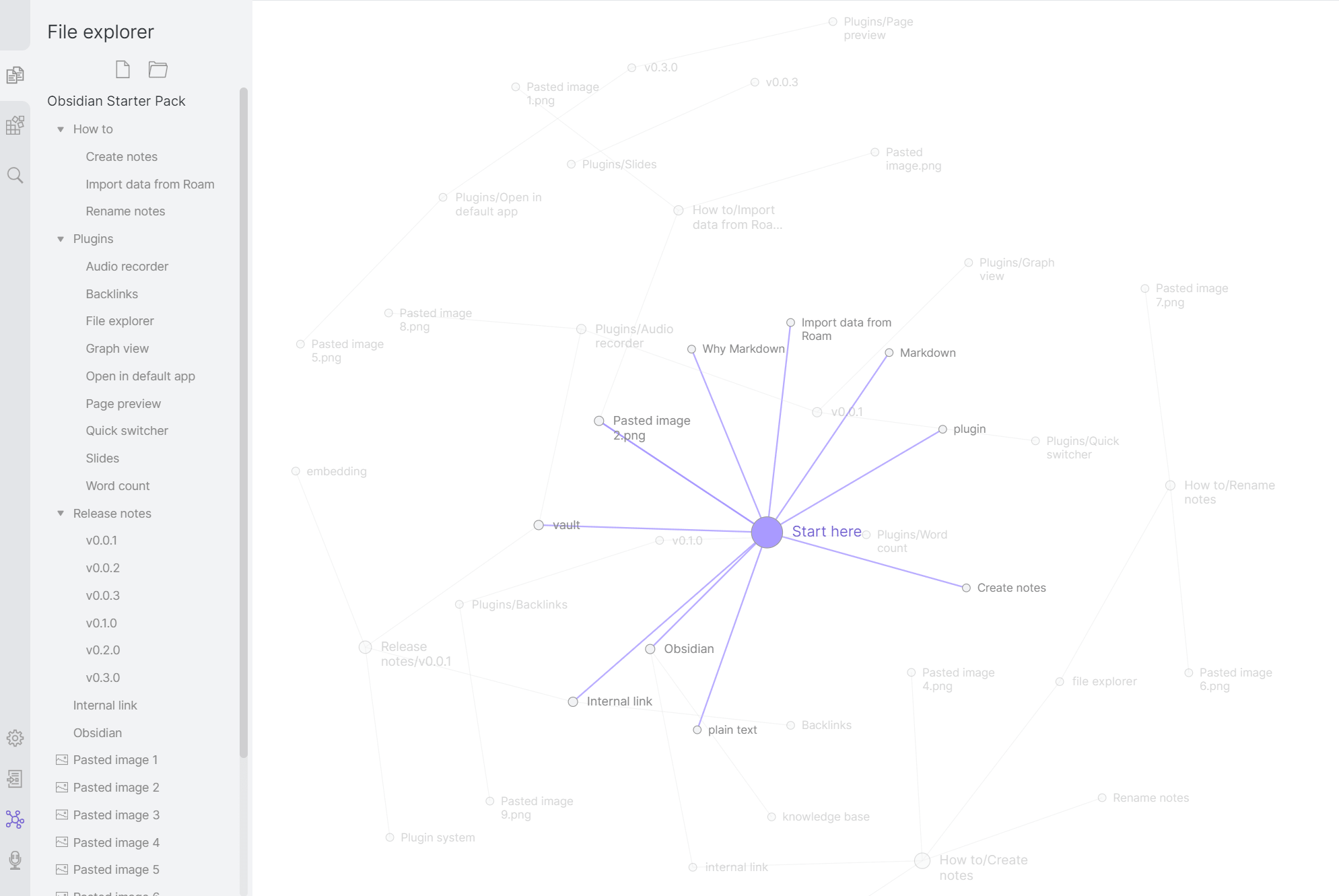
Obsidian: This one is the main “competitor” to AnyType (with a much, much bigger install base), it’s a little easier to use and is designed for work-related tasks (including coding) rather than personal knowledge managment.. Where AnyType uses nested files to establish hierarchical relationships, Obsidian really likes using internal links that you have more control over. You can also program some commands if you want to automate tasks. The user count is probably 10x higher than AnyType, so there are more options for community contributions like plugins and forum help. Obsidian also markets itself as privacy respecting, but I can’t vouch for that since I’ve only used it for a little while before switching to AnyType. I might use it if I were primarily a student rather than an average Joe due to how easy it is to categorize information in a way that makes sense i.e. one idea leading to another.
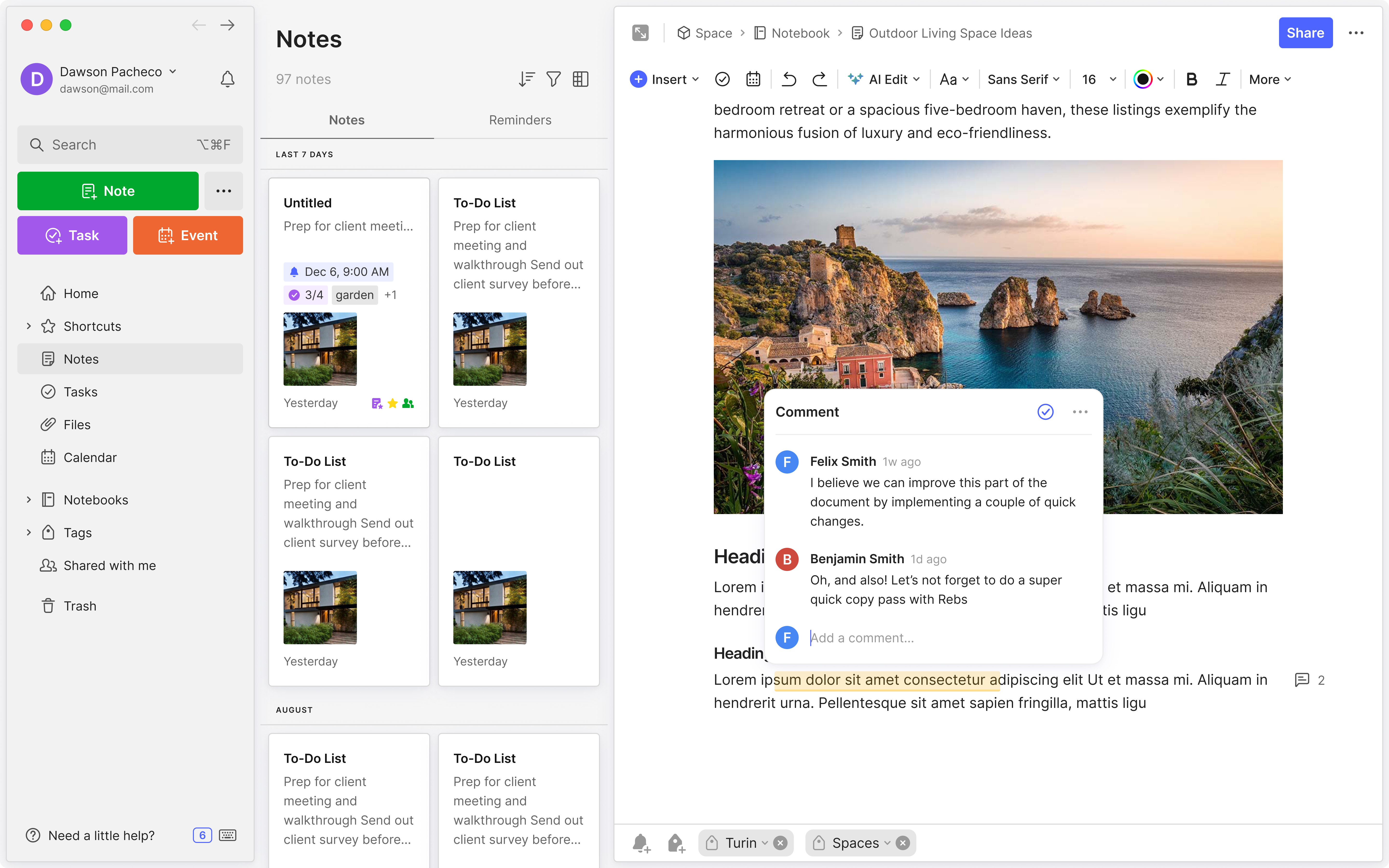
Evernote: Evernote is a cautionary tale. It’s basically “Google Docs but good”. Where Anytype is meant for individuals and Obsidian is more for work-oriented small teams, Evernote seems to be going for the small family or community (neighborhood, sports team, garage band, study group) set up. They push their premium plans and “cloud storage” pretty heavily, to the point of basically imploding their business over trying to extort their dwindling herd of paypigs for cloud storage. In exchange, you get an easy to learn interface and polished UI. Having never used it myself, it looks like the EZ Button solution for low tech literacy requirements, if your primary objective is an electronic scratchpad. However, Evernote is a despised company that may soon go under.
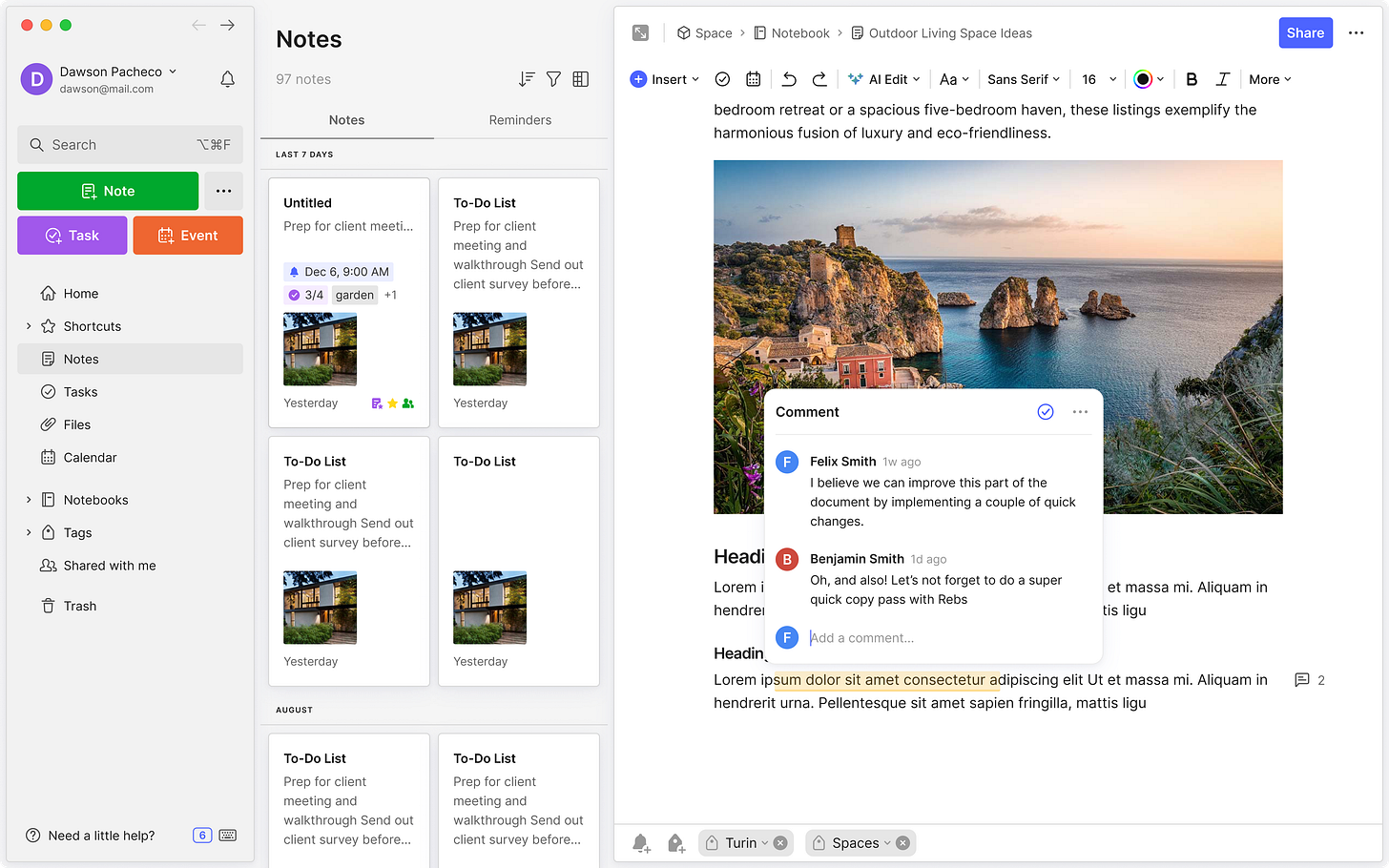
Like I said, it just looks like Google Docs
Here’s a YouTube video Essay documenting the bizarre downfall of Evernote as a company:
There’s a bunch of other PKMs with their own use cases that I won’t yap about. Try out one of these three and then you can explore more on your own.
If you’re someone that has a giant log of uncategorized Notes app entries or Google Docs, a PKM can bring a lot of balance to your daily life.
This isn’t a metaphor, stop looking down at your phone. Your spine isn’t built to handle sustained, unsupported dangling. By looking down at your phone, even a little, you’re drastically increasing the weight and pressure on the small bones and connective tissues that support your head:
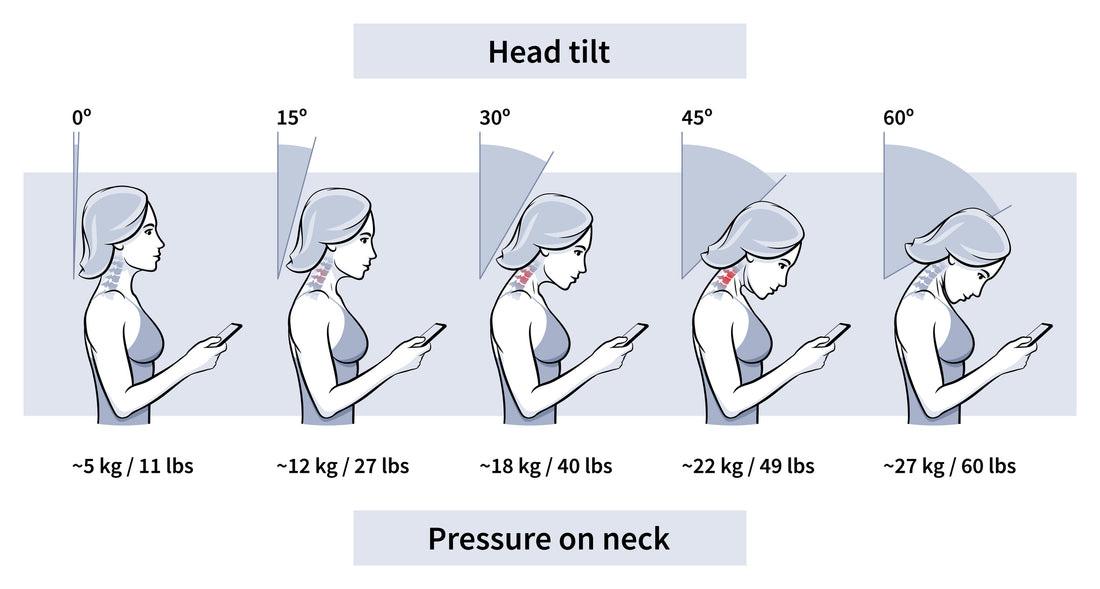
Over time, you’ll pull your spine out of alignment and contribute to arthritis, loss of mobility, herniated discs, cartilage degradation, and a bunch of other issues. The mobility-impaired and paralytics hordes of the year 2046 are currently shambling around in the posture of a candy cane looking at they DAMB PHONES!!!
I try to pull the curtains back
Turn you off, but can’t detach
When all I want and all I know
Is time spent looking at my phoneFind me when the lights go down
Signing in and signing out
Gods descend to take me home
And find me staring at my phone-TSLAMP, MGMT (2018)
If you heed this advice as I have (I unironically hold my phone straight out in front of me unless I can support my head), you might save yourself untold pain and expenses when you’re old and retarded. You’re welcome!
Here’s another one that sounds like I’m about to recite some cliches. I am, kind of, but not for the reasons you might expect. I am all about maximizing my genetic potential. As in, if I am born with an IQ ceiling of 150, I want to get as close to 150 as possible. If my body can handle crushing 200 pushups without stopping at peak performance, I want to be able to perform 200 pushups without stopping.
The three activities I mention here, playing an instrument, playing a sport, or learning a foreign language, were chosen because they develop your brain in a way that is unique. The study of genius is sort of a pseudo-science, but there are three domains that the trvly gifted always present strongly in: chess, mathematics, and music. If you think about it for a moment, it makes sense, but if you think about it for a few more it really doesn’t. Those are all three separate cognitive skills requiring very different forms of intelligence. Therefore, I think it’s quite beneficial to train those skills or some approximation of them.
Musical instruments train your brain in motor skills and some abstract thinking. For nearly all, you have to move two hands in two separate directions, at the appropriate time. “Rhythm” is a real skill that can be practiced and improved upon. When I first gained an interest in music, I couldn’t clap along to a song. After picking up the bass guitar, I developed a “pocket” where I can feel the rhythm of a song and even deviate from it appropriately in solos or jams. I’m still musically illiterate (musical notation is infamously difficult to learn and nonsensical) but I can play well enough to be a serviceable bassist in a bar band. There isn’t another activity I regularly perform that requires this bundle of skills or use of my brain. Pick an instrument, any instrument, and get good enough to play along to your favorite songs.
For any chuds with Steam: check out the old-but-gold game called Rocksmith (2014):
https://store.steampowered.com/app/221680/Rocksmith_2014_Edition_REMASTERED_LEARN__PLAY/
![Rocksmith - Beginner's Guide [UK]](https://substackcdn.com/image/fetch/$s_!Idnj!,f_auto,q_auto:good,fl_progressive:steep/https%3A%2F%2Fsubstack-post-media.s3.amazonaws.com%2Fpublic%2Fimages%2Fafbf5105-0ed6-4139-8b2c-8ca1b8ccc37c_1280x720.jpeg "Rocksmith - Beginner's Guide [UK]")
Rocksmith uses the input real musical instruments connected to a USB port to gamify learning how to play music. Think Guitar Hero with real instruments. It’s a bit janky, but quite powerful under the hood if you can put up with it. It can baby you through playing single notes at a time to practice fingering or strumming, all the way through real guitar solos exactly how the guys that wrote them play it. I got the Alice in Chains DLC and learned every song that way. It’s not the best for total beginners, but if you can play Twinkle Twinkle Little Star consistently, I highly recommend it.
I have frequently lambasted Chudstack for it disdain for sports. Sports are quite important, and that includes the viewing of sports as well as participating in them. The chuds that watch MMA and F1 somehow cannot conceptualize how entertaining it is to watch professionals in football or basketball, but I digress.
Sports require quick decision making, full body control, athletic skill, team-based communication, strategy, and any number of other “microskills”. They keep you young, and rewire your brain and body to perform in competitive environments. Especially for the Right Wing, there is no substitute for playing sports. You can always tell who grew up playing sports and I always find those who didn’t are vaguely to moderately faggy from that fact alone. There’s something deeply embarrassing about watching someone gently toss a full grown man something only to see the untrained flailing of fingers and arms before the item splats pathetically onto the ground. And we’ve all seen the “gay guy throw”:

Guess what? If you haven’t developed your body and throwing motion, this is what you look like. It’s really embarrassing. I’ve never felt more like a 90s movie bully chad than when I effortleslly tossed a pigskin with a crisp spiral after watching a guy who everyone assumed was more athletic than me (because he was quite muscular) throw a wounded duck that hit the ground with a disappointing BRAAAAAP sound effect.
Case in point on sports: I aged out of collegiate sports some time ago. Now, my “old guy” (mid 20s) sport is basketball. I have no background in it, but I enjoy the challenge of learning new biomechanics, rules, lore, strategies, etc. After about a year of grinding in the shadows, I’m good enough to play in a men’s league as a 6’1 paint patroller with a sneaky good midrange shot. It keeps me in good cardio shape, keeps my tendons strong and flexible, gets me connected to a team of other men, and helps stoke my competitive fire. I don’t participate in the pavement ape antics that typically come with basketball, but it is certainly exhilarating to splash a deep shot in someone’s face after they tried their hardest to swat your shot into the stands. Win or lose, sports are a unique and essential way to develop your mind and body. The mounting pressure of a tight game is something every man should feel.
It is not the critic who counts; not the man who points out how the strong man stumbles, or where the doer of deeds could have done them better. The credit belongs to the man who is actually in the arena, whose face is marred by dust and sweat and blood; who strives valiantly; who errs, who comes short again and again, because there is no effort without error and shortcoming; but who does actually strive to do the deeds; who knows great enthusiasms, the great devotions; who spends himself in a worthy cause; who at the best knows in the end the triumph of high achievement, and who at the worst, if he fails, at least fails while daring greatly, so that his place shall never be with those cold and timid souls who neither know victory nor defeat. Shame on the man of cultivated taste who permits refinement to develop into fastidiousness that unfits him for doing the rough work of a workaday world.
-Teddy Roosevelt, The “Man in the Arena” speech (1910).
You can throw a dart and hit an ancient Greek or Roman book that you “should be reading”. For my audience of devoted Layniacs, I’m cruising past the usual Great Books recommendations to offer you a specific one that I feel is supremely practical to a sensitive but ambitious twenty-something young man. I read it in college and it altered the way I see myself, my peers, and the world around me.
Plutarch’s “Lives”, properly called the Parallel Lives of the Noble Grecians and Romans, is one of the most interesting books I’ve ever read. Of the bits that survived antiquity, there are 23 paired biographies of Greeks and Romans (as well as four singular lives) designed for instruction and comparison. Plutarch plays the role of wizened mentor, speaking in first person directly to you as he recounts the tale of one man of fate or another before offering the reader useful lessons from their lives.
Can you see where I’m going with this? One of the brightest minds of the ancient world, Plutarch, is offering you personalized instruction on how to live a great life. The material he draws from are the greatest men of history: warriors, statesmen, poets, inventors, philosophers, the best Rome and Greece ever produced, all standing in formation for review from you and Plutarch. Plutarch wants to take you by the hand and stroll through the ranks, making stops and offering you, while you still live, insight on what the man in front of you succeeded in and failed in during his brief life. It’s almost like Dante’s trip through Hell, except Plutarch is a little wittier and a little less biased.

Let me pull one at random to give you an example, since I’m well aware this article might be the last time you ever think of Plutarch’s Lives. Don’t forget, today might be your last!
The life of Coriolanus (later turned into a Shakespeare play) is about a “furious young Roman aristocrat” who proves himself in battle but refuses to acknowledge the humanity of the peasantry of Rome. Like, at all. As in, he sees them as animals to be herded instead of countrymen to be ruled. Despite his potential as a historical great, he is eventually chased out of Rome by a rabble that were once waiting to be his subjects. (Note: I have a feeling this guy inspired Viva la Vida by Coldplay) Plutarch, speaking directly to you as if we were ghosts spectating this event from behind a marble pillar, says something about what makes Coriolanus great that has always stuck with me:
It may be observed, in general, that when young men arrive early at fame and repute, if they are of a nature but slightly touched with emulation, this early attainment is apt to extinguish their thirst and satiate their appetite; whereas the first distinctions of more solid and weighty characters do but stimulate and quicken them and take them away like a wind in the pursuit of honor; they look upon these marks and testimonies to their virtue not as a recompense received for what they have already done, but as a pledge given by themselves of what they will perform hereafter, ashamed now to forsake or underlive the credit they have won, or, rather, not to exceed and obscure all that is gone before by the lustre of their following actions.
Do I need to translate for your TikTok brain? That’s ok, Plutarch can be a little longwinded. Basically, those who are destined for a mundane life of little importance take the bait of resting on their laurels after a small achievement because they are content to sip from the chalice of victory once or twice in their lives— even better if this victory is acquired without too much struggle. Are you a young man? Stop reading or listening for a moment and ask yourself: is your confidence or self satisfaction derived from one or two achievements? Is this achievement what makes you valuable to others? What is your identity?
Is it a university degree? A job? A project you accomplished? A certification? A promotion? A skill? A hobby? An identity? Maybe you bagged a trophy wife?
Or maybe you coast off the accomplishments of another? Do you throw someone else’s name around for recognition? A sibling? Your dad?
Someone out there is sweating bullets as I inch closer to doxing them in this Chudstack article. Lol.
The point is, if you think you’re dat nigga because of this small accomplishment, it’s because you have the soul of a peasant. Sorry BAPtists, but graduating from an Ivy League or getting a prestigious job in a powerful institution is precisely the type of thing Plutarch is talking about. Great men treat these accomplishments as steps on a ladder, indications they are on the trajectory towards true greatness. Actually, its less like a ladder and more like one more heap of coal into the furnace that burns with a need for greatness. They don’t feel, as David Goggins likes to say, that they’ve “arrived” and thus the hard work is over. In fact, as Aristotle points out, small gifts are unbecoming of a great man, who should in fact reject them because accepting small-souled gifts is beneath the great man:
He, then, who deems himself worthy of great things and is worthy of them is held to be great souled. For he who does this in a manner contrary to his real worth is foolish, and no one who acts virtuously is foolish or mindless. The person spoken of, then, is great souled. For he who is worthy of small things and deems himself worthy of them is moderate but not great souled, since greatness of soul resides in greatness…He who deems himself worthy of great things while not being worthy of them is vain…He who deems himself worthy of less than he is worth is small souled—whether he is worthy of great things or of measured things or even if, being worthy of small things, he deems himself worthy of still less. And most small-souled of all would seem to be the person who is in fact worthy of great things [but does not deem himself so], for what would he do if he were not worthy of so much?
As for honor that comes from people at random, or small honors, [the great man] will have complete contempt for them, since it is not of these that he is worthy.
Think about it this way: imagine you have always known you’re destined to be an NFL legend. You know you’re good enough to dominate in college, make it to the league, and win some Super Bowls en route to a trip to the Football Hall of Fame. Let’s say you’ve known this about yourself, because you know you are great as Aristotle says, since the age of 12. Are you going to break down sobbing with ecstasy over being named All-County in high school? Absolutely not, you’re hunting bigger game than that. You want to be in the NFL, who cares about high school!
So affirms Plutarch. I got all of this knowledge out of one side comment, in one life, and yet it’s highly practical. The lessons from this singular passage: be confident, be noble, be kind, and be magnanimous.
One last point to drive the point home on this book: there is a man of history who read the Lives at a young age. Can you guess who it is?

That’s right, Le Petit Corporale was famous for his voracious reading appetite— particularly for the classics. Napoleon understood that the Lives are not mere fanfics or encyclopedic entries. They are weapons for the man who knows how to wield them. Again and again, in private correspondence and conversation, and in public, Napoleon drew from the deep well of the Lives to contextualize and assess the world around him. Combined with his photographic memory, the Lives were an invaluable resource because he used them as ancient simulations of paths he might go down. His brain was a database of the lives of these great men, and he recalled their errors and missteps frequently. In fact, he recruited them as agents, deployed from his mind to conduct reconnaissance. When he marched into Paris to assume the Consulship, when he crossed the Alps, when he docked on the shores of Egypt, when he split his army at Austerlitz, when he escaped exile, he was flanked on all sides by an invisible host of ancient Romans and Greeks, ready to lend their collective wisdom to any situation.

Napoleon was so famously witty and clever, in part, because he’d already lived vicariously through the Lives. It’s quite scary if you think about it. He’s already fought this battle through Caesar. He’s already studied the terrain of the Near East alongside Alexander. He’s already had this conversation with Marcus Cato, then again with Cicero. Anything his enemies might try, he’s already contemplated with Augustus at his side.
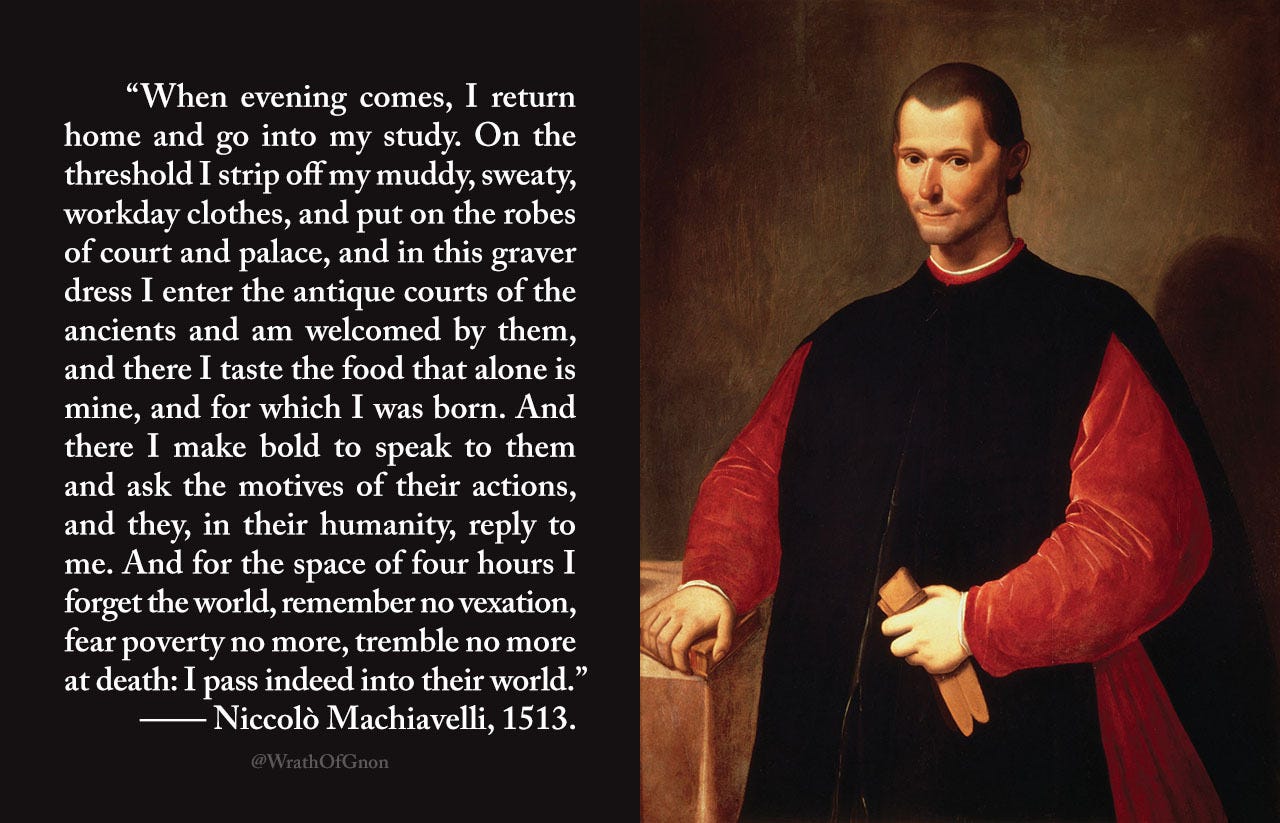
Don’t you want the same power? It’s hard to explain, but once you read the Lives, you can so clearly see how they guided his life. It’s like getting the cipher to a secret code or something.
Seriously, try to read them. They’re free online and you never know what ancient gemmies you’ll come across.
I say “become” because, if I know my audience of devoted Layniacs, there are some awfully reclusive little buddies that find socializing of any type to be a frustrating, sweaty experience. That’s okay, I am naturally an introvert myself. Actually, I am probably somewhere in the middle, a sentiment that is quite common for chuds of my age bracket.
Here’s my reasoning:
Humans are, by default, social animals. I would even say that most “introverts” are actually not introverted at all, in the same way the “hell yeah core” crowd thinks that everyone who is interested in trains or grills is autistic:

Self-diagnosing yourself as an introvert denies your mind, body, and brain, the chance to perform a function it’s been perfectly attuned over many tens of thousands of years to do: communicate with other humans. There is a small subset of the population (perhaps 15%) that truly wants to withdraw from the world and eagerly awaits the opportunity to jettison from modern life into their cave / computer room / homestead / pillar:

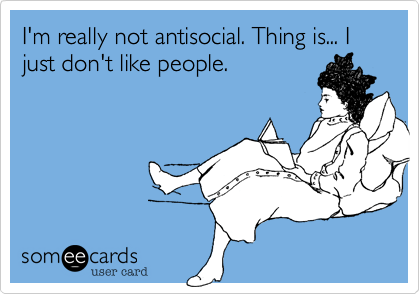
The problem is, people way overestimate how much of a sigma loner they really are. In fact, as the culture of America continues to decay, being a recluse is seen as cool and edgy and deep:
Here’s the 80IQ Orc fashion brand that parrots this Boomerism:

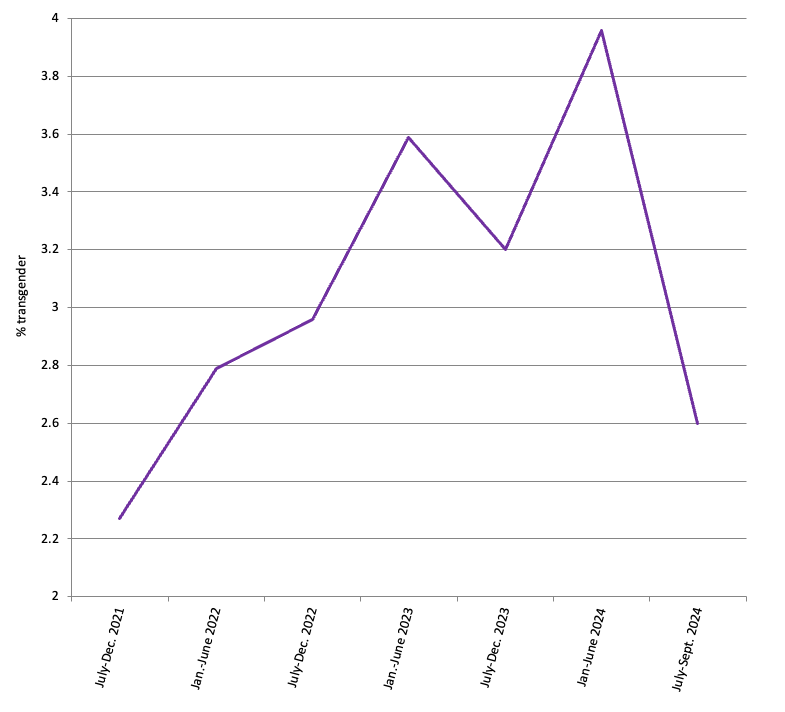
So you have the sort of social disease of people being taught to be introverts by the society they live in (ironic) which becomes a feedback loop akin to the transgender craze of the late 2010s:
Anyway, I don’t want to drone on so let me give you a funny counterexample. There’s a gameshow called Alone where 10 contestants are dropped off in remote Canadian wilderness to survive until only one remains. They come from outdoorsy backgrounds (game guide, logger, homesteader, wilderness guide, SERE instructor etc.) and typically from sparsely populated parts of the country where the solitary lifestyle is more acceptable and even involuntary in the remote backwoods. They get a random plot of land with their own cameras and medical equipment and, for typically about 100 days, they are truly alone.
Invariably, their pre-game interviews have 4-5 of them savoring the opportunity to “get away from people” with typical refrains about the hustle and bustle of their north Minnesota village (population 10,000). Fast forward 75 days, when the medic crew is pulling emaciated husks out for evac, the first thing they say is how good it is to see other people. You’d think their mental breakdown monologues might be about cheeseburgers, air conditioning, Tiktok, or other material comforts. Instead, they want something far more primal. They want to hear someone else’s voice, see another face, have a partner, kiss their wives, hold their kids, anything. It’s honestly fascinating. The people that make it the farthest are not the ones best at catching game or building shelters, it’s the ones that can “communicate” with themselves. One guy from the season currently on Netflix, Timber, makes a convoluted board game in which the pieces must deliberate amongst themselves to decide who will be cast into the fire. This guy was effectively holding a trial amongst the separate partitions of his mind, alone in a hut, for hours, to simulate having a conversation with another person.
I am willing to bet 5 Iran War-era gallons of gas ($23) that your mind will go to a similar, dark place if you were ever to be so isolated. Alone is a fascinating show, by the way. It might sound scripted, but if you watch even one episode you’ll see it’s completely legit. I find the psychology of it to be far more interesting than the surviving itself. People need people, simple as.

Okay, the other reason being extroverted is far superior is because extroverts unlock one of the most OP skills in the current meta: networking.
Did I make you wince? I get it. The mere mention of “Networking” probably has you imagining all of the contexts you’ve seen it in: LinkedIndians word vomiting out corporate buzzwords ad nauseam. Instead, “networking” is really just the ability to say “I know a guy” in any situation. It’s about being memorable, having a mental catalogue (or on your PKM!) of who could potentially do what for you— and what you could do for them. It’s about compounding your value in any conversation or setting because you have a web of other valuable people and good friends that can be there in a pinch. I cannot express to you how many opportunities “knowing the right people” has generated for me. In fact, let me give you some positive examples of networking and a negative example of not networking.
My dad is, even in the twilight of his career, a god tier networker. He worked in the radio engineering / radio tower industry for many years, at a weird intersection of engineering and sales. Basically, he was the engineer that was normal enough to be included in sales meetings. Anyway, he has become a sort of mob boss character in this industry. He knows everyone. Not by working a long time, by getting up from his desk and patrolling the office for people to meet, listening, remembering, and networking. In our town and the major city nearby, his name is ubiquitous. He can call a guy to get a problem solved, or call a guy who knows a guy, or even call a guy to find a guy. Think about all of the industries that “radio tower construction and engineering” might touch: steel fabrication, the FCC / FAA regulators, concrete pouring, construction subcontractors, research facilities at universities, urban planners and local gov, he’s even been an expert witness in a few spicy court cases. And that’s just what I can think of, having never worked in that field. I know a little about it because it seemed like we always had one of these guys in his network coming over for dinner, always played baseball with their kids, went deer hunting together, even vacationed with them at times. I wouldn’t quite call them family friends, but there was a revolving door of about 25 of these guys who we exchanged Christmas cards with.
The payoff in my life, as a bystander to the whole process, was immense. When it was time for me to go to college, I got some recommendation letters far beyond my station as the son of a middle class American burgher (teehee), allowing me access to a relatively elite school perhaps 2 steps below the Ivies. Repeat that for my jobs, where a guy who was or is very important at X organization made a few phone calls to opt me out of the AI hiring process. Hell, even in my job now, I can tap into this network if I need a problem solved.
And don’t get it twisted, these are not utilitarian “high human capital” exercises in assembling peasants to go do labor for us. We are not “using” our relationships. We like these guys, they’re our friends. They’re also competent, motivated themselves, and are willing to help out a buddy. I’ve always said that my dad’s greatest skill, even as an engineer, was the ability to have a beer with anyone on this planet. Powerful! So, we aren’t LinkedIndians whose eyes glaze over until you recite enough of your resumé for a keyword to excite us for our own selfish ends. Instead, we [Jacksons] are gregarious.
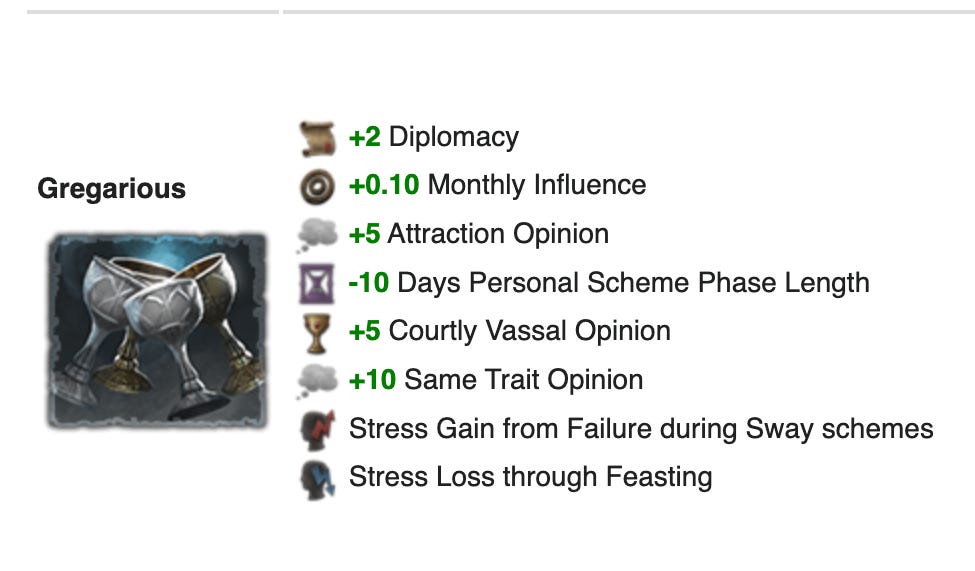
The guy that helped us with a project, or make a connection to someone that could, might stay at our house before his flight and leave his car to avoid parking fees. We might petsit for the one who used his influence to silence a bad boss. Or water his garden while he goes on a cruise with my parents after scoring a cheaper procurement cost on a new contract, that sort of thing.
Another note for chuds: this is the sort of empire building that you should be doing anyway. You should have a roster of likeminded guys in your mind. You should be accelerating and compounding the value of your skills, relationships, and network by constantly adding new guys to it where they fit. A final case in point: I have a buddy who comes from the world of corporate security (think VIP protection and perimeter security), he wanted to move back home and is looking for a job. Well, I happen to know a guy who runs a manufacturing plant around here who needed that exact role filled. Now, I’ve connected two guys who have a mutual friend, and security guy’s “interview” consisted of getting a cheeky pint where we talked business, (national) politics, and football. Surprise surprise, the HR ladies got a call from the plant manager to pull his application packet for executive review. From my perspective, I’ve gained a favor from my buddy, kept the money and connections “in-house”, and further enmeshed my network so everyone is slowly getting to know everyone else. There might be secondary and tertiary connections between these two guys (now friends independent of me), and so forth. That sort of dynastic networking is foundational for elevating yourself above the status of wage slave. Maybe I go invest with one of these guys some day, maybe we go out to the range sometime, who knows!
Now, I didn’t always used to be this way. In fact, shortly after I became Orthodox, I had a period where I leaned really heavily into monastic silence in a lurch of convert enthusiasm:
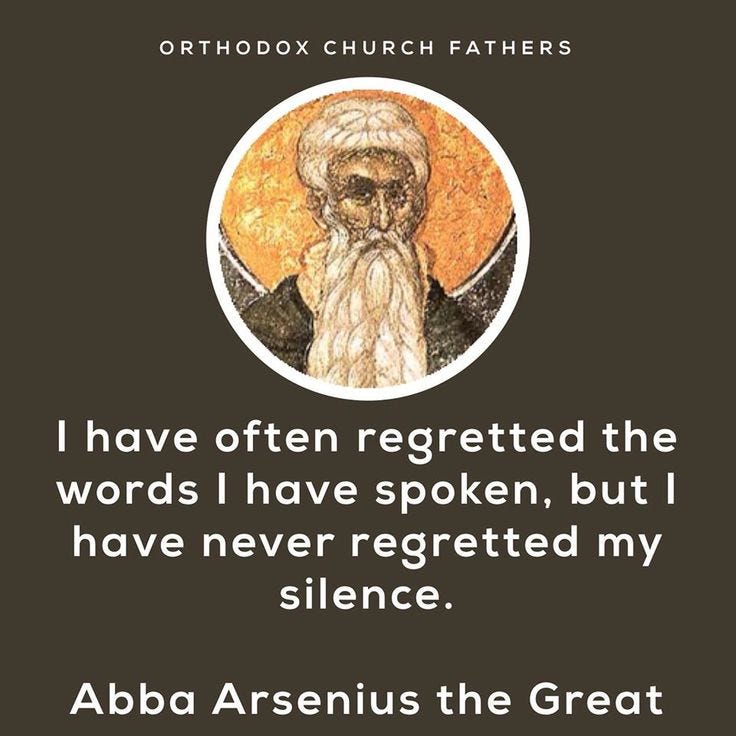

I was also keenly interested in mimicking Stonewall Jackson, who was himself silent to a fault. So, I went to work every day and said only what was strictly necessary. Nobody knew much about me, nobody would consider me a friend, I was just an NPC that worked until it was time to leave. I thought this would protect me from criticism, that others would see my good traits, that I would be beyond reproach. Really, I was angling for a moment where people would acknowledge me without having to sell myself. Instead, I was miserable. I never had the moment in the spotlight where I was rewarded for my perfect behavior and hard work. I never overheard coworkers singing my praises as I passed by. Instead, people thought I was weird. I wanted to come off as disciplined, stoic, and “above” office politics. Instead, the normies in my cubicle row thought I was a a serial killer in the making. I was so far out of bounds for normal human interaction that it wrapped back around to being weird. I didn’t make any connections, and thus my time in this job was merely trading hours for money.
You’re probably not a trad ortho neophyte. You’re probably a guy that goes to school or work, then goes home to scroll or play video games. If you do this, you’re not getting ahead. You need to be networking. Even if you “don’t like people”, even if you’re bad at it, even if you don’t think it’s fun. Being a “conversationalist” is a skill, it can be improved with practice. Go drive to the next town over if you don’t want to be embarrassed on your home turf, meet someone in a public area, and try engaging them in conversation. Rinse and repeat until you enjoy this process.
If you need more advice on not appearing to be autistic (around women especially), read this:
How to Talk to Women for Complete Autists
·
February 5, 2024

Disclaimer: As we discussed in my other post, I am not particularly attractive. I feel comfortable writing this because I’ve had disproportionate success with women for a man of my appearance. I’m remastering this iFunny classic for Le Kissless Handholdless Virgin Incels, not for guys who have game or are at least moderately attractive.
Note: Not a single line of Layne Archive has ever, or will ever, be written with AI.
I put this tip towards the bottom in the hopes only trve Layniacs would read this far and thus be more willing to hear me out.
Let me get this part out of the way: I do not like AI. I do not enjoy living in a world that is going to be constructed, managed, surveilled, and curated by AI. If I could push a button and instantly revert to a time before AI, I wouldn’t hesitate. Please, understand the difference between “AI advocate” (me) and “AI enthusiast” (LinkedIndians).
As with many things in life, the discerning gentleman must strike a balance between idealism and pragmatism. You and I likely agree very much on the “ideal” society, now it’s time to discuss what is pragmatic.
At first, I was skeptical of AI for all the reasons everybody else is. I laugh(ed) at the people who have to ChatGPT everything before they can know their own opinion. In fact, just to drive the point home, let me share a short vignette about how retarded AI can be.
I once attended a “cob house” workshop at a rural retreat ran by some real hippy crunchy granola types.

I have a scoop of this myself, which perhaps bled into my desire to attend, but I was still distinctly different from everybody else that went. We started with a “Native land acknowledgement” and I attempted to make the “get a load of this guy” eye contact with another relatively normal looking white guy only for him to glare at me and ask if I had a problem with the land acknowledgement.
The point of the story is, they had some sort of ridiculous Sanskrit phrase painted on the wall of one of their display cob houses. The instructors left it a bit of a mystery lingering over our primitive mudhuts, asking attendees what we thought the phrase might be. Several of us offered contextually relevant guesses (“building with cob is awesome!”), content with our speculations. Then some fat retard with Google glasses used them to scan the writing and have the Gemini model blurt out an incorrect translation: “IT SAYS UNITY, PEACE, AND LOVE!” he shouted, wrongly but confidently. Embarrassed, the instructors sheepishly clarified that it actually meant something like “Build a peaceful world together”. AI completely ruined this serendipitous moment.
The fact remains: AI is here, it’s never going away, and you will be left behind if you refuse to acknowledge that the world has changed yet again. In traditional “conservative” fashion, the people attempting to purge AI from society have completely failed in their counterrevolutionary efforts. I wish them well, but there is effectively zero incentive for anyone in a position of power to not deploy AI in some capacity. Over time, they will continue to shape the world in their image and according to their preferences. Society is going to continue to find new, mostly shitty, ways to incorporate an additional level of automation, as it always has. By the way, AI is just the latest way mankind has schemed up to automate their lives. Do you drive a car? Do you use electricity? Were you there when everyone lamented the omnipresence of the internet? Do you remember when everyone griped about having to go to a website to do something we used to do in person? Spoiler alert: everyone adapts within a few years and life moves on. The anti-AI sentiment will dissipate, the last few holdouts against it will be isolated, powerless, and ultimately forgotten in the same way the boomers that were against television completely failed. The only way to be logically consistent and maximally anti-AI is to live the Kaczynski Anarcho-Primitivist lifestyle out in the woods.
You can either embrace change, or you can dig your heels in and pretend that it hasn’t occurred. Hiding under your bedsheets and hoping Claude doesn’t find you is not an effective means of dealing with change. Using the internet, the “AI” of the early 2000s, to gripe about AI is like driving your Ford vehicle to your job at the furniture manufacturing plant to complain about deforestation.
Okay, enough shilling. Here is what I think you should do. Like the internet, it is important to wield AI correctly. Compartmentalize AI. Use it for what it’s good at, and completely firewall it from the rest of your life. Keep it at arm’s length from anything you don’t explicitly and consciously acknowledge is a beneficial use of AI. Here are some things AI is good at, that I use it for:
Search querying (Googling): AI has replaced traditional search engines for me. Instead of manually parsing through search results, I can query the entire internet at once with an LLM and have it boil down the best results. It works even better for ultra-specific searches that are unlikely to be found in a single weblink on Google.
Note: I am aware of the bias baked into AI models, and that it’s heavily biased towards “sources” that are friendly to captured institutions (Reddit). Like with regular internet searches, I do not query AI for anything even remotely politically sensitive. I treat it like Wikipedia: excellent for the “hard sciences” and absolutely radioactive for the social sciences. I do not, for example, ask AI what happened to Trump in Butler, PA. If you still have a problem with this, I hope you are not using a politically motivated search engine (that includes Pro-Israel DuckDuckGo) and you scroll through at least 5 pages of search results to make sure you aren’t getting SEOslopped.
Language or verbal skill practice: AI is excellent at practicing foreign languages. The models are good enough now that you can use your microphone to speak back and forth with it. Combining this with the first thing I mentioned, lets you tailor language practice to niche topics that you enjoy. Maybe what gets you to learn Spanish is discussing WWII military equipment in great detail, a task ostensibly impossible without AI.
Tech support: I have recently picked up self hosting as my Unc hobby, I suppose it was either that or grilling. AI is infinitely patient in providing tech support, which already sort of plays to its strengths. It’s going to find the random YouTube comment or forum post from 2014 that solves your problem nearly every time. I’ve used AI to teach me how to use the Linux CLI (command line interface), spinning up some projects as a way of learning some networking, some coding, that sort of thing.
Research: Along with just being better at querying, AI is excellent for assembling and categorizing large pieces of information. If the way you research for school, fun, projects etc. is to Google and manually assemble sources, this process can basically be automated with AI. If you train the model to qualify information it finds, you can control for much of the bias and leave the actual synthesis (opinion-forming) to you. Example: today, I was having a discussion with a lady that said the Church Fathers never said anything about physical exercise. Well, I have some books with their writings, but nothing exhaustive. Rather than Google it, I had an LLM query for relevant selections from the Church Fathers, along with a disclaimer for how it found a source. Then I read the passages myself and took it from there.
Monotonous tasks: like with other forms of automation, AI is good at the repetitive, annoying tasks you might need to do to stay alive. It can extract information from a photo and transcribe it into a table (and give you the Excel code to format the table how you need). I use it to help me contextualize feedback from the aforementioned and hard to understand Linux CLI (and the code generation itself is quickly improving). It can sort enormous amounts of information you find/make/need according to plain English instructions you provide— and it can ask followups to clarify exactly what your intention is. Humanizing the cold logic of machines plays to its strengths. You can even text tomo.ai to intuitively remind you via iMessage / SMS if that’s how your brain works.
Thoroughness: I use AI occasionally after I think long and hard, to make sure I’m not forgetting anything. It can’t reason, but it can parse basically the entire internet (most human knowledge) to make sure the idea I’ve created is complete and thorough. I occasionally also use it to confirm if something belongs to a group e.g. Is Linux Mint considered a Debian Linux distribution?
Specificity and Projects: You can be way more specific with AI than traditional search querying, particularly if you ask to make an inference that is ultra specific. Let’s say you want to plan a trip to England. You can spend 6 hours googling around, reading books or forum posts, watching YouTube videos, or maybe even talking to someone from England, or you can ask: “Plan a 7 day trip to England minimizing travel times and maximizing [my interests i.e. historical sites and not tourist attractions]. Generate the itinerary in a table with columns for cost, commute time from the prior location, rationale, alternatives, and any additional administrative remarks”. Is your life really that much worse for letting ChatGPT churn out a rough baseline in 5 seconds?
And now for some things I never use AI for:
Forming opinions or “first principles”: I only use it for non-sensitive topics, and never to form new opinions unless I am reasonably sure the topic is non-sensitive. For example, it has “formed my opinion” on whether chicken or beef is better for thyroid T3 and T4 hormone production.
Pictures of myself or my family, or any image generation involving my real life
“Summarization” of any sources I’ve found unless I don’t care about the topic or I’m in a hurry
As a chat bot, friend, companion, or in any way pretending it is a sentient being and not a word probability calculator sitting in a server rack in India
So anyway, that’s enough of that. I do use AI, but I hope I’ve demonstrated that I use it in “the good way” that is productive and not creepy or intrusive or lobotomizing. It’s your choice whether you use it or not, for now, but just know the writing is on the wall. I assume there are still holdouts somewhere who never used the internet, that’s how you’re going to look in 15 years. Better to learn how to exploit this emerging technology for your own purposes than pretend it doesn’t exist. I completely understand why people don’t want to use it, I think there’s something quite inglorious and a bit dehumanizing about it, the same way you might see the king of a once great nation unceremoniously drive into rush hour traffic in a Honda Civic instead of a suitably resplendent horse and buggy. Even still, I think the positives outweigh the negatives.
No posts
Comments
Nothing yet. Say the first thing.
Sign in to join the conversation.