
Recently my eight-year-old asked me if I had a TikTok, I said yes. “So why can’t I start a YouTube?” she asked, joining the 1 in 3 kids who aspire to become YouTubers.1
“You can,” I said. “When you become really, really good at something and want to teach it. That’s what I do.” Both buying time before my kid gets online, and calibrating her compass towards excellence.
The knowledge business is already a tough one. I recently read a Substack by Thembi Bheka about how knowledge is being commodified. The same article advised folks to go upstream: high-ticket advising/coaching. She cited creators who are advising to the tune of $150,000. And she really got me thinking about discernment.
Tim Ferriss further illustrated the point through his declining book sales, citing AI bots as a new-age swap for many readers.
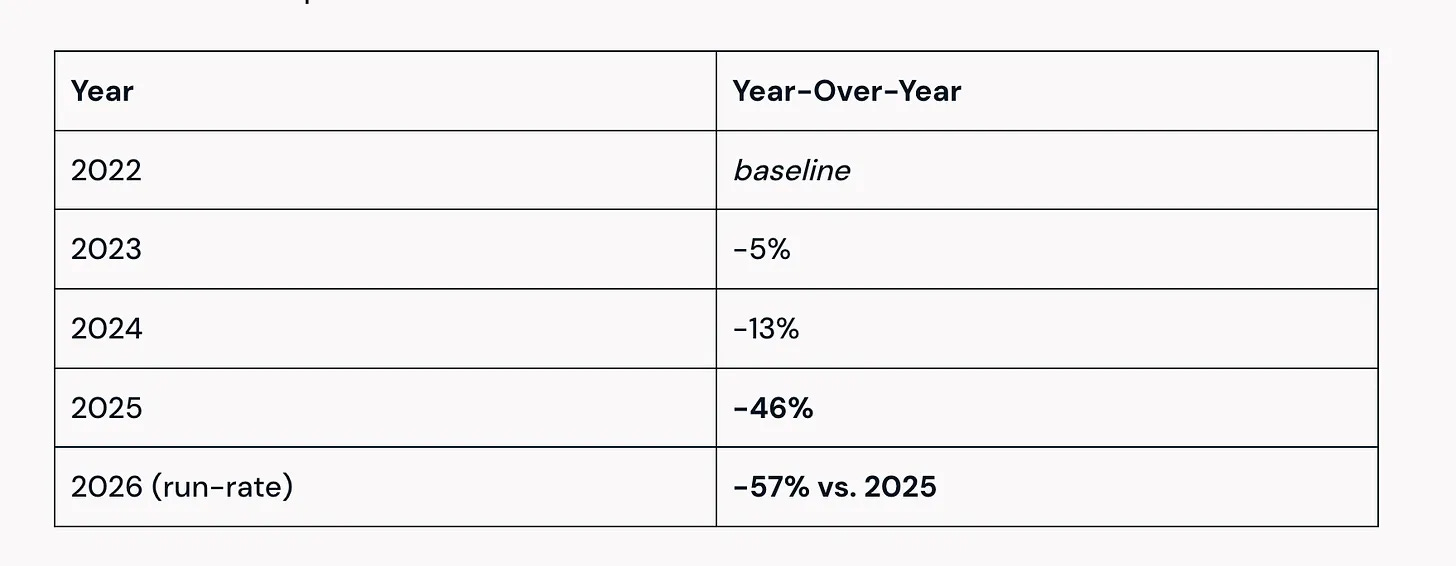
So can AI replace me? Can it replace my daughter’s YouTube dreams?
One thing that AI has done is dilute mainstream influence. A job that was started by social media companies a decade ago. Let me explain.

I grew up at a time when celebrity was fully manufactured. Limited programming, a few late night shows, and blockbusters determined celebrity. Magazines fanned the craze — from Cosmo to People to Vogue, influence was gatekept. Our culture was shaped by a few sources, and we followed. The clothes, the eyebrows, the books, the body goals were influenced by curated celebrity.

Then came the streaming era and social media, and more people gained influence and notoriety. Suddenly Hollywood blockbusters weren’t household names. A-list celebrities were A-list for some, but not always national sensations. We went from a select number of influential people to a much wider array. Primetime sitcoms had to compete with YouTubers who would unbox toys for hours on end.
And culture has since been shaped by more sources. Global voices. And influences across cultures, religions, and gender.
And now with AI, the branches of influence have only become more diluted. As Tim Ferriss put it, rather than someone consuming his work, a chatbot can consume his work and spit out frameworks. Culture has been steamrolled and tailored to your preferences in your voice. A quick prompt to the algorithm can create a specialized guide on how to do your eyebrows, what to cook with soursop, and what it takes to get into an Ivy League college.
The thing about extreme agency is that it necessitates extreme discipline.
And extreme discipline is built on self-trust and not letting your mood govern your plan.
I experienced this a few weeks ago when I was laboring. Self-trust is a crucial skill in birth, with the counsel of a medical team, of course.
My labor was long — like weeks long. I experienced contractions two weeks before my due date, daily. And the contractions led to a domino effect of arranging care for our kids and sledgehammering through various deadlines at work. My due date came and left. There were signs of progress, but no baby.
One night, I called my dad. We chit-chatted aimlessly. As soon as we hung up, he called back. My dad and I hadn’t talked about labor, but he must have sensed that I was struggling with the lack of predictability.
“Layla, labor is long. Don’t be worried. You are very smart, you have a great doctor and you are being monitored regularly. I know you are listening and collecting information, which is your job right now. Do not let this make you anxious. Your body is going through a natural process.”
That call was the push I needed to get out of my own head when I was, indeed, mentally spiraling in anticipation.
I reminded myself that I had done this, I had the discernment to know that my body was progressing. That I was indeed in close collaboration with my doctor and experts. And that my nerves wouldn’t help anything.
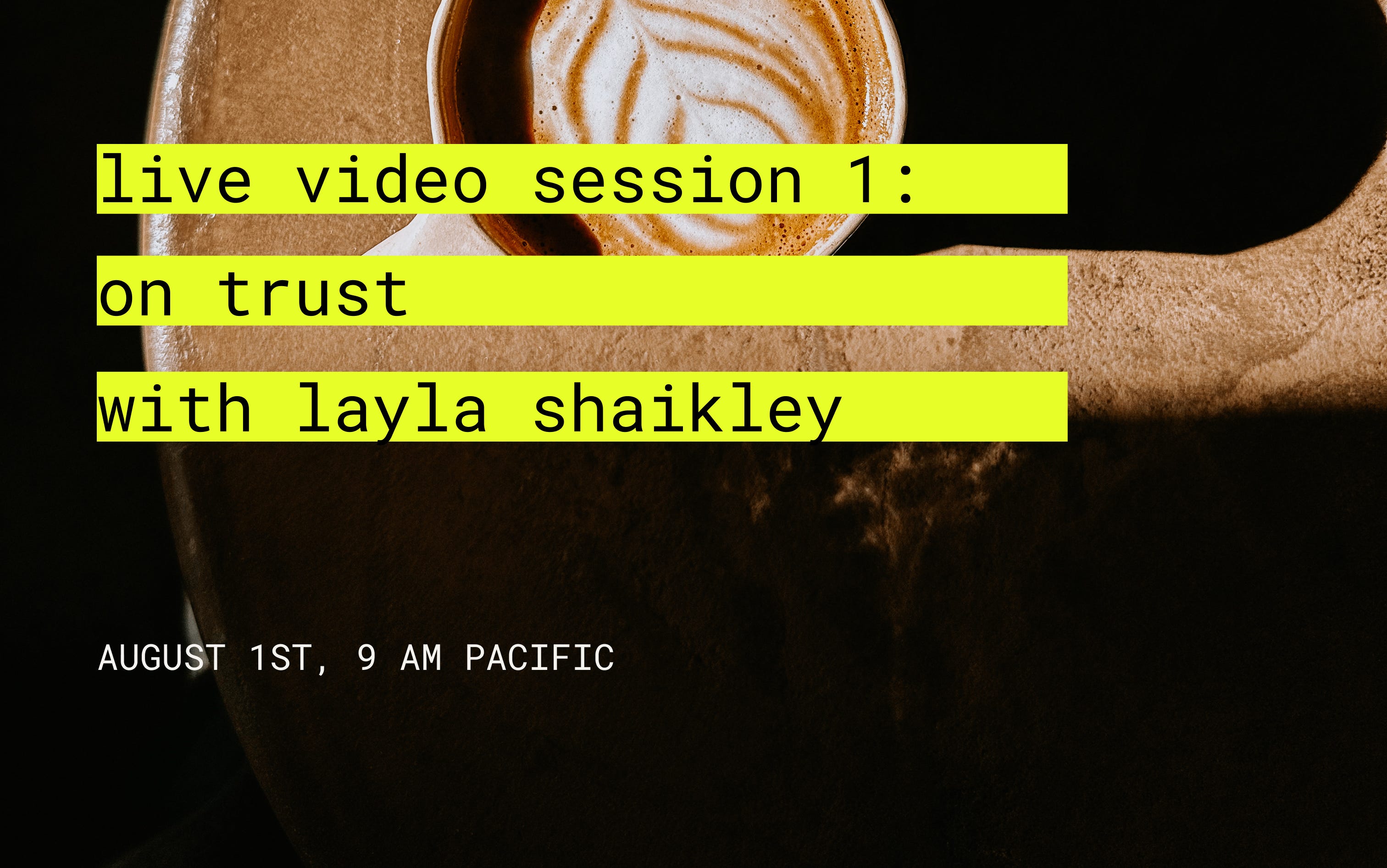
By the way, I am doing a live in a few weeks! It’s for paid subscribers. Pledge today to get the early bird rate. I often talk about how trust is foundational to being effective — at any capacity. And how trust is at the foundation of influence. We are going to dive into the mechanics of trust and how to gain influence through trust. Join me!
But what happens when you have extreme agency and limited discernment?
I recently learned about the free birth movement. Turns out I first heard about it on the finale of The Pitt, but it didn’t click until I came across content on Instagram encouraging pregnant women to skip medical care, skip the midwives, and forgo medical assistance altogether. The Guardian highlighted the dangers of this movement in a year-long investigation, interviewing parents whose newborns suffered or died due to the lack of proper medical attention when needed. And just recently, an influencer bled out due to a postpartum hemorrhage after a free birth. Her body couldn’t control the bleed.
As I read the piece in The Guardian, one part stuck out. It highlighted the risks of agency without discernment. It was about a woman who was warned by medical professionals that she was high-risk for shoulder dystocia because the baby was large. She dismissed the claims because a Free Birth Society newsletter told her those fears were “greatly exaggerated.”
As Esau Lopez was asphyxiated for the first 17 minutes of his life on Earth, the atmosphere in the room remained serene, even ecstatic. Acoustic music crooned from a speaker in a modest two-bedroom apartment in a suburb of Pennsylvania. “You are a queen,” murmured one of three friends in the room.
Only Esau’s mother, Gabrielle Lopez, felt something was wrong. She was pushing hard, but her son would not be born. “Can you help [him] out?” she asked, as Esau crowned. “Baby is coming,” the friend replied. Four minutes later, Lopez asked again, “Can you grab [him]?” Another friend murmured, “Baby is safe.” Six minutes passed. Again, Lopez asked, “Can you grab [him]?”
Lopez could not see the cord wrapped around her son’s neck, nor the bubbles blowing from his mouth. She did not know that his shoulder was grinding against her pubic bone, like a tire spinning on gravel. But “deep down”, she says, “I knew he was stuck.”
I wish the story had a better ending, but Lopez’s baby did have shoulder dystocia. The baby’s head was delivered and his body didn’t follow. Her son suffered hypoxic-ischemic encephalopathy, a brain injury caused by oxygen deprivation, which led to life-altering consequences for him.
I commend the mother’s bravery for sharing her story, as she openly admits she had agency but lacked discernment and a knowledgeable team to support her decisions.
My takeaway: We live in an era of extreme agency, but agency and discernment are not mutually exclusive.
Discernment comes from judgment. Judgment comes from knowledge. Knowledge comes from experience. Experience comes from implementation. Implementation comes from discipline.
The problem with our new AI world is that in the discipline → implementation → experience → knowledge → judgment → discernment lifecycle, we are jumping straight to step 4: knowledge. And relying on AI to check judgment and discernment before we get to implementation. We are starting in the middle of the lifecycle, leaving severe areas of vulnerability.
Similar to how a free birther is trusting the knowledge of the community to help determine judgment over the experience or knowledge of professionals.
I am an AI person. I remind my audience — ten toes deep, usually — that I hold the opinion, unpopular in many spaces, that I find AI very useful. That I use AI to streamline my own workflows and create workflows that would have otherwise been done manually.
But I do not rely on AI to create new thoughts or visibility for me. I create those things, whether it’s through writing on Substack or speaking or nailing my tone and message through Reels.
I was recently speaking to a pediatric plastic surgeon. “In residency, we learned as many operations as possible. As an attending, we learn how not to operate as much as possible.” The surgeon was talking about the difference between accumulating knowledge and building judgment. While residency is a great time to solidify technical skills, residents often have the oversight of a more experienced attending physician. As an attending physician, judgment is king.
Knowledge is extremely valuable when it has a synergistic relationship with judgment. You learn, you try, maybe you fail, maybe you succeed, and you tweak the process.
Knowledge enables judgment, execution guarantees it. And discernment refines it.
With AI, knowledge can be produced with very little judgment and context from the prompter. There is zero friction between an idea and an implementation plan. You don’t have to read all 448 pages of a Tim Ferriss book to create context, sink into the arguments, and generate a plan. You can prompt a plan in seconds. And sometimes you can even automate the implementation.
But friction helps us learn.

So maybe use AI to outsource your learning process and learn a thing or two. Or maybe the consequences of lacking discernment arrive faster and AI slop accumulates. And maybe you never really build skills along the way.
Research out of the MIT Media Lab demonstrates the difference between learning and retrieving knowledge. In the study, 54 participants wrote essays using ChatGPT, Google Search, or no tools, with EEG monitoring throughout. Predictably, the ChatGPT group showed the weakest, least distributed brain connectivity of the three. When later asked to write without AI, that group couldn’t recall content from their own earlier essays.2
But decades before the Media Lab’s study, UCLA psychologist Robert Bjork coined a term that we all know to be true (even though it’s actually pretty counterintuitive): desirable difficulties. Desirable difficulties describe conditions that make learning feel harder in the moment but produce long-term retention. When you struggle to retrieve an answer, it sticks. When you practice over time rather than cramming, it sticks. When you creatively produce a solution instead of borrowing someone else’s, it sticks.
It’s not lost on me that this newsletter is called Things You’ll Learn the Hard Way — because the hard way is often the most effective way to learn things.
Slow sticks. Painful sticks. Friction sticks.
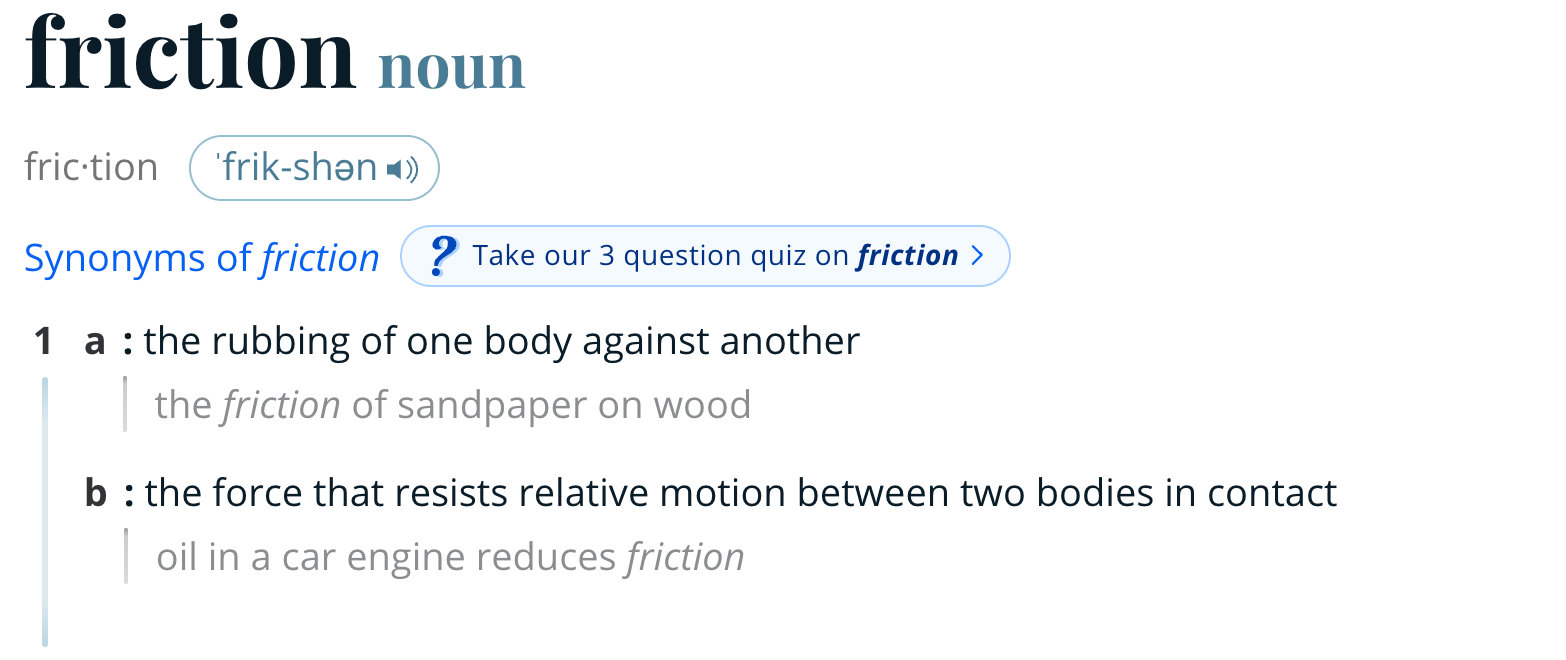
And if you are relying on AI to engineer your way out of friction, you will struggle to retain information. You may outsource, but you will not retain effectively.

Because friction is tuition for excellence. As the Four Stages of Competence reminds us, we have to be bad at something before we are good at something.
No.
I stand by this claim.
You can’t get to durable knowledge, let alone judgment or discernment, without passing through the difficulty first. AI didn’t find a shortcut around that.
AI did not kill the knowledge business. Because AI cannot replace discernment or judgment. And it cannot create discernment or judgment. But you can. And I can. And we both can document how we think. Or read about how others think, in a way that our brain engages with it and connects dots.
Because AI has reshuffled — once again — how influence is distributed. And it’s a platform for the loud and the well-documented. And a resource for the disciplined.
Thanks for reading! Please do consider subscribing or pledging to be a paid subscriber. If this article proves anything, it’s that I am committed to applying my brain and generating original thought in this new era of AI. So thanks for supporting good, old-school thought pieces.

My newborn is 3 weeks today! I can’t process that she was in my stomach 22 days ago. This is my current writing quarters.
BABOON TO THE MOON gifted me the most functional bags that I used for my hospital visit. The Small Go-Bag is a dream backpack for any short trip; it carries a bunch of stuff in a deep pocket, but also has a bunch of small pockets. And cleans easily. And the Go-Tote Bucket is my new diaper bag. I’ve honestly had my eye on B2M for a long time because the aesthetic is so cool, and now that I can co-sign on the functionality I am fully sold.


The Harris Poll, commissioned by LEGO Group (2019). Kids’ Career Aspirations Survey, U.S. sample of 3,000 children ages 8–12 across the US, UK, and China. 29% (in the U.S. subset) of children ages 8–12 said they’d rather be a YouTuber/vlogger than an astronaut when they grow up
Kosmyna, N., Hauptmann, E., Yuan, Y. T., Situ, J., Liao, X.-H., Beresnitzky, A. V., Braunstein, I., & Maes, P. (2025). Your Brain on ChatGPT: Accumulation of Cognitive Debt when Using an AI Assistant for Essay Writing Task. arXiv preprint arXiv:2506.08872.
Comments
Nothing yet. Say the first thing.
Sign in to join the conversation.