
This is a note to STEVE MITCHELL, one of the publishers of Scuppernong Editions, that will be bringing out my next book, The Marriage Dividend, Stories from the First Year, in February 2027. I’m going to tell you things he already knows.
It’s 2019. I get an email from Steve, who has been reading my posts on Facebook and wants to talk about making a book of them. He and his partner, Brian Lampkin, own a bookstore in Greensboro, North Carolina. It’s down the street from the famous lunch counter in Woolworth’s that was officially integrated on July 25, 1960, after a protest lasting six months. Scuppernong Books is a cultural perch for left and progressive birds in this ‘hood, and the partners have started a small press to advance their ways of looking at the world.
Steve and I arrange a meeting near the yoga studio I go to on Columbus Avenue in NYC, a plant store that serves coffee. We sit across from each other at a little table, under potted palms. I like his face. It’s warm. With some people—maybe with all people—it’s “you, yes,” or “you, no.” Steve says when he reads me he feels I’m writing directly to him. Also, he’s attracted to the way as a feminist I write about sex, or activities we use the shorthand of sex to describe. He proposes a book and asks if I want to think about it. I say, “No. I don’t have to think about it. Let’s do it.” It turns out to be Everything is Personal, published in 2020. I will turn out to steal the title for this Substack, when, two years later, I jump into writing here.
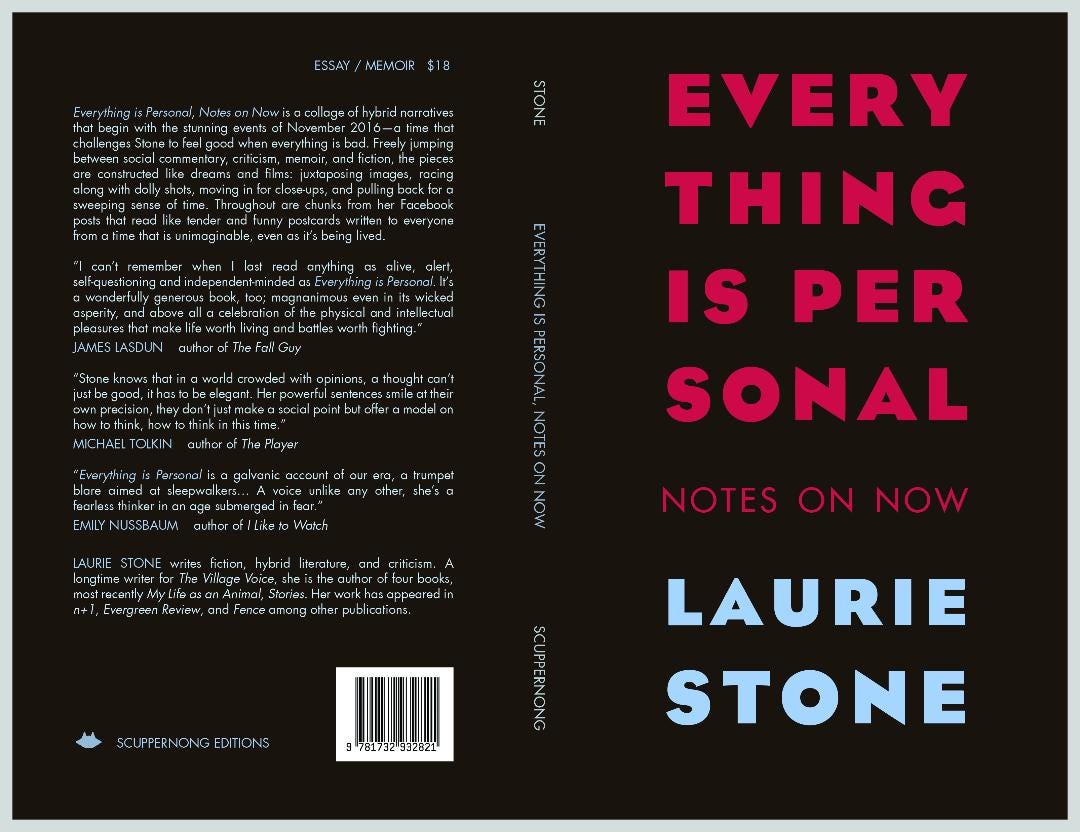
It’s perfect. What does that mean? We work out everything together, from editing sentences, to rearranging the order of the pieces, to consulting about the cover art, to figuring out ways to promote the book. There are no committees. There is no “watch out about using that word.” We have the same understanding of the writer’s job and the job of a great, supportive, very smart, kind editor, who sticks to deadlines and finds the same things funny that you do.
In 2022, I publish another book called Streaming Now, Postcards from the Thing that is Happening with Dottir Press. This experience, too, is brilliantly collaborative and warm-hearted with Jennifer Baumgardner as editor and publisher. In case I have not boasted to you lately, Streaming is longlisted for the PEN/Diamonstein-Spielvogel Award for the Art of the Essay. (It’s not a book of “essays,” but whatever.)
She is fantastic and supportive. She sends the book out to editors in the big houses she thinks will be interested in what I do. No one bites. Some people are polite. They talk about marketing and sales. Who know what they really feel. People are always not telling the truth to writers and maybe people are always not telling the truth to everyone they are going to disappoint. Even editors who have asked to read the manuscript turn it down.
This depresses me, to the extent my temperament can become depressed. I mean, it’s something I can tell you looking back at say three years ago. I can tell you the process of fielding those rejections was get me out of here and never again. Also, to be honest, the fantasies lodged in your brain surface. The fantasies you didn’t know were there and then you do know are there about having a hit, maybe. Is that it? Or being a heavy hitter, someone in the club. What is the club? How should I know? The club is something like the mean girls’ table in the lunchroom in junior high, I’m guessing.
Anyway, whatever the fantasies are, I don’t want them in my head. They make me stupider. They pour lighter fluid on my envy. They do not make me creative in any way.
I love it. It makes me happy. I meet you. You make me happy. In a few days little Stackie will be four years old. Is it a factory for making the next book? Maybe. I’m not sure. I write for other publications as well, including The Paris Review daily, edited by Sophie Haigney. She, too, is perfect. We get along great. Book publishing has become fully: No one knows how to sell a book and maybe all books should be genre whatevers or niche whatevers to appeal to identity boxes whatevers.
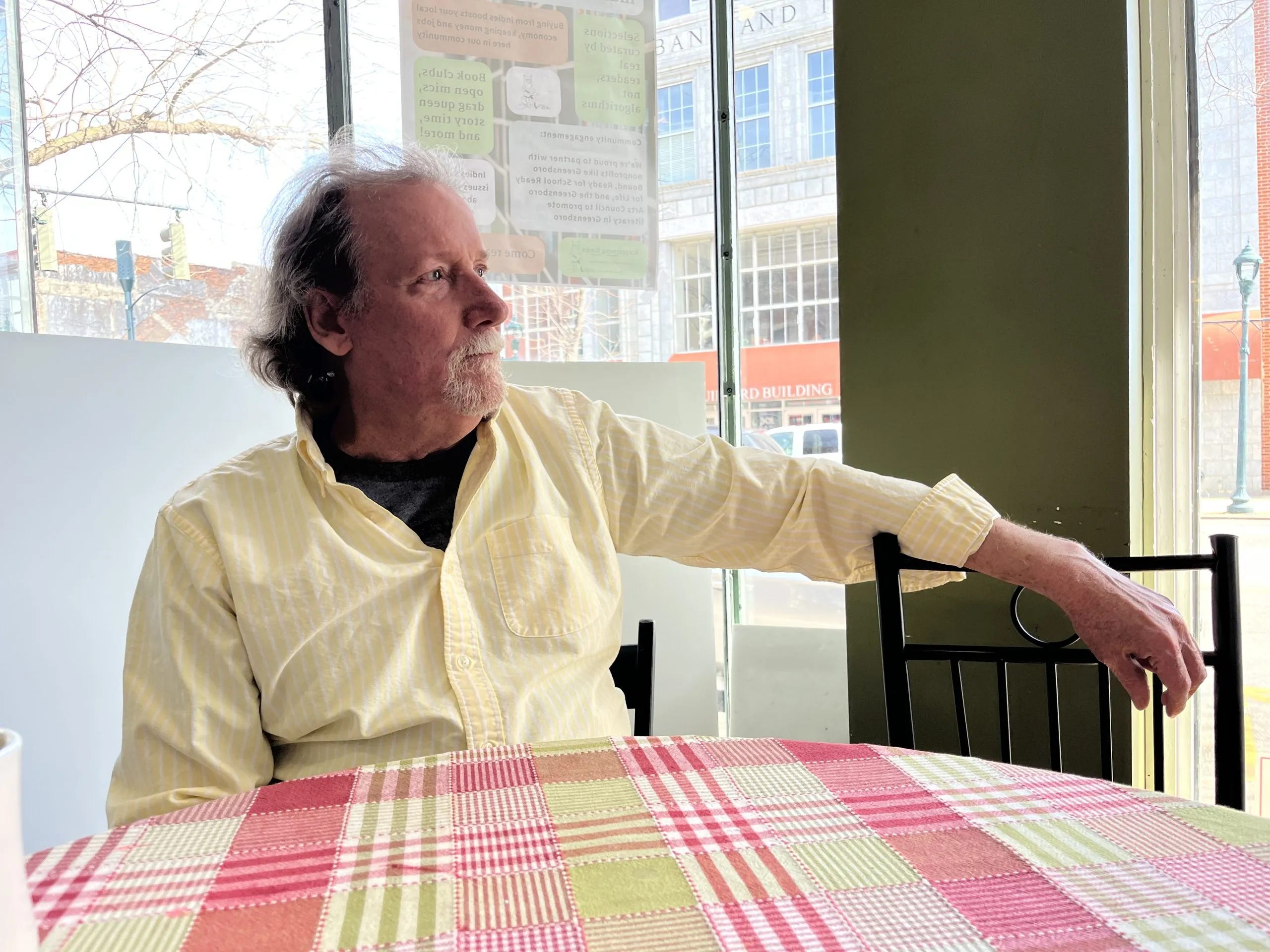
One day, he says to me, “If you ever want to do another book together, I’m in.” I say, “Really?” He says, “Yes.”
I’m serious. After this conversation, I start to keep a file of pieces I’m not sure why I put them in the file that could become a book. I keep throwing them into the file, and I don’t look at it for a pretty long time. Somehow, I know that a piece that’s good doesn’t belong in the file. It doesn’t have the right sound to qualify. Whatever book I can make from the pieces, the pieces have to have the same music. Maybe music is a poncy word. It’s the way I hear writing, both an individual piece and the many chunks that gather into a book.
Time passes and Steve emails to say, “So, when do you think I can read something?” I say, “I’ll get right on it.” I love deadlines. I don’t want to let the chance to work with Steve again slip away. I open the file. I like what I read. “Amaze, amaze, amaze,” as Rocky, the extraterrestrial in Project Hail Mary would say. Cutting to the chase, I send Steve a manuscript shaped with the conceit the narrator is telling stories she created in the first year of being married. Being married to Richard, who she’s lived with at that point for nearly nineteen years. She is 78 when she gets married. Richard is 74. Agewise, they are alta cockers. If anyone knows anything about publishing, it’s that: Alta cockers buy books.
It’s the best thing I’ve written. The book is in love with whatever it talks about. The book is in love with life. It’s the best thing I’ve written, and it would not exist had not Steve raised a hand to catch it. I would not have made another book without a hand to catch it.
I mean, you have to find your comfort zone. You have to discover the best way for you to work. You have to partner with people who stimulate your creativity with their receptiveness. You have to say no to offers that disrespect your freedom to say what you want to say. People will tempt you to change your language and meaning. Personally, I’m not tempted that way. It would spoil all the fun of sharing how my mind works.
We watched the first four episodes of Furious (Hulu). So far, it’s the most feminist show I’ve seen in maybe ever. The point of view is entirely: how does a woman use her nose, her eyes, her sense of what is big in this frame and what is minor, how does she understand the world from the perspective of being female, being female and black, being a female who has not fared well in the world of males who own things, run things, and get a giant social pass to hurt women and girls without consequences. Elizabeth Meriwether is the creator and showrunner.
Sex trafficking is a core element in the plot. There is a female serial killer who has been trafficked, starting at age 15. There are two female FBI agents working together on the case, who themselves have to outsmart and outpace the male whatevers in the FBI and the NYPD.
The show is not Killing Eve. I mean it’s not organized for us to fall in love with Jodie Comer, and the scripts have not been written by Phoebe Waller-Bridge’s witty, literary mind. Furious wants to remind you of Killing Eve in a way that does a disservice to itself. Furious is so inside an awareness of how used and sold short females are in human society, it leaves no crack for any other light, and this is its brilliance.
Here’s an example. The world assumes women will take care of men. Women will let men go first. Will not expect good gifts or any. When men are a houseguest, they won’t bring you anything. What, you thought they would?
Women will let men elbow their way forward, will let men say what’s on their mind. Women will look after the feelings of men, and if they don’t, expect a weather condition not even actual weather can surpass.
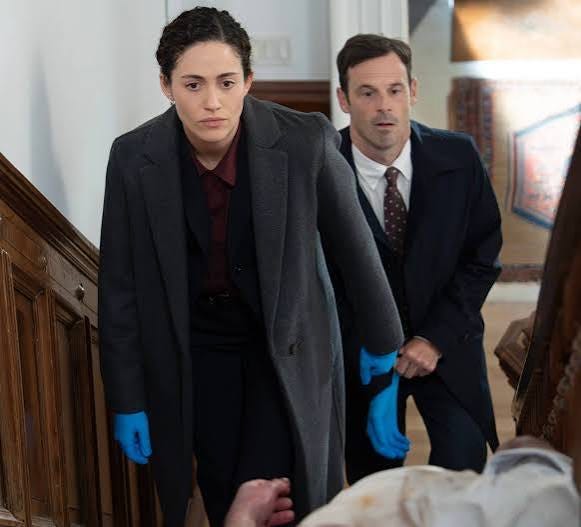
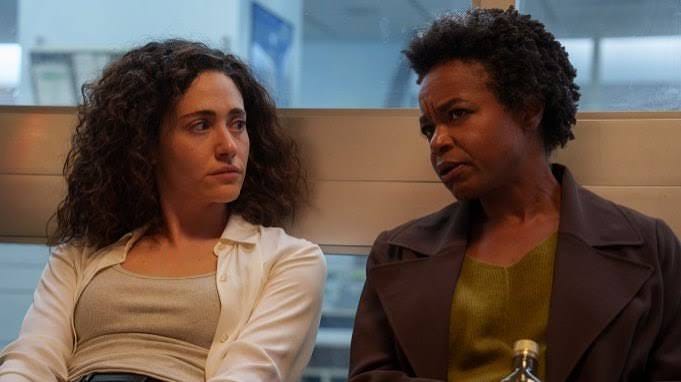
Scoot McNairy plays Danny Kelly, the ex partner of Alice Black (Emmy Rossum) when they were both cops in the NYPD. Now, she’s FBI, and they are back working the serial killer case. Alice left the force after her boyfriend, a fellow cop, put her in the hospital from a beating. The men in the force didn’t believe her. Danny believed her, and now the other men have frozen him out. He doesn’t want to let Alice forget that. He wants credit for being a hero because he believed her!! A hero who is getting shat on because he believed her!! Are you digging the low bar men set for themselves to stake a claim for their contribution? It’s the emotional equivalent of taking out the garbage as proof you “help with the housework.”
She doesn’t give him what he wants, because she understands how batshit crazy these moments are where what he feels, what he sacrificed, what he is up against with other men is being placed in front of her to, what, apologize for? Make large, somehow, in relationship to being beaten senseless?
The show knows that Danny is a good guy, a better guy than the rest, a guy the other men don’t like or trust because he believed his partner and broke ranks with them. And still, this good guy, Furious shows, expects to be taken care of by a woman. The show knows, as well, that Danny is so unconscious of the way he’s been formed as a man, he has no idea he’s made himself important to the beating Alice took.
A little while ago, I came across a piece I wrote five years ago about Klute (1971), as part of our project of rewatching movies we’d seen when they premiered—movies glowing with the times they were made in. It struck me as a time-trippy comparison to Furious, in that they share some themes. A time-trippy look at a film whose vision is driven by the male director, Alan Pakula.
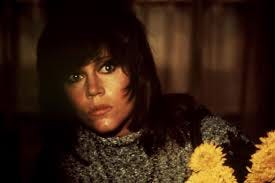
The movie is named after the male detective played by Donald Sutherland. It should have been named Shag, after Jane Fonda’s haircut, or Maxiskirt, which in reality no one wore for more than five minutes because they looked awful. Not even Jane, who plays Bree Daniels, a stylish prostitute, can make the maxiskirt work. By the way, in case you are wondering, back then, we were not all named after a cheese and didn’t speak to our johns and pimps with boarding school diction. Donald’s diction is crisp as well. It’s a pleasure to hear them both enunciate their syllables.
I liked many things about the movie. The pacing. The way the story is told in scene chunks that don’t connect all the dots, the way there is no back story, just the now of events. I loved Jane’s sessions with her smart female shrink. Jane is seeing a shrink so that every time she passes a phone booth (a phone booth!!!) she doesn’t call her connection to arrange a trick. Jane’s monologues about what she likes about prostitution amount to feeling in control of something. We see her turned down again and again for acting and modeling jobs. In the sessions with the shrink, she says the thing about wanting control, over and over. It was a new insight then, and in these scenes we feel the breath of the women’s movement floating across the screen.
I enjoyed watching the love story unfold between Jane and Donald. Jane is on screen in almost every shot, and she’s adorable with her sadness and the beautiful mouth of her distant dad. In Pakula’s direction, you see the male human straining to hear something of the social moment he’s living in, although, in the end, the central girl is still a prostitute—that’s the thing she will look back on in her life and think, Wow, I did something scary and on my own terms, and I was really good at telling men what they wanted to hear. And so angel/whore is still the only deal in town. And still Jane has stupidly to set herself up for a great risk in order to be rescued by a man. That’s not something that would happen now with a female character at the center. That’s part of the meaning of the past 55 years.
Everything is Personal is beginning year five. The only way it can continue is with PAID SUPPORT. If you have been enjoying the publication and have not yet taken a turn at a paid subscription, please jump in. More and more Substacks are out there asking for a piece of the pie. If you think this publication has a special combination of literary writing, feminist politics, humor, and coverage of streaming media, please give little stackie a birthday present with the DISCOUNT LINK below. 💋
LAURIE & RICHARD on writing DRAMATIC NARRATIVE in any prose genre: To RSVP: lauriestone@substack.com.
To attend one event or receive one recording, with no future payment obligation, you can buy a “coffee” for $4 at ko-fi.com/lauriestone
The BREAKOUT SESSION following the Zoom conversation about DRAMATIC NARRATIVE is on SUNDAY AUGUST 30, from 3 to 4:15 EST. There is a cap of 10 at each breakout. You are invited to share a piece of your own writing of around 400 words. The SLAM readings are thrilling impovs—we make a work together larger than the parts! The fee is $30. To sign up please email me at: lauriestone@substack.com.
with Steven Dunn, with Margo Jefferson and Elizabeth Kendall, with Francine Prose, with David Cale that includes a reading from his hit solo theater piece Blue Cowboy, with poet David Daniel, with Daisy Alioto, publisher of Dirt, and others, please email me at: lauriestone@substack.com.
If you would like to book time to talk one-on-one about a project you are working on or for guidance in gaining confidence and freedom in your writing practice, please email me at: lauriestone@substack.com.
If you would like to book time to talk one-on-one about STARTING AND GROWING a Substack publication, please email me at: lauriestone@substack.com. I can help you through the software, choosing a title, art design, and ways to gain readers.
I would have had sex with you and it would have been good. I would have thought it was good because I was into you. I would have thought the sex was good because of how happy it made me to be with you. I would have thought what happened inside me had happened inside you. It might have, but it is not a principle, as I once thought.
We would have met at an event where there was food and drinks. I would have slipped beside you because I liked the look of you. We would have had sex in my apartment. I would not have been afraid to bring you there. I would have rested my head in the crook of your arm and thought I should relax.
After you got up from the bed, you might have given me a small thought as you were getting dressed or hailing a cab and lighting a smoke. I would never see you again, and I would remember you for the rest of my life. I would remember you because I can’t put my finger on exactly why—and maybe that is the reason.
It would flash on me clearly for a moment I had no idea really what was going on between me and other people, and then I would lose this clarity so the same thing could happen with someone else. I cannot fully express how happy it makes me to tell you this thing I am describing can never happen again.
Comments
Nothing yet. Say the first thing.
Sign in to join the conversation.