
By Lauren Ashley Zitek
I have noticed that many parents are intrigued by the idea of Sabbath, yet feel intimidated by this practice. Many people ask, Is this spiritual practice possible with kids? It can be easy to dismiss the idea before even dreaming about what this day could look like.
Over the past three and a half years, our family has learned that Sabbath is one of the greatest gifts we can give our young children. Here are four reasons why.
One of the greatest gifts of Sabbath is that our children see what we value. Our kids see us praying, enjoying God’s gifts, playing, being present, reading Scripture, and sharing gratitude.
The culture of Sabbath in our home is formed by both what we choose to participate in on this day (such as a gratitude practice, time outside, time playing, family time in prayer, delightful activities that bring us joy), and what our family chooses to omit from this day (such as using our phones, doing chores, working, or shopping).
Sometimes, our children are invited to engage in these routines with us directly. We sing the doxology as a family, read from a kids’ bible, and pray together.
Other practices are simply ones our children observe. They see that we are not on our phones. They see that we also nap, read, and engage in hobbies. They also see that it’s good to slow down, whether that’s through a quiet walk, time with a book, or simply being present.
At some point during the morning of Sabbath, my husband and I spend about 20 minutes sharing what we are grateful for from the past week. We sit on the floor of our bedroom with our coffee and sometimes stretch while we talk. Our kids know that this is a holy time for us. They might pop in and out a few times, but generally understand that we need space for this conversation.
Observing our gratitude practice gives them a model of gratitude, sharing deeply, listening intently, and emotional intimacy. It also gives our children a chance to see that, although they are incredibly valuable to us, we also prioritize investing in our marriage and relationship.

Kids absorb both the practices they actively engage in and the ones they observe. They are watching how we live. We are teaching them, both directly and indirectly, how to rest and make space for what truly matters in life.
To be clear, it’s not that Sabbath is our only opportunity for modeling; our entire week is filled with opportunities to share God’s ways with our children. But Sabbath, occupying one-seventh of our week, is a significant gift we can give to our children. This rhythm carves out space for joy, gratitude, rest, contentment, and connection each week.
Our family spends a good amount of time together throughout the week—from our morning routine, after-school play time, family dinners, to bedtime. But on Sabbath, we are given the gift of concentrated, unrushed time with our children. Distractions are dialed down. Our eye contact is not broken by fleeting glances at our phone or our to-do list. The whole family feels more present on this day.
For our kids, one of the best parts of Sabbath is focused attention from Mom and Dad.
We have a sandwich shop toy that comes out as a part of our “Sabbath toys” most weeks. As soon as we finish our Sabbath launch routine and breakfast, you can usually find us in the living room getting set up for the Sandwich Shop Game.
My son, age three, plays the sandwich shop owner. I am his helper and take care of slicing the deli cheese, wrapping the sandwich, and asking if customers would like a cookie and chips with their sandwich (the answer is always yes, obviously).
My husband is a kind, yet ravenously hungry, customer. My daughter, five, usually pretends to be someone’s toddler who is adamantly opposed to olives. You can expect this “toddler” to wreak a little bit of chaos in the sandwich shop.
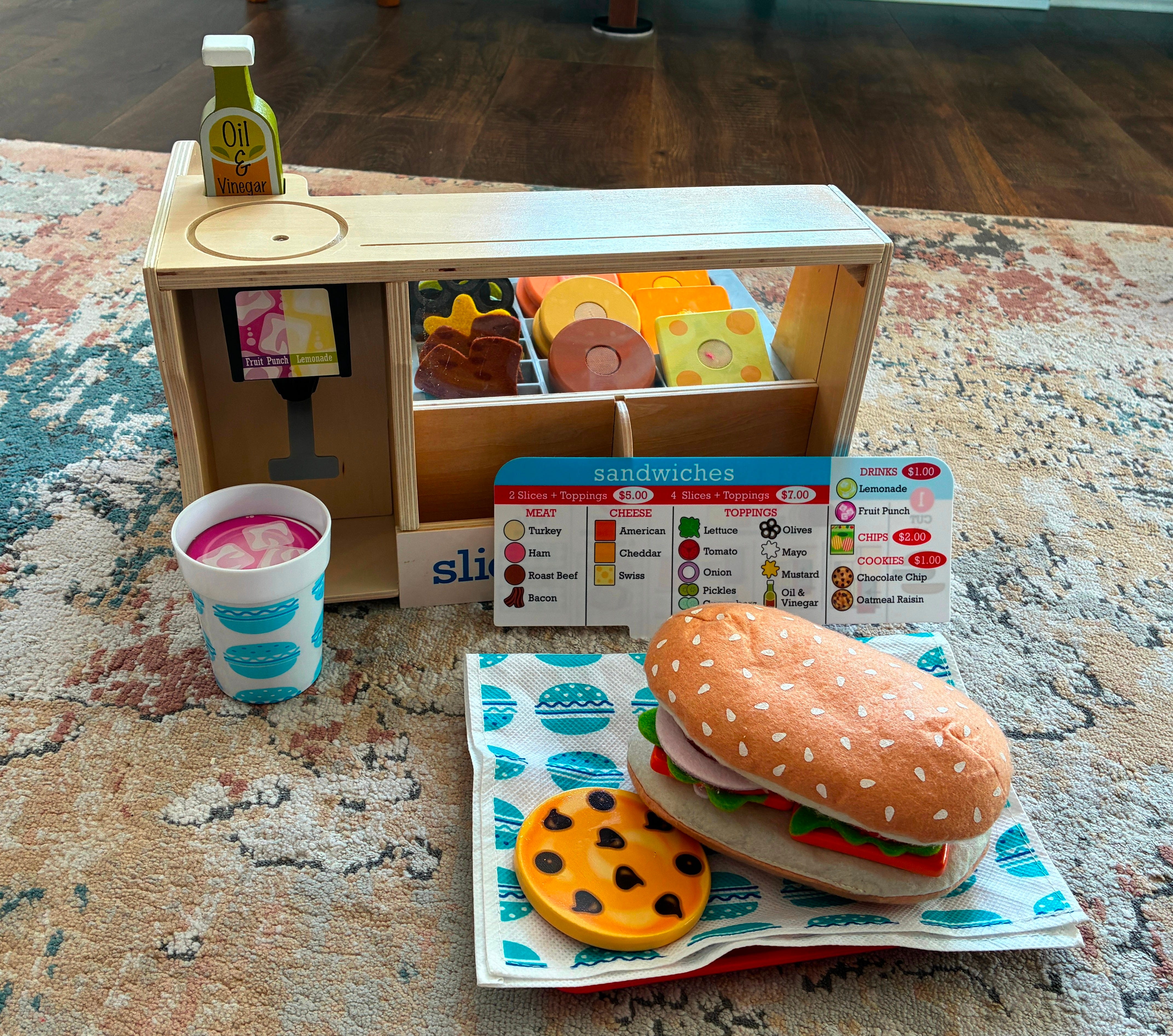
My husband and I have more time to engage in play with our kids on this special day.
Sabbath is a day set apart. A natural byproduct of a day with fewer distractions is a deeper sense of connection to both our Creator and the loved ones around us.
Travis Mahoney, a fellow Substacker, recently wrote:
“I’m more convinced each day that one of the greatest gifts you can give another person is your complete attention.
Eyes that see.
Ears that listen.
A heart that cares.”
What a gift, for our children to feel seen, heard, and cared for in our homes!
My kids look forward to Sabbath every week. They love extra family time, special toys, special treats, and morning cartoons. Sabbath helps us orient our hearts towards joy and gratitude. We lean into God’s blessings on this day, giving Him thanks all the while.
On Sabbath, my kids get to hear us share why we are grateful for each of them as we bless them in our “Sabbath Launch.”
On Sabbath, my kids hear us talking about God’s good gifts to us. They see us savor a piece of dark chocolate or an extra cup of coffee.
I frequently say to my kids on Sabbath, “God takes such good care of us, doesn’t he?” Addison, my five-year-old, told me last Sabbath, “Mama, you always say that. We know!” God’s goodness is the repeating chorus that echoes in our home on this day.
Someone asked me recently if I think Sabbath could create a sense of entitlement in children. I suppose it could, but I think it actually has the potential to have the opposite effect. We’re not “bribing our kids” to like Sabbath. We are leaning into God’s good blessings. A posture of gratitude cultivates more gratitude.
Part of the reason our kids love Sabbath is that it is a predictable routine. Our mantra, that we learned from Marty Soloman is: “We rest. We play. No Work. God loves us.” I love these statements because they boil down the essence of the day. These are the components. Every week.
My husband and I are both teachers, which has reinforced just how valuable it is for kids to have consistent routines. Rhythms and routines help kids self-regulate.
When I taught first grade, I would review the schedule for the day each morning. It was monotonous and yet, it was a time of the day I was guaranteed to have every single student’s full attention. Kids thrive when they know what to expect.
Our kids know that they can expect a day of rest, joy, worship, and connection each week. They have come to expect this day as a part of their week. They have also come to anticipate the routines within the day itself. They know: We prepare on Saturday. We get to watch cartoons in the morning and then do the “Sabbath Launch” together. We have a special treat. We get to play with Sabbath Toys. We go to church. Chores and work are set aside. We play outside. We nap. We might see friends.
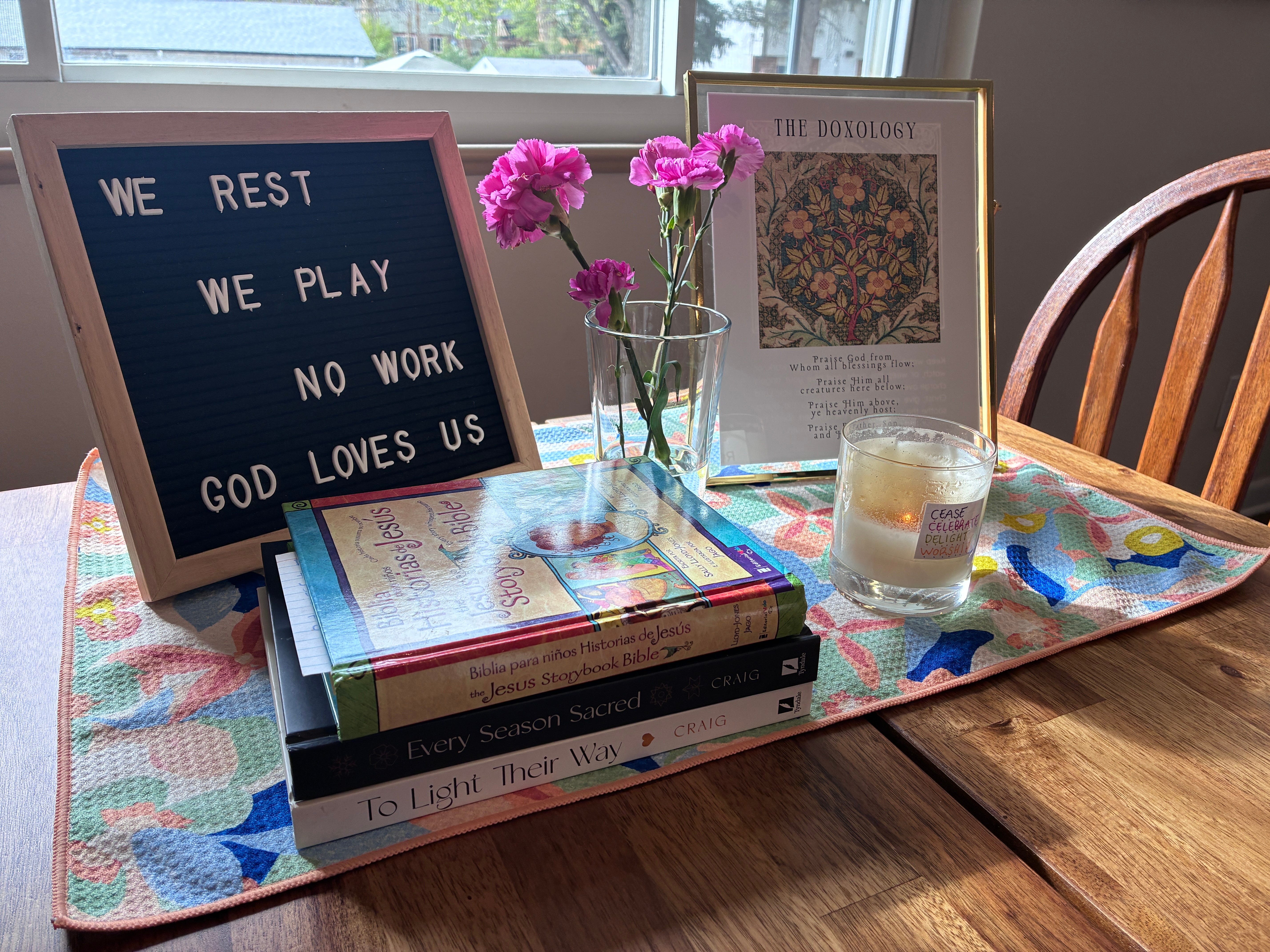
What if our kids grew up knowing how to prioritize rest, worship, gratitude, and connection?
What if our children grew up believing…
God loves me, and all blessings are from Him.
I was made to delight in Him and His good gifts.
My parents love me and make me a priority.
I’m not the sum of my accomplishments.
I don’t have to earn rest.
People are more important than things.
The people around me deserve my full attention.
My identity does not come from what I do or what I own.
I am enough, aside from my achievements.
I’m not saying that Sabbath is the only route to our kids’ growing up knowing these truths; ideally, Sabbath is one of many spiritual practices that are forming our kids to understand the deep love of God and His design for His people. Sabbath is not a silver bullet. But it is a springboard that can give us a significant boost into these priceless lessons.
Each family routine and interaction under our roof slowly shape what our children will come to know as our family values, our family priorities. The way that our kids relate to work, rest, identity, and connection is forming in these years.
I believe that Sabbath is especially important for families with young kids. Why? Because it continually reorients our hearts, minds and schedules towards God and the things that matter most in life. This is true for the adults who practice Sabbath. It’s also true for kids being raised in Sabbath homes.
If you are interested in learning about what the practice of Sabbath looks like in our family, check out this article.
Footnote: Our family has been practicing Sabbath for about three and a half years. Many of the ideas we have adopted have come from pastors, theologians, and dear friends who are figuring it out alongside us. I’m grateful for all the people who are writing and speaking about this topic.
Can you think of someone who would enjoy this post? Please share it with them!
No posts
Comments
Nothing yet. Say the first thing.
Sign in to join the conversation.