
ResearchED is unlike any other conference I’ve been to in that, for its small size, it includes such a powerhouse of presenters and attendees.
And they’re ALL SO NICE AND APPROACHABLE: giving of their time and expertise. It was such a thrill to be presenting along with so many incredible folks. In this post, I’m going to highlight a few takeaways from each of the sessions I attended, in order of my attendance at them.
I just wanted to cheer from the bleachers in the gymnasium when Zaretta Hammond began with an emphatic linking of the science of learning with racial equity. Antiracism is not enough to disrupt what she referred to as “cognitive redlining.” When we don’t get our students thinking, we are abandoning our #1 responsibility: learning. Making school too easy, over-scaffolding, focusing on completion over understanding do our students no favors. It’s like picking up the baby every time she tries to walk, Zaretta explained.
The result? Check out the picture below of one of her slides.
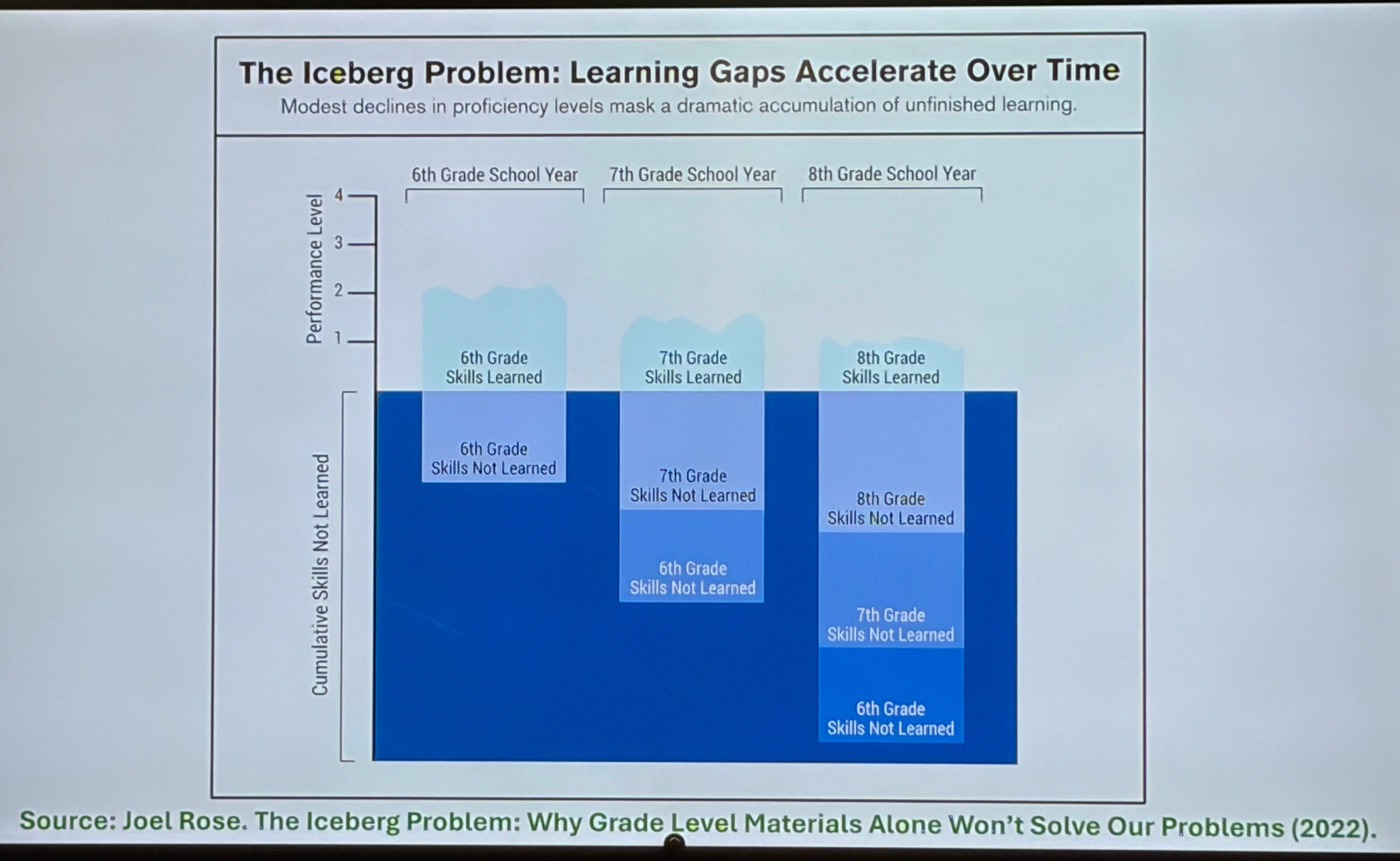
Those gaps compound. We need to keep them from happening in the first place, which we can do if we focus on building knowledge. YES to that.
Early in their presentation, Randi Blair and Patrick Steck from Deans for Impact showed a version of the diagram below, explaining how learning works.
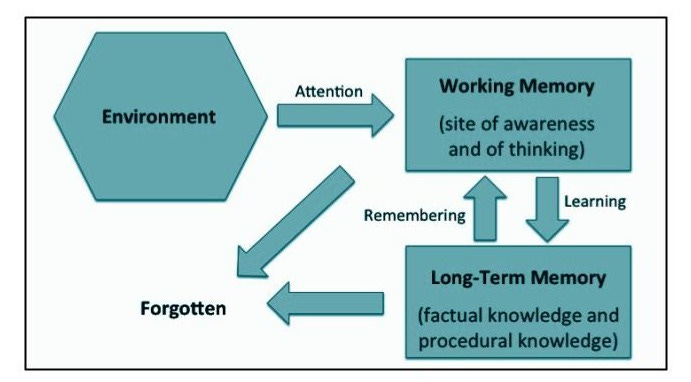
Zaretta Hammond showed a version too. I saw it 5 more times throughout the day which is 5 more times than I saw it in ANY of my teacher training or professional development as a teacher (other than my own reading.) Let that sink in a for a minute: a key point about how human beings learn is everywhere at ResearchED, but I never saw it in my teacher training or any professional development. As Lynn Gaffney said at the final panel discussion of the day, “I feel like I’ve been lied to.” A lie by omission. This is knowledge that needs to be widely disseminated to our nation’s teachers.
Thankfully, Deans for Impact is working on disseminating this at the foundational level: in teacher training. Their goal is to make sure that the science of learning is not seen as an “add on” for teachers—yet another shiny new fad— but as foundational information that all teachers receive in their initial training.
Patrick and Randi emphasized the importance of drawing attention to meaning and prompting effortful thinking by asking key questions and using examples and non-examples. And then they practiced what they preached by giving us all two examples of classroom activities and asking us which one would be more effective.
Here, you try: which activity is better for task?
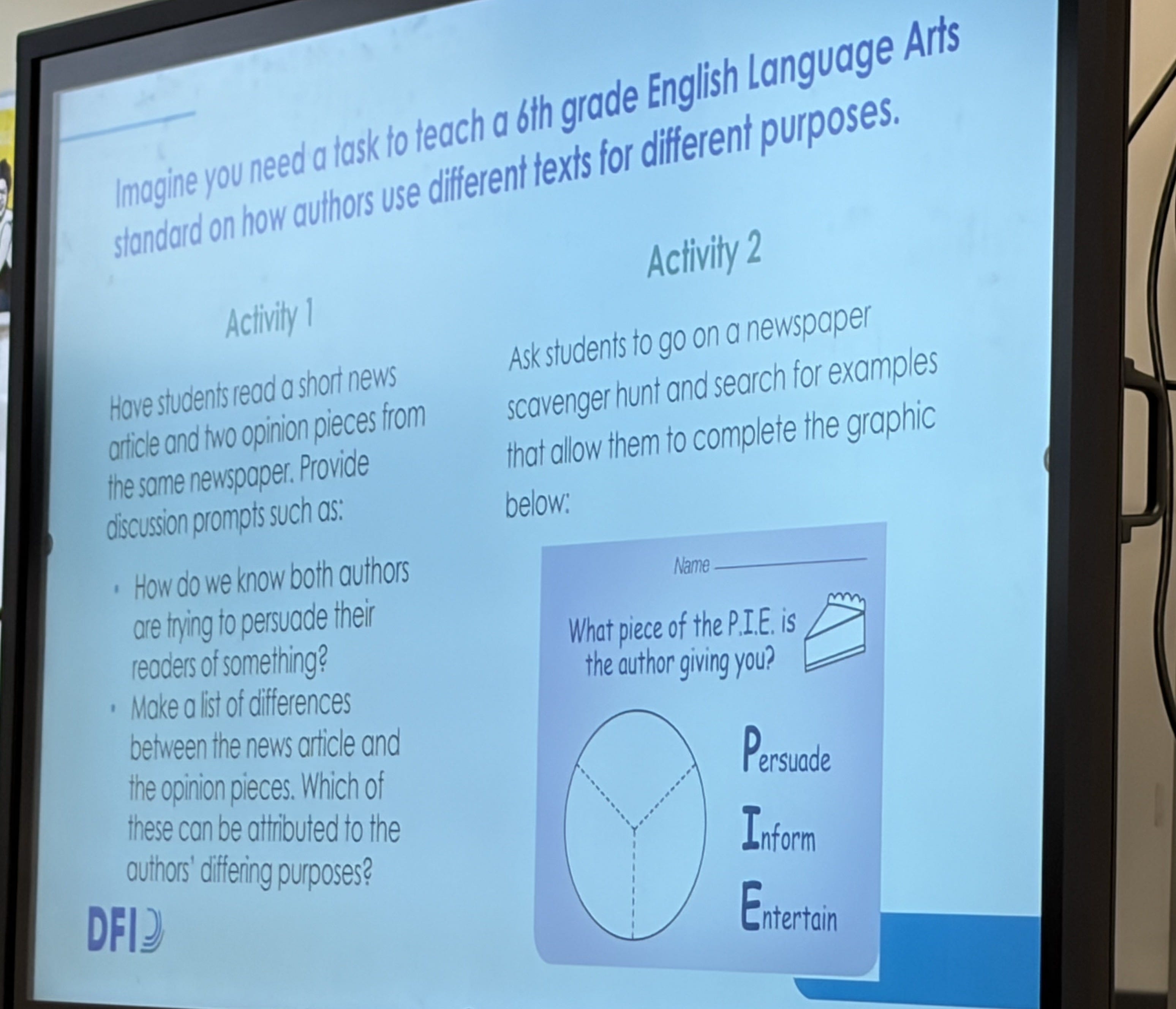
I forgot to note the statistics, but most preservice teachers incorrectly choose activity 2 as being the better activity until they receive training based on the science of learning that demonstrates activity 1 as the stronger option.
Why is it the stronger option? Graphic organizers are helpful and scavenger hunts sure sound like fun, but as the adults, it is up to us to find the materials that will most lead to student understanding. A scavenger hunt might lead students to all sorts of articles that don’t fit the task— a wild goose chase of sorts. As fellow participant and conference organizer Sherry Lewkowicz commented, it’s about curation. In other words, we the teachers must carefully pick and choose the articles that will best help students “understand how authors use texts for different purposes” if that is what we want them to learn.
April Croy and Michelle Palmieri, of Lumina Learning, are applying their literacy training to tackle elementary/middle level social studies, an endeavor close to my heart. They understand that getting students to think like historians is not because we want them to become historians, but because we need them to see history as a more than just a list of names, dates and events to memorize.
Croy and Palmieri describe teaching and learning history as a part of a more complex vision of what we mean by literacy, via the image below.
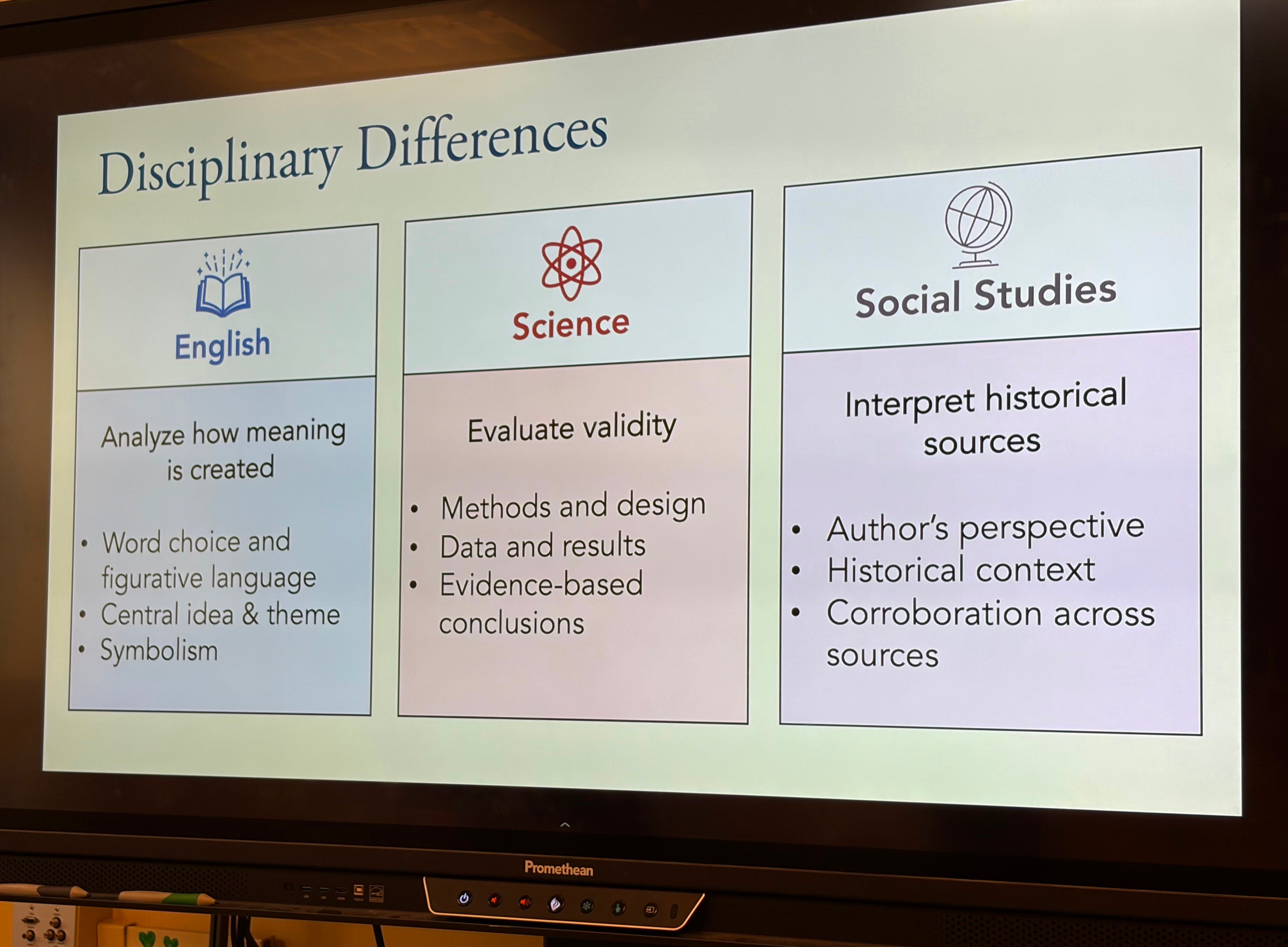
These different “literacies” remind us that we can’t just lump social studies or science into our ELA blocks. They are different subjects and demand separate time and pedagogies.
So how do we teach social studies literacy? There are many frameworks out there for teaching students historical thinking skills, and the one Croy and Palmieri offer is solid: simple, to-the-point, and easily implementable. Check it out below:
If you are reading this article, you likely already read The Science of Learning Substack by Nidhi Sachdeva and Jim Hewitt. (If you don’t, it's a must!) In her keynote, Nidhi gave a preview of the book, Becoming an Expert Teacher: Deliberate Practice for Effective Teaching she co-authored with Paul Kirschner that is coming out this fall.
The subtitle of her talk was “Becoming an Expert Teacher.” No easy feat.
Take, for example, the complexity of the job:
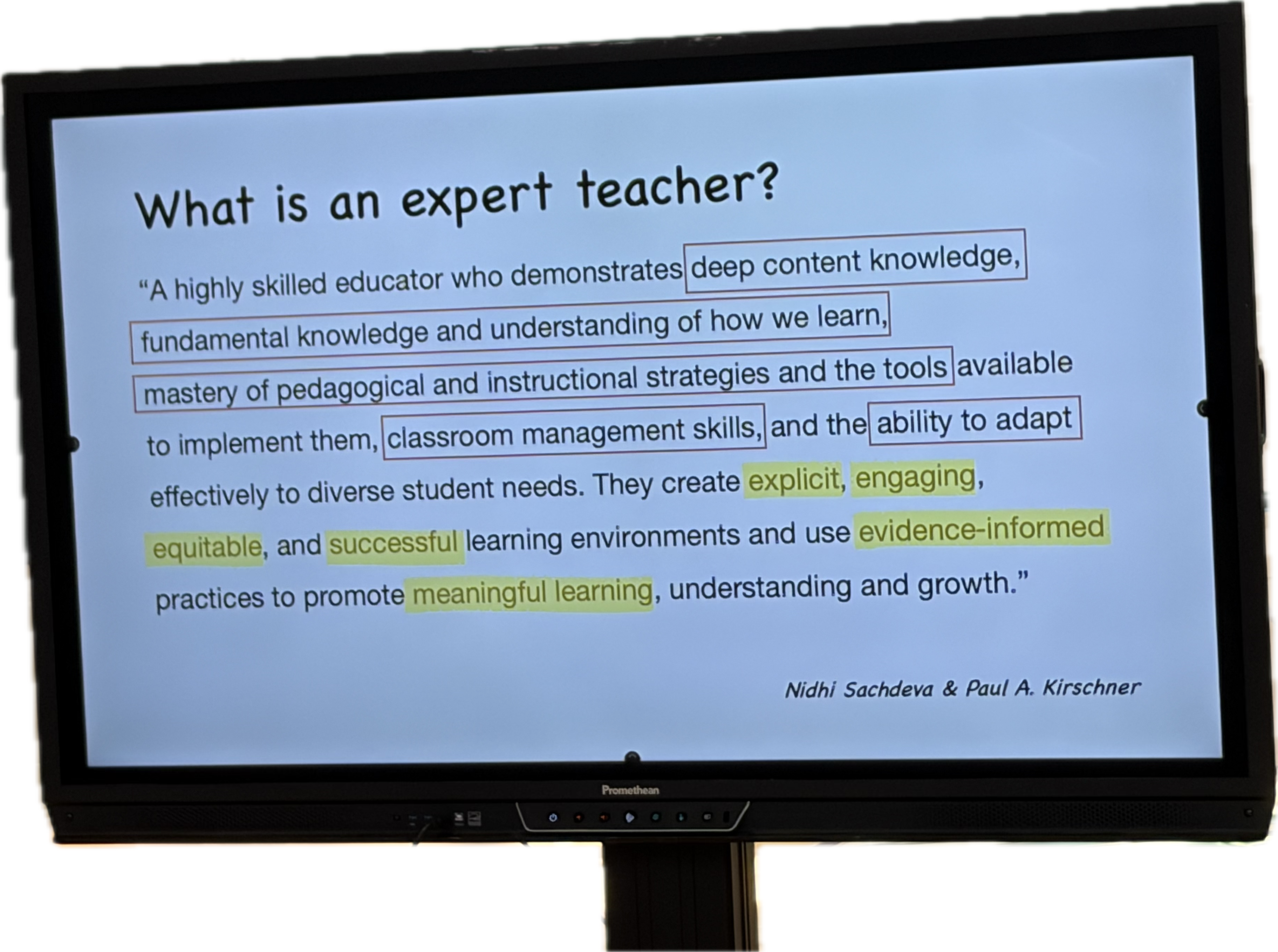
It’s a lot, right? She broke it all down into 5 components:
what we teach
how we learn
how we teach
the tools we use
how we relate
She said the most important sentence of her presentation was, “We can’t develop what we can’t name.” So carefully defining the work we do is imperative. Expert teaching, she went on, lies at the intersection of science and craft.
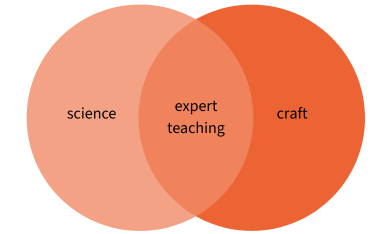
The science should come, ideally, in teacher training, before they start actually teaching. The craft part begins then, too, but continues through experience and thoughtful professional development. Like others, she emphasized that the science of learning is NOT an add-on, and like Zaretta, she emphasized it as a moral responsibility we owe our students.
This session was from Kristen McQuillan (check out her Substack here) of the Knowledge Matters Campaign along with Chelsea Harned. They spoke to the tendency of many to mistakenly separate what we know about working memory from reading comprehension. They explained how lack of background knowledge and vocabulary makes reading comprehension more burdensome through charts like the one below.
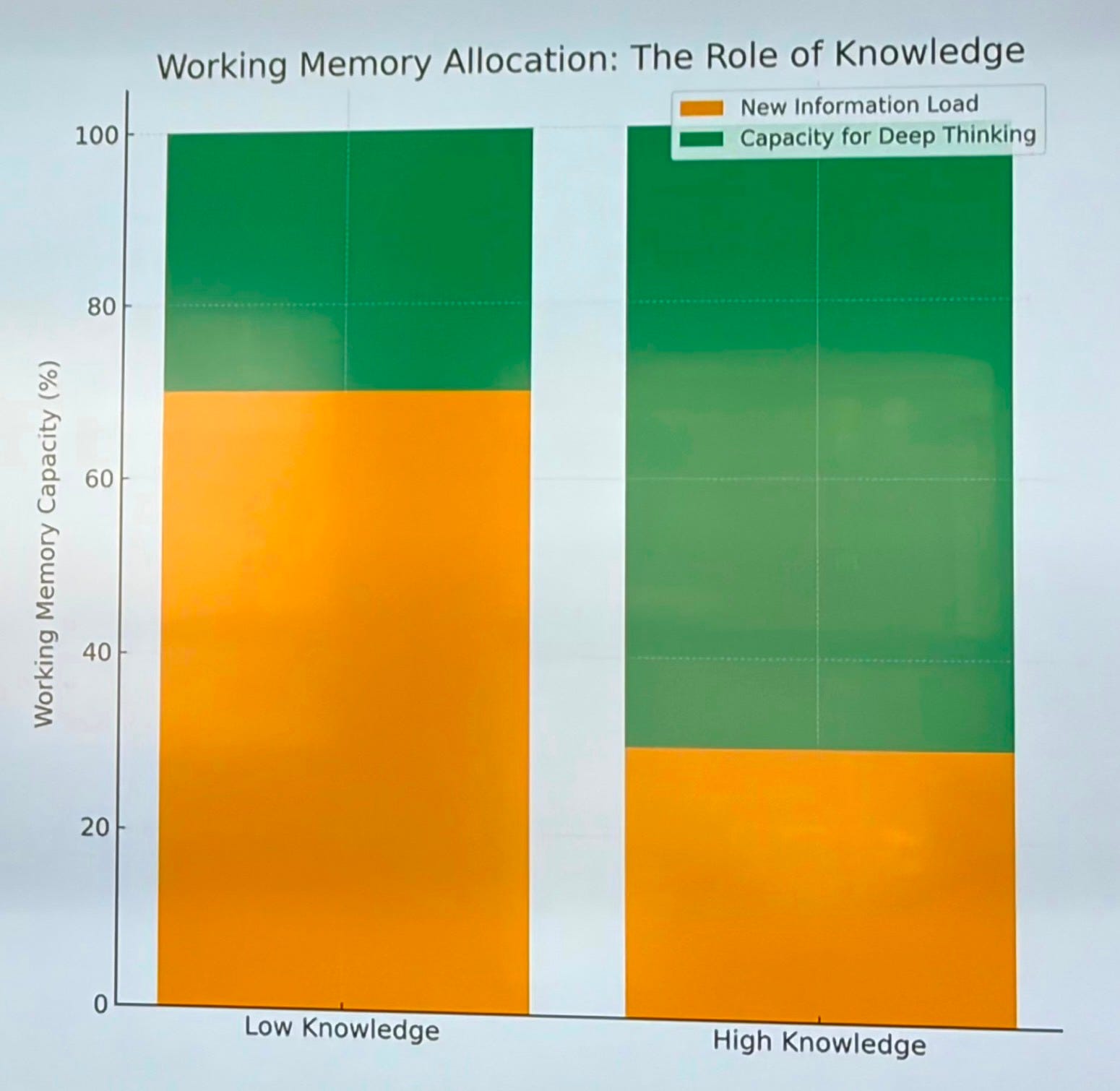
The central point was the importance of keeping the content of lessons at the center by centering the text.
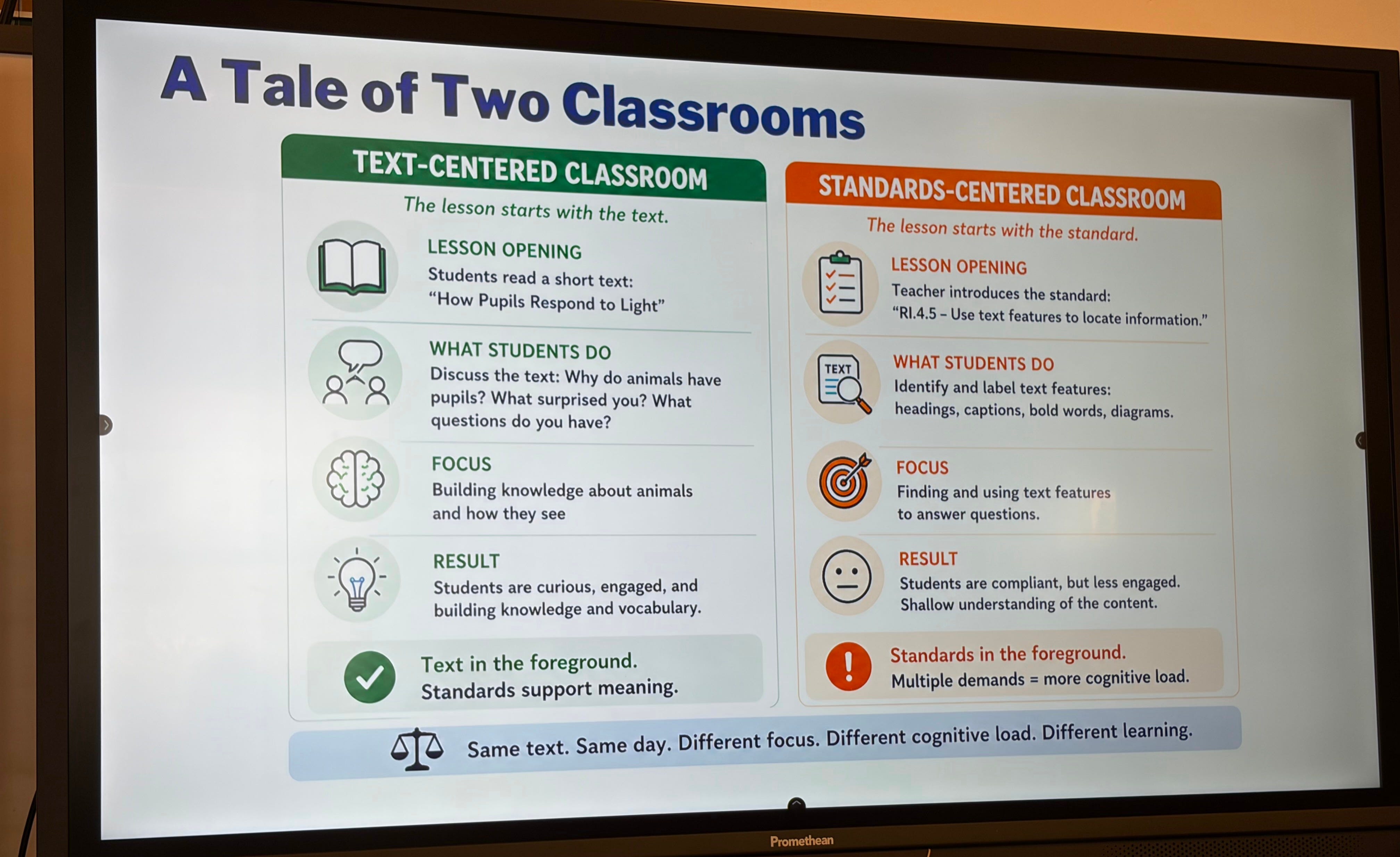
As you can see in their slide above, the activities described in the classroom on the left will lead to greater learning. The key for me is the non-smiley face in the classroom described on the right. It just looks like such a boring lesson without a point. If you want students to read something about how pupils respond to light, then do that. That’s cool and interesting. Text features? Not so much.
Session 4 was my own talk about the use of retrieval practice in history class with Alex Fairlamb. More on that in an upcoming post, as this one has gone on quite long enough.
A final point from Nidhi Sachdeva. Professional development is clearly sorely needed to help teachers improve. She cautions, however, that we often prioritize exposure over practice. We leave conferences like ResearchED, feeling inspired. Great. But then with the reality of Monday morning, we often continue to do the same things we have always done. The key is to use the tools of the science of learning—deliberate practice— to hone our craft. Not easy, to be sure. But unforgivable not to try.
Note that the next ResearchED conference in the U.S. will be this fall in St. Louis. Check it out!
Comments
Nothing yet. Say the first thing.
Sign in to join the conversation.