
One of my all-time favourite Substack notes is nothing more than five images of hinges.
Yes, door hinges.
The tiny, largely ignored piece of engineering tucked into the corner of a door, which is rarely visible… and designed to be forgotten.
I’m not, for the record, a hinge enthusiast (unless we’re talking about the app—where, incidentally, I met my partner). Without trying to sound cliché, these hinges were different. Designed with decorative swirls of metal, or creative angular joints, they showcased a ‘phenomenon’ I’m increasingly interested in: details.
For the purposes of this piece, I am going to use the words detial, flourish and care interchangeably. All three point to the small, easily missed decisions that reveal how much attention a design has been granted. When I talk about detail, flourish and care, I mean the way a hinge is articulated instead of shoved into a corner, how a seam is stitched instead of crudely sealed, how a leather knot is hand‑woven rather than slapped on like a sticker, or how a corner is resolved instead of papered over like a bad decision.
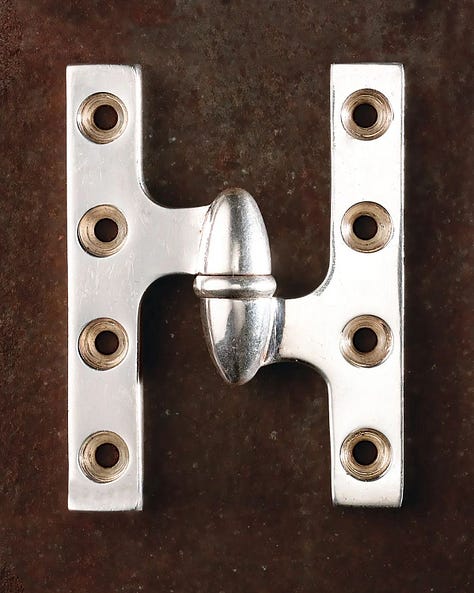
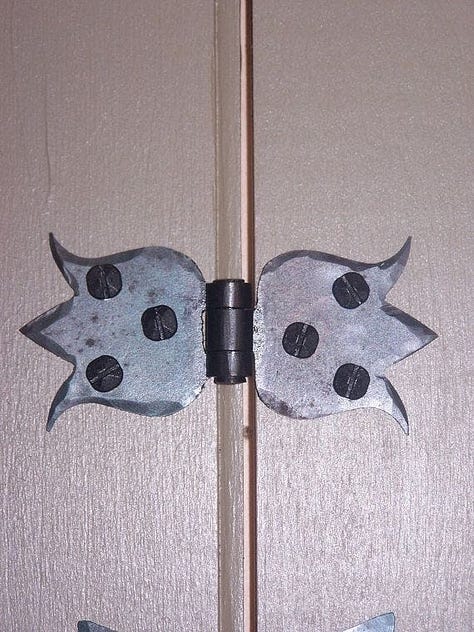
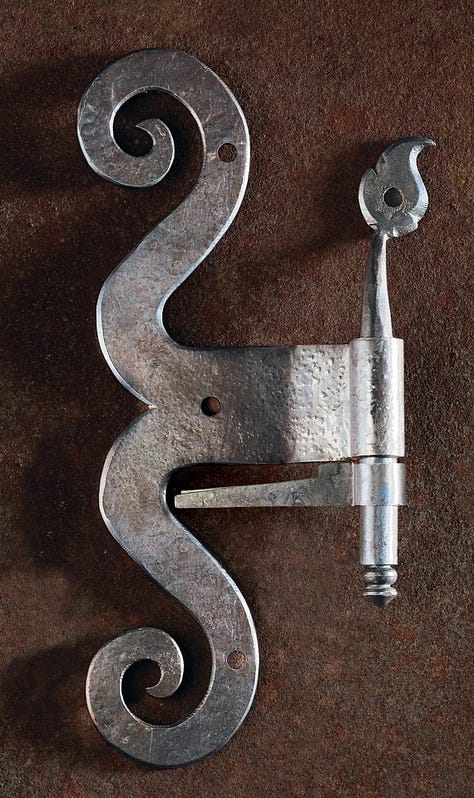
Taste Archive #03 is about that.
“Have nothing in your houses that you do not know to be useful or believe to be beautiful.” William Morris
The notion that even the smallest of elements deserve to be considered, even beautified, is not exactly avant-garde because for most of history, everyday objects were made this way by default.
From ancient Japanese joinery, to Medieval guilds or Islamic craftsmanship, utilitarian elements have been objects of beauty for centuries. Most of the time, this wasn’t an intentional choice, but a product of hand-craft. A well-made object worked, yes, but it also revealed how and why it had been made in the first place.
It’s only later, with the rise of industrial production, that this instinct was eventually challenged. As making became abstracted (split across machines, processes, and supply chains) the relationship between utility and beauty began to loosen.
One of the most vocal advocates for what we might now call “giving a damn about the small stuff,” was poet and painter William Morris. Morris insisted that the everyday was not exempt from care, and believed that usefulness did not excuse ugliness. Beauty, to mean anything at all, had to extend into the everyday.
Morris wasn’t alone in this thinking. From Ruskin’s moral defence of craft to Carlo Scarpa’s near-obsessive attention to joints and thresholds, there’s a long lineage of designers who refused to let the small things slip by unnoticed.
But this tribe of thinkers had some fierce opposition.
There isn’t one singular reason design stopped caring about the utilitarian. It’s a convergence of pressures, but to me they all point in the same, anti-capitalist direction: care doesn’t scale easily.
The first pressure was economic. As production accelerated and objects began to be made not by individuals but by systems, care became expensive, and therefore optional. What mattered instead was efficiency, clarity, repeatability — qualities a machine could deliver and a craftsman couldn’t, at least not at volume.
Then came the ideology. Where industrialisation made ornament expensive, modernism made it unfashionable. Adolf Loos famously equated ornament with crime; Le Corbusier reimagined the house as a machine for living in. Less wasn’t just cheaper anymore, it was better, more honest, more modern. A generation of designers absorbed this as gospel, and the small flourish became something closer to a moral failing.
The third shift was arguably the most consequential: the separation of design from making. Pre-industrial objects tended to have continuity between the person who designed them and the person who made them (the same hands, or at least the same workshop). Industrial production severed that chain. Design became abstract (drawings, systems, specifications), manufacturing became distributed, and the smaller decisions fell through the cracks between them.
Nobody was ignoring the hinge, exactly. It’s just that in a long enough chain, no one was looking at it either.
We are living in the age of saturation. Saturation of content. Saturation of design. Saturation of creatives… There is a lot of everything, everywhere, and things are surprisingly easy to get hold of.
A jacket one sees on a television show is a few clicks away from being on your shopping basket thanks to the likes of image recognition. A drinks cabinet you spotted at your favourite bar downtown can be replicated in a Chinese factory, likely for a fraction of its original price. Even a sculptural lamp from a boutique hotel can now be reverse-searched, rebranded, and delivered to your door before you’ve even checked out.
But despite the fact that most things have dupes, dupes aren’t always great. They rely on speed, on shortcuts to save money. These shortcuts mean dupes of intricate jackets fail to replicate the original hand-woven seams. Or skip the fancy zipper of an original handbag.
And so brands, particularly those prone to dupification (yes, I think I might have made that word up), start introducing little details to differentiate originals from their copies, like Bottega Veneta doubling down on its intrecciato weave (a technique that’s hard to fake well), or Loewe leaning into its intricate leather knots and ballooned constructions.
The same idea can be extrapolated to any creative field. Designers are introducing more and more details to differentiate their work, make it harder to copy, and equally stand out from an overwhelming amount of competition.
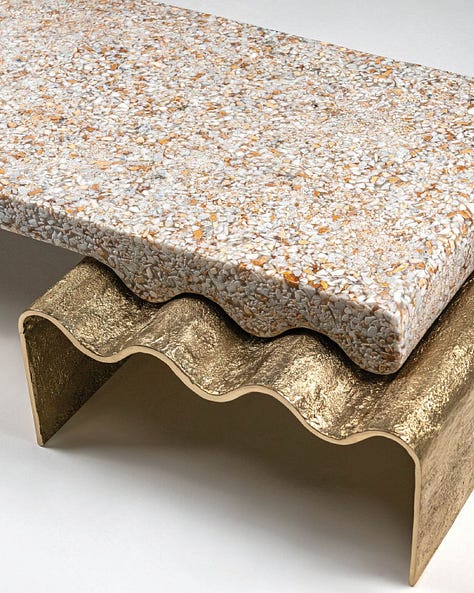
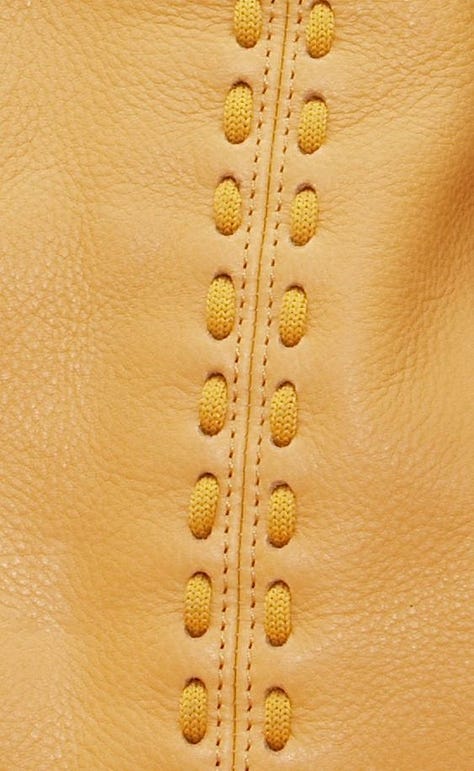
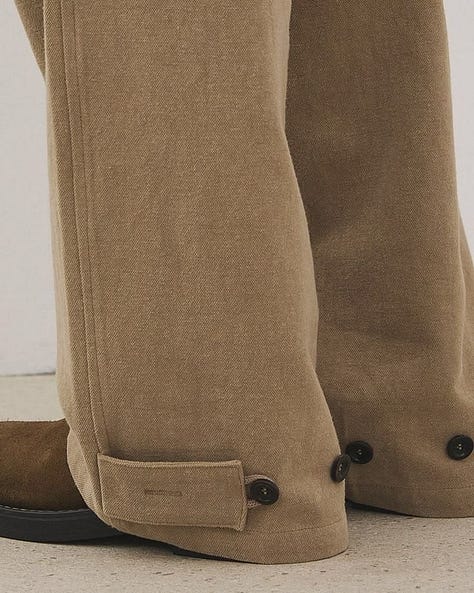
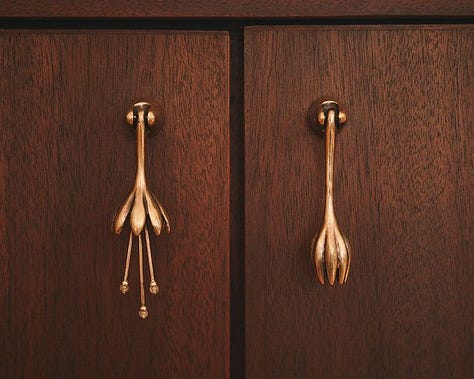
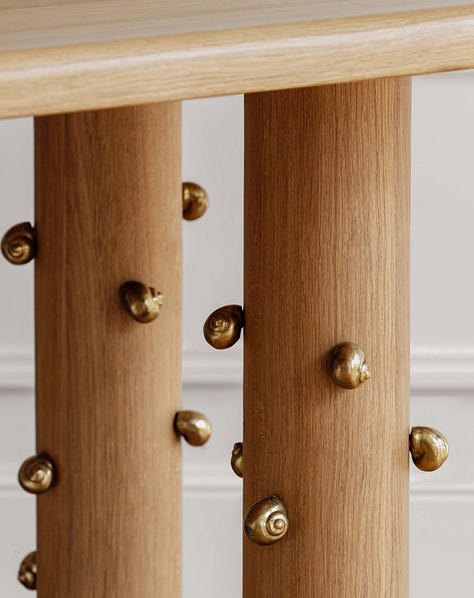
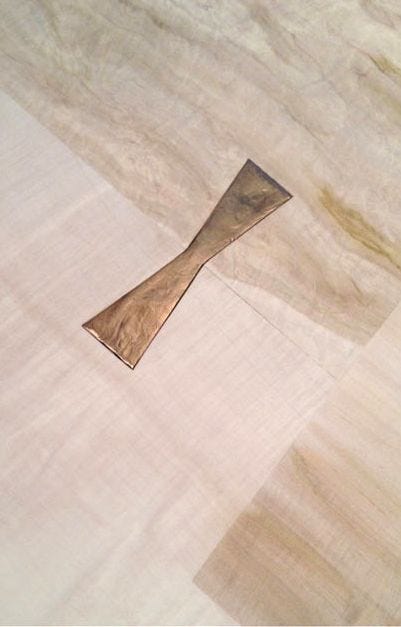
I like to think care, flourish and detail are making a comeback as a lie‑detector test for everything, not a heartfelt homage to craftsmanship. In a world where most things look cloned by the time they land in your feed, the hinge is one of the first places to check: are you dealing with something that was designed, or something that was merely produced?
The difference isn’t in the Instagram shot or the resale value; it’s in the small decision to let the joint show, to treat it like a proper character in the story instead of a background extra who should really just stay out of the way.
Comments
Nothing yet. Say the first thing.
Sign in to join the conversation.