
Niche ID is about the choices we make when we build for creative life. It explores non-linear journeys, cross-category concepts and the lore of the modern niche.
Get it on Apple here.
Friends! Hi!
News: The wrap episode just landed.
Slightly delayed because well, to do these things you have to be sincere. And to be sincere is a mood. Not quite a crying-in-the-front-seat-with-a-smoothie kind of mood. But sincere enough to be vulnerable. Conversations take curiosity, and sometimes a sprinkling of irreverence. Putting out a monologue takes having a point of view.
The episode kicks off with John Higgs framing the ecology of the niche as a central theme. That means acting in the world to claim your unique space in it, not ‘niching down.’
John talks too about his effort not to build a brand and avoid becoming “the weird music book guy” after the break-out success of his KLF book, back in 2012 because “the law of diminishing returns would’ve kicked in pretty quickly.”
And to that point, perhaps I need to move on from talking about niches all the time. It’s just such a useful metaphor for how acting in the world builds a body of work that makes sense. Action’s a step towards coherence. So I’ll take it.
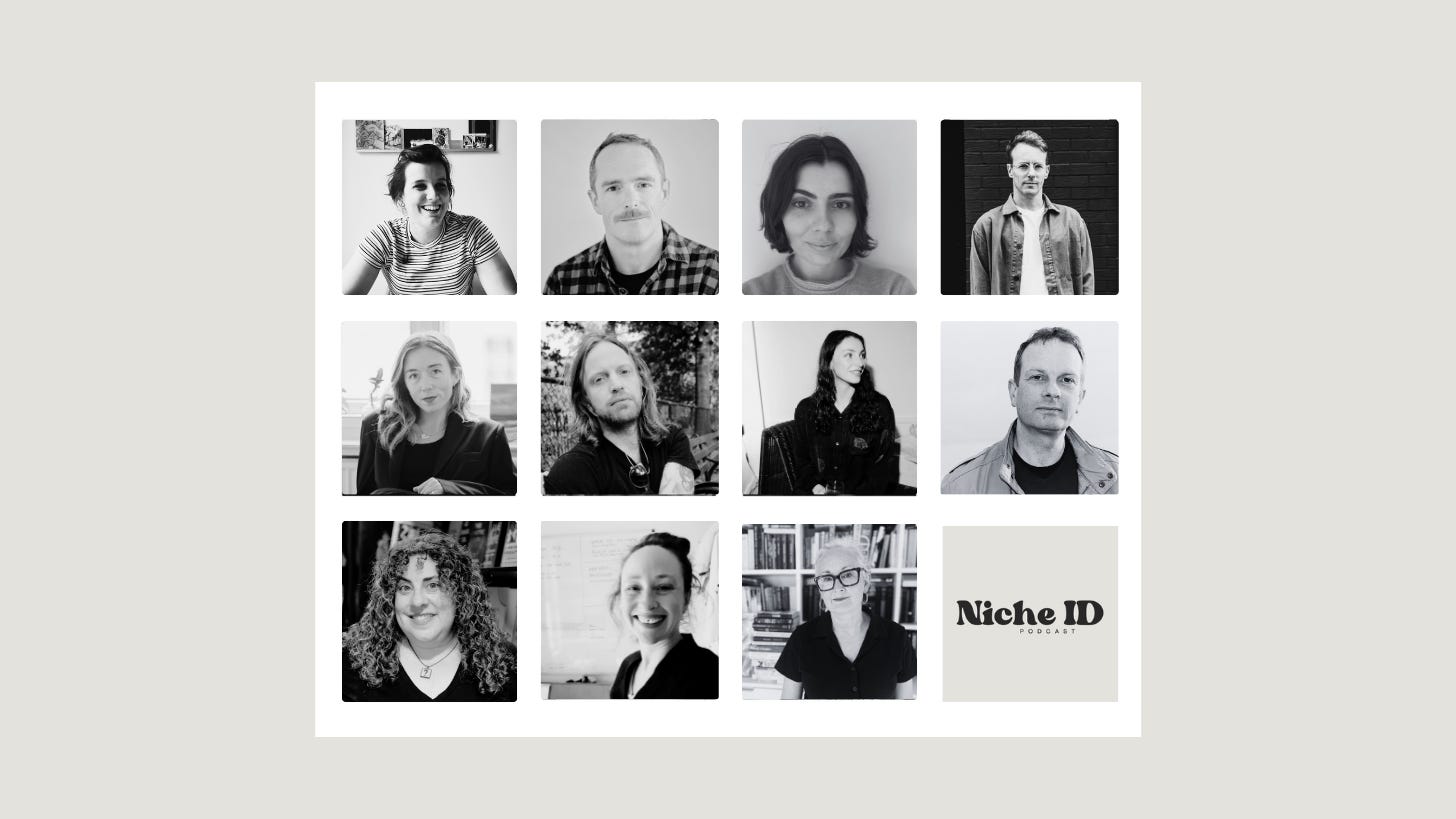
[Featured in the episode, L-R: Kaye Symington, Steve Watson, Laura Bryan, Max Leonard, Megan Wray Schertler, Ben Rayner, Jessie Hyman, John Higgs, Oriana Leckert, Alison Williams, Professor Leigh Wilson]
At the close of the wrap, I quote author and publisher Max Leonard. He’s explaining “worlds within worlds” and how his books take shape through imposing boundaries on the work. “It’s about narrative,” he says.
I hope that’s what the Niche ID project is about too, crafting compelling stories through layers as each conversation takes shape.
In the spirit of being self-referential (guilty, always) I’ve defined the key themes over the last few months, and expanded on how they can steer the choices we make when we build for a creative life.
That’s the end game. A creative life that serves us, however we define success.
꩜ Gratitude here for the creatives who shared their stories and theories with me. And thanks to everyone who listened, supported and shared the podcast.
Building a creative life is an act of ecology. It was never about ‘niching down.’ We’re making expansive moves here.
By acting uniquely in your creative landscape, you change it to become a place where you can flourish.
As John Higgs explains, “What happens is a species goes to a place and starts acting in the landscape and by acting in it, they change it in a way that makes it possible for them to survive and live there.”
Niche creation is built on a foundation of pragmatism and a specific point of view.
Ben Rayner defines that point of view simply as, “confidence in your taste and your selection of things.”
Jessie Hyman looks beyond the obvious (note to self: do your own thing), “I got advice really early on that you don’t want to pay too much attention to what other people are doing. If you do, you’re just going to look exactly like them.”
The enduring DIY appeal of zines lies in their accessibility and pure expression of self. The season explores the legacy of self-publishing that existed even before businesses like Newspaper Club put what Kaye Symington calls, “the joy of creation in everyone’s hands.”
As conversations this season developed, ‘analogue’ became a by-word not just for tangible output, but to signal craft, time and humanity related to process.
A recurring theme from guests like Alison Williams is that the ‘logic’ of a project often only appears in retrospect.
You don’t need a structured plan to begin. By creating, making, and (crucially) sharing your work, you gradually build a context where it makes sense.
Alison links this sense-making to synchronicity, “If you notice certain signs, if you see certain things that seem like coincidences, they’re not coincidences. That means you’re on the right path.”
Finally, the season explores at how defining your own results sustains creative longevity.
You set your own terms knowing that profit is just one metric of success. Success also lives in building and nurturing relationships, getting out of your comfort zone or (easy to say, harder to do) committing to consistency.
Reframe constraints as bookends rather than blockers. As Max Leonard says, you need the “outer edges” and limits to find the story you’re meant to tell.
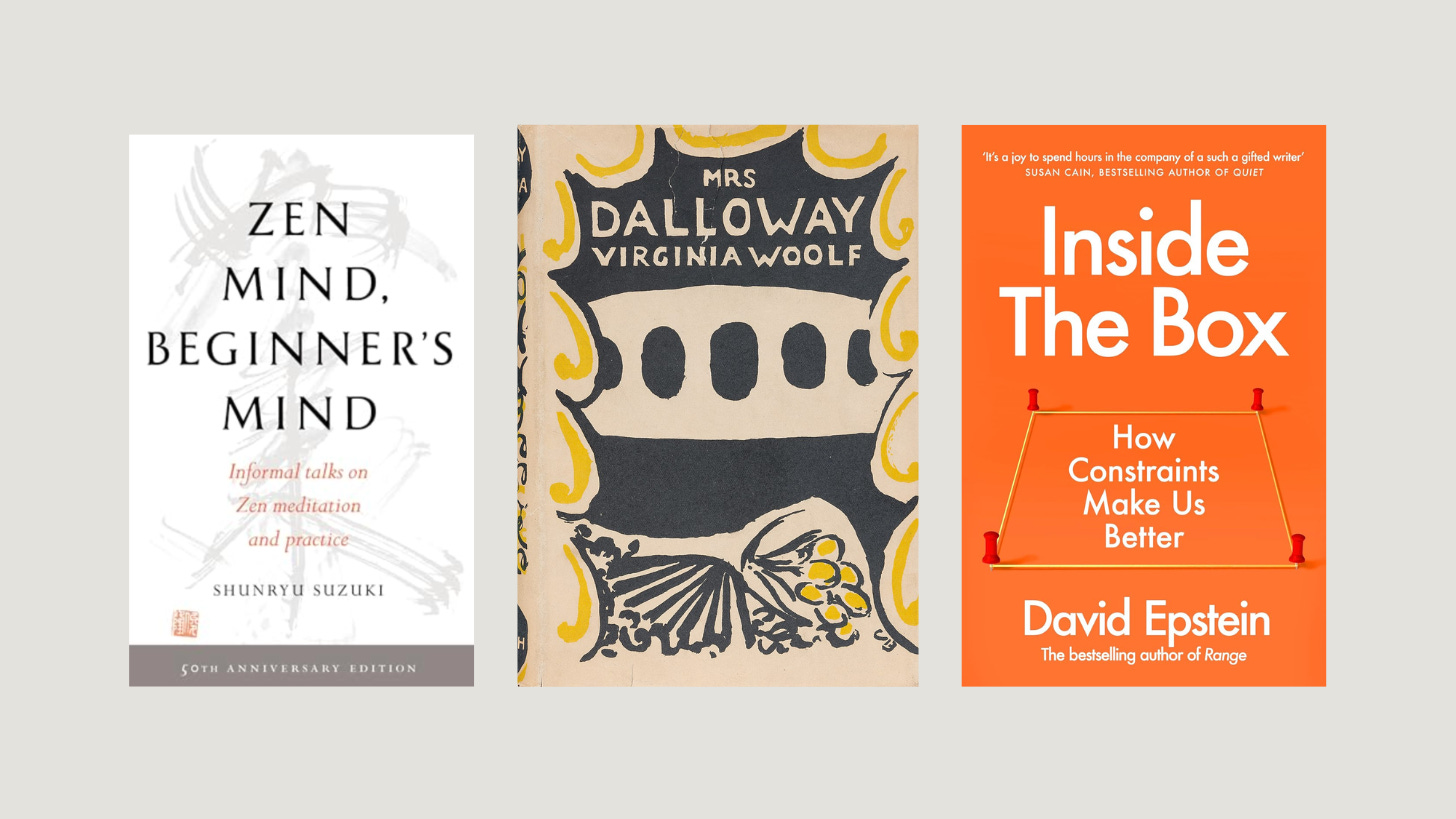
Zen Mind Beginner’s Mind by Shunryu Suzuki
“We should find perfect existence through imperfect existence,” says Suzuki. IMO the founding father of Zen in America should have had a zine.Mrs Dalloway by Virginia Woolf
Classic stream of consciousness storytelling from Woolf. I mention it because it was self-published and typeset by hand, representative of the meticulous craft behind the work.
Inside the Box: How Constraints Make Us Better by David Epstein
External constraints often present themselves. Otherwise, put limits on the work. A reminder that exploring endless rooms and corridors ‘of our own construction’ is scary and weird. IYKYK if you’ve seen Backrooms.
New Niche ID episodes will arrive later this year. I’ll announce them here first or just hit follow and you’ll get every one when they land 🖤
I’m speaking on June 24th at The Curzon, Hoxton alongside a stellar line-up of women writers and creatives. Hosted by Pruzan’s Jessie Hyman and Sarah Ackland of Taking Space. Get your ticket here.
I’m a strategic copywriter and podcaster. I’ve worked with brands including On, Condé Nast and Skin+Me. Check out my website. You can reach out on Substack, or message me here.
No posts
Comments
Nothing yet. Say the first thing.
Sign in to join the conversation.