
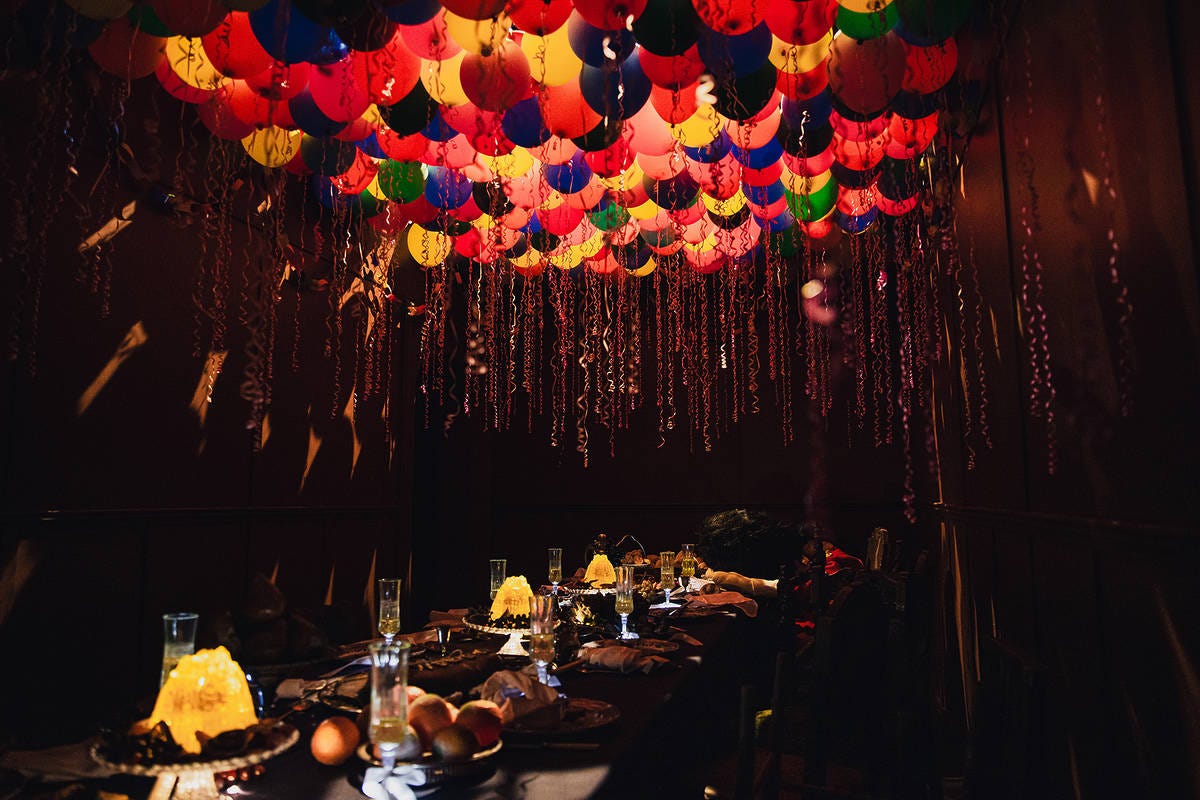
Last year, I went to Viola’s Room. I had purchased a ticket months before. I traveled to New York from Los Angeles and arrived at the venue on my assigned date.
But I didn’t experience the show. I experienced something else and, in a way, it was even more worthwhile.
Viola’s Room was created by Punchdrunk and is based on The Moon Slave, a story written by Barry Pain in 1901. After years of masked, immersive theatre (Sleep No More, The Burnt City), Viola’s Room was a new type of offering from Punchdrunk. A run in London preceded the show’s transfer to The Shed in New York.
Hoping I would have a chance to explore it firsthand, I’d avoided most details about the show with relative success. I knew that, unlike previous Punchdrunk productions, there were no live performers. Audiences would remove their shoes and be outfitted with headphones. The lush voice of Helena Bonham Carter would guide them, barefoot, through a series of sensorial spaces in groups of six (or fewer).
I went through the initial onboarding. I sanitized my feet, donned a pair of headphones, and did an audio check. I walked into the preshow room. It was dim, a single light bulb hung from the ceiling. A circle of wooden chairs sat empty, as though they had gathered around the soft flicker of a floating electrical campfire.
Listening to the voice-over, I waited. The room went black. Immediately I panicked. I fumbled my way out and stood in the hallway with my head in my hands.
I’ve learned that, for me, total darkness induces intense claustrophobia. It becomes a terrifying, full-body sensation of impending suffocation and my internal voice screams for escape. I don’t know if this is a new phobia or if I’ve simply never experienced absolute darkness until recently. I have no recollection of blackout experiences. I grew up in the Midwest and was comfortable outside at night, but there was always light pollution or moon glow. Haunted mazes have had light bleed or total darkness was fleeting. I can only surface memories containing some degree of illumination.
As I stood in the hallway at Viola’s Room, a staff member approached me and asked if I was okay. I said something along the lines of, “The dark was too much," which felt woefully inadequate. It was a statement absurdly lacking in its ability to encapsulate the severity of my emotional and physiological response. It sounded juvenile and perhaps also easily remedied. That staff member looked at me and said, with complete kindness, “I understand.”
He proceeded to confer with other staff, including a supervisor in another room. While he did so, two of the staff sat with me. There was little conversation but their presence was gentle. They tried to work out an alternative solution so that I could still experience the production somehow. In the end, it didn’t work out.
I was disappointed. I paid for a ticket and missed an entire production I’d been looking forward to. My companions that evening went through and I felt embarrassed and frustrated while I waited for them. And then, I realized I also felt… restored. I had been thoroughly cared for, which was deeply meaningful.
This process was unexpectedly duplicated, in part, just last week.
I went to House of Kong, another show recently produced in London that had traveled stateside. Similar to Viola’s Room, small groups of participants are guided through the experience by narration transmitted through headphones.
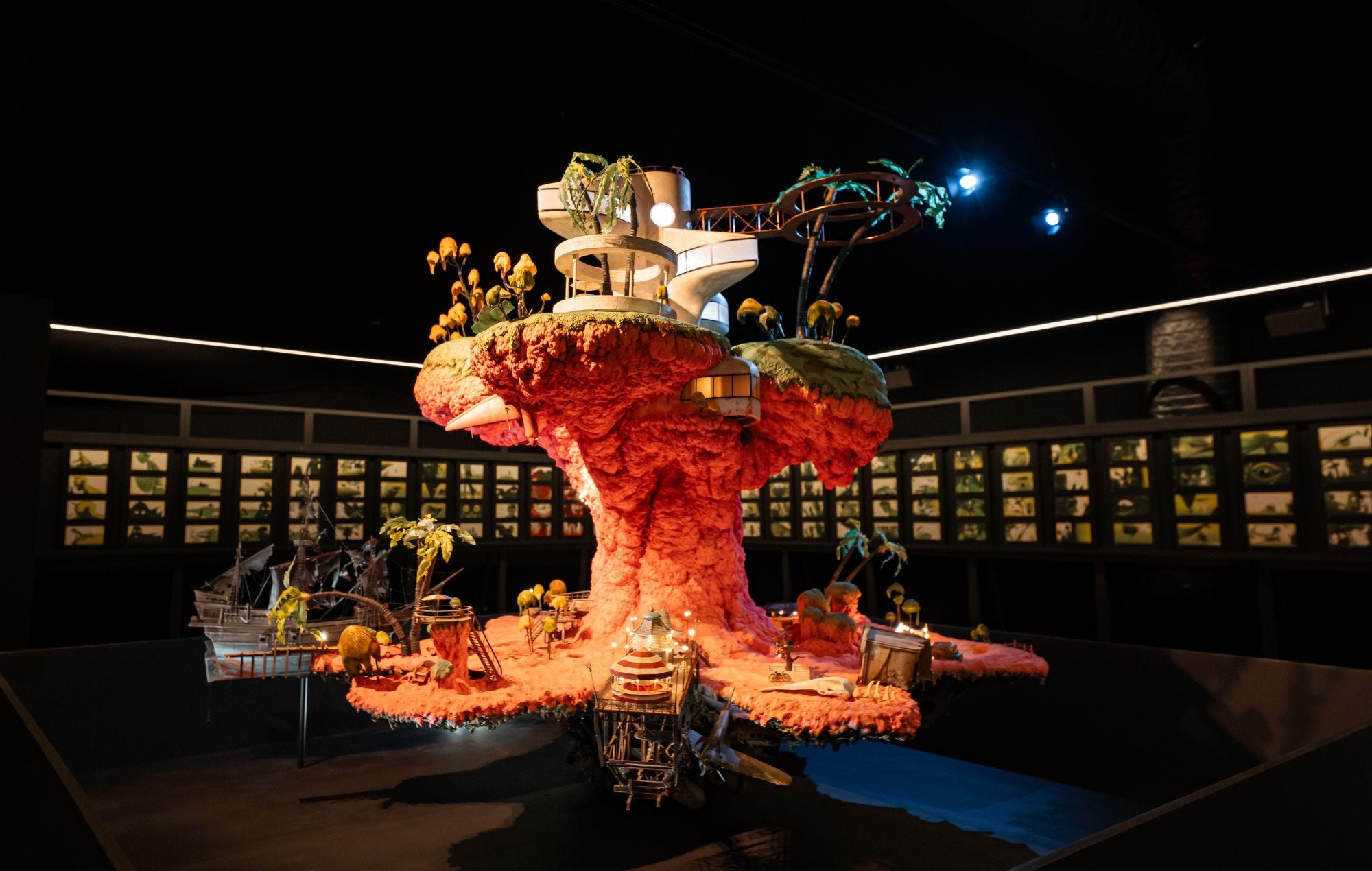
During onboarding I asked the crew if there was any sustained darkness. They confirmed a blackout moment and promptly asked how they could help. No assumptions were made. Instead, they asked questions like, “Would it be better if you knew where and when it happens?”
I’m new to this. It’s strange to navigate a phobia that seems as unreasonable as it feels unbearable. They gave me the information I needed and I was able to enjoy my way through the experience. I was still profoundly uncomfortable during the roughly minute-long darkness, but I’m grateful to the staff. Because of them I had a fulfilling time that wasn’t stunted or overshadowed by fear.
These anecdotes serve as key reminders that operational personnel can be singular in their impact; the totality of an experience can hinge on their levels of empathy. We should never underestimate the power of expert facilitation or underinvest in the skills of compassionate problem-solving. Individuals in those roles should be comprehensively trained, compensated, and valued.
I never thought I’d appreciate such discomfort. The final result of my experiences at Viola’s Room and House of Kong differed, but their commonality was the people and how well they cared for me, a stranger. That is true human-centered design.
***
Comments
Nothing yet. Say the first thing.
Sign in to join the conversation.